Category Archives: Generations to Generations

The Traditional Rice Varieties of Tamilnadu

The traditional harvest festival of the Tamils –  ‘Pongal’ is almost here. It falls on the 14th of January, 2017. Wishing everyone ‘Happy Pongal’ is the easiest way to wish on any occasion with a ‘Happy’ prefixed. But Pongal is the Day of the Farmer. It is the festival to respect the Farmer and his Cattle, for the relentless service in providing staple grains and millets to the society. It can also be the ‘Thanks Giving Festival of the Tamils’. We call it ‘UZHAVAR THIRUNAL’  in Tamil or ‘THE SPECIAL DAY OF THE FARMER’.

When one of our friends introduced us to a wide range of traditional rice varieties of Tamilnadu, what more special an occasion could I wait for, than a post on the Harvest Festival. Hence, I reserved it for Uzhavar Thirunal/Pongal. Though I have become a better user of millets of my state, and those special millets have become a regular feature of the breakfast table, these rice varieties were only reading material till date to me. Or more, a topic of discussion in Farmer’s Programmes across national channels.

Unfortunately, not much historical or research information could be found in the net. But fortunately, much has been written recently and much more information could be found through videos of specialized farmers and practitioners of traditional Tamil medicine. I could feel a sudden urge among media enthusiasts, to popularize these traditional grains – in a genuine interest to protect the grains from getting lost in the huge piles of junk/fast and processed foods in the super market and to protect those farmers whose livelihood has never been appreciated as the Farmers of the West.

As two sides of every coin…the ever rising health issues is truly the factor of concern. To protect the elite class and the section of the people who urge to reach the elite class from Obesity, Diabetes, Blood Pressure and a wide range of Life Style oriented diseases, there is this new rise in the introduction of traditional grains and millets.  What is sown by the simple farmer is reaped as benefit by the trendy super markets with trendier gunny bags to store tradition at its grandest.

Coming to the grains that I was introduced to – A very special thanks to Mrs. and Mr. T.

Here are a few grains that have been part of the traditional rice eating habit of the Tamils across centuries and more. I have tried to present the nutritional facts of the specific rice variety with the link from which I could gather the information. For any interested reader – Just type the name of the rice, and one would come across the very few websites which explain the benefits.

I wish to post the different foods that can be prepared from these grains in the near future… may be Paniyaram, Pongal, Idly or Dosai.


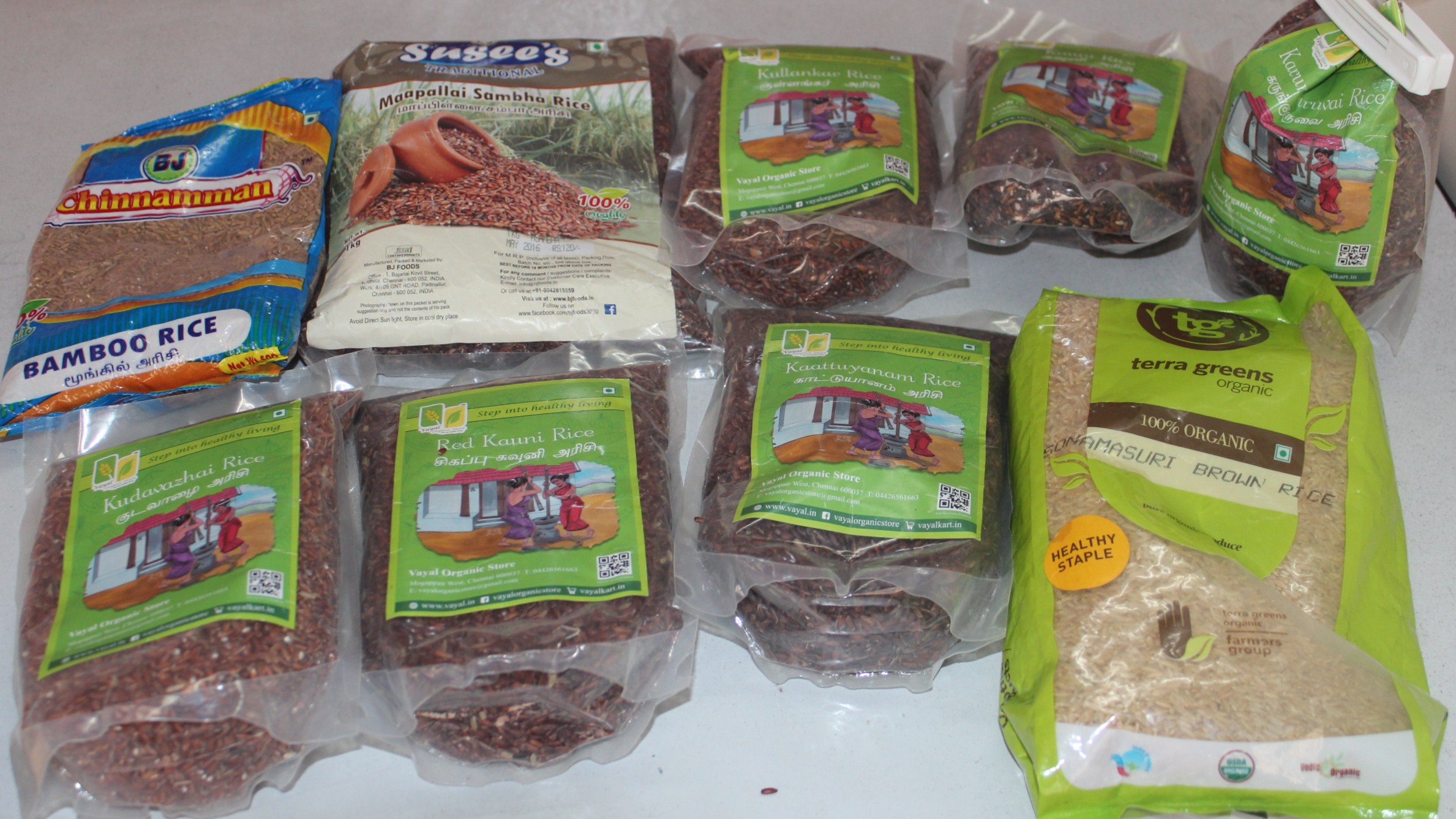
These are the different varieties of rice presently with me.  ARISI is rice in Tamil language.

  1. Karuppu Kavuni Arisi
  2. Sivappu Kavuni Arisi
  3. Karunkuruvai Arisi
  4. Moongil Arisi
  5. Kullankar Arisi
  6. Kudavazhai Arisi
  7. Kaatuyaanam Arisi
  8. Maappillai Arisi


img_7841


  1. Karuppu Kavuni Arisi – Black variety


img_7829


img_7868


This rice is believed to increase bone strength and prevent bone related ailments. It contains anti-oxidants equivalent to blue berries. It cures the problem of loss of appetite in children and also rectifies nutritional deficiencies.

Different foods that can be made from kavuni arisi are – paniyaram –sweet and spicy, payasam, pongal, dosai, puttu etc

http://swarnaprashana.org/the-miracle-rice-karuppu-kavuni-arisi-black-kavuni-rice/


2. Sivappu Kavuni Arisi – Red variety

This is the red variant of the black kavuni rice.


img_7832


img_7862


3. Karunkuruvai Arisi


img_7827


img_7840


Karunkuruvai arisi is believed to control Diabetes and Cholesterol levels and is also a Blood Pressure regulator. It also improves the strength of the body.

https://www.youtube.com/watch?v=A6tM2_tQrbc 

https://www.youtube.com/watch?v=ghDyu-p0iqw

-are video links in Tamil that talk of the benefits of the grain.


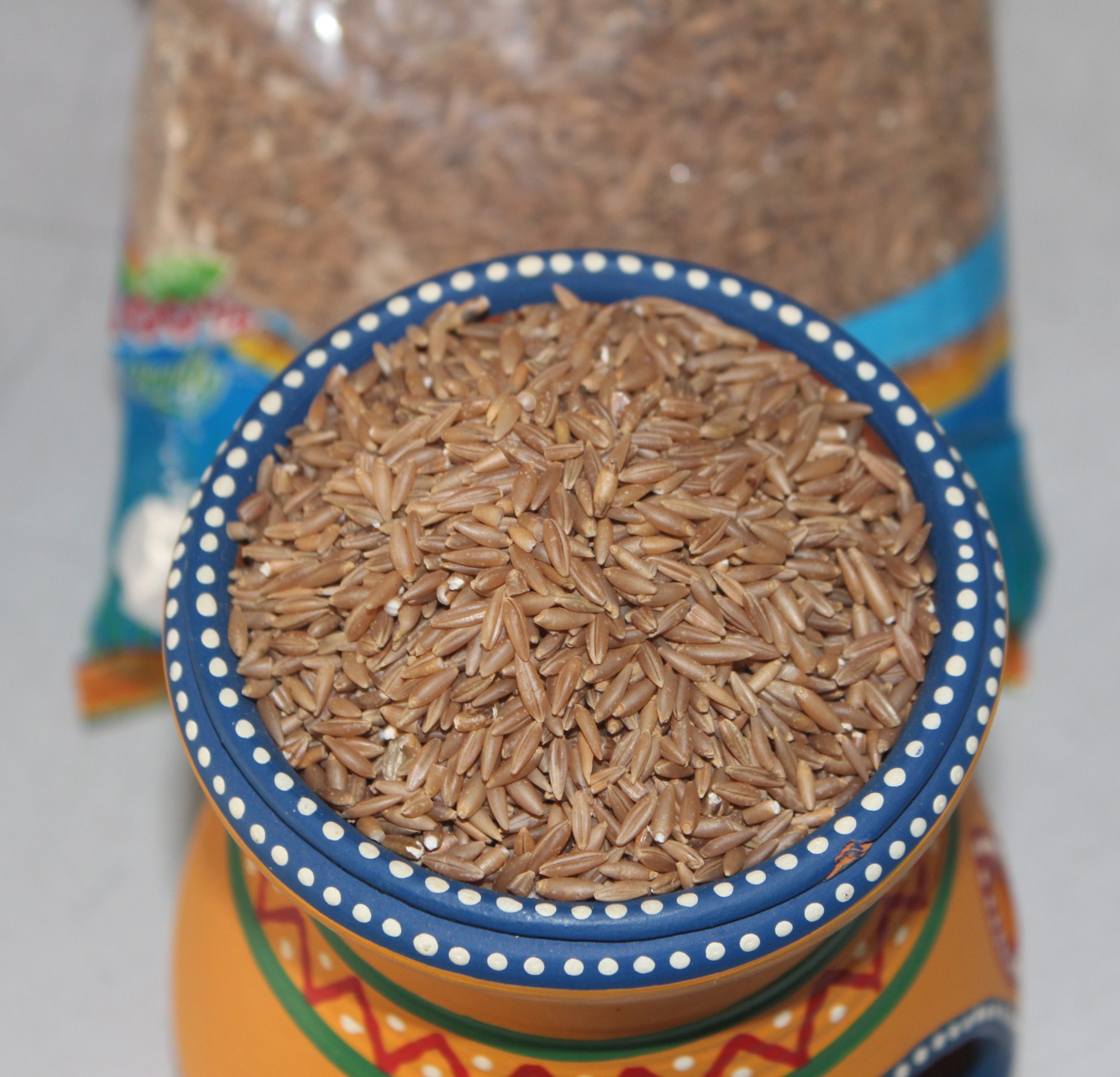
4. Moongil Arisi/Bamboo Rice


img_7830


img_7884


It is popular among the people of Kerala and is called Mulayari in Malayalam.  Bamboo Rice is collected from the seeds of the Bamboo flower. Some species of bamboos only bloom with flowers once in 40-60 years and often die after flowering. They compensate this by releasing huge amounts of flowers and seeds.

http://healthyliving.natureloc.com/bamboo-rice-mulayari-hidden-tribal-secret-revealed/

These key points specify the health benefits of the grain.

  1. Studies conducted on the Kani tribes in Kanyakumari forests have shown that they consume Bamboo rice for its fertility enhancing properties.
  2. Higher protein content than both rice and wheat.
  3. Controls Joints pain, back pain and rheumatic pain.
  4. Lowers cholesterol levels
  5. Good source of vitamin B6
  6. Has anti-diabetic properties

https://blog.naturallyyours.in/2016/02/26/6-reasons-why-you-should-have-bamboo-rice/

One can also learn a few facts in Tamil from the below mentioned link-

http://www.valaitamil.com/moongil-arisi-benefits_12692.html


5. Kullankar Arisi


img_7837


img_7873

This rice possesses antioxidental properties, and has higher zinc and iron content than white rices. They also strengthen, regenerate, and energize the body, regulate blood pressure, and prevent skin diseases and premature aging. Kullakkar rice contains complex carbohydrates that are good for health.

This rice is suitable to make idly, dosai and kanji /porridge.

https://en.wikipedia.org/wiki/Kullakar_rice


6. Kudavaazhai Arisi


img_7831

img_7851

http://thanal.co.in/resource/view/save-our-rice-tamilnadu–part-11–seeraga-samba-sivappu-kudavazhai-an-indigenous-rice-varieties-by-rjayaraman-70181242

The link above shows a short interview with Farmer R. Jayaraman, who specializes in indigenous rice varieties of Tamilnadu.

He says this rice plays an important role in the health of pregnant women and aids in easy child birth.


7. Kattuyanam Arisi


img_7825

img_7844


The name has two parts – kadu meaning forest and yanai meaning elephant. As Sidha Maruthuvar (Doctor of Traditional Tamil Medicine) Dr. Rajamanickam says, the grain in the field grows more than 7 foot tall and even an elephant can disappear amidst the crop. Hence the name to this indigenous healthy rice variety is Kattuyaanam.

It controls Diabetes, improves over all health of children, boosts immunity and protects against skin problems

https://www.youtube.com/watch?v=ODSWQ9XJt5c


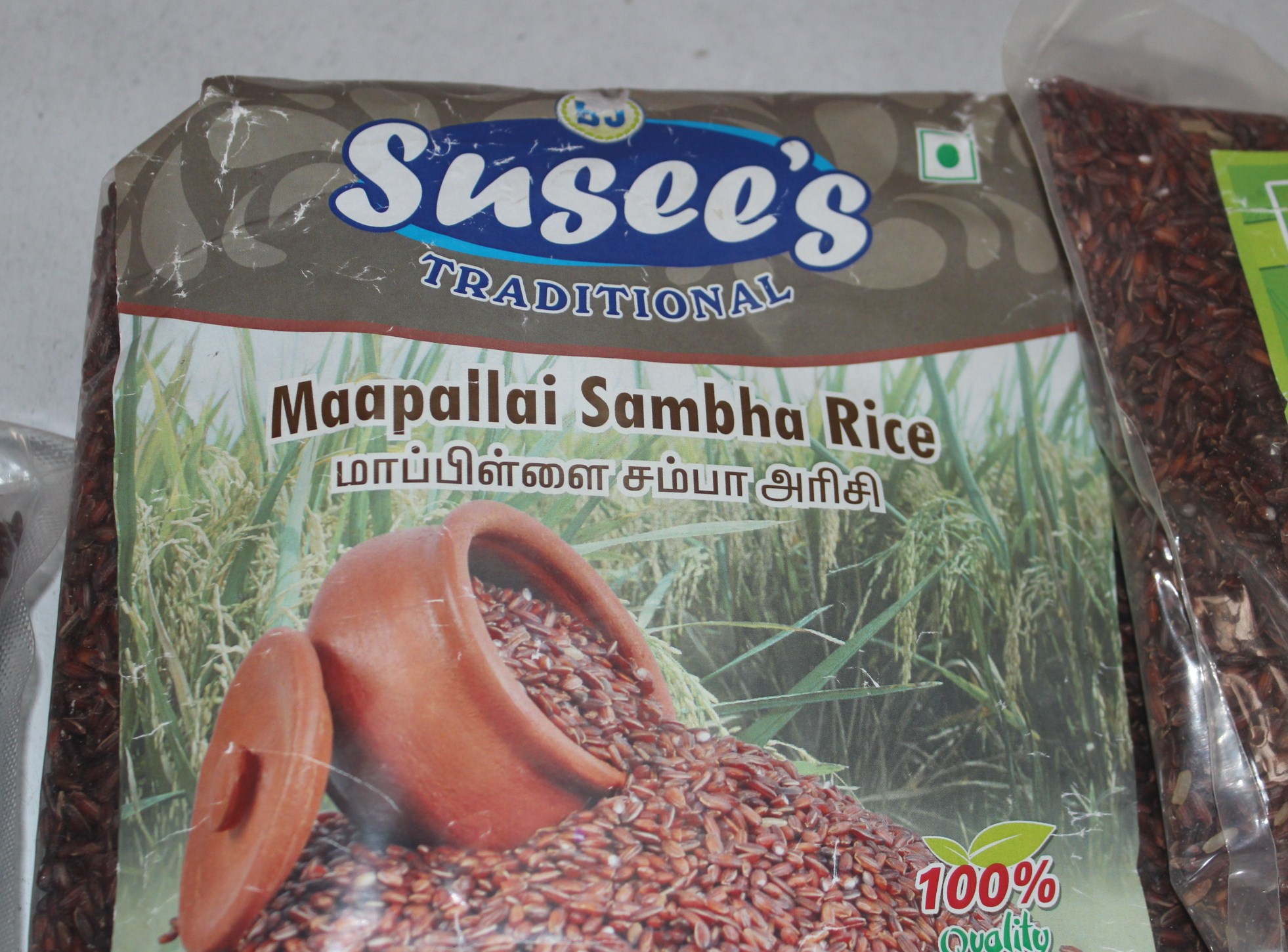
 8. Mappillai Samba Arisi


img_7826

img_7892

Mappillai Samba Rice variety increases stamina, provides energy especially for school going/studying children.  It specifically aids helps build a healthy body and an alert mind

Idly, Dosai, Pongal or Kanji/Porridge can be made from this rice.

https://www.youtube.com/watch?v=qSEUZimXm18


Farmer’s Day Wishes to everyone. Uzhavar Thirunal Nalvazhthukkal.

Cheeni Kizhangu/Sarkkarai Valli Kizhangu-Karuppatti/Sweet Potatoes in Palm Sugar Syrup


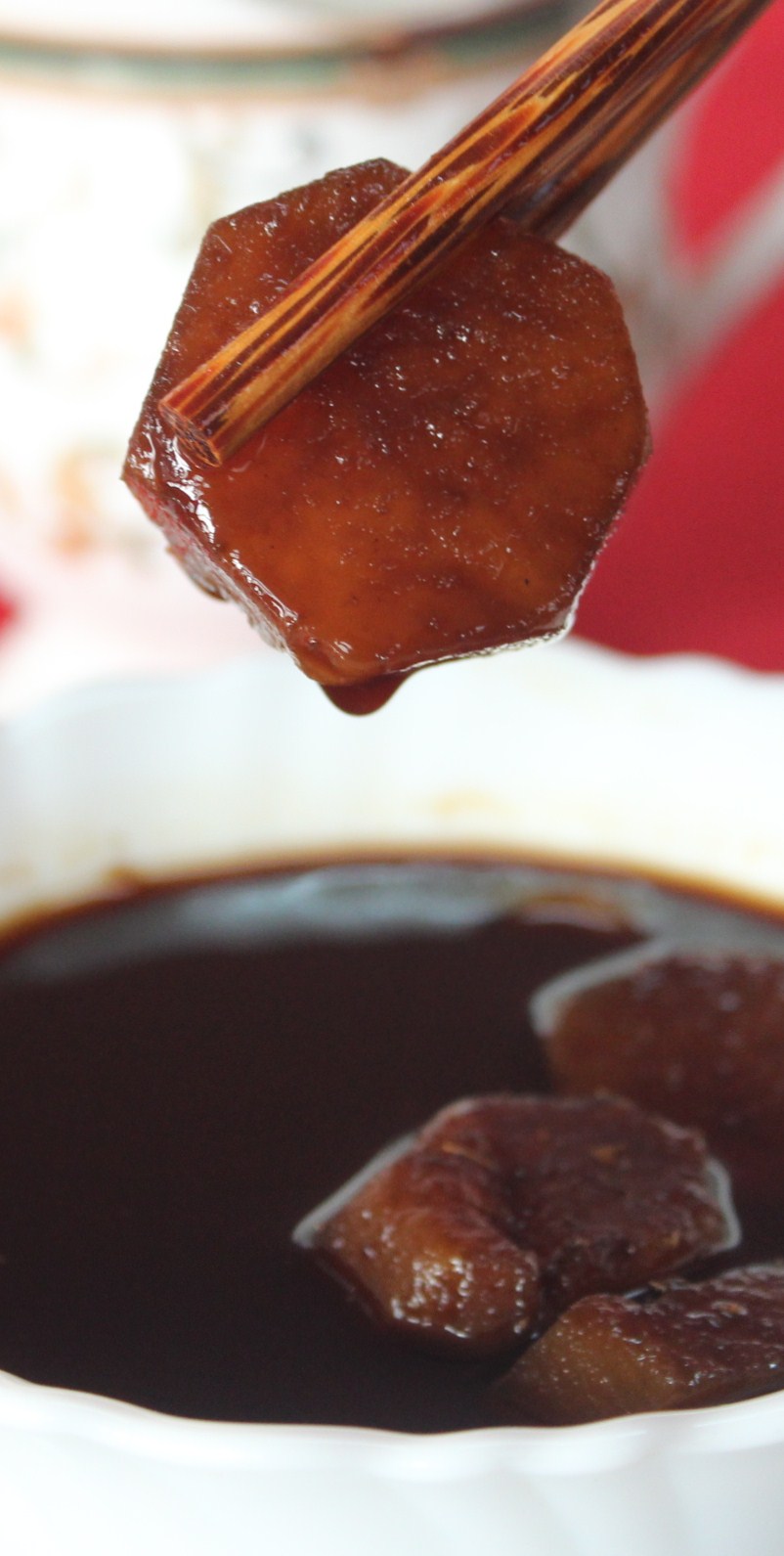
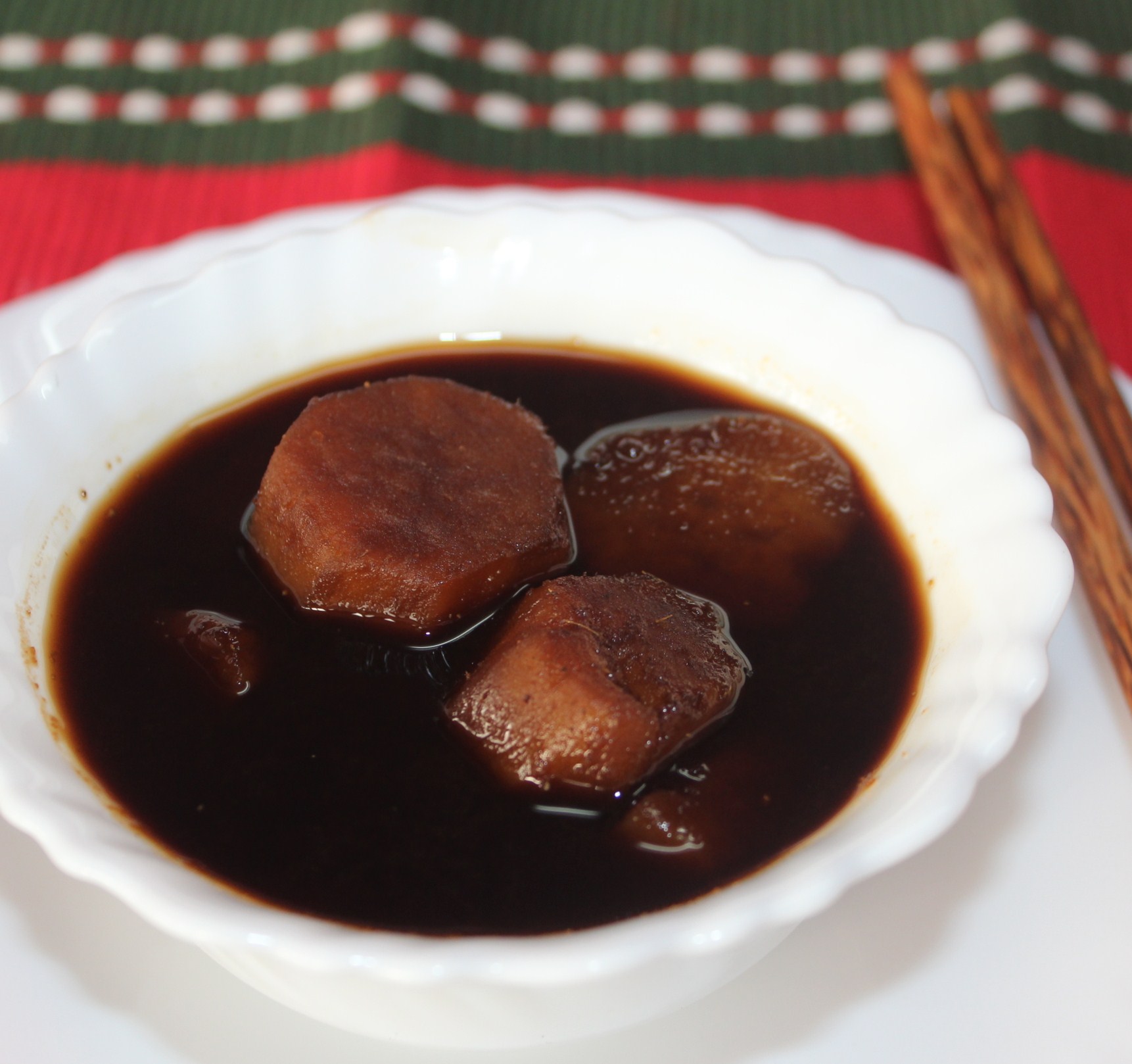
sweet potato soaked in palm jaggery syrup

IMG_4526


I have very less memories of Sarkkarai Valli Kizhangu or Cheeni Kizhangu – Sweet Potato as a vegetable. But I have evergreen memories of sweet potatoes floating in a tub of Palm syrup in Thoothukudi, my maternal grandmother’s house.

The big chatti or hot vessel filled with sweet aromatic Palm jaggery syrup and the  floating sweet potatoes inside was one of my favorites. Of course, still is. Mildly spiced with dry ginger for balance and added digestion, this delicacy can be had hot, warm or cold.

Cubed or Circled Sweet Potato pieces cooked in Palm Jaggery Syrup is a sweet coated with Divinity. No, it isn’t served for the Gods but the Divinity comes from its soaked flavor. The naturally mildly sweet Sweet Potato dipped in the flavorful Palm Jaggery Syrup offers a unique aroma and taste different from the other well-known sweets of Tamilnadu.

This might be termed as a healthy sweet as there is no frying involved.


Why should we stick to Traditional Foods?


IMG_3893IMG_2882IMG_8336


Do you believe in  –


  • the whole wheat breads of market that offer 50 % refined flour and still take the name ‘whole wheat’?
  • the baked chips with loads of sodium that still claim to be 0% cholesterol?
  • the high sugar/banned low sugar or honey filled granular bars that claim to be health snacks to start the day?
  • the mostly refined ready to eat whole grain cereals that are sent through high heat to be moisture free for longer shelf life?
  • and additionally, do you believe in the never-ending list of hazardous goodies that cheat us in the name of health food?


If you don’t believe in the above, then I’d suggest you to try out the traditional recipes of each culture.

Believe me!

These Sweet Potatoes –

  1. cooked in Palm Jaggery
  2. soaked well in the same syrup
  3. not deep-fried
  4. do not possess the minutest droplet of butter, ghee or oil
  5. no added milk or coconut milk
  6. no added cream or coconut cream

– can be claimed fat-free, gluten-free, free from milk and milk products, no allergic nuts involved in making, no soy products and so on.
Fortunately,  there is no claim of traditional sweets to be fat-free – no tagged promises. As there cannot be any food that could be completely fat-free/sugar-free/chemical free/ and to top the list – that is suitable for all. It is for the consumers to identify what suits their family, more importantly what suits their pocket and most importantly what suits their family’s health and well-being. But staying away from products that have higher shelf life and those beautifully arranged in the stores, could definitely be a healthier choice for the family, especially with growing children.

This simple logic has made me believe and rely completely on traditional foods. They don’t stay longer – reason one, we lick the bowls to our heart’s content and then, they have no added preservatives to stay long and tempt us longer. They can be high in calories, high in sugar, high in cholesterol as analyzed by dietitians. But, they are at a comfort kitchen zone where the intolerant levels can be altered.

Hence, while one cannot alter the sugar content of sweet potatoes, feel free to alter the amount of Palm jaggery used in the recipe.


Sweet Potatoes and the South East Asian Connection


I am amazed by the connection of south East Asian cuisine with the cuisine of Tamilnadu. On our visit to Indonesia, I could taste the same Cheeni kizhangu karuppatti in Indonesia, but with the twist of taste with coconut milk. Yummy Treat! The same Sweet Potato in different parts of the world can be used in different ways. But the abundance of Palm and Palm Sugar and Coconut and Coconut Milk has given way to a number of common recipes among the different countries of South-East Asia, Srilanka and Southern India that share sea space. This cuisine connect is also a remarkable proof of the successful maritime trade between Tamilnadu and other South East Asian Countries extending till China, the give and take of several recipes twisted to local tastes.

Here is the name of the delicacies with almost the same preparation. Please correct me for errors.

Indonesian – 

Biji Salak – Sweet Potato Dumplings cooked in Palm Sugar Syrup and flavoured with coconut milk and Pandan (screw pine) leaves and thickened with tapioca flour

Kolak Biji Salak – The above mentioned sweet with the addition of Bananas

Malaysian – 

Bubur Cha Cha – Sweet porridge made with 3 kinds of differently coloured sweet potatoes, yam, tapioca pearls (sago),  bananas and black eyed beans, thickened with tapioca flour and added flavor with coconut milk and Pandan leaves

Singaporean – 

BoBo Cha Cha – Bubur Cha Cha is also called BoBo Cha Cha and made with a mixture of different colored tapioca pearls. http://www.singaporelocalfavourites.com/2010/08/easy-bo-bo-cha-cha-recipe.html


Now, to the Tamil Recipe –

Cheeni Kizhangu Karuppatti/ Sweet Potatoes in Palm Jaggery Syrup


IMG_4523


Ingredients

  • cheeni kizhangu/sweet potatoes – 1/2 kg
  • karuppatti/palm jaggery – 1/4 kg
  • chukku podi/dry ginger powder – 1 tsp
  • elakkai podi/cardamom powder – 1 tsp
  • water – 250 ml and little more for potatoes to float


Method of Preparation
1. Wash and peel sweet potatoes

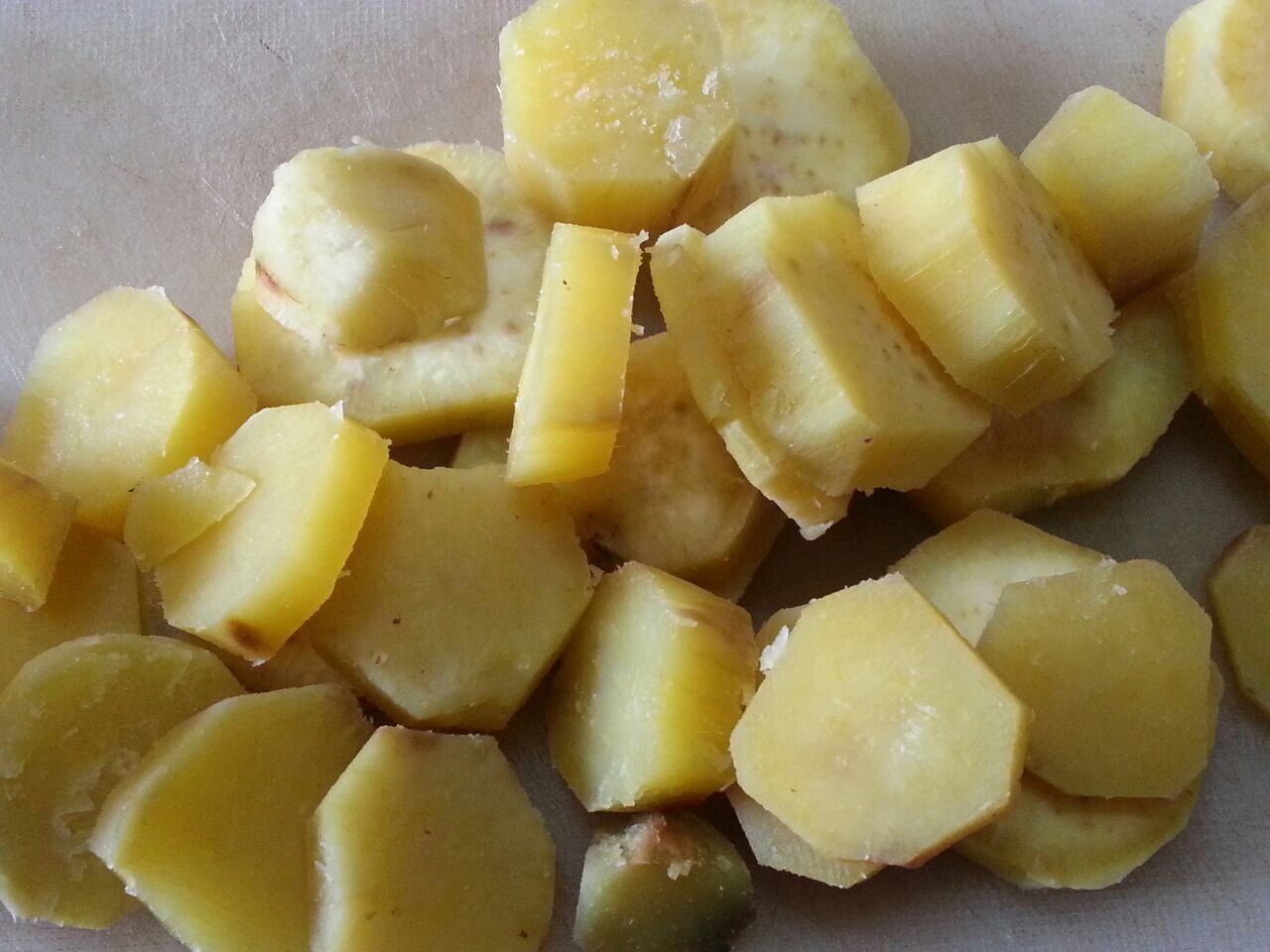
2. Cut them into circles preferably or cubes as per the size of potatoes


image


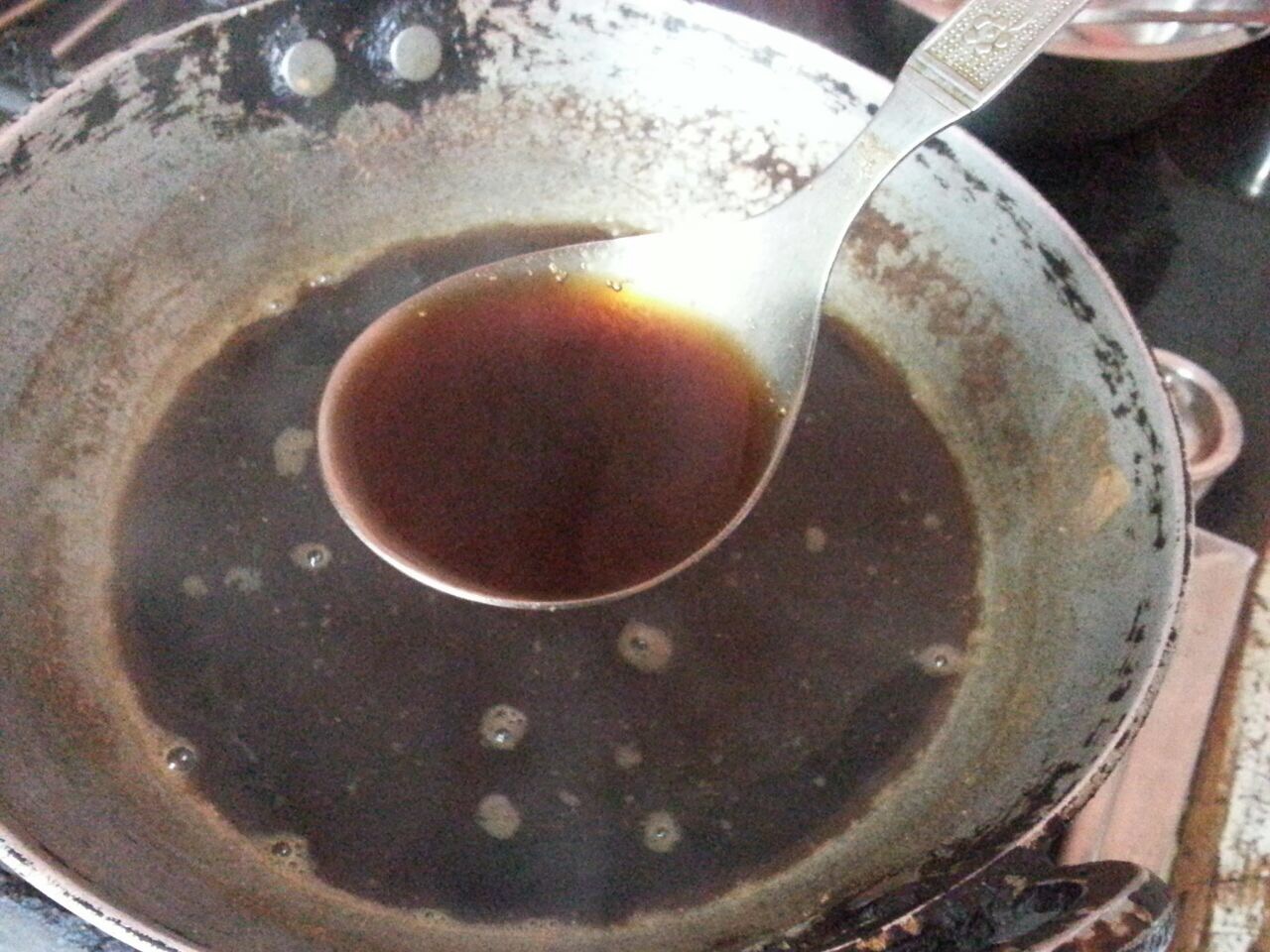
3. In a pan, place Palm jaggery and water and heat slightly till jaggery completely dissolves

4. Filter the liquid as Cane or Palm jaggery always consist impurities/mud

5. Take this liquid in a wide and hard bottomed pan and add dry ginger powder and cardamom powder


image
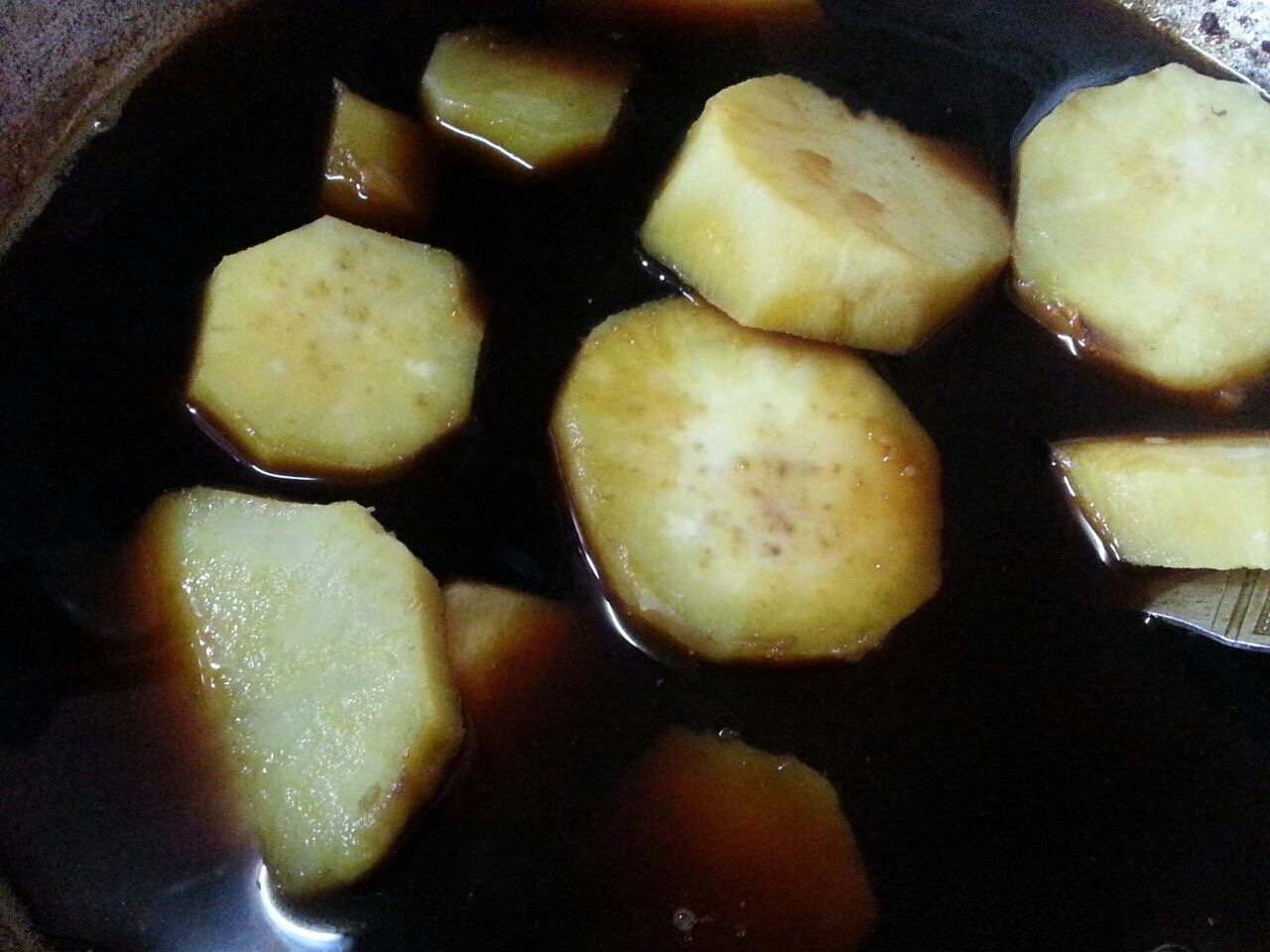
6. Add the cut sweet potatoes and add little more water if potatoes don’t have enough syrup to float


7. Slow cook sweet potatoes in the Palm syrup till done

image


8. Pressure cooking would result in mashed potatoes; Slow cooking the pieces in the syrup not only enhances the flavor but also helps in perfectly soft and spoon-able pieces

9. By the time the potatoes are cooked, the syrup would have thickened a bit

10. Yet there would be enough syrup for the sweet potatoes to float in

11. Enjoy this delicious sweet hot or cold.


IMG_4509


Note:

  1. If you have access to different colored sweet potatoes, just indulge – do not worry about the color.
  2. If there is no Palm jaggery available, try using powdered Palm sugar available in Thai markets, or use any unrefined cane sugar or jaggery.  No white sugar here please.
  3. If the potatoes are huge in size – slice in halves, if the circles turn out to be too big
  4. If preferred, this sweet can also be converted into a Payasam/Kheer, with the addition of coconut milk (like the Indonesian Biji Sala)

Ulundhankali/Black Gram Pudding – To my daughter with Love


IMG_3893
Ulundhankali/Ulundhu kali/Ulundhamkali – these are different ways of spelling out a super healthy sweet. It translates as Black Gram Pudding. It is a black gram-palm jaggery sweet from Tamilnadu, made especially for young girls during those special days of the menstrual cycle.
Ulundhu or Uluntham-paruppu means Black Gram
Kali is the word for a thick/sticky pudding. Take note not to pronounce it as ‘Kaali’ with a double ‘a’, which denotes the Hindu Goddess or Shakti of India.

Kali is pronounced as –

‘Ka’ as in Kabab or Kanji with ‘a’ as short vowel and

‘Li as in muesli or vermicelli.

As gentle as its name, this pudding is also very soft in consistency. But, the soft yet thick pudding can play different roles in the healthy life of a girl as a tasty sweet as well as a medicine.

Girls grow up to play several roles in the society… Of course that stands good for boys too. No gender bias here. But, as tradition goes and in reality, the healthy balance of the different roles played by women is directly related not only to their own well-being and sound health, but to the well-being of their families too.

When a girl says good-bye to childhood and is ready for the next phase, the organs responsible for her ability to continue the beautiful process of Procreation need additional focus. That responsibility of making her healthy to be part of branching the family tree, lies in the hands of mothers and grand-mothers, who were little girls long long ago.


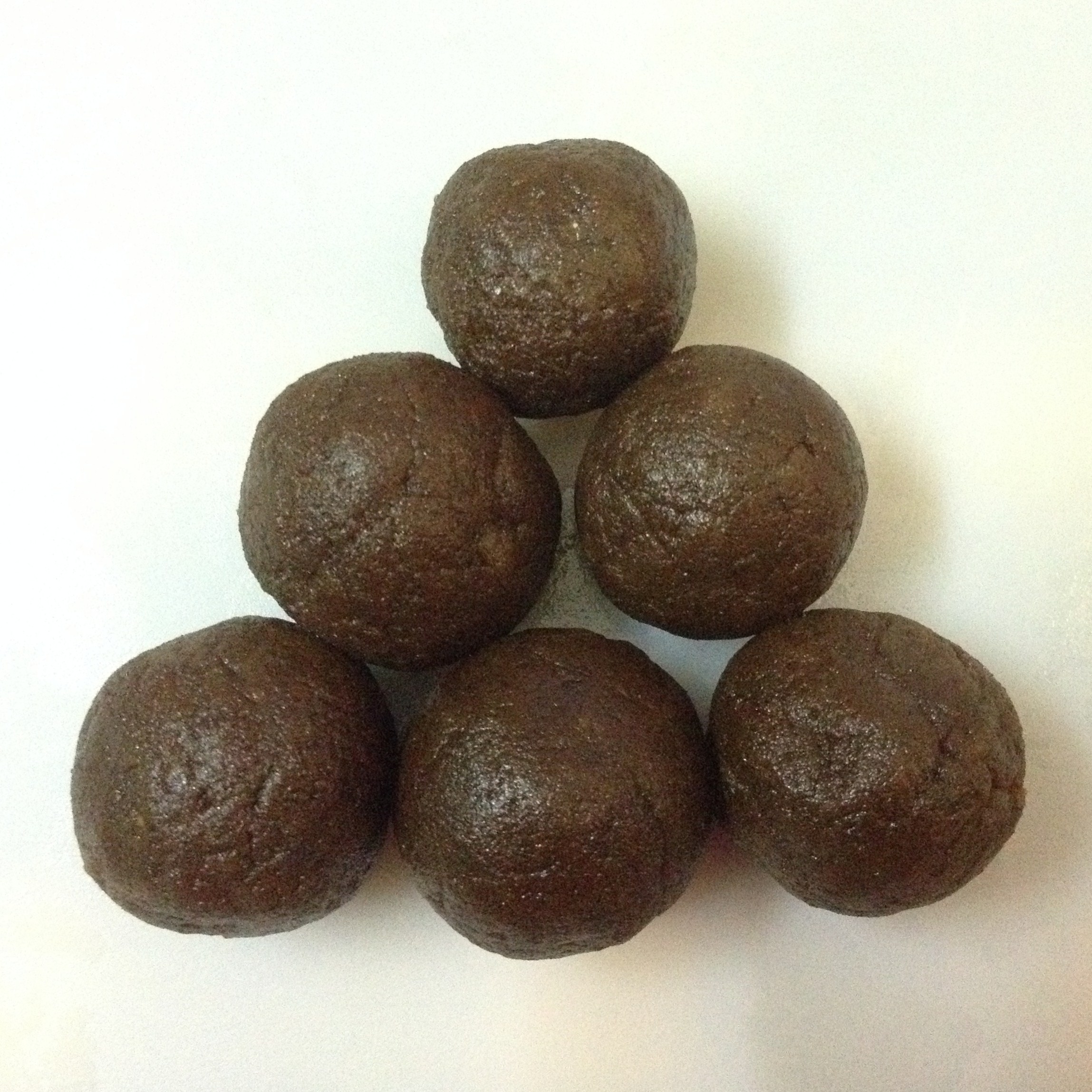
pudding or sweet ball, as preferred

IMG_3897
One of the key elements to sound reproductive health has been transferred from generation to generation through a few kitchen tricks. Ulundhankali or Black gram Pudding is one element of those handing-over strategies. One doesn’t know when this started. Hence, a tiny bit of imagination to understand… When my great grand mother became a big girl, her mother gave her ulundhamkali, taught by her grandmother in order to –

a. keep the hip bones strong,
b. completely cleanse the uterus after every menstrual cycle,
c. thereby develop her uterus without fibroid and cysts.

That is why, when the monthly cycle is done, we are given Black Gram Rice with Sesame Seed Chutney (refer – dosaikal.com/blackgramrice-sesame seed chutney) and this Kali/Black Gram Pudding. These foods are believed to act as uterus cleansers.

No written records here…. Only stories of information passed on by word of mouth from mothers to daughters. The making and consuming of ‘Kali’ starts with early teenage and goes on till menopausal stage of every woman.

The long generational chain hasn’t been cut till now and so the information thread is well intact.  So, this recipe of Ulundhankali is in honour of mothers, grand mothers and great grand mothers who have passed on the torch of good health to the daughters of their home.

So, here it is…. KALI – an exceptional recipe for the most precious princess and angel of my life. A mother’s contribution in making a Princess transform into a Majestic Queen!
The goodness of ingredients
The goodness of Kali lies in the most important three ingredients that go in the making. Each of the ingredients is rich in nutrient value and what impresses me the most, is the thought process that went into making such a balanced food, that aids in the core well being of the core member of each household. Especially, starting it off at an early age to proceed smoothly into the consecutive phases of adulthood in the journey of life.


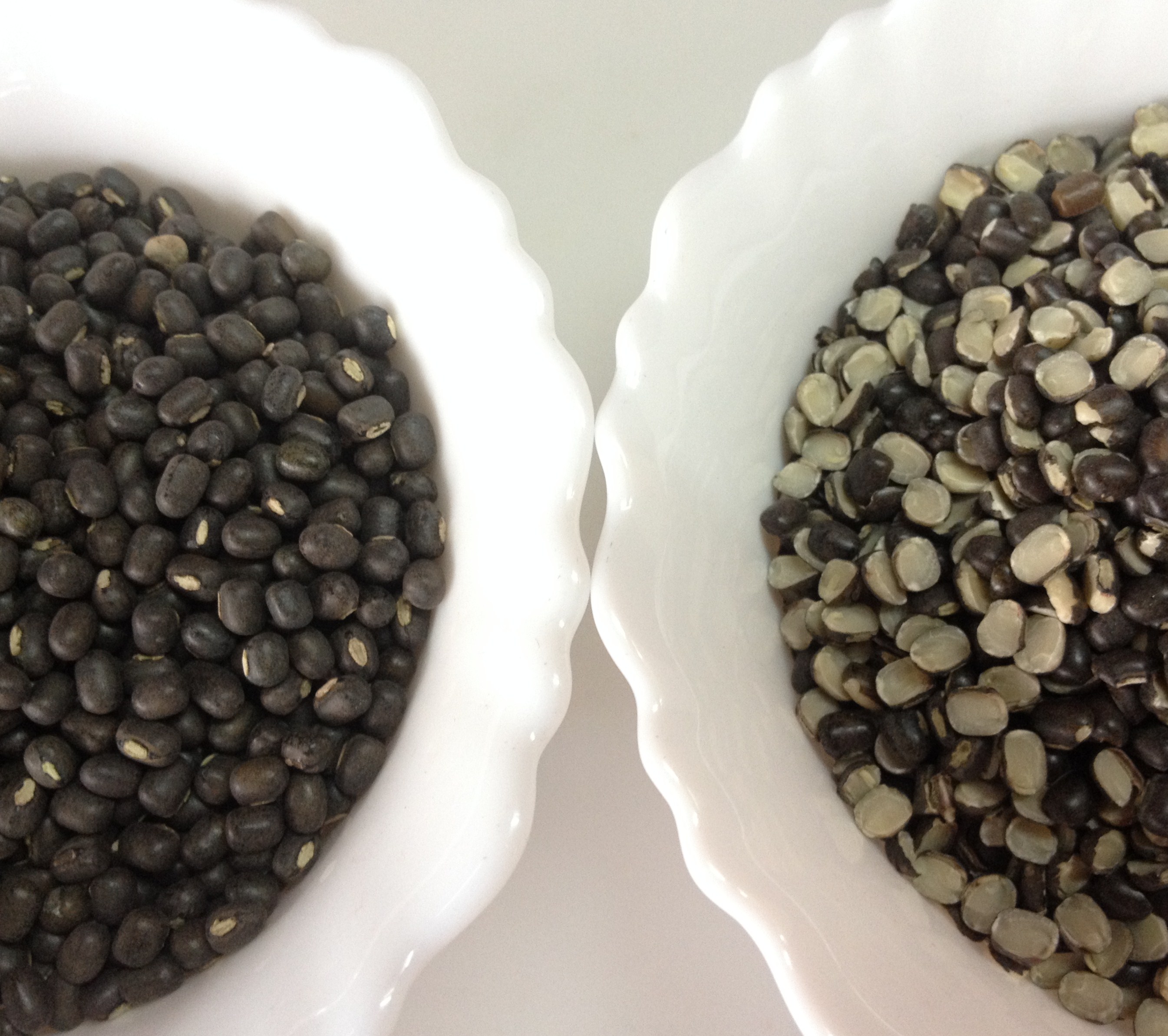
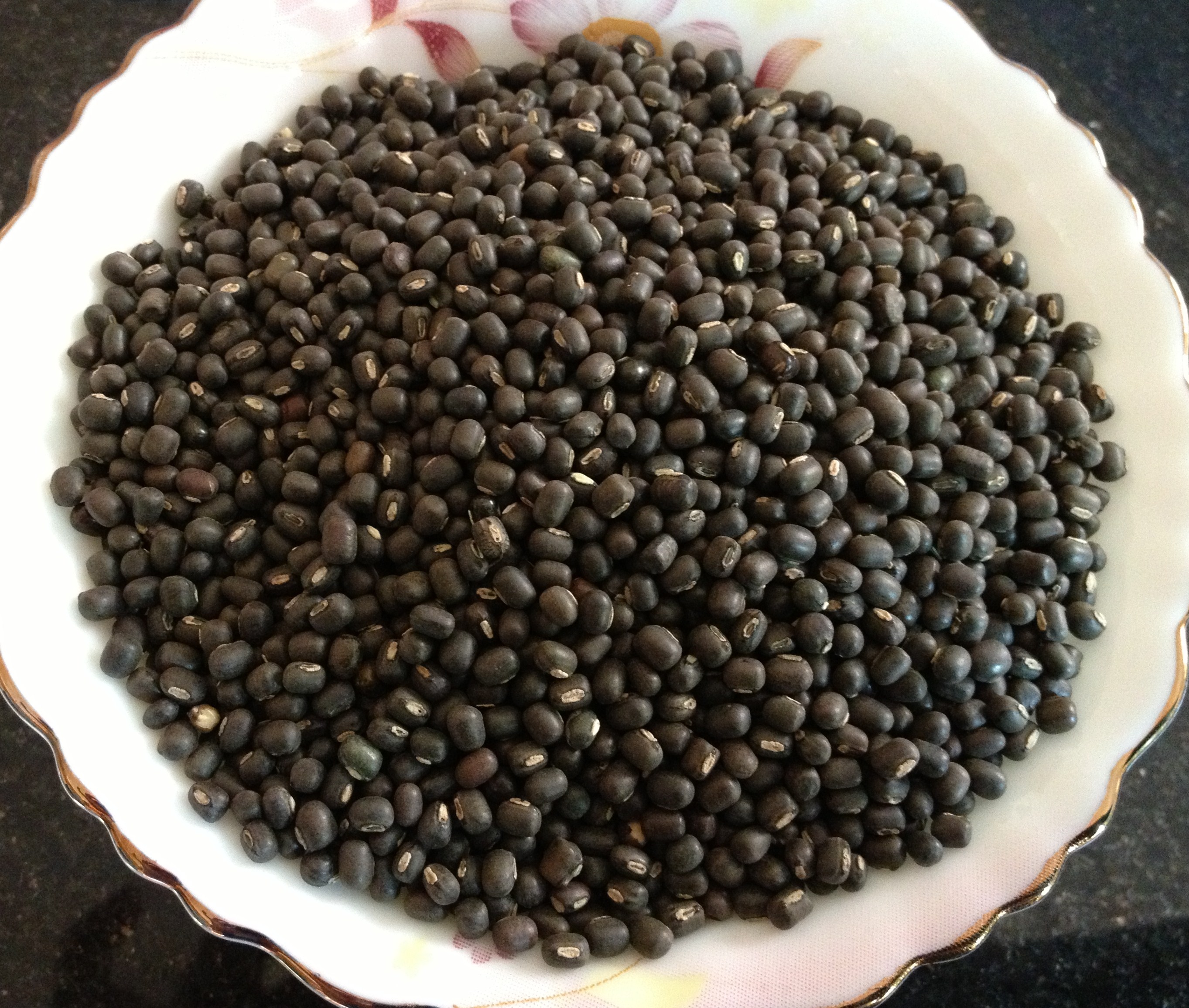
black gram – whole or split but with skin

IMG_4046
Ulundham Paruppu/Black Gram: The health notes on Black gram, which is the main ingredient of this simple 3 ingredient pudding, has already been discussed in – dosaikal.com/black gram rice with sesame chutney


karuppatti/palm jaggery


Health benefits of palm jaggery –


  1. high in energy and low in calories compared to white sugar
  2. rich in iron and helps fight anemia
  3. regulates liver functions
  4. symptoms of PMS like fatigue, irritability, weakness and muscle spasms can all be regulated with jaggery
  5. can boost the immune system and fight germs and infections. Regular intake can increase the resistance power of the body
  6. the potassium present in jaggery is vital for healthy nervous system functions and helps in smooth functioning http://www.diyhealthremedy.com/14-great-health-benefits-of-palm-jaggery/


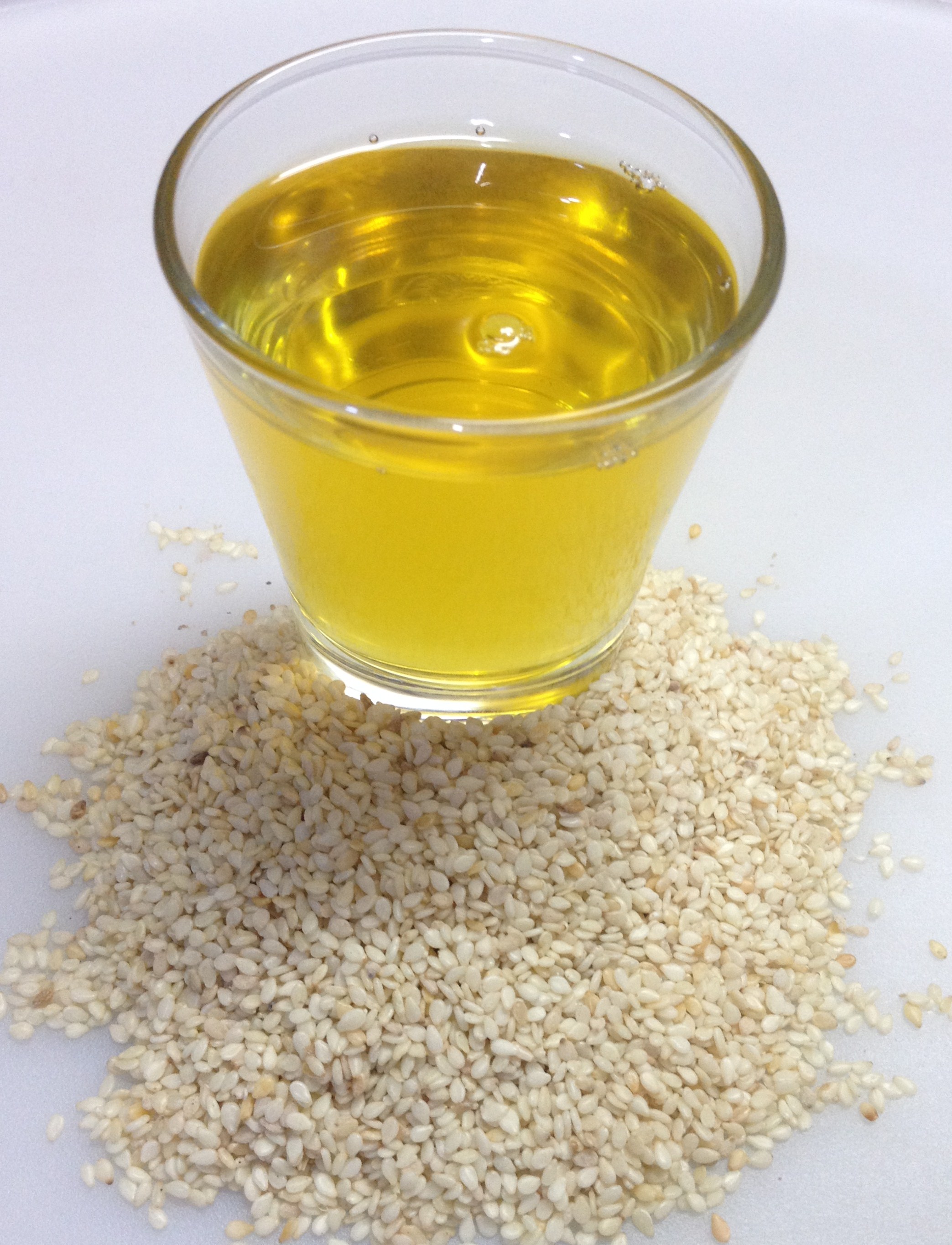
nallennai/gingelly oil or sesame oil

IMG_4165
 

Wellness aspects of sesame seeds have been posted in dosaikal.com/black gram rice with sesame chutney.

In the making of Kali,  sesame seed oil, which is called Nallennai in Tamil and Gingelly Oil or cold pressed Sesame Seed oil acts as a binding agent of the sticky pudding. The gingelly oil used for cooking and cosmetic purposes in the southern part of India, was cold pressed oil. Not very sure whether today’s store bought, packaged Nallennai/Gingelly oil still uses traditional ways of low heat extraction. But, a satisfying sight is the ‘Chekku’ or traditional oil extracting machines newly cropping up in the cities of Tamilnadu.
 Cold Pressed Sesame Oil

Cold-pressed sesame oil is a good source of vitamin E, containing 11.8 mg of the vitamin for every 100 g of the oil. Vitamin E gives sesame oil its antioxidant property. It also has a high concentration of fatty acids, including polyunsaturated omega-6 fatty acids and monounsaturated omega-9 fatty acids. Other constituents of cold-pressed sesame oil include zinc, copper, magnesium, calcium and iron as well as vitamin B-6. Zinc contributes to healthy bones; copper is good for the management of rheumatoid arthritis; calcium is essential for the prevention of osteoporosis, migraine and colon cancer; and magnesium contributes to respiratory health. http://www.livestrong.com/article/498331-cold-pressed-sesame-oil-benefits/


The ‘Chekku Yennai’ or grinding sesame seeds with a pestle and extracting oil with no high temperature setting is the traditional-goodness filled oil extracting method.
Alarming fact of present day refined oils –

The modern method of oil extraction involves supplying a lot of heat. The oilseed is first crushed, and the pulp is heated under pressure. As a result, almost all the oil is extracted.

The downside is that the oil is heated up to temperatures of 230 degree centigrade. Heating it to such high temperatures alters the properties of the oil molecules in unfavourable ways (Polycyclic Aromatic Hydrocarbons  are formed at high temperatures which are carcinogenic) – and strips it off of its nutritional value.

For optimum extraction of oil, a solvent is added, in this case, hexane. The hazards of exposure to hexane are many – including dermatitis and CNS depression – depending upon the quantity of hexane inhaled or ingested. http://www.thealternative.in/lifestyle/cold-pressed-oil-switch-refined-oil-much-healthier-alternative/


KALI – Research and Development

red rice and black gram

IMG_4052

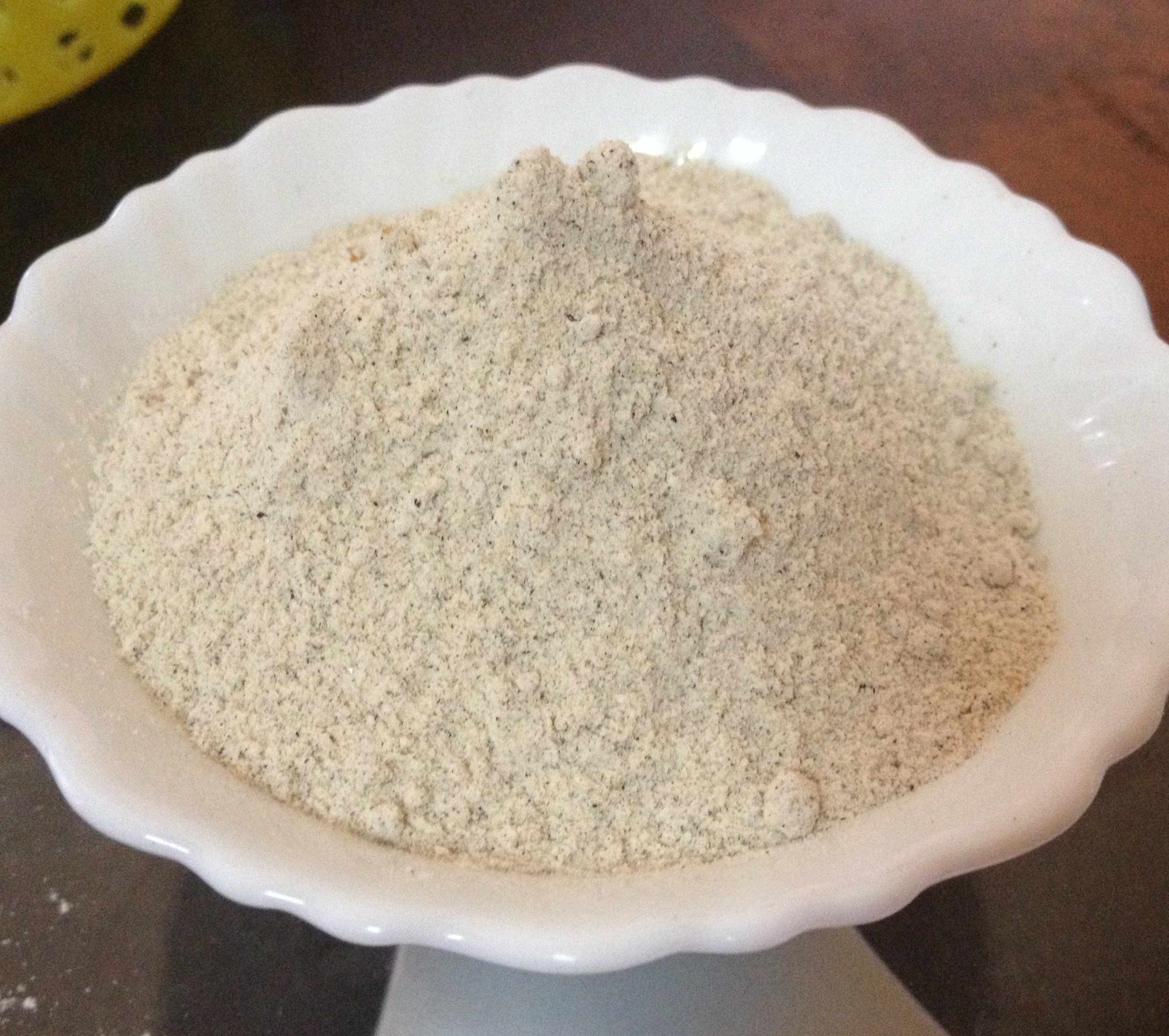
The first step in making Kali is making a powder out of Black Gram. Roasted Black gram is milled to a fine powder.

The traditional method of making Kali is by cooking the powder directly with Palm Jaggery water and Gingelly oil with constant stirring. This might take hours and result in a beautifully darkened, glossy Kali, with the addition of sore fingers and aching elbows and shoulders.

Aachis and Ammas (grandmothers and mothers) never bothered about their aches those days. And after all, making this pudding is all about that – reducing muscular, joint aches and strengthening bones. Might be they had an extra bowl of the strengthening KALI, to treat the after-effects – their aches.

After thorough analysis of the condition of our already very strong bones and muscles (so many stories of chiropractors and physio-therapists that we visit these days before 40), the elders of our households have devised an easier version of the extensive process of Kali Making.

The new found result after research comprises two main changes –

1. Mixing red rice to the black gram while making a powder – to aid in a ‘not so sticky’ paste;
2. Pressure cooking the three main ingredients – which drastically reduces the time involved in the making of kali.

After this simplified process, the Kali mixture (red rice-black gram powder cooked in palm jaggery water) is again cooked well in a pan with oil but with reduced stirring and brought to the right consistency. No complaints of joint aches and muscle pulls while making Kali anymore.

The introduction of red rice has reduced the trouble further. As mentioned previously, Ulundhamkali is usually made with ulundhu/black gram alone. But the sticky texture might be hard to handle sometimes. And might result in a burnt or lumpy semi-solid in the cooker. The addition of red rice (better than processed white rice) blends the mixture into a sticky cake in the cooker. This would be easily removable from the pressure cooker and transferred into the hard bottomed chatti/pan. Lastly, the sticky pudding is cooked well with gingelly oil.

The last ingredient which is the gingelly oil, helps bringing the sticky paste to a beautifully glowing glossy pudding. The end product ‘Kali’ can also be made into ‘urundai’ or sweet balls, easy for children.


Ulundhankali/Black Gram Kali – Palm Jaggery Pudding


IMG_3884
Step I

Making the Kali Powder


IMG_3994


  • muzhu ulundhu/black gram (split or whole but with skin intact) – 1 cup – 100gms
  • Sivapparisi/Red rice – 1/2 cup – 50 gms


  1. Dry roast black gram and red rice separately till a beautiful roasted aroma comes out
  2. Milling is the best as a fine powder yields better pudding. When there are no chances of milling, powder both together in a mixer and filter to remove coarse lentil-rice particles
  3. Use the fine powder alone for making kali; No compromises here
  4. The left over coarse powder can be used for any other dosais


Step II

Making Kali

Ingredients

  • ulundhu-arisi maavu combo/black gram-red rice powder combo – 1 cup or 100gms
  • karuppatti/palm jaggery – 150 gms
  • thanneer/water – 2 cups
  • elakkai podi/cardamom powder – 1/2 tsp (my optional inclusion)
  • nallennai/gingelly oil – 1/2 cup (little more or little less, but more the better)


Method of Preparation
1. Let 150 gms palm jaggery dissolve in 2 cups of water; Strain it
2. Mix 1 cup of Kali powder in strained Palm jaggery water
IMG_3997


3. Pour the mixture into a cooking utensil with 2 tsp nallennai/gingelly oil
4. Pressure cook in the separate cooking utensil inside the cooker – After the first whistle, reduce flame and let cook for 5 minutes
Note: Never cook the mixture in direct pressure cooker as the palm jaggery would burn and kali would stick to the cooker. Pressure cook in a separate utensil inside the cooker base with water to avoid burning. Yet, the mixture would be sticky but no burnt jaggery here


5. When done, remove from the cooker and transfer the cooked mixture into a hard bottomed pan with gingelly oil

sticky mixture from the cooker

IMG_4016
6. Keep stirring well till the sticky mixture reaches a non-sticky consistency
IMG_4041
7. The beauty of the glowing Kali after addition of oil is certainly a remarkable feat

oil needs to get incorporated well to lose its sticky texture

IMG_3882


8. It is just right to serve when the mixture doesn’t stick to the bottom and scoops out well in a ladle .

hurray!

IMG_3893
Enjoy Kali feeding your young ones. Additionally, Kali is also suitable for all, as it aids in keeping our bones stronger.

So, I mention again… this was it…. KALI – an exceptional recipe for the most precious princess and angel of my life. A mother’s contribution in making a Princess transform into a Majestic Queen!

The Macaroons of Thoothukudi – Cashewnut Goodies from Coastal Tamilnadu!


the beautiful macaroon biscuits

IMG_4856
The memory of soft, crunchy, melting macaroons summarizes the good old days of Thaatha Veedu or Grandpa’s house. Those were the days we had little or no concern on the fat intake. Just open the flavorful boxes of Ivory Macaroons of Thoothukudi and gobble five to six at one go…this was a normal event. Macaroons to me are synonymous to many many more childhood memories, richly associated with grandparents and a big gang of an extended family.

Nostalgia knows no currency. The simplest kodukkapuli (twisted tamarind) and the arunellikkai (small gooseberries) from the road side vendor outside school, the kuchi ice (stick ice-cream) from the mobile ice-cream man that we got for Rs.1 each and the elite macaroons that thaatha used to send with us after our summer holidays bring in the same ever green memories of the very special home town alike.

There is no record of the time of introduction to macaroon biscuits while we belong to the coastal city of Thoothukudi. When our digestive system became strong enough for semi-solid food, a pinch of powdered macaroons must have gone in between our toothless jaws. The rest of the story of consuming several kilogrammes of macaroons before completion of schooling is history.


True, we would have had countless macaroons, without knowing how it is made. We might not have known how and with what ingredients half of the snacks or goodies we consumed were made of. But with macaroons the case is different. Especially a vegetarian family, enjoying macaroons which are purely made of egg whites and sugar, could be a trend setting relaxation to conservative ideologies.

The good fortune of having made so many lives smile after giving them a packed box of exclusive macaroon biscuits from our home town as gift is enough for our family for many more generations to come. Seems exaggerated?? Could be… But such is the elevated position of ‘The Macaroon Biscuit’ in Thoothukudi.


IMG_0208
Ignorance is Bliss

On a lighter side, after so many years, what makes me jittery is the thought of giving the same box of beautifully shaped conical goodies to so many hard core vegetarian families –  both the giver and the receiver – unaware of the kilograms of egg whites gone into the box of macaroon biscuits, specially brought as a souvenir from Thoothukudi.  Now, Sharing, Caring and making people Happy are some of the greatest Virtues in life you can provide to the world. By this logic, I think we have done only good to those we delivered the Ivory Macaroon Biscuits. I tell to myself – “It’s something like having cakes, pastries and many more mousses taking no count of the eggs or the gelatin involved in the making.”

This long personal story is just not enough to emphasize the special place of  ‘macaroons of Thoothukudi’ in my life. Macaroons have played different roles in our intake of sweets and snacks. They could be the after school snack, dessert of the day, special goodies for friends and visiting dear ones, comfort snack during hunger pranks, the most elite souvenir and what not?..  Judge it junk or not junk… Macaroons are beyond all those jargons.

If the reader is reminded of advertisements that concentrate on persuading the customers to buy their product on all occasions, this is truly unintentional.
Ivory Macaroons


IMG_4870
I call them the Ivory Macaroons due to the color. The ivory color of the macaroons, comes from the Cashew nut powder added to the Egg-white and sugar mixture. While French macarons come in varied colors, Thoothukudi macaroons are solely ivory in color and there is no addition to diversify the true cashew nutty flavor.


History of Macaroons in the Southern City of Tamilnadu (India)

Before writing on the making of Macaroons, here is a brief note on the history of the very important Pearl Harbour in Thoothukudi, one of the essential gateways of colonial traders into down south Tamilnadu and the connection of Thoothukudi Macaroons to Meringue, Macaron and Macaroons.

If this tests your patience – Feel free to skip please!

Now, how did Macaroons come to the southern tip of India, from the countries it is believed to have originated? The origins of Macaroons in Thoothukudi must be surely the result of the Colonial Connection. Apart from the cane/palm jaggery based traditional sweets exclusive to down south districts of Tamilnadu, Thoothukudi has always been famous for its bakery products – be it the plum cake or the nutty caramel toffee.
Thoothukudi Sea port

For more evidences on the colonial connection of the city –

The Thoothukudi sea port is an ancient port, very resourceful due to its Pearl Fishing opportunities. From ancient times and during the 16th to 19th century ACE and still a source of strong economy for Pearl Fishing, the city of Thoothukudi is hence called ‘Pearl City’.

As a Pearl Fishing Port,

Thoothukudi was occupied by the Portuguese from 1500 ACE to 1658 ACE –


There were several flourishing trading centres and ports along the Pearl Fishery Coast. Thoothukudi was the headquarters and it was given its due political, commercial and cultural importance by the Portuguese. It is situated almost at the centre of the Pearl Fishery Coast. The annual pearl fishing was undertaken from here. All the islands are spread out before Thoothukudi. It (Thoothukudi) was strategically important in the sense, that the Portuguese could control Sri Lanka from here due to its proximity.


Occupied by the Dutch from 1658 ACE to 1796 ACE –


The Dutch increased their presence on the Fishery Coast, taking possession of towns, forts and ships of the Portuguese. Eventually, the Dutch attacked and captured the Portuguese headquarters at Tuticorin in 1658, bringing to an end the 133-year Portuguese rule over the Fishery Coast. The Dutch East India Company now took control of the entire Fishery Coast, all its seaports, the pearl fisheries.


And occupied by the British from 1796 ACE till independence in 1947.

With the Dutch and British Rule extended over centuries, there is little doubt on the import of the sugary macaroons into the Port City. But, for the search of specifics, this topic would need an extensive research. Please do let me know of any books or information on the travel of Meringues or Macaroons to South India.


The Origins of the Original Macaroon and its connection with Meringue, Macaron and Macaroon

The details learnt from other blogs and websites on the above mentioned trio have been included here purely for the purpose of understanding Macaroons. While trying to know important facts on Macaroons, facts on Meringues become unavoidable. This has helped in better comprehension of the shape of Thoothukudi Macaroons closer to Meringues and the Recipe which belongs to Macarons.

Now, the three words Meringue, Macaron and Macaroon are closely connected and often confused to be the same. Especially for those, who are always elated with their ‘Thoothukudi Mecroon Biscuits’, macaroon or macaron or even a macaroni  could just be spelling errors.

But the western world doesn’t think so and wouldn’t want the world to think that’s a mis-spelt word.  Search the world wide web and all beautiful details unwrap before you.
Meringue:

Meringue is the simplest of the three, with egg white and sugar whipped to stiff peaks and baked. Swiss, French and the Italian Meringue have their differences in technique but the basic ingredients remain the same.

The book ‘Meringue’ by Linda K. Jackson and Jennifer Evans Gardner talks elaborately on the the history and science of meringue,


Larousse Gastronomique, The New American Edition of the World’s Greatest Culinary Encyclopedia:

“Some historians of cookery believe that the meringue was invented by a Swiss pastry cook called Gasparini, who practiced his art in the small town of Meiringen (now in East Germany). Others maintain that the word comes from the Polish word marzynka and that the preparation was invented by a chef in the service of King Stanislas I Leszcyński, who later became Duke of Lorraine. The king passed on the recipe to his daughter, Marie, who introduced it to the French. Queen Marie Antoinette had a great liking for meringues and court lore has it that she made them with her own hands at the Trianon, where she is also said to have made vacherins, which are prepared from a similar mixture.”

http://boingboing.net/2012/09/04/the-history-and-science-of-mer.html

While wikepedia links Douglas Muster’s research on Meringues to a site called http://www.inmamaskitchen.com, I couldn’t get any details on Muster on Meringue from the link.  But in http://www.epicureanpiranha.com/2012/meringue-musings-and-history/, the writer talks of Douglas Muster’s book and states –

‘Muster’s research surprisingly points to England as the country of origin’.

and gives a detailed analysis of Muster’s claim to Meringue as a product of England.


Lady Elinor Fettiplace (c. 1570 – c. 1647) provides the earliest written evidence in what was described as a small bound manuscript, dated 1604, with a short recipe for what she called “white bisket bread”, made with a pound & a half of sugar, & an handfull of fine white flower, the whites of twelve eggs beaten verie finelie, proportions which are still in use today! The quantity of flour is so small that it could be compared to the addition of cornstarch in some of today’s recipes.

Lady Rachel Fane (1612/13 – 1680), who lived quite a distance (given the period in question) from Lady Fettiplace, provides a similar recipe for what she called “Pets”, a name still occasionally used to refer to meringues in the Loire region in France.

Despite having been written in the vernacular of the day and being referred to by different names, these two recipes can easily be understood and currently constitute the earliest known, documented proof of meringue being prepared.

http://www.epicureanpiranha.com/2012/meringue-musings-and-history/


By this, did the artistically shaped Meringue originate in Britain?? So, the British influence brought the so called Macaroon Biscuits into Thoothukudi?

Now, why write more on the Meringue?? Because Meringues seem to be closest in shape to the Macaroons of Thoothukudi.


meringue – closest in shape to our macaroons

basic-meringues-9945_l

image courtesy: http://www.taste.com.au/recipes/14029/basic+meringues

Macaroons and Macarons

After many blogs specifying the differences between Macaroons and Macarons, http://www.popsugar.com/food/Macarons-vs-Macaroons-8038818  seemed to give a clear description of both.

Macaron –

IMG_8124


A macaron specifically refers to a meringue-based cookie made with almond flour, egg whites, and granulated and powdered sugar, then filled with buttercream, ganache or fruit curd. The delicate treat has a crunchy exterior and a weightless interior with a soft ending that’s almost nougat like in its chewiness. To add to the confusion, it’s often called a French macaroon.
Macaroon –


macaroonsimage courtesy: https://lehungryotter.com/2012/09/09/macarons-not-macaroons/
In contrast, the word macaroon is a generic phrase that is applied to a number of small, sweet confections. Mostly, the term is equated with the moist and dense coconut macaroon, which is composed of egg whites, sugar, and dried coconut, often piped with a star-shaped tip, and sometimes dipped in chocolate. The coconut macaroon, or congolais, as it’s known in France, is frequently served during Passover because it contains no flour.

Definition Courtesy: http://www.popsugar.com/food/Macarons-vs-Macaroons-8038818

In a state of confused conclusion, what could be derived is –

  1. Having seen the shapes of Meringue, Macaron and Macaroons, Thoothukudi Macaroon Biscuits are closer in shape and design to Meringue.
  2. Macarons which are a blend of basic ingredients – egg whites, sugar and almond flour have lended their original recipe in the making of the South Indian Delicacy, with the inclusion of the local cashewnut from down south tamilnadu, instead of almond flour.
  3. Macaroons, as mentioned as a generic phrase to the egg white-sugar confections, have given the name to our beloved macaroon biscuits.


Visit to Thoothukudi

During our recent trip to Thoothukudi, I had the opportunity to visit one of the popular bakeries of the city, Ganesh Bakery to see the making of the Elite Macaroons.


IMG_4876
With new and innovative equipment available, making of Macaroons has become easier in a larger scale. But still, the bakers prefer the old fashioned fire wood ovens for its authentic taste.
Making of Macaroons

The Bakery made Macaroon Recipe is for bulk consumption and hence wouldn’t suit a home baker. As for me, I haven’t tried my hands after my first flop.

I found a good and seemingly perfect recipe in http://www.youtoocancook.net/2013/03/thoothukudi-macaroons-south-indian.html, where the pictures show a successful recipe.  This recipe is borrowed from the above mentioned blog.
Ingredients (makes 20)

  • egg whites – 2 no.s (at room temperature)
  • sugar – 120 gms powdered
  • cashewnut powder – 100 gms coarsely powdered


Method of Preparation

  1. Follow the below described picture wise procedure in making the batter.
  2. Preheat oven at 150 degrees C
  3. Bake the macaroons in 100 degrees C for 10 minutes.


This is a step-by-step procedure that the bakery personnel, led by their supervisory head showed us –


  1. First step – Beating egg whites

IMG_4807
beaten well


IMG_4821

to stiff peaks..


IMG_4823
2. Sugar is mixed –


IMG_4818

the egg white – sugar batter is still foamy-

IMG_4826

3.  Then the quintessential cashew nut powder is added. No beater here and notice the color change of batter from white to ivory.


IMG_4830

4. Batter is ready and is stuffed into piping cones-


IMG_4837
5. These are the strong hands that make the beautiful conical delicacy..

IMG_4842

with great speed…


IMG_4847

and greater accuracy and consistency….


IMG_4857


6. Macaroons are ready to be baked…
IMG_4863
7. Finally baked right to be tasted.


IMG_4872
The Colonial Remainder in Thotthukudi Macaroon Biscuit is a true delight for the sweet toothed. The beauty of the elegantly shaped Macaroon could easily be one of its kind in the Indian Baker’s Wish List. Not known to many in many other parts of the country, the legacy of the exclusive biscuits is carried forward only through its true connoisseurs. The original recipe still remains unchanged not only due to these connoisseurs but also due to those ignorant citizens who haven’t laid their hands in altering the taste.

I wouldn’t want my Thoothukudi Macaroons to have a twist of taste like the French Macarons, with added fillings and flavors. In this case, truly Ignorance is Bliss!

Home made Healthy Caramel Popcorn (with palm jaggery) – A Promise Kept!
IMG_3643

While on our recent flight, when my daughter asked for a caramel popcorn snack, I obviously restricted her not only due to the white sugar caramel.. but I could imagine a long list of unnecessary components dancing their way into the box. I was and am truly scared of the butter… too much salt… baking soda…. corn syrup… preserving agents and other unknown ingredients in the pack. I know I sound quite obsessed with healthy food. And as always, I promised her to make a healthier version of Caramel Popcorn at home.
Though in a while relaxing my obsession, I bought her a pack of caramel popcorn and tasted to find the original taste and texture of it. Crispy, buttery, salty, perfectly sweetened with caramelized sugar –  it definitely tasted good. Reading the ingredients, I couldn’t control the guilt of having those unwanted preservatives and unknown elements included in the pack to increase its shelf life.
Now, to keep up the promise..(by the way, I am approximately 75% good at keeping up my healthy promises in the kitchen), I decided to try a healthy caramel popcorn version not altering the taste of the packed junk that we had.
Off late, I have been quite successful in making peanut and sesame candies with jaggery syrup. With that confidence of getting the right syrup consistency, I went to fetch cane jaggery from my storage. In a corner, I saw the ‘chukku karuppatti’ specially bought from Thiruchendur Temple.


IMG_3611
Chukku Karuppatti is a flavourful/healthy combination of palm jaggery and dry ginger, moulded for storage in a hand-made palm leaf box. It is a household remedy for cold, cough and indigestion. So, you guessed right… caramel would be made from ‘chukku karuppatti’ – ‘dry ginger palm jaggery’ – that would aid in digestion too!
Here’s how I made it .. from scratch… with dry corn and no added ingredients. I prefer the taste of popped corn made from the humble pressure cooker than one made in a microwave.
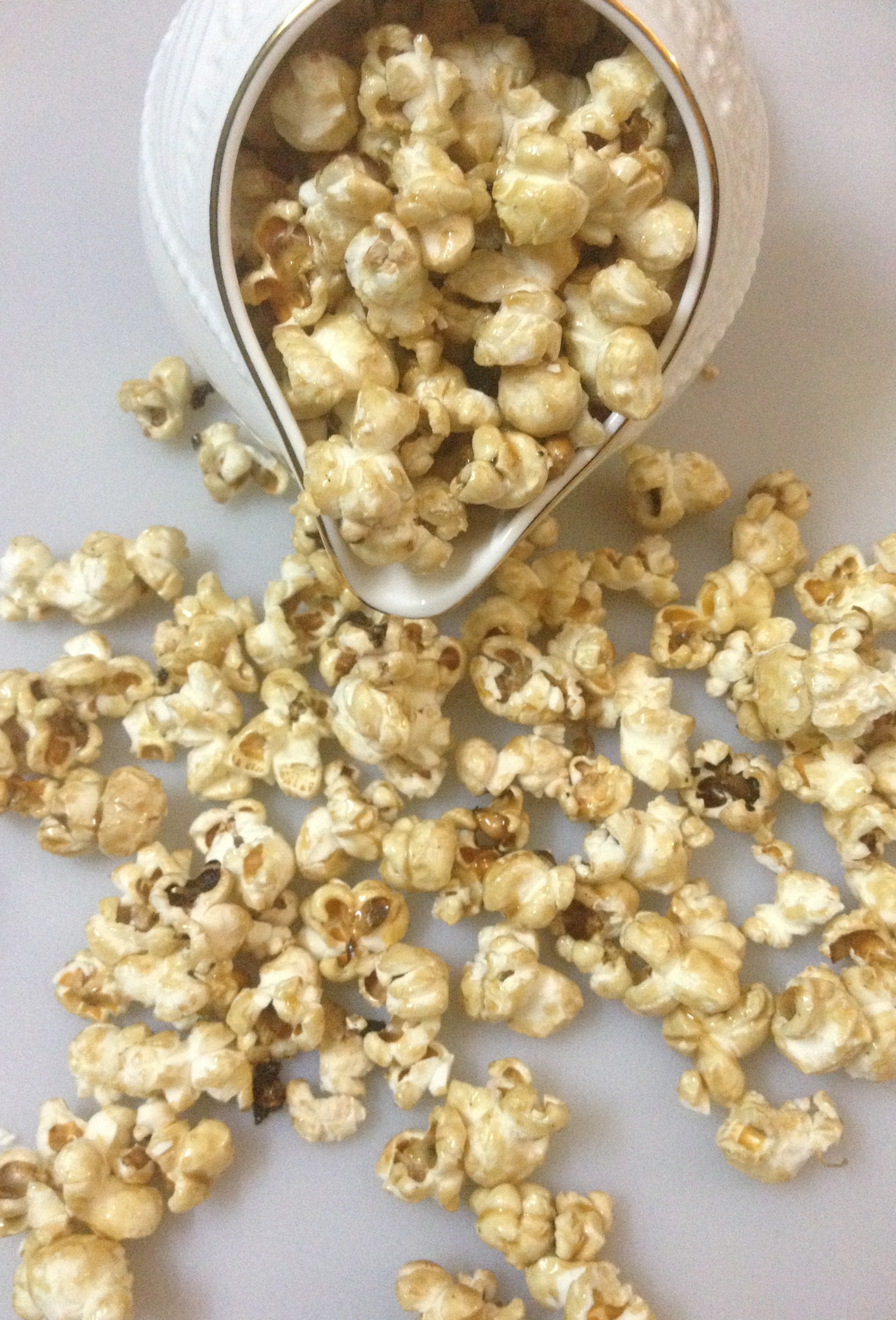
Palm Sugar Caramel Popcorn – flavoured with dry ginger


IMG_3652

Ingredients

for pop-corn

  • dried corn (to pop-up) – 1 cup
  • oil – 1 tsp
  • salt – 1/2 tsp


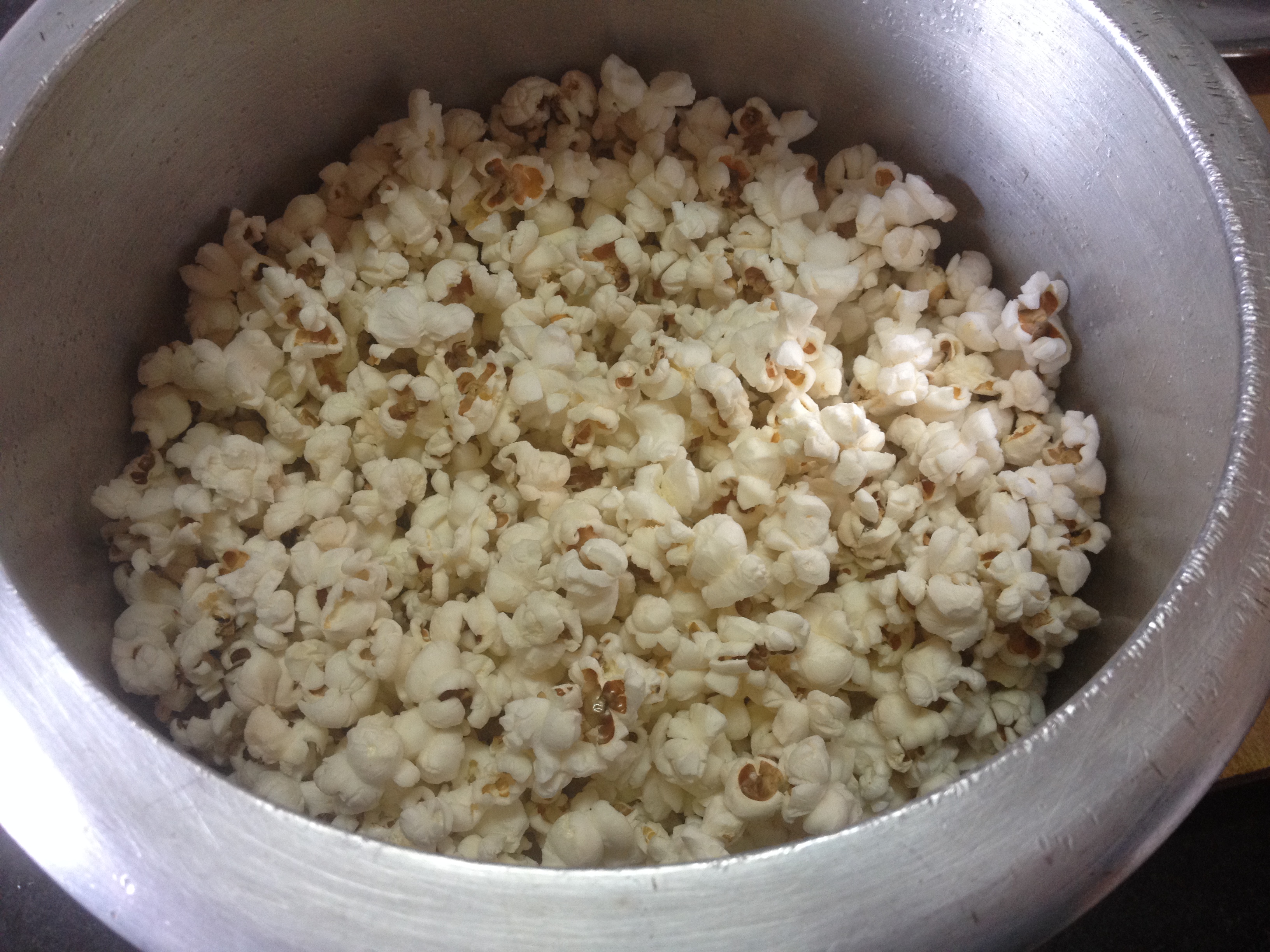
pressure cooker popcorn

IMG_3614


for caramel

  • chukku karuppatti/palm jaggery with dry ginger – 1/2 cup

Cane Jaggery can also be substituted for Palm Jaggery

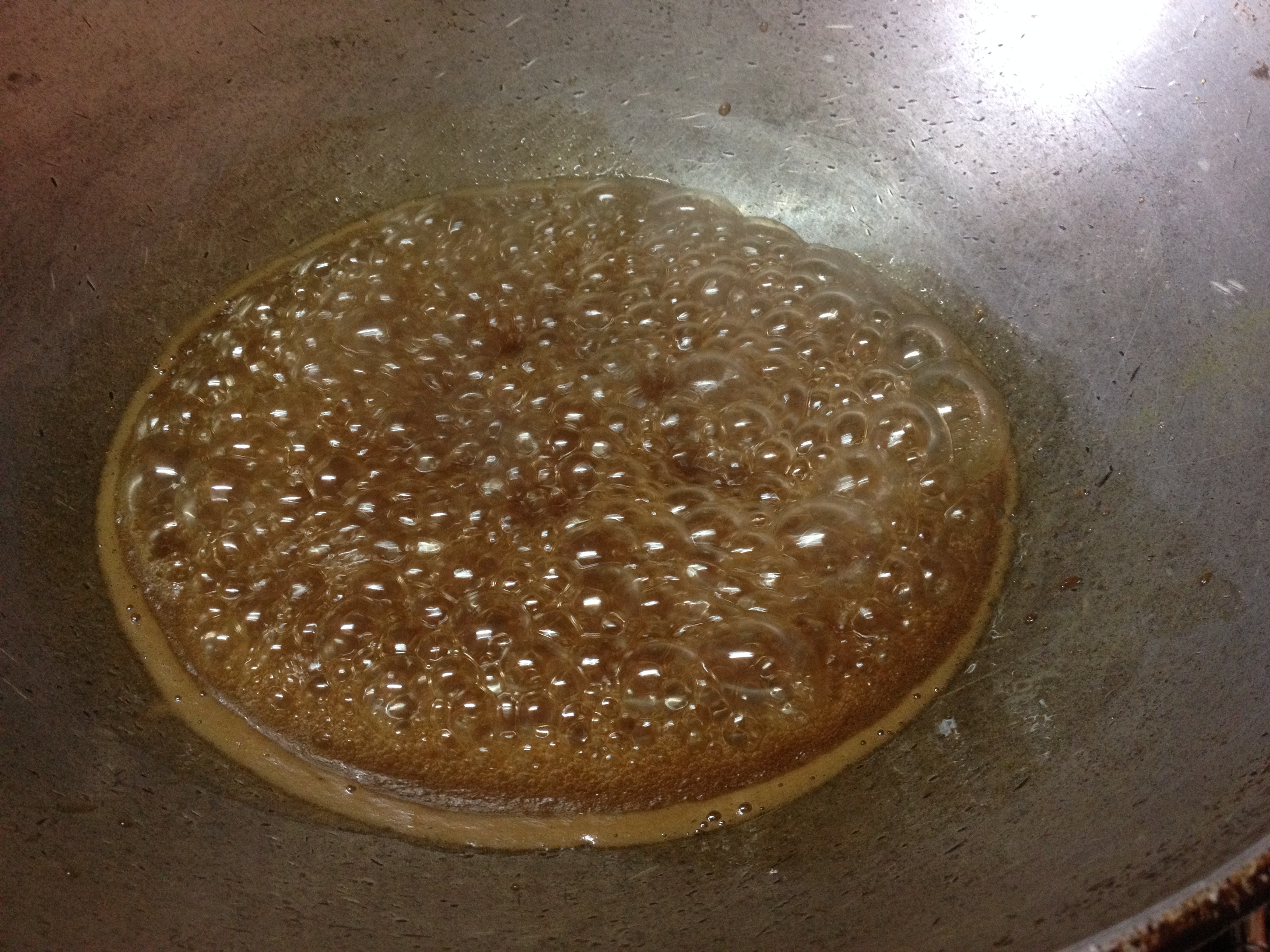
healthy brown syrup

IMG_3616


Method of Preparation

coating popcorn in palm syrup

IMG_3617


  1. Melt 1/2 cup palm sugar in 1/4 cup water either in minimum heat or by just stirring
  2. Keep the palm sugar aside at this melted level
  3. Before making caramel, it is better to make popcorn as the thickened syrup would harden quickly
  4. In a pressure cooker, take 1 tsp oil and salt; add dry corn and mix well
  5. Close the lid without the whistle and let the corn pop up in a few minutes
  6. Pop corn is ready
  7. Open the lid and keep aside and start making caramel
  8. For caramel, in a wide bottomed pan, take the already melted palm sugar and make a two string consistency syrup
  9. If one feels the quantity of syrup is too much for the quantity of popped corn, take the extra syrup and store for any other candy next time
  10. Immediately add the popcorn in the syrup and mix well
  11. Crispy Caramel Popcorn is ready
  12. Cool and store in an airtight container.


IMG_3639
It is truly a great feeling of satisfaction and pride to have fulfilled a promise given to your young one!


Thirukkaarthigai and Pori Urundai/Festival of Lights and Puffed Rice Sweet Balls

IMG_4479


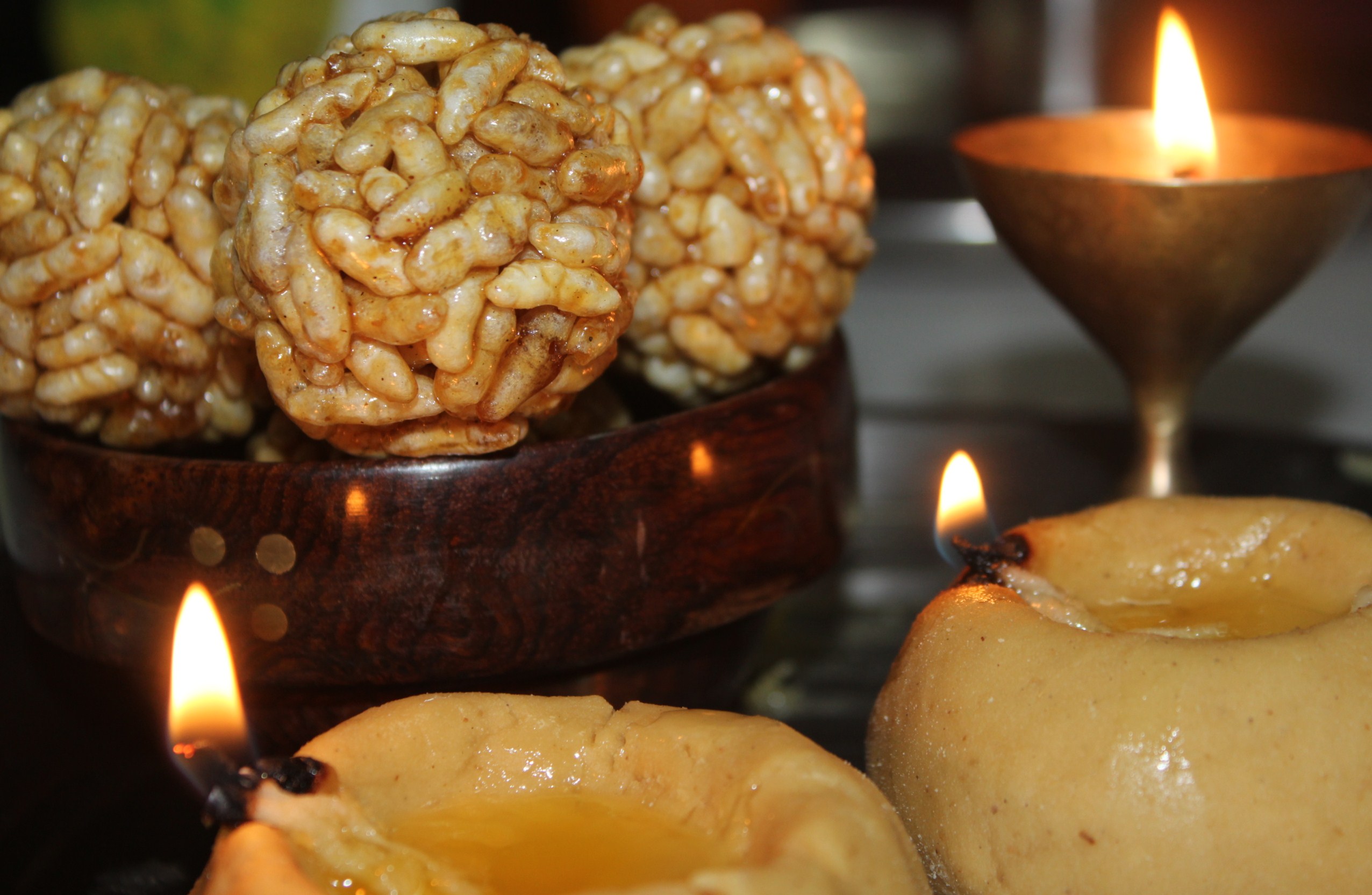
Thirukkarthigai was celebrated yesterday – 25.11.15. This is one of the ancient festivals of Tamilnadu and originally the Festival of Lights. It calls for decorating the house with lamps. A detail post on thirukkarthigai was written in 2011. Refer – dosaikal.com/thirukkaarthigai
There are various sweets prepared for different festive occasions- it can be a mix and match affair as far as the sweets are concerned. But there are certain specific delicacies for specific festivals. ‘Pori’ or Puffed Rice forms a basic part of Thirukkaarthigai. It takes the name of the festival and is called ‘Kaarthigai Pori’.


IMG_2873
In the previous post on Thirukkaaarthigai or Kaarthigai Deepam, I had tried Pori Urundai or Puffed Rice Jaggery Balls but had not been successful. Hence, it was converted into uthiri pori or sweetened puffed rice.

This time I was successful and could make Pori Urundais because of the right consistency of jaggery syrup.Graduating from a learner to a better learner, this time ‘Maavilakku’ or the lamp made with rice flour also came out better shaped, certified ‘good’ by my daughter. What else one needs as good marks from your child!

To the recipe-

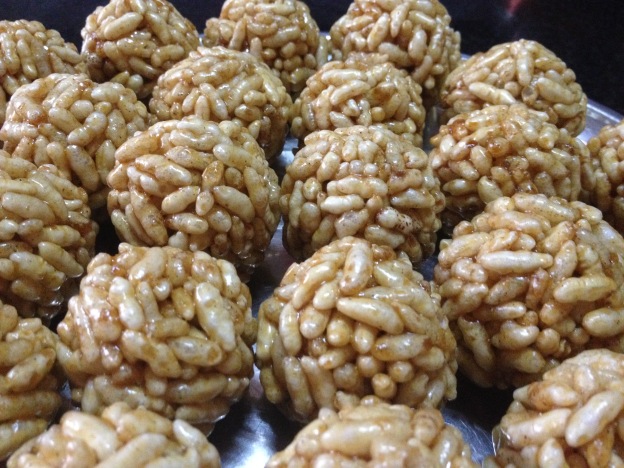
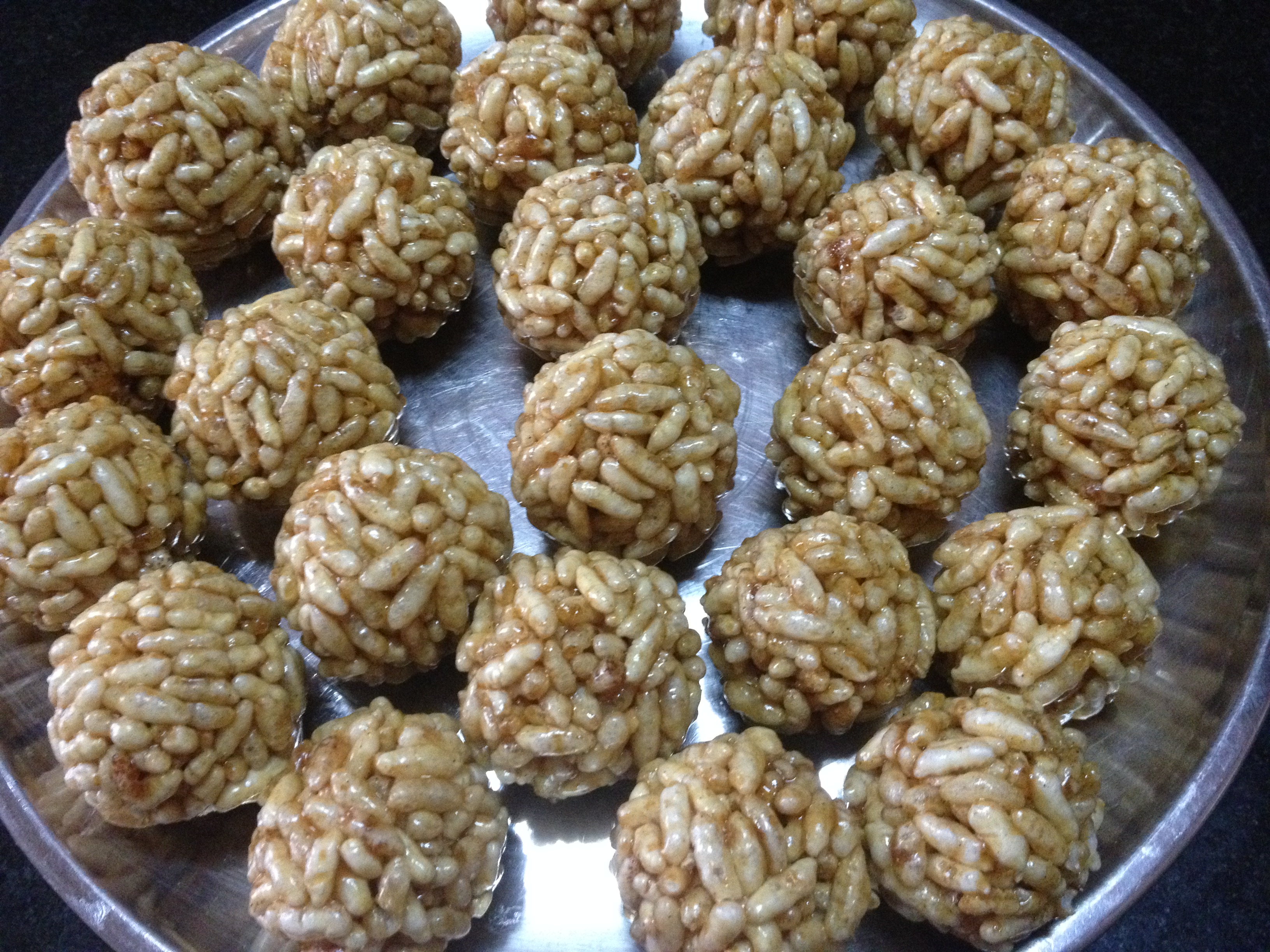
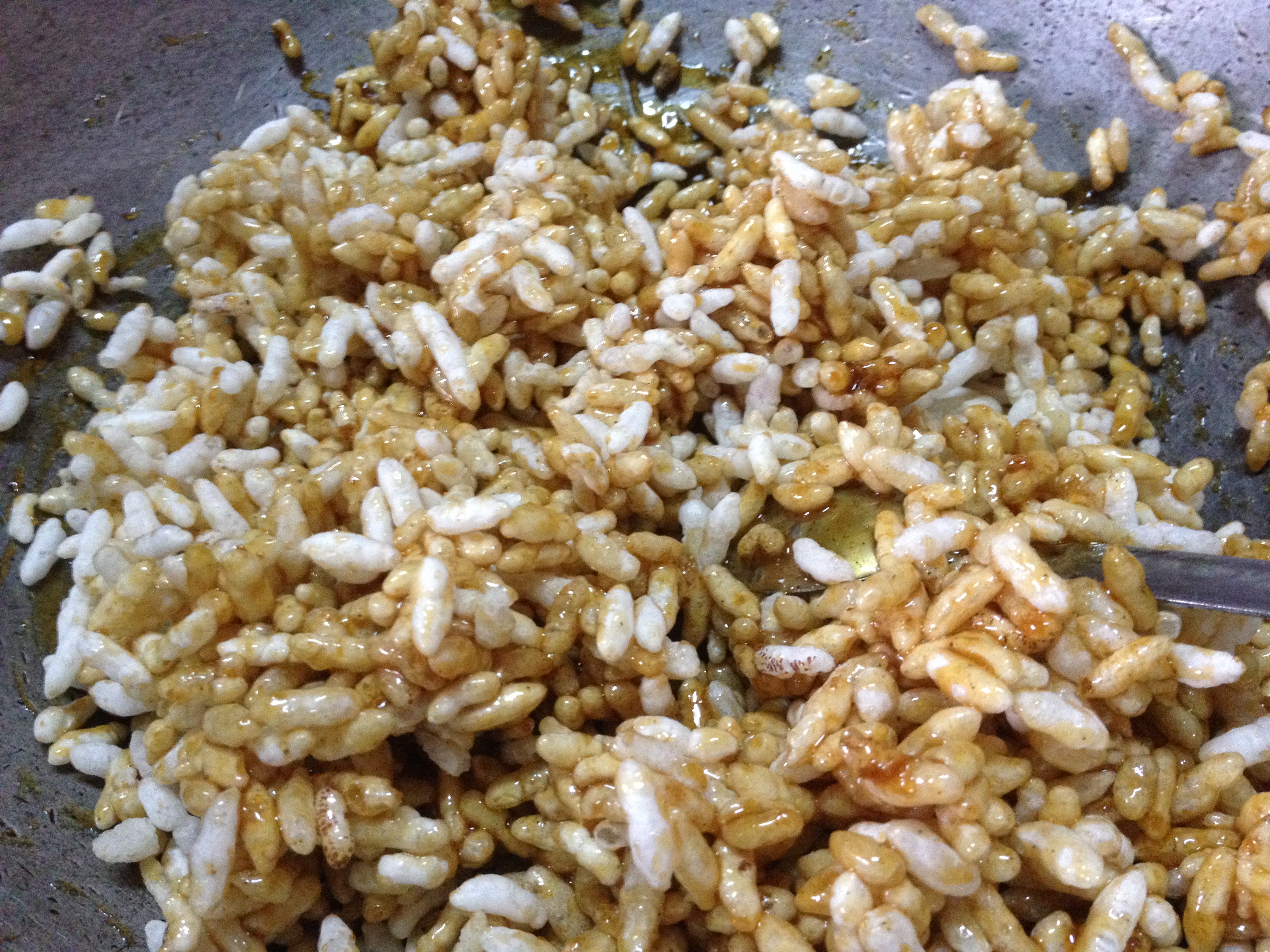
Pori Urundai


IMG_2881

Ingredients (makes approximately 30 balls)

  • pori/puffed rice – 5 cups
  • vellam/jaggery – 1 cup
  • thanneer/water – 1/2 cup
  • elakkai podi/cardamom powder – 1 tsp
  • chukku podi/dry ginger powder – 1 tsp
  • nei/ghee – to grease hands


IMG_2882


Method of Preparation

  1. Keep puffed rice in a wide bottomed bowl, enough to mix jaggery syrup
  2. Take Jaggery in a pan with water and heat till jaggery dissolves
  3. Strain jaggery to remove mud which is generally present
  4. Keep the strained jaggery water on stove and add cardamom powder and dry ginger powder
  5. Boil till it becomes a thick syrup and reaches a consistency where it forms a ball when dropped in water – this is called uruttu padham in tamil


6. When the syrup reaches proper consistency, pour into puffed rice bowl and mix well with a ladle

IMG_2873IMG_2878

7. Adjust the quantity of puffed rice according to the syrup

8. Grease both hands with little clarified butter/ghee and make medium sized balls

9. Pori Urundai is ready.

Note:

  1. The puffed rice can be moulded into balls only if the consistency of jaggery syrup is right.
  2. If the rice mixture turns hard after a while, keep on stove and reheat till it melts a bit and continue making again.
  3. If the pori has become crispy with syrup and is unable to be moulded, the syrup has crossed the required consistency. In such case, enjoy uthiri pori or fried sweet puffed rice.
  4. Adjust the quantity of pori as per need while mixing the syrup. I needed to mix at least 1/2 cup more to bring it to right ratio.
  5. Pori Urundai cannot be made with sugar; Jaggery is the only sweetener. Or one can try palm sugar.
  6. Dry ginger powder aids in easy digestion and helps especially in case of over-eating.
  7. If the puffed rice is not crispy and is a bit soft, dry roast before making urundais/sweet balls.


IMG_4489

Thengai Burfi/Coconut Burfi

With Diwali around the corner, it is certainly time for some sweets and snacks suitable for the festive occasion.
IMG_2665


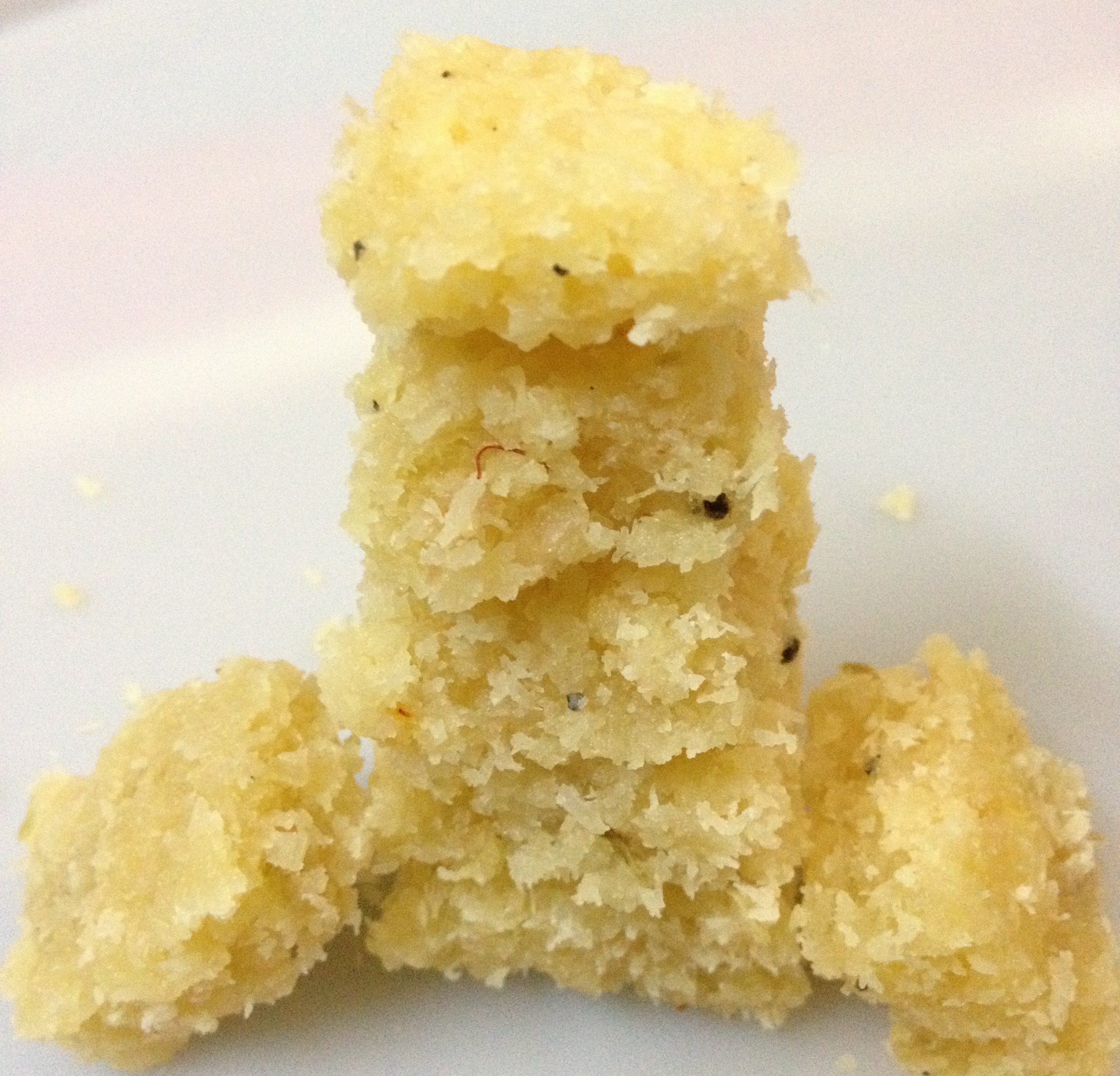
Thengai Burfi is one my childhood favorites. Coconut based burfi or urundai/laddu can be made in different styles – with milk and sugar, with sugary condensed milk, with milk powder and sugar, with sugar syrup without milk… thengai burfi (square shaped sweet) or thengai urundai (coconut balls) is something the tongue and teeth wouldn’t forget for long – Tongue for the taste of it and Teeth for the extras that always cling on to it. The Chewy, Juicy, Sugary, Coconut Milky flavor of the sweet takes me to a special day called MISSION SUNDAY.
My early years of schooling in an Anglo Indian School introduced me to a bit of Christianity and to the Sisters of the Missionaries. MISSION SUNDAY used to be a fun filled day of events, something equivalent to Carnivals in European Schools. A day of food, games and fun activities – all done by combined efforts of Teachers, Parents and Children. Nothing to do with religion, it was a Sunday devoted to opening stalls, selling your home products- especially food cooked by mothers/grandmothers, earn money and donate it to school. I remember Amma used to make Thengai Burfi in different colors – Pink,, Red and Yellow and Amma and me used to be a team selling thengai burfi. As Stallmates, we used to earn a bit… that was a very happy feeling of being a junior entrepreneur at an early age. So that’s the juicy story of Thengai Burfi.
My cousin ‘S’ would remember more as we went to the same school and what more we did in our stall together for Mission Sunday is something to discuss about. My memories are somehow stuck up with Coconut Burfi.
This version of Thengai Burfi is with the basic ingredients – coconut and sugar. There is no milk and no food color in the recipe. As I had saffron, I chose to bring in the exotic flavor of saffron and its beautiful mild yellow color to the burfi. Also added is cardamom to complete the combined flavor of the sweet.
Thengai Burfi/Coconut Burfi


IMG_2673
Ingredients (makes 20-24 pieces)

  • thuruviya thengai/grated coconut – 2 cups
  • sarkkarai/sugar – 1 1/2 cups
  • water – enough to soak sugar – appr. 1/2 cup
  • elakkai/cardamom powder – 1 tsp
  • kungumapoo/saffron – a few strings
  • nei/clarified butter – to grease the tray


grated coconut and cardamom

IMG_2651IMG_2654


saffron and sugar-water

IMG_8429IMG_2656
Method of Preparation

  1. Grate coconut, without the brown layer close to the shell. We need the white meat alone
  2. Grease a tray with enough nei/clarified butter
  3. Place pan (preferably non-stick) on stove and heat sugar and water with saffron strands and cardamom powder
  4. When water comes to a boil add grated coconut and stir well
  5. Keep stirring till the mixture starts to thicken and foams up in the pan. It would not take much time
  6. The sweet is almost ready and once it starts to leave the pan, spread in the already greased tray/bowl
  7. When it is a little warm, mark the spread sweet into desired shapes and remove only when completely cool
  8. Juicy Coconut Burfi is ready.


Notes:

  1. Grating only the white meat of coconut is important for the beautiful white colour. A substitute option to easy traditional grating is to take coconut completely out of the shell, remove the brown outer layer and then cut into small pieces. Then, grate in a mixer-grinder. (see picture above)
  2. Saffron is optional. The aroma and subtle yellow color are the true benefits of saffron. Those who prefer the original white color of coconut shall avoid saffron.
  3. Sugar can be altered as per taste preference. More the sugar, finer the structure of pieces. I have stuck to medium sugar.

Rectifying problems in consistency:

  •  if you find the consistency of burfi too thin and hence not ready to form stiff pieces, keep the mixture back in pan and stir for some more time
  •  if the mixture seems too thick to spread or turns into granules, put it back in the pan, add little water and stir till it softens and remove at the right consistency

IMG_2665

Ulundham Paruppu Saadham with Ellu Thuvayal / Black Gram Rice with Black Sesame Chutney

Super Healthy Rice Package


IMG_1949


Revival of Bone Strength – Nutrilicious Ulundham Paruppu Saadham/ Black Gram Rice with Ellu Thuvayal/Sesame Chutney

 
This is a speciality Variety/Mixed Rice or Kalavai Saadham as we call it in Tamil. Rice, black gram, garlic and salt are the only ingredients that go in the making of this super-healthy rice package. Black Gram Rice is had with Black Sesame Seed Chutney and Avial (vegetable stew) for the vegetable curry in the platter and  Appalam (disc shaped crispy fries) as a crunchy accompaniment – giving it a balance of many combined flavours. (see above picture)


An insight into the core ingredients of the rice and chutney..
  
The Goodness of Ulundhu/Black gram


split whole black gram used for this variety rice

IMG_1899

  
Ulundham Paruppu or Black Gram is used in various Indian Foods. From exotic restaurant menu cards to humble homely meals, this highly nutritious lentil can be found frequently in the Indian food arena. Dal Makhani, one of the north Indian speciality creamy lentil preparation is an all time favorite throughout the world. The Paruppu/Dhal/Lentil is also called Maa ki Dhal in Hindi or Mother’s Lentil, might be due to its nutrient value.

As far as South Indian Cuisine is concerned, Black Gram husked or dehusked is almost a staple diet and also a trusted stable diet. Stable Diet? Yes, ‘Ulundhu’/Black Gram aids in the growth and stability of infants, toddlers, teenagers, adults and the aged alike. It aids in Bone growth of all members of family.

Black Gram takes its place in the quintessential breakfast and dinner Idly and Dosai, the unavoidable snack Ulundhu Vadai, health food Ulundhu Kanji/Porridge, traditional food Ulundhu Kali/thick pudding, and crunchy chips Murukkus/crispies. In many foods, black gram is the core ingredient and a few others added for technical consistency. The appalam or pappad had has a starter or with rice meal is also made with Ulundhu.

In some preparations like Ulundhu Vadai, Black Gram is the sole main ingredient.


ulundhu vadai

IMG_9976
  

There cannot be a south Indian household without Ulandham paruppu as Idlies and Dosais cannot be made without this ingredient. I can be sure of this atleast with today’s parental generation. Cannot be sure about the next generation who might opt for breads, cereals and pastas for staple food but be rest assured certainly not stable.

Ulundham Paruppu/Black Gram is used in different forms. The whole lentil with black skin in certain foods, skin removed but whole in shape in certain foods and skin removed but split in halves, split in halves with skin…. Might be quite confusing for new comers to the Ulundhu Industry, but tradition says that that type that that dish! So, enjoy and don’t bother. De-skinning, splitting and all other technical necessities are taken care of and what one needs to do is just do some intelligent grocery shopping.


black gram – whole 

IMG_0701
  

These are a few Ulundhu Preparations from Tamilnadu, with the kind of black gram used, mostly common with mild differentiations among the other three states of the southern part of India. There are many more varieties depending upon the varied districts of Tamilnadu. Other South Indian states might have many more to add to the list too.


kutty idli – mini idli

IMG_1426
  

De-Husked or De-Skinned whole lentil for Idlies and Dosais;
De-Husked Split for Seasoning;
De-Skinned, Roasted and Milled for Appalam and Murukku;
Black Whole Lentil (with skin) for Porridge, Pudding;
Whole Split Lentil for One Pot Rice – ulundham paruppu saadham

  
Sesame Seeds –  a Girl’s Support Mechanism….
  
How I was introduced to Ulundhu Saadham and Ellu Thuvayal?
  
This variety rice is prepared mostly on all weekends or leisurely family meals as it tastes best direct hot from the cooker. But another essential occasion when ulundham paruppu saadham comes into the platter is during the monthly menstrual time. The rice with sesame chutney is believed to be a Cleanser Combo.


Sesame seeds are best among the other home medicines for menstrual problems. Some quantity of dried sesame seeds can be pounded and stored. A fresh solution can be prepared daily by mixing half a spoon of this powder in a cup of water. This concoction can be used once in a day for the better results of the treatment. Regular use of this decoction can help in relieving completely from scanty menstruation. – See more at:http://www.findhomeremedy.com/natural-home-remedies-for-menstrual-problems. http://www.findhomeremedy.com/natural-home-remedies-for-menstrual-problems/#sthash.MCaQlI3O.dpuf


We are adviced to have it at the end of the cycle as Sesame is supposed to cleanse the uterus of all the leftovers. So, it is a routine monthly cleanser of a woman’s unique organ. Additionally, mothers prepare their daughters from the right time for a healthy motherhood in future. While Ulundhu/Black gram aids in strengthening hip bones, sesame seeds help in cleansing.

Whether the notes on sesame seeds are scientific proven or not doesn’t matter to me. I totally believe the medical effects that the key ingredients of this Combo Rice Platter can provide to the system as a whole.


During the Post-Menstrual phase it’s important to nourish blood and yin after the menstrual flow of the previous week. It’s important to include ample amounts of protein, fat, folic acid, and vitamin B12, which are essential for building blood and yin. Also important during the Post-menstrual phase is foods rich in chlorophyll (that’s all the green goodies!): kale, chard, bok choy, micro-algae, seaweeds (especially dulse, which is high in iron). Other foods that are nourishing during this time include nuts and seeds, especially flax and black sesame seeds.. http://vibrantwellnessjournal.com/2013/02/11/balance-the-reproductive-cycle-naturally-with-traditional-chinese-medicine/


Sesame Seeds are also a rich source of calcium. Milk Allergic People and those who follow a Vegan Diet or Diary Free Diet use sesame seeds as a substitute to milk.


A good source of Natural Calcium which is easily assimilated in the body is Sesame seeds. The Black variety has a higher therapeutic value and a lower Oil content. You may soak overnight and eat. Chew to a fine paste. Include Sesame Seeds with your daily meals. They are a rich source of Calcium, Proteins, Magnesium and Iron. http://www.space-age.com/herbs/hormonebalance.html


In recent studies, calcium has been shown to:

  • Help protect colon cells from cancer-causing chemicals
  • Help prevent the bone loss that can occur as a result of menopause or certain conditions such as rheumatoid arthritis
  • Help prevent migraine headaches in those who suffer from them
  • Reduce PMS symptoms during the luteal phase (the second half) of the menstrual cycle http://www.whfoods.com/genpage.php/genpage.php?tname=foodspice&dbid=84


Now, it’s recipe time –
  
Ulundham Paruppu Saadham/Black Gram Rice with Ellu Thuvayal/Black Sesame Seed Chutney


Ulundham Paruppu Saadham


IMG_1933
  

Ingredients (serves 3-4)

  • puzhungal arisi/par boiled cooking rice – 200 gms
  • ulundham paruppu/split black gram(with skin) – 100 gms
  • poondu/garlic – 10 cloves
  • uppu/salt – as needed
  • thengai/coconut – ½ (grated) – optional

  
Method of Preparation


IMG_1925


  1. Wash and soak rice with garlic for ½ hour
  2. Wash the black gram well
  3. In a pressure cooker, cook rice, black gram, garlic and salt with enough water; cooked rice-black gram should be soft and not just right
  4. Mix the grated coconut and the rice is ready to be served hot.


IMG_1928
  
Ellu Thuvayal/Black Sesame Seed Chutney


IMG_1911


  • ellu/sesame (black) – 3 tsp
  • milagai vatral/red chillies – 4 no.
  • puli/tamarind – 1/4 lemon sized
  • thengai/coconut (grated) – 4 tsp
  • salt – to taste

  
Meth0d of Preparation
  
IMG_1917


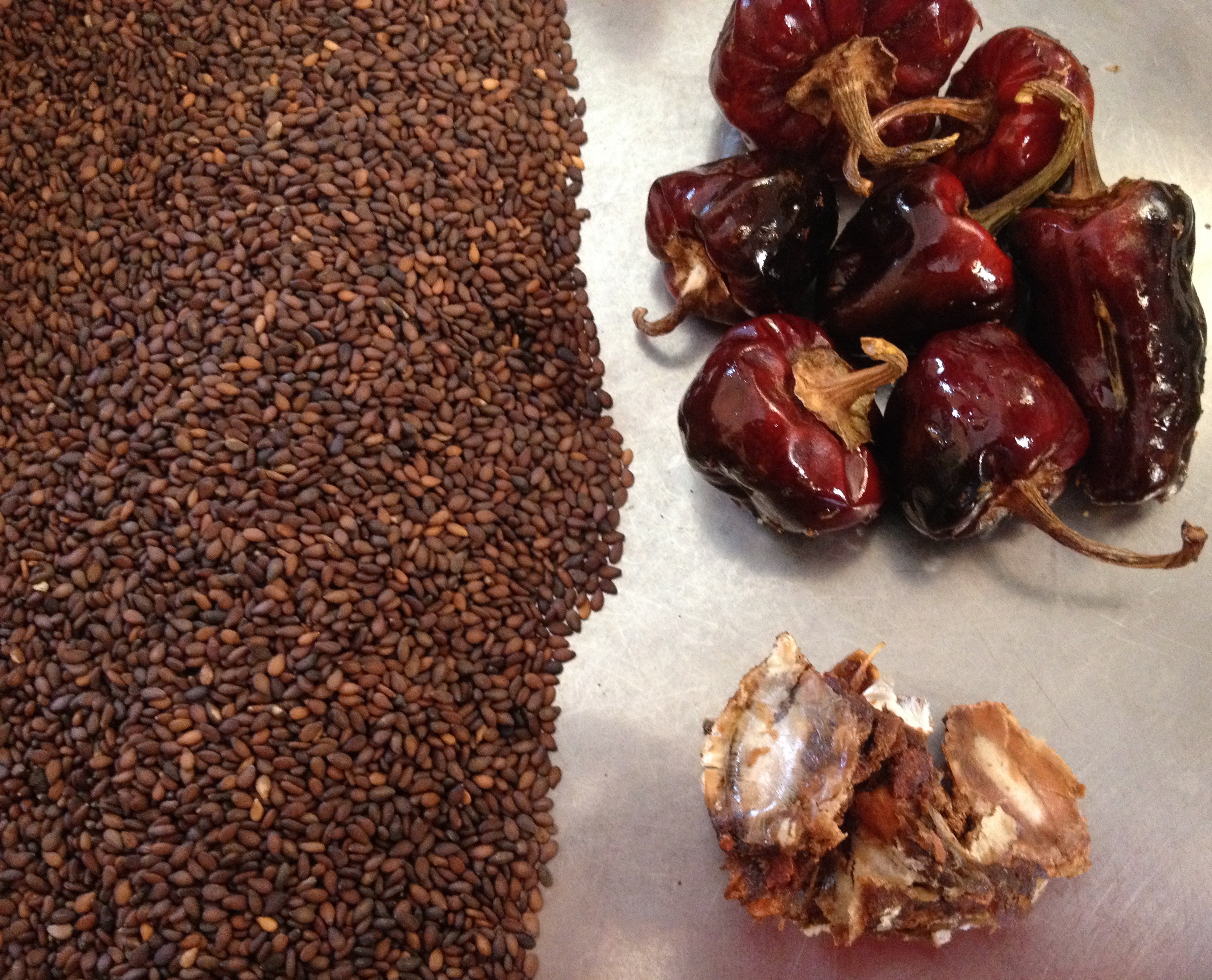
  1. Separately dry roast sesame seeds in a pan
  2. Remove the sesame seeds once roasted and in the same pan, roast red chillies with very little oil
  3. When the chillies are done, add grated coconut and roast till slightly golden in colour
  4. Wash the roasted sesame seeds (to remove sand particles generally found in sesame) and grind all ingredients with salt to a smooth paste/dip/ chutney
  5. Serve the thuvayal with ulundham paruppu saadham


Ulundham Paruppu Saadham is always served with Ellu thuvayal and preferably with Avial (mixed Vegetable stew) and Appalam/Roasted or Fried Pappad.
  
Notes:


IMG_1922
  

For Ulundham Paruppu Saadham

  1. This mixed rice is preferably prepared with puzhungal arisi/par-boiled rice if not available one can use other varieties too.
  2. Coconut is optional in the rice but tastes best with the humble coconut.
  3. The Black Gram used is whole-split as whole black gram tends to make the rice mushy.

  
For Ellu Thuvayal

  1. Always roast sesame seeds and then wash; Simple logic – The seeds cannot be roasted if washed before.
  2. Red Chillies can also be roasted dry without oil but roasting with little oil helps in fine grinding later.
  3. One can also fry tamarind with red chillies and coconut to make the tamarind softer.
  4. The quantity given is for very limited chutney; one can prepare according to family preferences.


For more on Sesame Seeds –
  

Sesame seeds may be the oldest condiment known to man. They are highly valued for their oil which is exceptionally resistant to rancidity.

Not only are sesame seeds an excellent source of copper and a very good source of manganese, but they are also a good source of calcium, magnesium, iron, phosphorus, vitamin B1, zinc, molybdenum, selenium, and dietary fiber. In addition to these important nutrients, sesame seeds contain two unique substances: sesamin and sesamolin. Both of these substances belong to a group of special beneficial fibers called lignans, and have been shown to have a cholesterol-lowering effect in humans, and to prevent high blood pressure and increase vitamin E supplies in animals. Sesamin has also been found to protect the liver from oxidative damage. http://www.whfoods.com/genpage.php/genpage.php?tname=foodspice&dbid=84

A perfect birthday present from the past!!

Rewinding 4 years of blogging…

Thank you so much for traveling with me, in my leisurely journey of cooking and more.

This is confession time- of a theft…

  • no no not something like stealing my husband’s heart many years ago ;
  • or my little brother stealing my grandparents’ slippers and preserving in some unknown place, so that they would stay with us longer;
  • or quickly finishing as many mangoes as we could from the huge, straw covered mango storage rooms… before my aunts would ask ripe mangoes for lunch (swear I’ve done this);

or might be a few more fun filled, less hinder-some deeds.

But this time it is a lovely theft, a cherishable theft, a heart-touching theft..  where the loser as well as the original owner of the product is anything but happy and delighted and for a moment Proud too!


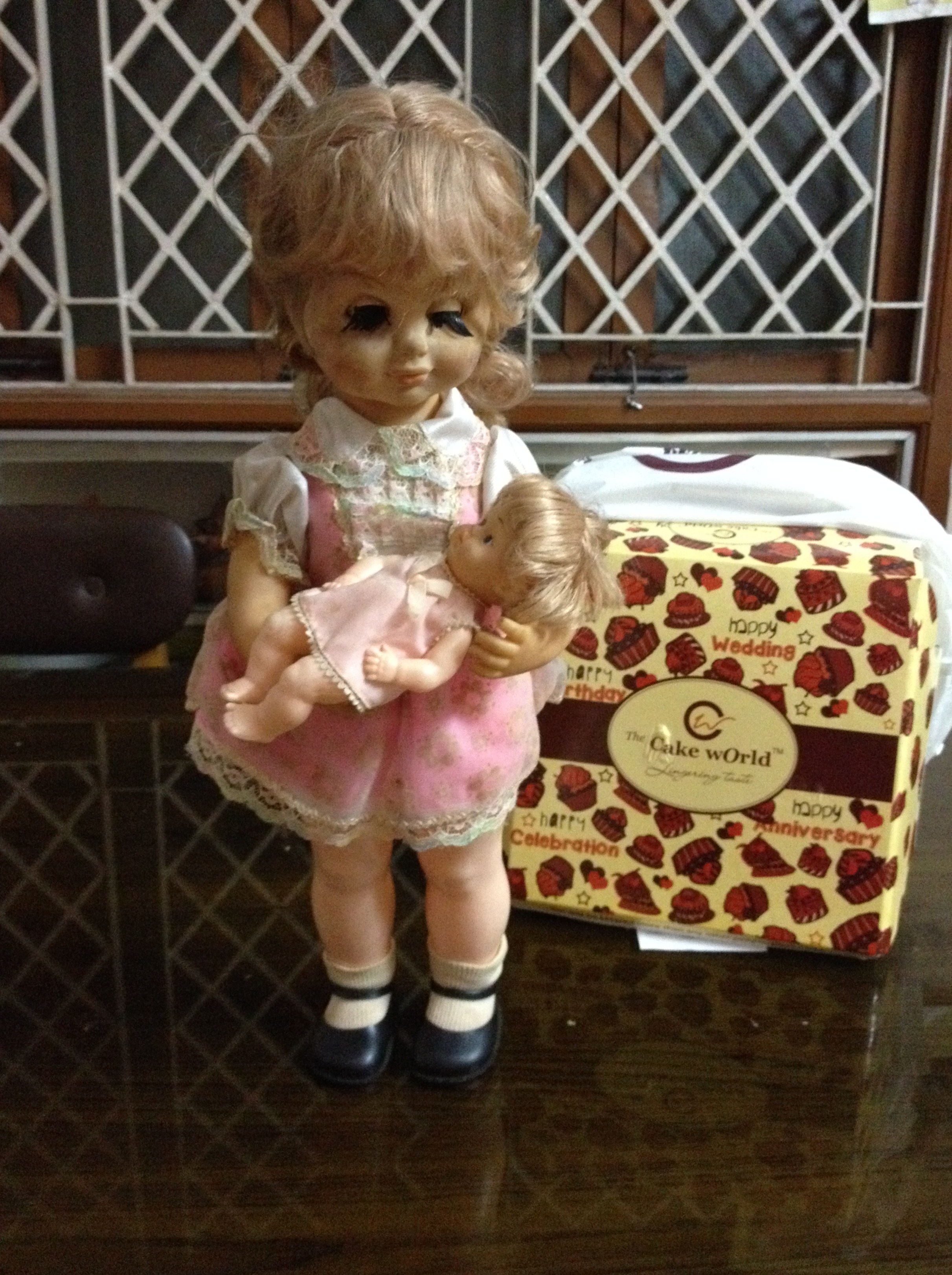
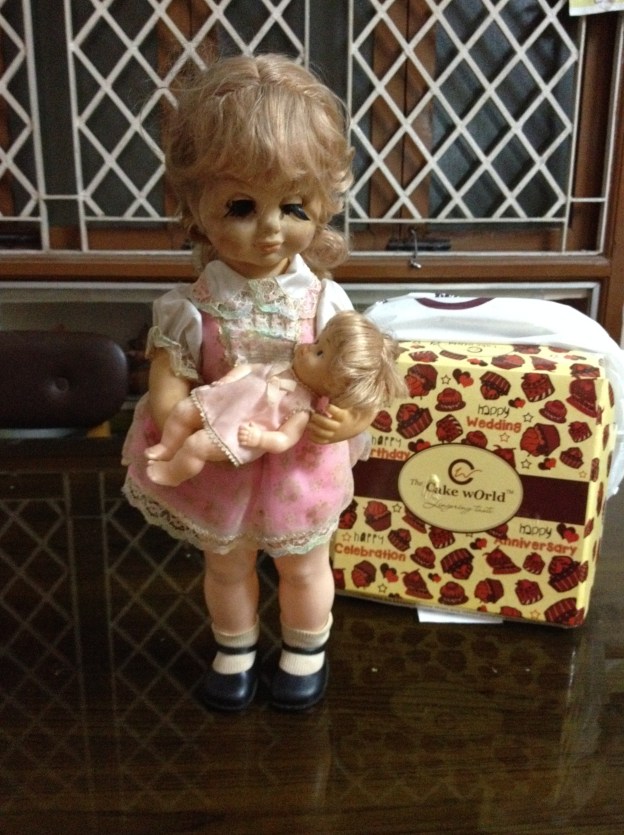
my precious doll

IMG_1593

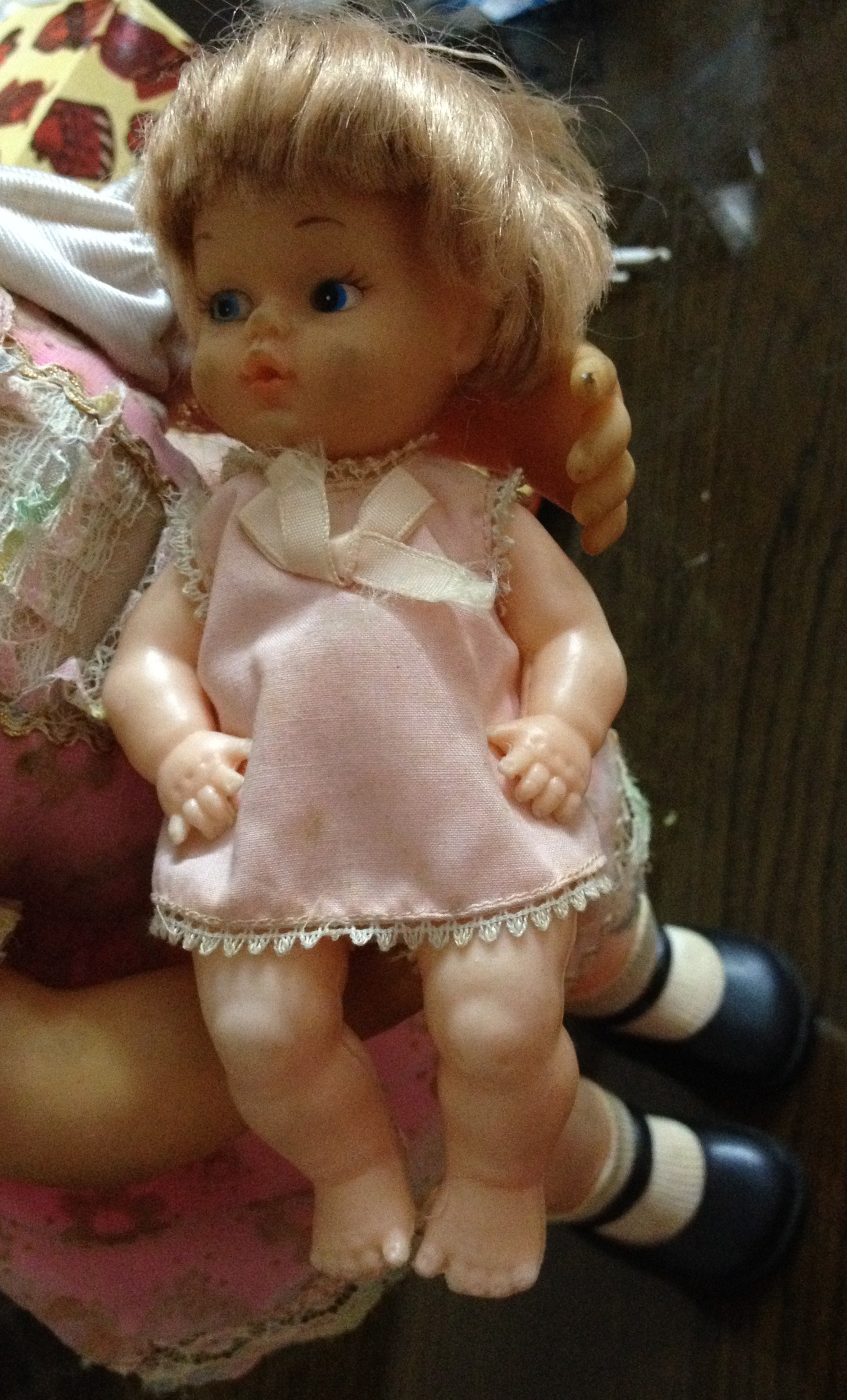
This theft is from my dearest daughter! What I took from her was Her birthday present. The Present was from the Past…. My Past…my beautiful doll when I was 3 or 4 years of age. One of the well preserved baby things.. It is a Mother-Child doll, mother putting her daughter to sleep. There is a key at the back as in an old model doll.  The mother gently sways to the inbuilt music while the baby goes to sleep. Amazing… All intact the doll still works good!


the mother

IMG_1598


Yes, Still works and the mother does a great job. By preserving such a beautiful thing of the past.. my mother too did a great job, isn’t it?Kudos to my mom. Nanri Amma.
My first post says ‘Generations to Generations’ and this doll ultimately signifies that. My daughter was sensationally delighted to get her mother’s doll from grandma as one of her birthday gifts. When I look back at these four years of blogging… Trying to pass on few treasures to my daughter… This year’s birthday gift that my Amma had preserved for my daughter was very special indeed!


and the child

IMG_1597


I was delighted too, to see my favorite doll after at least 35 years. Nostalgia struck me..hit me…captured me… Attach any number of verbs.
This was also time for some boastful behavior. Isn’t it a  pride to tell my daughter how well I maintained my play things? Also a pride to know how my daughter has taken after me in taking care of her things.

A few samples of how I nurtured my possessions. Of course, a bit of ‘Boast’ can be the secret of our energies too!


almost perfect shoes and sock

IMG_1596


gorgeous hair till today

IMG_1602


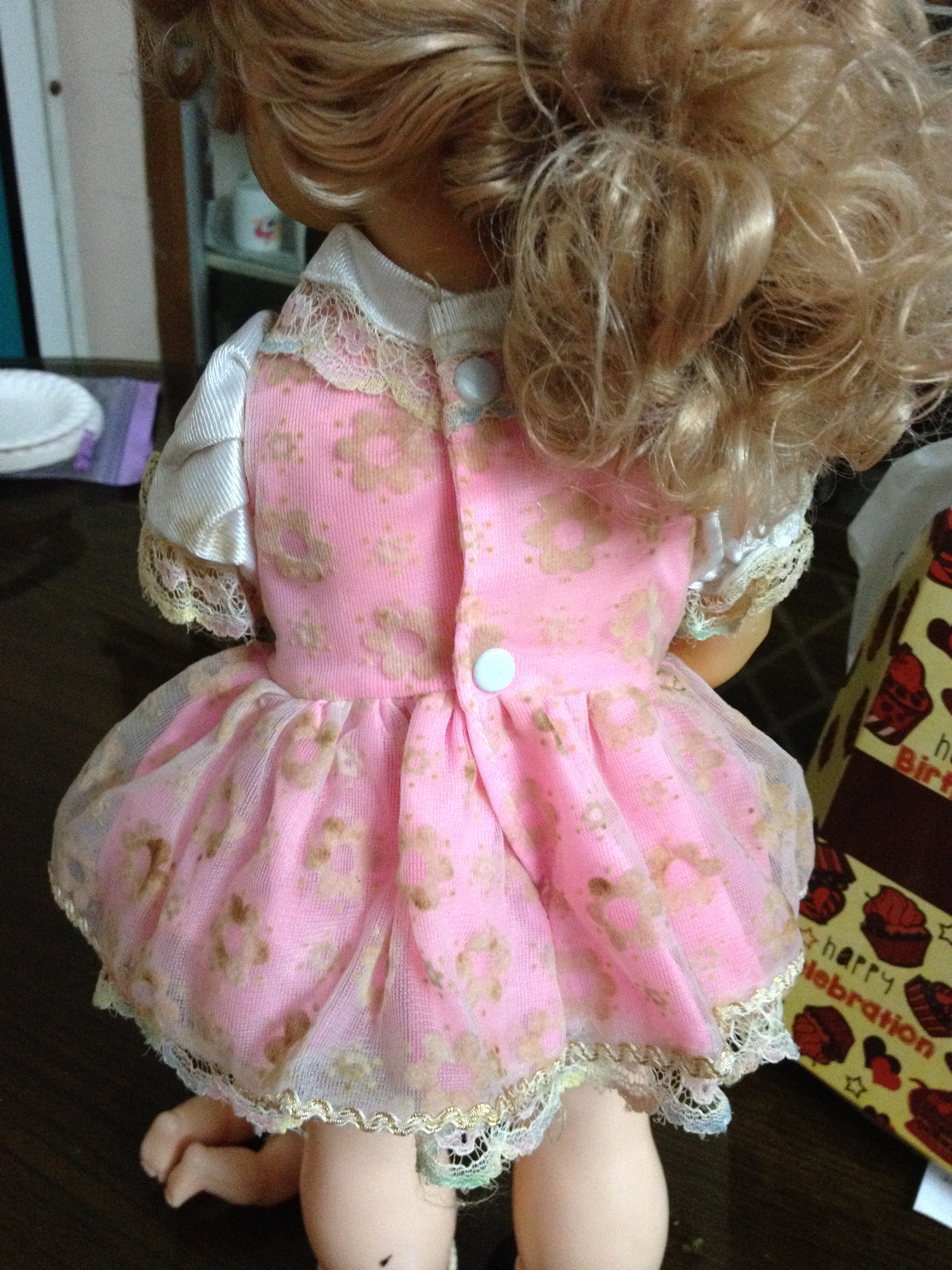
the pretty pink dress, though a tiny bit stained but no doubt beautiful

IMG_1607
Oh… after this episode, I’ve started looking at my mom as a Curator. Correct me if I am wrong.

According to wikipedia-


Traditionally, a curator or keeper of a cultural heritage institution (i.e., gallery, museum, library or archive) is a content specialist responsible for an institution’s collections and involved with the interpretation of heritage material. The object of a traditional curator’s concern necessarily involves tangible objects of some sort, whether it is artwork, collectibles, historic items or scientific collections. http://en.wikipedia.org/wiki/Curator


Moms and Dads who preserve important memorabilia/assets are actually Curators too! Why not??
Now, to the theft thing- I stole my doll from my daughter. To celebrate four years of blogging…. of course cannot say non-stop blogging.

My lovely daughter is a generous soul and she let me take her present with Pride. And the littlle brain is more than delighted that she says- ‘Oh amma,  I’m so happy you made me a part of your post’.

Reading more of the draft of this post, she was ultimately happy about my theft and so excited. But only on one condition.. I steal it for a day, for my post, then give it back to her!  OK, Accepted.
To improvise my vocabulary, she said.. why don’t you borrow from me…      So, for the magnanimity of the little heart, I take away ‘stolen’ and replace ‘borrow’. I borrowed my past  for this post, and gave it back to my present!


IMG_1593
We, the middle aged parental generation can effectively be catalysts in the transfer and culmination of cultural wealth from the previous to the next generation. ‘Dosaikal’ would be my humble aspiration and endeavour to transfer those mesmerizing memories and treasures from past generations to my next.

Nanri!

Ulundhu Vadai – The Outstanding Snack For All Occasions


IMG_9948
A great topic of research

Vadai is a deep fried snack, generally made with soaked and blended lentil. The most common of the Vadai Varieties are –

1. Ulundhu Vadai or Ulundha Vadai made with dehusked black gram and

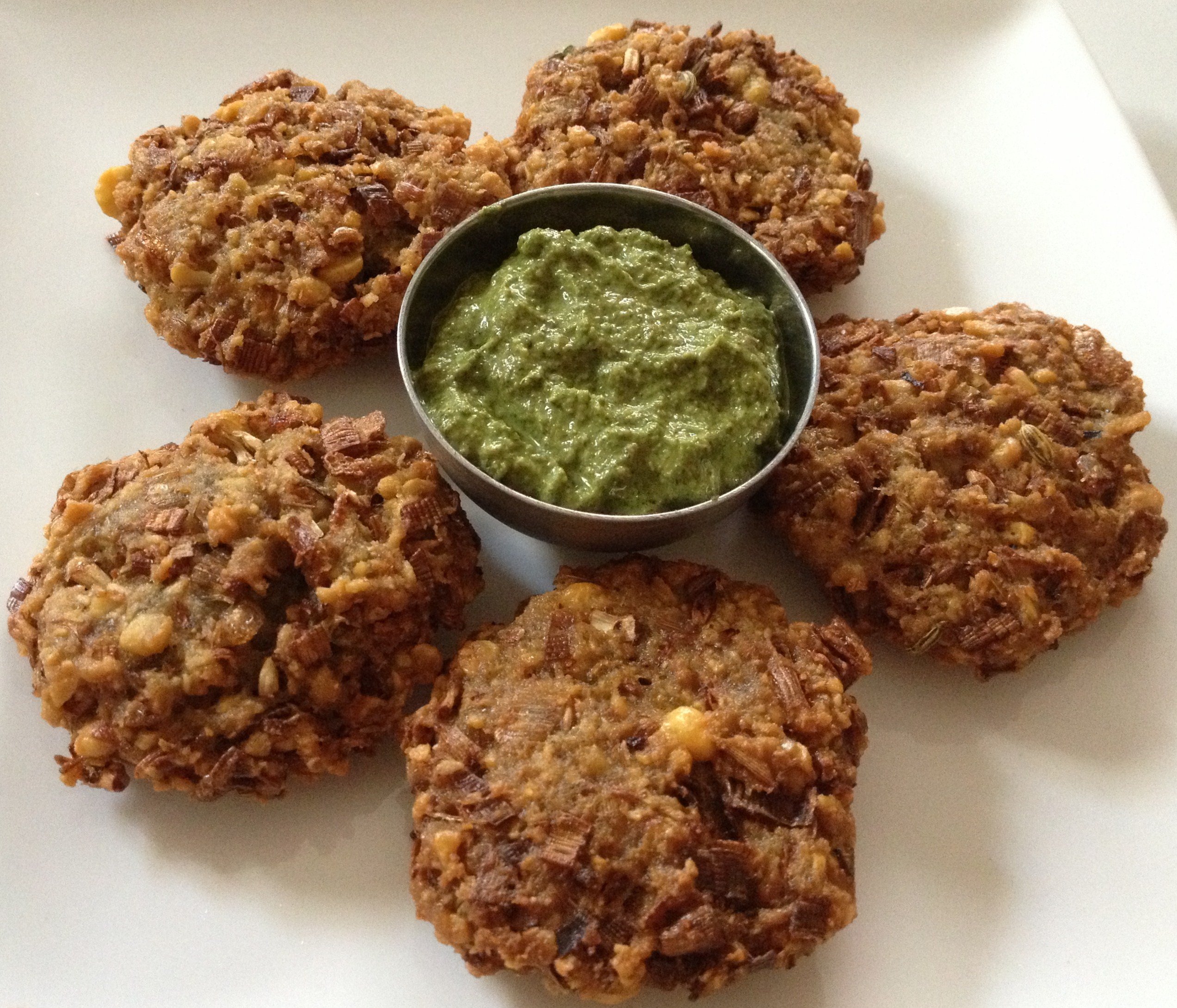
2. Aamai Vadai or Paruppu Vadai made with bengal gram.

These two in themselves have different names. Ulundhu Vadai is also called ‘Medhu Vadai’ meaning Soft Vadai; Aamai Vadai is also referred to as Masala Vadai  and they also possess many more names. Quite interesting though – that’s why the topic ‘Vadai’ can be a great research title!

One can also hear different versions of the same name – Vadai, Vada, Vade, Bada and I think in Punjab it is called Bhalla as in Dahi Bhalla, Thayir Vadai (Vadai soaked in curd) in Tamil.


Different Kinds of Vadai


ulundhu vadai – dehusked black gram vadai

IMG_9976
That is not all! While we make Ulundhu Vadai with dehusked black gram and Aamai Vadai with bengal gram, there can be various kinds of Vadais made with different combinations to these two core ingredients.

  • Vazhaipoo Vadai – with Banana Flower
  • Keerai Vadai – with Spinach
  • Milagu Vadai – with Black Pepper
  • Thavalai Vadai – with combination of lentils

and many more innovative crisps by chefs at home. Vadai is served with chutney and/or sambar.


 vaazhaipoo vadai – banana flower vadai

IMG_1129


Apart from combining ingredients, there can also be other impressive ways of serving Ulundhu Vadais – the softer among the two.

  • Sambar Vadai – vadai soaked in Sambar – the lentil curry
  • Rasa  Vadai – vadai soaked in Rasam – the digestive soup (for easy comprehension)
  • Thayir Vadai – vadai soaked in yoghurt with mild spices

Aamai Vadai/Paruppu Vadai made with bengal gram is crispier and enjoys special place in a few curries like-

  • More kuzhambu –  yoghurt curry that has paruppu vadai in place of veggie
  • Vadai Curry – an exotic spicy curry with ground spices, wherein the gravy is thickened by soaking the deep fried vadais. The taste of the spicy curry mixed with the flavour of fried vadais is a great hit with Idli and Dosai.


The Versatile Vadai


IMG_1356


Vadai can fit in all places and occasions.

Any traditional festival, celebration or happy occasion would be half done without these for sure.
Breakfast  – with Idli, Dosai or Pongal, Vadai makes the breakfast a complete ‘Platter’

Lunch – served with the three course Vaazhai Ilai Sappadu (traditional meal served on banana leaf) -the phrase actually is – ‘Vadai-Payasam’ – vadai and payasam/pudding to make the traditional meal a respectful finish

Dinner – who would say no to Vadai soaked in the lunch sambar or rasam, which is now a converted sambar vadai or rasa vadai for dinner..

Evening Snack – any guests for coffee/tea? – this snack can be simple and exotic, traditional and trendy – served with coconut chutney or any other chutney

Starter/Finger food – a grand dinner party – made smaller in bite size shapes, vadai can be an ideal starter or finger food

Street Food – it can be a sort after street food at any tea joint, or in bus or train stations

Live Kitchen – it could also be an eye-catchy as well as an appealing live display snack in Restaurants
The Balancing Factor
In addition to these impressive qualities, I find the essence of Vadai might be a culinary balance in festive occasions. For any festival, event or celebration, the quintessential flavor is sweet. Different kinds of or atleast one sweet dish is prepared for any special occasion. When enjoying food forms part and parcel of the day to day activities of an Indian household, the place of food in festivals is ultimate. The concept of making an occasion happy by distribution and consumption of sweets can sometimes be a painful practice for the self proclaimed ‘sweet toothers by birth’ too.

Here is where the role of Vadai stands appealing. When there is heavy downpour of sweets that smoothly glides into one’s tummy, there is always the quite bland and crispy/semi crispy salted vadai which is served with spicy chutney to give relief from the overdose of sweets. It certianly does great justice in soothing one’s palate during those essential times.

Hence, Vadai always forms part of festive food, to ensure a Balance might be.
Vadai-like ‘Akara’ in Nigerian Cuisine

While reading the recent article posted by dear fried Oz of ‘kitchen butterfly’, she had mentioned she tasted Vadai in Dubai and it tasted like ‘Akara’. I was anxious to know about akara.

Akara is a deep fried Nigerian Snack and breakfast meal made with ground de-hulled(peeled) brown or black-eyed beans and spices.
It is a very popular snack that can be eaten anytime of the day. Although Akara is popular as a breakfast meal, it can also be eaten as a snack or taken with Pap(ogi), custard or Agidi(eko) as a light dinner
Akara is also known as Acarajé, Fried Bean Cakes, Koose or Fried Bean Balls.

http://www.nigerianfoodtv.com/2013/02/how-to-make-nigerian-akara.html


Almost the same, with the different lentil. Black Eyed Pea is called Karamani in Tamil. I also found ‘Karamani Vadai’ recipe posted by fellow south indian bloggers. Learnt many things here. Akara and Karamani sound similar too!

Thanks Oz for aiding me know about akara and nigerian cuisine through that comparison.
Ulundhu Vadai

IMG_9976


Ulundhu Vadai is made with dehusked black gram. The lentil is soaked and blended to a thick foamy consistency. For binding, rice flour is added while mixing with salt and other ingredients like onions, green chillies, black pepper and curry leaves. I prefer to soak little rice with black gram and blend together. This I feel gives a better texture to the batter.

The speciality of this type of Vadai also lies in its shape. This is a doughnut shaped snack. Hence, little extra effort is needed in bringing in the exclusive shape.

One can also make basic vadai with three ingredients – lentil, rice or rice flour and salt blended with water and deep fried. Adding onions, chillies and curry leaves enhances the flavor of this snack.
Ingredients (makes appr. 15-20 vadais)


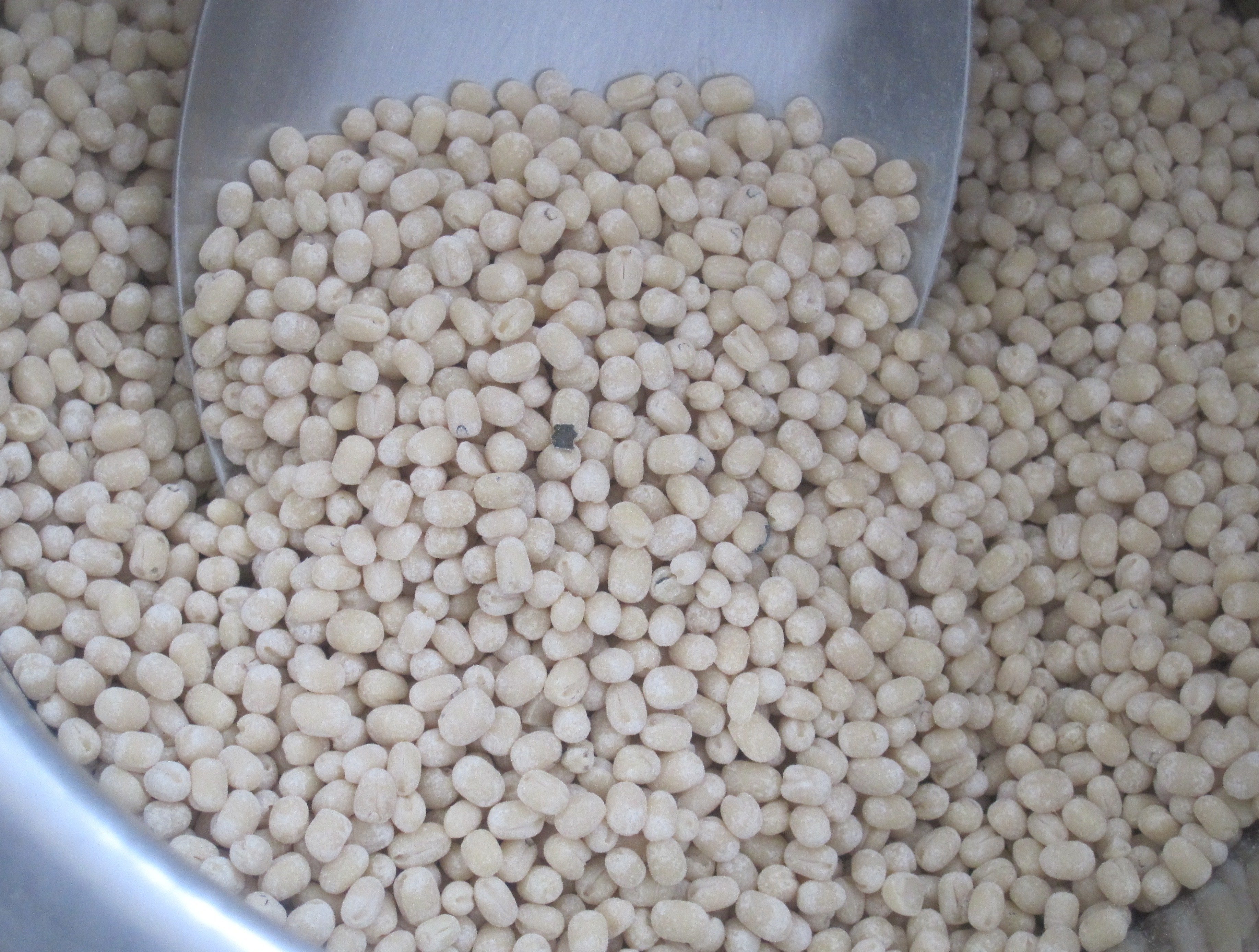
dehusked black gram

dosaikal 6 012

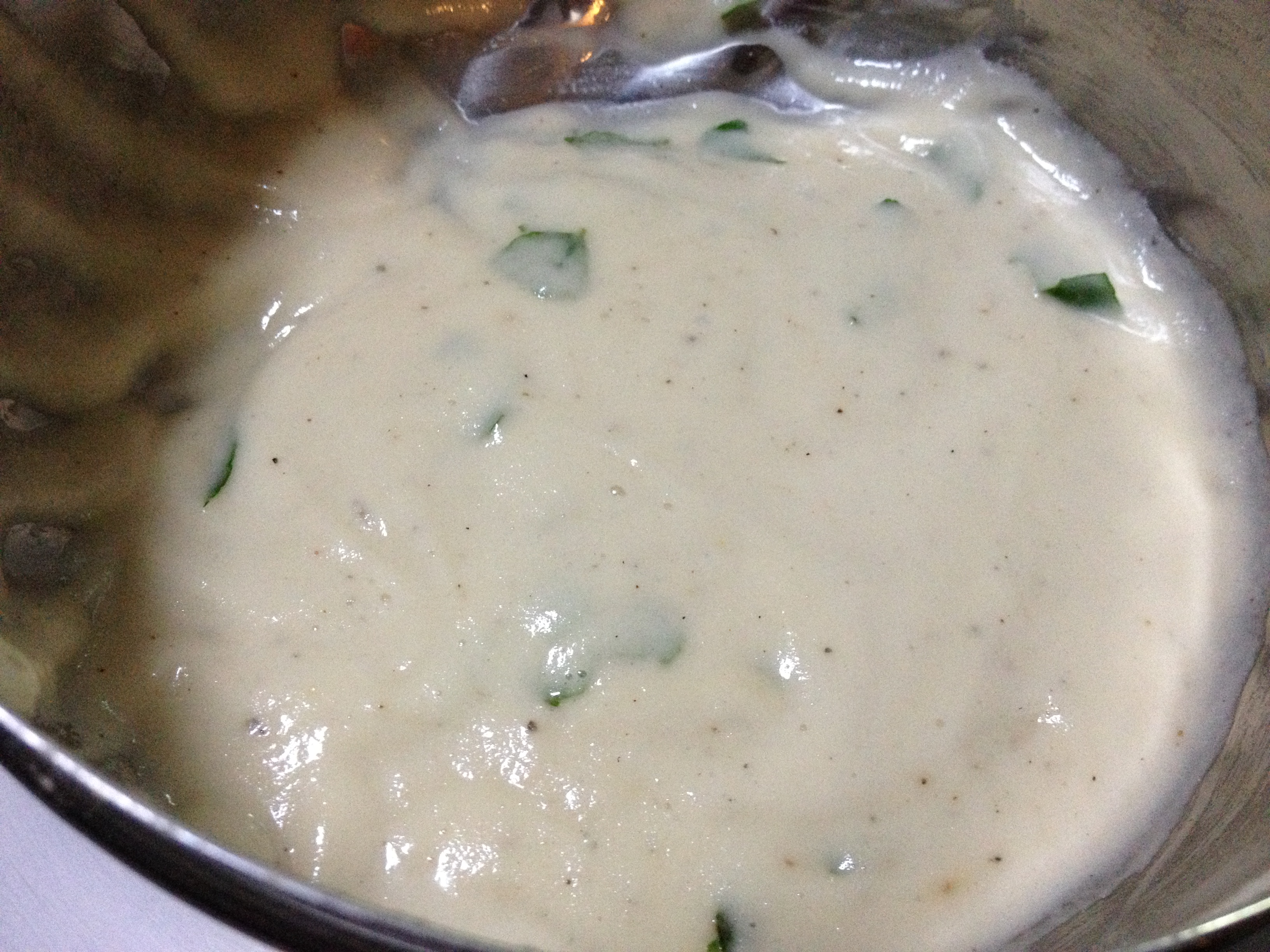
batter with chopped ingredients

IMG_1343


  • ulundham paruppu/dehusked black gram – 1 cup
  • arisi/rice (any non-sticky variety) -2 tsp
  • uppu/salt – as needed
  • vengayam/onions – 1 medium chopped or 4-5 shallots chopped
  • pachai milagai/green chilli – 2 no.s coarsely cut
  • kariveppilai/curry leaves – 7-8 leaves randomly split
  • inji/ginger – chopped or grated – small piece
  • perungayam/asafoetida – 1/4 tsp
  • yennai/oil – for deep frying


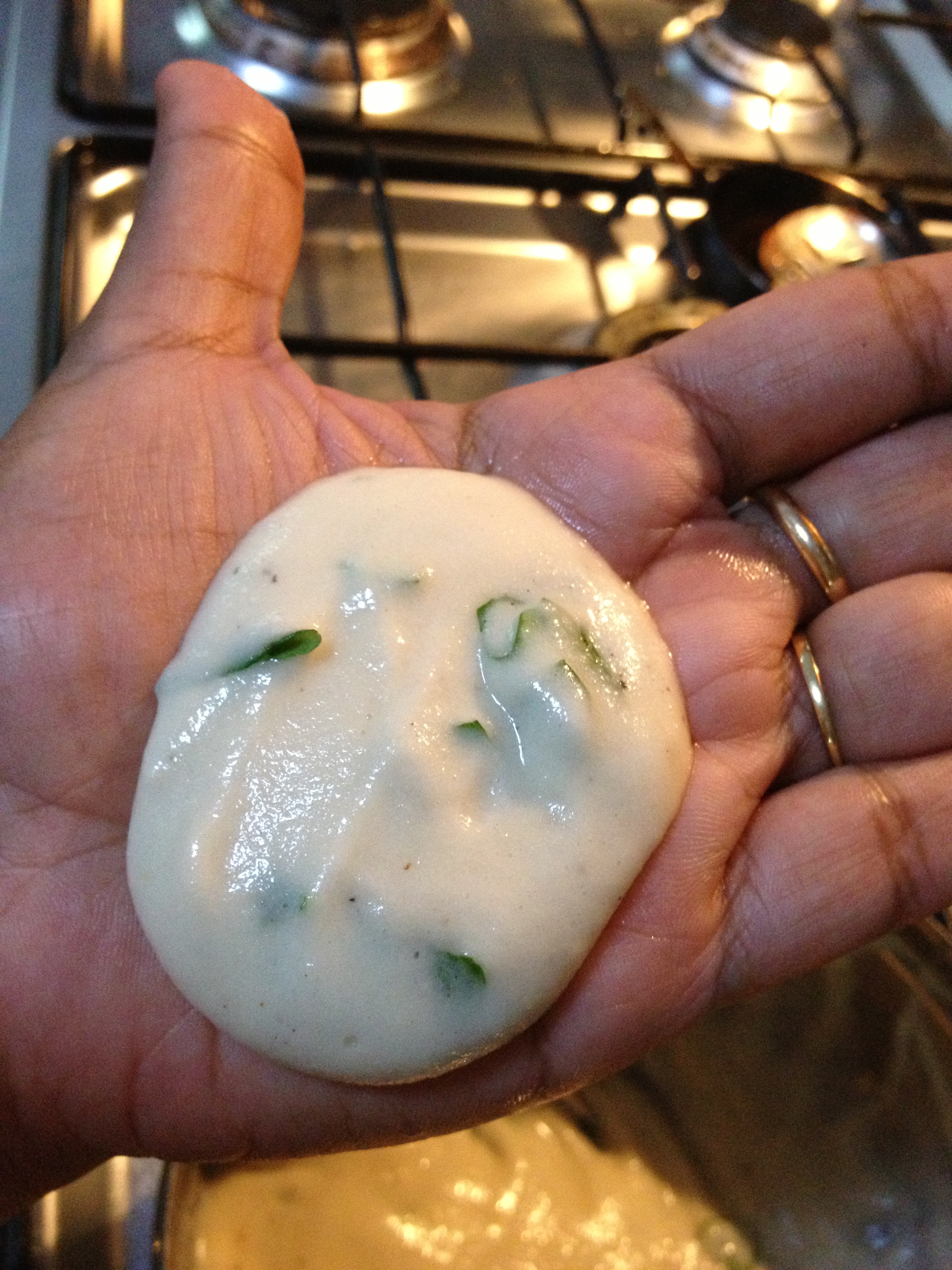
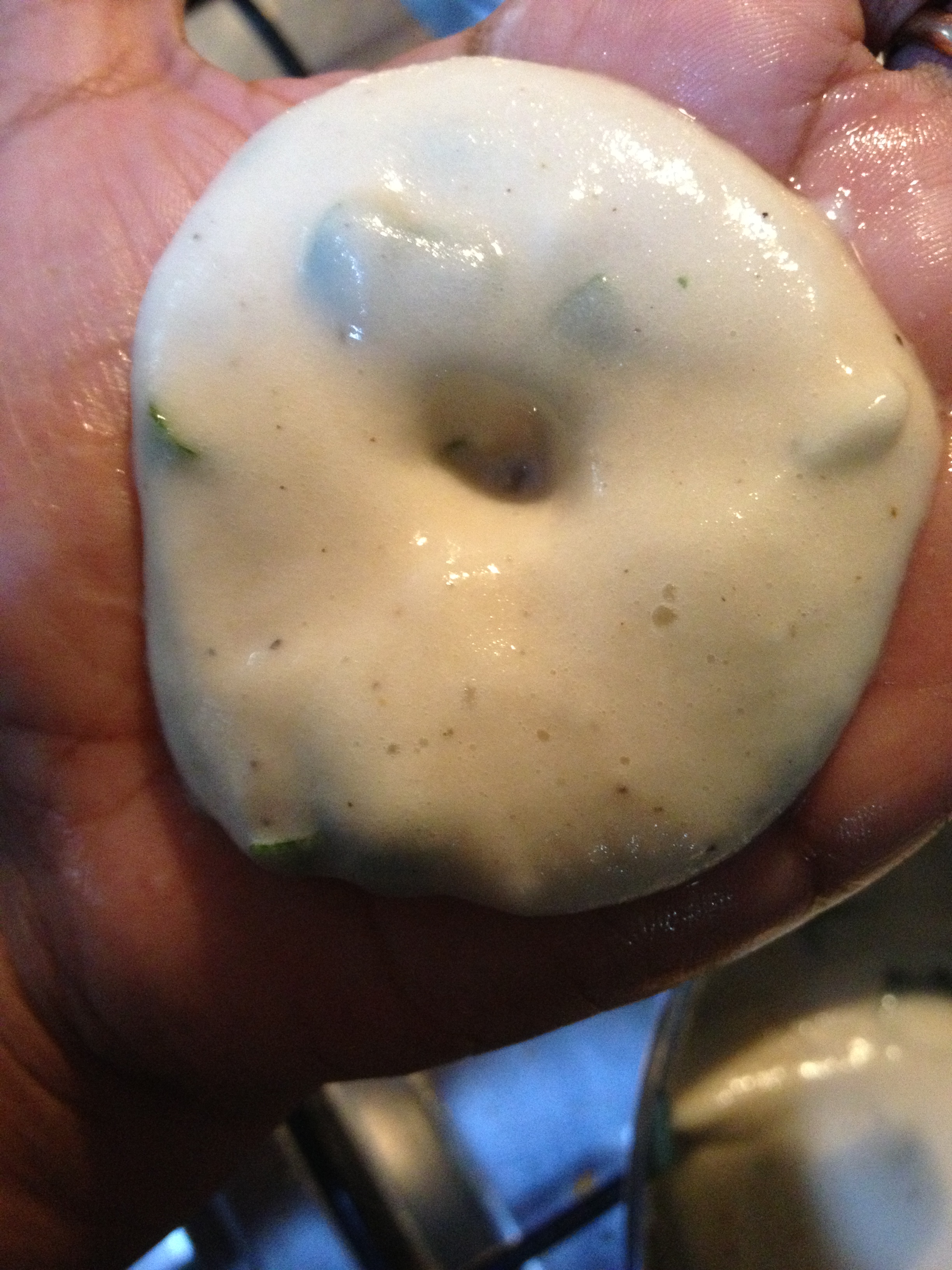
place batter on wet palm or banana leaf

IMG_1345


make a hole in middle

IMG_1350


Method of Preparation

  1. Wash and soak black gram and rice for a minimum of 2 hours
  2. Remove water and grind into a thick yet foamy batter by sprinkling very little water
  3. Add salt and all other chopped ingredients and mix well
  4. Place hard bottomed pan on stove and heat oil for deep frying
  5. For the doughnut shape of the vadai –  keep water in a small bowl
  6. Wipe palm of your hand or banana leaf with little water, take little batter, place on palm and make small hole in middle
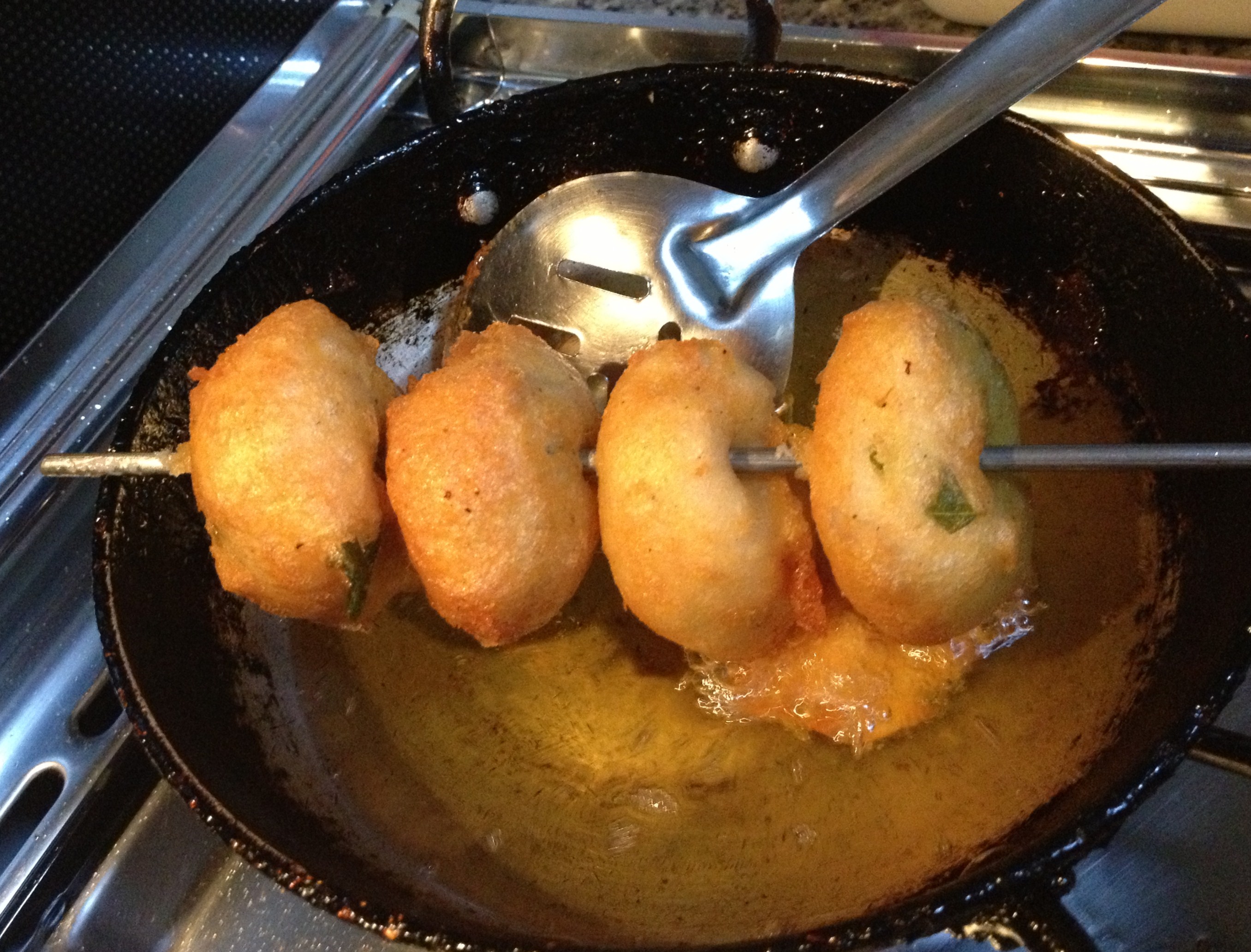
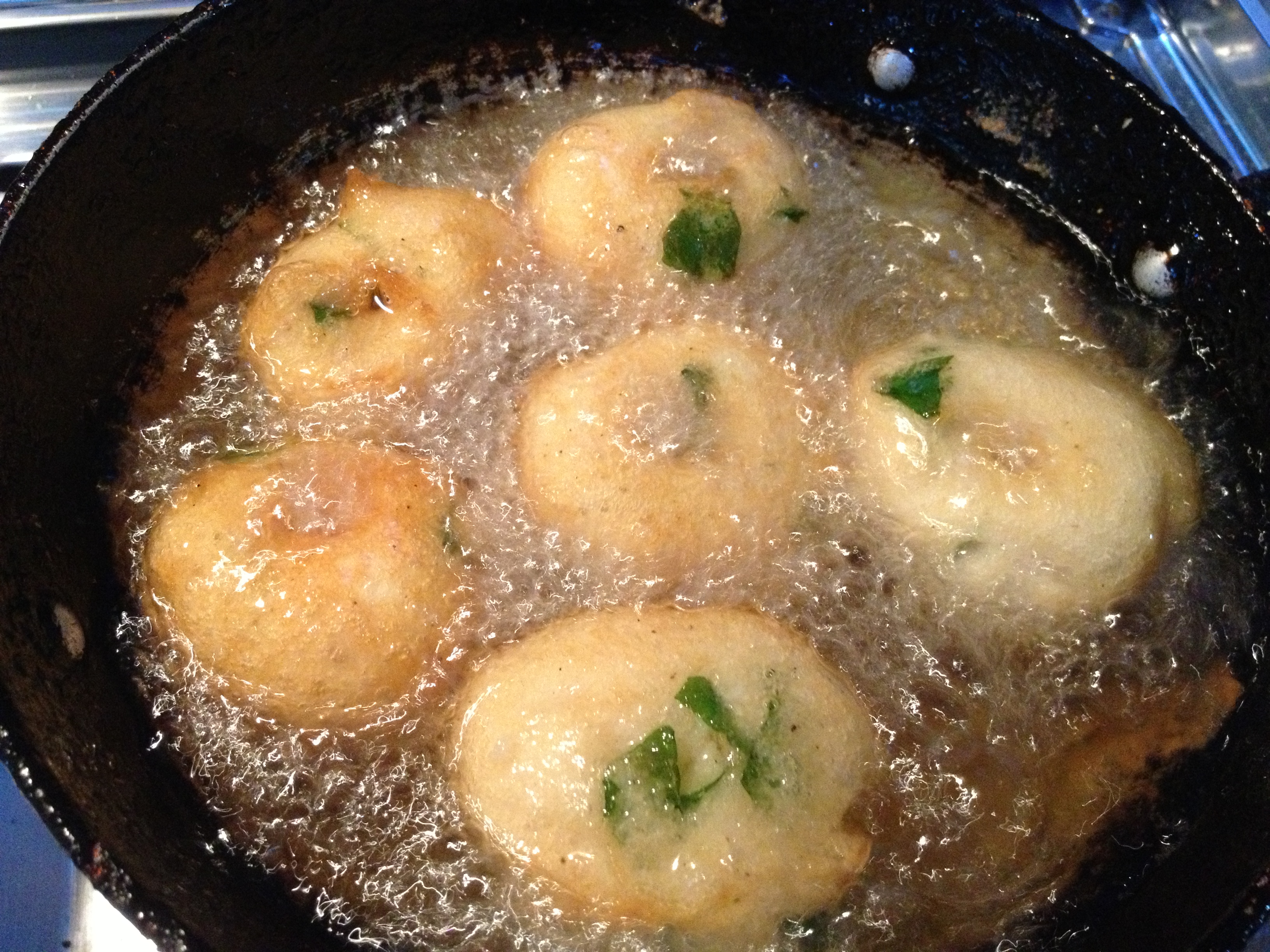
  7. Gently slide the vadai in oil and fry till golden brown
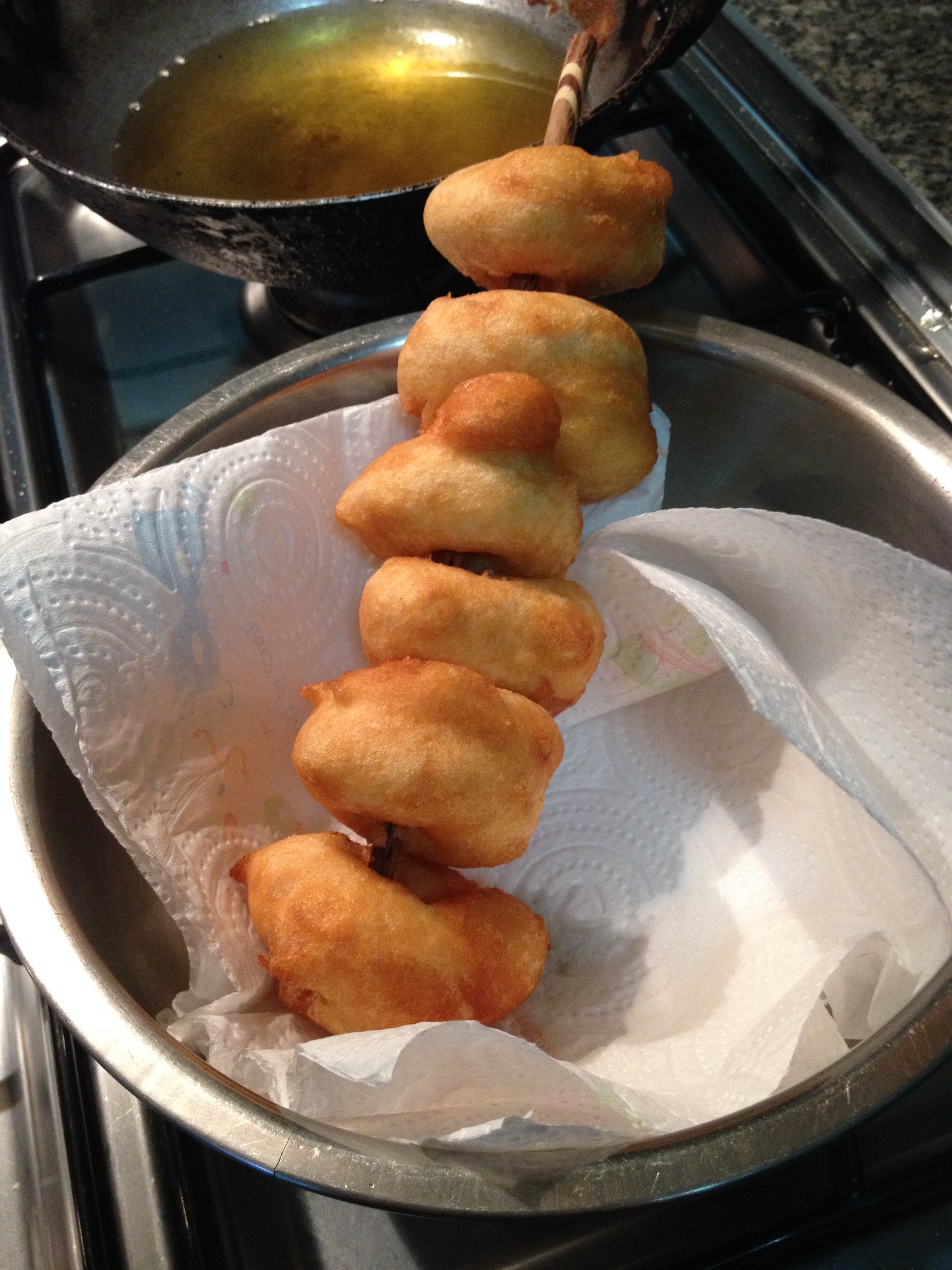
  8. Take out and place the vadais on kitchen tissue to absorb excess oil
  9. Serve hot with spicy chutney


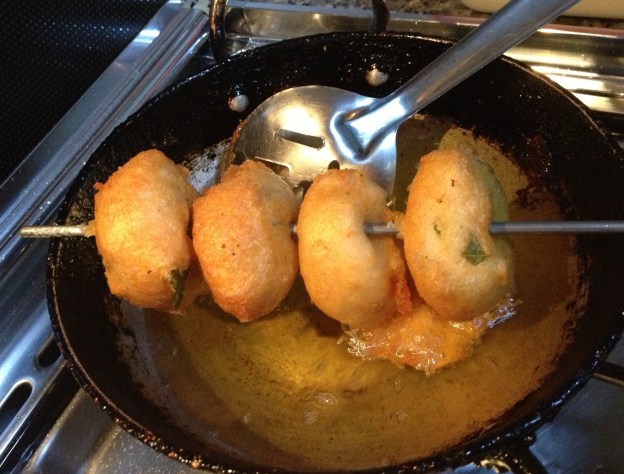
fry in hot oil

IMG_1341