Author Archives: dosaikal

Unknown's avatar

About dosaikal

A simple person who believes strong roots and values build up stronger generations; and good food and good food habits are one of the best gifts that one can give to their off springs.

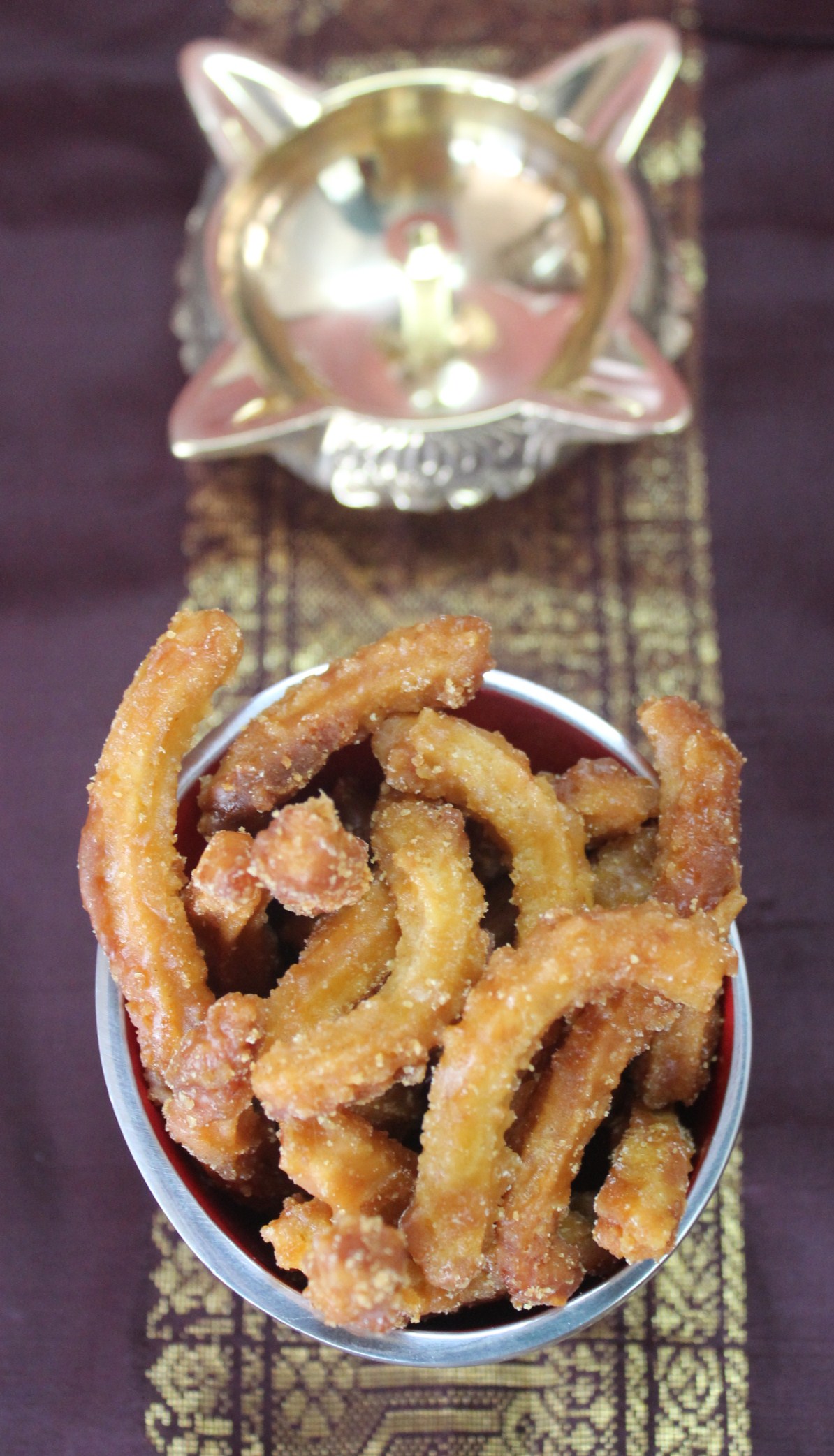
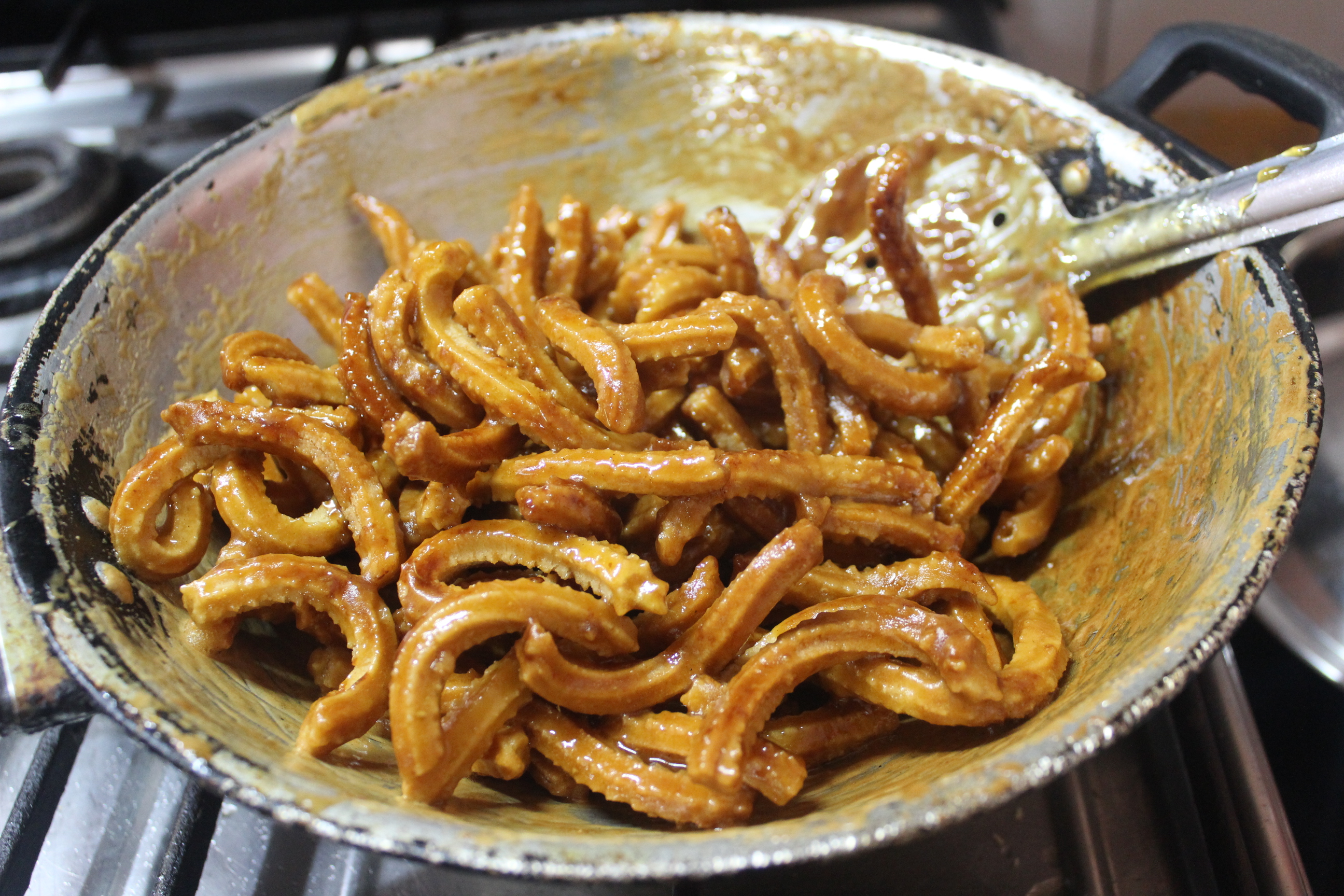
‘Manoharam’ – Gram Flour Fritters (Churros) dipped in jaggery syrup

426


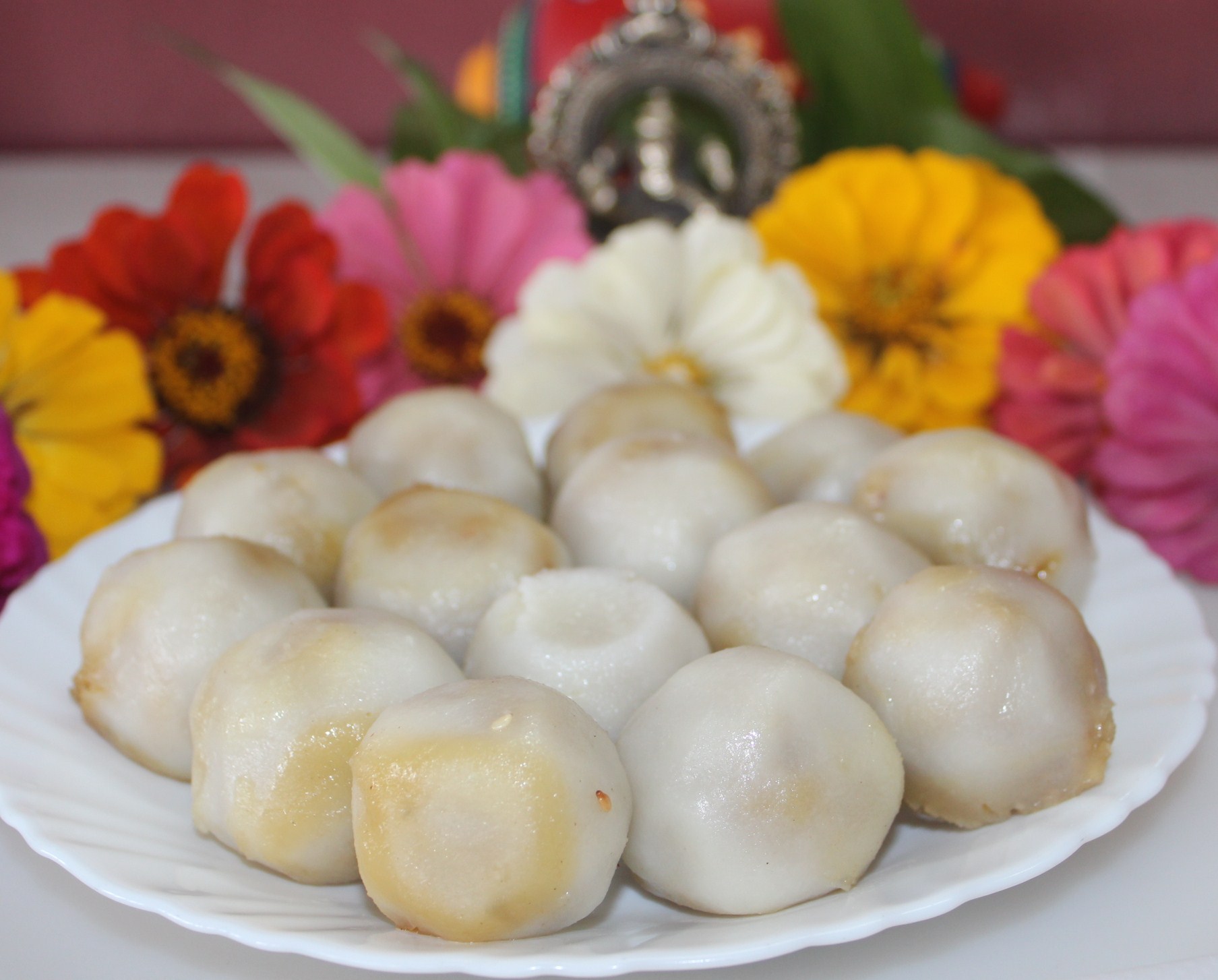
Manoharam is a traditional Tirunelveli sweet. The gram flour fritters soaked in gorgoeus golden-caramelly cane/palm jaggery syrup is a delight in every crispy bite.  With healthy Bengal gram flour and no white flour as the base and Unrefined Jaggery and no white sugar caramel for the coating, this is a no nonsense fritter as well as a childhood comfort snack.

When asked about the recipe, Amma fondly remembered both me and my little brother, having plates filled with these crispy fritters as an after school snack, giving more emphasis to the filled plates. Those were the days of no botheration of putting on weight, leave alone childhood obesity. We could burn the nutritious extra calories earned from healthy millet flours and cane and palm sugars, with the crazy amounts of time we spent playing in the streets. No store bought chips or cakes, buns or pastries loaded with white flour, white sugar and salt.

Manoharam and Spanish Churros – great observation by my Little Chef

Since I didn’t have the thenkuzhal/plain murukku – fritter disc, I used the magizhampoo disc – which is a sharp edged or star shaped fritter disc. Once the fritters were done, the little chef at home exclaimed that they resembled Spanish Churros, thanks to so many cookery shows in countless channels. That observation was quite a surprise to me indeed. When I put my eyes through her thought, the traditional Manoharam did look like Churros. While Churros are made with all purpose flour and coated with cinnamon sugar, Manoharam is made with gram flour, rice flour and a pinch of salt. And instead of the chocolate sauce to dip, we coat them in jaggery syrup. Both the tastes are completely different, created with local ingredients available – yet, there seems to be a slight similarity in the concept of making and looks.

If you don’t feel so, that’s ok.. let’s move on to recipe.

For a detail look at churros, I referred http://www.justataste.com/easy-homemade-churros-chocolate-sauce-recipe/

Manoharam

for fritters

  • kadalai maavu/bengal gram flour/besan – 1 cup
  • arisi maavu/rice flour – 1/2 cup
  • ulundha maavu/dehusked black gram flour/urad – 2 tsp
  • nei/clarified butter – 1 tbsp
  • uppu/salt – a pinch
  • thanneer/water – as needed


for syrup

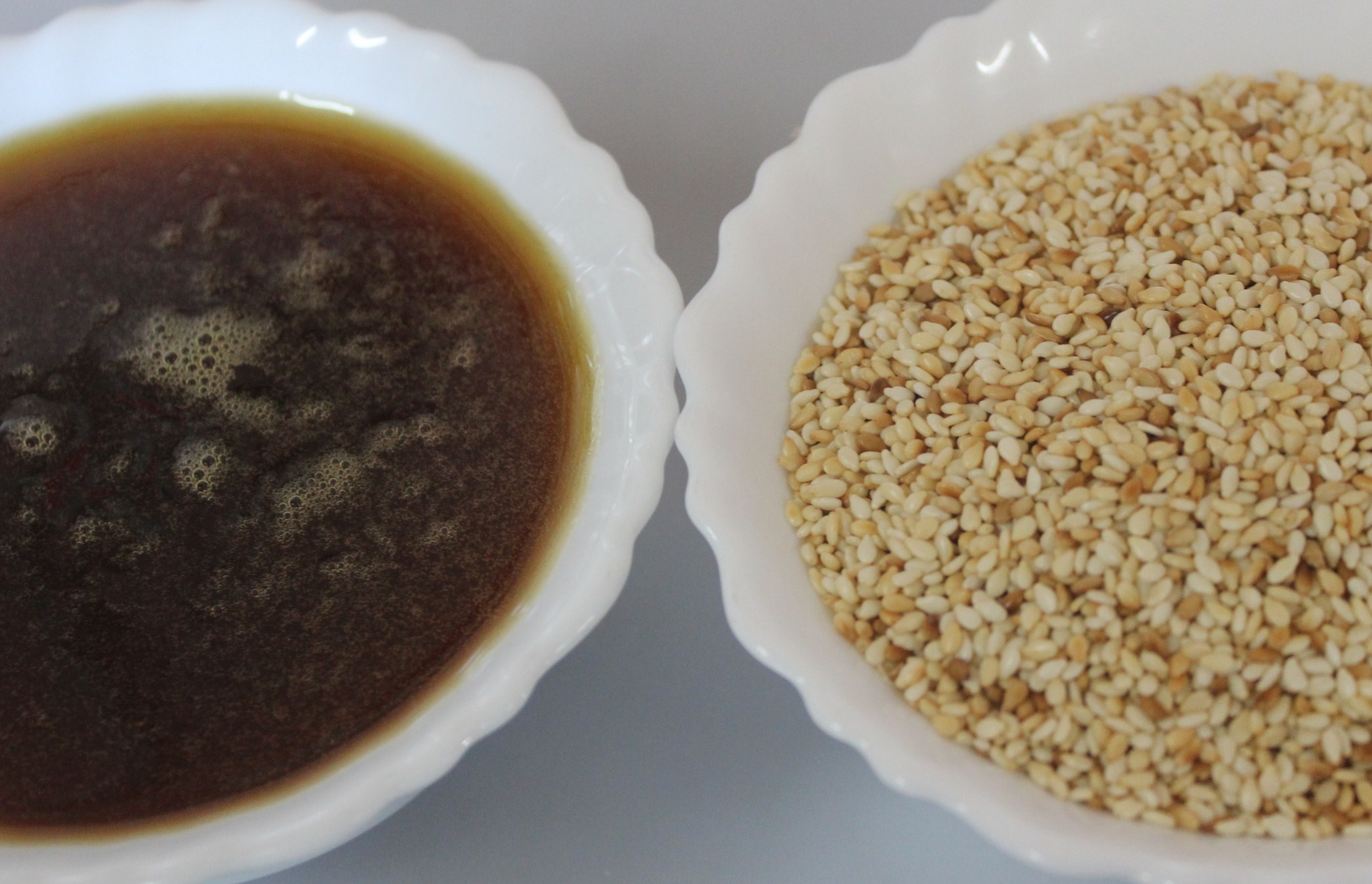
  • vellam/cane jaggery – 1 cup
  • thanneer/water = 1/2 cup
  • yelakkai podi/cardamom powder – 1/2 tsp
  • chukku podi/dry ginger powder – 1/2 tsp

Method of Preparation
Bengal gram flour and rice flour may be easily available in stores. Black gram flour should be made at home.

I. Making Black gram/Urad flour

  1. Heat a hard bottomed vessel or kadai
  2. Dry roast ulundham paruppu/urad dal – dehusked black gram till golden brown
  3. Grind to a fine powder in a blender
  4. Sieve it and keep aside
  5. Cool and Store in air tight container, and use when needed.


II. Making Fritters

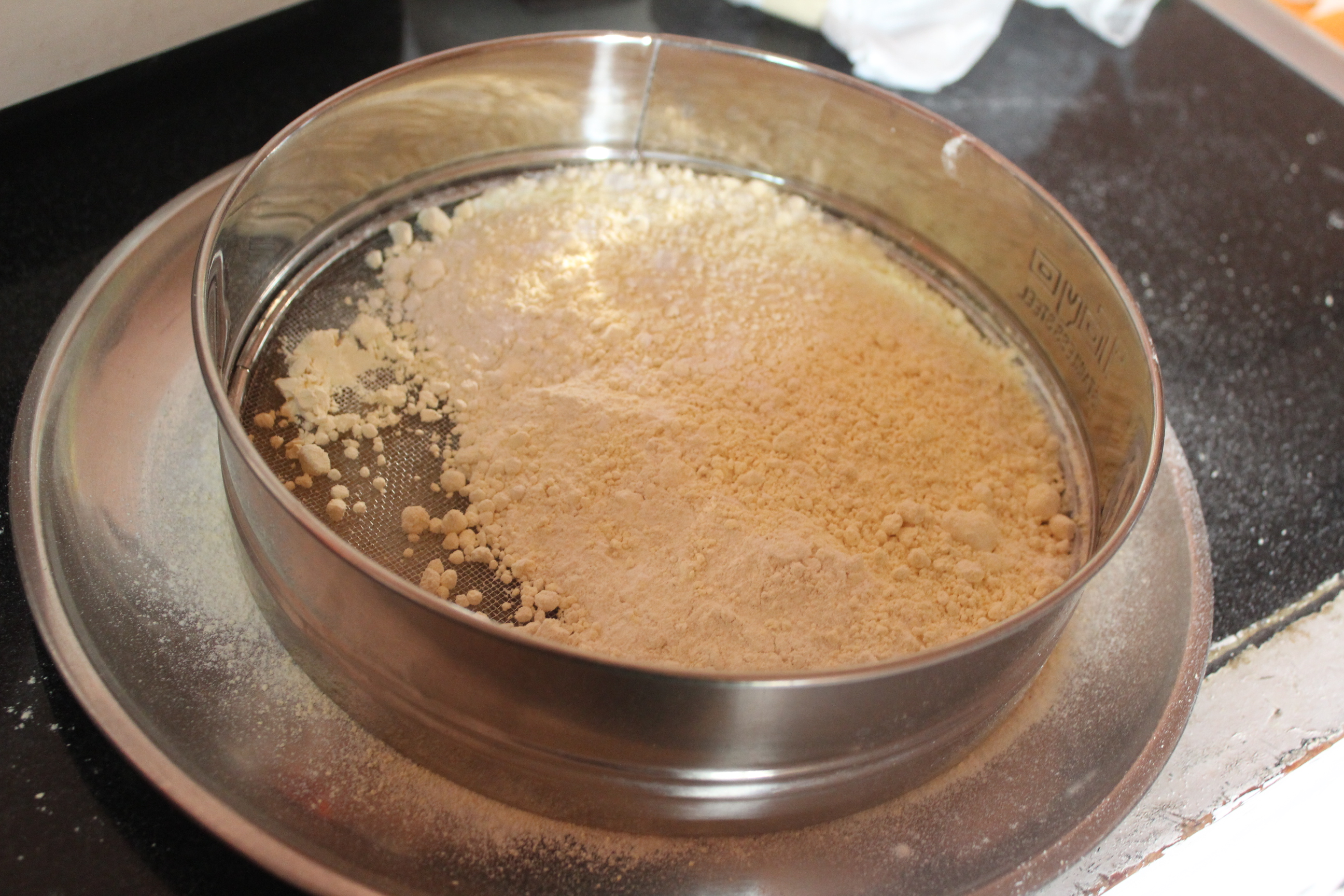
  1. Sieve all three flours without lumps

358

2. Add salt (just a pinch), clarified butter and just enough water to make a stiff dough
364


3. Heat oil in a pan for deep frying
4. Use any single holed disc of a Murukku Maker to make the fritter (for details of murukku maker and single holed disc, refer – https://dosaikal.com/the-all-time-favourite-murukku/
5. Take a portion of the dough and place inside the cylindrical container of the murukku maker and press into big circles,  directly inside hot oil
6. Fry both sides till golden brown


365
7. Remove in kitchen tissue to absorb excess oil

8. Break them into finger sized pieces
370


9. Keep them aside till we make the jaggery coating.


III. Making Jaggery Syrup and Coating the Fritters

  1. Let jaggery dissolve in water
  2. Filter the liquid to remove impurities
  3. Take a pan and pour the jaggery water
  4. Add cardamom powder and dry ginger powder
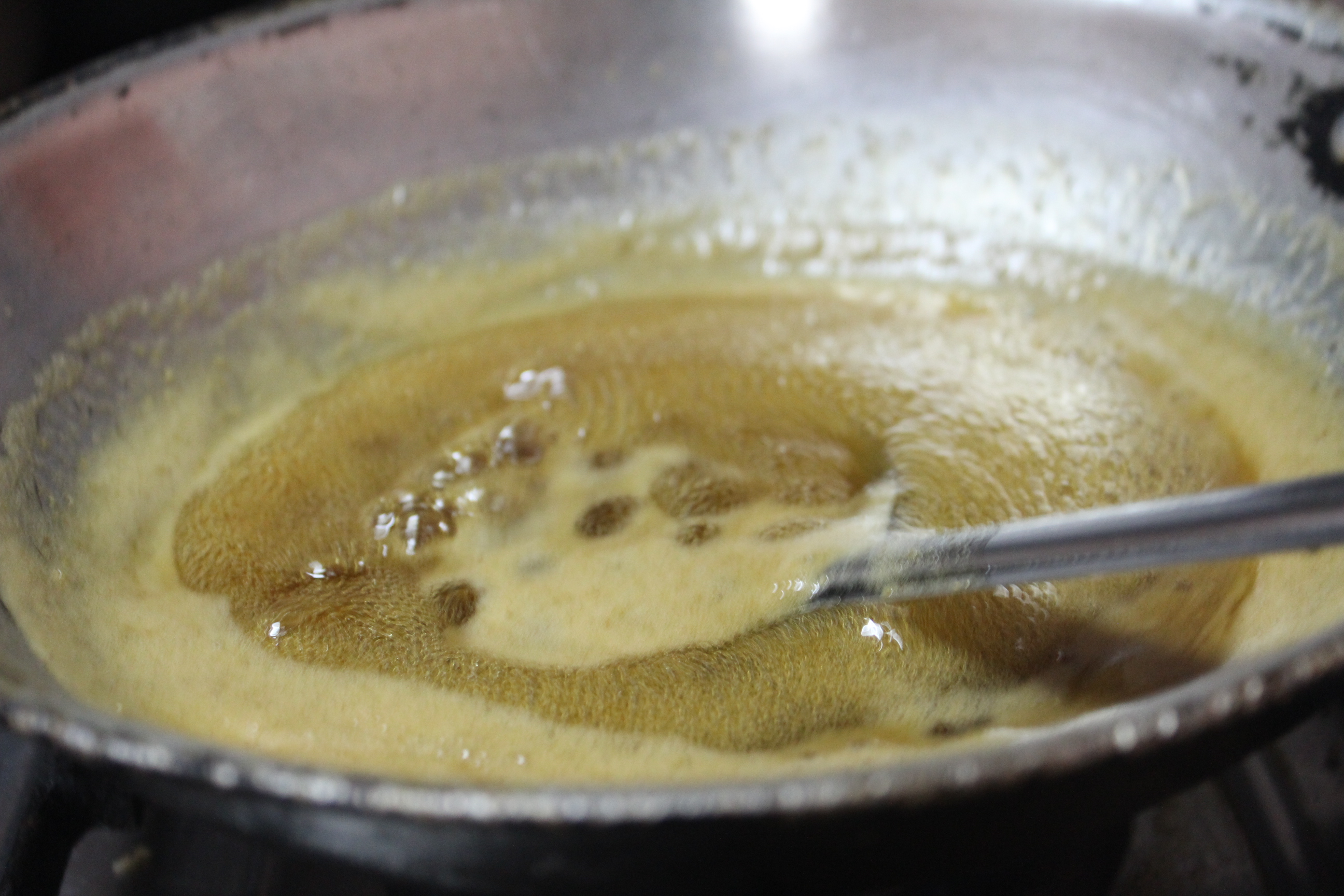
  5. Let the liquid come to a single string consistency or thick enough to roll the fritters through
  6. Keep the stove in sim position to judge the right syrup consistency

375

7. Once the liquid has become a syrup, drop all the fritters and gently mix well in the syrup

8. Let the stove be on and the thick hot syrup would coat the fritters well and reach the required crisp texture


381
9. When the syrup is thick and coated completely in the fritters, switch off stove

390

10. Jaggery coated glowing Manoharam is ready.


427


Happy Deepavali 2016 with Thiripagam – an easy variant of Badam Halwa


452


pre-diwali and diwali delicacies

295423
Deepavali falls on the 29th of October, 2016 in Tamilnadu. If Deepavali means lots of happiness and loads of sweets and snacks- the festivity arrived a week earlier at home.

In the earlier decades of joint families or extended families close by, or at least a few siblings to share and pick up the last bits of sweets and snacks from the thooku chatti, festivals meant making of sweets and savories literally in several kilograms if not tonnes.

Presently, with nuclear families, especially with single children or children in different destinations, the sweet and savories story isn’t a kilogram affair, but has become a ‘grammy’ indulgence. Additionally, there is no aachi-amma duo to occupy the kitchen for consecutive hours, patiently filling the big chattis with goodies. Making so many delicacies in a couple of days fit for consumption for diwali and a few days beyond has become too strenuous now, atleast for me.

But, when the most important ingredient of a good festival – the energy to make and share traditional sweets and savories was still bright and shining as the lights of Diwali, there arose a patient plan. The patience behind making several goodies gave rise to a Pre-Diwali weekend.Instead of slogging in kitchen with so many things in mind, I started off with a few last weekend. Festivity started a week earlier, yes- for the sheer temptation of making more and introducing more traditional sweets and snacks.

Cooking is a bliss when you have people around to gobble it in a jiffy. Now, I really miss the ever hungry tummy of my little brother, who let amma and aachi feel delighted to make more and more ‘norukku theeni’ aka nibblers with the same enthusiasm for years together.

Yet, I have a little nibble hunter, who is as enthusiastic to taste new palagaram/snacks as to cook a few.

These are a few of my little one’s contributions for this Diwali…


magizhampoo murukku by her

312

And also, a few kiliyanchatti/diyas hand painted for several occasions

painted lamps in gorgeous colors

458

and this one’s already lit with imagination

493


For the Pre-Diwali weekend, I made

  1. Gulab Jamun
  2. murukku in two different shapes

and  3. dragonny jilebis (those first attempt jilebis which turned out off-shape)

Mid way in the week, started off with the true notion of cooking traditional sweets from the place I hail from – Tirunelveli.
Thiripagam, Manoharam and Kara Sevu passed to the top of the list. If the first two resemble names of mythical characters beyond seas, that’s merely co-incidental. Not to worry, they are sweets and the third one is a popular spicy savory, available throughout South India.


444


First, to the most uncommon among the three – Thiripagam.
When Amma had already started with Thiripagam – a long forgotten sweet, I just grabbed the opportunity of introducing the same here. Thanks to her, took step by step instructions to make.

I was introduced to this elegantly presented sweet in my uncle’s marriage. The feast had this different sweet, but with a very familiar taste. Was it Mysore Pak or Badam Halwa ? The former is the ghee oozing/melting in the mouth sweet with bengal gram flour and the latter is the wonder pudding with the goodness of almonds. Now, Thiripagam is somewhere between both. Kadalai Maavu or Bengal Gram Flour is the base ingredient with equal proportion of nei/clarified butter. Add the sugar and it would very well become mysore pak. This sweet has an additional inclusion of milk to the gram flour, that acts as an alternate to the almond milky flavor. These might be reasons for the resemblance of Badam Halwa and familiarity of Mysore Pak.

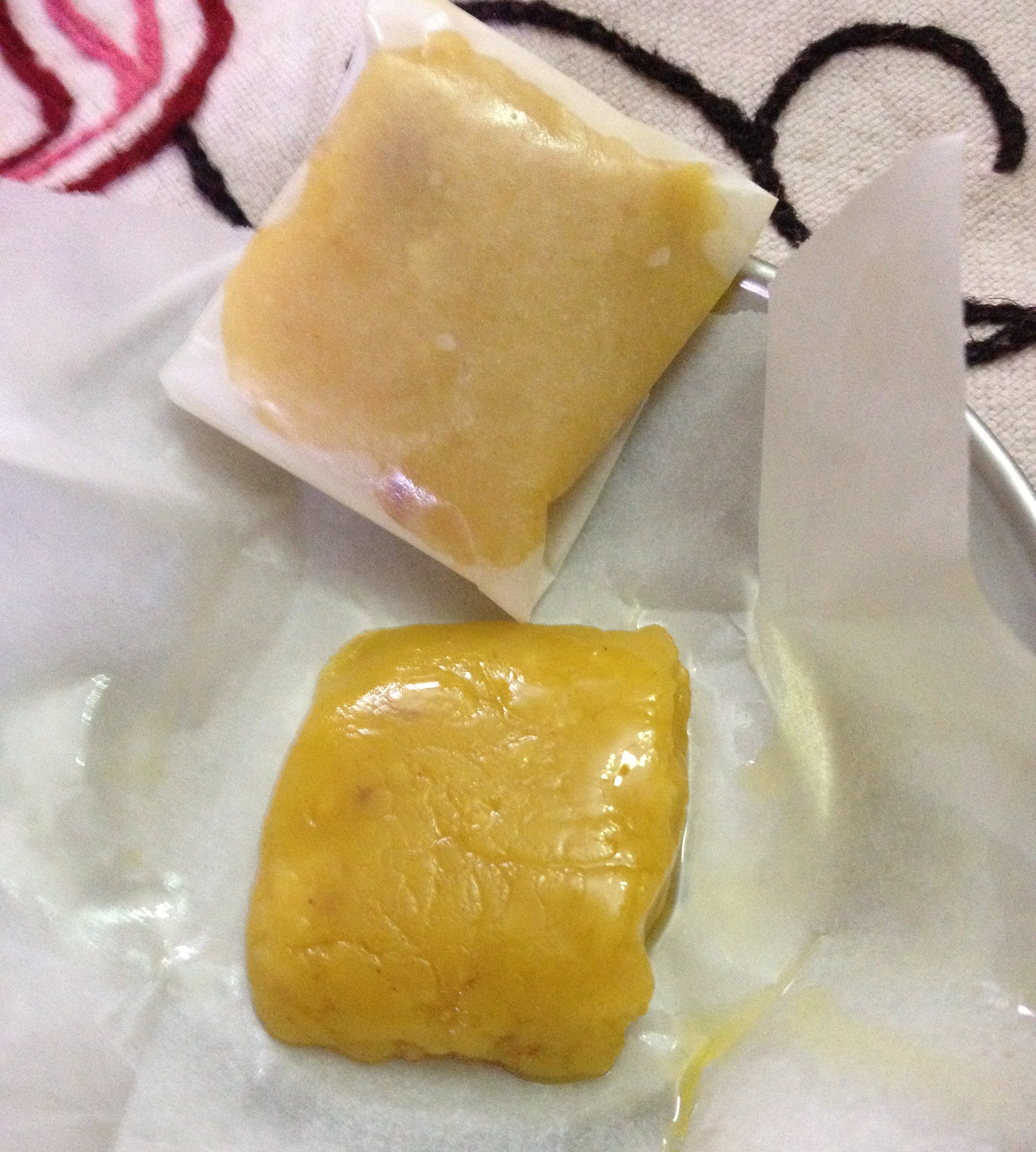
The pudding is shaped in rectangles or squares and wrapped in cookie sheet/butter paper. This is what aids in its elegant presentation with the distinct taste.

If made in a micro wave, this is certainly a 10 minute sweet to prepare. But since I don’t prefer micro wave cooking, I’ve done in the pan, which took about 30 minutes of stirring to reach the adequate kali/halwa consistency.

Thiripagam


471
Thiripagam, – which means three parts, where the name must have come from the three core ingredients – bengal gram flour, clarified butter and milk.


img_5177
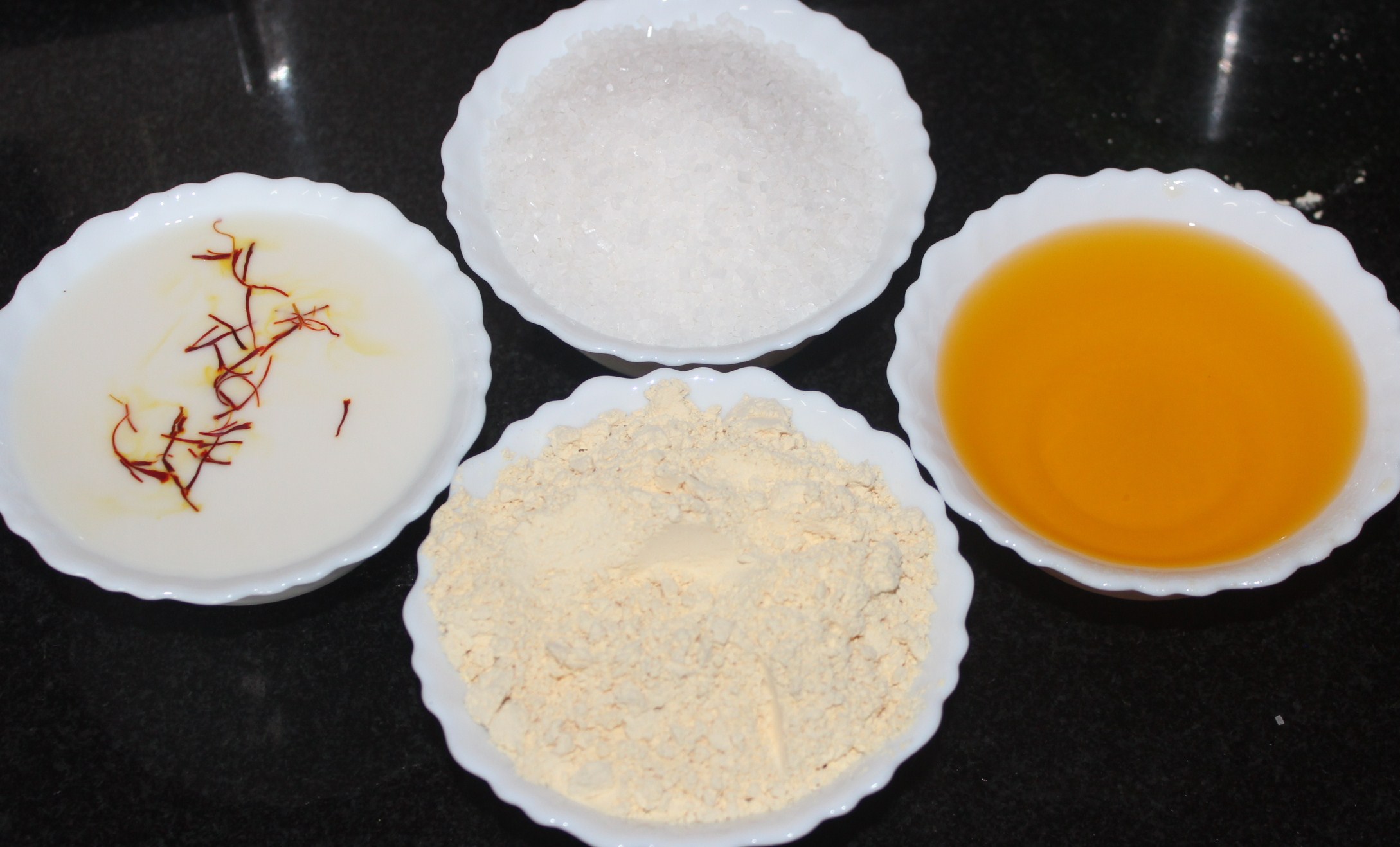
Ingredients (makes 16 pieces)


330


  • kadalai maavu/bengal gram flour (besan) – 1 cup
  • nei/clarified butter (ghee) – 1 cup
  • paal/milk – 1 cup
  • cheeni/sugar – 3/4 cup
  • kungumapoo/saffron – generous strands


Though Amma mentioned the quantity of sugar could vary between 1 1/4 to 1 1/2 cups, I added only 3/4th of a cup. One can alter as per their sweet preference. Another alteration I made was the deduction of pachai karpooram/edible camphor. The flavor of the sweet comes from edible camphor, but I thought saffron could be a flavorful component to this exceptional sweet.


Method of Preparation

  1. Sieve kadalai maavu/bengal gram flour and keep ready
  2. Warm milk and mix the saffron strands
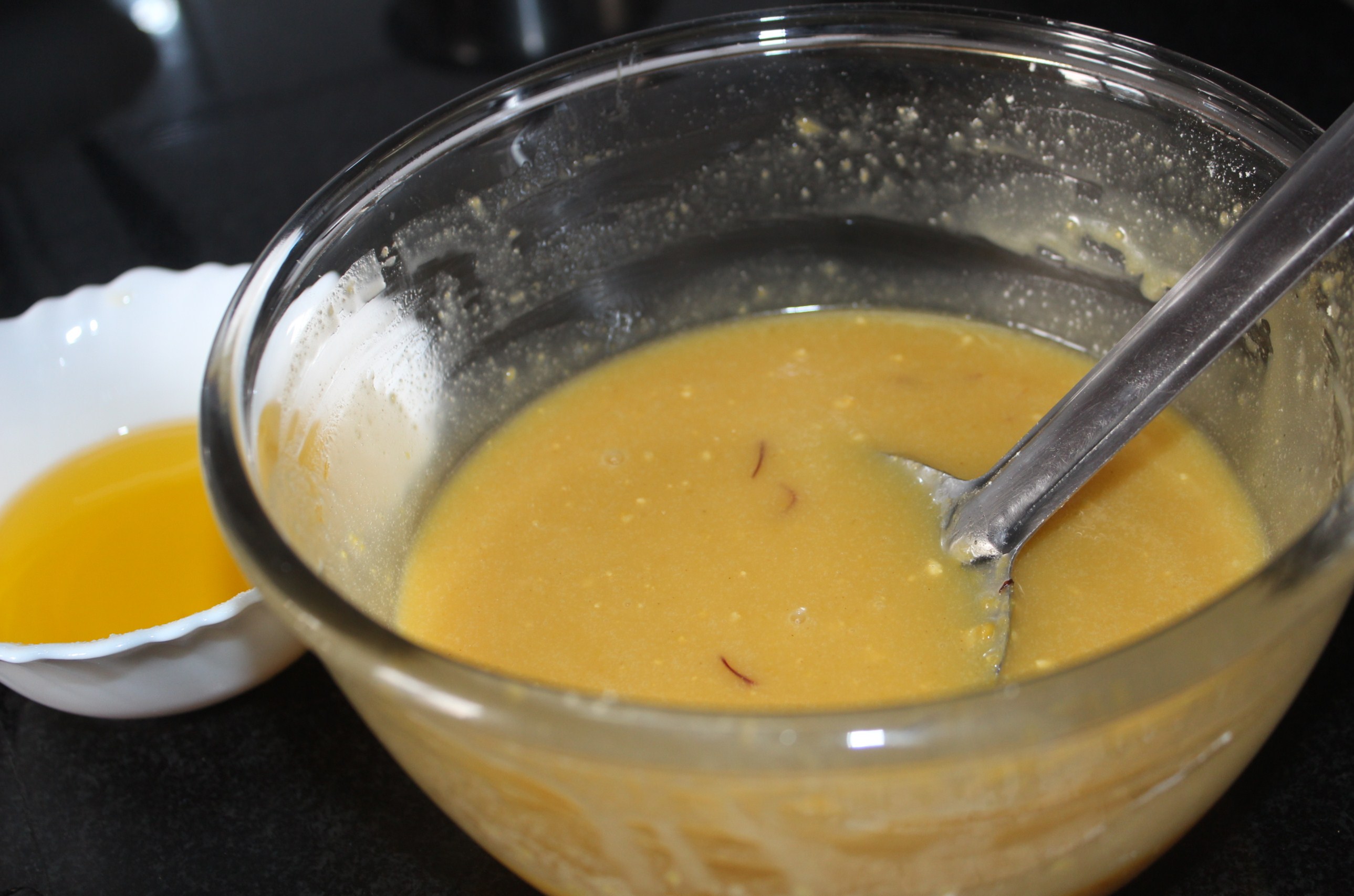
  3. In a bowl, mix the sieved flour, sugar, 1/2 cup clarified butter and milk with saffron – without lumps


341


4. Having the batter without lumps is very important – I used a fork to press the few lumps that was left over in the batter

345

5. Keep the other 1/2 cup clarified butter to add in the end when pudding is almost done

6. Mix well till all sugar is dissolved

7. Heat the batter in a non-stick pan and let it boil

8. Keep stirring and when it starts boiling, simmer the burner


347

9. The batter would reach a thicker consistency in about 30 minutes time in sim position


351
10. At this stage, pour the reserved 1/2 cup clarified butter and stir well


354

11. When the kali/halwa has become thick enough to be spread in a plate, switch off stove

12. Spread the halwa in a greased plate and cut into rectangular/square piece when warm

13. Take cookie sheets and cut into squares enough to fold the thiripagam pieces

14. Place the piece inside the cookie sheet and fold into beautiful squares


img_5177

15. Thiripagam is ready in its perfect presentation.


The Pinkalicious Jam – with Pomegranate-Beetroot


dosaikal-239-beet-pomegranate-jam-102
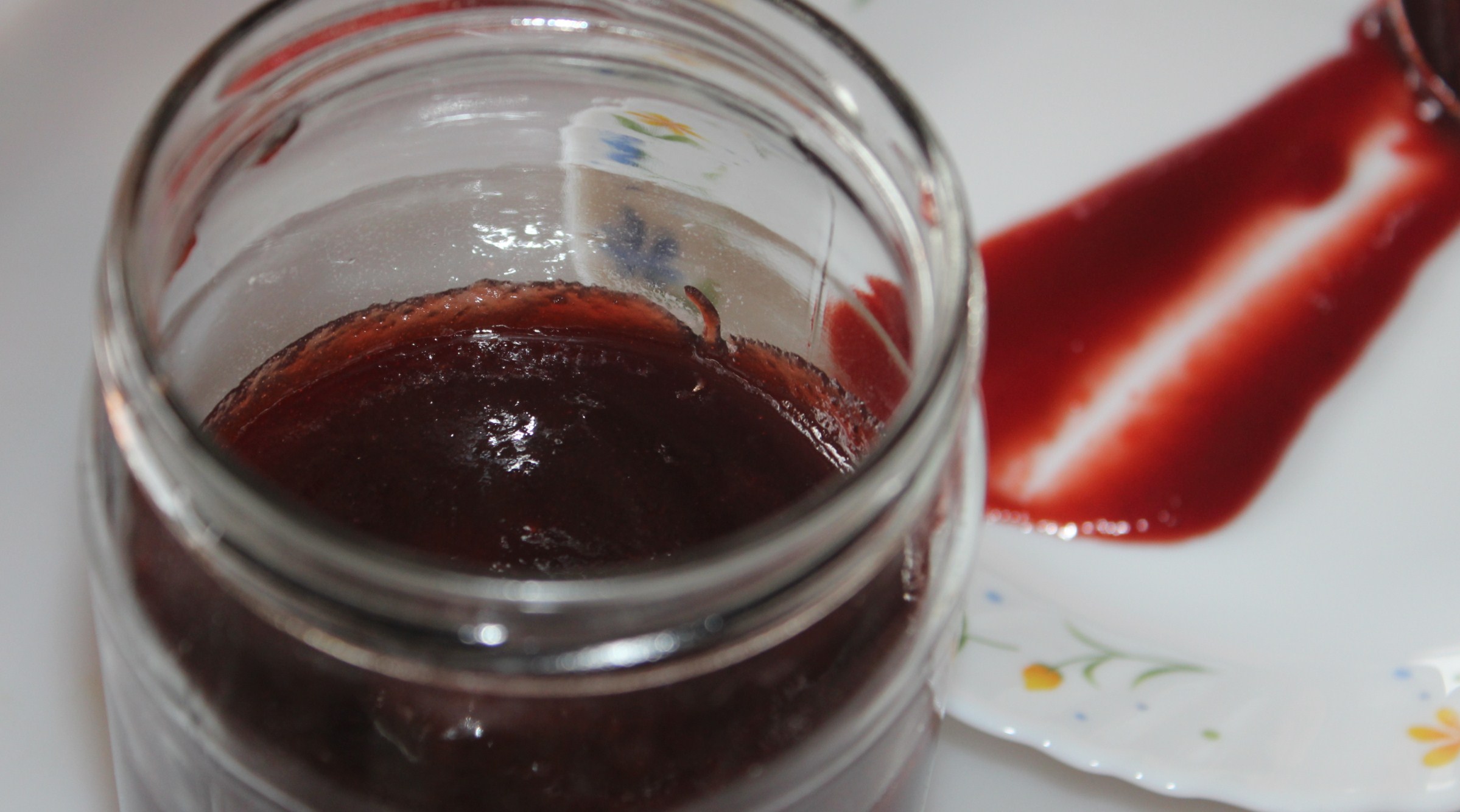
The Pomegranate and Beetroot mixture reminds me of the stories in the Pinkalicious Series of children’s book that my daughter used to read few years ago. Those are interesting stories on a child’s love for pink. This fruit-vegetable combination exhibits the same color and I hope the jam brings the same brightness to your morning breakfast bread too.

There can be numerous passions and obsessions in everyone’s life. It’s a thin line that differentiates both. And when passion turns into obsession, it sometimes becomes a burden. But let’s think otherwise… obsession clubbed with passion can certainly be a joy forever. Why not? Especially, when that obsession is concerned with the well-being of your loved ones, and aids in better life-style through effective foods – there’s no point of having negativity about the word ‘Obsession’.

Among my various passions that have turned into obsessions, is the latest one on breads and jams. Jams and Preserves with the best of simple ingredients, along with the goodness of fresh fruits are heated up in my kitchen and stored in beautiful bottles. This time, it is pomegranate and beetroot. The bright color that both these ingredients impart is no match to any artificial pink. The antioxidants preserved by nature in these both are well-known.

How have I been using them separately –

While pomegranates have been included as fresh juices, combined with sprouts for breakfast and seeds mixed with yoghurt rice for the sweet-sour flavor; beetroot has been included as a dry vegetable curry (poriyal), beetroot halwa (sweet pudding) and beetroot cakes (healthy version of red velvet).

I have been passionately incorporating a combination of beetroot and pomegranate in my salads along with cucumber and tomatoes. But when passion turned into obsession, I chose to preserve the iron-rich combo pack.


dosaikal-239-beet-pomegranate-jam-016dosaikal-239-beet-pomegranate-jam-010


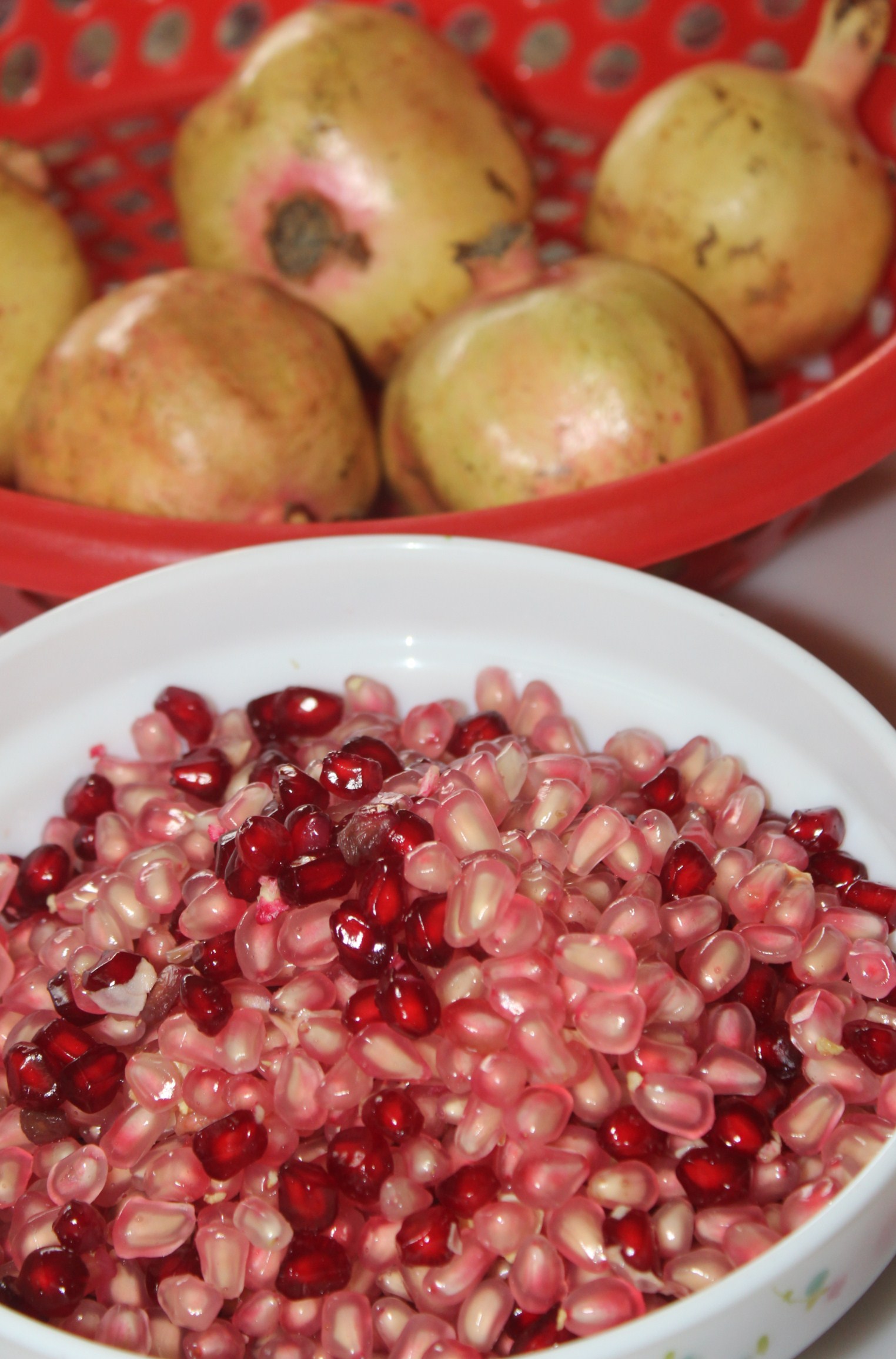
When I had a few hand-picked pomegranates fresh from the garden, the idea of making a jam came up. But with the liquid juice from the fruit might need loads of sugar and hours of time to thicken. Additionally, the pomegranate variety was white, not the blood red seeds, that would add color to the jam by itself. So, why not combine another similar colored healthy ingredient, that would economize the usage of extra sugar and also save exhaustive time, in bringing a juice to jam consistency. Beetroot came to my rescue. I also added a couple of red seeded pomegranate for my satisfaction of added color. Actually, with addition of beetroot, this was really not needed.

The usage the beetroot puree, has most importantly helped not wasting the nutrient value of the iron-rich fruit in extended cooking, plus contributing to the iron content of the end product-jam. Hence, the idea of adding beetroot puree to pomegranate juice in Jam making, has added volume and color (hope this doesn’t sound like an artificial hair color advertisement) to the wonderful preserve.


Pomegranate-Beetroot Jam

with flax-seed bread

dosaikal-239-beet-pomegranate-jam-117


dosaikal-239-beet-pomegranate-jam-075
Ingredients

  • pomegranate – 10 no.s – juice from 10 pomegranates – little less than 1 lr (I got 980 ml app)
  • beetroot – 1 kg – puree from 1 kg cooked beetroot – 550 gm (little more/little less)
  • sugar – 2 cups – 300 gms
  • lemon – 1/2 cup (juice of app. 8-10 small lemons)


Method of Preparation
Step I – Pomegranates


dosaikal-239-beet-pomegranate-jam-036

  1. Remove seeds of pomegranates and place in a wide bowl.
  2. Wash well and fill in more water to immerse the seeds.
  3. This helps the white fibrous layer to get separated on the water surface and seeds stay beneath.
  4. Strain water and extract juice; strain well for a clear liquid.


dosaikal-239-beet-pomegranate-jam-044


Step II – Beetroot


dosaikal-239-beet-pomegranate-jam-045

  1. Peel and wash beetroot well
  2. Cut random pieces and let it cook in a pressure cooker. Do not add water to the beets, instead pour water in the bottom of the cooker and place the bowl with beetroot without water and cook; close the bowl with lid.
  3. We are not steaming here. So, do not forget the whistle in the cooker.
  4. Or cook as you please – the notion is that, we don’t need any added water from cooked beets to make puree.
  5. Cook till done. I gave one whistle in full flame, reduced and left it for two more whistles in sim flame, and opened the cooker when all pressure was released by itself.
  6. Take out cooked beetroot pieces and make a puree in a blender.


Step III – Sterilize bottles

  1. Wash the bottles and lids to store jam very well with no food particles sticking to it.
  2. Take a big bowl and place the washed bottles and lids on sides.
  3. Fill water in the bowl immersing the bottles.
  4. Let the water come to a full boil.
  5. Close with lid and let it stay till the jam is done.


Step IV – Plate in freezer


dosaikal-239-beet-pomegranate-jam-059
Place a plate in the freezer and a few spoons; we need to check for consistency later by swiping the jam in the chilled plate.


Step V – Making of Jam
1.In a heavy bottomed pan/utensil, mix pomegranate juice and beetroot puree and bring to boil

2. Simmer and let cook for ten minutes. You can find a foamy layer settle on top of the boiling liquid. Gently remove foam and let it simmer.


the pinkalicious puree

dosaikal-239-beet-pomegranate-jam-053


3. After removal of foam, add sugar and lemon juice and cook over medium heat.

4. Once the mixture becomes thick, check for consistency : Take the plate from the freezer- place a spoonful of jam on the plate and swipe splitting into two halves. If it sets well and isn’t flowing on the plate, jam is done. Else, cook for some more time.

5. When the jam has reached the required consistency, switched off flame.

6. Pour hot jam into sterilized hot bottles directly from stove and close lid tightly.


dosaikal-239-beet-pomegranate-jam-062

7. Do not pour hot jam in cold bottles, otherwise the bottles would crack.

8. Leave the jam to cool by itself. Do not engage in cooling by other means. That would affect the setting of the Jam.

9. If you find the jam is less in sugar after done, place jam in pan, add more sugar to taste and boil again. If it is too thick add very little water to loosen jam and boil it back to jam consistency with added sugar.

10. Enjoy with home-made bread or bun. Also use in-between biscuits.


dosaikal-239-beet-pomegranate-jam-098


My good bread – a success story!


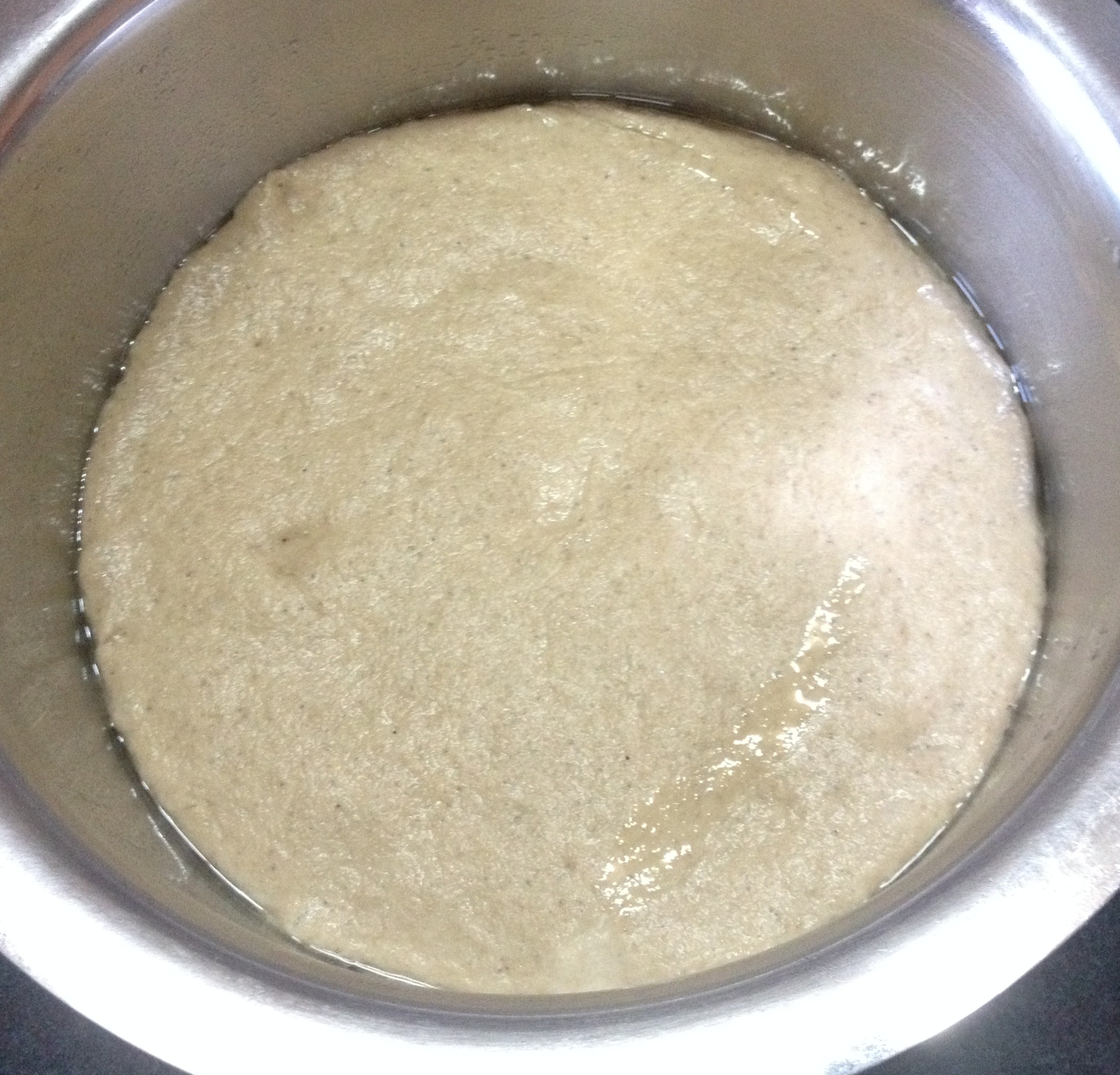
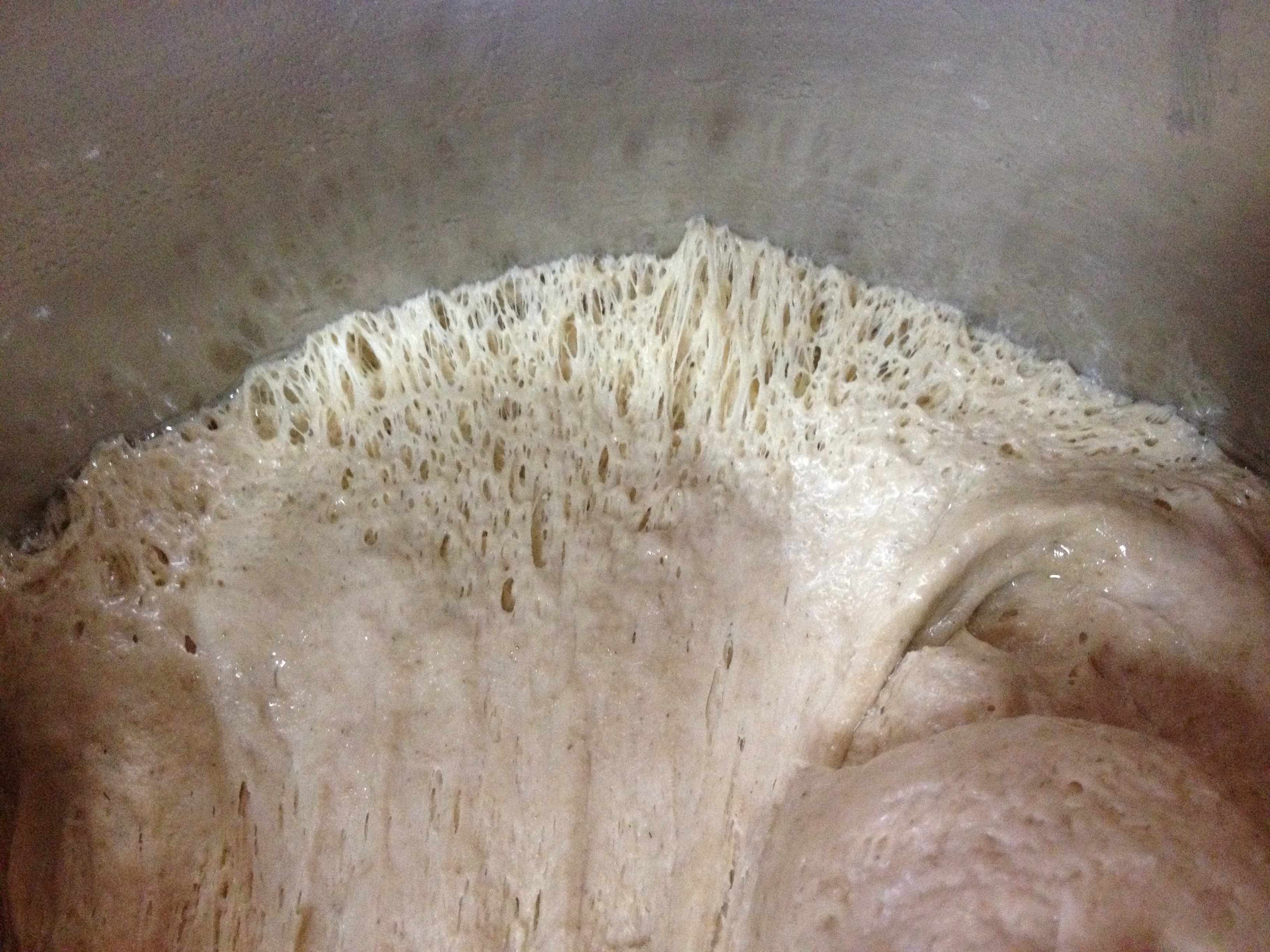
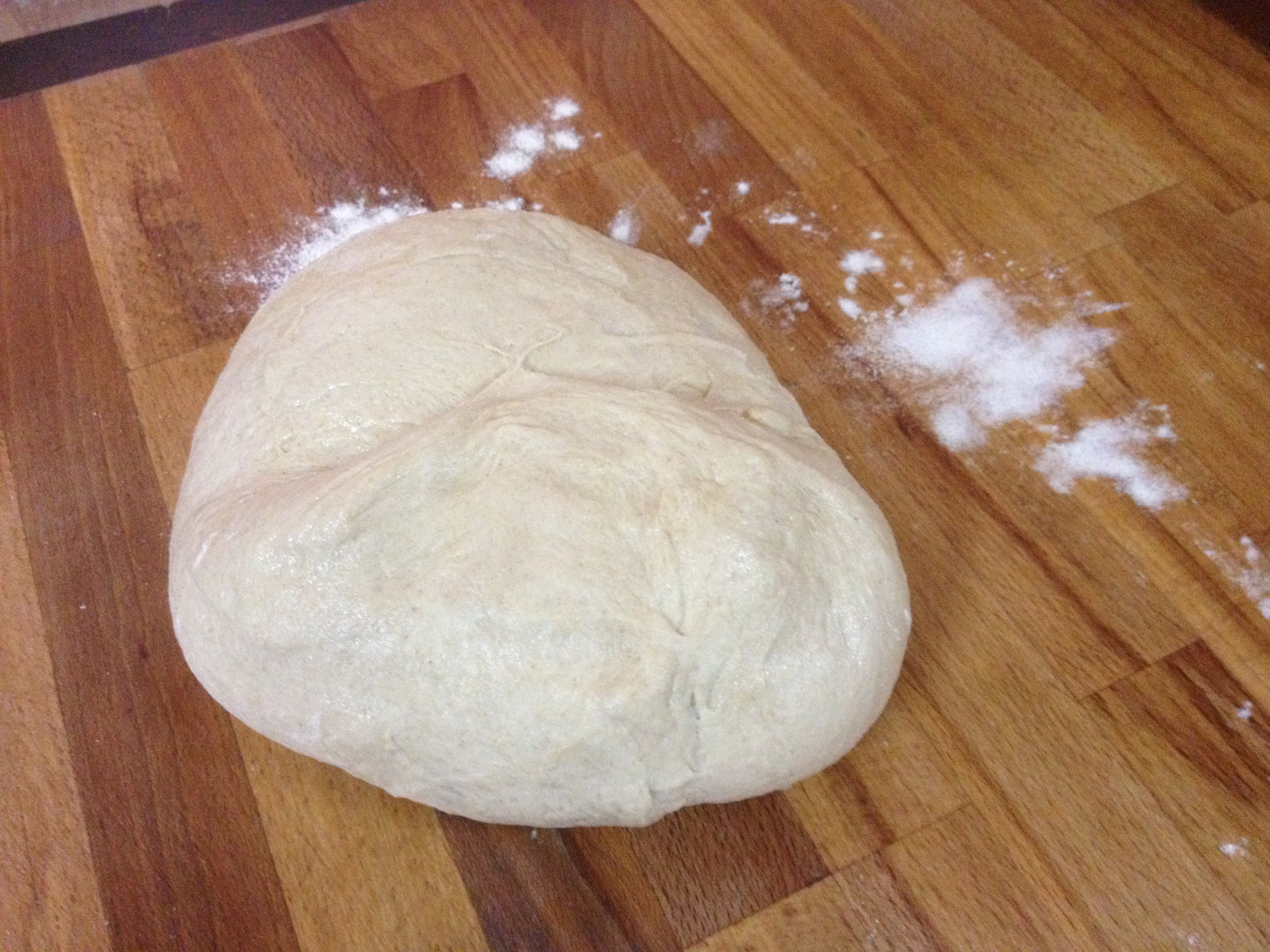
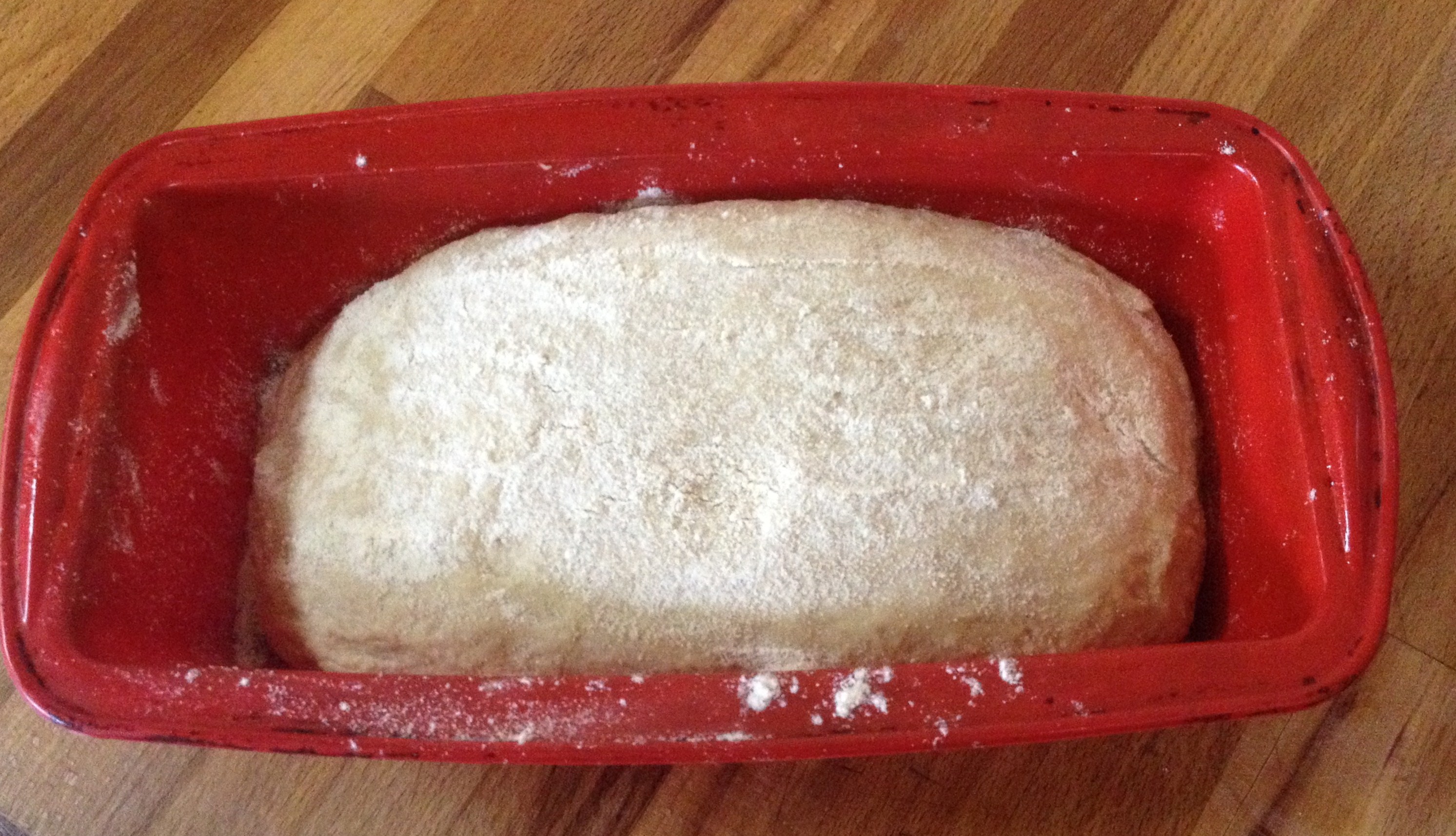
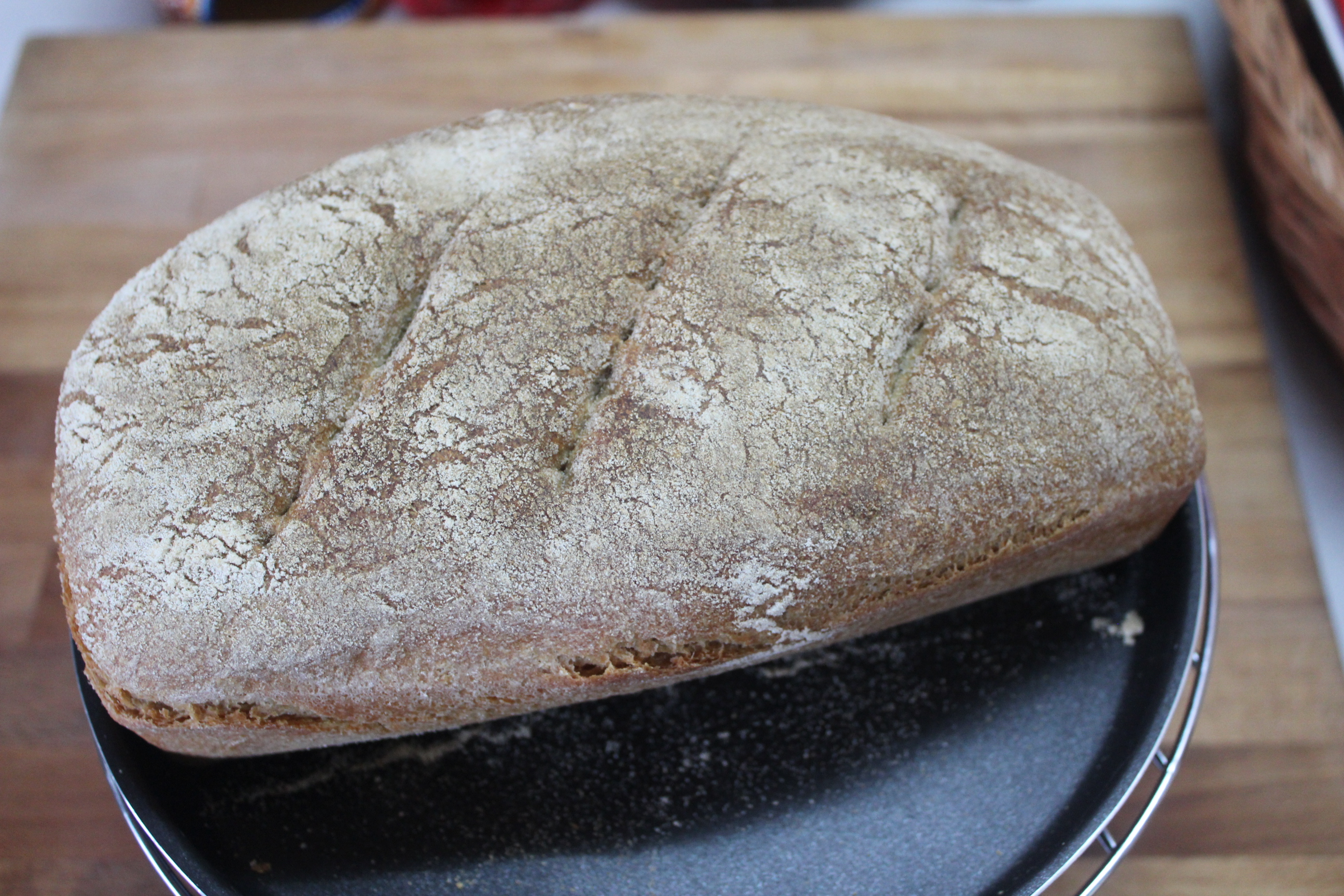
dough and bread

img_5009img_5016


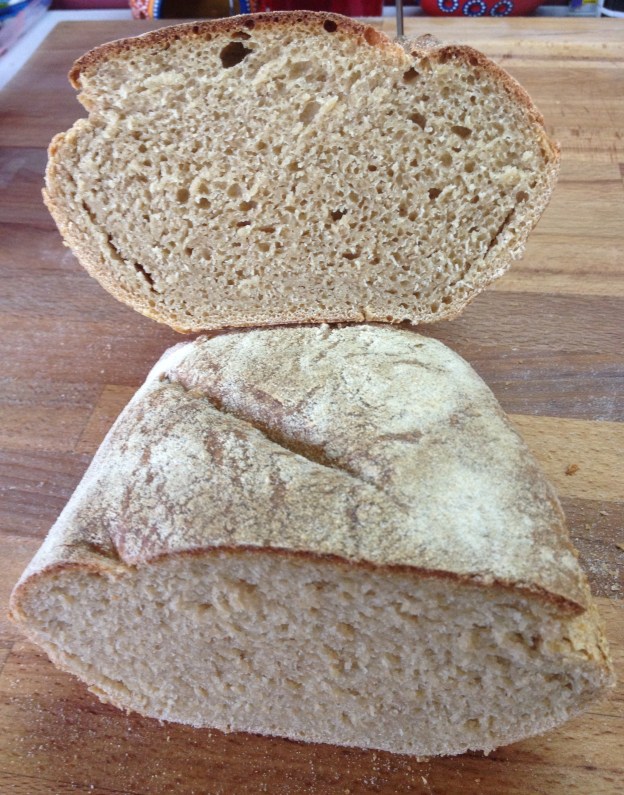
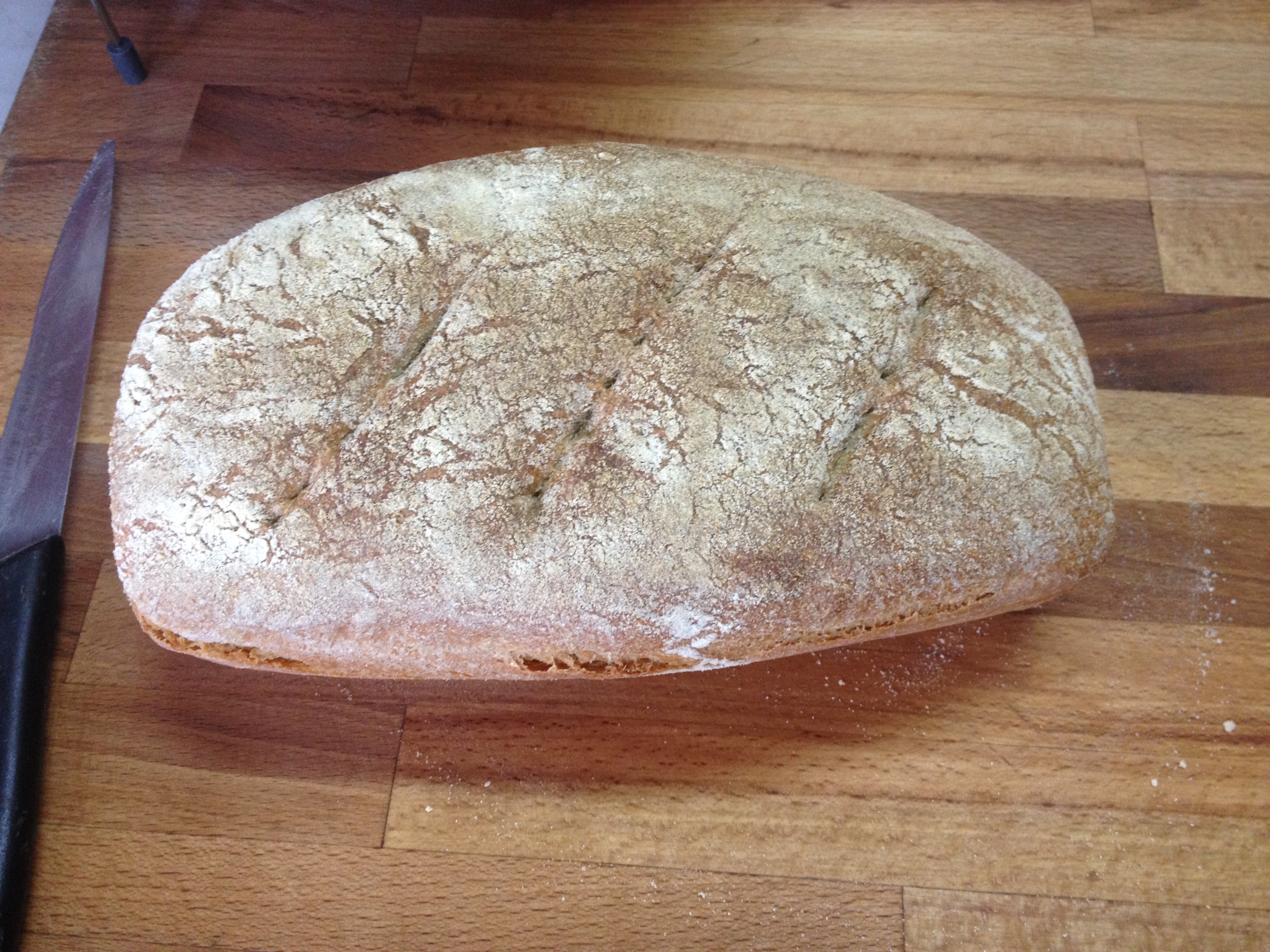
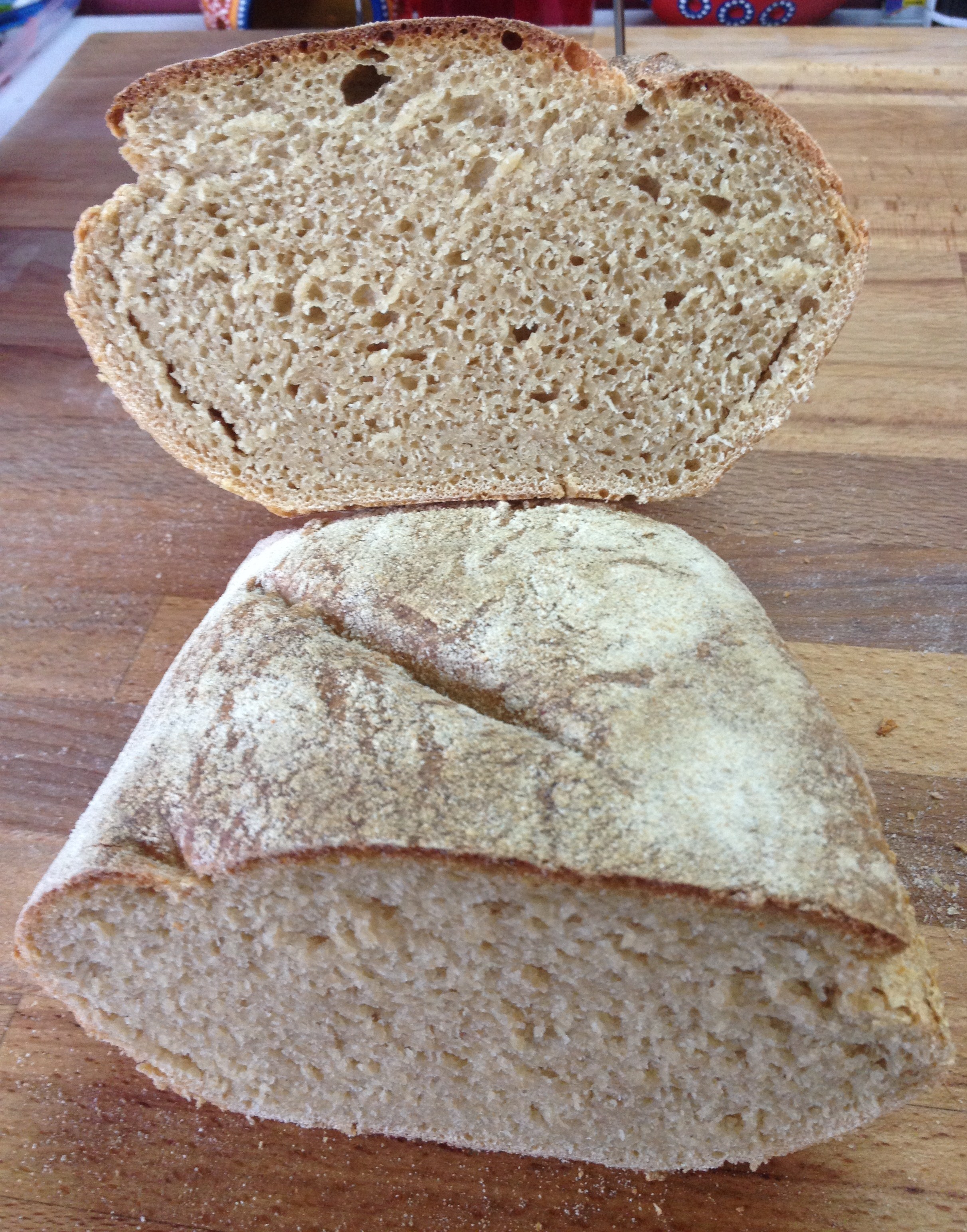
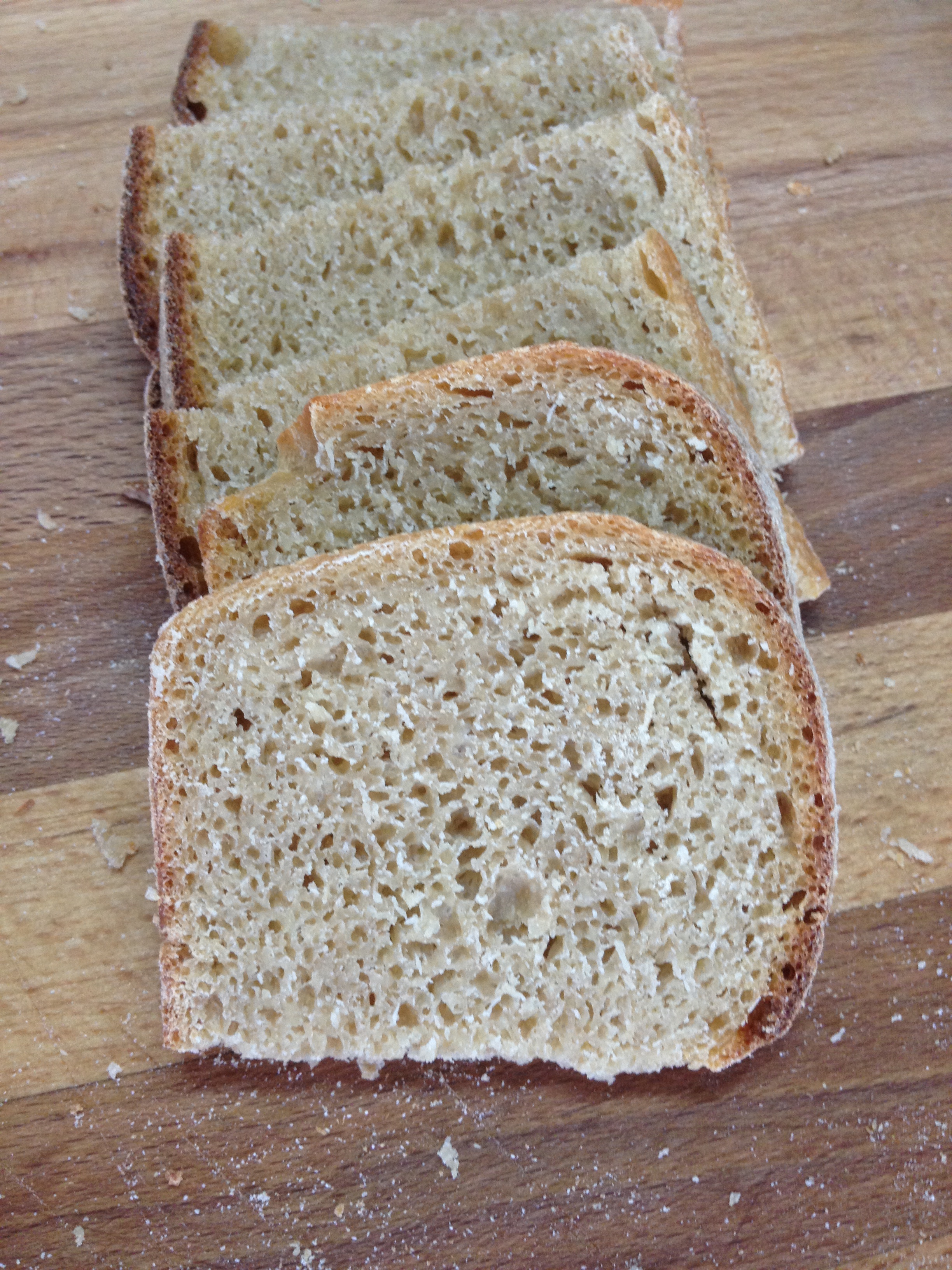
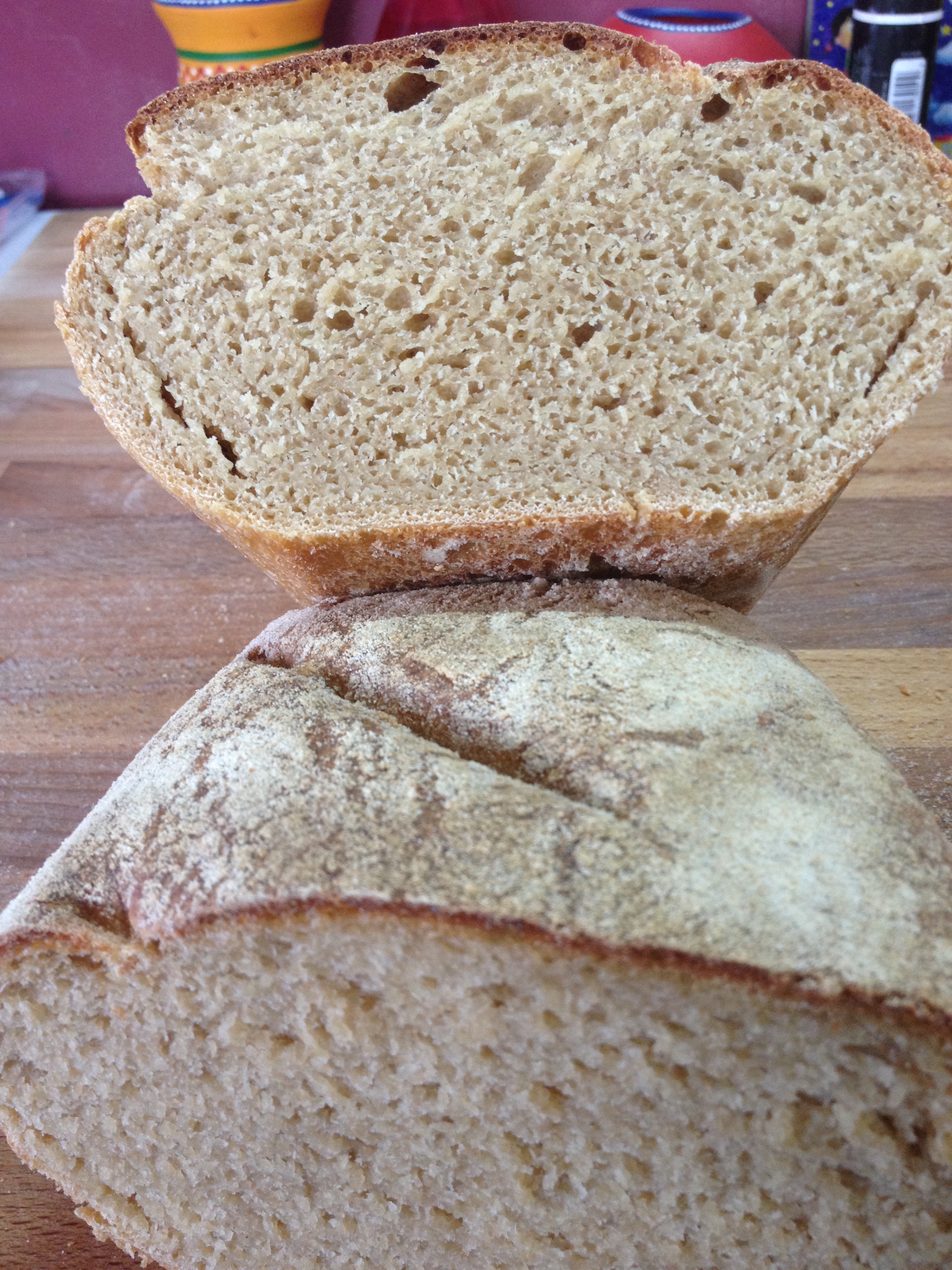
I am truly a happy home-baker today. After years of trying to bake bread that has helped my family practice yogic patience, this time my bread had the better taste of sourdough bread. It is a chunky bread, due to the whole wheat flour. I made a little compromise with 100 gms of white flour to 500 gms of whole wheat flour.

I’ve forever tried to bring in almost the same softness of white bread in my whole wheat bread, with the addition of eggs, butter, flax seeds or yoghurt. All these variants have certainly altered the texture of the bread and given unique flavors to home made 100% whole wheat bread.

A rustic bread with just 2 hours of leavening and 2 hours raising (in hot climate), has been the best ever breakfast bread that I have made. Yes, that was the best best I relished in terms of taste of rustic bread to me, but I’m not sure, it would be appreciated as a blog post. My quest for better baking, if not for the best bread has never faded. It’s still on.

But, this time I decided to become a bit more professional to strike a balance with whole wheat bread. A Big Thanks to so many bloggers out there in the world wide web, who have helped me learn so much about the process of baking bread. So, this is not my invention, but my discovery of baking good bread which has already been analayzed by so many unknown friends throughout the world.

Now, I chose to take up the two basic necessities of baking bread –
1. Patience
2. Endurance

Apart from these two – the most important techniques –
1. Giving enough time for leavening – i.e. giving enough time for the leavening agent, which is yeast to grow well. This helps in softening the bread.
2. Knead the flour well – kneading dough by hand, strengthens the gluten strands that gives bread its structure.

I came across these beautiful articles on bread making very recently –
a. http://www.thekitchn.com/how-to-make-sourdough-bread-224367

Here, I was pleasantly struck by the intricate details.
b.

Flour, yeast, water and salt – a traditional loaf needs only four ingredients. So why are calcium propionate, amylase, chlorine dioxide and L-cysteine hydrochloride now crammed into our daily bread? Andrew Whitely, Britain’s leading organic baker, reveals how our staple foodstuff was transformed into an industrial triumph, but a nutritional and culinary disaster. http://www.independent.co.uk/life-style/food-and-drink/features/the-shocking-truth-about-bread-413156.html, 


That was a shocking revelation of the hazards of quick leavening agents used by bakers for lessening the time spent in bread preparation. That was an eye opener for sure.

Special thanks to both the bloggers for such useful information.

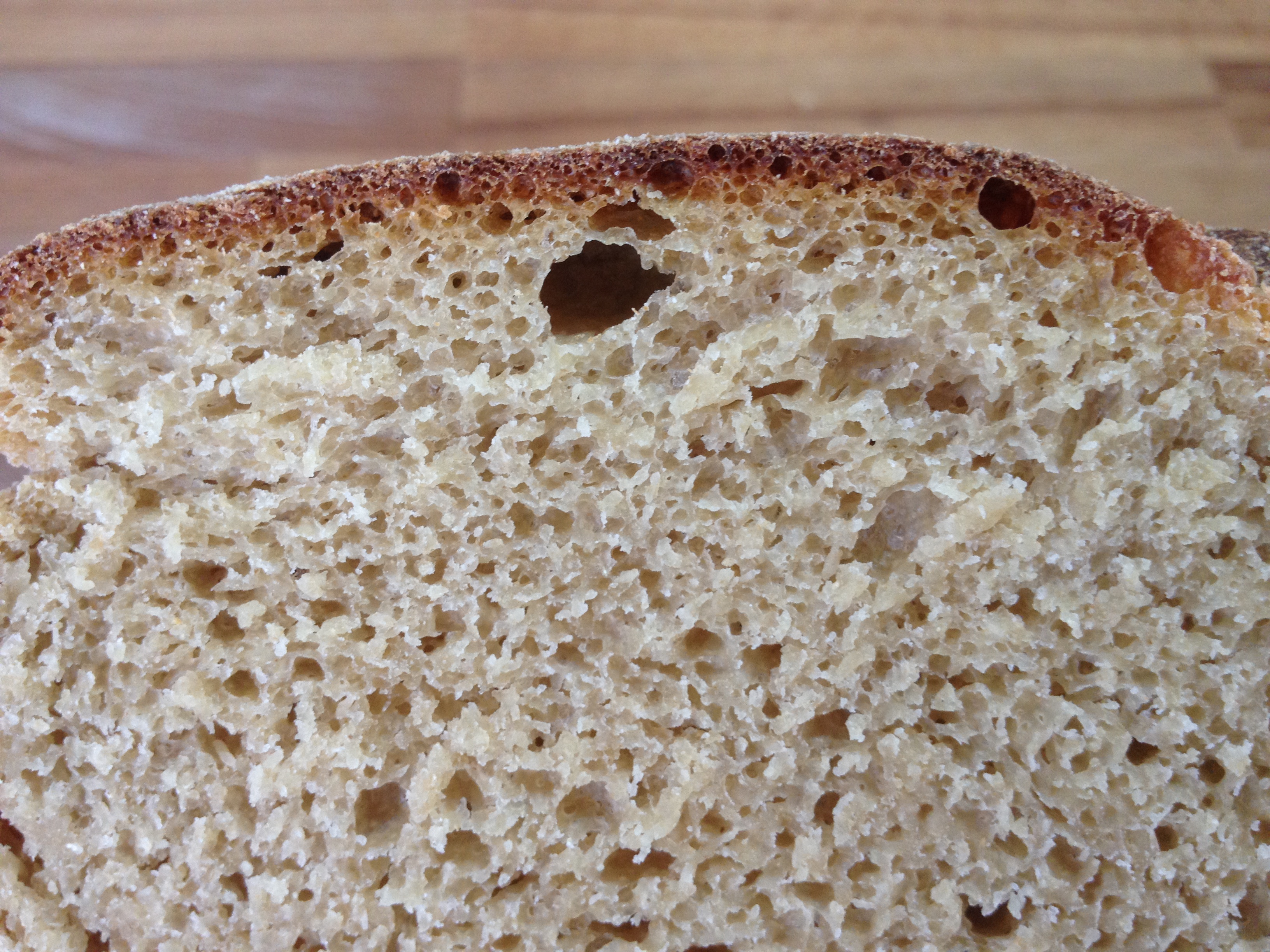
I chose to try the basic bread recipe suggested by www.independent.co.uk  . A small change was made. I left the dough to raise overnight, instead of 2 hours suggested by the blog.  I think that made a lot of difference. The yeast had sufficiently grown and the bread had beautiful pores as a result.
Making Bread


img_5036
Ingredients

  • whole wheat flour – 500 gms
  • white flour (maida) – 100 gms
  • active dry yeast – 8 gms
  • sea salt – 5 gms
  • olive oil – just enough to grease the bowl and bread baking tray
  • warm water – 400 ml – 150 ml to soak yeast initially and extra 250 ml to knead


img_5051


Method of Preparation


1.Soak yeast in 150 ml (app. 1 cup) warm water for 10 minutes. Always do this to check for its active ability. If yeast does not grow/turn foamy in warm water, might be the yeast is not in good condition for bread baking. Do not use it.
2. Measure whole wheat flour, white flour and salt in a dry bowl.
3. Mix the foamy textured yeast water and extra warm water to the dry flours and mix with spatula.
4. Transfer to a clean surface and start kneading well with hands or kneader of a food processor for about 10-15 minutes. Kneading with machine might involve less time.
5. The dough should be moist and never dry. Add more water if needed.
6. While kneading, we can feel water getting absorbed into the dough and the dough becomes softer and stiffer. Keep scrapping off sticky dough from the surface and incorporate into the dough.
7. Grease a big bowl with olive oil and place the well kneaded dough inside.
8. Cover with a moist towel, aluminium foil or plate and place in a warm room overnight.


img_4995
9. The next morning you may notice the wonderful growth of yeast by raising of the dough.


img_4996


10. Knock the dough back to its sticky self.
11. Sprinkle little flour on a clean surface and start making a smoother dough, by folding for a few minutes – not as long as the first procedure. (search the web for ‘folding bread’ and you’d get to know the art of it)


img_5003
12. If you’d like to bake a single big loaf, fold into into one dough. If one prefers two smaller loaves, divide into two halves and roll into rectangulars.
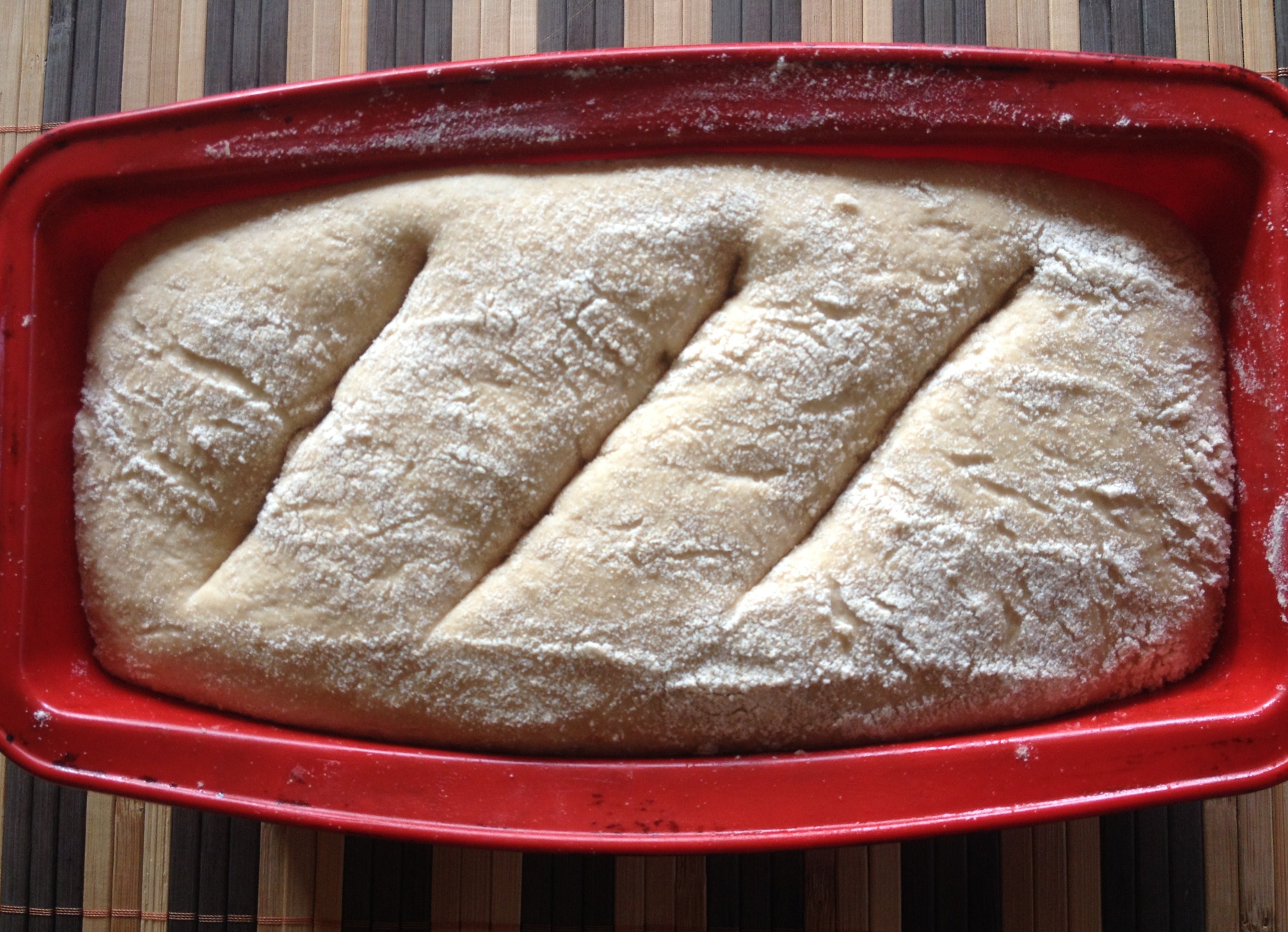
13. Place the rolled bread in greased tins and let it raise for two hours.


img_5007
14. While the bread has doubled or raised a bit (some breads tend to raise in the oven), make slits in top and sprinkle little flour to avoid  drying of bread while baking.


img_5009
15. Preheat oven at 230 degrees C and place the bread tin for baking.
16. After preheated, reduce the temperature to 210 degrees C and bake for 30 – 40 minutes till the bread sounds hollow while tapped. Alter temperature according to your oven.
img_7062
17. I have had this problem of bread getting baked brown on top but the covered bottom area remains a bit doughish. I took out the almost done bread out of the tin and placed on a wire rack and let it bake for another 10 mins and it was done.


img_5041
18. Cool it, Cut it and enjoy it. Freshly baked bread tastes wonderful just out of the oven.

the beautiful crust..

img_5045
This one was certainly worth the effort!

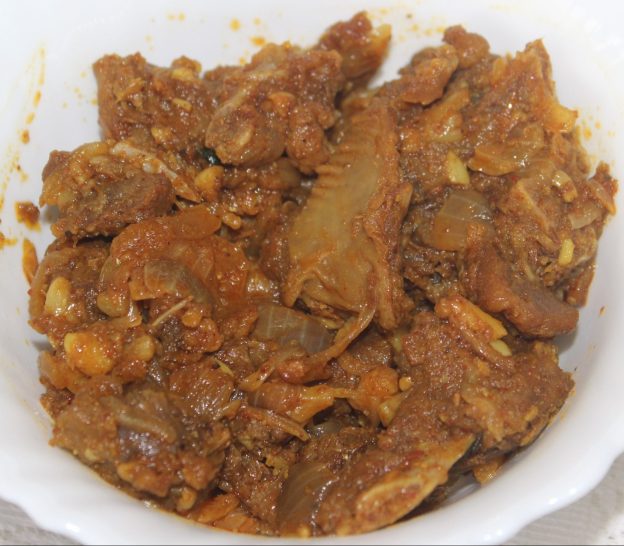
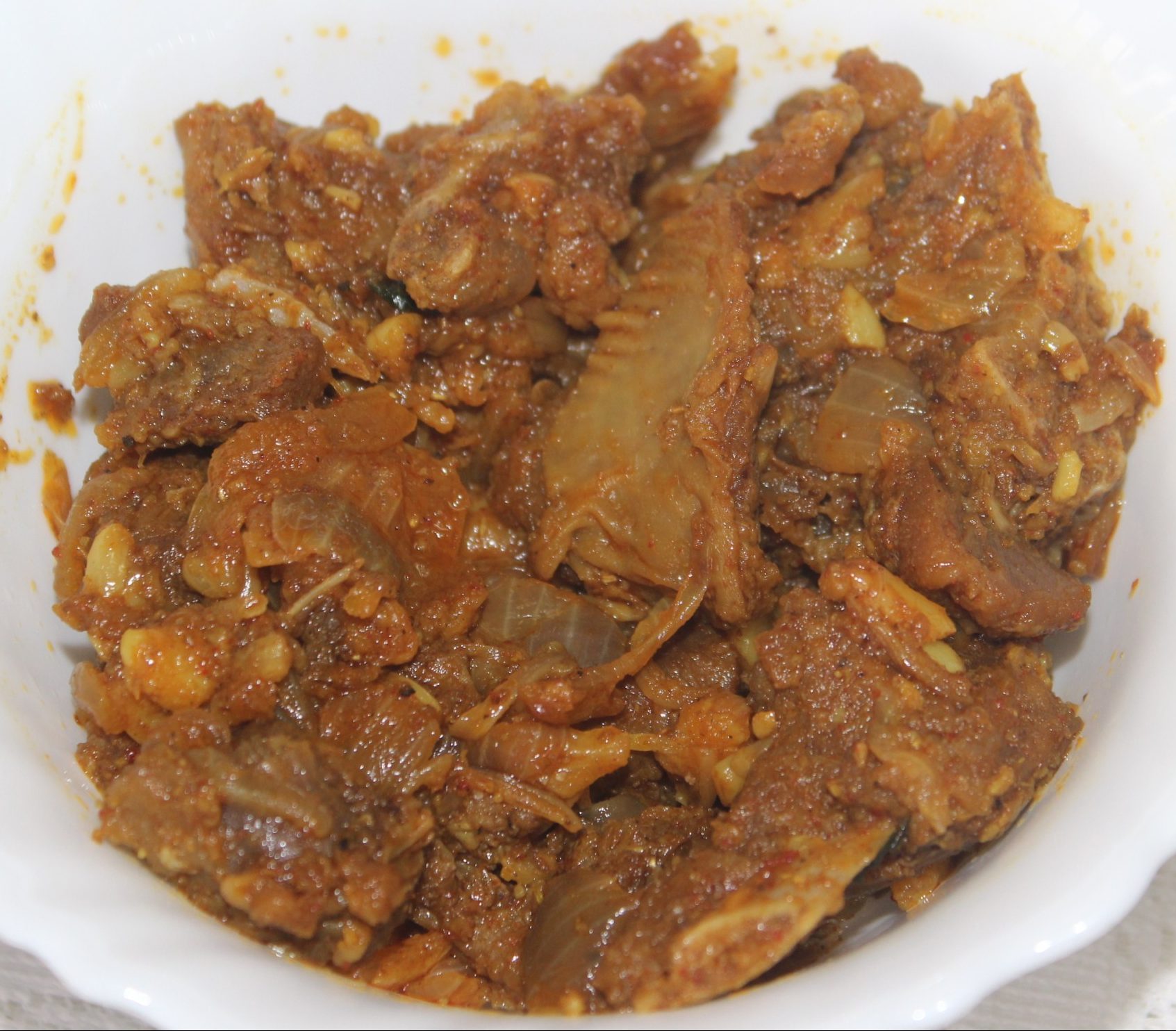
Mutton Vathakkal/Spicy Stir fried Mutton

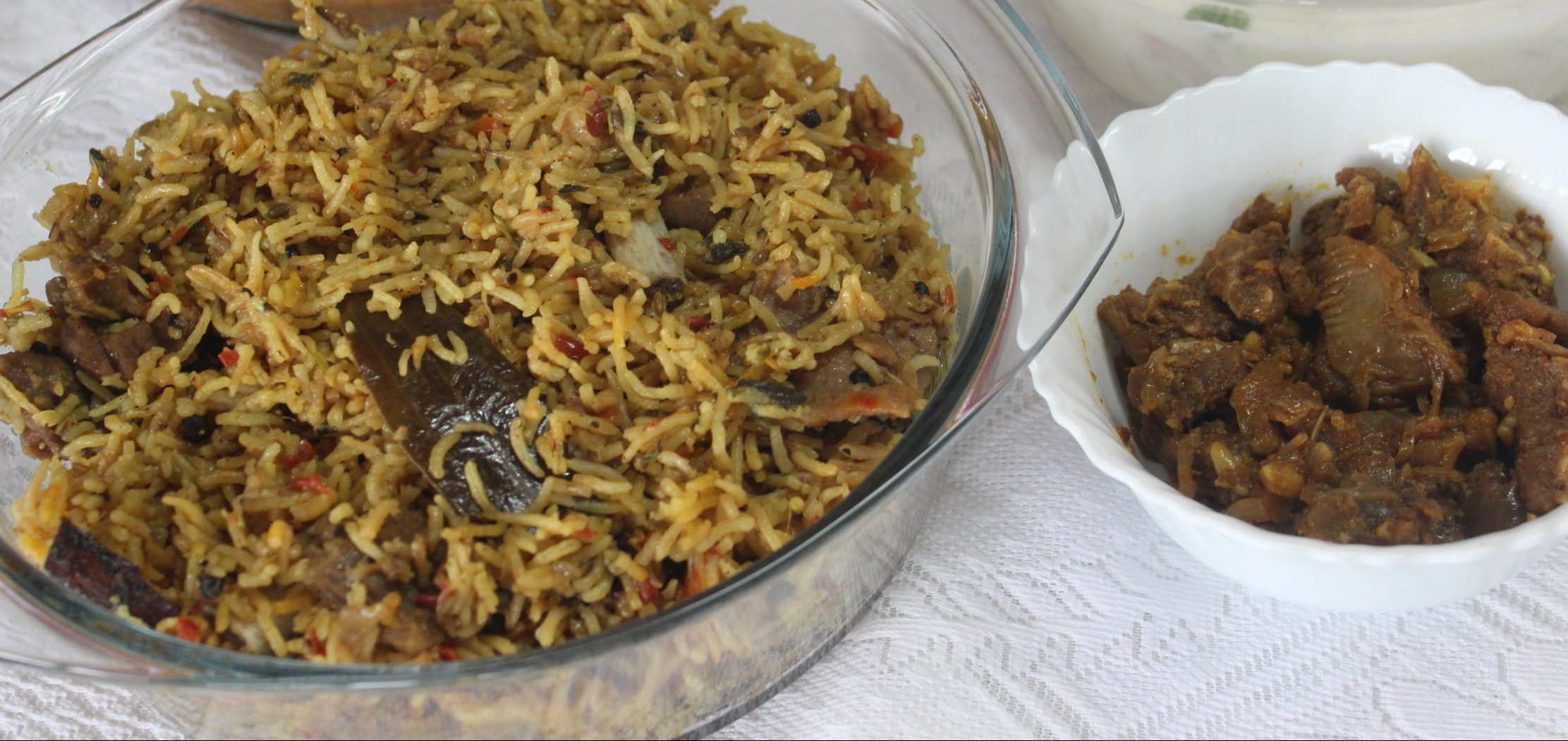
Let’s complete the Simple Sunday Meal of Mutton Biriyani (refer –  home-cook’s-pressure-cooker-mutton-biriyani ) with Mutton Fry. Having given balance to Biriyani with Salna (refer – kathirikkai-salna-brinjal-salna )– a veggie gravy/stew in the previous post, its time for Aadu Vadhakkal – spicy mutton stir fry.


img_6848


Mutton fry – That’s not the best of pictures, I know. Shall update it shortly. Yet, no compromise in taste.
img_6836
Aadu Vathakkal or Stir fried Mutton can be found in restaurant menus as mutton fry. It’s a spicy dry curry. And as a well known fact, the culinary secrets of Indian Cuisine differs with each family.  With the basic preparations intact, modify the fry as per your taste and spice preference. With the addition of tomatoes, this might become a gravy dish.

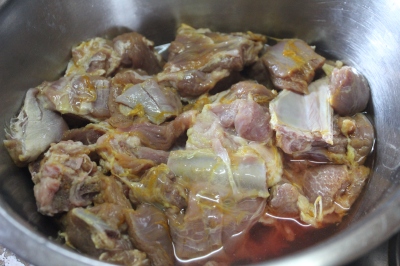
Since I decided to make Mutton Varuval, along with biriyani, I put in the mutton pieces for both biriyani and spicy fry in the pressure cooker for initial cooking. This reduces the time in cooking mutton separately. After a kilo of mutton is cooked in the first stage, separate boneless chunks (app. 250 gms) for Vathakkal. Keep the bigger portion for Biriyani.

Otherwise, to make a separate mutton fry, pressure cook mutton pieces with water, salt and ginger for 30-40 mins. or until done. Enjoy the broth as soup with crushed pepper. Take the pieces for the vadhakkal/fry. Easy isn’t it?


Ingredients

  • mutton – 250 gms
  • garlic – 12 cloves crushed coarsely
  • onions – 2 no.s sliced fine
  • salt – to taste
  • juice of ½ lemon
  • oil – 2 tbsp
  • red chilli powder – 1 tsp
  • coriander powder – ½ tsp
  • black/white pepper powder – 1 tsp
  • turmeric powder – ¼ tsp


Method of Preparation

  1. Cook mutton in water, with salt and ginger for 30-40 minutes or until cooked well.
  2. Strain the cooked broth and consume as soup.
  3. Use cooked mutton pieces for the fry.
  4. In a pan, heat oil and fry the crushed garlic.
  5. Add sliced onions and sauté till golden brown.
  6. Add turmeric, red chilli, coriander and white pepper/black pepper powders and mix well.
  7. Add ¼ cup cooked broth and a pinch of salt. Be cautious with salt, as salt has already been added while cooking mutton pieces.
  8. Cook closed in sim flame.
  9. After the raw smell of powders is gone, open lid, keep stove medium.
  10. When almost done, keep flame in full and let the water dry.
  11. Add the juice of lemon and transfer vathakkal to a serving dish.
  12. Spicy Vathakkal is ready.

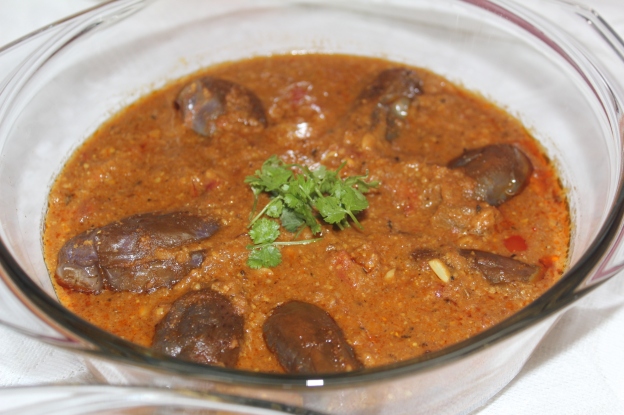
Kathirikkai Salna/Brinjal Salna

Let’s continue the Mutton Biriyani recipe of the previous post, with a balance of Salna – veggie gravy/stew and complete it in the next post with Aadu Vadhakkal – spicy mutton stir fry.
img_6865


First SALNA..

‘Salna’ – a unique delicacy that is served along with Biriyani, is a simple gravy to tackle any spicy variety rice.  The tanginess of the Salna strikes a balance with the aromatic Biriyani. This is a  tamarind curry, thickened with peanut-fennel powder. Peanut stands as a natural variant to the usual coconut based gravies of the south. Tried for the first time and voila.. turned out to be good. No separate pans, time consuming closed cooking here. Yes, the best part is, this dish is quite simple, as everything goes into the cooker and is cooked in no time.
I concentrated so much on the making of Biriyani, that didn’t click better pictures of salna or mutton fry. Shall update with better pictures..at the earliest.

Kathirikkai Salna/Brinjal Salna


img_6810

Ingredients

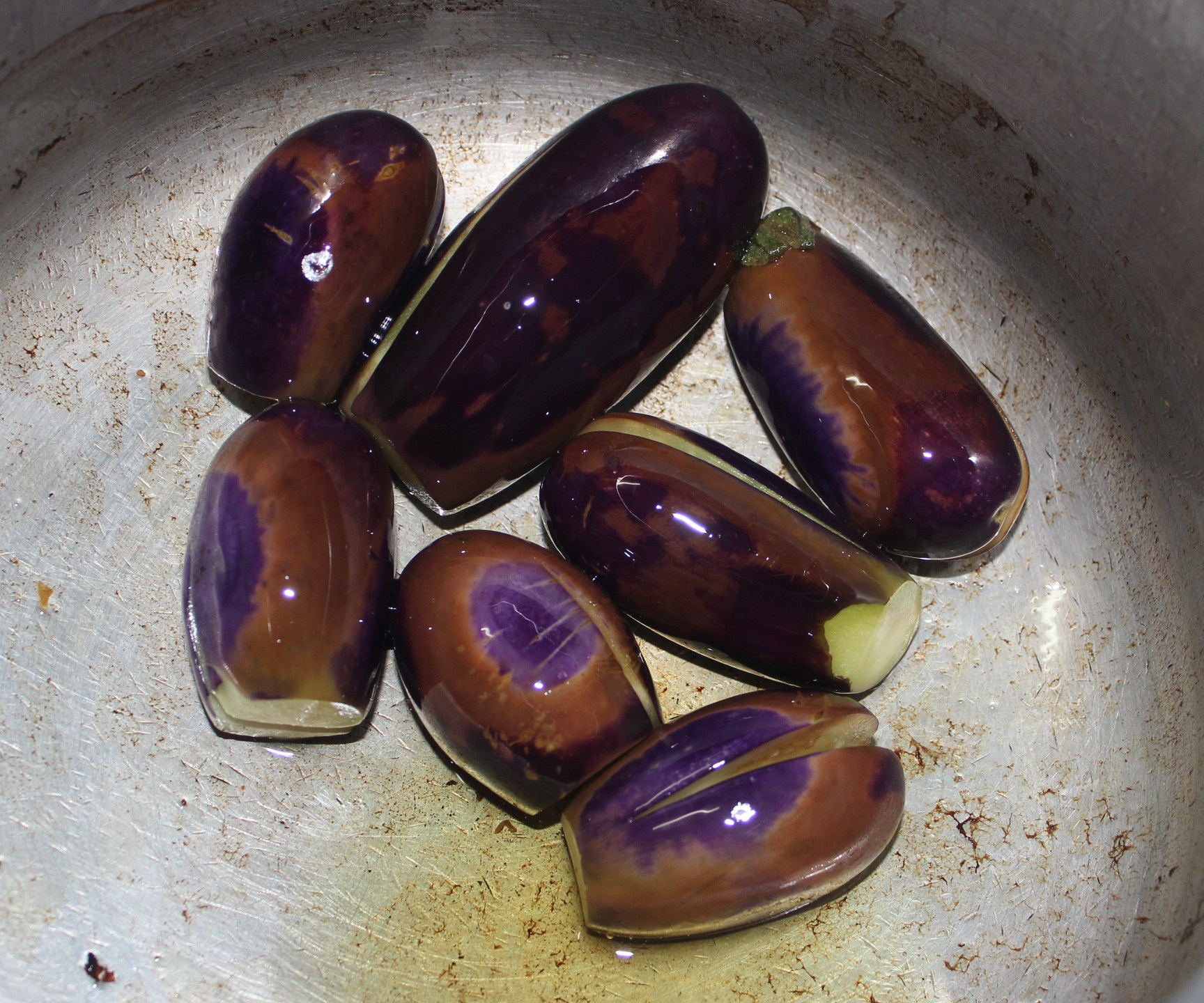
  • brinjal – 6 no.s. – slit in the middle
  • ginger- garlic paste – 2 tsp each
  • onion – 2 no.s – coarsely ground in blender
  • tomato – 2 no.s finely chopped
  • tamarind – extract of a gooseberry sized piece
  • jaggery syrup – 1 tsp
  • water – 1 cup
  • oil – 3 tsp

powders

  • sambar powder – 1 ½ tsp
  • coriander powder – 1 tsp
  • turmeric powder – ¼ tsp
  • salt – to taste

dry roast and powder

  • peanuts – 2 tsp
  • fennel seeds – 1 tsp

Method of Preparation

  1. Wash and slit brinjal on top.
  2. In a cooker, fry brinjal in oil. Remove and keep aside.
  3. In the same oil, fry ginger garlic paste.
  4. Add coarsely ground onion and fry till golden in color.
  5. Add the chopped tomatoes and fry well.
  6. Add tamarind pulp and powders and mix well.
  7. Add 1 cup of water.
  8. Then add peanut – fennel seed powder and stir well.
  9. Add the jaggery syrup.
  10. Close cooker and cook in full flame for 2 whistles.
  11. Open the cooker once pressure is released by itself.
  12. Kathirikkai (Brinjal) Salna is ready to be served.

img_6867

Home Cook’s Pressure Cooker Mutton Biriyani with Thayir Pachadi/Raita

img_6848


That was a simple Sunday that started with the usual home made bread for breakfast.  Sundays can turn out to be one of the laziest days, yet the best is expected to come from the kitchen.  Thankfully for me, Cooking has always been a stress buster and an energy creator. This attitude can be termed as the height of optimism by those relaxing Sunday souls, who refuse to enter kitchen on holidays.

With the same positive energy, to make that lazy Sunday a flavorful one, I chose to try a Mutton Biriyani, a favorite delicacy throughout the world, with some good mathematics to post here. Mathematics with Biriyani…. certainly not written due to stress in brain activity. But, Biriyani needs meticulous measurements to bring out that ultimate aroma and taste.

I’ve tried to be accurate with the quantity of ingredients involved in the making of Mutton Biriyani. Additionally, reducing the effort involved in the making of good Biriyani, Pressure Cooker is used for quick cooking. This is no advertisement for Pressure Cookers, but believe me… it does reduce the stress of watching the Biriyani in a Pot or Handi cook to long grainy soft perfection.
A note on the history of Biriyani in India-


Though it may appear to be a dish indigenous to India, in reality the dish originated quite far away. Biryani is derived from the Persian word Birian, which means ‘fried before cooking’ and Birinj, the Persian word for rice. While there are multiple theories about how biryani made its way to India, it is generally accepted that it originated in West Asia.

There are records of a rice dish known as Oon Soru in Tamil literature as early as the year 2 A.D. Oon Soru was said to be made of rice, ghee, meat, turmeric, coriander, pepper, and bay leaf, and was used to feed military warriors.
http://www.thebetterindia.com/60553/history-biryani-india/


Just type – ‘oon soru’ and browse the internet. Your box would be filled with websites that talk about the same above said detail, verbatim. Which website posted the basic article is unknown. The above article gives a very fine and elaborate write up on different biriyanis in India.

An elaborate research would provide different insights into the culinary secret behind the speciality rice in Tamilnadu. I’ve heard people well versed in Tamil literature, talk about ‘Oon Soru’ and the practice of cooking rice with meat among the early Tamils.

With various popular versions of Biriyanis-  Hyderabadi, Lucknowi or Old Delhi’s famous Mughal preparations, Tamilnadu has its own versions – Dindukkal Biriyani, Arcot Biriyani, Ambur Biriyani, Chettinad Biriyani and so on. There is one more variety that has no popular name, but the version is different from home to home – that’s the Home Made Biriyani, with the tasteful signature of the amateur home cook.

So, this Sunday I decided to make the Home Cook’s Mutton Biriyani – with step by step elaborate procedures for purpose of sharing here. This is a two-way process, where meat is pressure cooked initially with turmeric and salt, and then pressure cooked again together with spices and rice. This second part, makes the biriyani an easier version, where no ‘Dum’ (closed cooking in sim flame) is required and hence, is less time consuming, but no compromise in taste.
With the urge to cook Biriyani, came a list of other things that go well with the exotic Rice.

a. Thayir Pachadi – Onion and Yoghurt Raita

b. Kathirikkai Salna – Mildly spiced, tangy Gravy with brinjal/egg plant that is served alongside Biriyani

c. Mutton Vadhakkal – Spicy, Pan fried Mutton – the perfect munching companion for the succulent Biriyani

A successful Sunday with special delights calls for 2 connected posts on the lunch served. So, first – Biriyani and Pachadi, I call it the match made in kitchen, which is supposedly a cook’s heaven of culinary creations!
Home Cook’s Pressure Cooker Mutton Biriyani
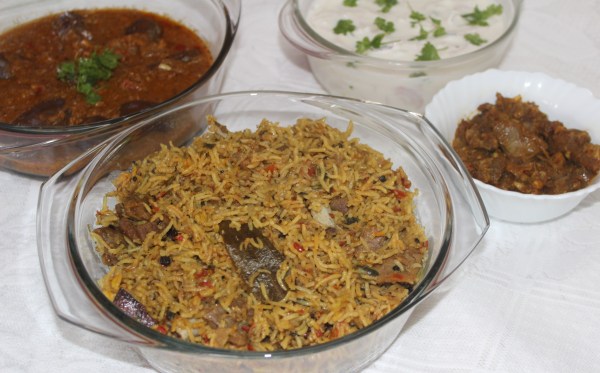
 

img_6859


Ingredients (serves 3)


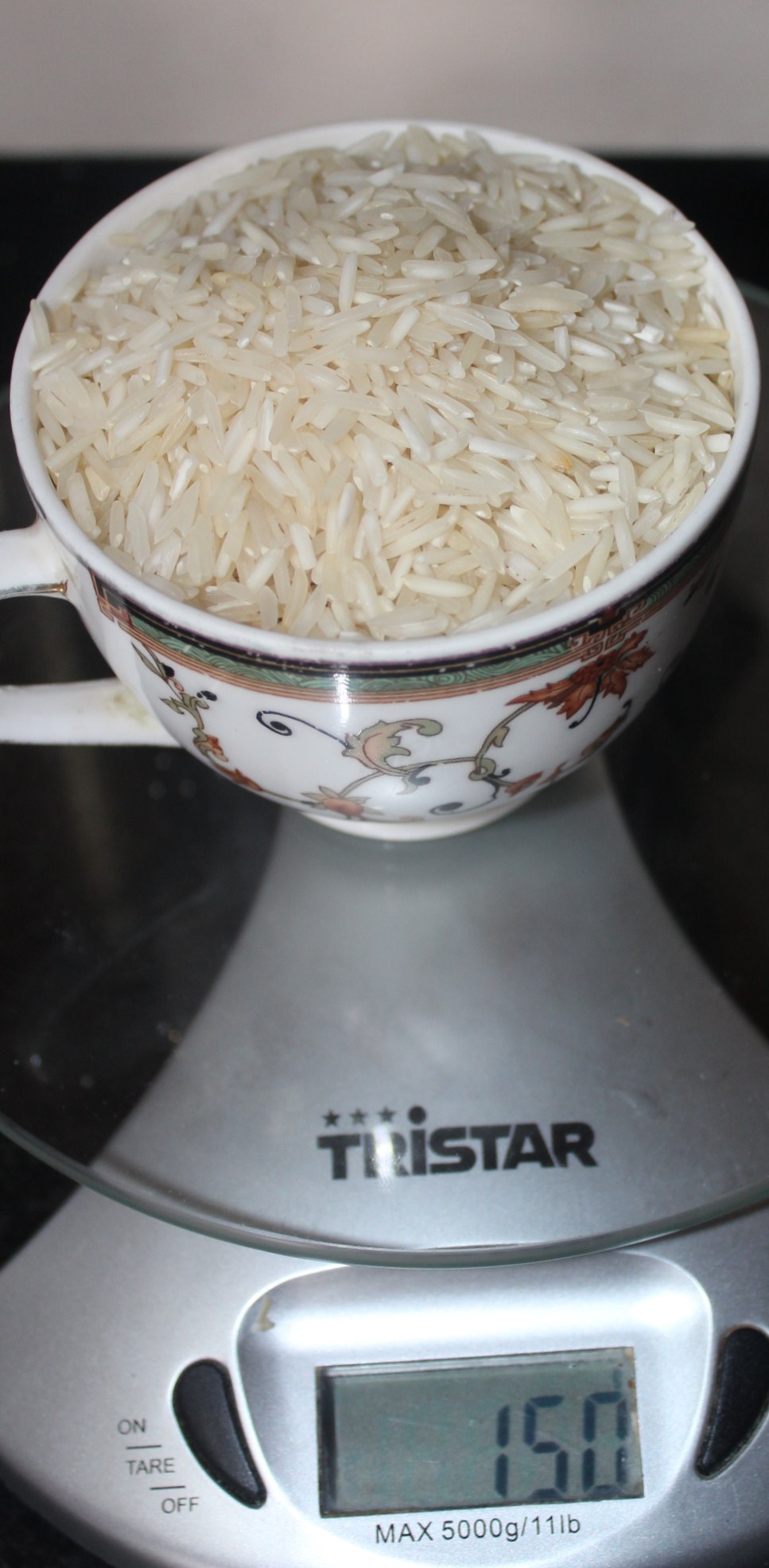
long grain basmati rice
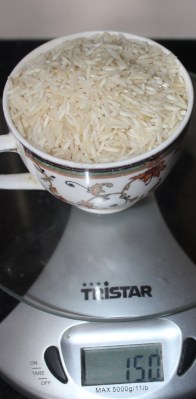
img_6750


and meat

img_6746


  • basmati rice – 1 ½ cups – (app. 225 gms)
  • mutton – 500 gms
  • turmeric powder – ¼ tsp for cooking meat separately + ½ tsp while making biriyani
  • salt – to taste
  • oil – 3 tsp (for caramelising onions) + 3 tsp (for making biriyani)
  • clarified butter – 3 tsp

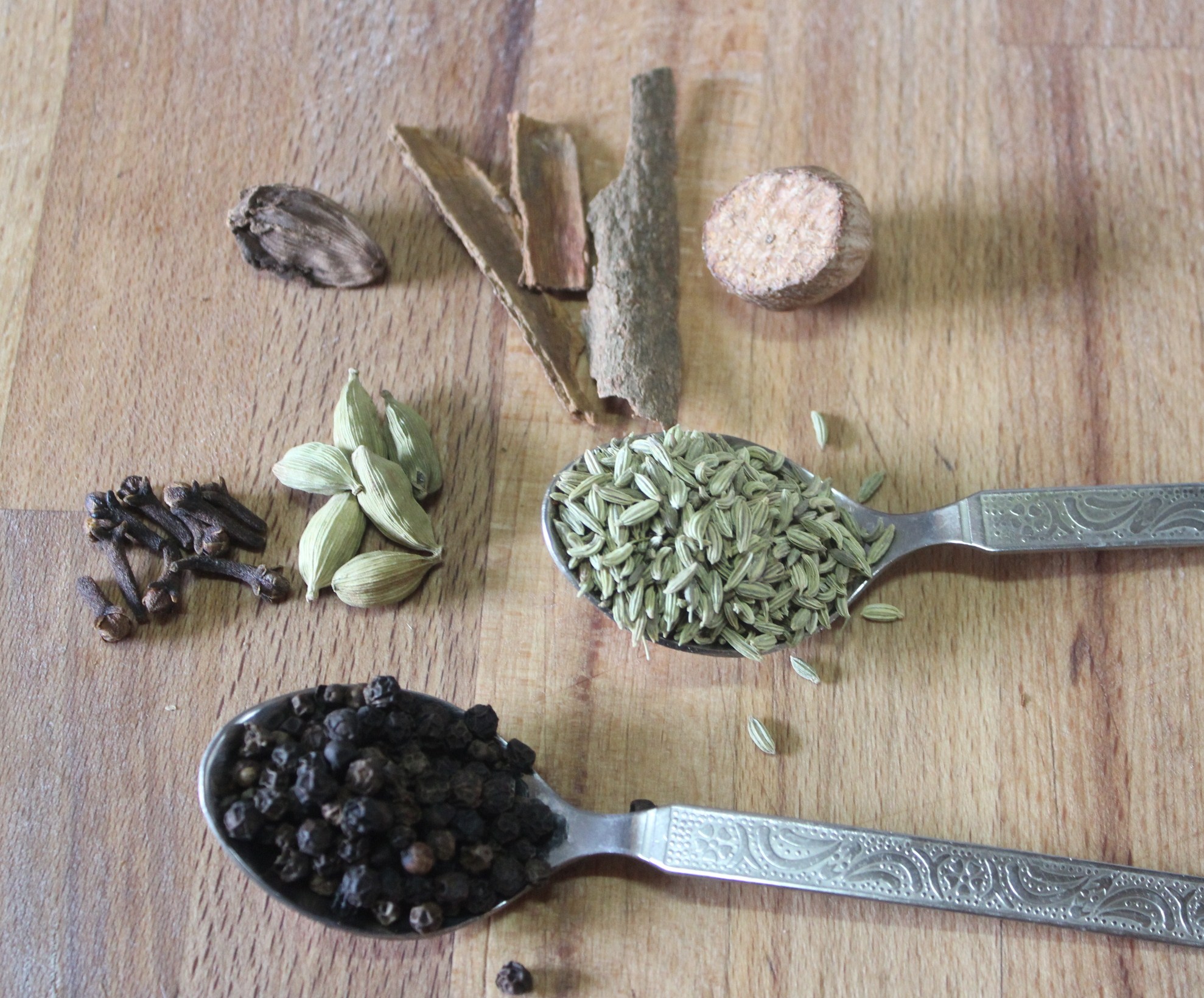
Dry Spices


img_6763


  • cardamom pods – 7 no.s
  • cloves – 7 no.s
  • cinnamon – 2-3 sticks
  • bay leaves – 2 no.s
  • big cardamom – 1 no.
  • fennel seeds – 1 ½ tsp
  • pepper corns – 1 tsp

To chop


img_6755


and green chillies

img_6765


  • ginger – 50 gms
  • garlic – 30 gms (app. 3 small pods)
  • onion – 3 large – 165 gms
  • tomato – 2 large – 130 gms
  • green chillies – 5 -7 no.s (finely chopped)

For freshness

caramelised onions with mint and coriander

img_6771


  • mint leaves – 3 tsp
  • coriander leaves. – 3 tsp

Exotic touch


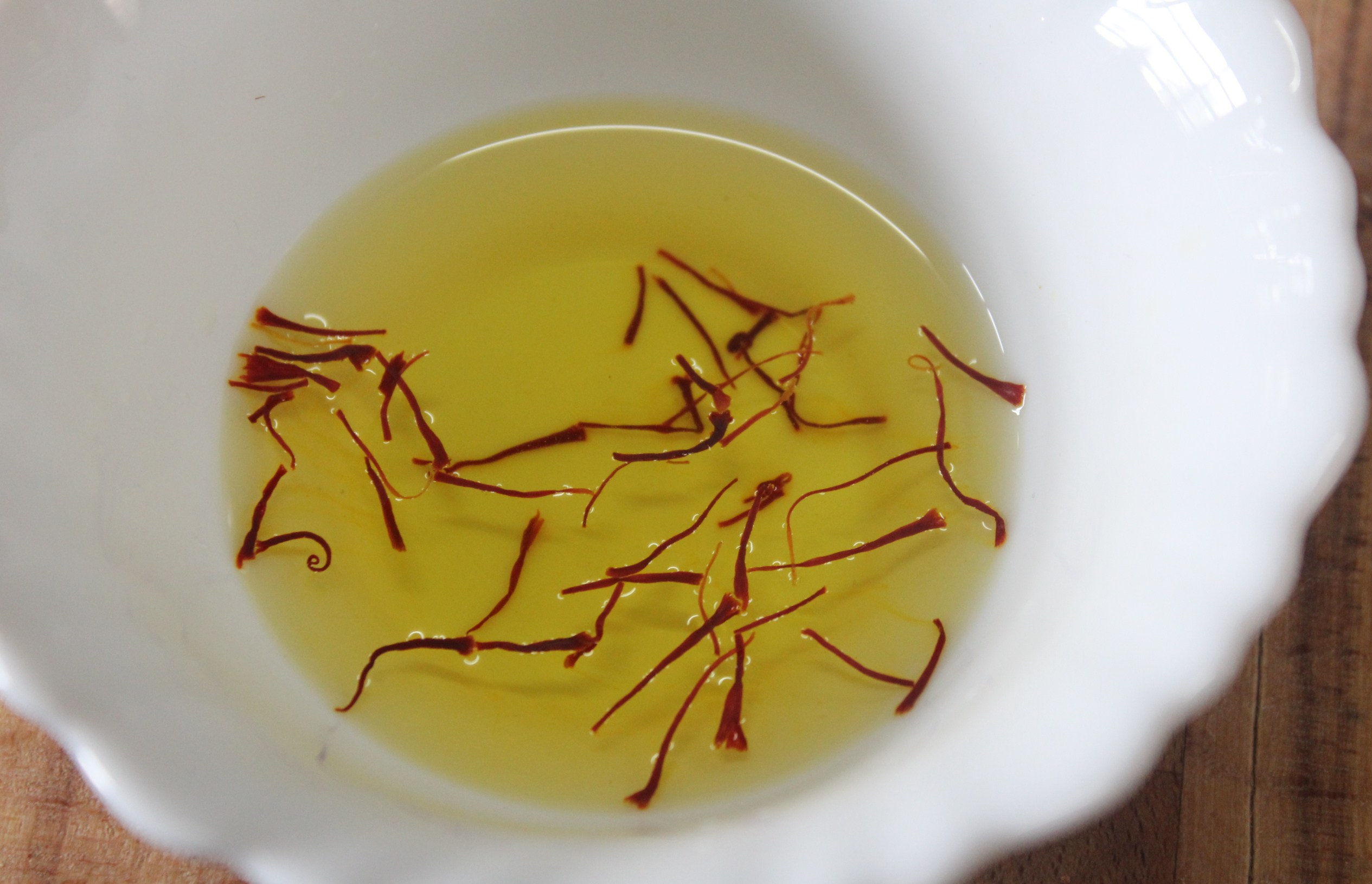
saffron in water

img_6782


  • generous strands of saffron soaked in ¼ cup hot water tsp bring out that gorgeous colour
  • nutmeg – ½ tsp grated

Method of Preparation


img_6856
Part I

  1. Wash and soak basmati rice at least ½ an hour before pressure cooking meat
  2. Soak saffron in ¼ cup hot water


soaked rice
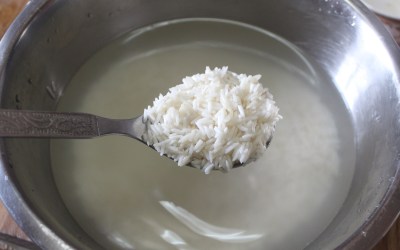
img_6789

Part II– Cook Mutton

  1. Remove fat as far possible from meat
  2. Mix turmeric and salt to meat and keep aside for 15 minutes
  3. Wash and clean well
  4. Squeeze out excess water from the washed meat
  5. In a pressure cooker, add meat, ¼ tsp turmeric and salt with water enough to cook for approximately 30 minutes
  6. Pressure cook meat till done (It takes 30-40 minutes to be cooked well)
  7. Do not forget to use the meat broth to cook the final Biriyani.

Part III– Getting things ready – grinding, slicing, chopping, caramelizing.


  1. Coarse grind ginger, garlic, fennel seeds and pepper corns together in a blender (without water). Though full pepper corns are fried with spices in Biriyani, I prefer to grind as there is no wastage on the plate. Additionally, ground pepper corn spices up the Biriyani with its unique flavor.
  2. Thinly slice onions. Caramelize sliced onions in 3 tsp oil.
  3. Finely chop green chilies and tomatoes separately. Keep aside.


img_6770
Part IV – Let’s do it – THE BIRIYANI

1. Heat pressure cooker and add oil and clarified butter.

2. Drop all the dry spices except pepper corns and fennel seeds (already blended with ginger-garlic)
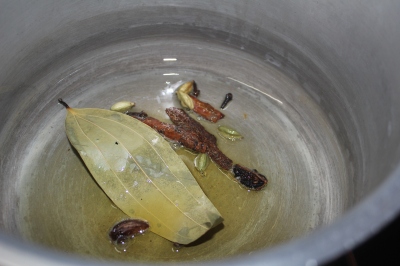
img_6768

3. Next, add the ground ginger-garlic-pepper-fennel paste with green chillies and sauté.


img_6786

4. Add the chopped tomatoes and sauté till soft and mushy.

5. Then, add the caramelized onions and mix well.

6. Strain rice without water and add to the hot ingredients in the cooker and stir well.
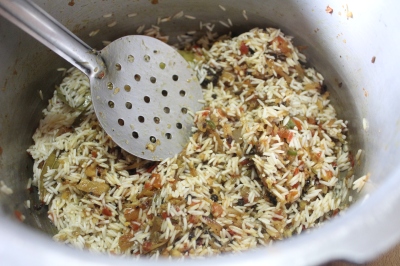
 

img_6792

7. Add nutmeg, turmeric powder and salt.

8. Strain mutton and save the cooked broth.

9. Add cooked mutton pieces and mix.
10.The most important ingredient- WATER

Now, it’s time to add water. I go by this ratio and it turns out good.

img_6799
For 1 cup of rice – 2 cups of water;
For 2 cups of rice – 4 cups water minus ½ cup = 3 ½ cups water
For 3 cups of rice – 6 cups of water minus ½ cup = 5 ½ cups water
For 4 cups of rice – 8 cups of water minus 1 cup = 7 cups water

So, for this biriyani, where 1 ½ cups rice is used, less than double or less than 3 cups, i.e. 2 ¾ cups of water is used.

  • Mutton cooked water – 1 cup
  • Saffron water – ¾ cup
  • Extra plain water – 1 cup

That works out to be 2 ¾ cups water for 1 ½ cups of rice.
Alter plain water according to the quantity of mutton cooked water you have. Add water, mix well.

11. Check for salt. As mutton is already cooked, the water tasted does not consist raw meat. So, go ahead, taste and add salt if needed.

12. Close cooker with lid in full flame. Keep in full flame for 3 whistles. Switch off and wait for the pressure to release by itself.


img_6860

13.Open cooker and serve hot Biriyani.
Biriyani- Thayir Pachadi / Biriyani- Onions in Yoghurt: Match made in heaven!

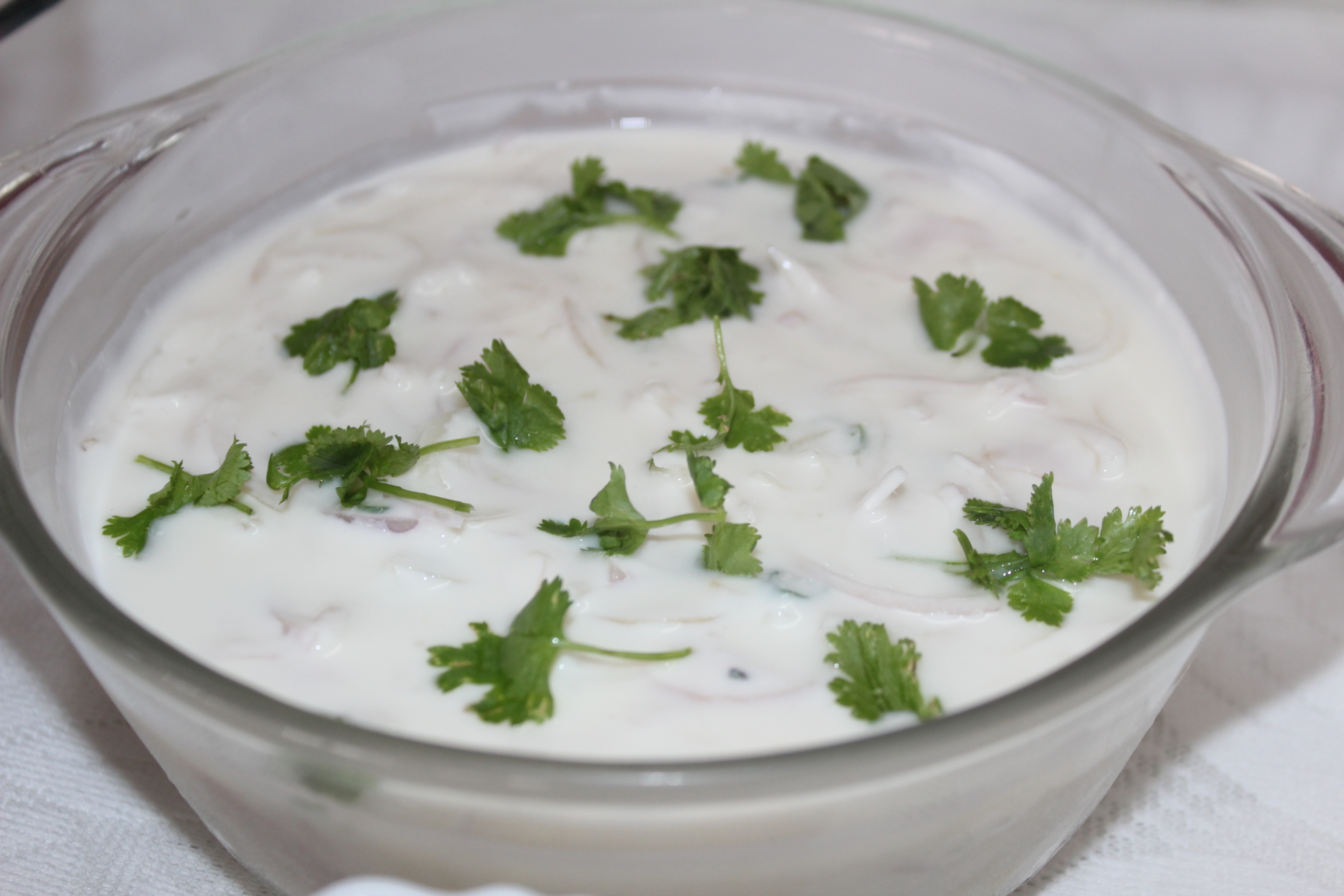
Thayir Pachadi – Onions in Yoghurt

img_6868


Biriyani needs a Thayir pachadi or Raita as in North Indian cuisine. Vegetable, chicken or mutton biriyani, is incomplete without the accompaniment of Pachadi.

Though, there can be many varieties of Pachadi/Raita. In Tamilnadu, a pachadi with just onions and little green chillies for spice is generally served with Biriyani.

  • thinly sliced onions – 3 no.s
  • thick yoghurt – to soak the sliced onions (approximately 3 cups)
  • chopped green chillies – as preferred
  • salt – to taste
  • coriander leaves (fresh) – for garnish


Mix all ingredients together and garnish with coriander leaves. In a restaurant that serves, vengaya pachadi or onion raita – yoghurt is less than mentioned above. But I prefer to have more yoghurt to the quantity Alter quantity of yoghurt as preferred.


img_6848

Apple and Peach Jam


img_6742
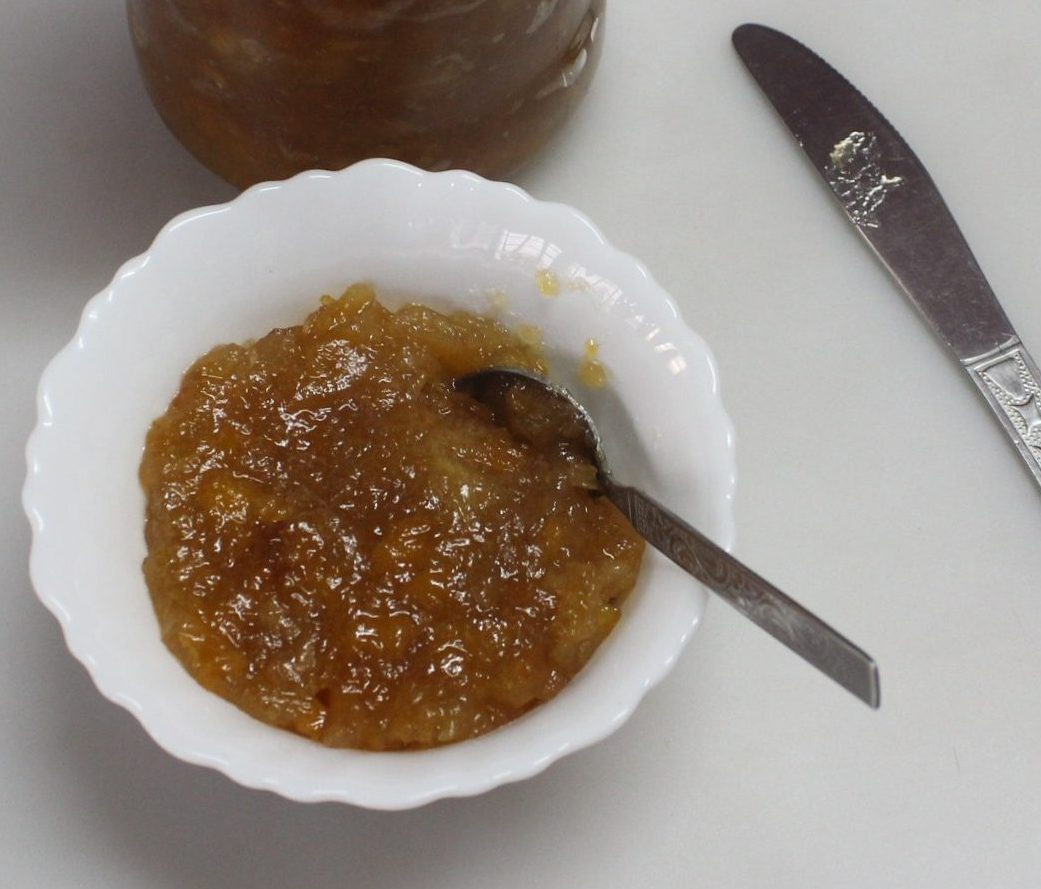
With the same motive of making jams without added store bought pectin or other preservatives, this is an Apple and Peach Jam. With the tanginess of peach and sweetness and a bit of sourness of apple, this recipe again uses the natural pectin already preserved in the two fruits and additionally in the seeds of apple and stone of peach.

The learning fact this time – ‘There is pectin in the cores/seeds of certain fruits that helps the jam to ‘set’.’ – thanks to this elegant blog post – http://merrynsmenu.blogspot.in/2013/04/peach-and-apple-jam.html

So, I got 100% organic apples and peaches, pectin from apple seeds and peach stones, minimal sugar (400 gms sugar for 1200 gms of fruit with the core and stone) and scored well with a good consistency Jam.

I would suggest a reduction of 100 gms of sugar, as the jam seemed a bit higher on the sugar side, but go on with the same 400 gms if you prefer a sweet jam as store-bought.

Thanks to my little one who chopped a few apples and squeezed lemons in the making of this healthy Jam with natural pectin.


Apple and Peach Jam


img_6726

Ingredients

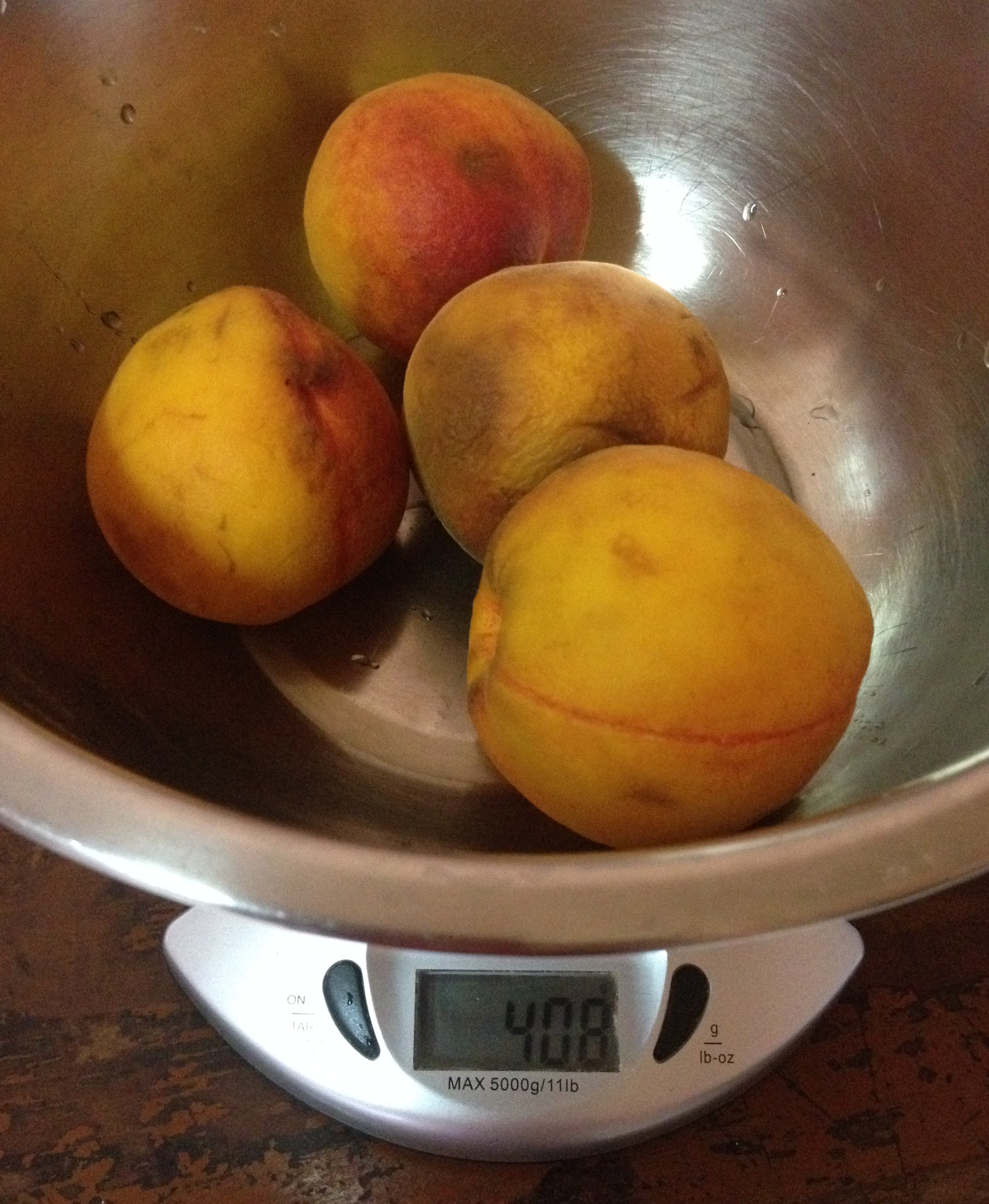
  • peaches – 4 no.s – app. 400 gms
  • apples – 6 no.s – app. 800 gms
  • sugar – 400 gms
  • lemon juice – juice of 4 lemons
  • apple cores and peach stones – tied in a clean muslin cloth
  • water – 1/2 cup – app. 150 ml


Method of Preparation

Part I


  1. Wash the peaches and apples.
  2. Soak them in turmeric-salt water for 1/2 an hour.


apples

img_4897

and peaches

img_4892


Part II

Before cooking the plum, there are two other things that are essential in the making of Jam-

a) Plate in the Freezer

Place a plate in the freezer and a few spoons- we need to check for consistency later by placing the jam in the chilled plate.

b)Sterilize the bottles with lid

  1. Wash the bottles and lids to store jam very well with no food particles sticking to it.
  2. Take a big bowl and place the washed bottles and lids on sides.
  3. Fill water in the bowl immersing the bottles.
  4. Let the water come to a full boil.
  5. Close with lid and let it stay till the jam is done.

Part III
1. De-skin the fruits and cut into small pieces.

2. In a hard bottomed vessel, first add the chopped apples and water and bring to boil. Reduce to simmer.

Note: If both fruits are added together, apple remains hard but peach tends to become soft, as peaches cook faster than apple.

3. Then, add peach and sugar and stir well.

4. Tie the apple cores and peach seeds in a clean white muslin cloth and keep it dipped in the fruit-sugar mixture and let it boil for 10 minutes.

Note: It is suggested in http://merrynsmenu.blogspot.in/2013/04/peach-and-apple-jam.html  to immerse the apple cores and peach seed just after apples are brough to boil – i.e. before adding peaches and sugar, but I forgot that step. So after addition of peach and sugar, I dipped the cores and stones. Yet, it turned out be perfect…lucky me.


img_6495

5. After 10 minutes, remove the cloth with seeds and add lemon juice to the cooking mixture.

6. Let the mixture cook well and set to jam consistency.

7. Check in-between with the plate in the freezer for consistency – swipe a spoon of jam on the plate and split into two halves with a spoon. If it sets well and isn’t flowing on the plate, jam is done. Else, cook for some more time.


img_4938

8. When the jam has reached the required consistency, switched off flame.


9. Pour into sterilized hot bottles directly from stove and close lid tightly.

10. Do not pour hot jam in cold bottles, otherwise the bottles would crack.

11. Leave the jam to cool by itself. Do not engage in cooling by other means. That would affect the setting of the Jam.

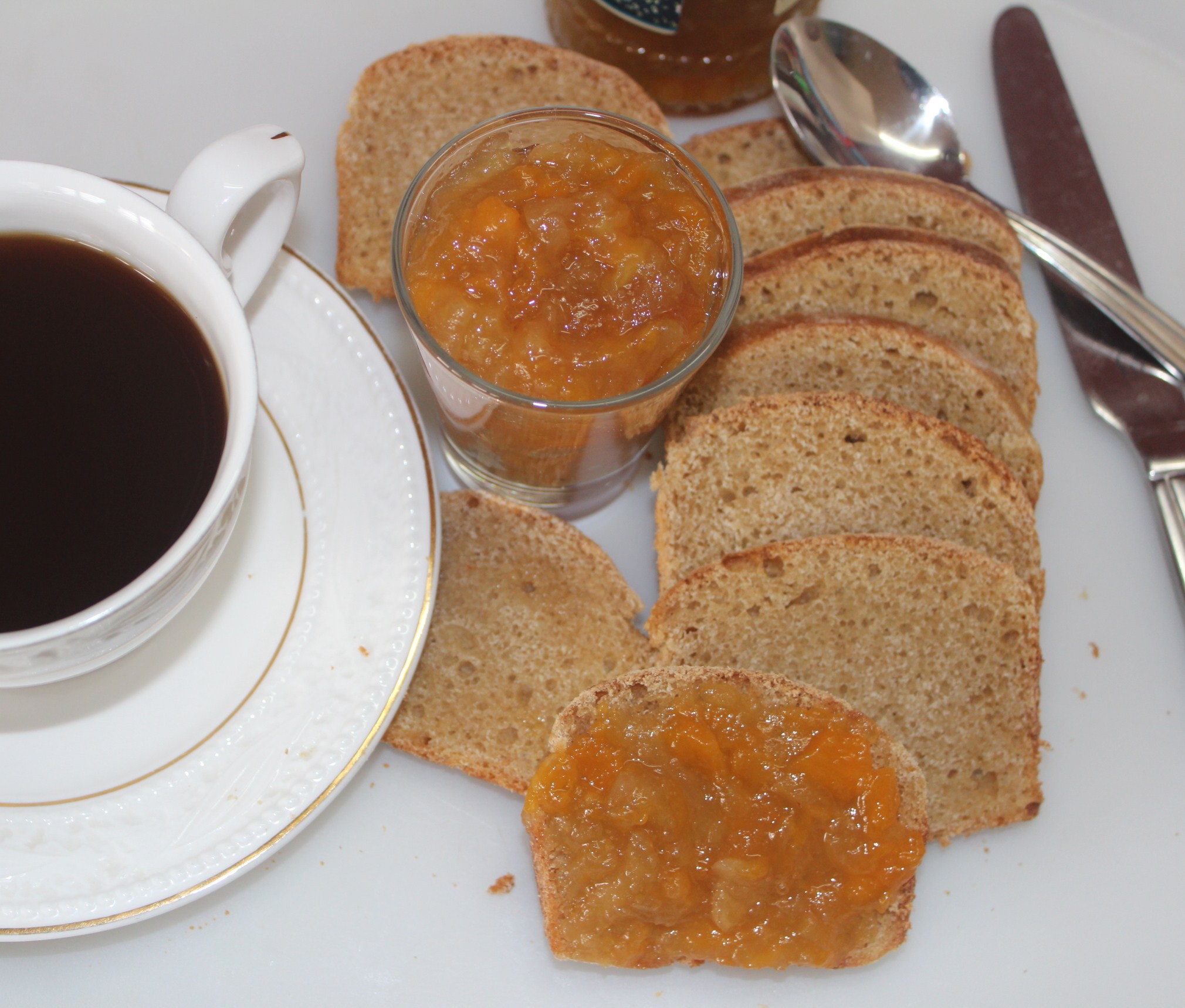
12. Enjoy with home made bread or bun. Also try in tarts or pies.


img_6705


Ellu Kozhukkattai/ Rice Flour Dumplings with Sesame Seed and Jaggery


dosaikal 232 - ellu kozhukkattai 070dosaikal 232 - ellu kozhukkattai 073
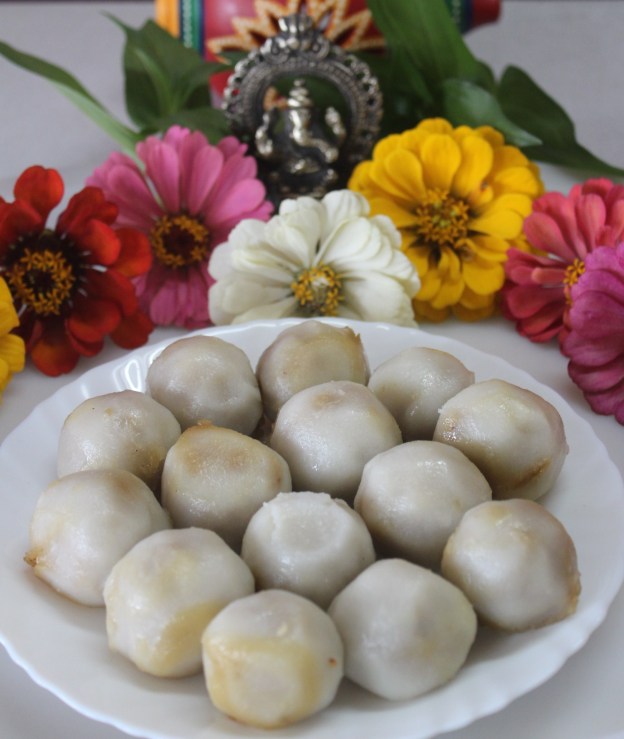
Pillayar Chathurthi, Ganesh Chathurthi or Vinayaka Chathurthi is being celebrated today. The Gods we worship have different names in different parts of India. Pillayar in Tamilnadu is also called as Ganesha or Vinayaka, followed by a list of many other names. Different names don’t interfere in the festivities on the street and inside homes.  What the elephant-headed God, being Pillayar or Ganesha likes is fixed – Kozhukkattai in Tamil and Modakam in Sanskrit. Different Forms of Modak are the most important preparation of Pillayar Chaturthi.

Added to the well popularised Modakam in the God’s hands, is a long chain of local ingredients – fruits, vegetables and grains that come up during the season.

In Tamilnadu, what Lord Ganesha is simplified in the poetic verses – ‘Appamodu Aval Pori’ – which gives the best three things that he likes to eat –

a. Appam/Deep fried Rice flour-jaggery Dumplings (the altered version being made with wheat flour and sometimes banana too)
b. Aval – Flattened Rice
c. Pori – Puffed Rice.

This also shows the socioeconomic connection behind these religion based celebrations. The major crop of the area – Rice and its different versions, has been adapted as ‘Festive Food Essentials’. I often think, if Ganesh Chathurthi had been celebrated elaborately in the northern parts of India – Wheat based specialities would have been his favorite, wheat being the major crop of that part of the country.

Now, the core ingredient of Kozhukkattai or Modakam is the rice flour. What enters into the beautiful rice cover can be optional. Coconut – Jaggery is the ultimate killer combination of all kozhukkattais according to me. The next classic filling is the Sesame Seed – Jaggery combination. The nutty flavor that the sesame seeds give and the traditional sweetness from jaggery can also be a low-fat version for those who feel coconut or fried coconut is rich in cholesterol (not me). Apart from this stuffed modakams, there are also varieties of non-stuffed stuff – pidi kozhukkattai or plain sweetened or salted steamed dumplings pressed with the impression of fingers – that aid additionally as quick and easy evening snacks.

Coconut-Jaggery Kozhukkattai and Pidi Kozhukkattai – Sweet and Salt and Spicy versions, have already been posted. It’s time for Ellu Kozhukkattai or Sesame Seed-Jaggery filled Dumplings this time.
Ellu Kozhukkattai/Rice Flour Dumplings with Sesame Seed and Jaggery
dosaikal 232 - ellu kozhukkattai 032
a. Ingredients specified below makes 20-25 dumplings

b. The V -Part demonstration is for precise comprehension alone – otherwise these dumplings are quite easy to make


Part I – Making Rice Flour at home
The core ingredient Rice Flour can be store-bought which comes out well, but the snow-white colour of home-made rice flour is something beyond comparison. For those who prefer home-made rice flour, please refer https://dosaikal.com/2016/08/29/uppu-seedaisalted-rice-ball-crispies/
Part II – Making the Rice Dough which is the outer covering

Ingredients


  • arisi maavu/rice flour – 1 1/2 cup – app. 200 gms
  • thanneer/water – boiling hot to make a stiff yet soft dough
  • uppu/salt – 1/2 tsp
  • nallennai/gingelly oil – 2 tsp


dosaikal 232 - ellu kozhukkattai 016


  1. Boil water in a vessel;
  2. In a bowl, mix rice flour and salt;
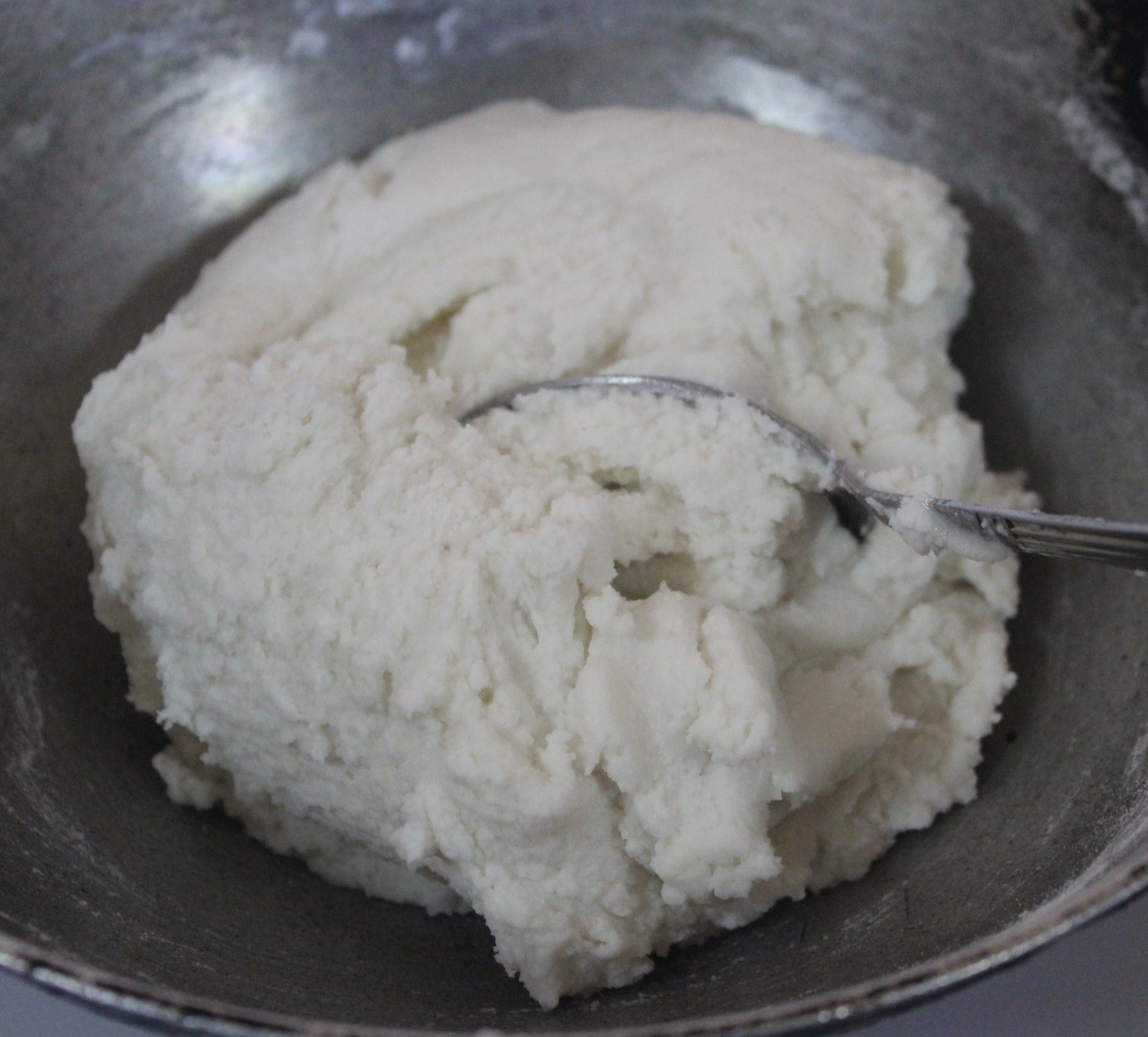
  3. Pour boiling hot water on it and mix well with a ladle immediately before lumps form;
  4. Add the gingelly oil for smooth consistency.


Part III – Making the filling


  • ellu/sesame seeds (white or black) – 100 gms – app. 1 cup
  • vellam/jaggery – 200 gms – app. 1 cup
  • thengai thuruval/grated coconut – 1/2 cup – app. 50 gms
  • chukku podi/dry ginger powder – 1 tsp
  • elakkai podi/cardamom powder – 1/2 tsp


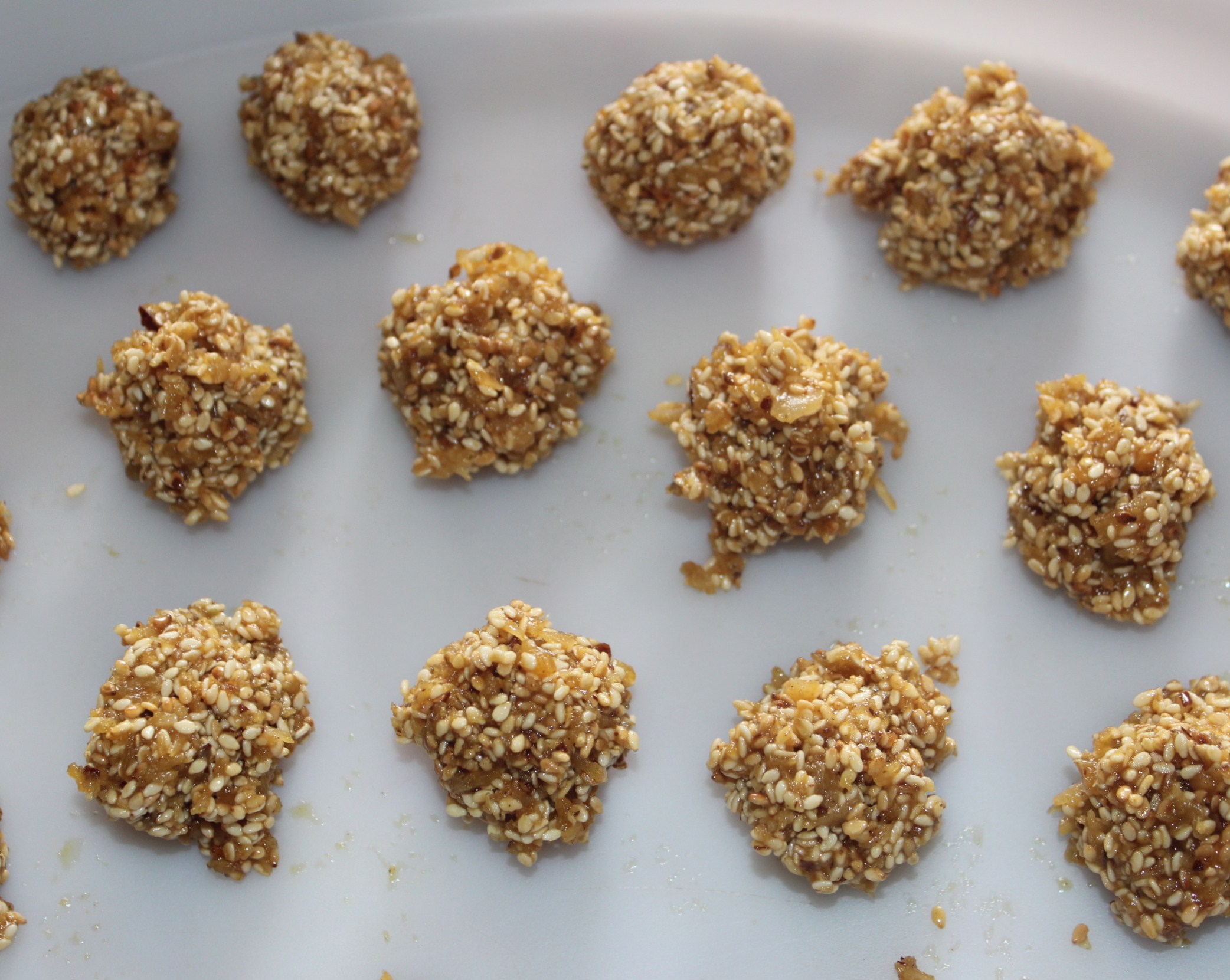
roasted sesame with jaggery water…

dosaikal 232 - ellu kozhukkattai 005


mixed with coconut, dry ginger powder and cardamom powder..

dosaikal 232 - ellu kozhukkattai 013


and shaped to be filled..

dosaikal 232 - ellu kozhukkattai 021


  1. Dry roast clean/non-muddy sesame seeds till golden.
  2. Separately dry roast coconut – for 10 mins – with the coco-nutty stickiness intact.
  3. Dissolve jaggery in just enough hot water and filter the mud that is present.
  4. In a pan, heat together sesame seeds, grated coconut, jaggery water, dry ginger powder and cardamom powder.
  5. Let the mixture thicken, ready enough to make small stiff balls.
  6. Make equal sized balls for filling.

Part IV – Making Kozhukkattai/Dumplings

(for step-by-step procedure for keeping the filling inside and closing kozhukkattai please refer – https://dosaikal.com/2011/09/14/modhakam-pillayar-chaturthi-special/


  1. Make small equal sized balls for the outer covering.
  2. Keep a bowl with 3 tsp gingelly oil for greasing palm – this helps the rice dough not sticking to the palm.
  3. Grease palm with gingelly oil.
  4. Take one rice ball and press it flat in the palm and fill it with one sesame jaggery ball.
  5. Cover it well and make kozhukkattai/dumpling.
  6. Make all dumplings to be steamed.


ready to be steamed

dosaikal 232 - ellu kozhukkattai 030


Part V – Steaming Modhakams


img_1037


  1. Take an Idli Kopparai/Idli Cooker or any Steamer.
  2. Boil water in the base of the steamer.
  3. Oil the moulds and place the kozhukkattai/dumplings.
  4. Place the mould in the steamer and steam for 15 minutes.
  5. Kozhukkattais are ready to be served.
 

dosaikal 232 - ellu kozhukkattai 043


Home made Plum Jam with Unrefined Cane Sugar (Preservative Free)


100% whole wheat Bread and Jam without store bought Pectin

IMG_4885
This post calls for some great adventure in the kitchen. From a person who started off highlighting traditional Tamilnadu dishes, with an open mind to learn cuisines of different countries, Baking Bread and Making Jam is of course an adventure. But it has certainly been a fruitful adventure.

Everyone aims at Healthy Food for the Family. Aiming at providing healthy food might mean many things –

Cooking-

a. food from scratch
b. with fresh, healthy ingredients
c. with unrefined food products like whole grains, lentils or unpolished stuff
d. that inculcates balance in all nutrients – carbohydrates, vitamins, proteins and fiber
e. that sticks to traditional foods
f. that involves less time to cook

and any other version that suits you and your family and more essentially the Family’s Palate.

My preferences of making food, starts from scratch and follow a traditional Tamil Grandma’s Household style.  Satisfying the taste buds that long for foods from different parts of the world, through specialties which can be cooked at home – from scratch with minimal ingredients, has been no less than a  beautiful, adventurous journey across the world.

So, my recent passion has been Baking Bread – 100% whole wheat and 0% all purpose flour. And connected to it, came the Making of Jam with no added preservatives or store bought Pectin.


The Nutty Bread

IMG_4974


Cooking Healthy Food might seem like a difficult task in hand. I chose the simple method of clinging on to all the above, especially understanding traditional foods – be it from any country or culture.

Simpler than this can be to just avoid processed food. That might not sound practically simple, but I assure, it is certainly a simple affair with loads of care and patience in choice of food stuff bought from the store.

When you go farther away from Earth, less the gravitational force and hence you float. A visit to the Local Super Market can be like a visit to Space, away from the true necessities of healthy living. While it pulls you or sucks you in, you float in the amazing aura and aroma of packed, refined junk basic items.  As your heart and brain is immersed in the tempting outer world of packaged nonsense, we tend to pick the most fancy ones, easy to cook and less time consuming. The next possible misery would be to fool oneself in the health benefits that has been quoted in the pack, and come back to the original world- Home, with more unwanted processed stuff.

It is so easy, we pick what we want, depending upon what had already tempted us and the beloved kids through advertisements. Now, we are proud owners of all those beautifully sealed packets – but, the proud owner of the super market is surely ‘The Winner’. That Super Market is indeed a Special SPACE where Losers are also satisfied souls.

Obesity and increasing health issues at a very young age throughout the world are things of real concern. This anxiety and uneasiness made me bake my own whole wheat breads and buns. The additional benefit of home made 100% whole wheat breads and buns  is the abundant patience instigated in the family. Truly, the chunky breads and buns need endurance to be consumed, after so many years of soft/store bought/ s0-called whole wheat bread.  Yet, the aroma of baking bread that fills the house and the satisfaction of having a healthy whole grain meal has become an addition. It has become our Sunday breakfast after a 6 day breakfast plan with power packed pancakes. https://dosaikal.com/2014/04/19/power-packed-pancakes-whole-grain-dosais/
My own… Dinner Rolls and Breads

IMG_3652IMG_6490


and buns…


IMG_5944

IMG_4107
While I need to perfect my bread baking efforts, before I post a few breads and buns that I make, I thought of the best accomplishment for breads – Jams and Jellies – easily the most sort after store bought item. Have a glance on the package of Jams available, there would be a long list of ingredients for storage purposes. Why not make our own Jam with the minimal ingredients – truly only two needed – sugar and fruit.

What about Pectin, an important ingredient needed for the consistency of jam? This has been a learning experience.

http://healingcuisinebyelise.com/2012/07/questions-answered-is-pectin-healthy.html gives a detailed analysis on Pectin.


According to the USDA, fruits contain the greatest amount of pectin — all fruits are made up of at least 5 to 10 percent pectin. Peaches, apples, oranges, grapefruit and apricots contain the highest amount of pectin among fruits. For example, one small peach contains 0.91 gram of pectin, while 1 cup of apple slices contains 0.654 gram of pectin. http://www.livestrong.com/article/289067-list-of-foods-high-in-pectin/


The learning fact is that fruits can be direct sources of Pectin, to attain the exact consistency in Jams and what can be skipped is the store bought Pectin. The danger of commercial pectin is that it might be a chemical combination with artificial sweeteners.


Pectin Fruit content

Courtesy: http://healingcuisinebyelise.com/2012/07/questions-answered-is-pectin-healthy.html


Hence, for a healthy food style, just choose unprocessed food. A visit to super market is a necessity. But, having healthy choices makes all the difference. What is healthy is something to be understood with Precision.

Additionally, it also means preserving foods with natural preservatives – unbelievable natural ingredients available in your kitchen – also available in small shops and super markets – but not as a processed version but as a basic unprocessed raw material. Amazing isnt it? But what remains most important is that ‘We Need to Make Our Choices’ for a healthy life style.

That’s why it is time for a Jam with fruit and sugar alone. When I had beautifully ripe Plums, that also had a sour touch to it, I chose to make a jam with plum and unrefined cane sugar – no refined white sugar either…Hurray!! Why bother about Pectin from store – Plum has all that is needed to fix the jam. And that was a true Success – with a capital ‘S’.

Come along… let’s see how I made it.
Plum Jam with Unrefined Cane Sugar (No Preservatives or store bought Pectin)


IMG_6482


Ingredients

  • plums deseeded and chopped – 1200 gms (approximately 6 bowls)
  • molasses/unrefined cane sugar – 500 gms


IMG_4612molasses


Method of Preparation
Part I
To disinfect the plums, take a big bowl of water with turmeric and salt. Leave the fruits in the water for 1/2 an hour.


IMG_4602


Part II
Before cooking the plum, there are two other things that are essential in the making of Jam-
a) Plate in the Freezer
Place a plate in the freezer and a few spoons- we need to check for consistency later by placing the jam in the chilled plate.


b)Sterilize the bottles with lid


IMG_4629


  1. Wash the bottles and lids to store jam very well with no food particles sticking to it.
  2. Take a big bowl and place the washed bottles and lids on sides.
  3. Fill water in the bowl immersing the bottles.
  4. Let the water come to a full boil.
  5. Close with lid and let it stay till the jam is done.


Part III


  1. Remove the plums from turmeric-salt water. Wash well and pat them dry with a clean cloth.
  2. De-seed and chop them into small pieces. Smaller the pieces, more blended the jam would turn out.
  3. Smaller pieces combined with slightly bigger chunks in-between, taste delicious with a candied flavor.
  4. Take a hard bottomed, wide bowl and drop in both ingredients -plum and sugar.


IMG_4620


4. One can also substitute molasses with cane sugar.

5. Let the mixture boil in open bowl, do not close with lid.

6. The procedure would take 45 minutes to an hour to reach the required jam consistency


IMG_4624
7. Check in between with the plate in the freezer- swipe a spoon of jam on the plate and cut into two halves. If it sets well and isn’t flowing on the plate, jam is done. Else, cook for some more time.


IMG_4626
8. When the jam has reached the required consistency, switched off flame.

9. Pour into sterilized hot bottles directly from stove and close lid tightly.

10. Do not pour hot jam in cold bottles, otherwise the bottles would crack.

11. Leave the jam to cool by itself. Do not engage in cooling by other means. That would affect the setting of the Jam.

12. Enjoy with home made bread or bun. Also try in tarts or pies.


IMG_4631