Author Archives: dosaikal

Unknown's avatar

About dosaikal

A simple person who believes strong roots and values build up stronger generations; and good food and good food habits are one of the best gifts that one can give to their off springs.

Eggless Chocolate Cake

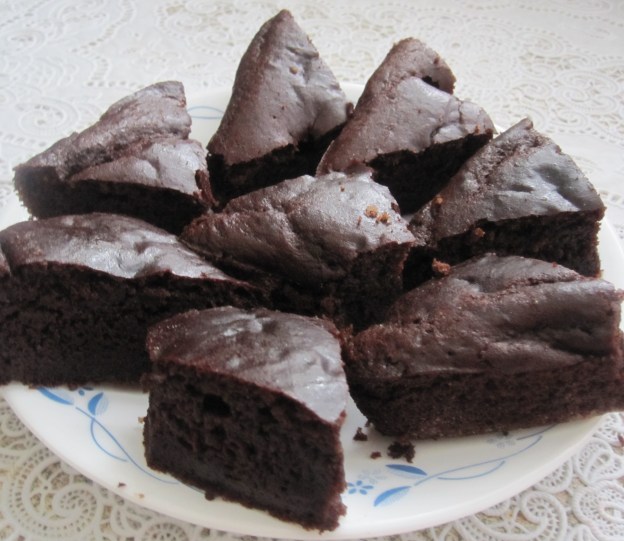
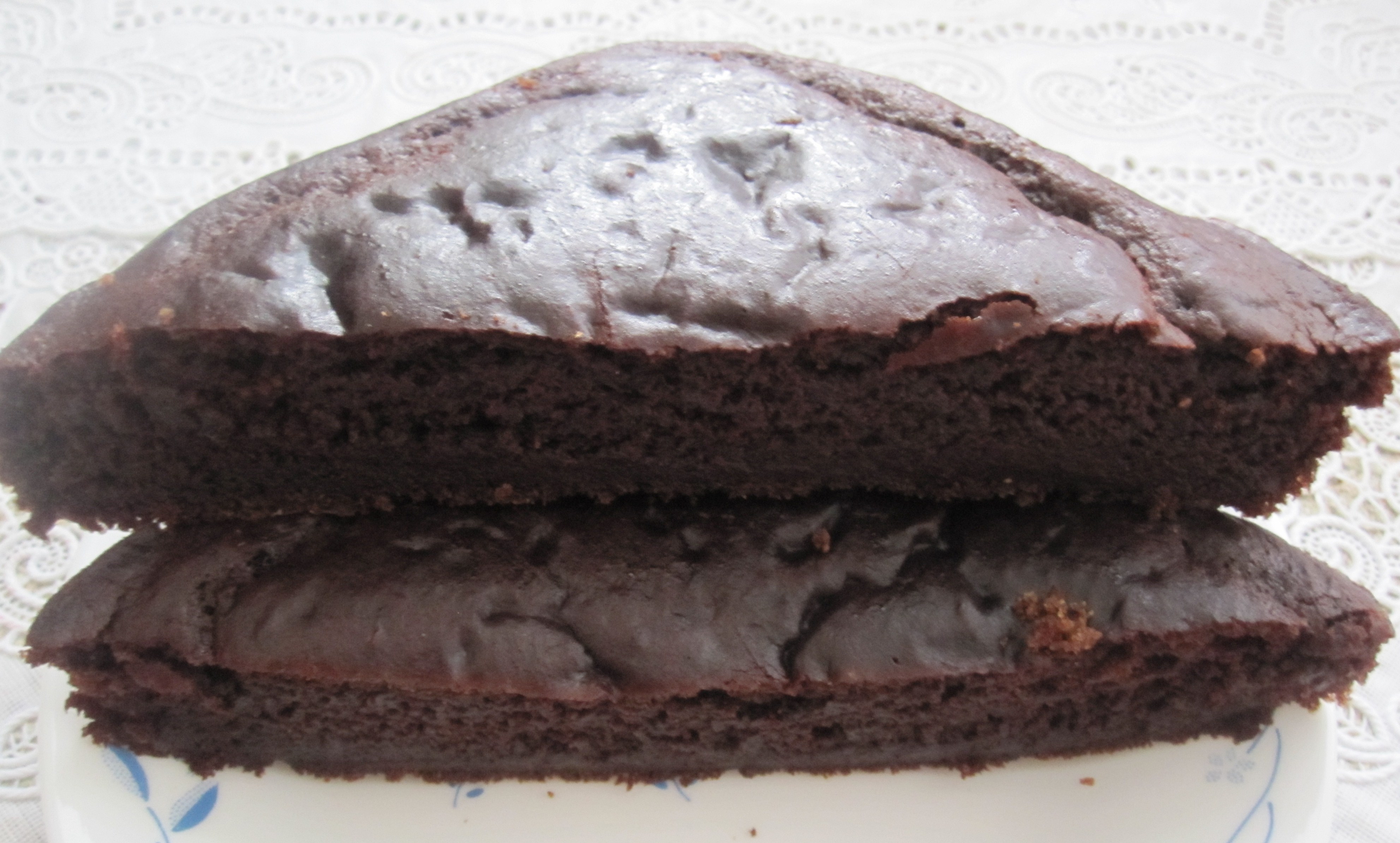
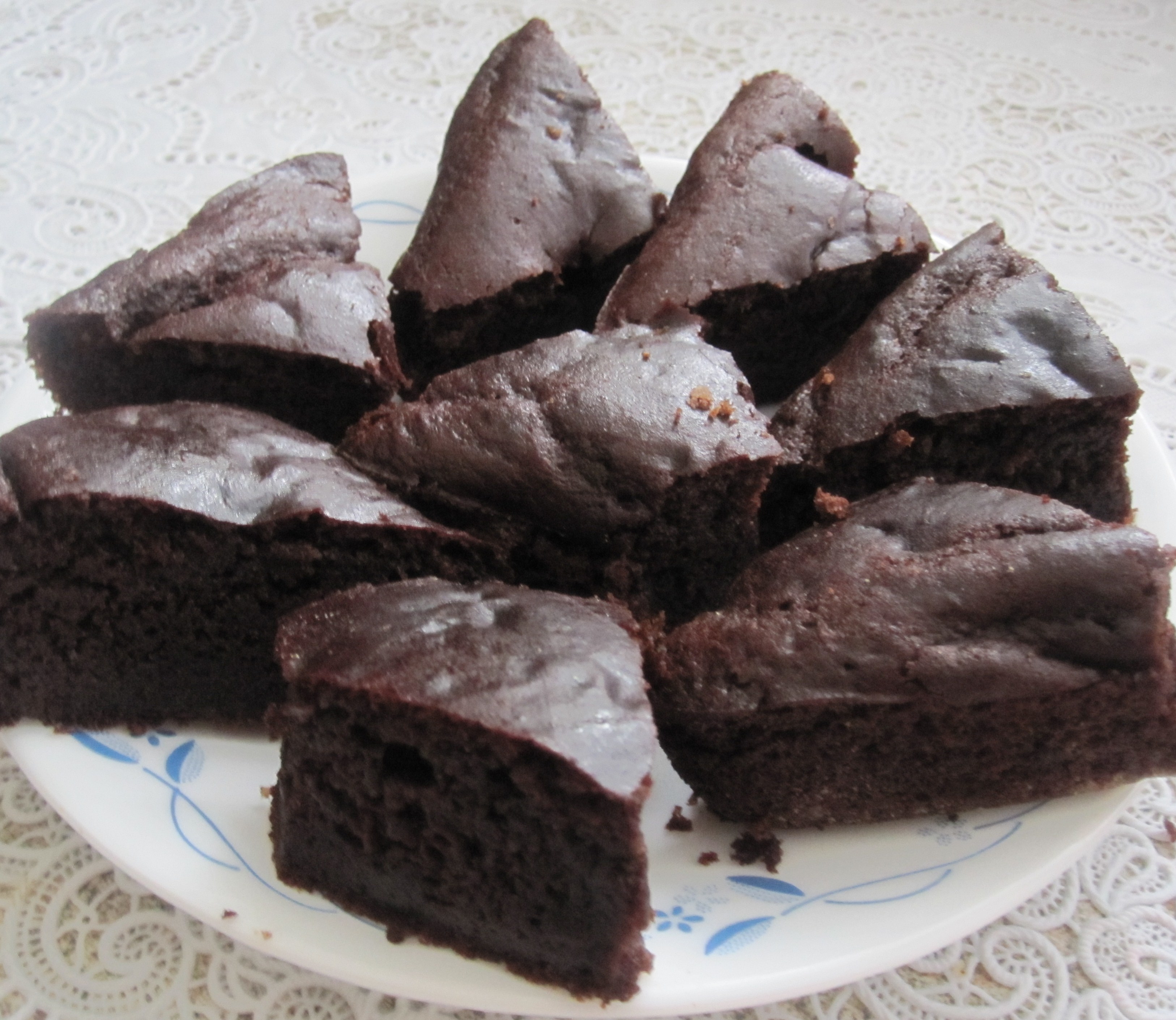
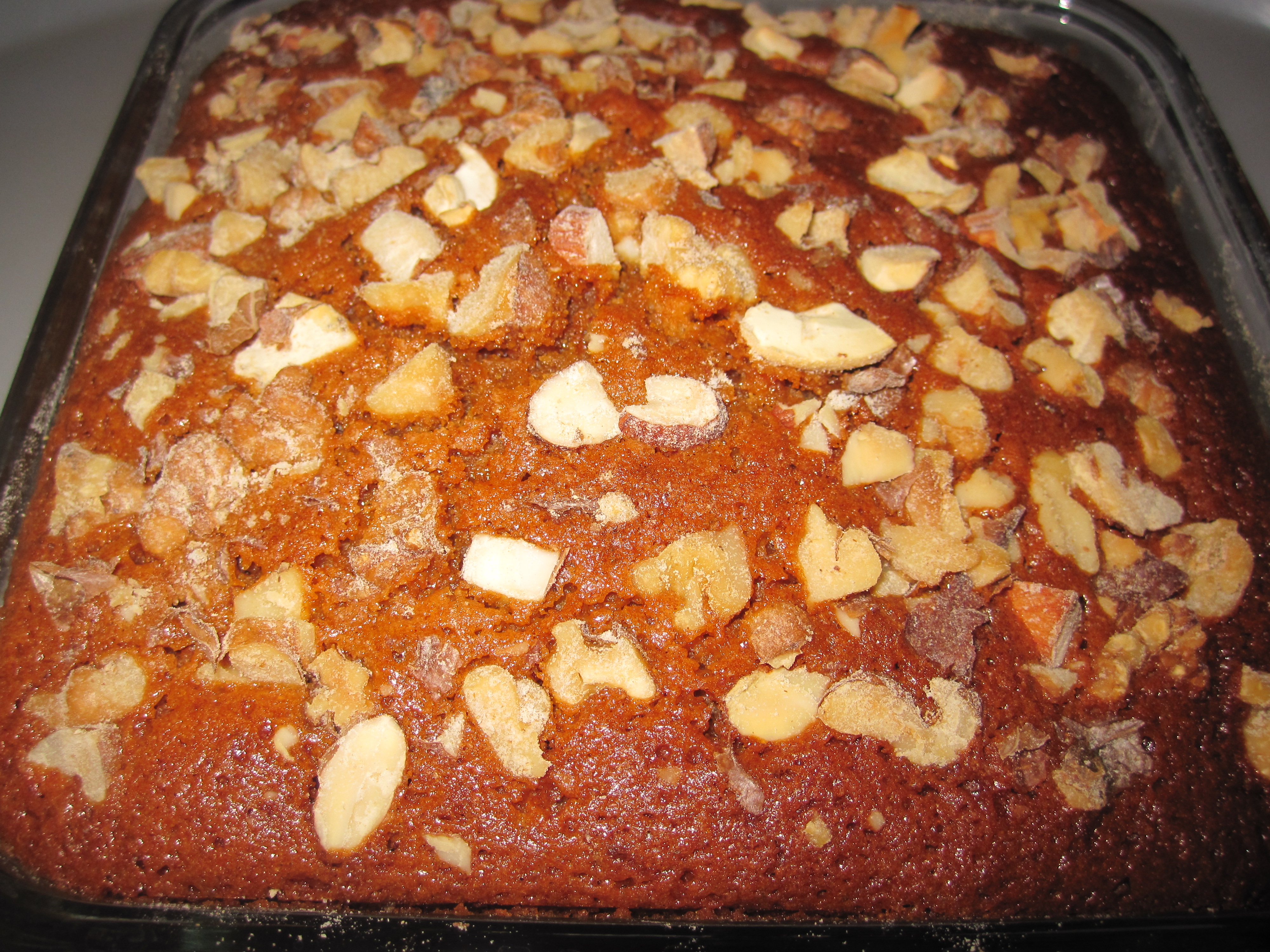
Here comes a Chocolate Cake – Eggless!  I prefer using eggs in my cakes… it’s just that I like the texture of the cake when eggs are used. But, I try to bake eggless cakes for my friends who do not include eggs in their diet.

As usual, butter is substituted with oil and all-purpose flour with wheat flour.   Eggless cakes are also baked using condensed milk – here yoghurt is used instead. Of course, another healthier option – brown cane sugar is used in place of white sugar. 


Eggless Chocolate Cake 

Ingredients

  • wheat flour – 1 small cup – 100 gms
  • brown cane sugar – 3/4 cup – 75 gms
  • cocoa powder – 1/4 cup – 25 gms
  • cooking oil (I used sunflower oil) – 1/2 cup – 50 ml
  • yoghurt/curds – 1 1/2 cups – 150 ml
  • baking powder – 1/2 tsp
  • baking soda – 1/2 tsp
  • milk – a little (if needed)
  • salt – a pinch
  • vanilla extract – 1/2 tsp


Method of Preparation

  1. Sieve wheat flour, cocoa powder, baking powder and baking soda and keep aside
  2. In a wide bowl, mix oil, sugar, yoghurt and vanilla extract till sugar melts
  3. Add the sieved dry ingredients little by little
  4. If batter is thick, add milk as needed to make a batter of pourable consistency  and lump-free too
  5. Pour in a greased tray
  6. Bake in a preheated oven at 200 degrees centigrade for 20 minutes
  7. Check with a tooth pick
  8. Cake is ready when tooth pick comes out clean
  9. Cool and serve.


 forgot to take a snap before i started cutting…


Note:

  1. If one needs more sugar, can be added
  2. Quantity of yoghurt can be reduced or diluted with  very little water
  3. Nuts, especially walnuts can give the cake a nutty taste
  4. This cake gives nearly 20 small pieces – quantity can be altered for bigger or smaller cakes – checking at the right time is important!


The Indispensable Sambar

Sambar can easily be the most favourite of all kuzhambus in south indian cuisine. This is the  second course  in a Tamilnadu meal (https://dosaikal.com/2011/10/14/thamizhar-virundhu-feast-of-the-tamils/). This is a lentil and vegetable gravy prepared with an exclusive podi/powder called the Sambar Podi. One cannot find a south indian or especially Tamilnadu household without Sambar Podi or Powder. Though there are several sambar powders available in stores across the world, in traditional homes or in most households, the powder is still prepared by mothers and given to their daughters.  I still get it from Amma and have no plans of making my own in the near future too! My mother got it from her mother and now it is my turn!


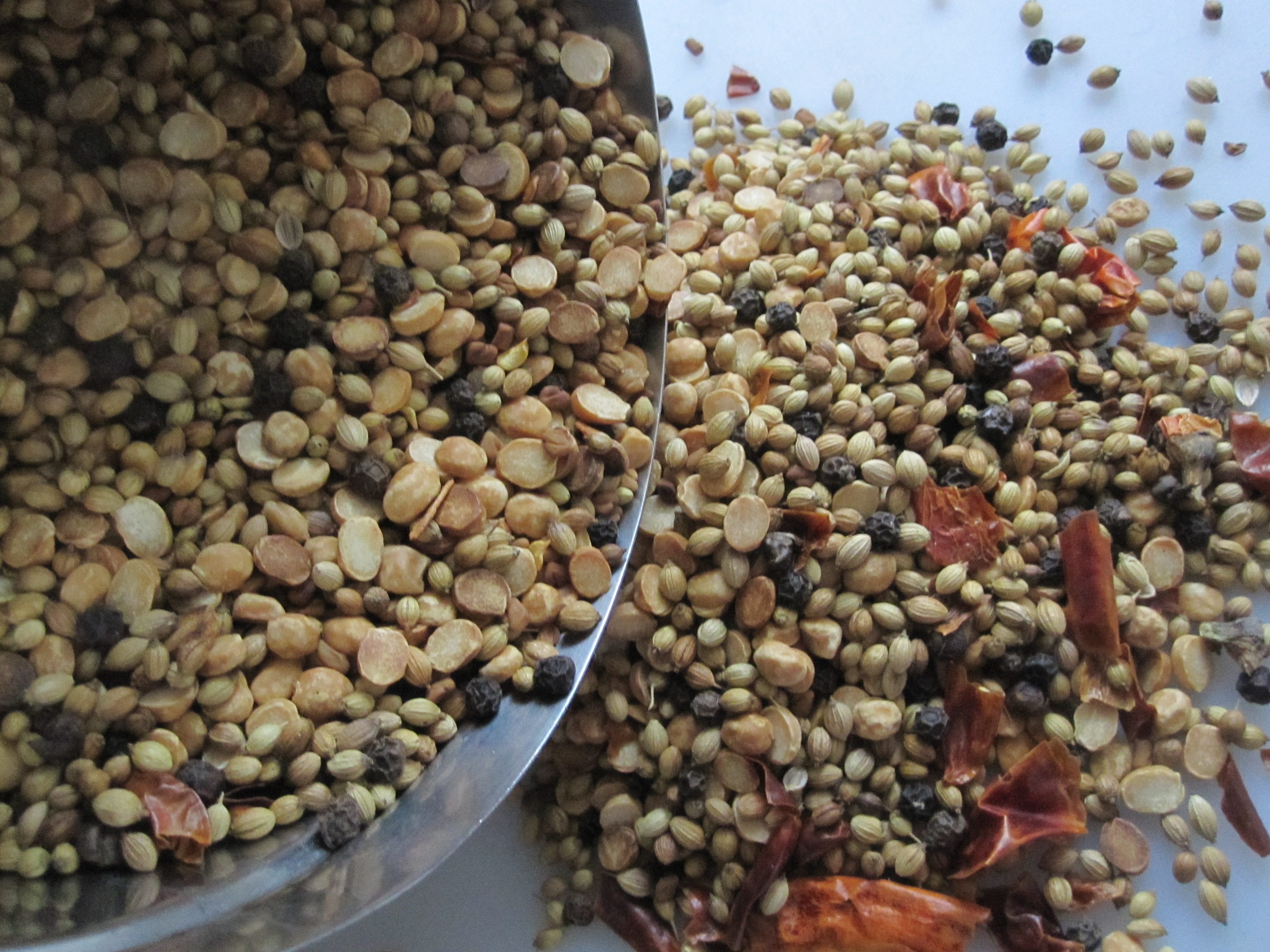
amma’s sambar podi


Since the basic sambar powder is a household preparation, transferred from mothers to daughters, the taste of Sambar in each home differs in taste and looks. Though thuvaram paruppu/thuvar dhal/split pigeon pea is the lentil used in the sambar to be had with rice, the vegetables used and the combination of the ingredients used in the powder differs. This gives the specific flavour of Sambar of each household.

Sambar is had with Idlis, Dosais, Uppumas, Adais, Idiyappams – all breakfast/dinner items and with starters or with deep-fried snacks like vadais, bondas and many more. When lunch and dinner has rice as the base food, sambar is the most preferred. A busy day’s simple lunch would constitute rice and sambar with a vegetable side-dish and rice and curds to end. Sambar to go with idlis and dosais differs from the sambar made for rice. 


sambar saadham/sambar rice


Several ingredients are dry roasted and ground in the  mill as each family makes it in plenty to store for months and packs for daughters like me.  When I came to live in a country very far from Chennai, and the Sambar powder that amma sent with me would be done in five to six months time… my chithi (mother’s sister) gave me this idea. She dry roasted all the ingredients needed for sambar powder and packed them in several packets. After amma’s ready-made sambar powder would be done, she asked me to just re-roast one packet each time, and powder it in a blender and fresh sambar powder would be ready.  Thankyou Chithi!! That was an excellent idea for some fresh sambar powder without struggling for the ingredients each time.


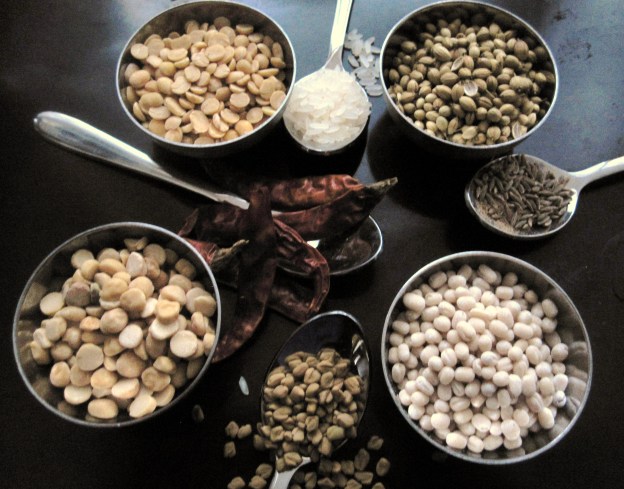
chithi’s ingredients for sambar


So, till today, I do not know to make traditional sambar powder – thanks to amma and chithi. But to inform my readers about the ingredients that go into my sambar powder – I collected this from amma.

Note: Chithi’s powder is different from amma’s!!


Sambar Powder

Ingredients

  • kothumalli vithai/coriander seeds – 1/2 kg
  • milagai vatral/red chillies – 1/2 kg
  • kadalai paruppu/bengal gram – 100 gms
  • thuvaram paruppu/split pigeon peas – 100 gms
  • uluntham paruppu/dehusked black gram – 100 gms
  • seeragam/cumin seeds – 4 tsp
  • venthayam/fenugreek seeds – 2 tsp
  • raw rice – 1oo gms


ingredients to be dry roasted


Method of Preparation

  1. In a hard bottomed vessel, dry roast all the ingredients except rice
  2. Separately roast rice – after a while the rice would puff up – 100 gms of rice would become nearly 200 gms, after roasted
  3. Spread in a plate and cool it for a short while
  4. Dry grind into a smooth powder
  5. Sambar Powder is ready.

Note:

Take measurements in limited quantities for less powder.

Now to the making of Sambar … Generally in Tamilnadu, Sambar is made with split pigeon peas and one vegetable – Murungaikkai Sambar (drumstick sambar), Mullangi Sambar (radish sambar), Kathirikkai Sambar (brinjal sambar), Vendaikkai Sambar (okra sambar),  Avaraikkai Sambar (indian broad beans sambar), Mangai Sambar (raw mango sambar), Keerai Sambar (spinach sambar) and a nearly never-ending list of sambar varieties.


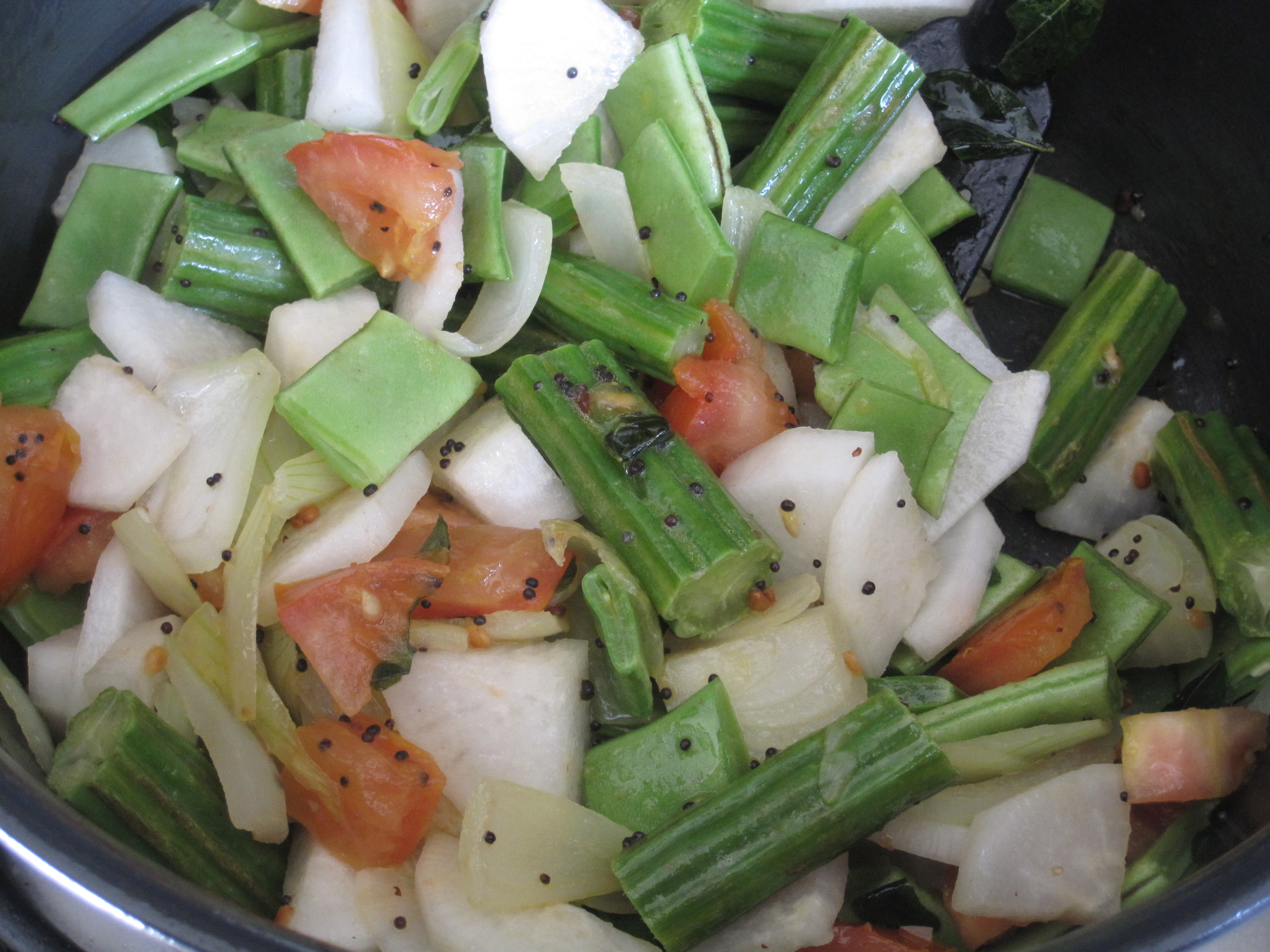
mixed vegetables for sambar


Sometimes it can be a combination of two vegetables -like murungaikkai-kathirikkai sambar – drumsticks and brinjals with lentils. Even though, we find many other vegetables like carrots or beans  in sambars in restaurants, traditionally it is not preferred even now. When there are guests from different parts of the world or even from other parts of India, I do mix up a variety of vegetables.. but when it comes to family alone, then there is only one vegetable – which does not go the non-sambar way!


vegetables cooking in tamarind water and sambar powder


Thakkali sambar (tomato sambar) and onion sambar (shallots sambar) are generally had with idlis, dosais or pongal.


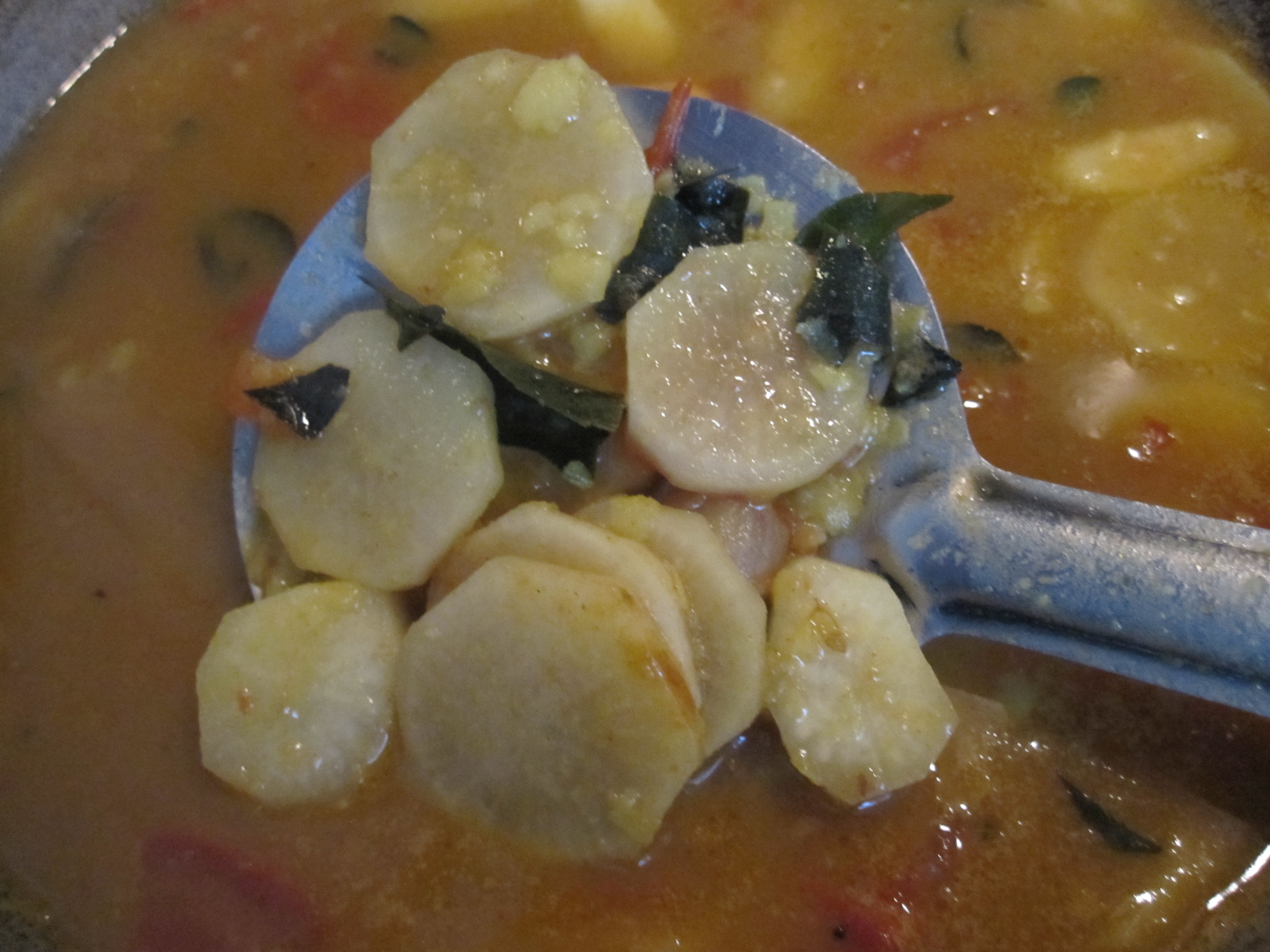
Mullangi Sambar/Radish Sambar


shallots, tomato and radish


Ingredients (serves 4)

  • cooked thuvaram paruppu/split pigeon peas/toor dal – 2 cups
  • tamarind – lemon sized ball
  • shallots – 10-12 nos
  • thinly sliced mullangi/radish – 1 cup
  • tomato – 1 no.
  • sambar powder – 2 tsp
  • salt – as needed
  • coriander leaves – for garnishing

Seasoning

  • oil – 2 tsp
  • kadugu/mustard seeds – 1/2 tsp
  • uluntham paruppu/dehusked black gram – 1/2 tsp
  • venthayam/fenugreek seeds – 1/2 tsp (optional)
  • perungayam/asafoetida – 1/2 tsp
  • karivepilai/curry leaves – a few


tamarind juice and cooked lentil


Method of Preparation

  1. Soak tamarind in hot water for half an hour; Mix it well with hands and strain it
  2. Thinly slice radish and cook the lentil till soft
  3. Heat oil in an iruppu chatti/hard bottomed vessel
  4. Add mustard seeds, when it splutters add dehusked black gram and fenugreek seeds 
  5. When black gram turns golden brown, add curry leaves and shallots
  6. Add chopped tomatoes, fry for a while and add sliced radish
  7. Pour the strained tamarind juice and sambar powder and salt
  8. Add more water if needed and close the vessel with lid and let the vegetable cook in the tamarind juice and sambar powder
  9. When the radish is cooked, add the cooked lentil and mix well
  10. Bring it to boil, check salt and add very little water if needed to bring sambar to pourable consistency
  11. Sprinkle asafoetida and coriander leaves
  12. Sambar is ready; Serve with hot rice.


mullangi sambar/radish sambar


Note:

  1. In Thoothukudi or Tirunelveli Sambar, tomatoes are not used. Here, tomatoes are used to reduce tamarind
  2. Tamarind juice/pulp, lentil and vegetables can be reduced or increased as per preference
  3. Kuzhambus/gravy dishes generally start with seasoning, and all other ingredients are added to it for cooking. So, all kuzhambus start with mustard seeds and black gram and then the vegetables are added gradually
  4. Thoothukudi and Tirunelveli Sambars (Thoothukudi and Tirunelveli are my mother’s and father’s native places respectively) have ground coconut added in the end – that can be a different recipe all together… might be in the near future!

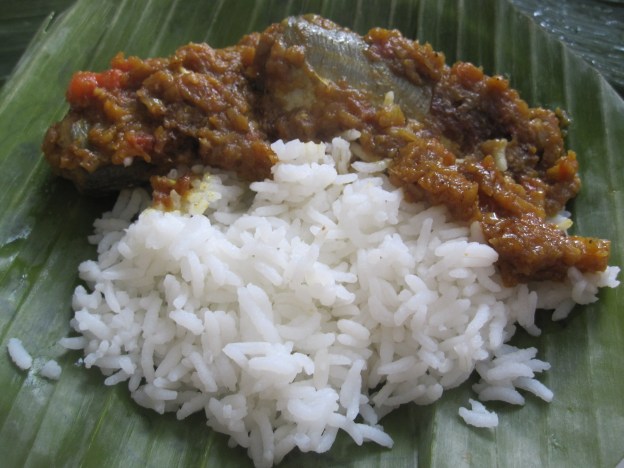
Rice with Meen Kuzhambu/Fish Curry

This can be a quick and easy sunday non-vegetarian meal – not to waste much of the precious weekend family time in the kitchen. One can also make this meen curry on a friday/saturday evening and store for the next day lunch/brunch! I don’t think this can be called an exact kuzhambu as generally kuzhambu is a thinner version. This can be fish in a thick gravy/thokku! Add more water and it can be converted to a simple kuzhambu.


The word ‘curry’

Curry has become a very popular and sort after word in the UK and many parts around the world…


The earliest apparent mention in print in the English language occurs in a translation (1598) of a Dutch traveller’s account of voyages in the E. and W. Indies. Referring to Indians, this text states that: ‘Most of their fish is eaten with rice, which they seeth in broth, which they put upon the rice, and is somewhat sour but it tasteth well and is called Carriel, which is their daily meat.’ http://www.huffingtonpost.com/encyclopedia/definition/curry/730/


The word comes from “Kari” which is from the Tamil language and was later anglicized into “curry”. Curry powder itself is not a single spice but a blend of different spices and can be mild or hot. This golden colored spice is one of the oldest spice mixes and is most often associated with Indian cuisine. http://www.indepthinfo.com/curry/history.shtml


There is also another view to the origin of the word curry in english –


200 cooks and several philosophers were summoned by King Richard II to produce the first English cookery book ‘The Forme of Cury’ in 1390. The book contained 196 recipes. None of these recipes have any thing in common with Indian curries. ‘Cury’ was the Old English word meaning cuisine based on French ‘cuire’ meaning: to cook, boil, or grill.. After the cookery book, Cury became a popular part of English vocabulary. The term Cury became associated with stew. http://www.indiacurry.com/faqhistory/hfaqcurry.htm


 ‘Kari’ means Meat

The word ‘curry’ is believed to be the anglicized version of the tamil word ‘kari’. But, in Tamil, the word kari/curry might denote meat..

Kozhi kari kuzhambu means Chicken Gravy – where kozhi means chicken, kari means meat and kuzhambu means gravy;

Aatu kari kuzhambu means Lamb Gravy – Aadu means Lamb, kari kuzhambu means meat gravy;

The same applies for Meen kari kuzhambu where Meen means Fish; and 

Kothu Kari means Minced Meat.


Most people in the world today know what a curry is – or at least think they do. In Britain the term ‘curry’ has come to mean almost any Indian dish, whilst most people from the sub-continent would say it is not a word they use, but if they did it would mean a meat, vegetable or fish dish with spicy sauce and rice or bread. http://www.menumagazine.co.uk/book/curryhistory.html


Now, the Meen Curry. 

Meen Curry

Ingredients (serves four)

  • meen/fish – 500 gms (any variety – with bones or fillet as preferred)
  • garlic – 6 cloves
  • onions – 2 medium
  • tomato – 2 medium
  • tamarind – marble sized ball
  • red chilli powder – 2 tsp
  • coriander powder – 3 tsp
  • pepper powder – 1/2 tsp
  • turmeric powder – 1/2 tsp
  • salt – as needed
  • oil – 4 tbsp
  • kadugu/mustard seeds – 1 tsp
  • vendhayam/fenugreek seeds – 1/2 tsp
  • curry leaves – a few


 Method of Preparation

  1. Clean the fish pieces; apply salt and turmeric powder and keep aside
  2. Finely chop garlic, onions and tomatoes separately
  3. Wash and soak tamarind in 1 cup hot water
  4. Heat oil in an iruppu chatti/Pan
  5. Add mustard seeds, when they splutter add fenugreek seeds and curry leaves
  6. Add chopped garlic, onions and tomatoes and fry for a while
  7. Add turmeric, chilli, pepper and coriander powders and salt and fry well
  8. Strain the tamarind and add the pulp
  9. Cook till the raw smell of spices and tamarind goes away
  10. Add the fish pieces and let the fish cook in the pan with closed lid in sim position
  11. The fish would be cooked in 5 -7 minutes or a little more
  12. Thicken the gravy if needed or add some water to make it thinner
  13. Serve hot with rice.


 Note:

  1. After the fish is washed, a paste of turmeric powder and salt is rubbed over the fish pieces and kept for at least 1/2 an hour
  2. Soak tamarind in hot water to easily get the pulp or paste
  3. Meen Kuzhambu tastes best when made in an earthen pot.

Vallarai Thuvayal/Chutney For Better Memory

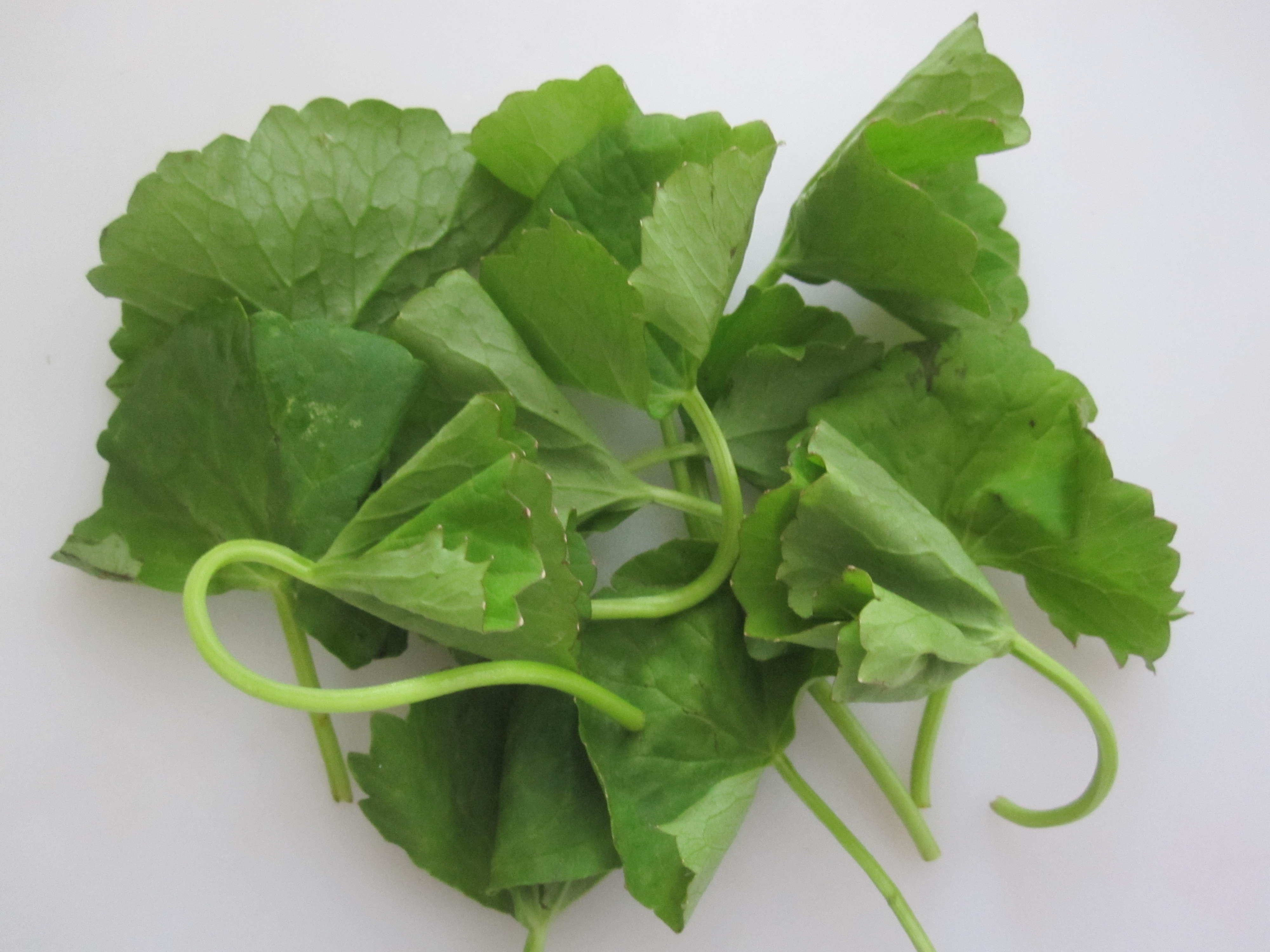
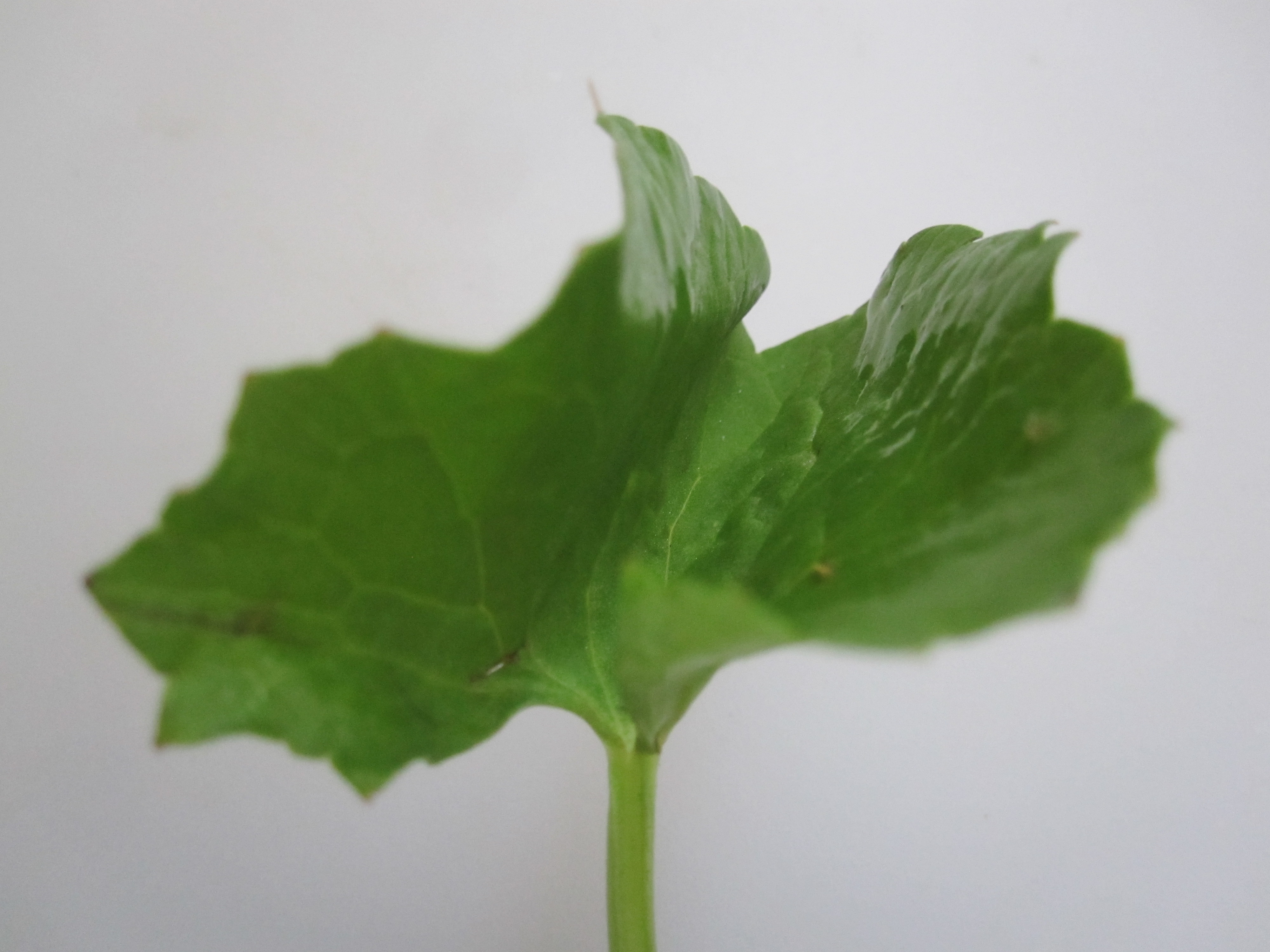
After all the festivities and special food of the occasion, now for some simple yet worthy cooking. This one sounds simple but the health benefits are tremendous. Vallarai Thuvayal is a green chutney with the herb Vallarai. It is called the Indian Pennywort and its botanical name is Centella Asiatica.


Centella asiatica, also known as ‘Vallarai’ in South India, belongs to the family of herbs that help in maintaining youthful vigour and strength, reveals Charaka, the foremost exponent of Ayurveda.

Apart from providing vigour and strength, it improves the receptive capacity of the mind, improves memory, voice, physical stamina, complexion and digestive capacity of the body. The herb is also advisable for diabetics and people suffering from anaemia. The extracts of the plant are also being used in cosmetology as an ingredient in face creams and anti-wrinkle creams.  http://www.ayurvedictalk.com/vallarai-herb-to-maintain-youthful-vigour-and-strength/627/


Vallarai Keerai or the Pennywort leaves are also available as toffees, syrups, juices or powders. They are available in the Naatu Marundhu Kadai or the Tamil Medicine Shops in and around Tamilnadu, and other Sidha and Ayurvedic Medical shops.


 Vallarai Thuvayal

Ingredients (serves 4)

  • vallarai leaves – 2 cups
  • kadalai paruppu/bengal gram/channa dhal – 4 tbsp
  • chinna vengayam/shallots or small onions – 12 nos
  • poondu/garlic – 4 cloves
  • green chillies or red chillies – 2 nos
  • puli/tamarind/imli – marble sized
  • oil – 1 tsp
  • salt – to taste
  • water – very little to make a thick paste


 fried and ready to be ground


 Method of Preparation

  1. Separate the leaves from the stem and wash very well
  2. Peel skin of shallots and garlic cloves; wash and set aside
  3. Heat oil in an iruppu chatti/pan and fry bengal gram till golden brown
  4. Add shallots, garlic cloves, green chillies/red chillies and fry well
  5. Add vallarai keerai/greens and fry well
  6. Cool this and grind in a blender with tamarind, salt and very little water to a smooth paste.


 vallarai keerai thuvayal


 Note:

  1. Serve with piping hot plain white/brown rice and nei/clarified butter/ghee
  2. Nallennai/Gingelly oil can also be used instead of ghee
  3. This can be a first course of any meal with a gravied vegetable/stew
  4. Some might have this thuvayal with thayir saadham  (https://dosaikal.com/2011/12/22/thayir-saadham-mor-milagaicurd-rice-sun-dried-chillies/)
  5. Ulundham Paruppu/Dehusked Black Gram can be substituted with Bengal Gram
  6. Grated Coconut can also be used if preferred
  7. The quantity of chillies can be altered according to spice preference. 

Thai Pongal – The Harvest Festival and Sarkkarai Pongal

Pongal is the harvest festival of the Tamils. After the tamil month – Maargazhi, comes Thai (not pronounced as in Thailand. Pronounced as in thigh). It marks the end of the harvest season.  According to the tamil seasons – the month of Thai falls in Mun Pani Kaalam – early winter.

These are the tamil seasons classified in the literary works-

  • Ila Venil Kaalam – Milder Hot Season – The months of Chithirai and Vaigasi (mid april and mid june)
  • Muthu Venil Kaalam – Hot Summer – The months of Aani and Aadi (mid june to mid august)
  • Kaar Kaalam – Cloudy/Rainy Season -The months of Aavani and Purattasi (mid august to mid october)
  • Koothir Kaalam – Cold Season – The months Aippasi and Kaarthigai (mid October to mid December)
  • Mun Pani Kaalam – Early Winter/Dew – The months of Maargazhi and Thai (mid December to mid February)
  • Pin Pani Kaalam – Later Winter/Dew – The months of Maasi and Panguni (mid February to mid april)

(http://sangamtamilforeignscholars.wordpress.com/robert-butler/)


Pongal cannot be considered a religious festival, though it is more popularized as a Hindu Festival. It can be called as a thanks giving celebration – the farmers thank the Sun God for a bounty harvest and thank their cows for their milk and the bulls who helped them plough their fields and pull their carts.

People living in cities are not really connected to this professional affair. With much population moving towards towns and cities for non-agriculture based livelihoods, what keeps the tradition still alive?

The quintessential grain of the people of south india – ‘Rice’ is needed for making Idli, Dosai, Cooked Rice, Payasams, Savouries and many more food items. Might be this connection between those farmers and city dwellers keeps everyone celebrate pongal alike. When the farmers thank their cattle and nature for helping in their bountiful harvest, people in other parts celebrate Pongal as a thanks giving festival to  the Farmers who provide them with the incomparable and unsubstitutable RICE, other crops and vegetables.


Pongal is a four-day affair.

1. The first day – the last day of the month of Maargazhi – this year (2012) January 14 – is called Bhogi Pongal and is the day of cleaning.  All old unwanted things are shed away. People white wash their houses and new Kolams – traditional drawings on the floor with rice flour and the house gets ready to celebrate Pongal the next day.


Kolam  from free pongal wall papers 



All the houses from the richest to the humblest are thoroughly scrubbed and whitewashed. Homes are cleaned and decorated with “Kolam” – floor designs drawn in the white paste of newly harvested rice with outlines of red mud. Often pumpkin flowers are set into cow-dung balls and placed among the patterns. Fresh harvest of rice, turmeric and sugarcane is brought in from the field as preparation for the following day. http://www.123pongal.com/pongal/festival/bogi-festival.html


2. The second day is Thai Pongal. The day of Pongal, which falls on January 15, 2012 is the first day of the month of Thai. The Tamil saying goes –
‘Thai pirandhal vazhi pirakkum’ – meaning when the month of Thai is born,  good things start coming into everyone’s life.

Pongal is also called Thai Thirunal and Thamizhar Thirunal – which means the festival of the Tamils – beyond religions.

Pongal means boiling or spilling over in reference to rice or milk. It is celebrated in cities on the gas stoves in the kitchen. In villages and towns, mud stoves or brick stoves are used to cook the newly harvested rice on man chatti/earthen pots or vengala paanai/brass pot. The stove is kept on the traditional kolams drawn on bogi night and pongal – plain rice and sweet jaggery rice is cooked not in the kitchen but in front of every house – thanking the Sun God.


pongal wishes from free pongal wall papers


The Vengala Paanai used only for Pongal purpose, is also called the ‘Ponga paanai’ is given to every bride by her parents and the first pongal after marriage is called ‘Thalai Pongal’ and the new daughter-in-law celebrates Pongal with her new Ponga paanai. After a few years of usage, unfortunately now, mine lies back home and so I use the normal pressure cooker in kitchen to make Pongal.

There would be two Paanais/vessels. One with plain white rice and water and the other with plain white rice and when it boils, jaggery is added to make Sarkkarai Pongal – the sweet jaggery rice – the delicacy associated with the festival. When the new rice boils and spills over the paanai, women of the house say – ‘Pongalo Pongal’ in chorus.

Maavilai thoranam/decorating houses with fresh mango leaves, Manjal Kizhangu/Fresh turmeric with the fresh leaves tied to the Pongal Paanai, Karumbu/Sugarcane and Panankizhangu/Palm Root are certain things associated with Pongal and those which I miss a lot during these special days, not to mention the fresh Banana leaves.

Not only Sarkkarai Pongal, the whole feast meal consists of those traditional vegetables – the normal four coarse meal – ilai saapadu – is enjoyed by the whole family. Sambar, Rasam and Yoghurt being normal, Avial – a vegetable dish with coconut gravy – using raw banana, egg-plant, pumpkin, drum sticks and many other root vegetables is the highlight of the day. By the end of the day, the tongue would have lost its taste co-ordination due to the unlimited intake of sugarcane!

The strong and courageous use their strong teeth to peel the skin of sugarcane – enjoying the real taste of course. The more pampered ones like appa – my father – would have their share of sugarcane cut to bit size pieces by his mother – aachi . The sight of my then sixty-five to seventy year old aachi sitting down on the floor with her arivalmanai – colloquially aruvamanai – the all in all traditional metal knife with a base – which cuts, chops and grates coconuts, and cutting sugar cane for appa is still framed in my mind. Even now, she is ready for it, but we don’t let her do it!

For photo of Aruvalmanai – see – http://www.flickr.com/photos/techno_freak/512113871/


3. The third day is Maatu Pongal – the day to thank the cattle. When in Thoothukudi in my maternal grandparent’s home, since there were cows, maatu pongal would be a colorful affair. Mamas/Uncles would paint the horns of cows and calves in different colours and we youngsters would tie colorful flower garlands to their necks. Thaatha would bring the bullock cart from his farm – and when we were very young, would even taken a ride in the bullock cart. That diminished later, and only painting horns and worshipping them continued till there were cows at home.

This day is also famous for Manju Virattu or Jallikattu – the bull fight – the tradition that is regarded to be more than 2000 years. In ancient days, parents of a girl would give their daughter to a courageous man who tamed the bull.


Jallikattu is more than 2,000 years ago old. Good proof for it are cave paintings, showing men chasing bulls, that were found in Karikkiyur village located in the Nilgiris district. Long time ago Jalikattu used to be a way for local women to choose their husbands. http://traditionscustoms.com/strange-traditions/jallikattu


4. The fourth day is Kaanum Pongal. It is the day of meet and greet. People visit their relatives and friends on this day. This is also a day of family picnic with ‘kootanchoru’ – the mixed rice packed by aachis and ammas for everyone for lunch. My maternal grandfather – thatha would drive us – the grandchildren – to River Thamiraparani in Vallanadu in Tuticorin district. We would swim in those cold waters – or literally warm water – nearly for three to four hours enjoying kaanum pongal picnic. Thatha made it a thatha and peran/pethigal – Grandfather-grand children day. When we were older, thatha took us again – just to see the water which had turned ankle depth – that made us really sad.


 Now for the true essence of Pongal, Sarkkarai Pongal!


 Sarkkarai Pongal

Ingredients (serves 4)

  • pacharisi/raw rice – 1 cup
  • paasi paruppu/split green gram/moong dhal – 1/3 cup
  • grated vellam/jaggery/gud – 1 1/2 cup
  • yela podi/cardamom powder – 1/2 tsp
  • nei/clarified butter/ghee – 4 tbsp
  • mundhiri paruppu/cashew nuts – 3 tbsp


Method of Preparation

  1. Cook rice and lentil in enough water in a pressure cooker (I used 5 cups for my rice quality)
  2. Mash well and keep aside
  3. Boil jaggery in 1/4 cup water till it dissolves and filter it straight into cooked rice and lentil
  4. Add cardamom powder and cook till jaggery syrup mixes well in rice and pongal reaches a thick consistency
  5. In a separate pan, heat ghee and fry cashew nuts
  6. Pour into Sarkkarai Pongal and mix well till everything blends well
  7. Sarkkarai Pongal is ready.


Note:

  1. The quantity of jaggery can be reduced if preferred
  2. Though amma prepares sarkkarai pongal with only rice as in traditional pongal paanai, this is the standard pongal cooked at all times – with split green gram mixed to it
  3. For an even better traditional taste – a bite of banana and coconut with a spoon of pongal tastes heavenly for some (I am one among those)
  4. For those with no sweet tooth or less sweet preference, but like to taste pongal – might try this one – have the sweet pongal with some sambar or coconut chutney.


5. January 16 of every year is also celebrated as Thiruvalluvar Naal/Thiruvalluvar Day. Thiruvalluvar is the author of Thirukkural. This would give a clear picture of the man and his contribution to Tamil Literary Works.

.

Thirukkural is the masterpiece of Tamil literature with the highest and purest expressions of human thought. It is written in the form of couplets (two line poems) expounding various aspects of life. It contains 1330 couplets, divided into 133 chapters of 10 couplets each

Thirukkural was written by Thiruvalluvar, who is believed to have born 30 years before Jesus Christ. The Tamil Calendar is dated from that period and referred as Thiruvalluvar Aandu (Year). We find Thiruvalluvar as a moral philosopher, political scientist and master of public administration in the first two parts of Thirukkural. We find him to be a creative artist in the third part, depicting the fascinating aspects of lovers.

Thirukkural’s immortality and universality are unquestionable. Its ethics and values are applicable to all religions, countries and time. It has been translated in over 60 languages of the world. http://www.tn.gov.in/literature/thiruvalluvar/thiruvalluvar.htm

Maargazhi Maadhathil Ven Pongal/Ven Pongal in the month of Maargazhi

 The Tamil Calender starts with Chithirai Maadham which starts from 14th of April. Chithirai is the name of the month and maadham means month. Chithirai, Vaikasi, Aani, Aadi, Aavani, Purattasi, Aippasi, Kaarthikai, Maargazhi, Thai, Maasi, and Panguni are the twelve tamil months. Among all the months, in hindu religious terms, Maargazhi maadham- (mid december to mid january) is considered auspicious – especially to the followers of Lord Vishnu. But mostly, irrespective of the sects, we can see most of the young girls singing Thiruppavai in temples.


Andal 


Thiruppavai

Thiruppavai is a collection of thirty songs on Lord Vishnu, sung by Andal – one of the twelve Alvars of the Bhakthi Movement in Tamil Literature. Alvars were Vaishnavite Saints as Nayanmars were Saivaite Saints. The quote below gives a better view on Alvars and Bhakti Movement.


Andal is one of the most extraordinary personalities in religious history. She is known in her native tongue of Tamil as an Alvar, one who is “immersed” in the depths of enjoyment of God, the omnipresent mysterious One. Tradition reckons 12 Alvars, of which Andal is the only female. Between the fifth and ninth centuries, in the Tamil-speaking region of South India, these saints revitalized the Indian religious milieu, sparking a renewal of devotional worship throughout the subcontinent. Traveling from place to place, from temple to temple, from holy site to holy site, they composed exceedingly beautiful poetry to their Divine Beloved, Vishnu, as an expression of their love for Him. Anyone can see why their poetry was so attractive; at once both impassioned and philosophical, their words cut across all barriers of caste and class, attracting all to their faith. In doing so, they sculpted a new religious heritage of intensely emotional bhakti, or love of the Divine, whose impact is still felt today in the Indian religious life. Andal, whose life and poetry are celebrated every December-January, is the most visible contributor to this heritage. http://www.ramanuja.org/sv/alvars/andal/


Andal observed Paavai Nonbu – the simple norms of which are explained in Thiruppavai, to attain Lord Vishnu as her husband. Andal imagines herself as a cowgirl, wakes up all the girls in Aayarpadi/hamlet of cowherds,  early in the morning, to proceed towards the river bed for the early morning rituals of bathing the Lord and worshipping the Lord in tamil hymns. It used to be believed that if young girls observed Paavai Nonbu and sang Thiruppavai – the sacred hymns of Andal, they would get good husbands. Andal has also written Naachiyar Thirumozhi.

Beyond the marriage connection, I think singing Thiruppavai in temples has become more of  religious inclination and healthy spiritual introduction for the young in the later generations. The concept of waking up early in the morning, having a fresh shower, collecting all our friends and proceeding towards the nearby temple to sing Thiruppavai still remains fresh in my mind and heart.

The thought of Maargazhi Maadham brings in wonderful memories of mist filled early mornings, the cold shower, ringing the bells of neighbourhood girls, then walking together to the temple and singing Thiruppavai… not to forget the big colourful kolams/traditional rangolis of south india,  in front of every house.

So, the day would start at the temple at five in the morning. We would wake up at four o’clock, have a shower and thanks to a lenient amma, have a glass of hot milk and would run to call our friends. This feels so tiring today! But it used to be really interesting those days.  Every morning all the thirty stanzas are sung in a group and at the end, stanza of the day is sung.

After some food for thought, there is always food for the starving tummy! As we finish singing, we collect your Prasadham – generally piping hot Ven Pongal in Dhonnai. Dhonnai is the ever special disposable cup made of palm leaves. Ven pongal is the mildly pepper spiced rice and lentil dish for those young ones who have been starving nearly for two hours singing thiruppavai.

Ven Pongal has never been so tasty… may be the spiritual and literary singing made it a well earned treat! The dhonnais are so easy to dispose and give an authentic flavour to the ven pongal. The time is nearly half past six. The morning wouldn’t be over with this. After Vishnu Temple, then is the turn of Shiva temple. We move on to the nearby shiva temple – for me it used to be the Rathnagireeswarar temple in chennai. It is the time to wake up Lord Shiva with Thiruppalli Ezhuchi and also sing Thiruvembaavai. Thiruppalli Ezhuchi and Thiruvembaavai are written by Manickavaasagar – one of the sixty three saiva nayanmars or saints and one of the four main saints of Saivism.


‘Few of the world’s biographies are more interesting than that of this man of rare genius.’ says G.U. Pope, of Manicka-vachagar, (660 – 692 C.E.) the fourth of the four grandmasters. http://www.krishnamurthys.com/profvk/WOVpage11.html


We have some more prasadham in the Shiva temple- generally puliyodharai/tamarind rice in the disposable dhonnais and walk back home to get ready to go to school. From where did the energy come to wake up early as four and come back nearly at eight, after four hours of spiritual practice in a very playful and interesting way – then proceed towards school for a whole seven hours of education…. I suppose the month of maargazhi is magical! Truly the tamil saints have made literature and religion a part of a healthy life style for generations now.

It is kind of living in the present with the essence of the rich literary past. Today, priorities have changed and the world is slipping into a different culture. This new culture is to hang on to the well spread branches, than clinging on to the roots. This concept of glorifiying the mesmerising past would be minimalised to nothing, if not for those who still believe in the strong roots.

But, beyond the roots and branches, Venpongal (spiced lentil rice), Sarkkarai Pongal (jaggery rice) or puliyodharai (tamarind rice) is still the most sort after things in any temple, next to the deity (or sometimes more than the deity).


So now it is ven pongal time!

The word Pongal as a verb means to boil or sometimes to cook in tamil. The spilling over of boiled milk is always referred to the verb pongal. As a noun, it is Pongal – the festival and Pongal – the food. The festival PONGAL  – the harvest festival of the tamils falls in mid january when the new tamil month Thai starts. We shall talk about it in the forth coming posts.

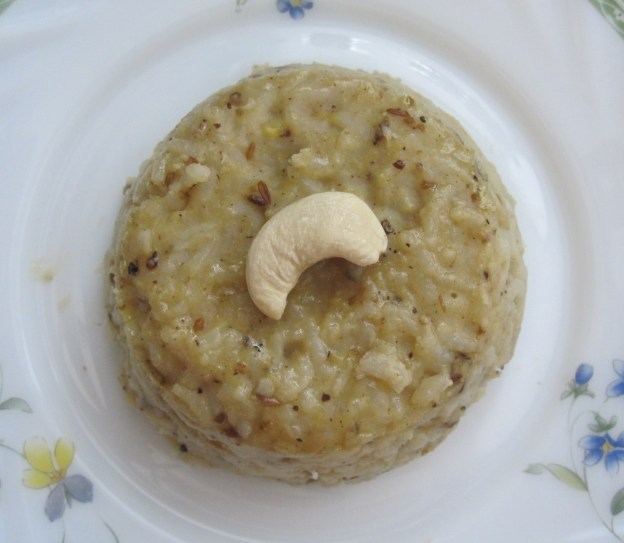
Now, to Ven Pongal – the rice and lentil meal! Venmai – the word from which ven pongal comes means white. The sweet pongal or sarkkarai pongal is dark brown in colour due to the jaggery in it. Ven Pongal, the salted, spiced meal is not exactly white but a little lentillish in colour. This is a wonderful breakfast food – especially on cold or rainy days – spiced with black pepper, ginger and cumin seeds, it works as a cold/cough reliever. All these and the added cashewnuts in ghee makes ven pongal the most favourite breakfast dish after idli or dosai in tamilnadu.


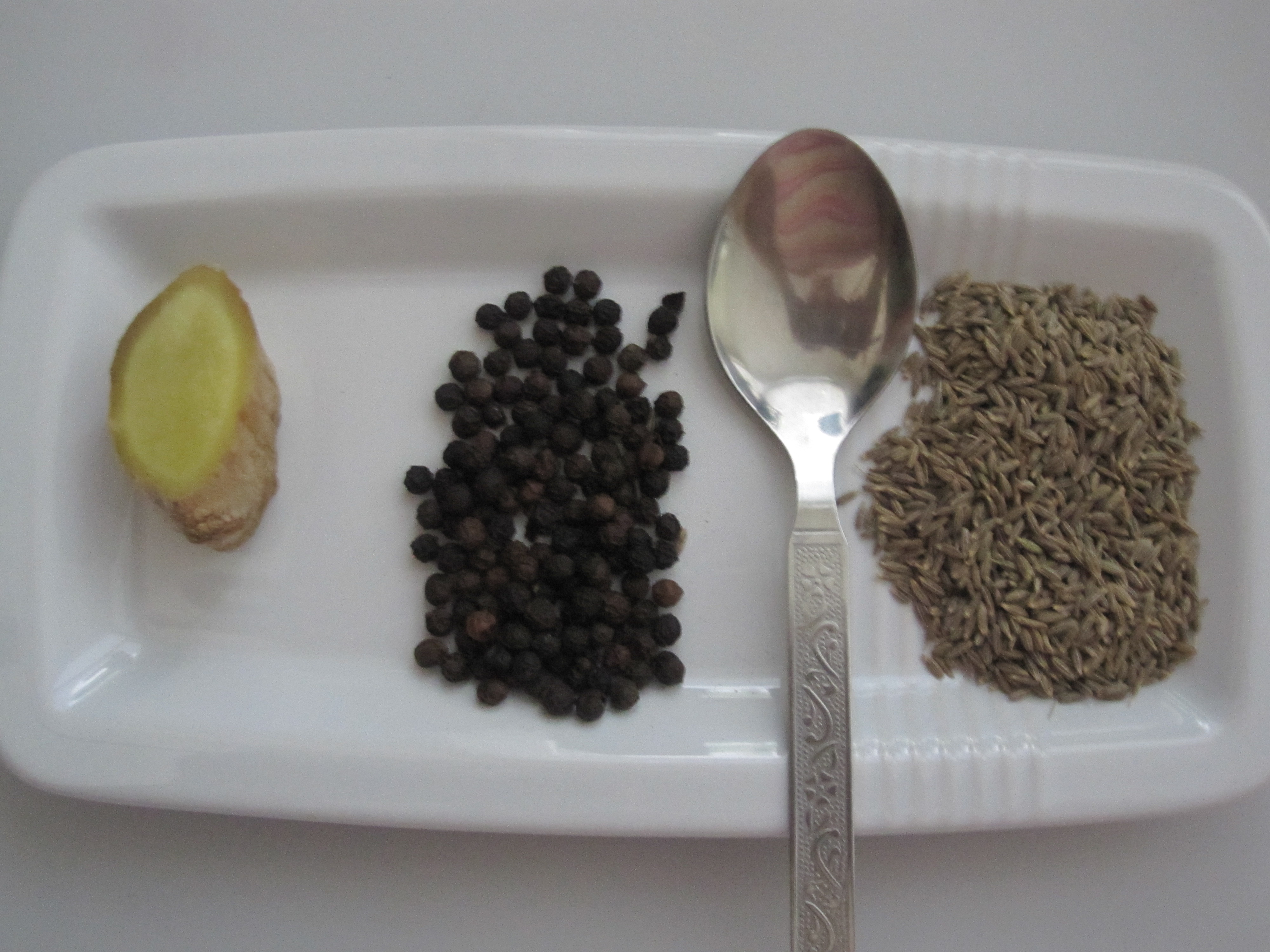
the spices


Ven Pongal

Ingredients (serves 3)

  • paccharisi/south indian raw rice – 1 cup
  • paasi paruppu/split greengram-yellow lentil/moong dhal – 1/2 cup
  • water – nearly 6 cups (to slightly overcook rice and lentil together)
  • salt – as needed
  • whole black pepper – 2 tsp
  • grated ginger – 1 tsp
  • cumin seeds – 2 tsp 
  • nei/ghee/clarified butter – 2 tbsp
  • cashew nuts – 2 tsp


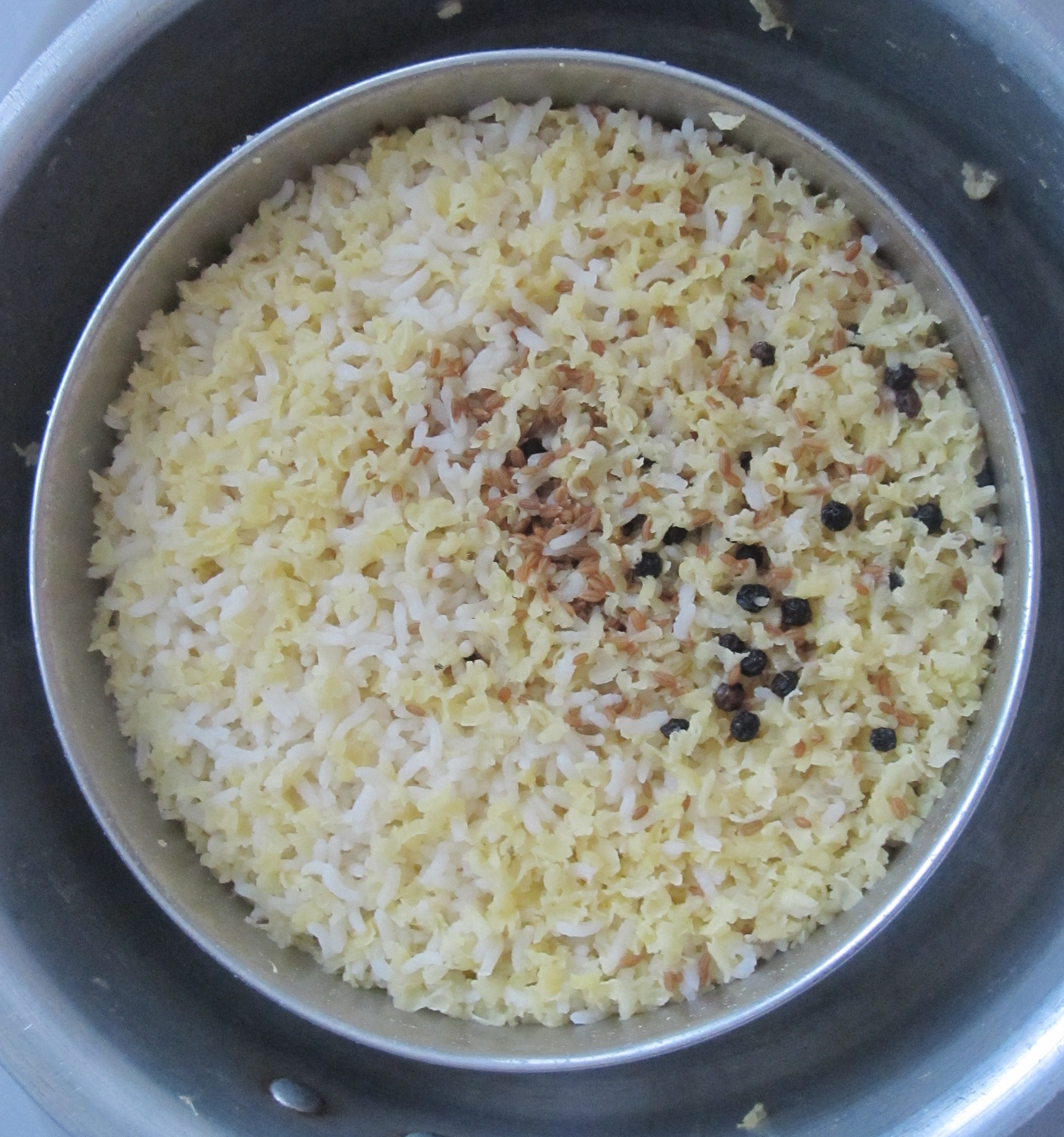
rice and lentil cooked in pressure cooker with cumin seeds and whole black peppers


Method of Preparation 

  1. Wash rice and lentil together
  2. Add water, black pepper, cumin seeds and salt and cook till very soft
  3. For seasoning, heat ghee in a kadai – add cashew nuts and fry till golden brown
  4. Mix into the rice and lentil preparation
  5. Serve hot with coconut chutney (https://dosaikal.com/2011/09/20/thengai-chutney-coconut-chutney/), sambar or kathirikkai gothsu/eggplant gothsu.


ven pongal with thengai chutney


Variation

Ven pongal is always cooked with whole black pepper. Most of the kids and some elders would keep the whole black pepper aside due to the spice aspect of it. Dry grinding the spices and blending it well in the rice avoids wastage of spices and helps in better utilisation of the goodness of the spices. This way, pongal is more spicy and a very good home remedy for cold and cough. This also gives the taste of  ‘kovil ven pongal’ or the ven pongal served in temples. While making in this method, black pepper can be reduced to 1 tsp.

  1. Cook rice and lentil in salt and water with 1 tsp cumin seeds and 1 tsp whole black pepper
  2. Coarsely dry grind 1 tsp cumin seeds, 1 tsp black pepper and grated ginger and fry in gingelly oil/ghee
  3. Fry cashew nuts separately in ghee
  4. Mix spices and nuts together into rice and lentil and serve hot.


ven pongal with murungaikkai sambar/drumstick sambar 


Note

  1. Cook rice and lentil in more than normal water as it would turn very hard in very less time
  2. Ven Pongal is always served hot and the glow of ghee is a compulsory requisite while serving for better taste
  3. If Pongal has turned out little thick/hard, hot water with little salt can be added and brought to right consistency while serving
  4. South Indian Pachirisi or raw rice is preferred as other starchy rice varieties would make ven pongal sticky.

Christmas Fruit Cake

Any place of worship – be it a temple, church, mosque or any other religious place – being worshipped for number of years, especially centuries has a special aura. Prayer, Meditation, Chanting, Devotion, Peace and many more things occupying the worship area –  make it a special place. I experience Peace and Tranquility in a temple – one of the reasons being the religious stories that I have been fed with, since childhood. When I grew up, I was pulled towards the ancient past of the 1000 to 1500 year old temples of Tamilnadu and the history and literature of the Tamils behind those walls and the stone inscriptions of the historic past on the walls of the temples. 

I experience the same unexplainable respect for the ancient past and people of the past when I enter a Church which depicts valuable stories of history. The architectural beauty of Cathedrals amazes me and I tend to travel to another world!

Though this post comes a couple of days after Christmas, I thought I could share a few photographs of some of the most beautiful and powerful religious monuments that we’ve visited in Europe. Capturing those magnificent architectural marvels in a camera everyone would agree, can never be satisfying.

In Germany…


pictures of koln cathedral


frankfurt dom or cathedral


In Switzerland…


bern cathedral


cathedral de loussanne


In France…


notre-dame, paris


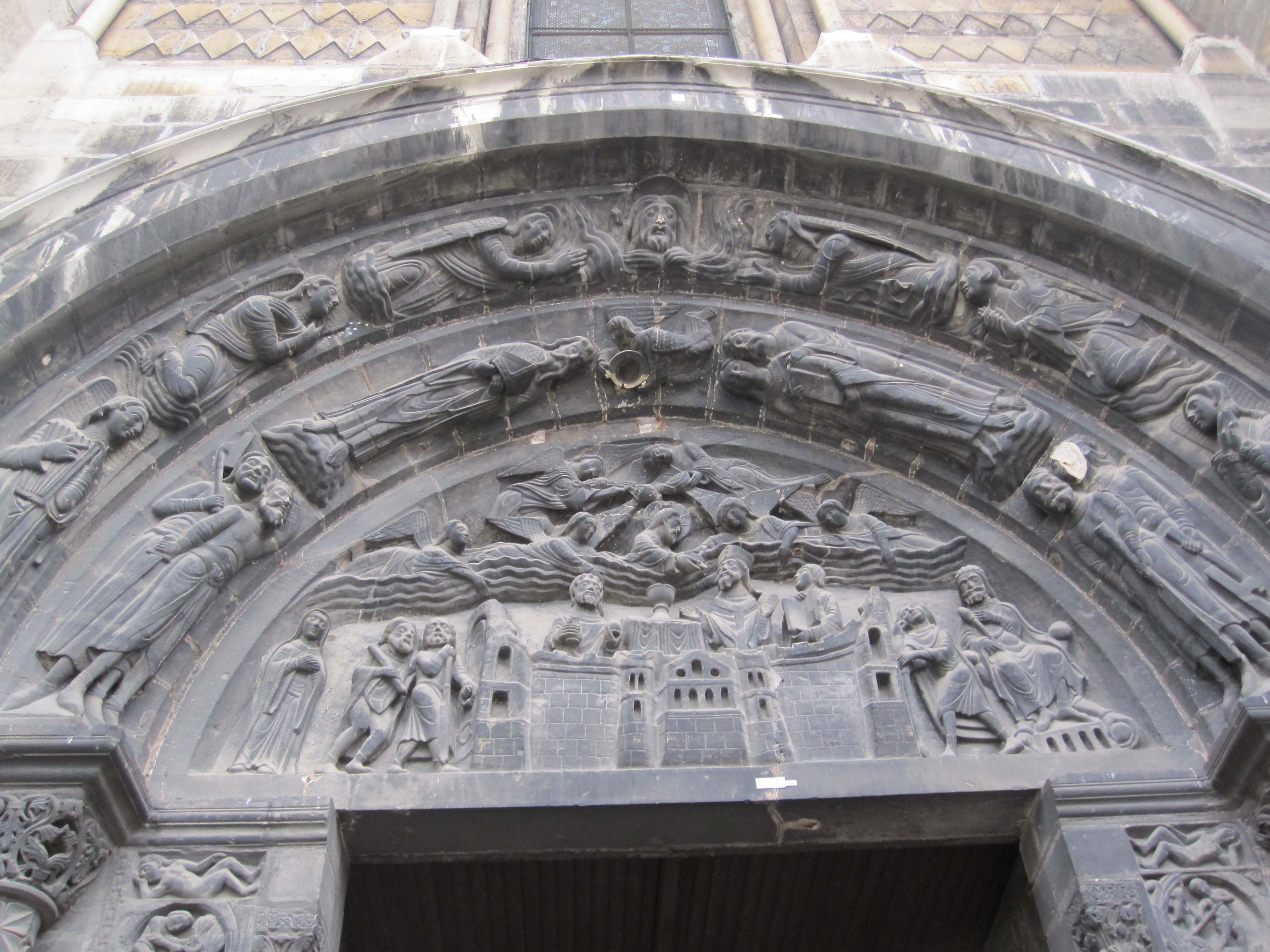
st.denis bascilica, st.denis


In Scotland…


St. Giles’ Cathedral, Edinburgh


glasgow church


A few other christmas clicks that we relish…


christmas eve in brussels


santa at kaufhof shop, dusseldorf


Now, some culinary business for Christmas!

The best Fruit Cake or Plum cake I have ever tasted is the Thoothukudi Bakery Plum Cake. Thoothukudi, the original tamil name of the place, the Britishers changed to Tuticorin for their safe pronunciation. This is a port city in down south Tamilnadu.  It holds a special place to me because of several reasons – 1.  it is the place from where my mother comes from; 2. the place I started my schooling as a child; 3. After we shifted to Chennai, it was my only favourite holiday destination to spend the school annual vacations at grandparents’ place!

It  is famous for Pearls – it is also called muthunagar or the pearl city and Salt Fields.  Thoothukudi also holds a special place in Indian Freedom Struggle as the First Swadeshi Ship was launched here in British India in 1906 by V.O. Chidambaram Pillai.

Now, Thoothukudi is also famous for its Bakery Foods. Thoothukudi Macaroons are very famous- a little change – macaroons are famous – but not many people would know it comes from Thoothukudi/Tuticorin. I have enjoyed  kilograms and kilograms of macaroons while young and even now, thaatha used to bring us from the bakery and additionally send for our friends in chennai to enjoy the true flavour of Thoothukudi. Beyond Macaroons, the most enjoyed bakery product used to be the Plum cake. So, when I wanted to bake a Christmas cake at least a bit similar to thoothukudi plum-cake, I searched the net. I found http://elitefoods.blogspot.com/2008/12/christmas-plum-cake.html where Viki, the author of the blog had additionally mentioned, the cake was similar to the plum-cake of thoothukudi. I tried it with some minor changes, keeping the basic structure intact. It was certainly a good fruit cake, but not as good as thoothukudi plum-cake as I had made those changes. Thanks Viki for the recipe!

As usual, I replaced all-purpose flour with wheat flour/gothumai maavu/atta. I used cooking oil instead of butter.  I used fresh orange juice to soak candied fruits instead of rum or brandy. Since dates, raisins, candied fruits and caramelised sugar has been used, the quantity of sugar is reduced. As I had candied cherries and apples, I used them – candied plums, pears, prunes and apricots make the cake more ‘fruitful’.


the christmas cake


Christmas Fruit Cake

Ingredients (gives 2 medium size cakes)

  • wheat flour – 1 1/2 cups
  • sugar – 3/4 cup
  • eggs – 3 no.s
  • oil – 3/4 cup
  • baking powder – 1 tsp
  • baking soda – 1/4 tsp
  • salt – 1/2 tsp
  • vanilla extract – 1 tsp
  • caramel syrup – 1/2 cup

to soak in 1 cup orange juice 

  • candied cherries -1/4 cup
  • candied apples – 1/4 cup
  • dates – 1/2 cup
  • raisins – 1/2 cup

finely chopped dry fruits – 1 cup

  • cashew nuts
  • almonds
  • walnuts

spice mix

  • cloves – 3 no.s
  • cinnamon twigs – 1/2 inch twig
  • nutmeg powder – 1/4 tsp
  • dry ginger powder – 1/4 tsp

Caramel Syrup

  1. Take 1/4 cup sugar and 1 tbsp water in a utensil and let it boil in medium heat
  2. After a while, the syrup would start becoming brown in colour
  3. When it becomes darker, add 1/2 cup warm water and mix well
  4. Be careful while adding water to the very hot caramelised sugar, it might sprinkle and cause burns
  5. Caramel syrup is ready


soaked fruits into the batter


ready to be baked


Method of Preparation

  1. Soak candied fruits, raisins and chopped dates in orange juice for minimum 12 hours
  2. Finely chop dried nuts and keep aside
  3. Make fine powder of spices
  4. Take a wide bowl or a cake blender in a processor can be used
  5. Beat eggs, sugar and oil
  6. Add caramel syrup, spice mix and soaked fruits without the juice into the blender
  7. Add wheat flour, baking powder and baking soda and blend well
  8. Add salt and vanilla extract and mix well 
  9. Add the left over orange juice if needed
  10. Mix the chopped nuts in 1 tsp flour so that nuts do not settle in the bottom of the mixture
  11. Preheat oven at 175 degree celsius
  12. Grease a baking tray and sprinkle some flour
  13. Pour the cake mixture into the tray and sprinkle chopped nuts
  14. Bake for 40 to 50 minutes and check with a tooth pick to see if done
  15. After nuts were sprinkled,  I did not mix it. That is why, nuts remained on top and formed a nutty covering. If mixed a bit, nuts would have mixed well in the cake for a better nutty flavour throughout.


Cake done!


the last pieces left for the click..


Wishing you all Merry Christmas!!

Thayir Sadham-Mor Milagai/Curd Rice-Sun Dried Chillies

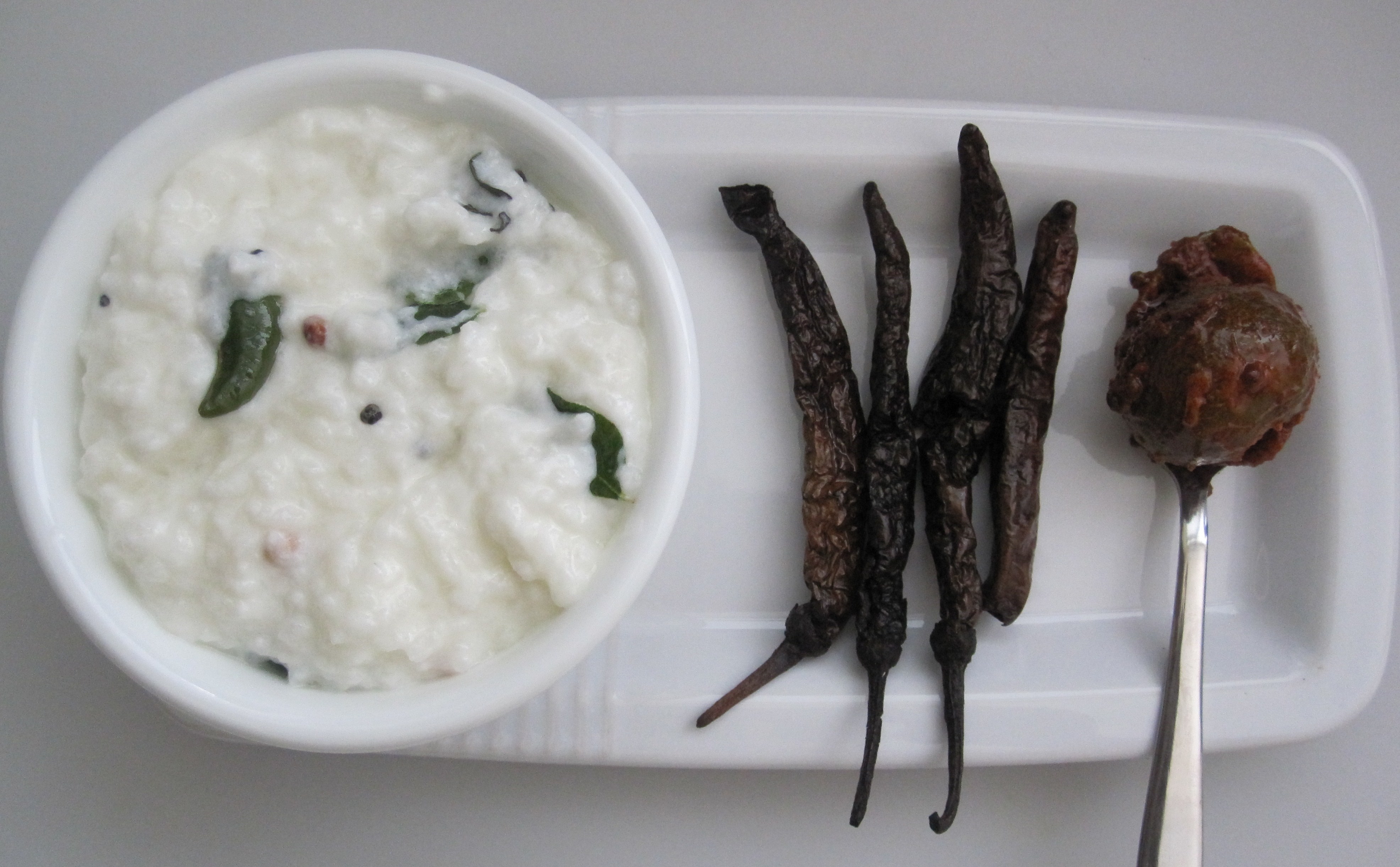
Any meal with steaming hot rice as the base food, with sambar, rasam, puli kuzhambu – the gravy dishes; elumichai saadham/lemon rice, puliodharai/tamarind rice, thengai saadham/coconut rice and many more ready to eat mixed rices – thayir saadham/curd rice is there to end the meal. Thayir means curds and saadham means cooked rice. When on a banana leaf meal or a steel plate meal, one or two scoops of plain steamed rice with needed curds poured on top of it, mix well and have with pickles or the special mor milagai – fried sun dried chillies.


means pickle. It is a very simple word for pickle – it literally means soaked vegetable or marinated unripe fruit. There used to be so many varieties of home made pickles – on the kitchen shelf – elumichai (lime), kidarangai and naarthangai belonging to the citrus family, maavadu (baby mangoes), aavakkai (raw mango), nellikaai (gooseberry), and many more to go with thayir saadham.

Mor Milagai – Mor means buttermilk and Milagai means chilli. The green chillies are soaked in salted buttermilk, then sun dried and stored for months together! Nowadays, these are easily available in departmental stores – neatly packed. Every time, there is a call for mor milagai with thayir sadham, the readily dried chillies are deep fried in medium hot oil – and are ready to be served! For now, I’ve been using those mor milagai got from India. Next summer, I plan to try at home.. let’s see!! I also hear that in some other parts of India, especially Maharashtra, mor milagai is known as dahi mirchi and is had with khichdi (rice and lentil preparation).


raw mor milagai


fried mor milagai


Mouth watering home made pickles and mor milagai with thayir saadham… this I call Pure Nostalgia!

Thayir saadham… Thayir saadham can also be a lazy day’s single main course – with one steamed vegetable to go with it (balance in diet). Especially on a tummy upset day, this is a boon – mashed white rice with curds-  not only easily digestible but soothes your system too.

To make the simple thayir saadham more exotic in taste and exquisite in presentation, there are many more ingredients like grated ginger, chopped green chillies added to it.


Thayir Saadham

Ingredients (serves 2)

  • cooked white rice – 1 cup
  • thick curds – 1 cup
  • water – as needed
  • salt – as needed
  • fresh coriander leaves – to garnish

thaalippu/seasoning

  • oil – 1 tsp
  • mustard seeds – 1/2 tsp
  • urad dal – 1/2 tsp
  • curry leaves – a few
  • grated ginger – 1 tsp
  • chopped green chillies – 1/2 tsp
  • asafoetida – a pinch


Method of Preparation

  1. Mash cooked rice well with a ladle/spoon,  into a coarse mixture and mix salt and curds to it
  2. Mix it to porridge consistency
  3. If curds are too thick add little water to arrive at the required consistency
  4. In a pan, heat 1 tsp oil
  5. When hot, add mustard seeds and urad dal
  6. When mustard seeds splutter and urad dal turns golden brown add chopped green chillies and grated ginger
  7. Just when chillies and ginger are fried a bit, add curry leaves
  8. Mix the seasoning with the curd rice
  9. Add asafoetida and mix well
  10. Sprinkle fresh coriander leaves and serve with mor milagai and/or  pickle.


Note:

  1. Mash rice when hot; take care rice is not mashed into a paste and never in a blender
  2. Always mix curds when rice is cool
  3. Curd rice tends to thicken after a while as rice absorbs water – hence add more water and curds as desired before serving
  4. Other variations like cut green grapes, cucumber or pineapple pieces
  5. Mint leaves can also be added with coriander leaves for extra flavour.


Pudhina Kadalai Thuvayal- Kozhi Kuzhambu – Sivapparisi Sappadu (Mint Peanut Chutney/Chicken Curry/Brown Rice Platter)

It was a lazy sunday morning. But one cannot feel too lazy with a four-year old waiting for food. After a hot cup of ragi kanji/finger millet porridge made with milk (recipe in future), it was time for brunch or a proper lunch. I had made nothing. No special meen kuzhambu/fish curry; no biriyani; no sambhar, no rasam – the usual traditional lunch sequence. (C’mon we need our Sundays too.) Why not something simple yet different; not too time-consuming, but would come under a whole meal category, especially nothing less than expected!

Then came a picture of thuvayal, chicken kuzhambu (chutney/chicken curry)  and sivapparisi/brown rice platter!


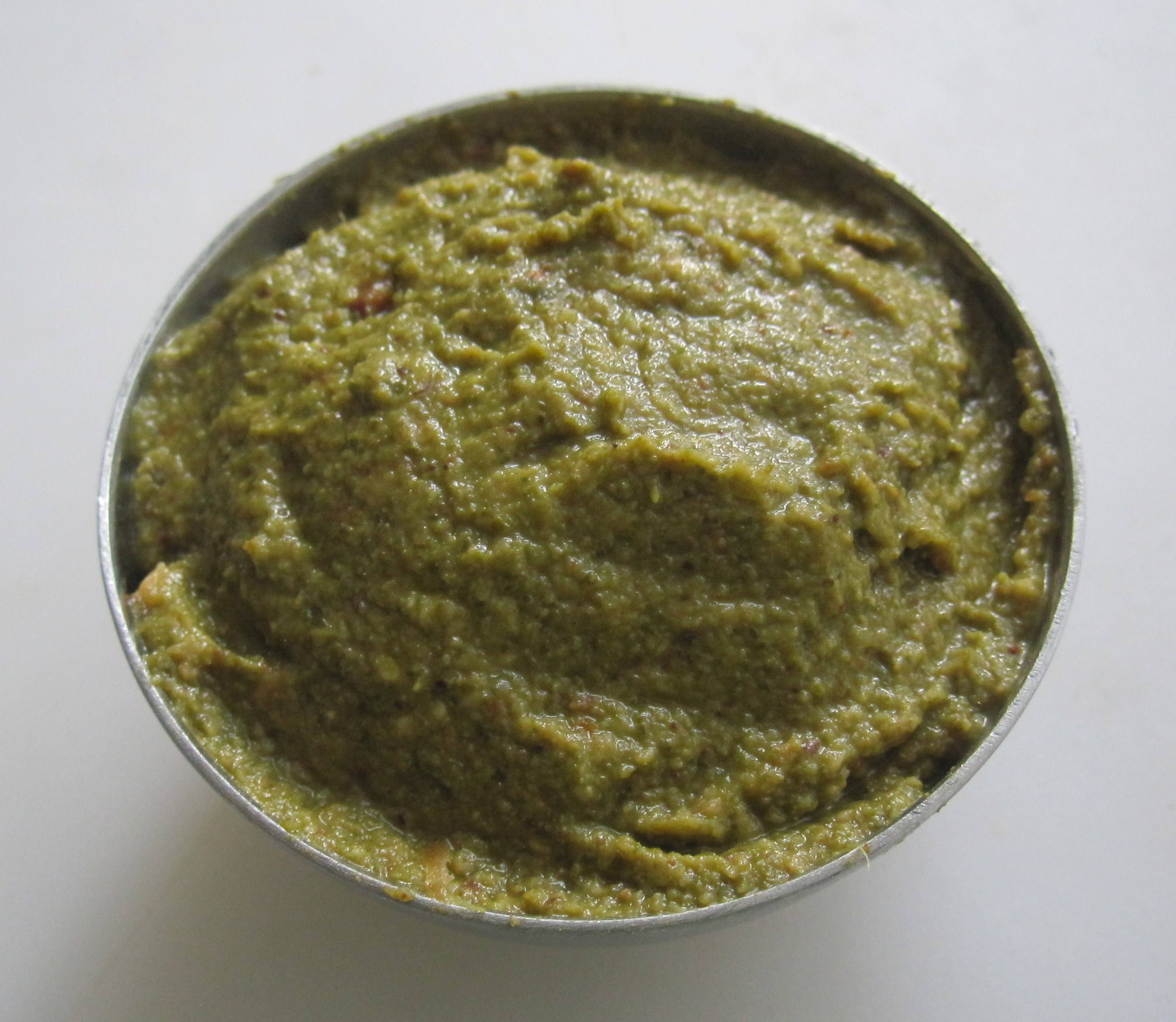
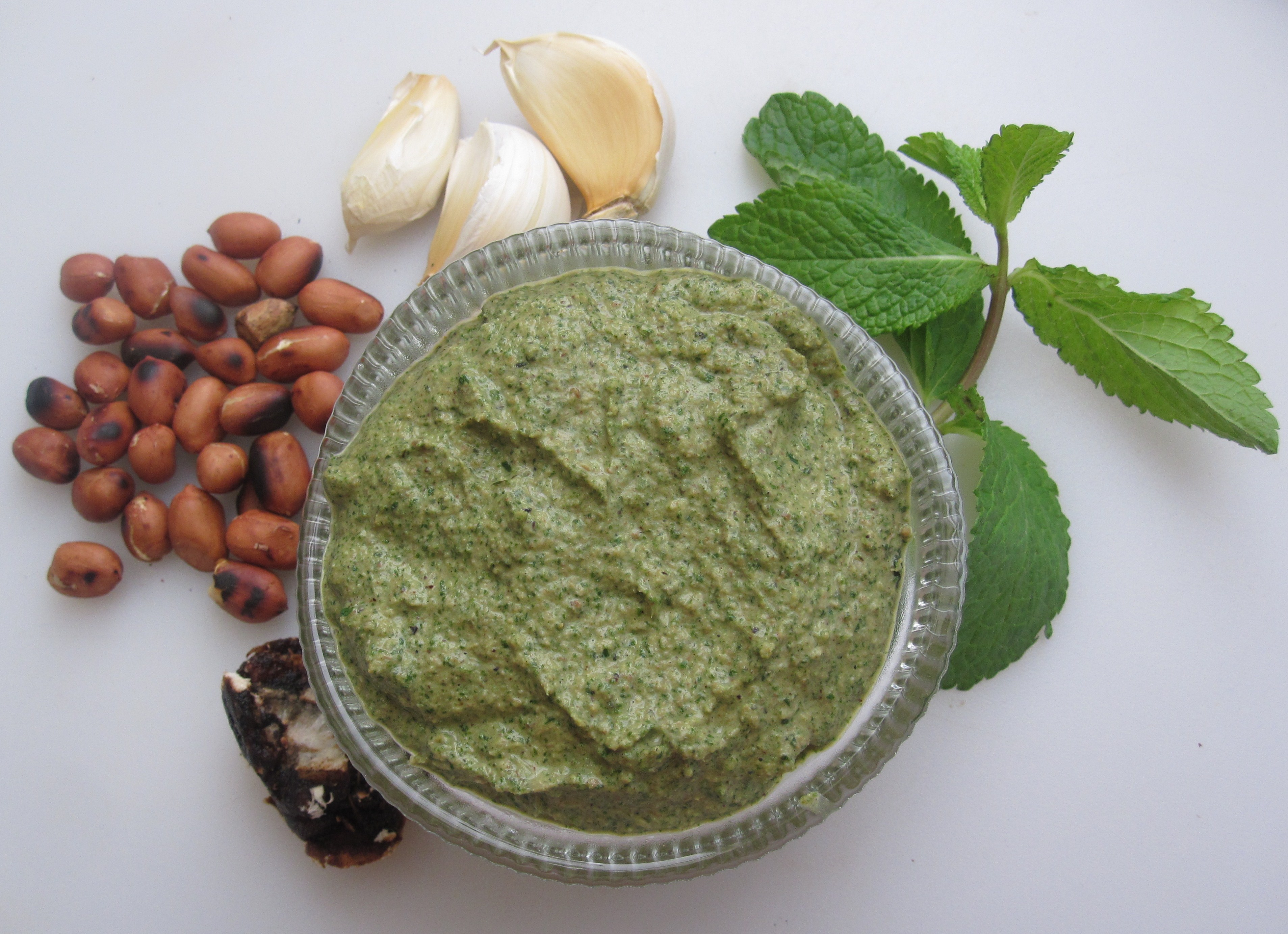
Mildly spiced Pudhina Kadalai Thuvayal – Mint Peanut Thuvayal doesn’t need seasoning or tempering with mustard seeds and black gram when the thuvayal is served with rice.

What is the difference between thuvayal and chutney? I do not know a definite answer to this. But I have always thought thuvayal is the tamil name for chutney. The thuvayal served as accompaniment for idlies, dosais, uppumas and pongal can be of a little watery consistency. Thuvayal served with rice is a thick paste and a bit coarse too.


The word “chutney” stems from the Sanskrit word chatan, which literally means “to lick.” Chutneys occupy a minuscule spot of real estate on an Indian thali, but an Indian meal would be incomplete without these zingy sides. Not only do chutneys add zing to just about every cuisine in India, but the variations are as abundant as the number of hands that make them! http://poetryoffood.com/stories/bombay-spice/rushina-m-ghildiyal/delicious-chutneys-and-chaats


‘Chutney’ has become a universal term for thick pastes, pickles and sauces, ‘Thuvayal’ has become a term in Tamilnadu, associated more with those chutneys had with rice.

Now, back to our pudhina kadalai thuvayal..

This is a thick thuvayal to be had with steaming hot rice. Generally, thick thuvayal and rice would be had with a combination of a gravy/ kuzhambu or kootu (vegetable and lentil stew). This is for a perfect blend of a thick chutney with a gravy stew for easy consumption and digestion too!

For the gravy dish or kuzhambu to go with rice and thuvayal, I made a quick and easy chicken fillet kuzhambu!


First the thuvayal!

Pudhina Kadalai Thuvayal/Mint-Peanut Thuvayal

Ingredients (serves 4)

  • cleaned and washed pudhina/mint leaves –  2 cups
  • varutha kadalai/roasted peanuts (with or without skin) – 1/2 cup
  • poondu/garlic – 3 cloves
  • chinna vengayam/shallots – 6 no.s
  • kaayndha milagai/dry red chillies – 3 no.s
  • puli/tamarind – gooseberry shaped ball
  • oil – 2 tsp
  • salt – as needed
  • water – a little


Method of Preparation

  1. Heat oil in an iruppu chatti/pan
  2. Fry garlic cloves and shallots till garlic cloves become slightly brown and shallots slightly opaque
  3. Add red chillies and washed tamarind
  4. Add the mint leaves – mix for a while  
  5. Turn off the stove and let it cool
  6. Once in room temperature, make a coarse paste with roasted peanuts, salt and water.


Note:

  1. Usually mint leaves are fried till they shrink. I prefer just before they shrink. This gives a fresh mint smell to the chutney and also the green colour of mint leaves is lost if fried longer.
  2. Red chillies can be altered according to taste.
  3. Peanuts can be made to 3/4 cup instead of 1/2 cup if more peanutty taste is preferred.
  4. Deskinned peanuts are preferred for easy grinding – those who don’t mind the taste of peanut skin can go on with the skin as I do. Saves time and energy in de-skinning.
  5. Those with peanut allergy – please avoid this recipe.


Peanut skins are also a good source of dietary fiber. Fiber is the part of the plant that is indigestible. It is broken down into soluble and insoluble fiber. Soluble fiber is fermented in the digestive tract and can help lower total cholesterol. Insoluble fiber adds bulk to food and aids in digestion. Peanut skins are a good source of both types of fiber.http://www.livestrong.com/article/98722-nutrients-peanut-skins/


After thuvayal, came kozhi kuzhambu – quick and easy chicken curry. Not a time consuming dish at all.. just keep adding one ingredient after the other to the hot oil in the kadai, close the lid and cook chicken. Simple isn’t it? 


Eliya Kozhi Kuzhambu/Quick and Easy Chicken Curry

Ingredients (serves 2)

  • chicken fillets – 250 gms
  • ginger – small piece
  • garlic – 5 cloves
  • onions – 2 nos. medium
  • tomato – 2 no.s medium
  • turmeric powder – 1/2 tsp
  • red chilli powder – 1 tsp
  • coriander powder – 1 tsp
  • garam masala powder – 1 tsp
  • salt – to taste
  • oil – 4 tsp
  • curry leaves – a few


Method of Preparation

  1. Clean and cut chicken fillets to bite size pieces
  2. Heat 2 tsp oil in a kadai
  3. Fry chopped garlic, ginger and onions till slightly brown
  4. Add chopped tomatoes and fry till soft
  5. Add all dry powders and salt and fry for a couple of minutes
  6. Now add chicken pieces and mix well
  7. Sprinkle very little water and close and cook in medium flame till chicken is done
  8. With closed lid, chicken would let out water..hence sprinkling little water is enough
  9. When the chicken is done check salt
  10. If one finds the gravy too thick, little water can be added
  11. If one needs a thicker consistency, cook till gravy thickens
  12. Heat the other 2 tsp oil – preferably gingelly oil (nallennai in tamil) – fry curry leaves and pour into the curry
  13. Simple Chicken Curry is ready to be served. 

Serve thuvayal and kozhi kuzhambu with brown rice. First course of brown rice and thuvayal tastes best with a spoon of hot ghee/clarified butter. To finish the meal, there is always thayir saadham – curd rice.

Thayir saadham – Serve a small ladle of the same cooked brown rice. Mix well with generous amount of curds. This can be had with the thuvayal or chicken curry or as just plain curd rice. Generally it is had with any south indian pickle and/or mor milagai (deep-fried – dried chillies).  A south indian meal always ends with thayir saadham – which is rice mixed with curds/yoghurt. This aids in digestion after the intake of varied spices in a lunch and dinner platter.

In my next post, I shall elaborate on the ever-special seasoned thayir saadham!


Thirukkaarthigai – Ancient Festival of the Tamils

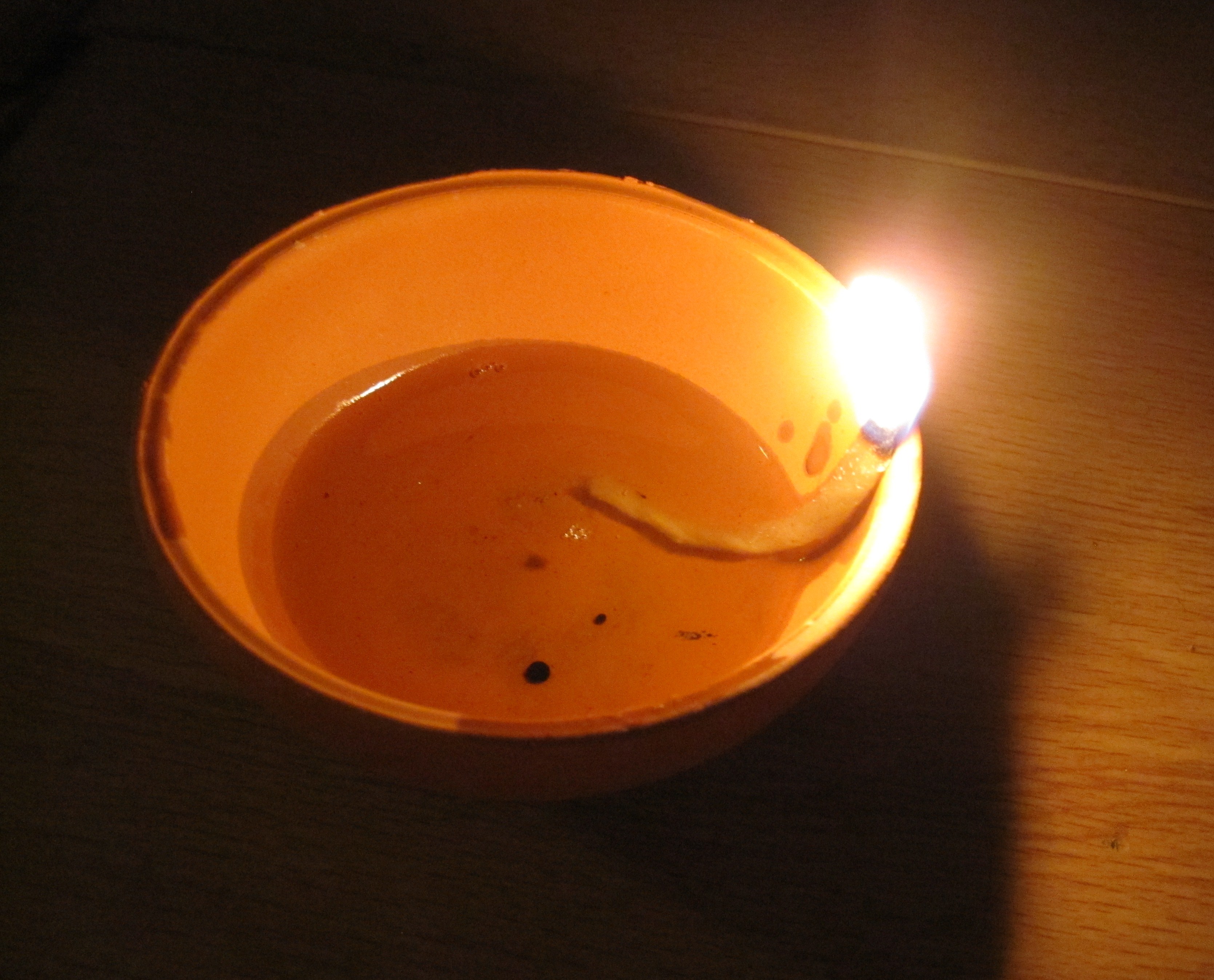
Cleaning of houses and traditional kolams displayed at entrances, pooja rooms and many more places inside houses are common events in any festival in the south of India. Kaarthigai Deepam is the festival of lights in Tamilnadu. Oil filled earthen lamps – agal vilakku – lit at room entrances and windows mark this festival. Beautiful agal vilakkus placed on the aesthetically done kolams are a truly marvelous sight to watch.

Kaarthigai Deepam is believed to be one of the oldest festivals of the Tamils. It is celebrated on the full moon day which coincides with the star Krithigai of the tamil month of Kaarthigai (November-/December). Many literary works mention the existence of the festival thousands of years ago. See https://dosaikal.com/2011/10/08/deepavali-the-sweets-and-savories-story/ – para titled – Deepam and Tamilnadu.

More than the religious aspects, I have always concentrated on the traditions based on the ancient culture.  Here too, emphasis is on the tradition behind the festival.  Temples have always interested me due to their historic, architectural and literary importance to ones’ roots.


Lord Shiva and Kaarthigai Deepam  (December 8, 2011)

Kaarthigai Deepam or Thirukkaarthigai is celebrated in all Shiva temples throughout Tamilnadu. But Thiruvannamalai temple holds a special place. Lord Shiva is worshipped in the form of fire – Agni Lingam in Thiruvannamalai.


Lord Shiva appeared as a hill (Arunachala Hill) at Tiruvannamalai in Tamil Nadu. Indeed, the very names `Tiruvannamalai’ and `Arunachala’ translate as `holy fire hill.’ The Shivalinga in the temple here is the agni linga. The tiny lamps lit during the Karthigai festival (Karthigai Deepam) are believed to be the miniature replicas of the fire linga.  http://www.tamilnadu-tourism.com/tamilnadu-festivals/karthigai-deepam.html


Karthigai Deepam festival celebrated during the full moon day in November–December during which a huge beacon lit on the top of the hill. It can be seen from miles around and believed to be Shiva’s lingam of fire joining the limitless skies. The event is witnessed by 3 million pilgrims. During each full moon day, the Annamalai Hill is swelled by close to 1 million pilgrims who do a girivalam (circumnavigate the base of the temple and the Annamalail hill) and worship Annamalaiyar in the temple.

The temple is revered by the Tevaram hymns of 7th century Saiva nayanars – Tamil saint poets and is also classified as a Paadal Petra Sthalam (temple revered by the nayanars). It is said that the 9th century Saiva saint poet Manikkavasakar composed the Tiruvempaavai at Thiruvannamalai. http://en.wikipedia.org/wiki/Annamalaiyar_Temple


For more information about Thiruvannamalai the sacred town and Annamalaiyar temple in Tamilnadu visit  http://www.thiruvannamalai.in/tiruvannamalai/history-of-tiruvannamalai.html . 


The Festival of Thirukkaarthigai

The festival of Thirukkaarthigai and the lighting of lamps are inseparable. As children, we used to watch aachi and amma light those agal vilakku in all entrances of rooms. As youngsters, we were trained to light those lamps and decorate the same way as a joyful event. Now, it is the turn of my daughter to watch and enjoy!


Traditionally, lamps are lit in temples and agal vilakkus would adorn the thinnais of houses. Bigger lamps made of mud; stone and metal were lit inside homes. The ancient Tamils are said to have even imported lamps from as far as Greece and Rome, through the ports of Arikamedu (near Pondicherry), Mallai or Mamallapuram and Mylai or Mylapore (part of present-day Chennai). One such imported lamp was of the hanging variety, designed in the shape of a swan with a fish placed at the top. http://pulivahanan.wetpaint.com/page/Significance+of+Karthigai+Deepam


Apart from the kaarthigai vilakku, these are some of the other special things that come to memory about deepam.


1. The special kolams which I have of course not learnt!

Maakolam is the traditional kolam or drawing done with rice powder and water mixture. Generally kolams are displayed at entrances every morning with rice powder. But this kaarthigai maakolam is done with rice powder mixed with water. Aachi – my grandmother -at nearly 85 is still an expert in this art. Dipping a clean white cloth in the rice powder-water mixture and making numerous intricate kolams is an exclusive art by itself. Though this is an ordinary routine on all days, earthen lamps arranged beautifully inside the maakolam is simply special about Thirukkaarthigai.


2. The tasty Maavilakku Maavu

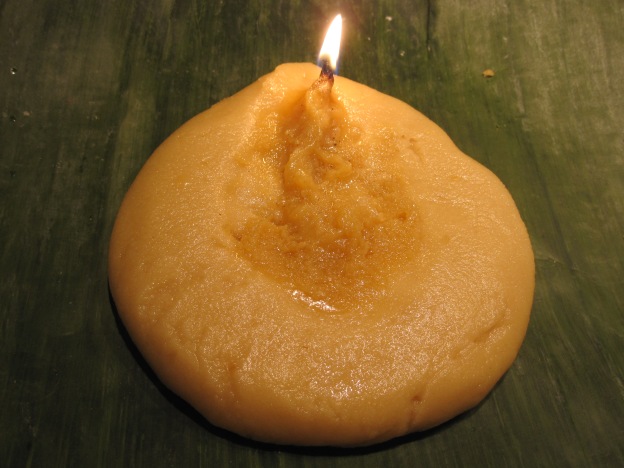
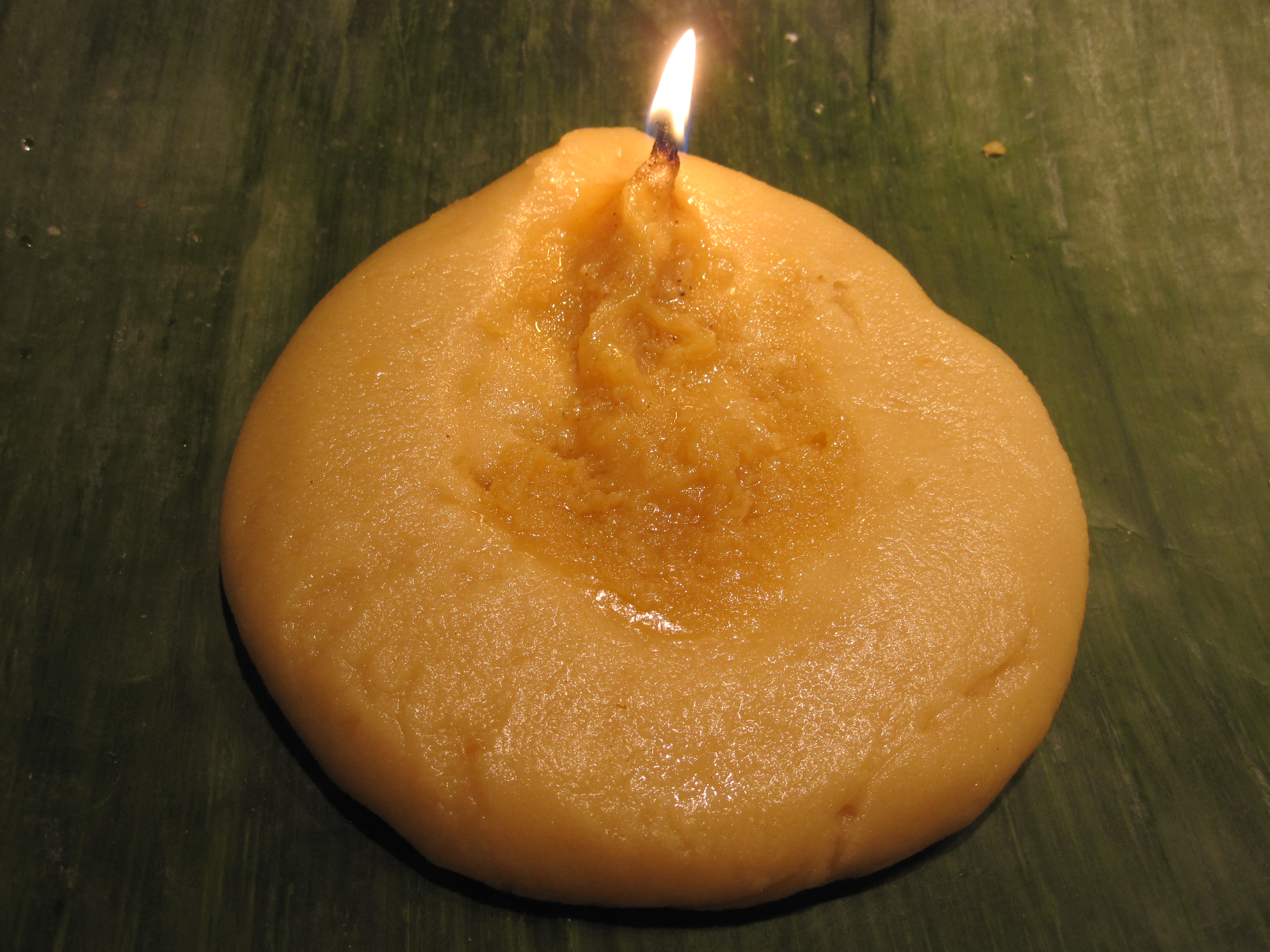
Maavilakku is an edible lamp made of freshly ground rice powder and jaggery and lit with clarified butter. Maavu means powder. This is purely for the poojai/puja – worship purpose in devotion of Lord Shiva. After the poojai is done, it is in the hands of everyone to taste and enjoy.


Maavilakku


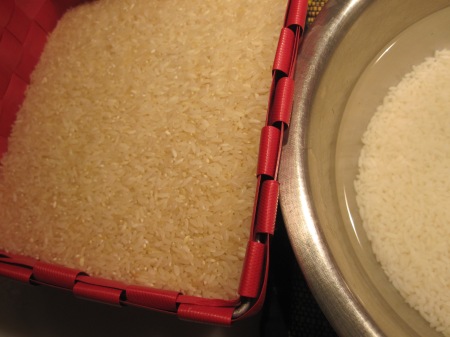
raw rice – soaked


Ingredients

  • Raw rice – 100 gms – nearly 1 cup
  • Grated jaggery – 1/2 cup

Method of Preparation

  1. Soak 100 gms/1 cup raw rice for ½ an hour
  2. Strain water and spread in a clean cloth and let it dry in a shady place for ½ an hour
  3. When it is still moist, grind it well to a fine powder
  4. Take it out of the mixer jar and immediately mix the grated jaggery
  5. This helps in perfect blending of both and now it can be made into a shape of a lamp/vilakku
  6. Fill in nei/ghee/clarified butter and place the thin cotton thread and light the lamp in front of Lord Shiva.

Note:

  1. 100 gms rice would give 200 gms rice powder
  2. Incase the powder blend is too thick to make a lamp, sprinkle water or coconut water.


3. Kaarthigai Pori

There are three kinds of Pori.

  • Arisi Pori is normal puffed rice
  • Aval Pori is puffed flattened rice
  • Nel Pori is puffed paddy

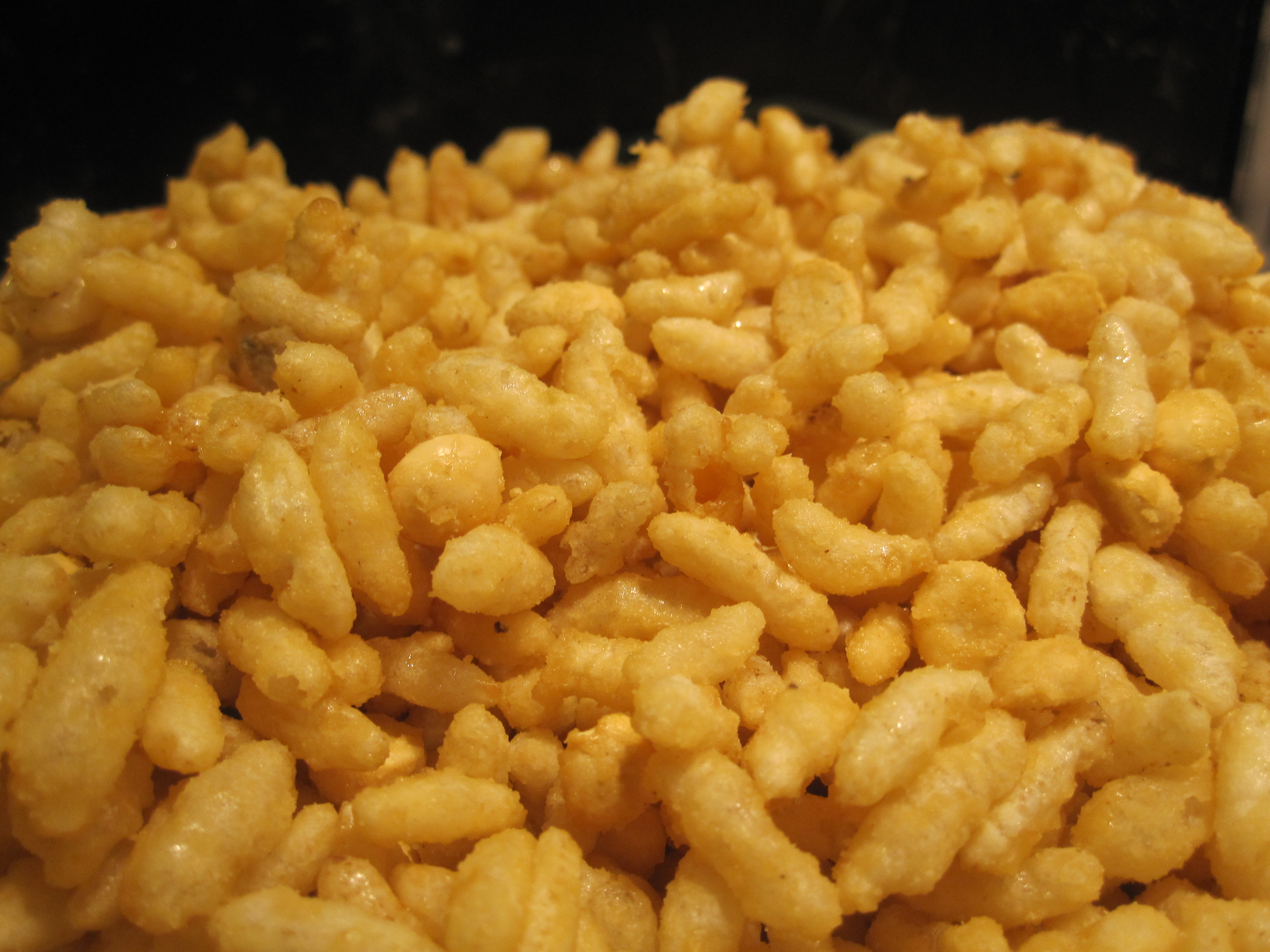
Aval Pori, the special puffed flattened rice is available mostly only on those specific kaarthigai days. In the market, the shop keeper would fry the flattened rice – aval and we bring it home fresh for consumption. I do not have this with me now. So, I tried it with the normal puffed rice -arisi pori.


Making pori urundai/puffed rice sweet balls with aval pori or kaarthigai pori was out of question due to lack of ingredients. I thought of making simple vella-p-pori or jaggery mixed with puffed rice. It is served in a bowl and amma would not make urundais or sweet balls out of it. Easier for me too!


Vella-p-pori

Ingredients

  • Pori/Puffed Rice – 4 cups
  • Grated Vellam/jaggery – 2 cups
  • Thengai/coconut – cut into thin pieces ½ cup
  • Nei/clarified butter – 1 tsp
  • Elakkai podi/cardamom powder – ½ tsp
  • Chukku podi/dry ginger powder- ½ tsp

 Method of Preparation

  1. Dissolve jaggery and little water and strain for impurities
  2. Boil jaggery with cardamom and dry ginger powder and make a thick syrup
  3. Syrup should be single string consistency – keep a bowl of water – when a drop of jaggery syrup is dropped it should roll into a ball – this makes pori crisper
  4. Fry coconut pieces in nei and mix in the jaggery syrup. Coconut can also be dry roasted to avoid ghee
  5. Take pori in a large bowl and pour the jaggery syrup mixture and mix well
  6. Pottukadalai/Roasted chana dal can also be added to the pori mix for added taste.


4. Hand impression on doors

This used to be one of the most exciting parts of Thirukaarthigai as children and youngsters. Dip your hands in the rice powder-turmeric-water mixture. Place those hands carefully on all doors- from entrance door to all doors in the house. Keep discussing about those hands till the impression lasts!

I am still trying to find the reason behind this.


Kaarthigai and Lord Murugan

The full moon day of the month of Kaarthigai, which also co-incides with the kaarthigai star is also a special day for Murugan, the thamizh kadavul or God of the Tamils. It is believed that on this day, all his six forms were united by his mother, Parvathi and he had six faces – he is called Arumugan. In the main six temples or Arupadai Veedu, which are the six battled fields of Murugan, special poojas are performed on this day.


clicked from the famous ‘rani-muthu’ calender -2009