Category Archives: Generations to Generations

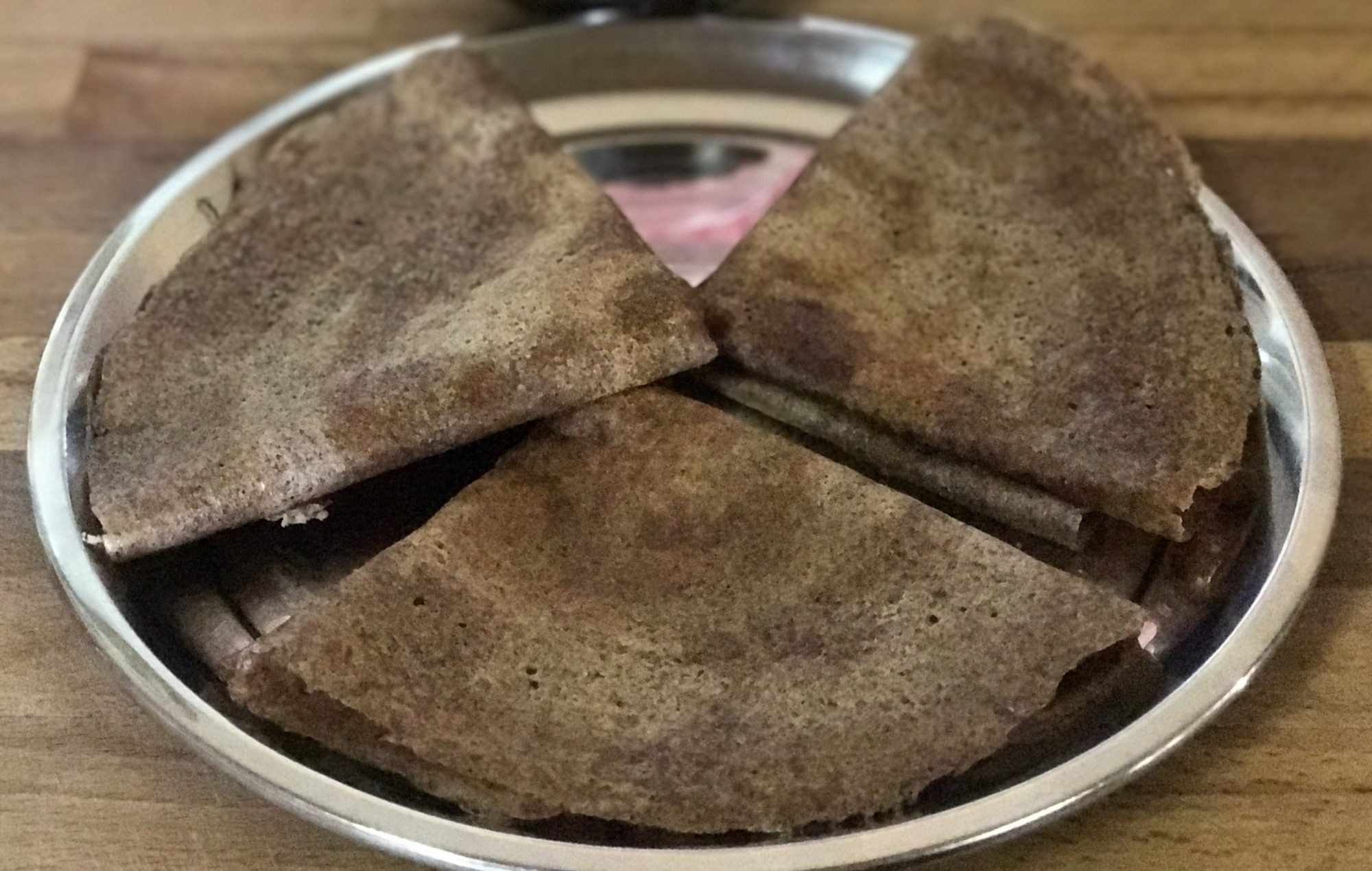
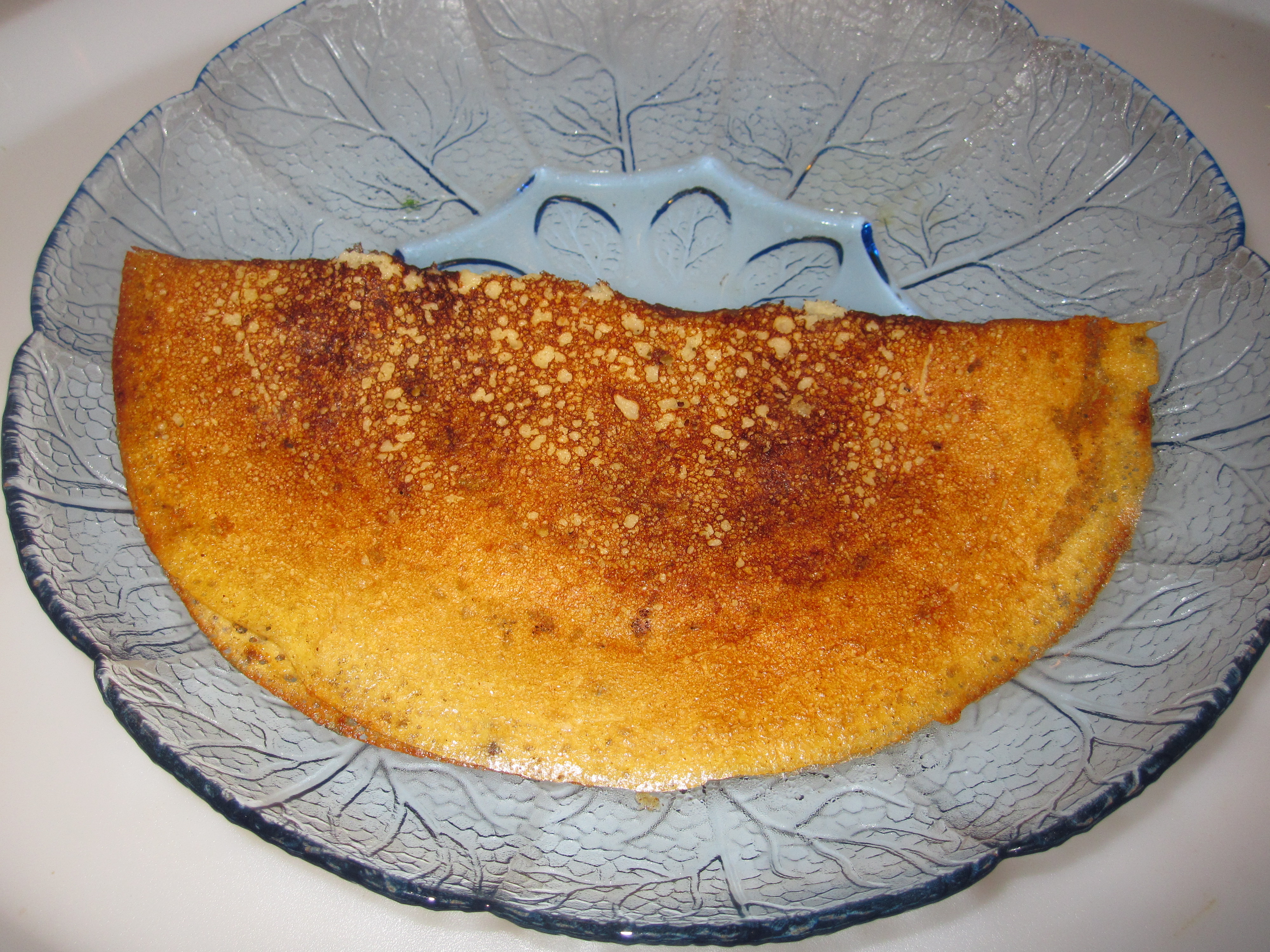
Power Packed Pancakes – Whole Grain Dosais!


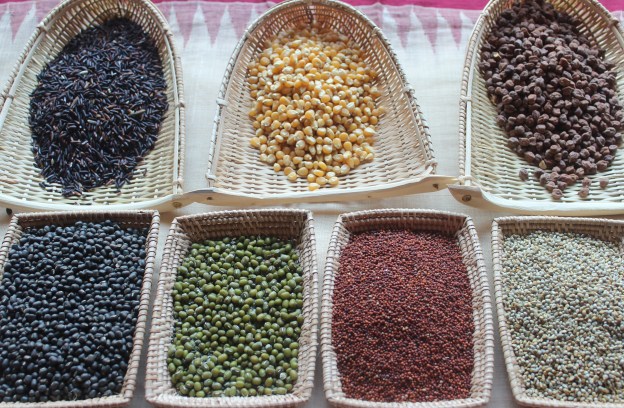
power packed grains and lentils
IMG_4982

top – brown rice, yellow corn and black chick peas

bottom – black gram, green gram, finger miller and pearl millet.


Idlies and Dosais for Stress-free life/life style…


Why not start a series on different kinds of Dosais/pancakes? With less intake of White Rice recommended, the wide variety of whole grain Dosais would not only contribute to the overall well-being of the family, but also in relieving Stress in terms of what to provide the next morning as breakfast on the table… Healthier, Yummier and less stress on the Home Cook! Just a bit of pre-planning required of course.
  

Whole Grains and Lentils

The different grains and lentils grown in the southern part of India marks the usage of those grains in the form of Dosais. Check out the link for the recipe!


Kezhvaragu/Keppai – Finger Millet
Kambu – Pearl Millet
Makka Cholam – Corn
Vellai Cholam – Jowar/Sorghum
Varagarisi – Kodo Millet
Samai – Little Millet
Thinai – Foxtail Millet
Godhumai – Wheat
Muzhu ulundhu – Black Gram
Kollu – Horse Gram


Above are a few grains that are used in making Dosais and sometimes Idlies/steamed cakes too! But Dosais are comparatively easier, as Idlies have the risk of not rising well if the combination goes wrong or the fermenting ingredient is less or more. This list is apart from the usage of red rice and other lentils in making Dosais.

and this is varagarisi/kodo millet
IMG_4993

  
I might have left out a few here. Also, the photo display has only a few grains, those which are available with me at present.

The grains are not only used in their original form, soaked and ground; they are also used as powders, milled – sprouted or not sprouted. These powders are available in specific stores all over Tamilnadu.

These are 100% traditional foods. With today’s’ medical advancements proving their health benefits, the almost lost grains in the cities are slowly becoming power packed foods with soaring prices in the retail market.

The list of Dosais/Pancakes are all traditionally still part of South Indian cuisine – more specifically that I am sure of in Tamilnadu cuisine and in the homes of believers of traditional food.

The usage of grains may not only be in the form of pancakes, but in a varied forms like kanji/porridge, idiyappam/string hoppers, grain balls/urundai, kali/halwa and many more …

or the storable batters that end up as Idlies/rice cakes or Dosais/pancakes!
  

Stress-free Cooking with Dosais
dosaikal 26 027


In today’s world, everyone is busy – an infant, toddler, pre-schooler or a school going kid, a teenager, youngster or an adult … ‘Busy’ is synonymous to ‘Life’. While ‘Stress’ stands for over-burden, who can categorize the stress level of each person?

Now, What is Stress?
an unmanageable kid – stress for a working mother,
a lazy employee – stress for a Boss,
heavily demanding boss – stress for a subordinate
troublesome daughter-in-law – stress for a mother-in-law,
complaining mother-in-law – stress for a daughter-in-law,
a serious patient – stress for a physician,
not so serious physician – stress for a patient,
And
not so caring wife – stress for a husband,
a self-centric husband – stress for a wife

The list is endless. This list may not categorize the true stress levels… Mostly the opposite or other extreme of these could also be stress factors.

Why talk so much about Stress? Having Good, Healthy Food and Serving Good, Healthy Food are stress factors attached to the Kitchen Cabinet – whoever is in charge be it male or female.


IMG_2847
  

I am one of those who takes her work serious and so the Stress too! It’s my feeling that Home is my Office, Kitchen is my Cabin and my work load in terms of a Chef without Hat at home is to provide Good, Healthy Food to my family.

So, whatever be my above mentioned stress, an unmanageable kid or a lazy caretaker, I want to do my Duty without much flaws! Especially, ensuring the best possible nutrients in homemade GOOD FOOD – ‘GOOD’ in its true sense – Stressless or Stressful!

Luckily for my family – COOKING is my Stress Buster!
  

IMG_3256
  

That is where I find Idlies – Rice cakes and Dosais – pancakes make my life stress free – of course with the tiny bit of stress making the batter before hand. But, stress free as they can be stored for even five days in the refrigerator. Every morning and evening, only a few minutes to make them, leaving the stress of making chutney or Sambaar only! That’s ok.. the side dishes are manageable and can be stored in the freezer too.
  

Frozen Batter
dosaikal 4 162
  

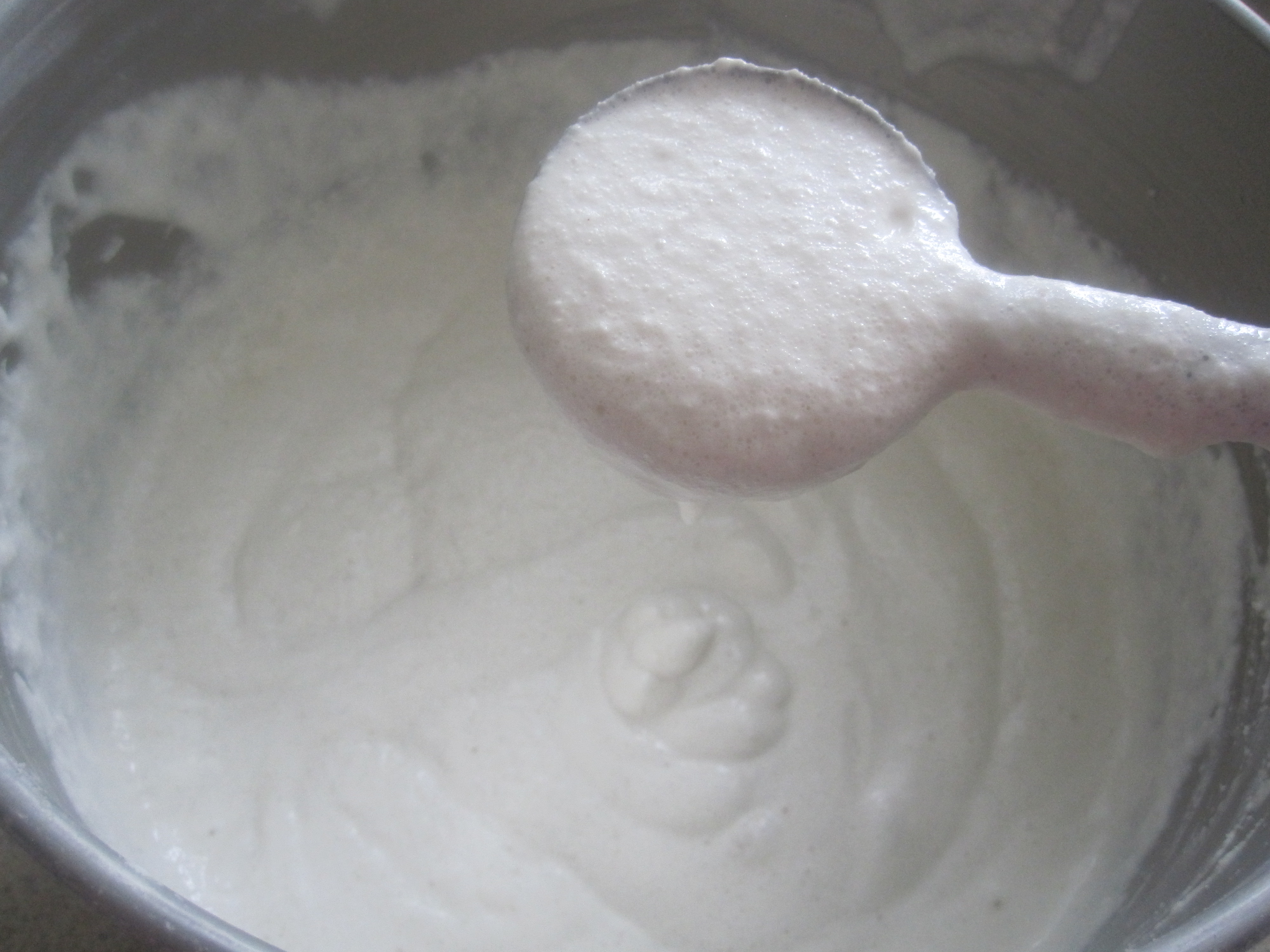
Any batter for Dosais- pancakes (basic idli/dosai or lentil or whole grain batters) can be frozen. Make your batter, ferment it and freeze it in small portions or in two portions. Take out one portion and place in the refrigerator section overnight. Next morning keep it out for a few minutes to an hour. Or defrost in the morning. Batter is ready to make Dosais! What else do you want for a lazy weekend brunch or early dinner? Team the pancakes with chutney or left over curries too!

In fact, whenever we were traveling in Europe, with my daughter who was 3-5 years of age or sometimes with my septuagenarian mother-in-law who would prefer Dosais to sandwiches, I used to freeze a huge quantity of batter which would yield at least 30-40 Dosais enough for all for 3-4 days. Our favourite car trunk used to be filled with frozen food! After a long day’s tiring travel and touring and lunch with sandwiches, the thought of coming back to our kitchenette and having Dosais with thawed chutney or curry was such a soothing affair only South Indian tummies can explain!

In an apartment that wasn’t ours, in some of the most beautiful parts of Europe, in a kitchen that wasn’t mine, making our own Dosais, used to be a wonderful feeling, leave aside the work before and after… Washing the utensils and winding up the kitchen (that was not ours too) even during a holiday!
  

dosaikal 8 088
  

But an important point to remember, dosaikal or the pan to make Dosais cannot be adjusted with any other pan! One needs to carry the same pan… Pans used for Dosais alone can make the best of Dosais without the batter sticking to pans.

I think back after a couple of years now and feel exhausted even at the thought of having done that for the three years of delightful tours in Europe. But, not letting my three year old sleep with only half or quarter tummy full or the whole family long for home cooked meal after a couple of days has been a Soothing Effect for my heart!

Have I become so much older that I feel exhausted even at the thought of it? But that’s not the issue. The fact is that dosai/pancake batters can be stored for long or frozen too! So flexible to maintain a healthy diet with minimal stress!
  

Breads, Parathas and Dosais

Different kinds of breads or pancakes for the western world;
Different kinds of parathas for northern India;
Dosais or pancakes stand for the South Indians!

1. these can be made from various ingredients – whole grains, lentils or a combination of these
2. some fermented and some non-fermented
3. unlike yeast or other baking-aid ingredients, basically black gram or dehusked black gram is used for the fermentation process
4. as kneading the dough is needed in both breads and parathas, here washing, soaking and grinding involves more time.. Time involved is more than the work involved with the aid of electrical equipments
dosaikal 4 113
Unlike breads or baguette those need to be baked and kept on the breakfast table, the North Indian Parathas and South Indian Dosais taste best from a live kitchen with an on-the-spot chef who makes hot/incomparable stuff. Of course, they can also be made beforehand and stored in hot cases. But not as same as breads!

  
A Series

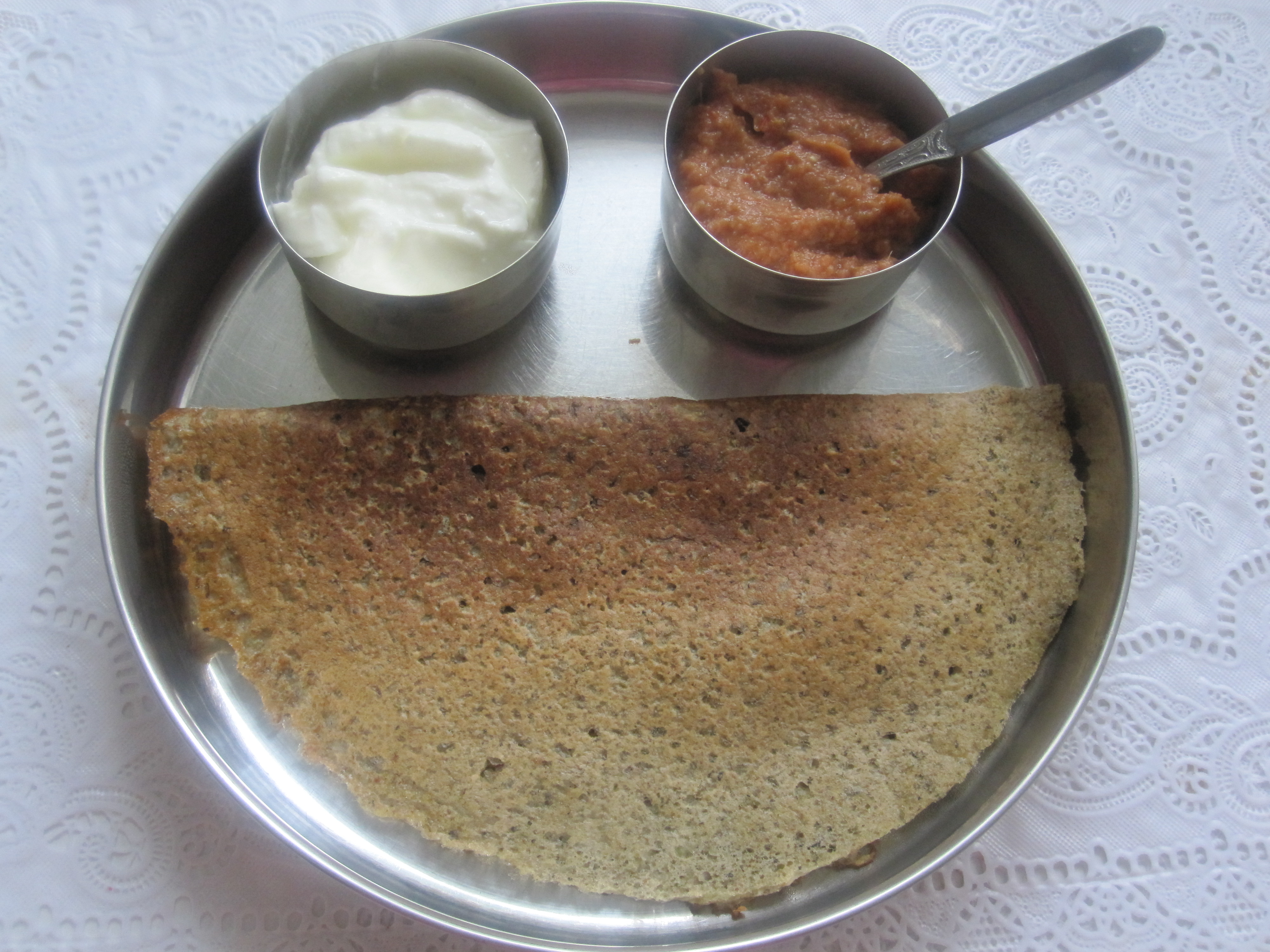
In the forthcoming posts, I shall try to post a few of the whole grain dosais or power packed pancakes as I call them. Some would be the soaked grain version and a few would be the powdered version as per stock at home.
  

008
  

A gentle reminder

Now, if reading this article was a stress or one feels making dosais can be a stressful affair, do not worry! This free world is full of options – make your food yourself or buy or order it yourself, it is your decision. Anything ‘Stressfree’ is the need of the hour!!

But, if you decide that, making the power packed pancakes at home is going to be less stressful than reading this post of mine, just continue … the next few posts I promise would be truly a – Power Packed – Healthy series!
My 100th Post! Kootanchoru – Typical Home Town One Pot Meal.

Is Knocking Century a great mile stone? Cricketers and Bloggers would agree unanimously. When my paternal die hard cricket fan thaatha (grand father) would take me to Chennai M.A. Chidambaram Stadium to watch cricket matches, as a ten year old I would jump screaming high to sixes and fours of Ravi Shastris and Kapil Devs alike. Till today I no nothing much about the game but what I liked the most was getting ready early in the morning with packed lunch and snacks and more snacks and ice-cream to be bought at the stadium and a whole day of watching different kinds of people enjoying their day. That was a perfect outing of a grandpa-grand daughter duo – chatting, munching, screaming, clapping and jumping through out – more work-out than those cricketers on the field.

Today, I feel the same excitement when I jot down my 100th post. A big THANKS to all of you who’ve kept my pen writing.

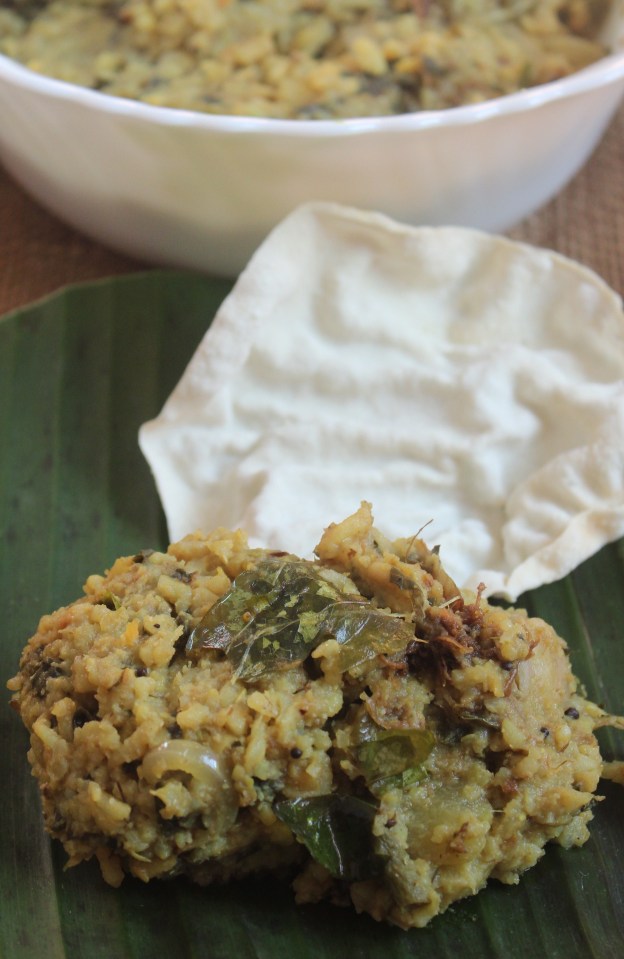
I wanted to present one of the most fabulous One Pot Meals of my home town – Thirunelveli and the nearby districts my maternal Thoothukudi. It is called KOOTANCHORU – literally translates as might be – ‘combined rice’. (Kootu means combination/combine and Choru means Rice)


IMG_3887


Kootanchoru is –
1. a combination of rice and lentil – thuvaram paruppu or split pigeon peas;
2. with as many country vegetables and one green leafy vegetable preferably Arai Keerai (Amaranth Greens), salt and turmeric powder;
3. cooked in a kuzhambu/curry of tamarind and ground coconut-spice paste
and
4. seasoned with mustard, dehusked black gram, curry leaves and vadagam (sun-dried onion seasoning).


One-Pot Meal
With the culinary world turning its eye towards One-Pot Meals,  Kootanchoru is a healthy whole meal with high nutrient value; though with a long list of ingredients, it involves less time and work in cooking. While the rice, lentils and vegetables are cooked in the ground spice paste, the house would be filled with a unique aroma – I call it the true flavor of THE TAMIL  cuisine, common to every down south –  Indian household.

As I have mentioned, the ingredient list is elaborate, the initial preparation involves slightly more work, but the cooking proccedure is quite simple. The aroma and flavor of the meal is worth the effort of initial tasks!!

PONGAL – the harvest festival of the Tamils (refer – https://dosaikal.com/thai-pongal-the-harvest-festival and https://dosaikal.com/pongal-in-cambodia/), is just five days away. Kootanchoru is also a special meal during Kaanum Pongal or the fourth day of the harvest festival where people visit their friends and family and also spend the time on a Picnic. Kootanchoru can also be a picnic meal!

While the joy of a 100 posts rekindles memories of my paternal grandfather who has also been a wonderful friend till he left us a year and a half ago, the word Kootanchoru reminds me of my maternal grandfather who would take us all grandchildren on different picnics and shower us with the delicacies of Thoothukudi.

Coming from a family where the huge extended family, with maternal and paternal aunts (athais, chithis and periyammas) and those special aunts wedded to uncles (athais and chithis), I think each one in the clan are excellent cooks and my kootanchoru can never match their flavor of their hands; Or now in the next generation, the tasteful endeavors of my cousins – experts in variety of cuisines!
The Making –
Kootanchoru

Ingredients (serves 4-6)

1. main ingredients

  • puzhungal arisi/par boiled rice – 1 heaped cup
  • thuvaram paruppu/split pigeon pea – 1/2 cup
  • oil preferably gingelly oil – 1 tsp for the base of the cooker
  • puli/tamarind – lemon sized soaked in 1/2 cup water
  • manjal podi/turmeric powder – 1/2 -3/4 tsp
  • uppu/salt – to taste


rice and lentil

IMG_3854


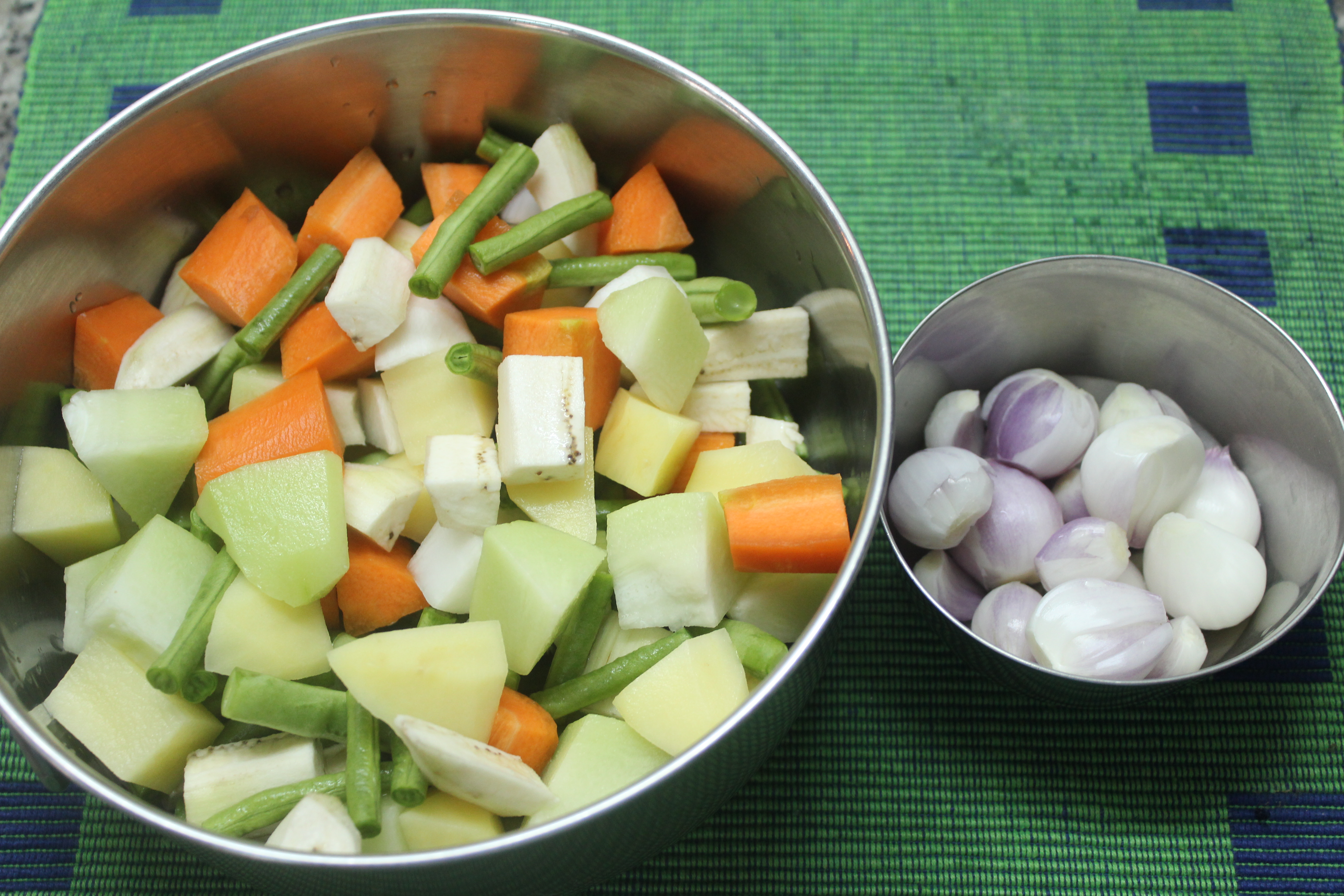
2. mixed vegetables cut to medium size pieces – 5-6 cups of the same measuring cup of rice

  • kathirikkai/egg plant
  • vaazhaikkai/raw banana
  • carrot
  • beans
  • chenai/yam
  • urulai/potato
  • kothavaarangai/cluster beans
  • avaraikkai/broad beans
  • chinna vengayam/shallots – 10 no.s uncut for frying
  • oil for frying shallots – 3 tbsp


vegetables and shallots

IMG_3797

3. greens – 1 cup

agathi keerai/amaranth greens or any other greens, the second preference would be murungai keerai/drum stick leaves

greens and tamarind water

IMG_3808

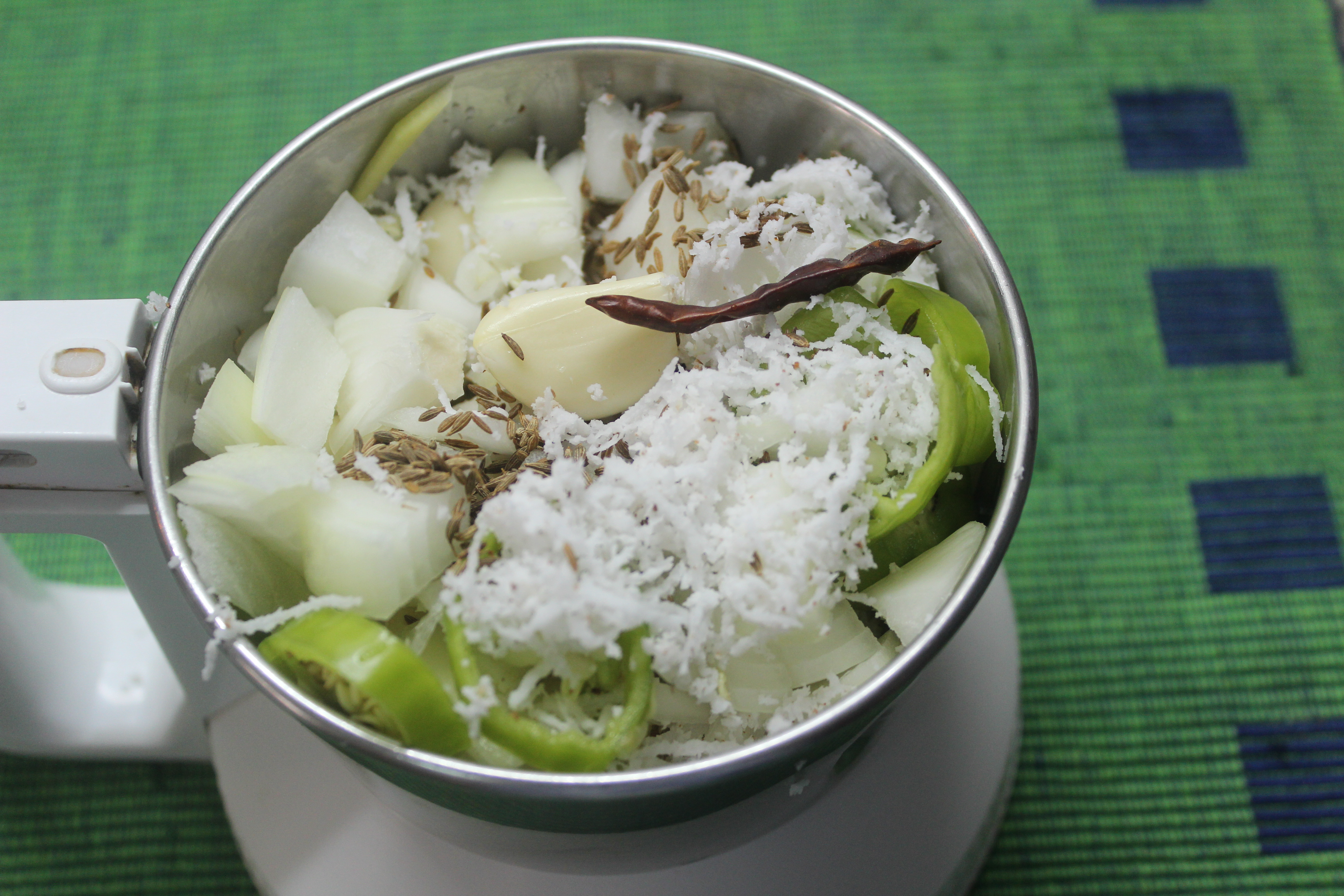
4. to grind – garlic is a key ingredient!

  • grated coconut – 1/2 cup
  • seeragam/cumin seeds – 2 tsp
  • milagai vatral/red chillies – 3 no.s
  • pachai milagai/green chilli – 1 no.
  • poondu/garlic cloves – 10 no.
  • chinna vengayam/shallots – 5 no.s or 1/2 of normal big onion


IMG_3801


5. seasoning

  • oil – 3 tbsp
  • kadugu/mustard seeds – 1 tsp
  • ulundham paruppu/dehusked black gram – 1 tsp
  • chinna vengayam/shallots -6 no.s or periya vengayam/onion – 1/2 – cut long and thin strips
  • karivepilai/curry leaves – 15 leaves
  • vadagam/sun dried onion balls – 1 or 2 no.s


IMG_3826

Method of Preparation
Initial Preparation

  1. Wash rice and lentil; keep aside
  2. Grind the grated coconut with the above mentioned spices into a smooth pastewith little water
  3. Wash and soak tamarind in water
  4. Cut all the vegetables and amaranth greens or any spinach of your spinach and keep ready
  5. While using eggplant, potato and raw banana, keep them in a bowl of water to avoid discoloration
  6. Peel the skin and wash the shallots and keep aside

Procedure – I

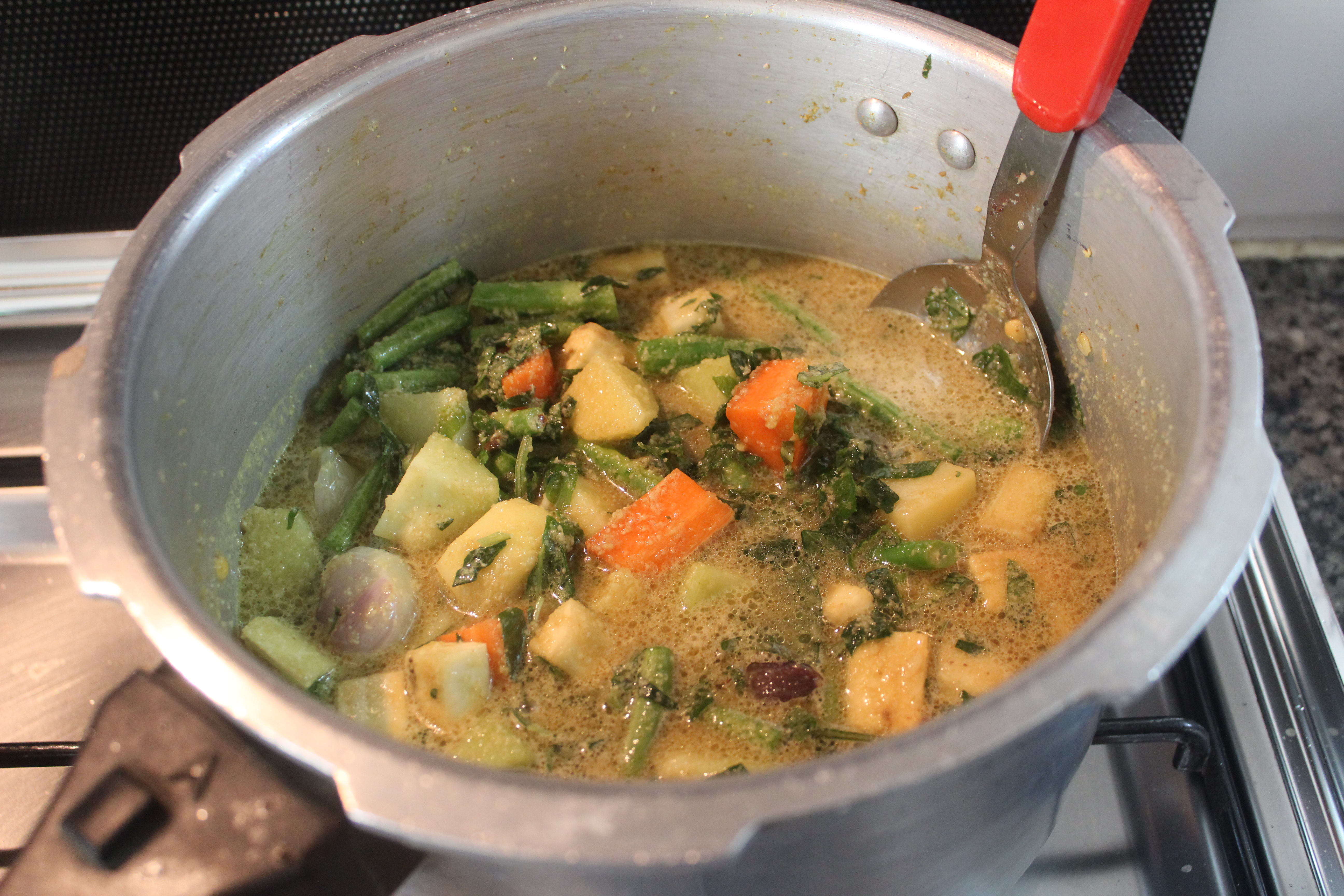
Heat 1 tsp of oil in a pressure cooker on lighted stove and start adding all ingredients one after the other in order–

  1. rice and lentil without water
  2. ground coconut and spice paste
  3. cut vegetables
  4. chopped greens
  5. turmeric powder and salt
  6. tamarind water

Procedure – II

  1. Add 4 cups of water for every cup of rice-lentil mix. I have used total 1 1/2 cups both combined – so I added almost 6 cups. This is not inclusive of the tamarind juice of 1/2 cup and the water content in the spice paste.
  2. A total of 4 cups for 1 cup is ideal. Parboiled Rice needs more water for a well cooked – semi mashed consistency and that is what is needed for Kootanchoru.
  3. Do not close the cooker; let the mixture boil in medium heat. Keep stirring as the mixture might stick to the bottom of the cooker, as there is less oil. Generally no oil is added to the cooker but I added to be on the safer side
  4. In a separate pan, heat 3 tbsp of oil and fry the whole shallots reserved for frying
  5. Add the fried shallots and also the oil to the rice-water-spice mixture
  6. When the mixture starts boiling, close the cooker with lid and wait for the first whisle
  7. Keep the stove in full position; After the first whistle, reduce and cook for 5 mins. Switch off gas
  8. Open the cooker after 20 minutes; Kootanchoru is almost ready.


fry shallots separately

IMG_3858


add fried shallots to the ready to be cooked kootanchoru

IMG_3864

Procedure – III
Seasoning:

  1. Heat 3 tbsp oil in a pan
  2. Add mustard seeds and dehusked black gram
  3. When mustard seeds splutter and the gram turns brown, add the long stripped onions, curry leaves and vadagam
  4. Pour this on top of the cooked Kootanchoru and mix well
  5. If one doesn’t have vadagam, more onions can be cut into strips and fried brown and added
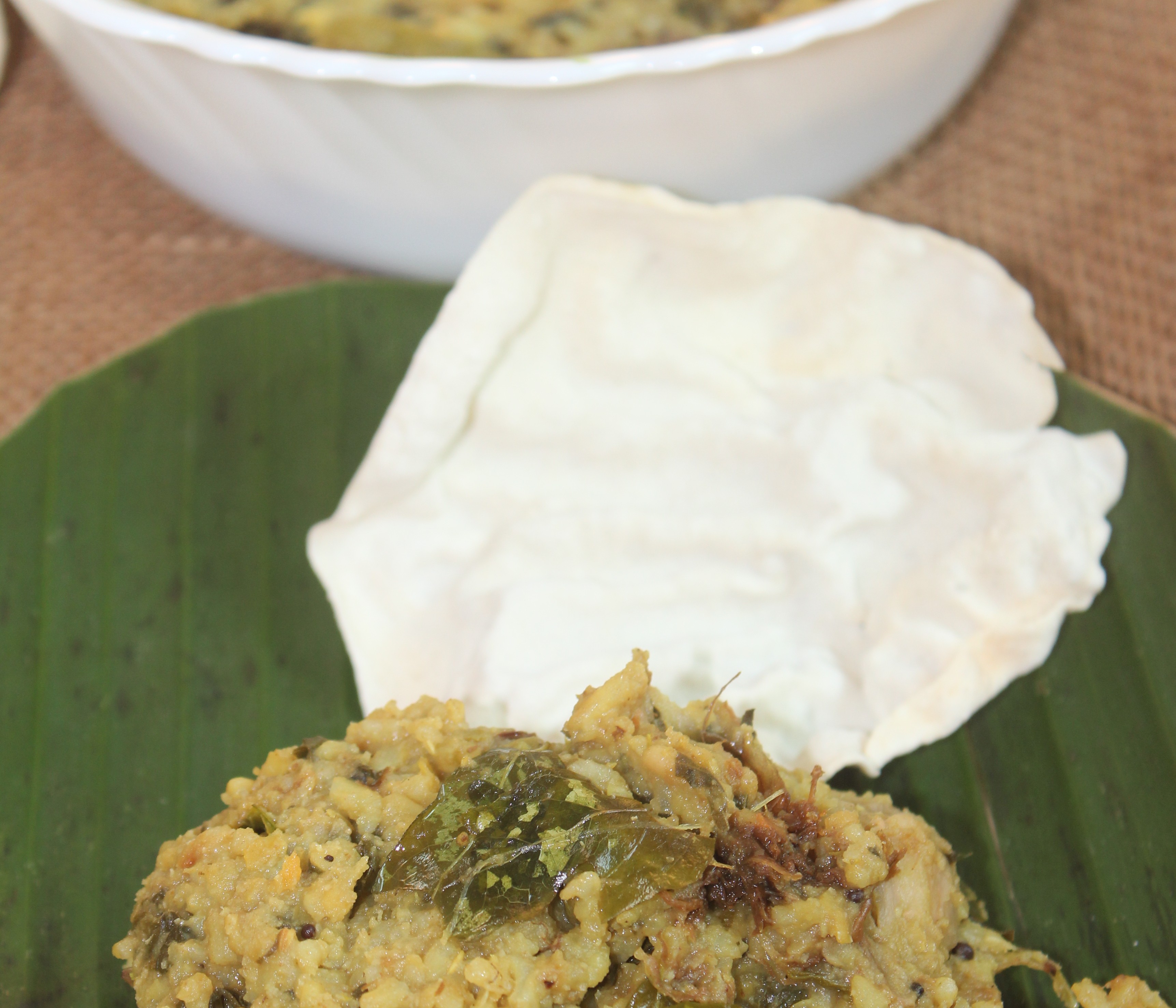
  6. Kootanchoru is ready and tastes best with Thayir Pachadi  and Appalam.


IMG_3867


fried seasoning ingredients on top of the cooked rice

IMG_3870

The Exclusives –
1. Vadagam
IMG_3828

a. Vadagams are sun-dried seasoning ingredients, stored for months at homes. They may contain mustard seeds, dehusked black gram, curry leaves and onion. Variations depend on the family.

b. In Thirunelveli, we have a different vadagam made of onions, not only used for seasoning but mainly had as accompaniment to thayir saadham/yoghurt rice as fritters (like the sun dried chillies). See – https://dosaikal.com/thayir-saadham-mor-milagaicurd-rice-sun-dried-chillies/. Since I did not have the original fritter vadagam, I have used the seasoning vadagam.
2. Thayir Pachadi


IMG_3978

a. Pachadi can be a yoghurt based salad or raita in Hindi. There are various kinds of pachadis – specially yoghurt with onions for Biriyanis, yoghurt with cucumber for combination rices like lemon rice or tamarind rice or mint rice, or just a soothing pachadi of yoghurt, onions and tomatoes for any meal. Carrot, Beetroot, Pineapple, mango… anything can go in as Pachadi,

b. Typical/Original Pachadis have a coconut-green chilli paste added to the yoghurt base. What we have done is a simple one with yoghurt and salt alone as base.

c. Since my daughter doesn’t prefer tomatoes, I used onions, cucumber and green chillies mixed in yoghurt and salt.
3. Appalam


IMG_3936

a. Appalam is exclusively South Indian. In the North, they are called Pappads – made spicy too. Pappadams in south are another variety of discs which puffs up when deep fried.

b. They are thin disc shaped fritters,  made of dehusked black gram flour. There are also other varieties like rice flour appalams, jack fruit appalams and so on.

c. They are deep fried or roasted on stove, nowadays microwaved and are had generally with a rice based meal.

d. They can also be substitutes to vegetables on a lazy day.


IMG_3930

Kootanchoru is not only a humble and simple symphony of various ingredients, but one of the best aromatic and flavorful meals from the southern part of Tamilnadu.
NOTE:
Do not miss the garlic to be ground with other spices. The flavor of garlic is one of the key essences to the flavour of this rice.

Pathirpeni/Sugary Snow White Crisps


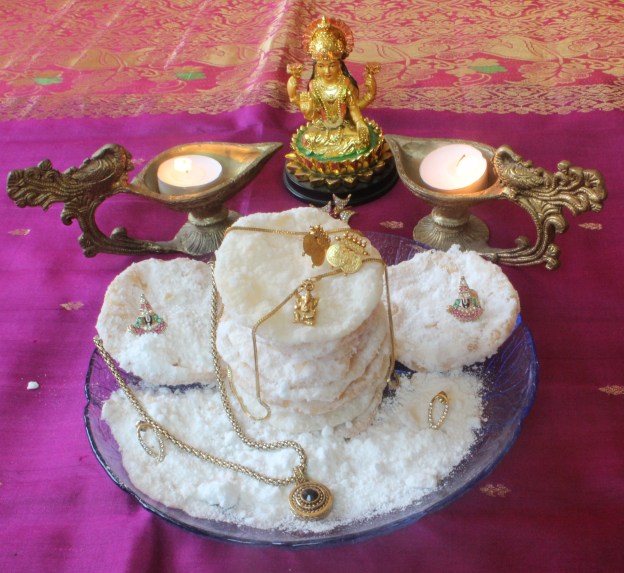
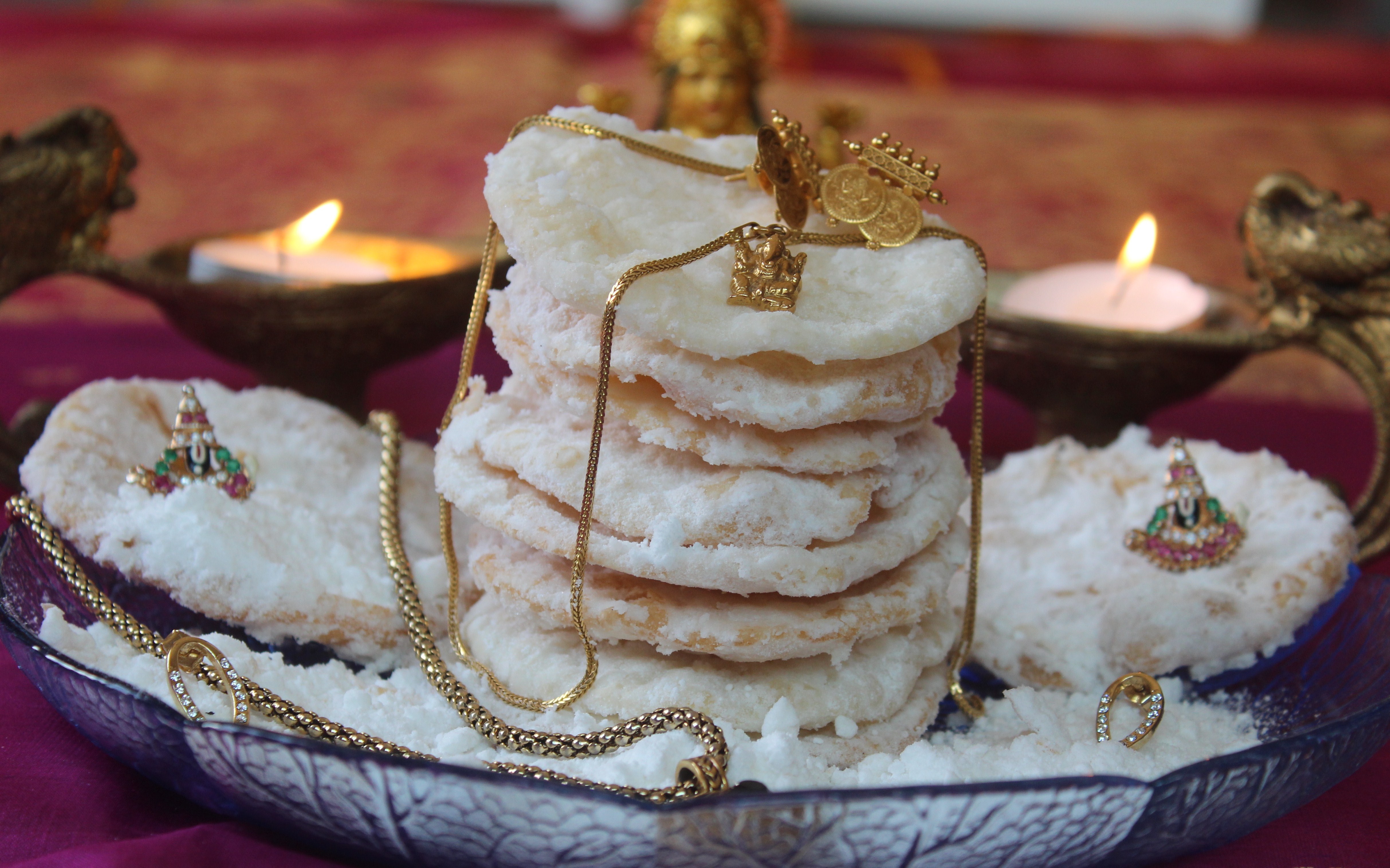
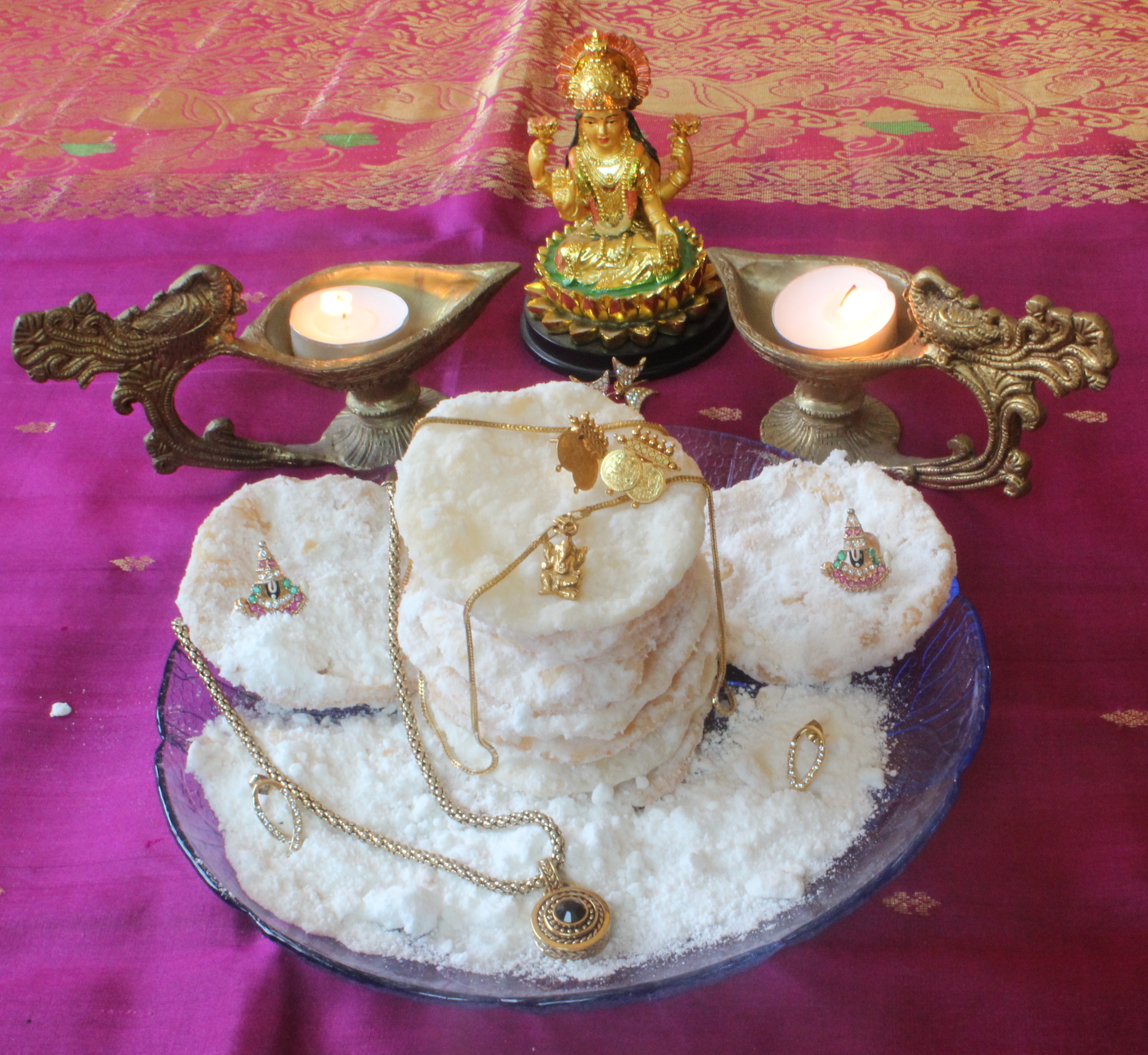
IMG_3397

Pathirpeni is a very special sweet to me and to my brother! It was and is still a speciality signature sweet of Aachi  my paternal grandmother. I do not remember having pathirpeni in any other house in the big clan that we belong to. The sole supplier to all near and dear ones was Aachi – helped meticulously by Amma – my mother.

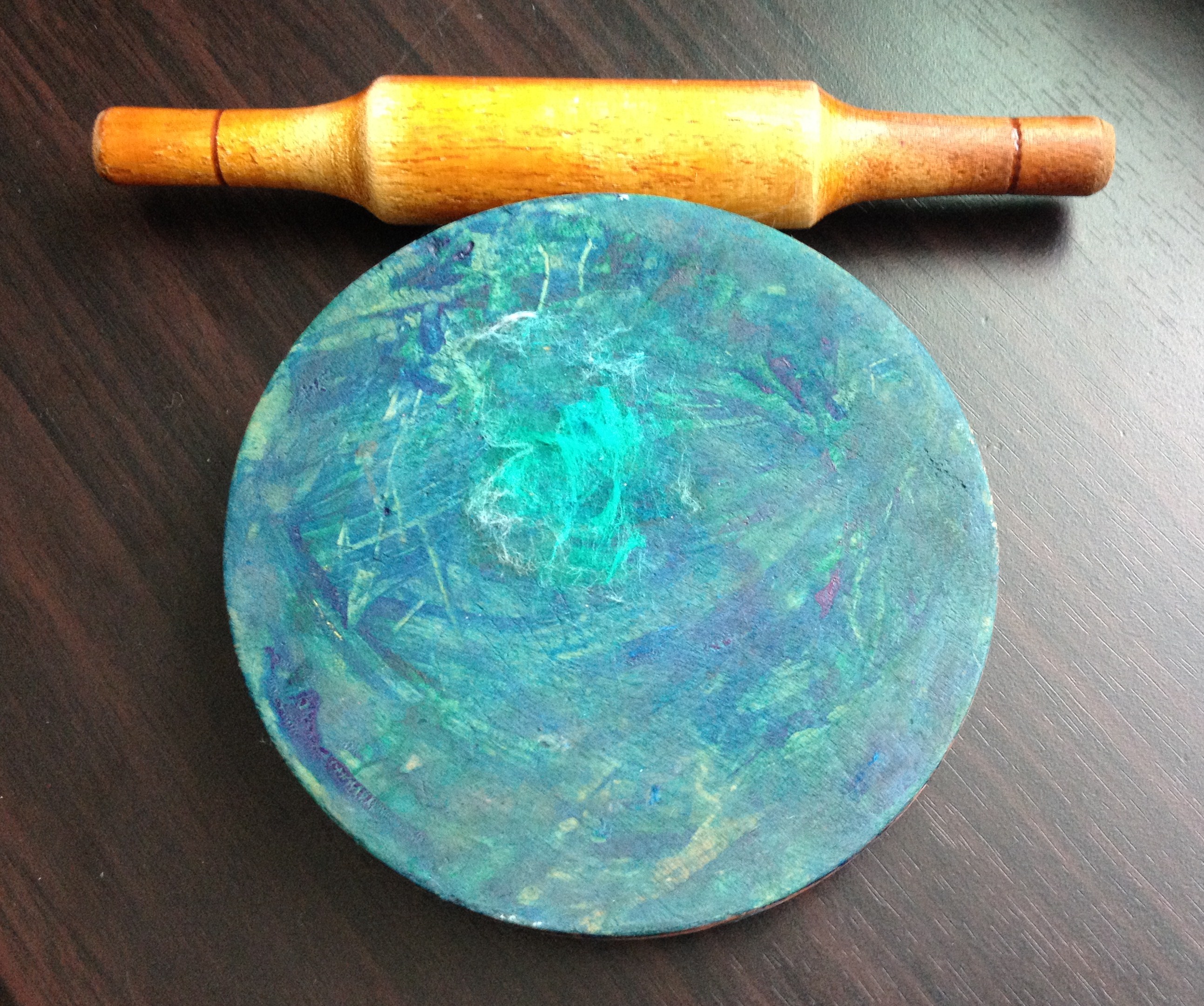
I had my miniature ‘Puri kattai’ or the spherical puri maker in wood to specially make pathirpeni and also puris. This was handed over to my daughter who used to help me make rotis, but feels she is a grown up and uses my bigger puri kattai. She painted my dear little puri kattai though the newer roller is intact.


IMG_3744

Pathirpeni is for those with that extra sweet tooth – which might be god sent genetically or amma fed affectionately… We siblings have both – hence not one but two extras to successfully acquire that ‘happier the healthier’ plump look!

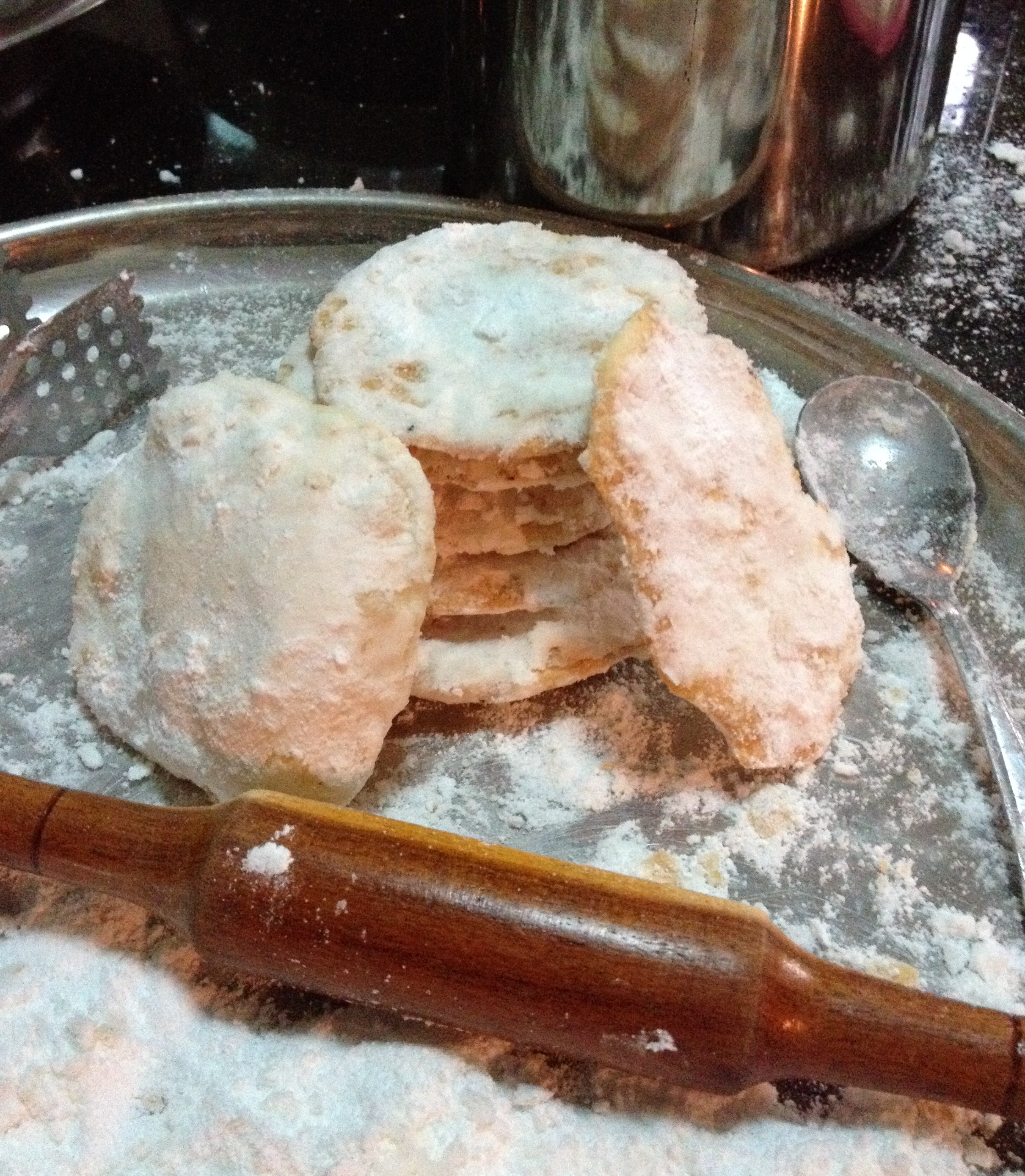
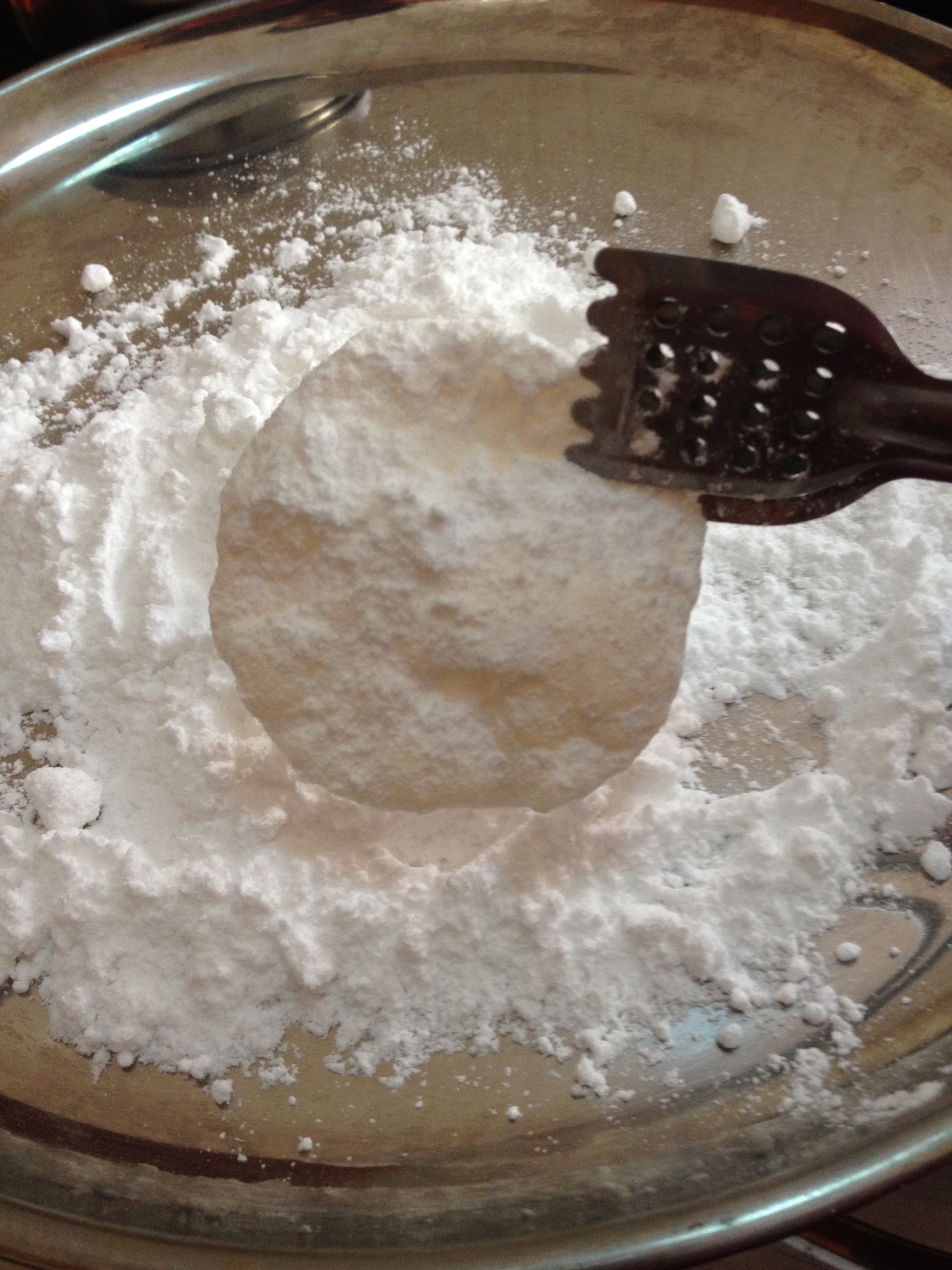
These are deep-fried crisps dipped/rubbed immediately in powdered sugar to get the snowy white finish. It is a simple sweet with minimal ingredients but one should be ready for some interesting variety of work. The sugar that melts in the mouth first is followed by the crispy crunch of the deep-fried discs.

These also involve an efficient team work. Since the count was always in hundreds, amma or aachi would knead the dough; they would take turns in pressing the spheres and frying in oil – the last quintessential part of rubbing the powdered sugar would be ours – mine and my brother… I think I did the rubbing and he contributed more into something which can also be decently termed as tasting!

So I did the rolling and frying and my 6-year-old did the sugar-coating! She wanted to make her own pathirpeni and then I was a proud mother!!


she started off like this….

IMG_3725


and then graduated with flying colours!! – special seven that the little hands made!

IMG_3722

These can be stored in air tight containers after cooled for a week – that’s not a concern as its life ends too quickly! Yet the tastiest crisps are those which directly come out of the oil and are delicately transferred for one’s taste buds to relish, sprinkled/rubbed very quickly with powdered sugar.

One cup of flour (about 150 gms), would yield 20-25 crisps. After a no maida/all-purpose flour and no white sugar life for many years now, this one has been an exception. Might be I try next time with whole wheat flour and brown sugar – but have to sacrifice on the colour as wheat flour would result in brown crisps and then we might call it brownie crisps!
Now to the recipe –
Pathirpeni/Sugary Snow White Crisps


IMG_3385

Ingredients (makes 30-35)


IMG_3426


  • maida maavu/all-purpose flour – 1 1/4 cup (200 gms)
  • cheeni/sugar – 1 1/4 cup (200 gms)
  • thanneer/water – as needed
  • uppu/salt – a pinch
  • nei/clarified butter – 1 tsp
  • arisi maavu/rice powder – 1 tsp
  • yennai/oil – for deep frying

Method of Preparation
1. Sieve all-purpose flour, add a pinch of salt and mix enough water to make a tight dough


IMG_3670

2. Finely powder the sugar and keep in a wide bowl or plate; the deep fried crisps would directly land inside this bowl to have a sugar bath
3. Heat oil in a pan, keep in sim position
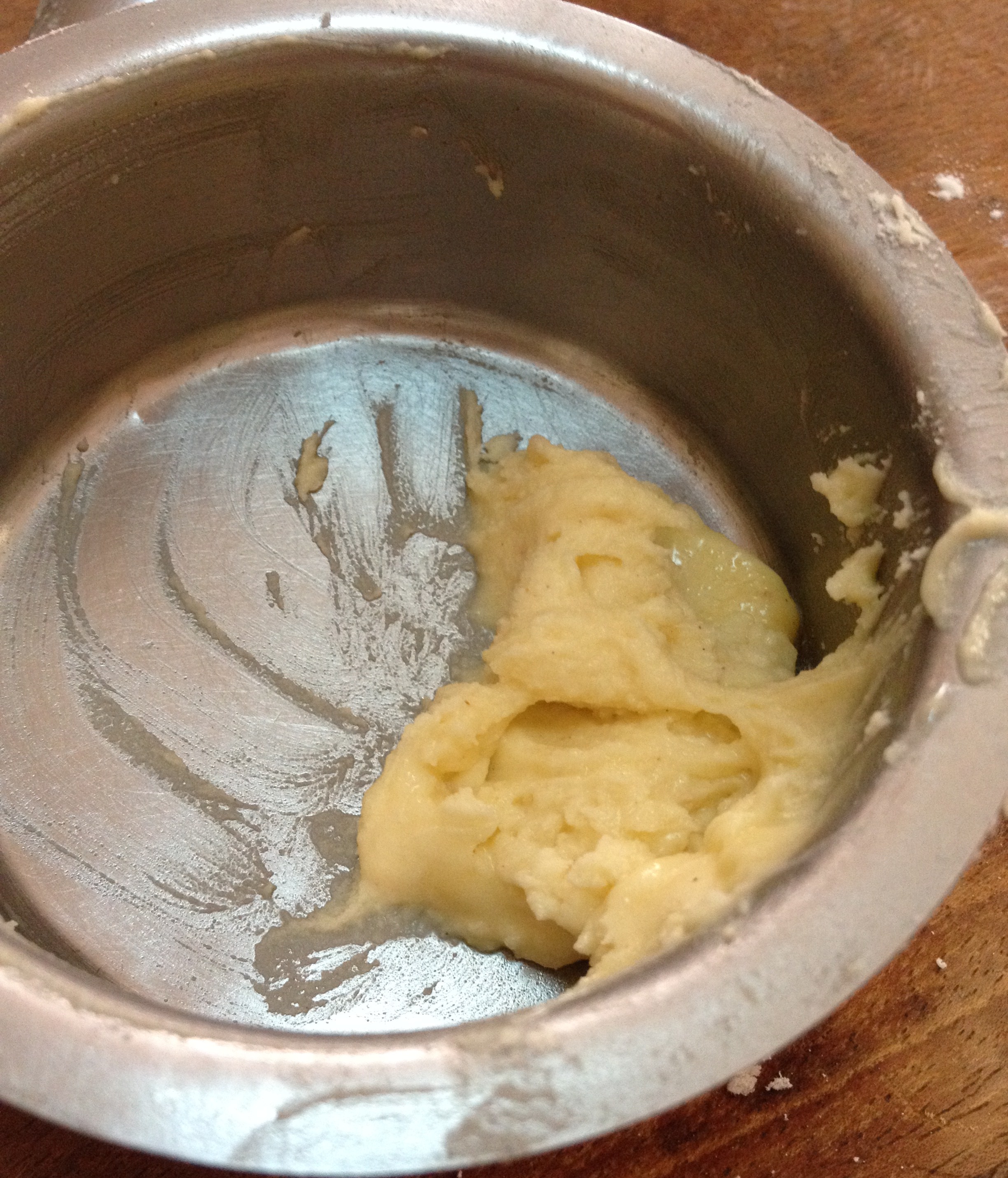
4. In a small bowl, mix clarified butter and rice powder
IMG_3673
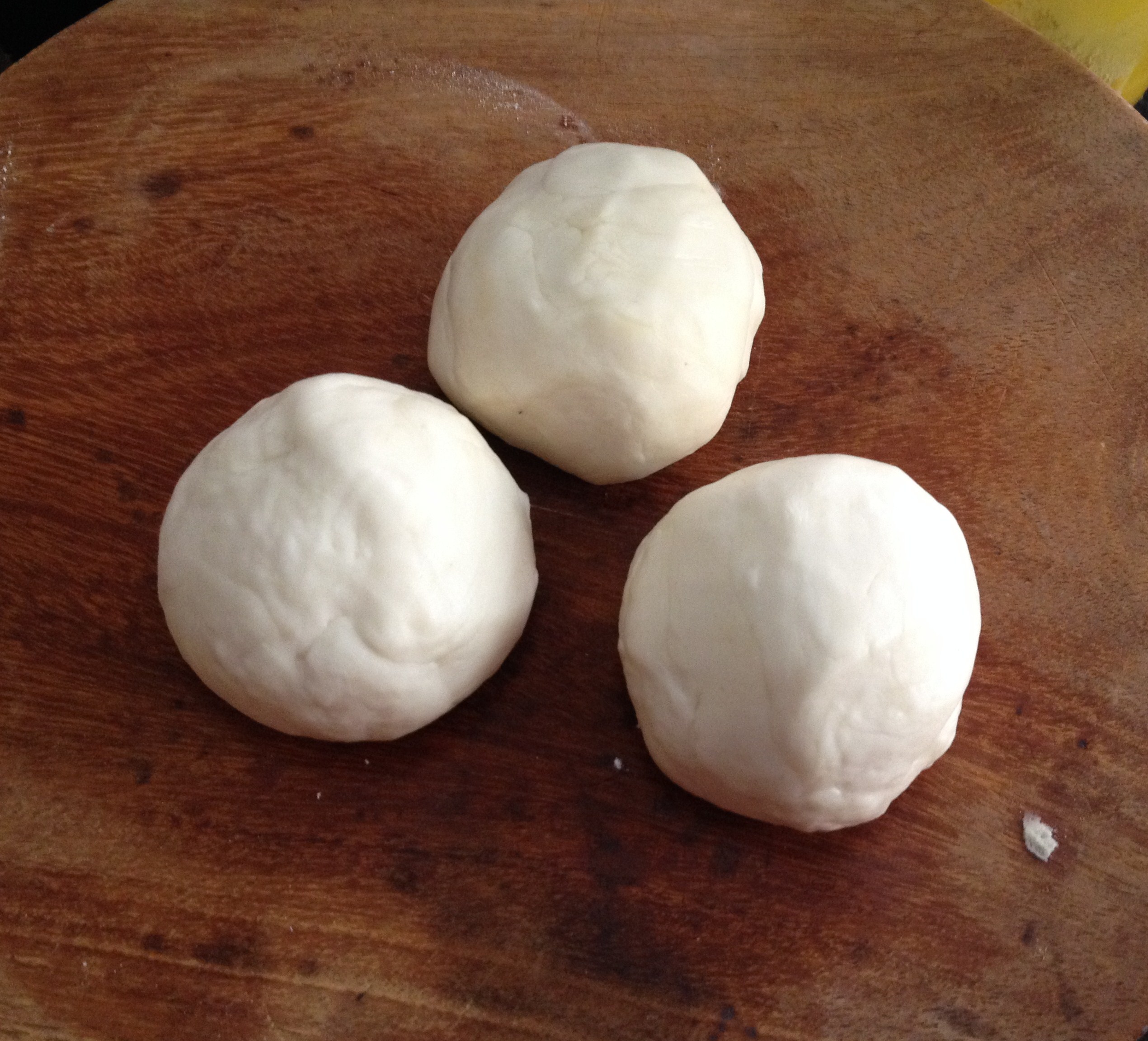
5. Make three even balls of the dough


IMG_3681

6. Spread into flat breads – chappatis/indian roti size – not too thin, not too thick


IMG_3683

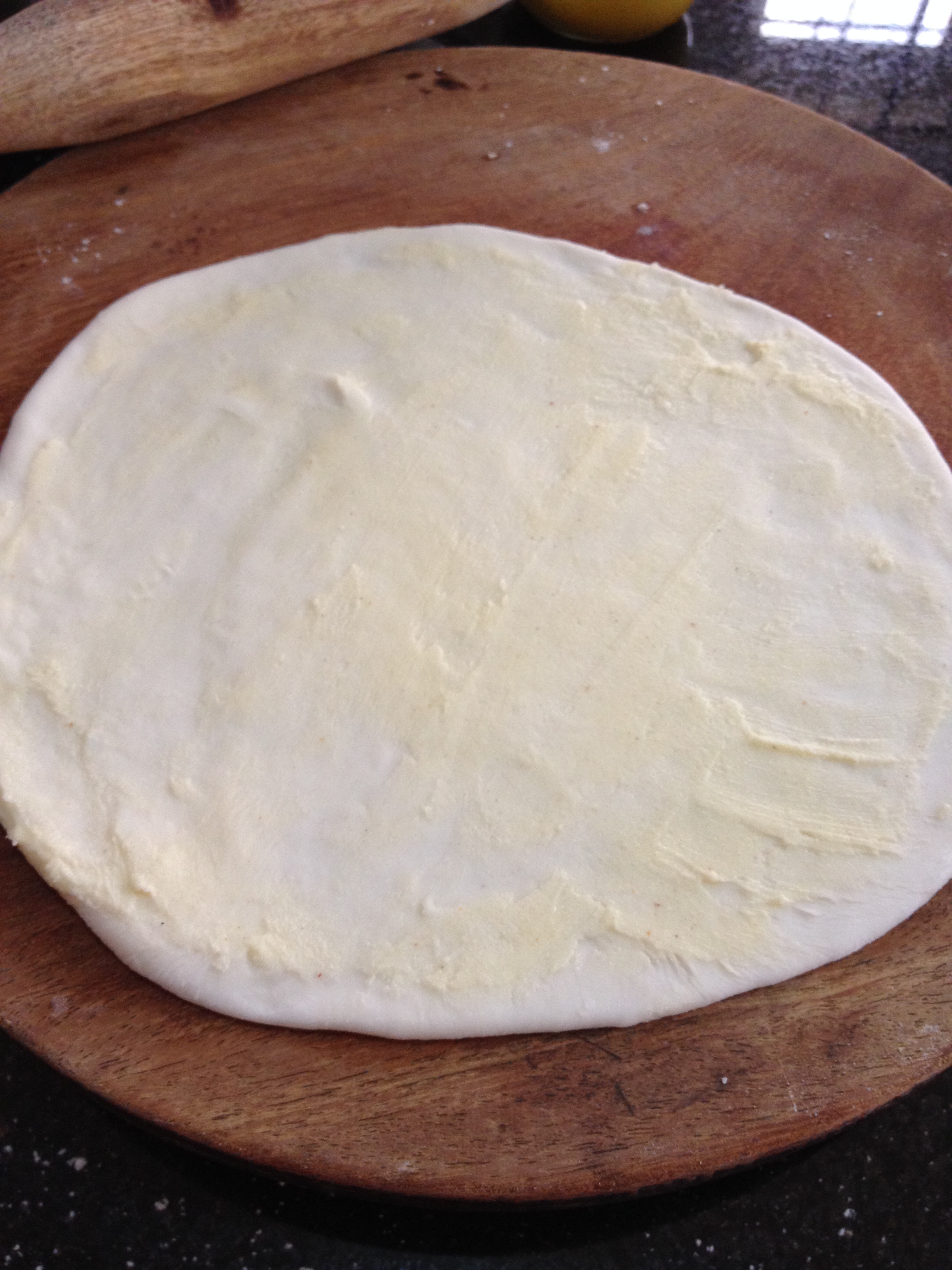
7. Do not place rotis one on top of the other before spreading the mixture as they would stick to each other and one would have to make the three flat breads again. Make one and place on a plate; spread the butter rice powder mixture, make the second one and place on top of the first; spread the mixture and make the third; now place the third on top of the second. It had become messy as I had placed before spreading – I had to do it all over again. So be cautious on this


IMG_3684

8. Roll this triple layered roti . Now it is time to pull the rolled roti as long as possible without spoiling or breaking the texture


IMG_3685


pulled long

IMG_3687

9. Then cut into very small bits, size enough to make small circular crisps

these are little big, i had to make them smaller

IMG_3694

10. Roll into thin crisps – while rolling, see the side which was cut by knife – make thin puris/crisps pressing the knife cut edge into a circle. This helps the butter mixture to stay intact. Otherwise it would ooze out from the puris.


IMG_3688

11. When the oil is ready, roll one by one and fry till crisp. We do not want a fluffy soft puri – make really thin and flat ones that come out crisp
12. Immediately drop it inside the sugar bed and apply well; the powdered sugar must have coated evenly


IMG_3692

13. Tap the crisps slightly to reduce the excess sugar
14. Taste one to enjoy the true taste of pathirpeni – this is the most important step in my opinion; having identified the flaws (making thinner or thicker; right shape; less sugar coating; more sugar coating and so on), proceed with the next
15. Make all the crisps and let them cool
16. Store in an air tight container and enjoy.
17. Do not hesitate to help yourself with more – you won’t get those hot crisps after they are cooled – cannot be microwaved or reheated by any means!
Note:

  1. This is a simple one – yet, some caution on important steps would make it easier
  2. Try one and feel the crispness of it and accordingly try to make corrections on the thinness and crispness of the pathirpeni
  3. Each time, tap a little to take away the sugar if one doesn’t prefer so much sugar
  4. Adding cardamom powder to the powdered sugar might add some aroma and flavor though it is not added normally.


IMG_3367


Navaratri and Nostalgia – Karuppu Kondaikadalai Sundal/Stir fried Black Chick Peas


IMG_3115

This is the week of Navaratri – the Hindu festival devoted to the three women deities – Parvati, Lakshmi and Saraswathi, consorts of Shiva, Vishnu and Brahma respectively.

Religious aspects differ with families and mindsets of families. This holds good for traditions too. But, I strongly believe that the procedural aspects of religion are secondary and so are the mythological stories that have evolved to keep a community within its boundaries. But the traditions that have been transferred through grandmothers and mothers of households holds a community, society and a race intact, without losing its identity.

Passing on stories and memories of one’s childhood to the next generation is an interesting event on a day-to-day basis. With nuclear families as the norm and families living in different countries around the world, the connection between generations has slowly gone to a negative index. Thanks to modern social networking tools and low-cost international call facilities, the widened gap has reduced. But, the role of story telling is switched over predominantly to the parents from grandparents greatly.

This ‘Role Adoption’ of a mother as a story-teller in transferring culture and traditions to the next generation, has its own advantage, especially during festival occasions.

More information had been written on the religious and festive aspects of Navaratri in https://dosaikal.com/2011/09/30/navaratri-and-the-sundal-connection. So, let us talk about the experience of story telling with Navaratri and Nostalgia.

The immediate ones, apart from other elaborate and striking features, that would come to my mind about Navaratri are –

a. Pattu Pavadai – the traditional dress worn by little girls on festive occasions;

b. Carnatic Music – classical south indian music, the classes of which would start from the day of Vijayadasami;

c. Recital of Songs – as small and young girls, we would go in groups or with amma to worship the golu celebrations or the decorative arrangements of our near and dear ones and

d. Sundal – the lentil salad if I could call it which would be made everyday for poojai and also distributed to families in the neighbourhood!

Pattu Pavadai Chattai


IMG_3079

Now, as a story teller, Nostalgia hits me first with the Pattu Pavadai Chattai – Pattu – Silk; Pavadai – Full Skirt and Chattai – Blouse; the traditional silk skirt and blouse of the little girls. Everytime I buy new clothes from Chennai, Pattu Pavadai is part of the collection – it comes from various sources – maternal and paternal grannies and other grandmothers and grandfathers of the total clan!

I get them stitched like any other Tamil person in different heights so that my daughter can wear each one new as she grows taller day by day. There is also the concept of ‘duck’ – not the noun which quacks but the verb – the work that the tailor does to alter the height of the Pavadai/skirt. We tell him ‘ducku podunga’ – might have been ‘tuck it in’. He tucks the extra length of the skirt cloth in one or two layers to be unthreaded as she grows and the height of the skirt is increased. What excellent tailoring sense from generations!

When I see her wear the Pattu Pavadai Chattai for any occasion – my childlike senses are rekindled – this time I made the ‘puff kai chattai’ – puffed hand blouse – which I dare not try to wear for my Pudavai/Saree today.


IMG_3089

Carnatic Music

Telling her stories of Paatu vaguppu/Music classes, I have become her music teacher too – just the basics!


IMG_3038

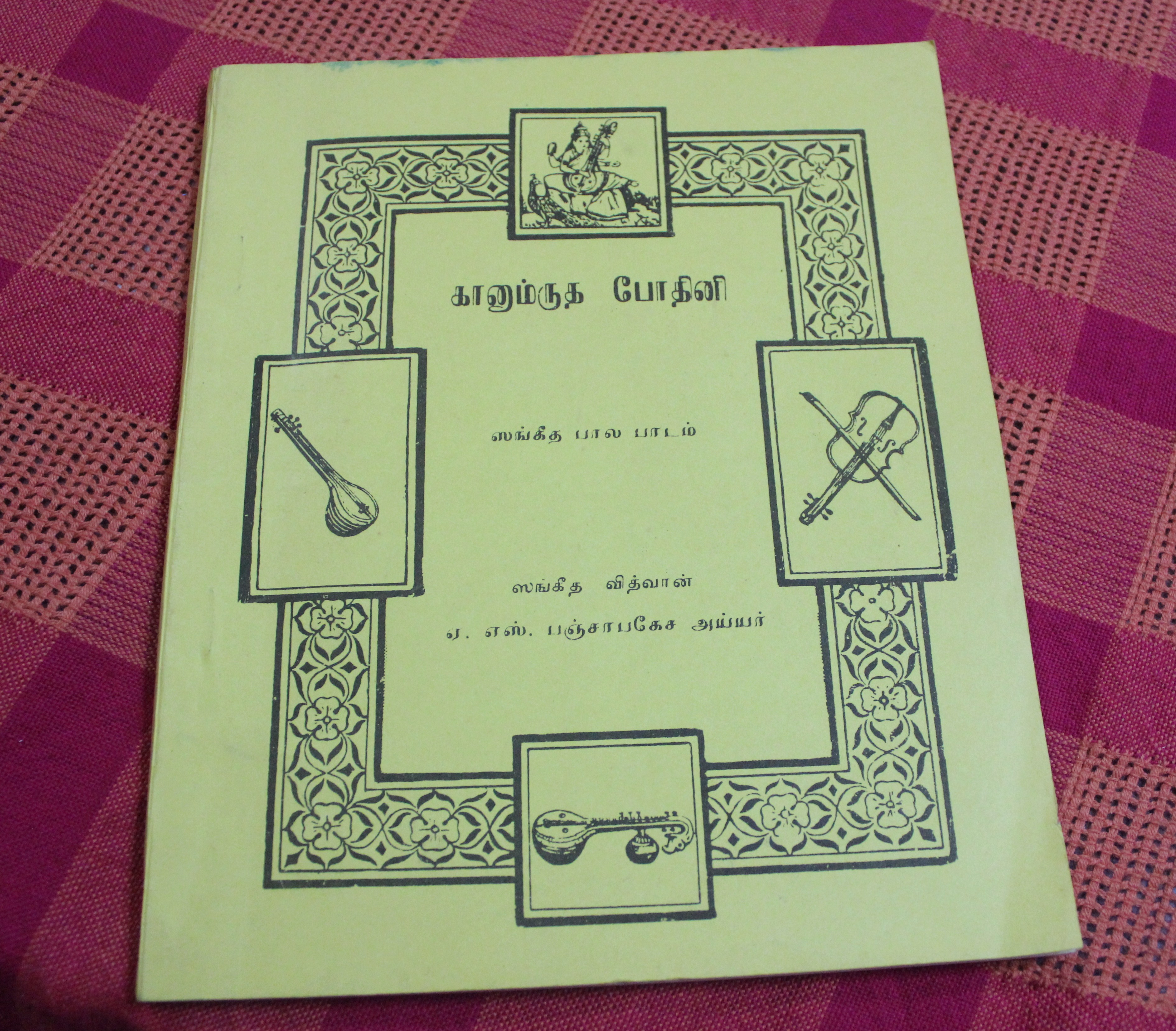
With the new edition of the same old book of basic classic Carnatic music to the easily portable shruthi box – I try to dig in to memories back home!
Sundal

Navaratri without Sundal – lentil salad is like Pongal without Karumbu/Sugarcane.(https://dosaikal.com/2012/01/13/thai-pongal-the-harvest-festival)

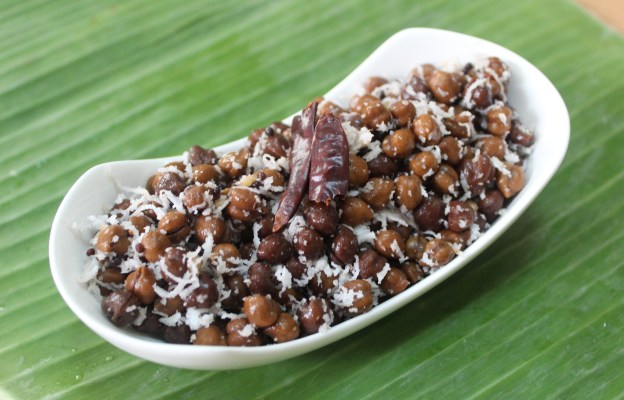
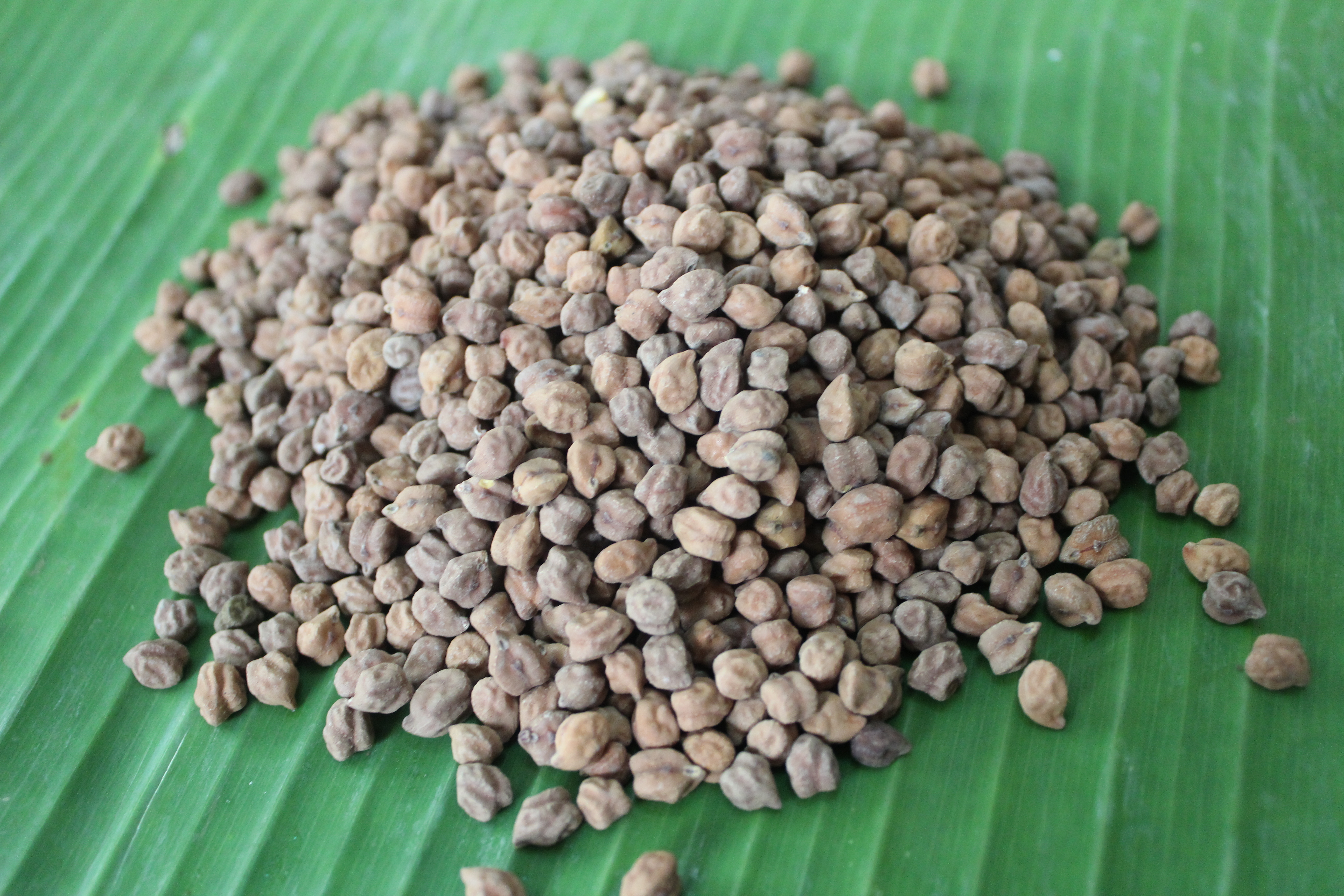
The protein rich, nutritious sundals are real treat during this festival.  Different lentils are soaked and cooked and seasoned with minimum oil and just stir fried to be presented as a healthy snack. Among the various varieties, it is Karuppu Kondaikadalai Sundal this time.

Now, to the recipe –

Karuppu Kondaikadalai Sundal/Stir fried Black Chick Peas


IMG_3121


Chickpeas are a source of zinc, folate and protein.Chickpeas are low in fat and most of this is polyunsaturated. Nutrient profile of desi chana (the smaller variety) is different, especially the fibre content which is much higher than the light coloured variety. One hundred grams of mature boiled chickpeas contains 164 calories, 2.6 grams of fat (of which only 0.27 grams is saturated), 7.6 grams of dietary fiber and 8.9 grams of protein. Chickpeas also provide dietary phosphorus (168 mg/100 g), which is higher than the amount found in a 100-gram serving of whole milk.

Recent studies have also shown that they can assist in lowering of cholesterol in the bloodstream. http://en.wikipedia.org/wiki/Chickpea

Ingredients (serves 3 to 4)

  • karuppu kondaikadalai/black chick peas – 1 cup
  • thuruviya thengai/grated coconut – 1/2 cup yennai/oil – 2 tsp
  • kadugu/mustard seeds – 1 tsp
  • ulundham paruppu/dehusked black gram – 1/2 tsp
  • milagai vatral/red chillies – 1 no.
  • kariveppilai/curry leaves – a few
  • perungayam/asafoetida powder – 1/4 tsp
  • salt – to taste


IMG_3096

Method of Preparation

  1. Wash and soak black chick peas in enough water overnight or at least for 8 hours
  2. Pressure cook till soft – this might take at least 20 minutes in low-medium heat
  3. Heat oil in a pan and let the mustard seeds splutter and add black gram
  4. When dehusked black gram turns golden brown, add red chillies and curry leaves and saute
  5. Red chillies can be substituted with green chillies if one prefers
  6. Strain the cooked black peas and add to the pan
  7. Add salt to taste and stir fry well
  8. When all ingredients are combined well – this might take five minutes – turn off the stove
  9. Sprinkle freshly grated coconut to serve
  10. Coconut can be added while sundal is still getting stir fried. Then, the colour of fresh coconut is lost but an excellent flavor of pan roasted coconut enhances the salad; While non-roasted fresh coconut might not add those extra calories due to roasting!
  11. The addition of coconut can be left to choose as per family preference
  12. Enjoy the healthy snack which can also be an excellent starter in dinners.


Entering Year 3! Paasi Paruppu Payasam/Dehusked Green Gram Pudding/Kheer


paasi paruppu payasam

IMG_1297


The second year of blogging has not been a continuous writing affair… though there was no end to cooking affair! Too much into packing, shifting places, entering new places and faces, unpacking and settling has been quite tedious. When I look back, the previous year has been a slow-paced one… sometimes out of sight for a couple of months too. But I feel overwhelmed by the support I have received in spite of those long intervals.

NANRI – Thanks a ton – for understanding my absence for short periods!

During this period of settling down, the new subscribers that joined hands with me and my old friends who have been continuously keeping pace with my posts, have made me feel more guilty of not having settled sooner and not having posted more. I shall surely try to compensate on that this year.

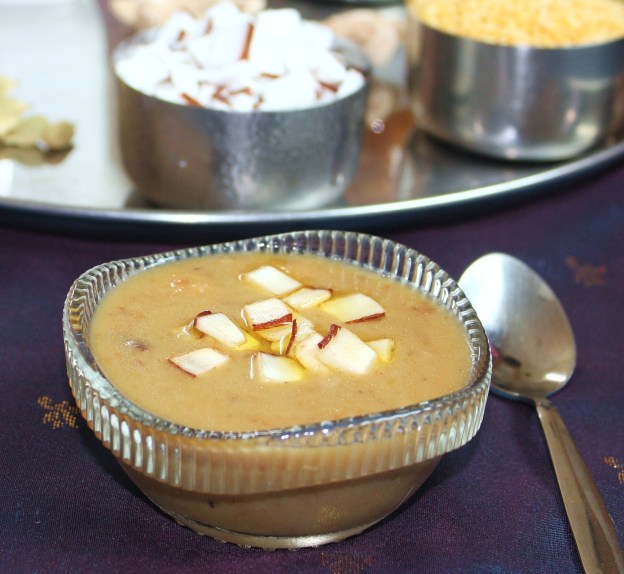
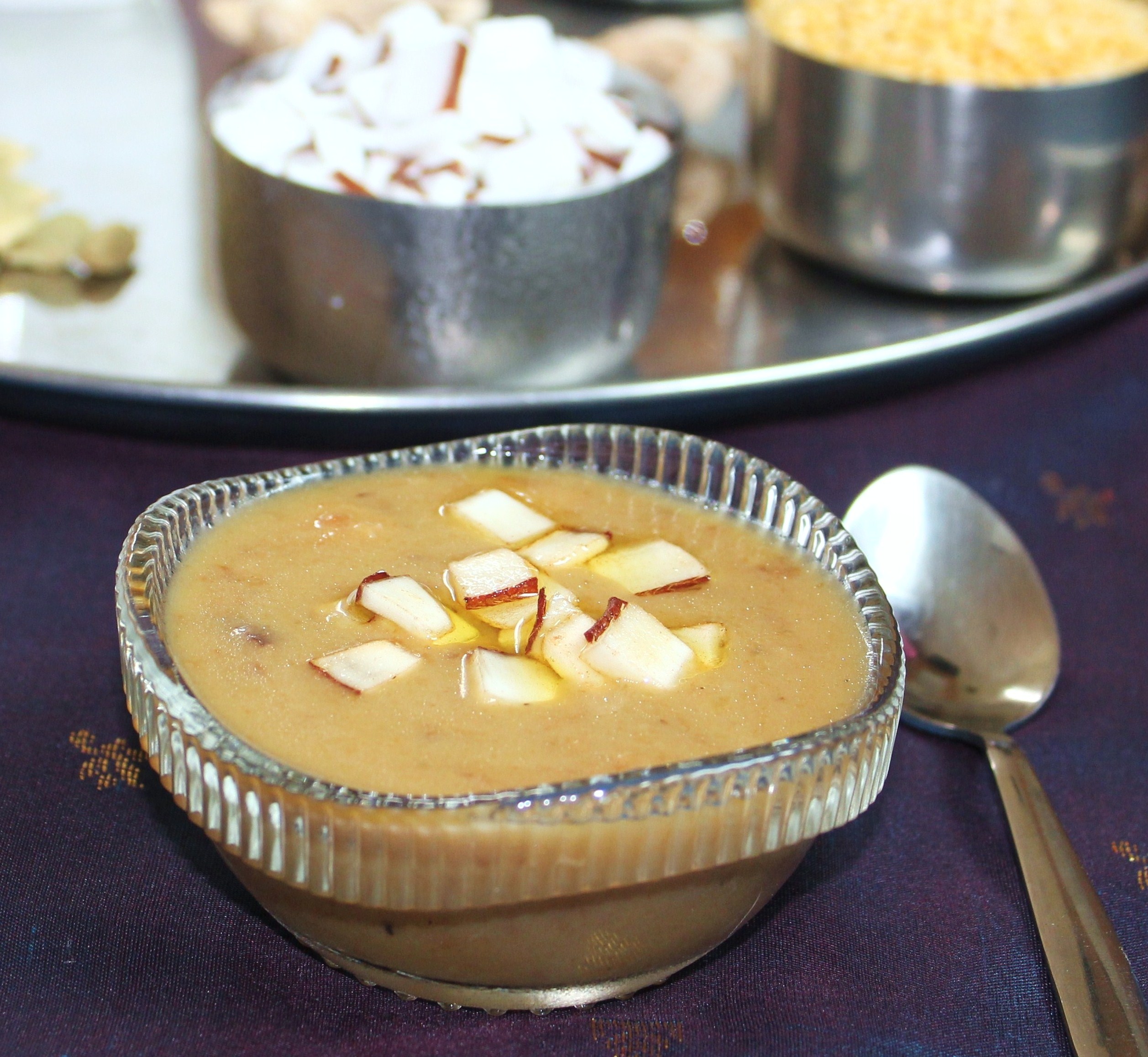
As usual, let’s enter another year with a sweet dish. This is one of my favourite payasams, of course next to Adai Pradhaman (https://dosaikal.com/adai-pradhaman-ada-pradhaman).J aggery and coconut milk make a sweet dish heavenly! This is one such payasam/pudding/kheer, with dehusked green gram. Generally, in payasams or any sweet dish, nuts are roasted or fried in nei/ghee to add richness and flavour. Here, traditionally, thinly cubed coconut pieces are fried in nei/clarified butter and added to the completed payasam. The coconut pieces can be added with fried cashewnuts. But, they can taste good all alone without the nuts too! Here, I have avoided the nuts and added fried coconut pieces alone.

I have seen aachi and amma always use chukku podi – dry ginger powder when jaggery is used in sweets. Adding dry ginger to jaggery helps in avoiding acidity and gastric problems. When the dish has coconut milk to make it a heavy intake, chukku podi/dry ginger powder would aid in easy digestion too!
 

Paasi Paruppu Payasam


IMG_1316
 

Ingredients (serves 4-6)

  • paasi paruppu/dehusked green gram – 3/4  cup
  • vellam/jaggery – 1/2 cup
  • water – 1/4 cup to dissolve jaggery
  • thengai pal/coconut milk – 1 and 1/2 cup
  • chukku podi/dry ginger powder – 1/2 tsp
  • elakkai podi/cardamom powder – 1//2 tsp
  • thinly cubed coconut pieces – 3 tblsp or lesser as per preference
  • nei/clarified butter – 2 tblsp


Method of Preparation

  1. In a pan, roast dehusked green gram till golden brown, no oil or butter needed
  2. In the same pan, fry coconut pieces in clarified butter till golden brown
  3. Cook the gram in pressure cooker with enough water till done; do not overcook
  4. While the green gram is getting cooked in the pressure cooker, dissolve jaggery in just enough water (1/4 cup). Strain it to avoid impurities
  5. Now on, the preparation is really easy and simple – Strain jaggery into the pressure cooker with cooked lentil
  6. Add dry ginger powder and cardamom powder and bring the mixture to a slightly thick consistency; if the cooked lentil is already thick and with very less water and the addition of jaggery has made it thicker, not to worry – add very little water if needed. This might help blending jaggery well with the lentil
  7. When jaggery is well blended with cooked lentil, add coconut milk. I used canned coconut milk
  8. If the payasam is too thick in consistency, add 1/2 cup water to dilute it.  If one likes the thicker version, can avoid adding more water
  9. After coconut milk is added, too much cooking and boiling might make coconut milk curdle due to the presence of jaggery
  10. Bring to a single boil and switch off the stove
  11. Transfer to a serving bowl and mix the fried coconut pieces with nei/clarified butter
  12. Serve hot.


Note:

  1. Do not roast the lentil too dark as the payasam would lose perfect colour.
  2. Coconut pieces should be really thin.
  3. Keep track of the amount of water in cooking the lentil and soaking jaggery… too much water would result in too much cooking time in reducing the lentil-jaggery mixture before adding coconut milk.
  4. The quantity of jaggery here is for a mildly sweetened payasam. Those who prefer more sweetness in their payasam can add a little more jaggery
  5. The most important thing is the coconut milk. Adequate care should be taken not to curdle the milk.
  6. REHEATING: Do not reheat the payasam directly on stove as it may curdle or the lentil would get burnt at the bottom. Heat slightly in microwave or Boil water in a vessel and place a steel bowl of payasam to heat up.


IMG_1297
 

Wait..Wait…

This is not as complicated as the points mentioned above! But actually, just take care of the coconut milk alone.

If one notices, I have emphasised a bit too much on water. It is just to say that one need not panic if lentil has less water or more water. Add more water wherever needed and incase of excess water, boil it to bring to required consistency. Just one thing to remember, all alterations of boiling should be before coconut milk is added.

If lentil is overcooked, not to worry. This payasam tastes good with overcooked lentil too! Personally to me, doesn’t make big difference. The taste of coconut milk with jaggery takes care of everything.

One last thing….
Forgot to reduce water before adding coconut milk…… not to worry again!  Instead of a bowl, serve in a tumbler/glass as we do at home in Tamilnadu!!

A Visit So Special!

Isnt it a wonderful feeling to go to your birth place!

My train journey started in Muthunagar Express, also called or nowadays often called Pearl City Express, taking us to Thoothukudi, which is believed the Portuguese converted to Tuticorin for easier tongue twisting(?!).

A short detail on the city –


History of Port


In Literature, the earliest mention has been made in 88 AD in Greek work “Periuplus of the Erythrean Sea”. In AD 124, the earliest reference was made by Ptolemy who has observed – “Country of Kareoi, in the Kolkhic Gulf, where there is a pearl fishery, Sosikourai and Kolkhoi, and emporium at the mouth of the river Solan”. There is little doubt that Ptolemy’s Sosikuorai is no other place than Tuticorin. From AD 200 to AD 1000, no records pertaining to Tuticorin are available. http://www.vocport.gov.in/port_history.aspx


the sea


Rulers in various centuries


The 7th to 9th Century AD were ruled by Pandya Kings and 10 to 12 Century AD it was ruled by Chola Kings. There is a mention that there was a well guarded and natural Harbour where ships could anchor in safety in Tuticorin. Portuguese, Dutch and British ruled India in different time frame. Portuguese sailed into Tuticorin in 1532. In 1649, Dutch captured Tuticorin. Many European visitors particularly English travelers have meticulously recorded their impression of Tuticorin in 17th Century. The impression recorded by Philip Baldaeus, an English missionary, who visited Tuticorin in 1675 are graphic and valuable. The lucrative pearl fishery that flourished under the Dutch is vouchsafed by Jean De Lacome. The English East India Company took over the administration of Tuticorin and its other dependent cities like Kayalpattinam, Punnakayal, Manapad etc. on the 1st June 1825.http://www.vocport.gov.in/port_history.aspx


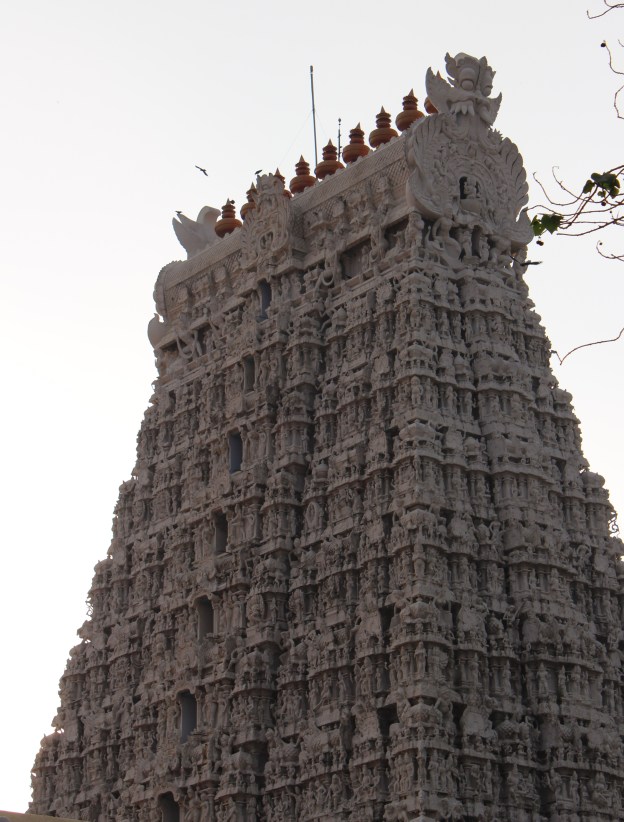
the temple Tiruchendur


The Name – Thoothukudi


Originally denominated as ‘Thirumandhira Nagar’, the name of this city was transformed to Tuticorin by the Portuguese who could not pronounce the actual name. Tuticorin is called ‘Thoothukudi’ in Tamil. This term finds its origin from two Tamil words, Thoothu and Kudi. Thoothu means to dig and Kudi means to drink. As this interurban doesn’t have rivers, the people living there have to dig wells and fetch their drinking water. As the other interpretation goes, Thoortha means ‘the land recovered from the sea’ and Kudi stands for a colony or a human settlement. So, the combination of these two terms means a colony that is established on the land which is recovered from the sea. http://www.indiahotels.com/tuticorin/362-tuticorin-tourism


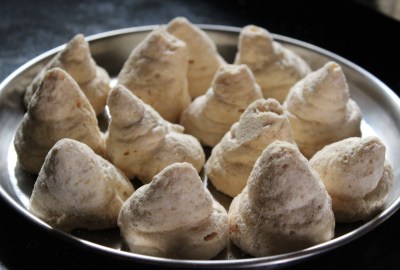
thoothukudi macaroons made of cashews, egg whites and sugar!


and the french macarons


and the various options


This is the city where I started my early schooling, later after we shifted to Mainland Madras aka Chennai, Thoothukudi was our most favourite holiday destination. The reason was purely, solely one… Thaatha Veedu- grandfather’s house.

Nostalgia! I truly relish!

As kids, we would wait for the last day of the school academic year. Not to just enjoy the start of the vacation, but to catch the train on the same evening to ‘thaatha veedu.’ Wasting even a day in Chennai was not accepted!

Today, when the train crossed Madurai, started my count of speciality foodies and goodies, exclusive to those towns.


  • Madurai Malli – jasmine flowers and idlies (rice cakes) as soft and white as jasmine;
  • Kadambur poli -sweet rotis;
  • Maniyaachi  murukku – savory;
  • Kovilpatti kadalai mittaai  – groundnut chikki and inji maraappa – sweetened ginger cubes;


Not in the train route, but closer to Thoothukudi,

  • Srivilliputhur paalkova – sweet milk khoya;

and the very special –

  • Tirunelveli halwa – sweet made of wheat flour and lots of nei – clarified butter;

and many more I have missed..


Special Features


The salient features of the district include its lengthy,curvy and scenic sea coast which was an international cynosure in the days of yore for its pearl fishery; beautiful coastel villages with their sacred temples, churches and mosques like Tiruchendur, Manappadu and Kayalpattinam respectively, Adhichanallur, one of the cradles of the ancient civilizations, Korkai, an ancient port of the Sangam Pandyas,Kayal, the confluence of the river Tamiraparani with the Bay of Bengal,one of the five illustrious rivers of Tamilnadu,

Panchalamkurichi, the capital of Veerapandiya Kattabomman, an early martyr, for the cause of freedom,

Ettayapuram, the birth place of the great poet Subramanya Bharathi,

Ottapidaram the home town of V.O.Chidambaram Pillai,who dared to sail ships as a measure to combat British imperialism;

Maniyachi, where Vanchinathan assassinated Ashe, the British Collector for this high –handedness against the leaders during Swadeshi Movement;

Great missionaries like G.U.Pope, Veeramamunivar, Caldwell and others who, besides their missionary work,contributed a lot for the development of Tamil language and literature and above all the enterprising and hard working people who now constitute a major trading community in the State. http://www.thoothukudi.tn.nic.in/profile.html


Coming to the goodies corner, Thoothukudi is known for its exclusive sweets – Macaroons, Mundhiri Halwa – Cashewnut Halwa; savouries like Omapodi, Karasevu, Mixture; and those very special bakery products – Plum Cake and various other biscuits!


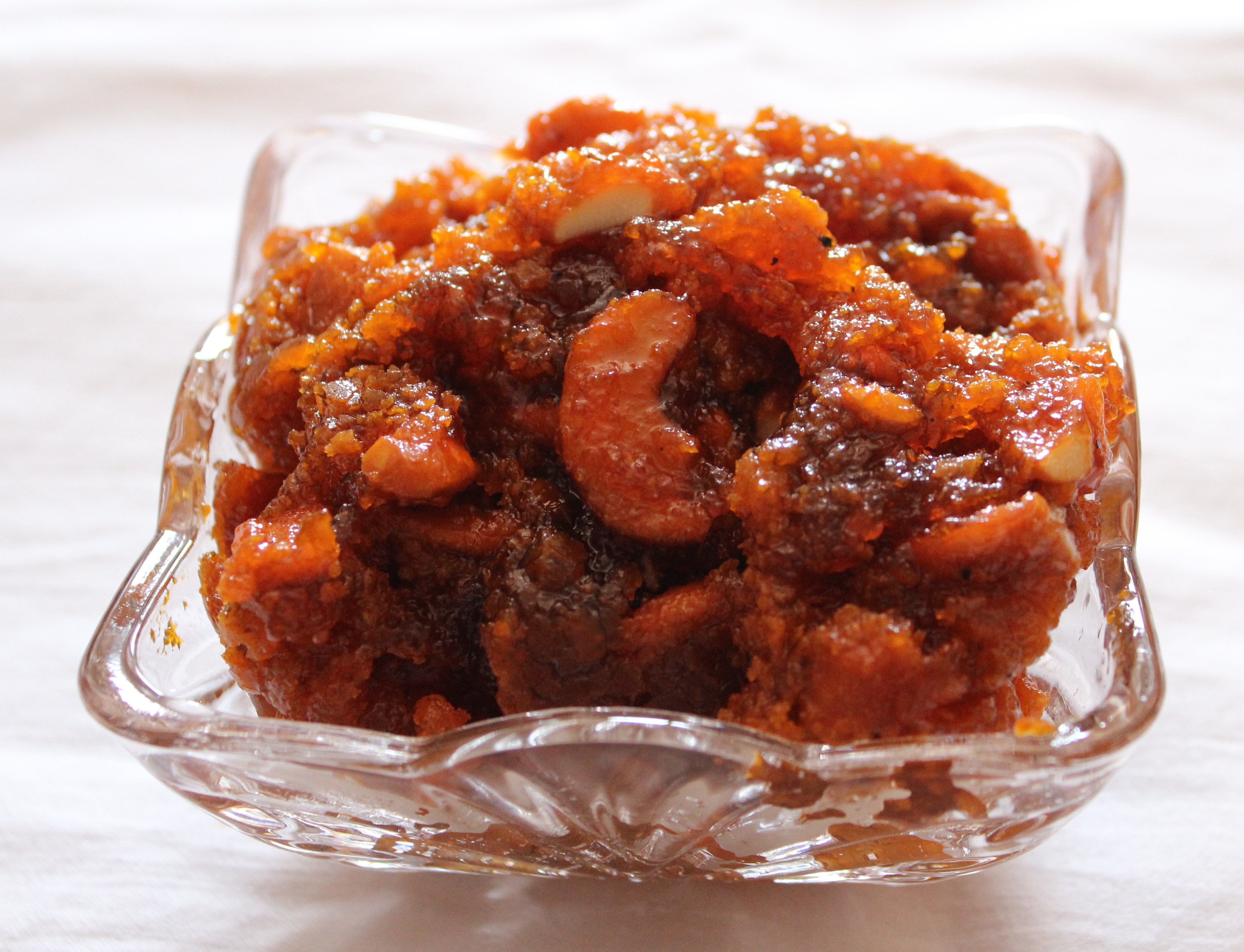
mundhiri halwa


My memory seems to drive me backwards.. At least some twenty years back!

There we arrive in Thoothukudi,  to meet all of nearly ten cousins, nine aunts, minimum of four  uncles and aachi and thatha (grand mother and grand father).   The palatial house is filled with laughter and giggle, chit chats and continuous cooking, eating and munching special goodies like halwa, macaroons, mixture, omapodi, Kara sevu and many more specialities of Thoothukudi.

The day starts with fresh milk milked from our own thatha veetu maadu .. Cows that belong to grandpa’s house! On Grandpa’s own cows read – https://dosaikal.com/2012/06/18/the-dutch-dairy/.

Ground floor, in the kitchen, all the ladies are cooking for almost thirty people per meal, amidst laughter and crazy gossips; we the youngsters climb up the stairs for some secret teenage talk…

Upstairs is a long house, in which some of the rooms are meant to store raw mangoes and guavas. The mangoes are kept in thick patches of straw to ripen faster.

The chat session starts after breakfast, then it continues with the search of ripe mangoes… as a munchy snack! We bend down to search for some ripe mangoes… Successfully pick a few.

Then it is time to wash, squeeze well with hands and make a hole on top and voala! Mangoes are ready. We enjoy those juicy, fruity, tasty mangoes (never count how many). We chat again till lunch…

There is a call from downstairs. We are asked to bring some (more) ripe mangoes for Thayir saadham (https://dosaikal.com/2011/12/22/thayir-saadham-mor-milagaicurd-rice-sun-dried-chillies/) or as lunch dessert… The search is on again in the big room. We pick the mangoes and proceed downstairs for lunch.

The same search holds good for guavas too! A few of us who would like guavas raw and the few others like me who would prefer ripe… The same straw patch – same search – same enthusiasm.. the fruits are different.

We were young enough for the search.. young enough for the munch and young enough for the non-stop munch to digest too!


kara sevu


I am brought back to reality, not by the train that stopped at Thoothukudi station, but by the voice of vendors in Kovilpatti Station,  who sell Kadalai Mittaai and Inji Maraappa, which is exclusive to Indian trains.

A short travel and we reached Thoothukudi. We entered Thatha Veedu – Grandpa’s House! I become a kid whenever I step into that house where i spent most of my vacation time as a little girl.


omapodi


A trip to Tirunelveli, place of my paternal grandparents and Tiruchendur – the famous Hindu Shore Temple of Lord Murugan used to always be part of the holiday agenda.

I did not want to miss that this time too.  We visited Tiruchendhur –  the sacred Temple of the Tamil God Murugan-

where he defeated the demon Sooran…

Where Kanda Sashti is celebrated at its best… (https://dosaikal.com/2011/10/31/paanakam-the-energy-drink-of-south-india/);


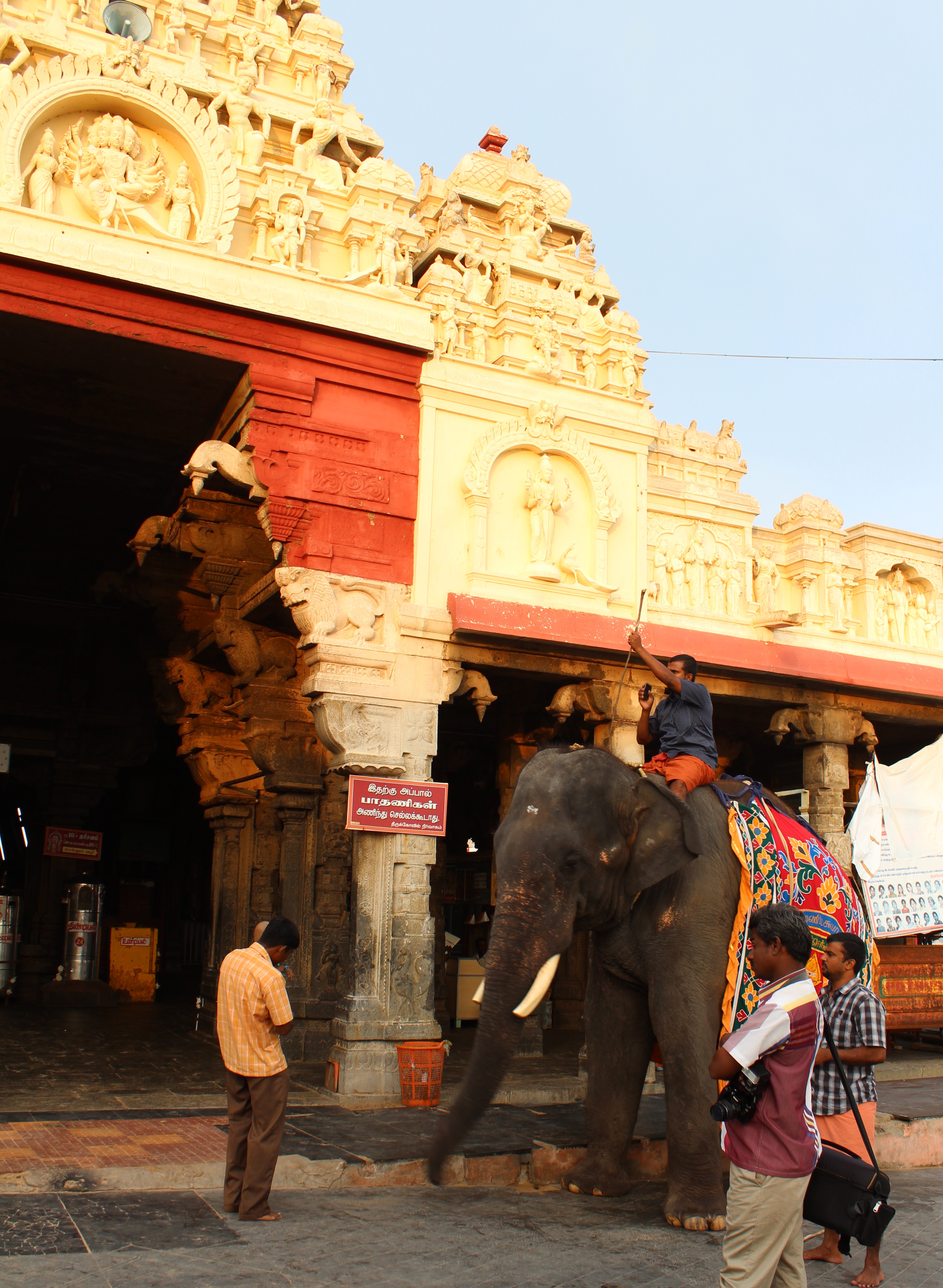
the temple premises


and the trademark elephant


Thiruchendur is one of the very few places one can get ‘cheppu chaamaan’ – wooden toys for kids…  Easy to play, less hazardous than plastic, has authentic south indian household utensils, wrapped in exclusive palm leaf baskets.

I was disappointed to find the cheppu chaamaan – wooden toys packed in plastic bags;

Another disappointment was that the number of utensils had drastically reduced.

But, thankfully the traditional puja basket, which has the offerings to Lord Murugan came in the same panai olai petti – palm basket!!

traditional puja basket


Got a wonderful dharshan at the temple and returned back to Thoothukudi. Got to the train station with innumerable thoughts and nostalgic emotions… And got to the next destination to meet more near and dear ones!

Our travel continues…

Nanri! – dosaikal completes a year!


Nanri is a very special word in Tamil language…it means Thankyou.

Today,  ‘dosaikal’ completes a year, it is truly a very happy feeling.  As a child grows up, parents remember the elated emotion when the child was born… but from a new born to infant, infant to toddler, toddler to pre-schooler, pre-schooler to schooler and an adolescent – the transformation is as fast as a blink.

It was exactly a year ago that I wrote my first article in dosaikal and now it is a full circle of 365 days! Every year on my birthday.. it is usually a mixed feeling – one of celebration and other of growing older. Ofcourse, the former overrules the latter!

With dosaikal’s birthday – it is again a kind of mixed feeling – one of jubiliation and delight and the other of more responsible writing.

My heartfelt thanks to every reader who has lent his/her valuable time to spend some time in by blog. Their patience to read and come back to read again means a lot to me.

My special thanks to my subscribers who have given me the confidence, enthusiasm, vigour and motivation to express my passion in words. That is why, this ‘NANRI’ is not a simple word – it is a special word and a special emotion.

Amma holds a special position. She explains the perfect methods of making a delicacy and I try completing it to atleast half perfection. A very special nanri to Amma and Aachi, my true inspirers.


As a proud Tamil person, I take the support of ‘Thirukkural’ to convey my gratitude –


Thirukkural is the masterpiece of Tamil literature with the highest and purest expressions of human thought. It is written in the form of couplets (two line poems) expounding various aspects of life. It contains 1330 couplets, divided into 133 chapters of 10 couplets each.

Thirukkural was written by Thiruvalluvar. We find Thiruvalluvar as a moral philosopher, political scientist and master of public administration in the first two parts of Thirukkural. We find him to be a creative artist in the third part, depicting the fascinating aspects of lovers.

Thirukkural’s immortality and universality are unquestionable. Its ethics and values are applicable to all religions, countries and time. It has been translated in over 60 languages of the world.

http://www.tn.gov.in/literature/thiruvalluvar/thiruvalluvar.htm


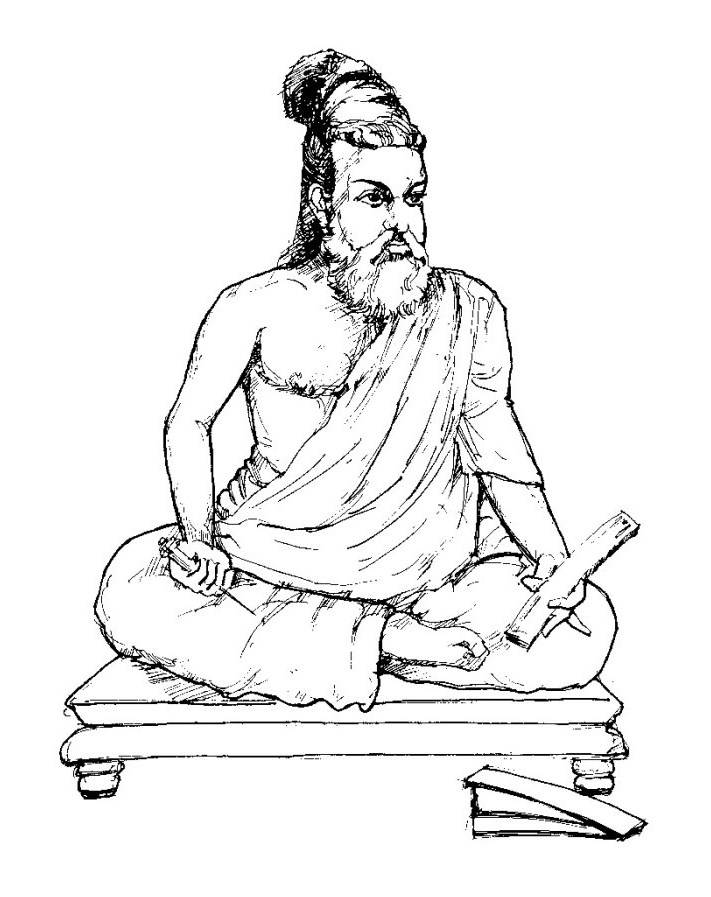
picture of thiruvalluvar

picture courtesy: http://s44.photobucket.com/albums/f11/ponnusamychandran/Line%20drawing/?action=view&current=Thiruvalluvar.jpg&sort=ascending


It is generally reckoned that Kural was composed during the Sangam Period of literary development in Tamil (500-200 BC).

http://acharya.iitm.ac.in/tamil/kural/kural_ref.php


Among the 1330 couplets, kurals 101 to 110 under the title ‘sei nanri aridhal’ or Gratitude talks on importance of gratitude.


This one is for my beloved friend Oz, who helped me in starting this food blog. A fine, popular and sort after food blogger (www.kitchenbutterfly.com) herself, took the pain of explaining me the nuances of blogging. Infact, I registered this blog with Oz helping me in the procedures. Thankyou Oz!

Kural 102

காலத்தி னாற்செய்த நன்றி சிறிதெனினும்
ஞாலத்தின் மாணப் பெரிது.

kaalathi narsseitha nanri siritheninum

gnalathin mana perithu


Translation:

A timely benefit, -though thing of little worth,
The gift itself, -in excellence transcends the earth.

Explanation:

A favour conferred in the time of need, though it be small (in itself), is (in value) much larger than the world.

Nanri Oz!


This one is for all my subscribers and readers –

Kural 103 

பயன்தூக்கார் செய்த உதவி நயன்தூக்கின்
நன்மை கடலின் பெரிது.

payanthookaar seitha uthavi nayanthookin

nanmai kadalin perithu.


Translation:

Kindness shown by those who weigh not what the return may be:
When you ponder right its merit, ‘Tis vaster than the sea.

Explanation:

If we weigh the excellence of a benefit which is conferred without weighing the return, it is larger than the sea.

Nanri Friends!


Thanking my husband and lovely daughter … would be like thanking myself… but these verses of Thiruvalluvar explain the beauty of the relationship.

Kural 45

அன்பும் அறனும் உடைத்தாயின் இல்வாழ்க்கை
பண்பும் பயனும் அது.

Anbum aranum udaithayin ilvazhkkai

panbum payanum adhu.


Translation:

If love and virtue in the household reign, This is of life the perfect grace and gain.

Explanation:

If the married life possess love and virtue, these will be both its duty and reward.


All verses of Thirukkural, Translation and Explanation taken from http://www.thirukkural.com/


Nanri! Thankyou! Keep encouraging me to communicate my passion in words !


Thai Pongal – The Harvest Festival and Sarkkarai Pongal

Pongal is the harvest festival of the Tamils. After the tamil month – Maargazhi, comes Thai (not pronounced as in Thailand. Pronounced as in thigh). It marks the end of the harvest season.  According to the tamil seasons – the month of Thai falls in Mun Pani Kaalam – early winter.

These are the tamil seasons classified in the literary works-

  • Ila Venil Kaalam – Milder Hot Season – The months of Chithirai and Vaigasi (mid april and mid june)
  • Muthu Venil Kaalam – Hot Summer – The months of Aani and Aadi (mid june to mid august)
  • Kaar Kaalam – Cloudy/Rainy Season -The months of Aavani and Purattasi (mid august to mid october)
  • Koothir Kaalam – Cold Season – The months Aippasi and Kaarthigai (mid October to mid December)
  • Mun Pani Kaalam – Early Winter/Dew – The months of Maargazhi and Thai (mid December to mid February)
  • Pin Pani Kaalam – Later Winter/Dew – The months of Maasi and Panguni (mid February to mid april)

(http://sangamtamilforeignscholars.wordpress.com/robert-butler/)


Pongal cannot be considered a religious festival, though it is more popularized as a Hindu Festival. It can be called as a thanks giving celebration – the farmers thank the Sun God for a bounty harvest and thank their cows for their milk and the bulls who helped them plough their fields and pull their carts.

People living in cities are not really connected to this professional affair. With much population moving towards towns and cities for non-agriculture based livelihoods, what keeps the tradition still alive?

The quintessential grain of the people of south india – ‘Rice’ is needed for making Idli, Dosai, Cooked Rice, Payasams, Savouries and many more food items. Might be this connection between those farmers and city dwellers keeps everyone celebrate pongal alike. When the farmers thank their cattle and nature for helping in their bountiful harvest, people in other parts celebrate Pongal as a thanks giving festival to  the Farmers who provide them with the incomparable and unsubstitutable RICE, other crops and vegetables.


Pongal is a four-day affair.

1. The first day – the last day of the month of Maargazhi – this year (2012) January 14 – is called Bhogi Pongal and is the day of cleaning.  All old unwanted things are shed away. People white wash their houses and new Kolams – traditional drawings on the floor with rice flour and the house gets ready to celebrate Pongal the next day.


Kolam  from free pongal wall papers 


All the houses from the richest to the humblest are thoroughly scrubbed and whitewashed. Homes are cleaned and decorated with “Kolam” – floor designs drawn in the white paste of newly harvested rice with outlines of red mud. Often pumpkin flowers are set into cow-dung balls and placed among the patterns. Fresh harvest of rice, turmeric and sugarcane is brought in from the field as preparation for the following day. http://www.123pongal.com/pongal/festival/bogi-festival.html


2. The second day is Thai Pongal. The day of Pongal, which falls on January 15, 2012 is the first day of the month of Thai. The Tamil saying goes –
‘Thai pirandhal vazhi pirakkum’ – meaning when the month of Thai is born,  good things start coming into everyone’s life.

Pongal is also called Thai Thirunal and Thamizhar Thirunal – which means the festival of the Tamils – beyond religions.

Pongal means boiling or spilling over in reference to rice or milk. It is celebrated in cities on the gas stoves in the kitchen. In villages and towns, mud stoves or brick stoves are used to cook the newly harvested rice on man chatti/earthen pots or vengala paanai/brass pot. The stove is kept on the traditional kolams drawn on bogi night and pongal – plain rice and sweet jaggery rice is cooked not in the kitchen but in front of every house – thanking the Sun God.


pongal wishes from free pongal wall papers


The Vengala Paanai used only for Pongal purpose, is also called the ‘Ponga paanai’ is given to every bride by her parents and the first pongal after marriage is called ‘Thalai Pongal’ and the new daughter-in-law celebrates Pongal with her new Ponga paanai. After a few years of usage, unfortunately now, mine lies back home and so I use the normal pressure cooker in kitchen to make Pongal.

There would be two Paanais/vessels. One with plain white rice and water and the other with plain white rice and when it boils, jaggery is added to make Sarkkarai Pongal – the sweet jaggery rice – the delicacy associated with the festival. When the new rice boils and spills over the paanai, women of the house say – ‘Pongalo Pongal’ in chorus.

Maavilai thoranam/decorating houses with fresh mango leaves, Manjal Kizhangu/Fresh turmeric with the fresh leaves tied to the Pongal Paanai, Karumbu/Sugarcane and Panankizhangu/Palm Root are certain things associated with Pongal and those which I miss a lot during these special days, not to mention the fresh Banana leaves.

Not only Sarkkarai Pongal, the whole feast meal consists of those traditional vegetables – the normal four coarse meal – ilai saapadu – is enjoyed by the whole family. Sambar, Rasam and Yoghurt being normal, Avial – a vegetable dish with coconut gravy – using raw banana, egg-plant, pumpkin, drum sticks and many other root vegetables is the highlight of the day. By the end of the day, the tongue would have lost its taste co-ordination due to the unlimited intake of sugarcane!

The strong and courageous use their strong teeth to peel the skin of sugarcane – enjoying the real taste of course. The more pampered ones like appa – my father – would have their share of sugarcane cut to bit size pieces by his mother – aachi . The sight of my then sixty-five to seventy year old aachi sitting down on the floor with her arivalmanai – colloquially aruvamanai – the all in all traditional metal knife with a base – which cuts, chops and grates coconuts, and cutting sugar cane for appa is still framed in my mind. Even now, she is ready for it, but we don’t let her do it!

For photo of Aruvalmanai – see – http://www.flickr.com/photos/techno_freak/512113871/


3. The third day is Maatu Pongal – the day to thank the cattle. When in Thoothukudi in my maternal grandparent’s home, since there were cows, maatu pongal would be a colorful affair. Mamas/Uncles would paint the horns of cows and calves in different colours and we youngsters would tie colorful flower garlands to their necks. Thaatha would bring the bullock cart from his farm – and when we were very young, would even taken a ride in the bullock cart. That diminished later, and only painting horns and worshipping them continued till there were cows at home.

This day is also famous for Manju Virattu or Jallikattu – the bull fight – the tradition that is regarded to be more than 2000 years. In ancient days, parents of a girl would give their daughter to a courageous man who tamed the bull.


Jallikattu is more than 2,000 years ago old. Good proof for it are cave paintings, showing men chasing bulls, that were found in Karikkiyur village located in the Nilgiris district. Long time ago Jalikattu used to be a way for local women to choose their husbands. http://traditionscustoms.com/strange-traditions/jallikattu


4. The fourth day is Kaanum Pongal. It is the day of meet and greet. People visit their relatives and friends on this day. This is also a day of family picnic with ‘kootanchoru’ – the mixed rice packed by aachis and ammas for everyone for lunch. My maternal grandfather – thatha would drive us – the grandchildren – to River Thamiraparani in Vallanadu in Tuticorin district. We would swim in those cold waters – or literally warm water – nearly for three to four hours enjoying kaanum pongal picnic. Thatha made it a thatha and peran/pethigal – Grandfather-grand children day. When we were older, thatha took us again – just to see the water which had turned ankle depth – that made us really sad.


 Now for the true essence of Pongal, Sarkkarai Pongal!


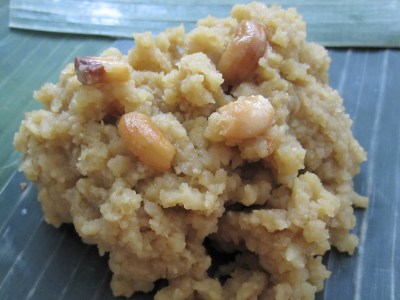
 Sarkkarai Pongal

Ingredients (serves 4)

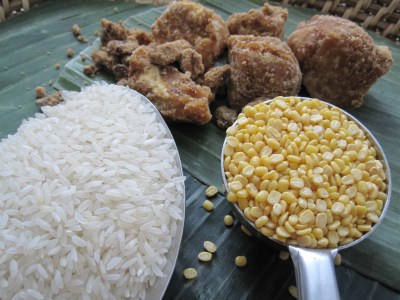
  • pacharisi/raw rice – 1 cup
  • paasi paruppu/split green gram/moong dhal – 1/3 cup
  • grated vellam/jaggery/gud – 1 1/2 cup
  • yela podi/cardamom powder – 1/2 tsp
  • nei/clarified butter/ghee – 4 tbsp
  • mundhiri paruppu/cashew nuts – 3 tbsp


Method of Preparation

  1. Cook rice and lentil in enough water in a pressure cooker (I used 5 cups for my rice quality)
  2. Mash well and keep aside
  3. Boil jaggery in 1/4 cup water till it dissolves and filter it straight into cooked rice and lentil
  4. Add cardamom powder and cook till jaggery syrup mixes well in rice and pongal reaches a thick consistency
  5. In a separate pan, heat ghee and fry cashew nuts
  6. Pour into Sarkkarai Pongal and mix well till everything blends well
  7. Sarkkarai Pongal is ready.


Note:

  1. The quantity of jaggery can be reduced if preferred
  2. Though amma prepares sarkkarai pongal with only rice as in traditional pongal paanai, this is the standard pongal cooked at all times – with split green gram mixed to it
  3. For an even better traditional taste – a bite of banana and coconut with a spoon of pongal tastes heavenly for some (I am one among those)
  4. For those with no sweet tooth or less sweet preference, but like to taste pongal – might try this one – have the sweet pongal with some sambar or coconut chutney.


5. January 16 of every year is also celebrated as Thiruvalluvar Naal/Thiruvalluvar Day. Thiruvalluvar is the author of Thirukkural. This would give a clear picture of the man and his contribution to Tamil Literary Works.

.

Thirukkural is the masterpiece of Tamil literature with the highest and purest expressions of human thought. It is written in the form of couplets (two line poems) expounding various aspects of life. It contains 1330 couplets, divided into 133 chapters of 10 couplets each

Thirukkural was written by Thiruvalluvar, who is believed to have born 30 years before Jesus Christ. The Tamil Calendar is dated from that period and referred as Thiruvalluvar Aandu (Year). We find Thiruvalluvar as a moral philosopher, political scientist and master of public administration in the first two parts of Thirukkural. We find him to be a creative artist in the third part, depicting the fascinating aspects of lovers.

Thirukkural’s immortality and universality are unquestionable. Its ethics and values are applicable to all religions, countries and time. It has been translated in over 60 languages of the world. http://www.tn.gov.in/literature/thiruvalluvar/thiruvalluvar.htm

Maargazhi Maadhathil Ven Pongal/Ven Pongal in the month of Maargazhi

 The Tamil Calender starts with Chithirai Maadham which starts from 14th of April. Chithirai is the name of the month and maadham means month. Chithirai, Vaikasi, Aani, Aadi, Aavani, Purattasi, Aippasi, Kaarthikai, Maargazhi, Thai, Maasi, and Panguni are the twelve tamil months. Among all the months, in hindu religious terms, Maargazhi maadham- (mid december to mid january) is considered auspicious – especially to the followers of Lord Vishnu. But mostly, irrespective of the sects, we can see most of the young girls singing Thiruppavai in temples.


Andal 


Thiruppavai

Thiruppavai is a collection of thirty songs on Lord Vishnu, sung by Andal – one of the twelve Alvars of the Bhakthi Movement in Tamil Literature. Alvars were Vaishnavite Saints as Nayanmars were Saivaite Saints. The quote below gives a better view on Alvars and Bhakti Movement.


Andal is one of the most extraordinary personalities in religious history. She is known in her native tongue of Tamil as an Alvar, one who is “immersed” in the depths of enjoyment of God, the omnipresent mysterious One. Tradition reckons 12 Alvars, of which Andal is the only female. Between the fifth and ninth centuries, in the Tamil-speaking region of South India, these saints revitalized the Indian religious milieu, sparking a renewal of devotional worship throughout the subcontinent. Traveling from place to place, from temple to temple, from holy site to holy site, they composed exceedingly beautiful poetry to their Divine Beloved, Vishnu, as an expression of their love for Him. Anyone can see why their poetry was so attractive; at once both impassioned and philosophical, their words cut across all barriers of caste and class, attracting all to their faith. In doing so, they sculpted a new religious heritage of intensely emotional bhakti, or love of the Divine, whose impact is still felt today in the Indian religious life. Andal, whose life and poetry are celebrated every December-January, is the most visible contributor to this heritage. http://www.ramanuja.org/sv/alvars/andal/


Andal observed Paavai Nonbu – the simple norms of which are explained in Thiruppavai, to attain Lord Vishnu as her husband. Andal imagines herself as a cowgirl, wakes up all the girls in Aayarpadi/hamlet of cowherds,  early in the morning, to proceed towards the river bed for the early morning rituals of bathing the Lord and worshipping the Lord in tamil hymns. It used to be believed that if young girls observed Paavai Nonbu and sang Thiruppavai – the sacred hymns of Andal, they would get good husbands. Andal has also written Naachiyar Thirumozhi.

Beyond the marriage connection, I think singing Thiruppavai in temples has become more of  religious inclination and healthy spiritual introduction for the young in the later generations. The concept of waking up early in the morning, having a fresh shower, collecting all our friends and proceeding towards the nearby temple to sing Thiruppavai still remains fresh in my mind and heart.

The thought of Maargazhi Maadham brings in wonderful memories of mist filled early mornings, the cold shower, ringing the bells of neighbourhood girls, then walking together to the temple and singing Thiruppavai… not to forget the big colourful kolams/traditional rangolis of south india,  in front of every house.

So, the day would start at the temple at five in the morning. We would wake up at four o’clock, have a shower and thanks to a lenient amma, have a glass of hot milk and would run to call our friends. This feels so tiring today! But it used to be really interesting those days.  Every morning all the thirty stanzas are sung in a group and at the end, stanza of the day is sung.

After some food for thought, there is always food for the starving tummy! As we finish singing, we collect your Prasadham – generally piping hot Ven Pongal in Dhonnai. Dhonnai is the ever special disposable cup made of palm leaves. Ven pongal is the mildly pepper spiced rice and lentil dish for those young ones who have been starving nearly for two hours singing thiruppavai.

Ven Pongal has never been so tasty… may be the spiritual and literary singing made it a well earned treat! The dhonnais are so easy to dispose and give an authentic flavour to the ven pongal. The time is nearly half past six. The morning wouldn’t be over with this. After Vishnu Temple, then is the turn of Shiva temple. We move on to the nearby shiva temple – for me it used to be the Rathnagireeswarar temple in chennai. It is the time to wake up Lord Shiva with Thiruppalli Ezhuchi and also sing Thiruvembaavai. Thiruppalli Ezhuchi and Thiruvembaavai are written by Manickavaasagar – one of the sixty three saiva nayanmars or saints and one of the four main saints of Saivism.


‘Few of the world’s biographies are more interesting than that of this man of rare genius.’ says G.U. Pope, of Manicka-vachagar, (660 – 692 C.E.) the fourth of the four grandmasters. http://www.krishnamurthys.com/profvk/WOVpage11.html


We have some more prasadham in the Shiva temple- generally puliyodharai/tamarind rice in the disposable dhonnais and walk back home to get ready to go to school. From where did the energy come to wake up early as four and come back nearly at eight, after four hours of spiritual practice in a very playful and interesting way – then proceed towards school for a whole seven hours of education…. I suppose the month of maargazhi is magical! Truly the tamil saints have made literature and religion a part of a healthy life style for generations now.

It is kind of living in the present with the essence of the rich literary past. Today, priorities have changed and the world is slipping into a different culture. This new culture is to hang on to the well spread branches, than clinging on to the roots. This concept of glorifiying the mesmerising past would be minimalised to nothing, if not for those who still believe in the strong roots.

But, beyond the roots and branches, Venpongal (spiced lentil rice), Sarkkarai Pongal (jaggery rice) or puliyodharai (tamarind rice) is still the most sort after things in any temple, next to the deity (or sometimes more than the deity).


So now it is ven pongal time!

The word Pongal as a verb means to boil or sometimes to cook in tamil. The spilling over of boiled milk is always referred to the verb pongal. As a noun, it is Pongal – the festival and Pongal – the food. The festival PONGAL  – the harvest festival of the tamils falls in mid january when the new tamil month Thai starts. We shall talk about it in the forth coming posts.

Now, to Ven Pongal – the rice and lentil meal! Venmai – the word from which ven pongal comes means white. The sweet pongal or sarkkarai pongal is dark brown in colour due to the jaggery in it. Ven Pongal, the salted, spiced meal is not exactly white but a little lentillish in colour. This is a wonderful breakfast food – especially on cold or rainy days – spiced with black pepper, ginger and cumin seeds, it works as a cold/cough reliever. All these and the added cashewnuts in ghee makes ven pongal the most favourite breakfast dish after idli or dosai in tamilnadu.


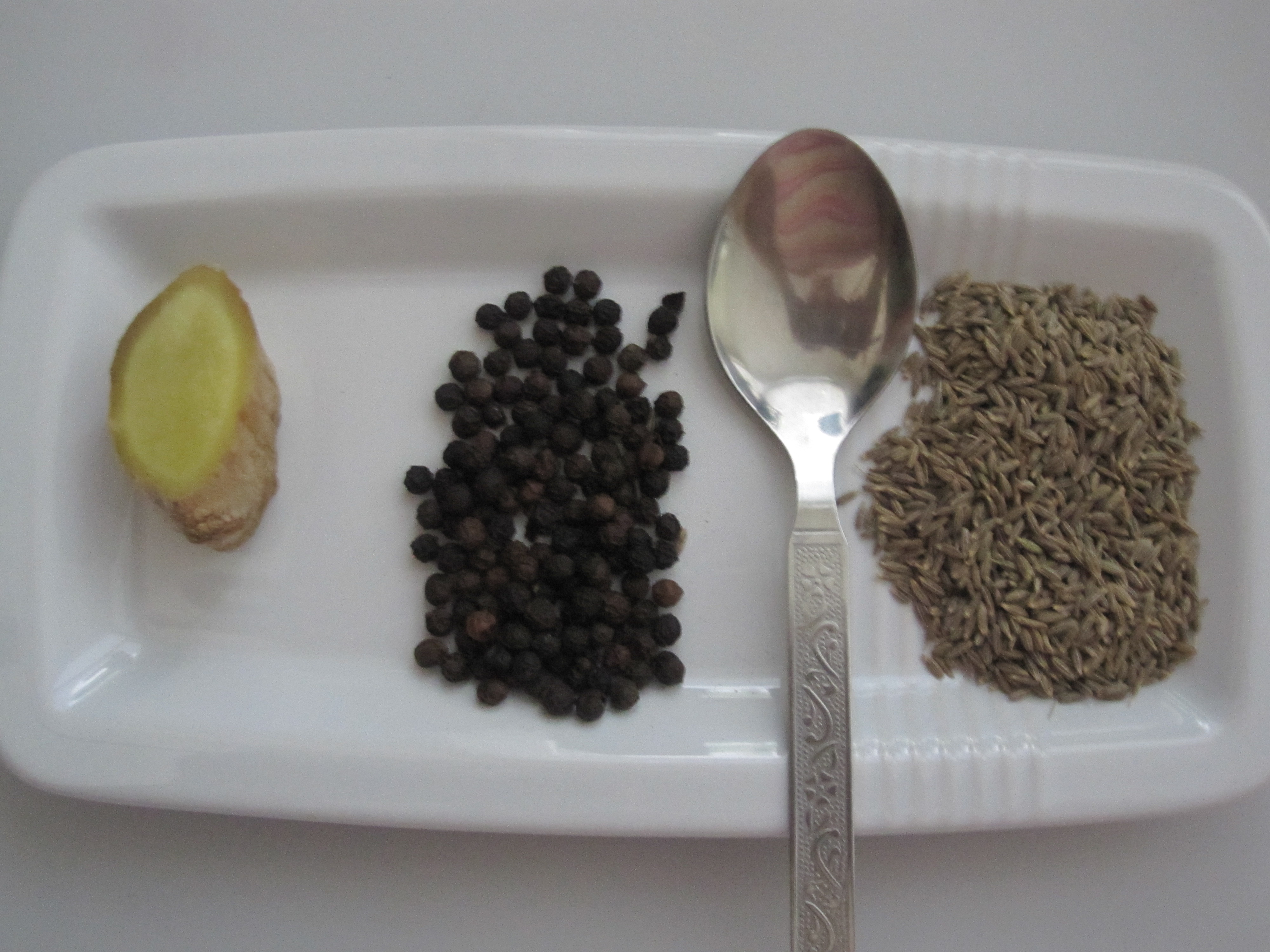
the spices


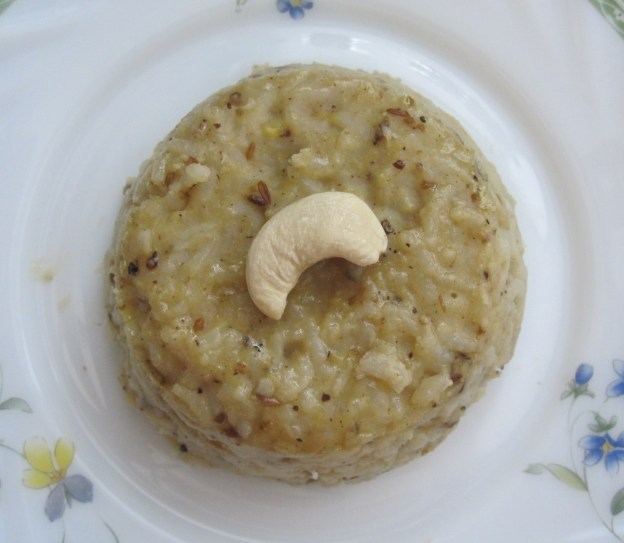
Ven Pongal

Ingredients (serves 3)

  • paccharisi/south indian raw rice – 1 cup
  • paasi paruppu/split greengram-yellow lentil/moong dhal – 1/2 cup
  • water – nearly 6 cups (to slightly overcook rice and lentil together)
  • salt – as needed
  • whole black pepper – 2 tsp
  • grated ginger – 1 tsp
  • cumin seeds – 2 tsp 
  • nei/ghee/clarified butter – 2 tbsp
  • cashew nuts – 2 tsp


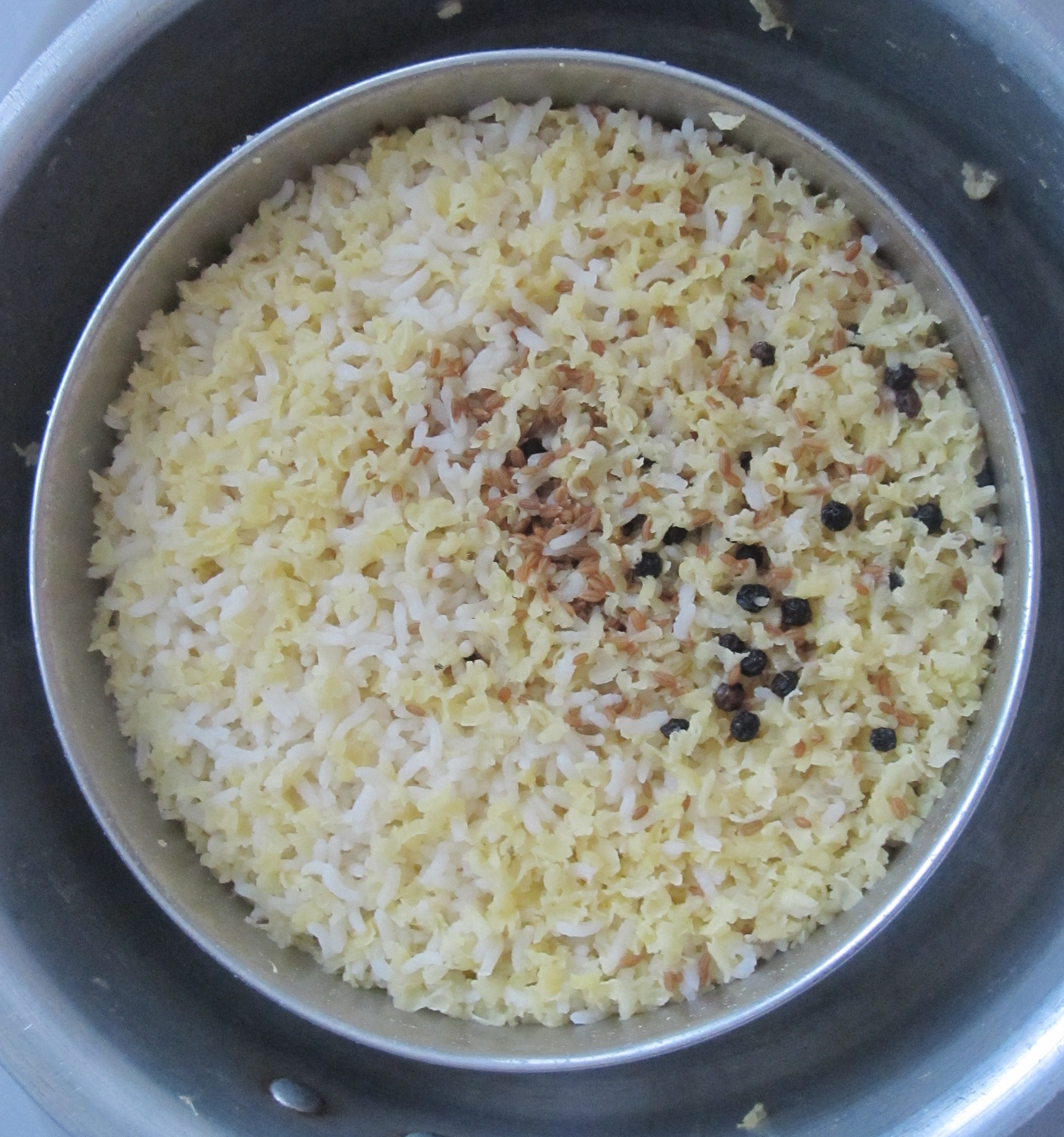
rice and lentil cooked in pressure cooker with cumin seeds and whole black peppers


Method of Preparation 

  1. Wash rice and lentil together
  2. Add water, black pepper, cumin seeds and salt and cook till very soft
  3. For seasoning, heat ghee in a kadai – add cashew nuts and fry till golden brown
  4. Mix into the rice and lentil preparation
  5. Serve hot with coconut chutney (https://dosaikal.com/2011/09/20/thengai-chutney-coconut-chutney/), sambar or kathirikkai gothsu/eggplant gothsu.


ven pongal with thengai chutney


Variation

Ven pongal is always cooked with whole black pepper. Most of the kids and some elders would keep the whole black pepper aside due to the spice aspect of it. Dry grinding the spices and blending it well in the rice avoids wastage of spices and helps in better utilisation of the goodness of the spices. This way, pongal is more spicy and a very good home remedy for cold and cough. This also gives the taste of  ‘kovil ven pongal’ or the ven pongal served in temples. While making in this method, black pepper can be reduced to 1 tsp.

  1. Cook rice and lentil in salt and water with 1 tsp cumin seeds and 1 tsp whole black pepper
  2. Coarsely dry grind 1 tsp cumin seeds, 1 tsp black pepper and grated ginger and fry in gingelly oil/ghee
  3. Fry cashew nuts separately in ghee
  4. Mix spices and nuts together into rice and lentil and serve hot.


ven pongal with murungaikkai sambar/drumstick sambar 


Note

  1. Cook rice and lentil in more than normal water as it would turn very hard in very less time
  2. Ven Pongal is always served hot and the glow of ghee is a compulsory requisite while serving for better taste
  3. If Pongal has turned out little thick/hard, hot water with little salt can be added and brought to right consistency while serving
  4. South Indian Pachirisi or raw rice is preferred as other starchy rice varieties would make ven pongal sticky.

Thirukkaarthigai – Ancient Festival of the Tamils

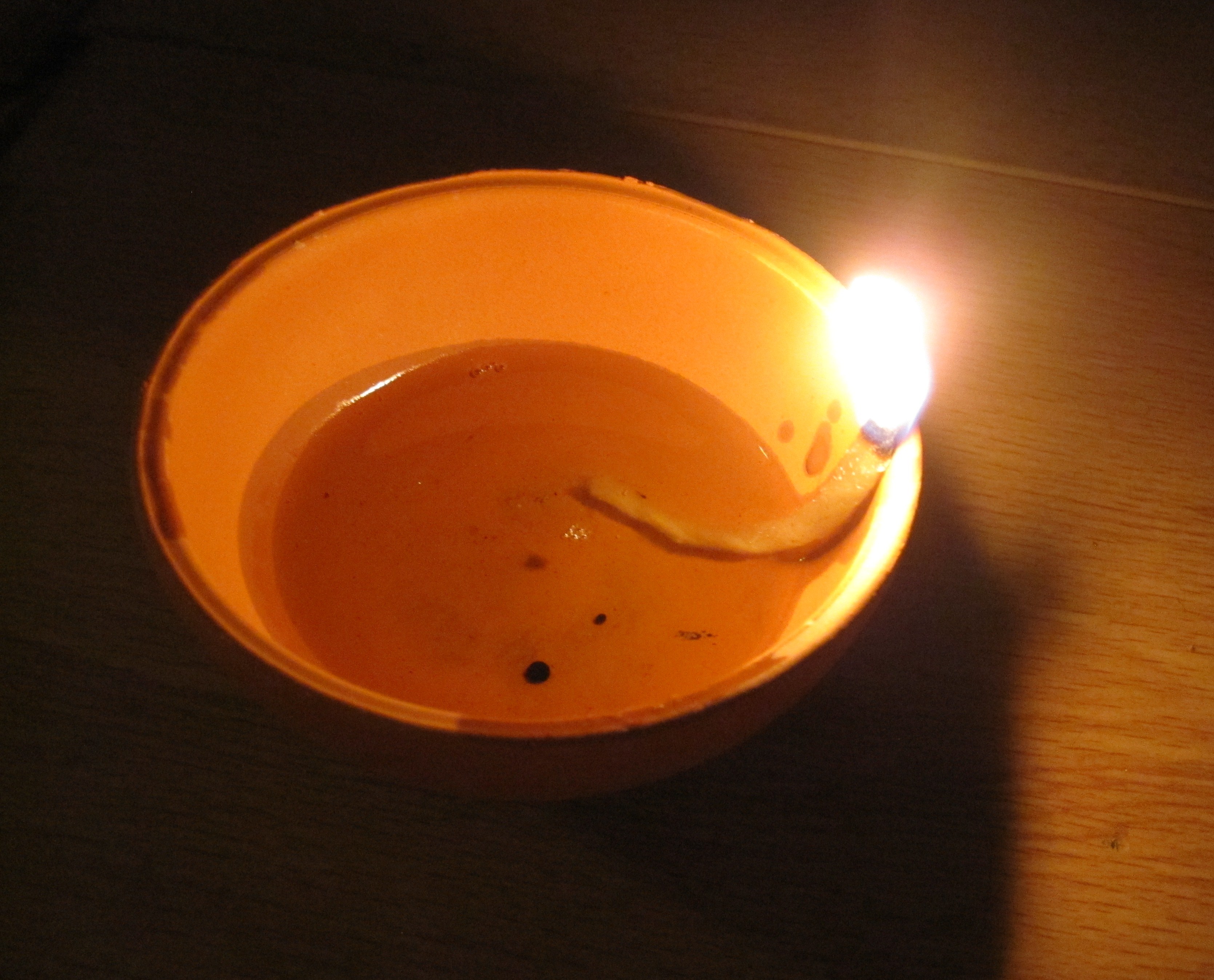
Cleaning of houses and traditional kolams displayed at entrances, pooja rooms and many more places inside houses are common events in any festival in the south of India. Kaarthigai Deepam is the festival of lights in Tamilnadu. Oil filled earthen lamps – agal vilakku – lit at room entrances and windows mark this festival. Beautiful agal vilakkus placed on the aesthetically done kolams are a truly marvelous sight to watch.

Kaarthigai Deepam is believed to be one of the oldest festivals of the Tamils. It is celebrated on the full moon day which coincides with the star Krithigai of the tamil month of Kaarthigai (November-/December). Many literary works mention the existence of the festival thousands of years ago. See https://dosaikal.com/2011/10/08/deepavali-the-sweets-and-savories-story/ – para titled – Deepam and Tamilnadu.

More than the religious aspects, I have always concentrated on the traditions based on the ancient culture.  Here too, emphasis is on the tradition behind the festival.  Temples have always interested me due to their historic, architectural and literary importance to ones’ roots.


Lord Shiva and Kaarthigai Deepam  (December 8, 2011)

Kaarthigai Deepam or Thirukkaarthigai is celebrated in all Shiva temples throughout Tamilnadu. But Thiruvannamalai temple holds a special place. Lord Shiva is worshipped in the form of fire – Agni Lingam in Thiruvannamalai.


Lord Shiva appeared as a hill (Arunachala Hill) at Tiruvannamalai in Tamil Nadu. Indeed, the very names `Tiruvannamalai’ and `Arunachala’ translate as `holy fire hill.’ The Shivalinga in the temple here is the agni linga. The tiny lamps lit during the Karthigai festival (Karthigai Deepam) are believed to be the miniature replicas of the fire linga.  http://www.tamilnadu-tourism.com/tamilnadu-festivals/karthigai-deepam.html


Karthigai Deepam festival celebrated during the full moon day in November–December during which a huge beacon lit on the top of the hill. It can be seen from miles around and believed to be Shiva’s lingam of fire joining the limitless skies. The event is witnessed by 3 million pilgrims. During each full moon day, the Annamalai Hill is swelled by close to 1 million pilgrims who do a girivalam (circumnavigate the base of the temple and the Annamalail hill) and worship Annamalaiyar in the temple.

The temple is revered by the Tevaram hymns of 7th century Saiva nayanars – Tamil saint poets and is also classified as a Paadal Petra Sthalam (temple revered by the nayanars). It is said that the 9th century Saiva saint poet Manikkavasakar composed the Tiruvempaavai at Thiruvannamalai. http://en.wikipedia.org/wiki/Annamalaiyar_Temple


For more information about Thiruvannamalai the sacred town and Annamalaiyar temple in Tamilnadu visit  http://www.thiruvannamalai.in/tiruvannamalai/history-of-tiruvannamalai.html . 


The Festival of Thirukkaarthigai

The festival of Thirukkaarthigai and the lighting of lamps are inseparable. As children, we used to watch aachi and amma light those agal vilakku in all entrances of rooms. As youngsters, we were trained to light those lamps and decorate the same way as a joyful event. Now, it is the turn of my daughter to watch and enjoy!


Traditionally, lamps are lit in temples and agal vilakkus would adorn the thinnais of houses. Bigger lamps made of mud; stone and metal were lit inside homes. The ancient Tamils are said to have even imported lamps from as far as Greece and Rome, through the ports of Arikamedu (near Pondicherry), Mallai or Mamallapuram and Mylai or Mylapore (part of present-day Chennai). One such imported lamp was of the hanging variety, designed in the shape of a swan with a fish placed at the top. http://pulivahanan.wetpaint.com/page/Significance+of+Karthigai+Deepam


Apart from the kaarthigai vilakku, these are some of the other special things that come to memory about deepam.


1. The special kolams which I have of course not learnt!

Maakolam is the traditional kolam or drawing done with rice powder and water mixture. Generally kolams are displayed at entrances every morning with rice powder. But this kaarthigai maakolam is done with rice powder mixed with water. Aachi – my grandmother -at nearly 85 is still an expert in this art. Dipping a clean white cloth in the rice powder-water mixture and making numerous intricate kolams is an exclusive art by itself. Though this is an ordinary routine on all days, earthen lamps arranged beautifully inside the maakolam is simply special about Thirukkaarthigai.


2. The tasty Maavilakku Maavu

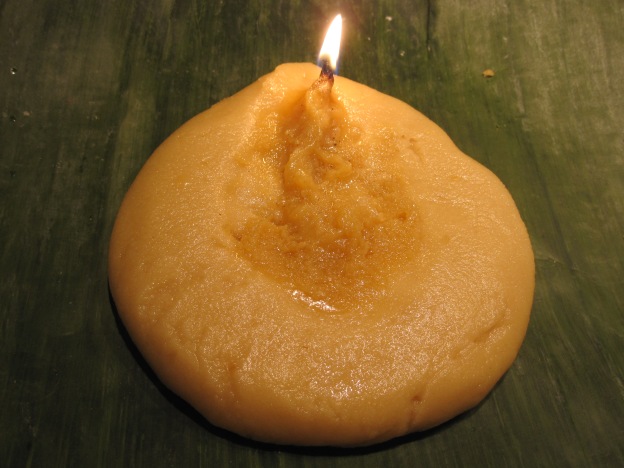
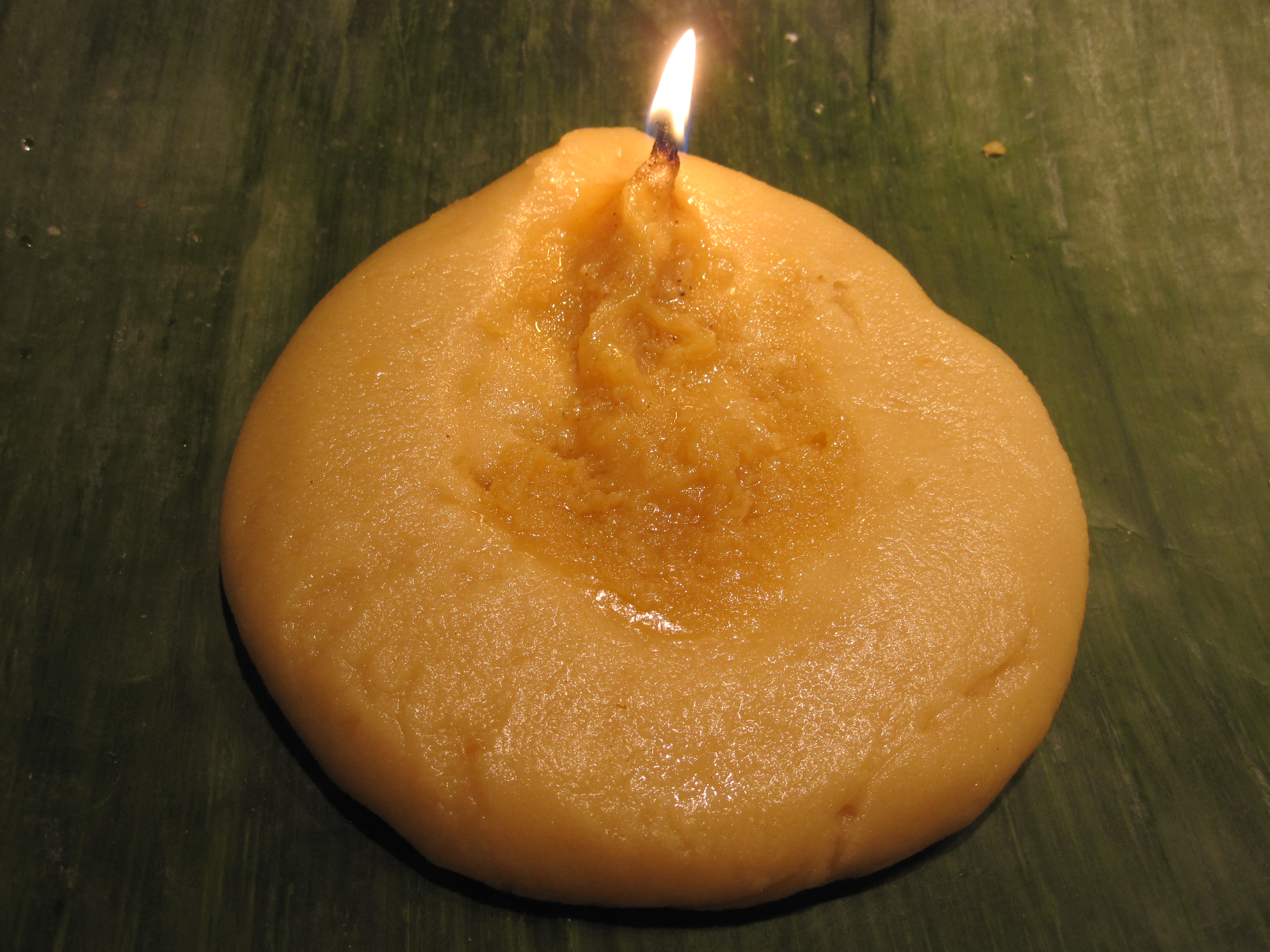
Maavilakku is an edible lamp made of freshly ground rice powder and jaggery and lit with clarified butter. Maavu means powder. This is purely for the poojai/puja – worship purpose in devotion of Lord Shiva. After the poojai is done, it is in the hands of everyone to taste and enjoy.


Maavilakku


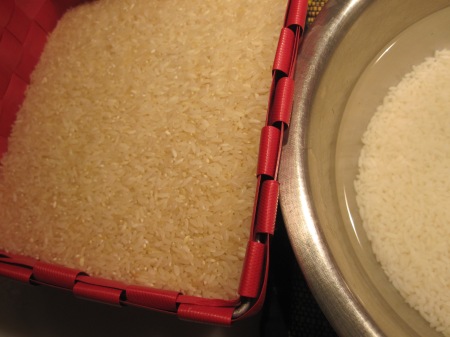
raw rice – soaked


Ingredients

  • Raw rice – 100 gms – nearly 1 cup
  • Grated jaggery – 1/2 cup

Method of Preparation

  1. Soak 100 gms/1 cup raw rice for ½ an hour
  2. Strain water and spread in a clean cloth and let it dry in a shady place for ½ an hour
  3. When it is still moist, grind it well to a fine powder
  4. Take it out of the mixer jar and immediately mix the grated jaggery
  5. This helps in perfect blending of both and now it can be made into a shape of a lamp/vilakku
  6. Fill in nei/ghee/clarified butter and place the thin cotton thread and light the lamp in front of Lord Shiva.

Note:

  1. 100 gms rice would give 200 gms rice powder
  2. Incase the powder blend is too thick to make a lamp, sprinkle water or coconut water.


3. Kaarthigai Pori

There are three kinds of Pori.

  • Arisi Pori is normal puffed rice
  • Aval Pori is puffed flattened rice
  • Nel Pori is puffed paddy

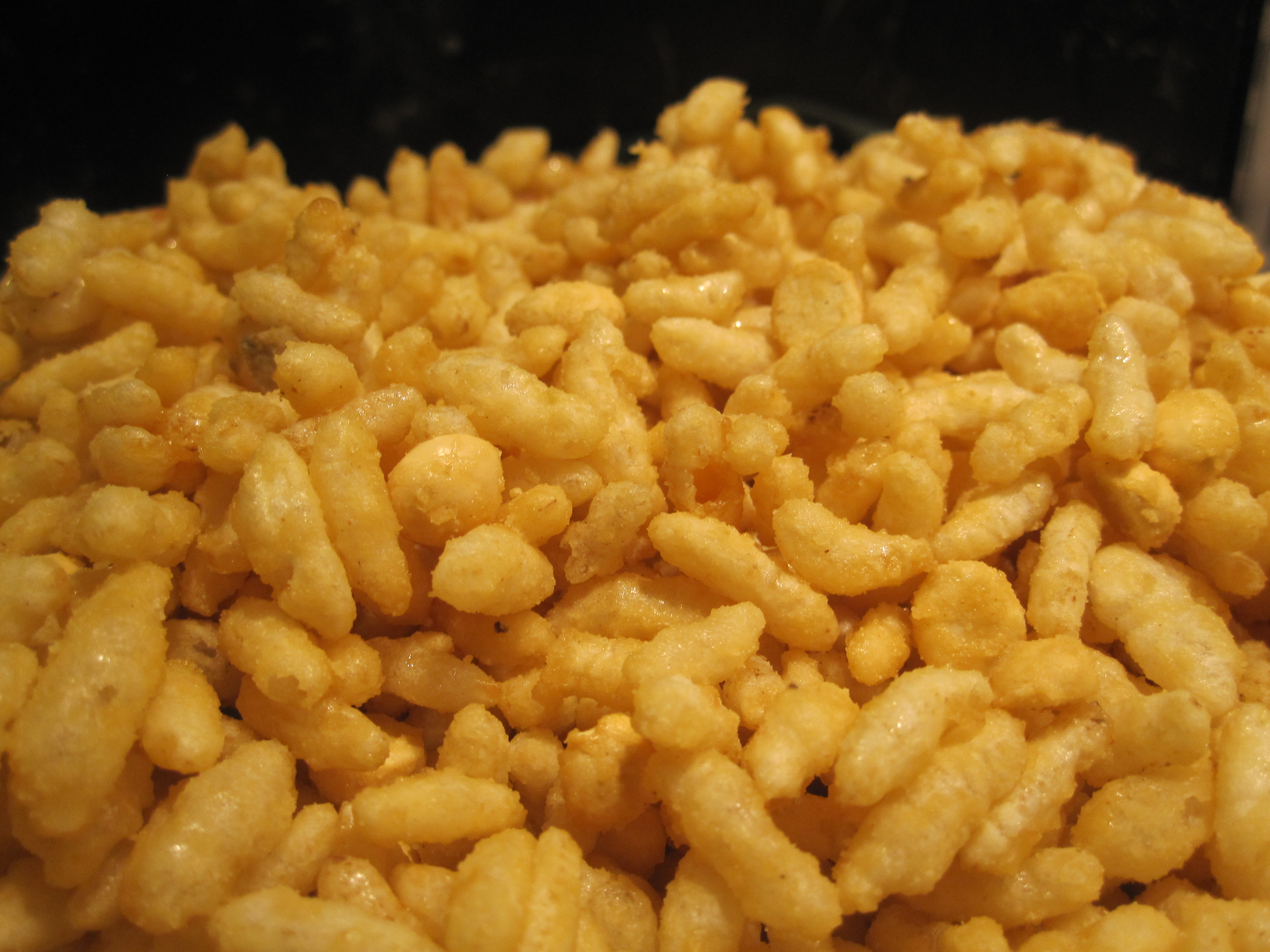
Aval Pori, the special puffed flattened rice is available mostly only on those specific kaarthigai days. In the market, the shop keeper would fry the flattened rice – aval and we bring it home fresh for consumption. I do not have this with me now. So, I tried it with the normal puffed rice -arisi pori.


Making pori urundai/puffed rice sweet balls with aval pori or kaarthigai pori was out of question due to lack of ingredients. I thought of making simple vella-p-pori or jaggery mixed with puffed rice. It is served in a bowl and amma would not make urundais or sweet balls out of it. Easier for me too!


Vella-p-pori

Ingredients

  • Pori/Puffed Rice – 4 cups
  • Grated Vellam/jaggery – 2 cups
  • Thengai/coconut – cut into thin pieces ½ cup
  • Nei/clarified butter – 1 tsp
  • Elakkai podi/cardamom powder – ½ tsp
  • Chukku podi/dry ginger powder- ½ tsp

 Method of Preparation

  1. Dissolve jaggery and little water and strain for impurities
  2. Boil jaggery with cardamom and dry ginger powder and make a thick syrup
  3. Syrup should be single string consistency – keep a bowl of water – when a drop of jaggery syrup is dropped it should roll into a ball – this makes pori crisper
  4. Fry coconut pieces in nei and mix in the jaggery syrup. Coconut can also be dry roasted to avoid ghee
  5. Take pori in a large bowl and pour the jaggery syrup mixture and mix well
  6. Pottukadalai/Roasted chana dal can also be added to the pori mix for added taste.


4. Hand impression on doors

This used to be one of the most exciting parts of Thirukaarthigai as children and youngsters. Dip your hands in the rice powder-turmeric-water mixture. Place those hands carefully on all doors- from entrance door to all doors in the house. Keep discussing about those hands till the impression lasts!

I am still trying to find the reason behind this.


Kaarthigai and Lord Murugan

The full moon day of the month of Kaarthigai, which also co-incides with the kaarthigai star is also a special day for Murugan, the thamizh kadavul or God of the Tamils. It is believed that on this day, all his six forms were united by his mother, Parvathi and he had six faces – he is called Arumugan. In the main six temples or Arupadai Veedu, which are the six battled fields of Murugan, special poojas are performed on this day.


clicked from the famous ‘rani-muthu’ calender -2009