Category Archives: Sweets and Desserts

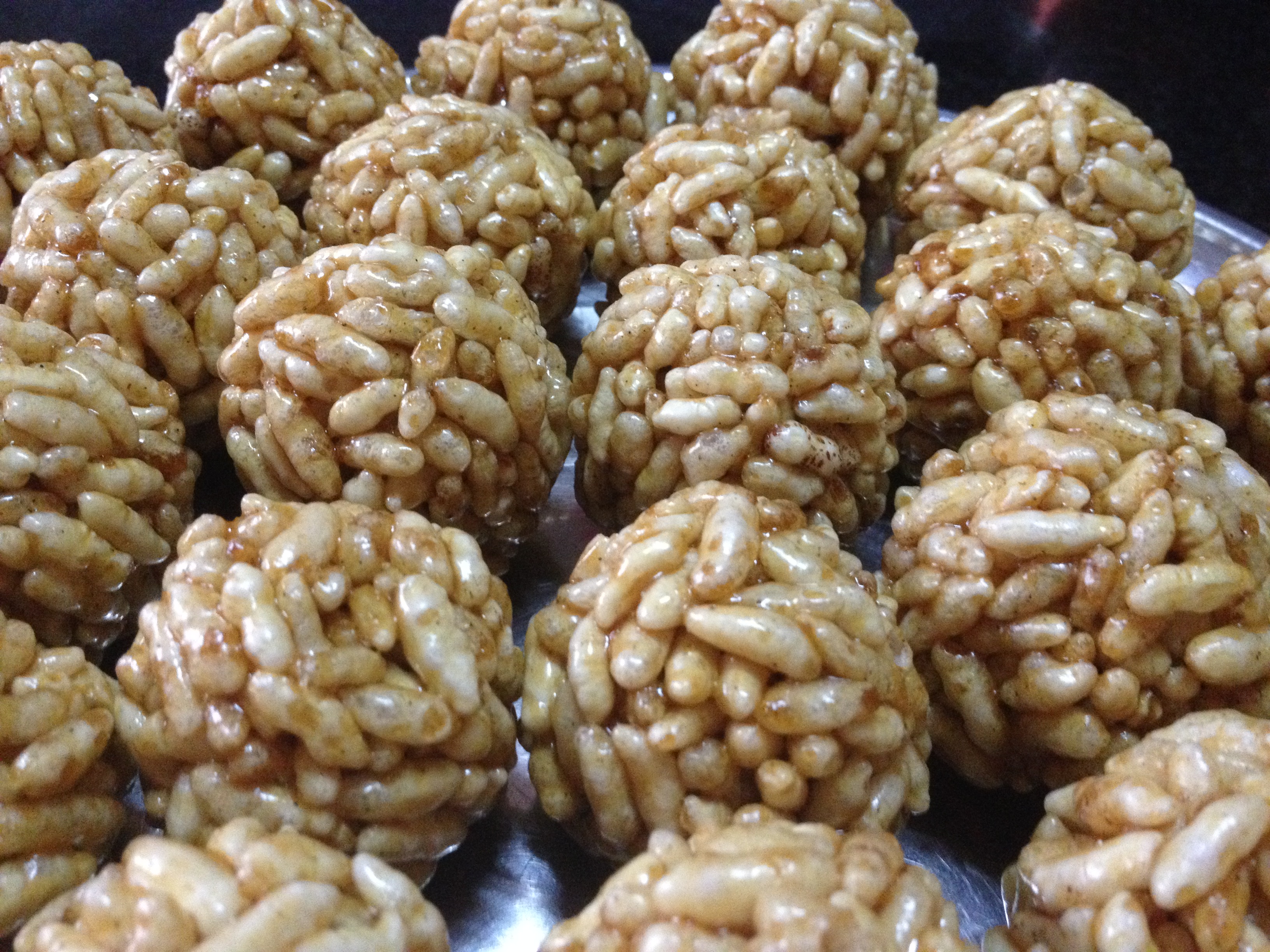
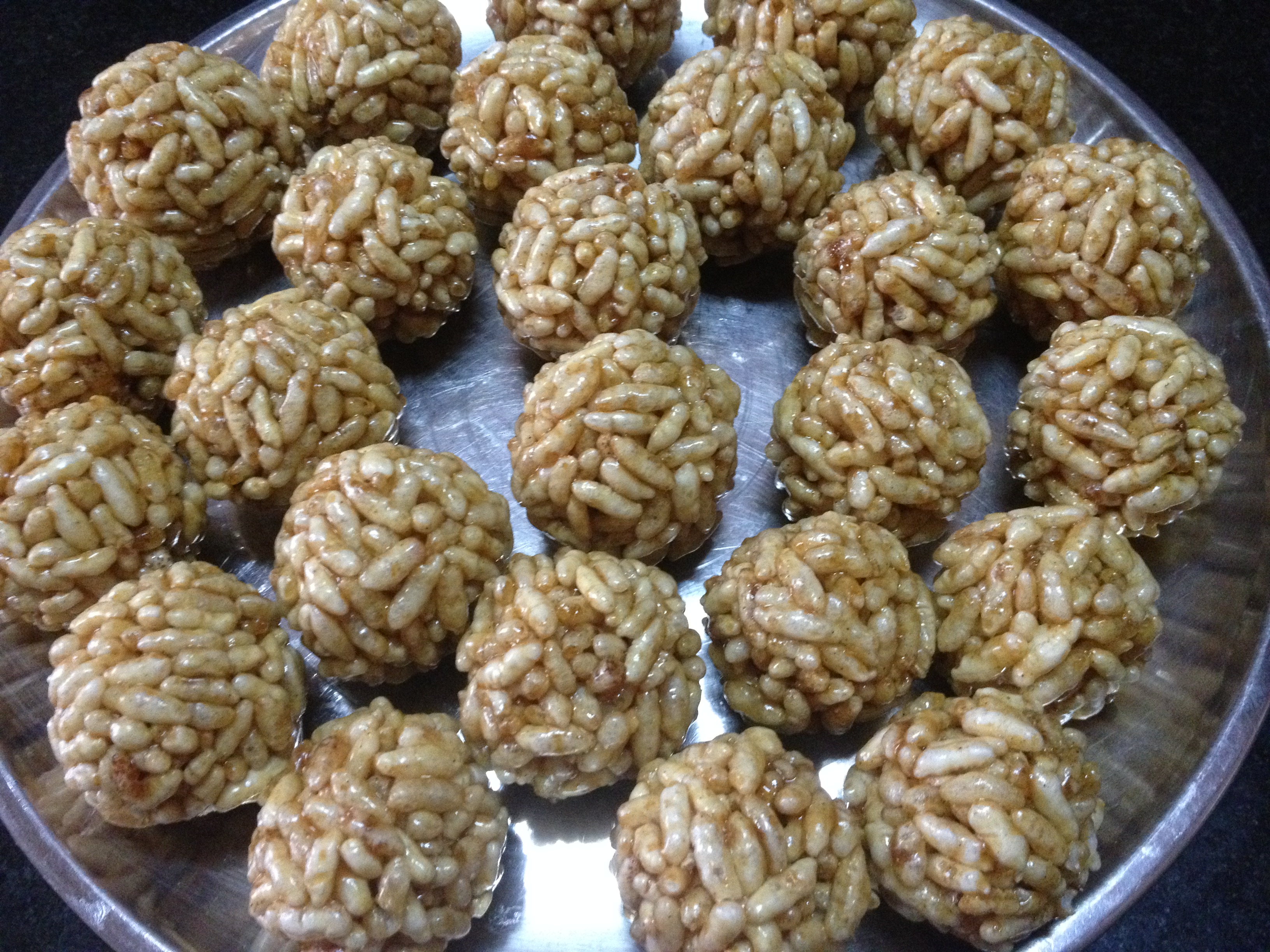
Thirukkaarthigai and Pori Urundai/Festival of Lights and Puffed Rice Sweet Balls

IMG_4479


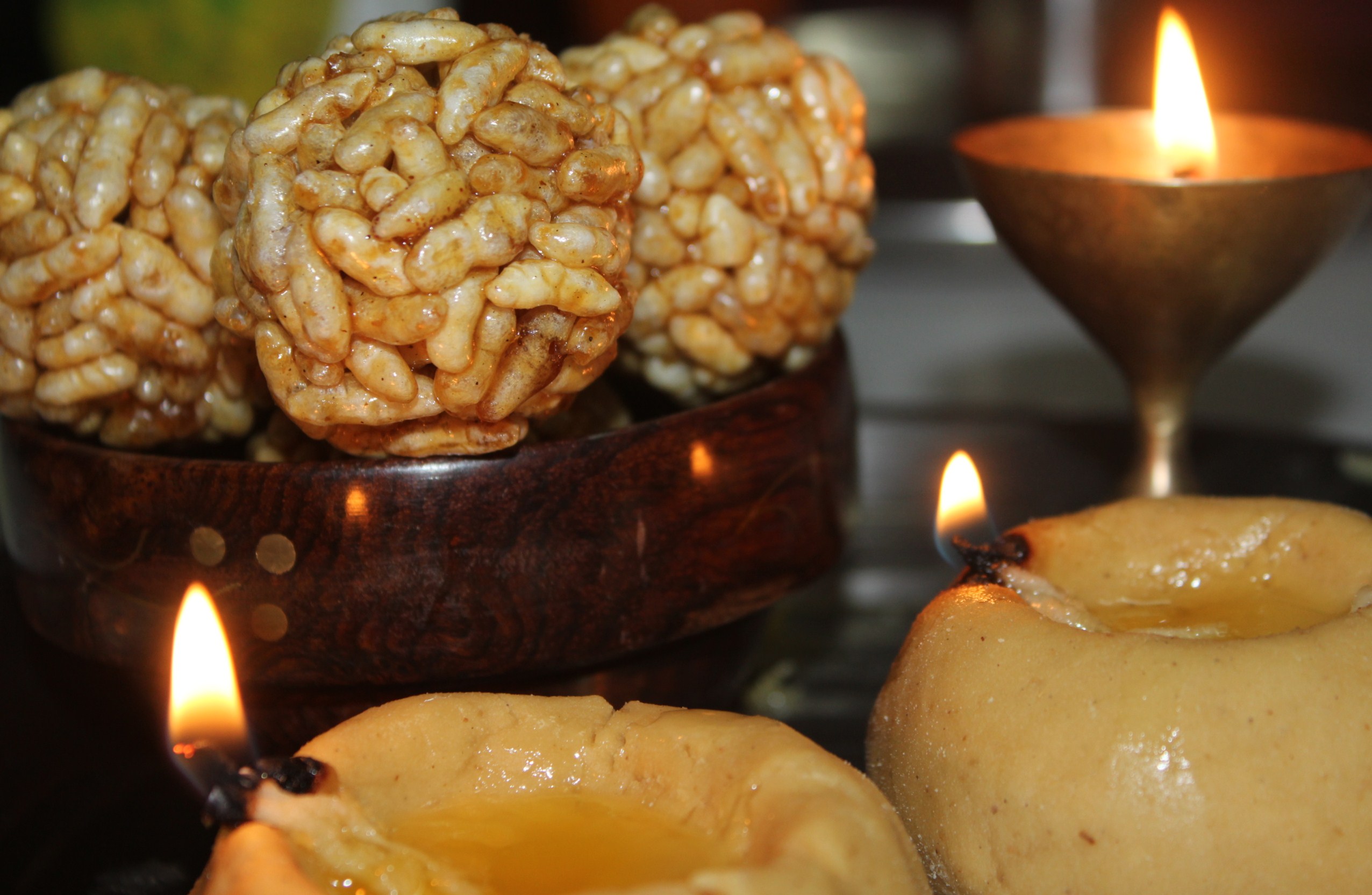
Thirukkarthigai was celebrated yesterday – 25.11.15. This is one of the ancient festivals of Tamilnadu and originally the Festival of Lights. It calls for decorating the house with lamps. A detail post on thirukkarthigai was written in 2011. Refer – dosaikal.com/thirukkaarthigai
There are various sweets prepared for different festive occasions- it can be a mix and match affair as far as the sweets are concerned. But there are certain specific delicacies for specific festivals. ‘Pori’ or Puffed Rice forms a basic part of Thirukkaarthigai. It takes the name of the festival and is called ‘Kaarthigai Pori’.


IMG_2873
In the previous post on Thirukkaaarthigai or Kaarthigai Deepam, I had tried Pori Urundai or Puffed Rice Jaggery Balls but had not been successful. Hence, it was converted into uthiri pori or sweetened puffed rice.

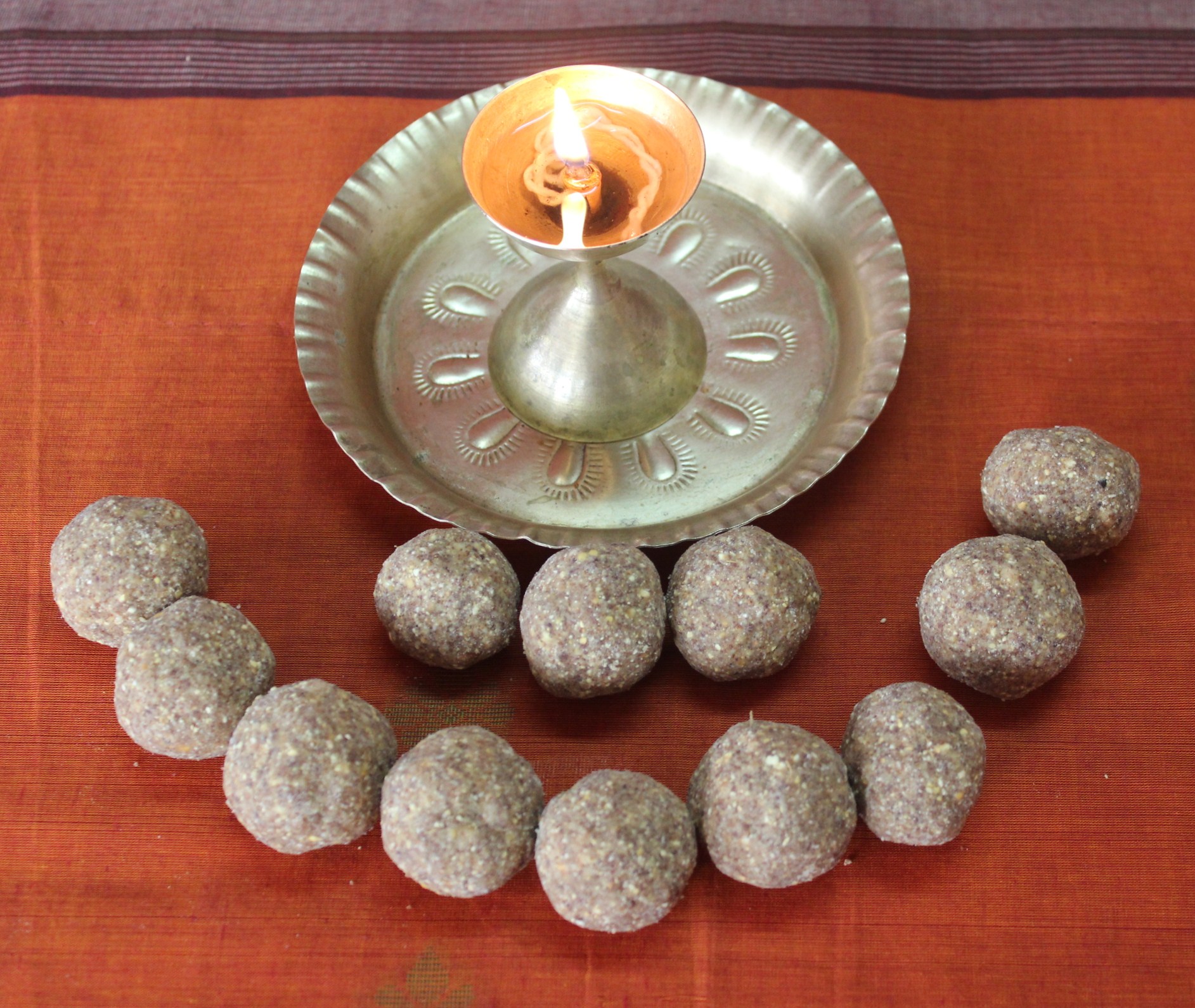
This time I was successful and could make Pori Urundais because of the right consistency of jaggery syrup.Graduating from a learner to a better learner, this time ‘Maavilakku’ or the lamp made with rice flour also came out better shaped, certified ‘good’ by my daughter. What else one needs as good marks from your child!

To the recipe-

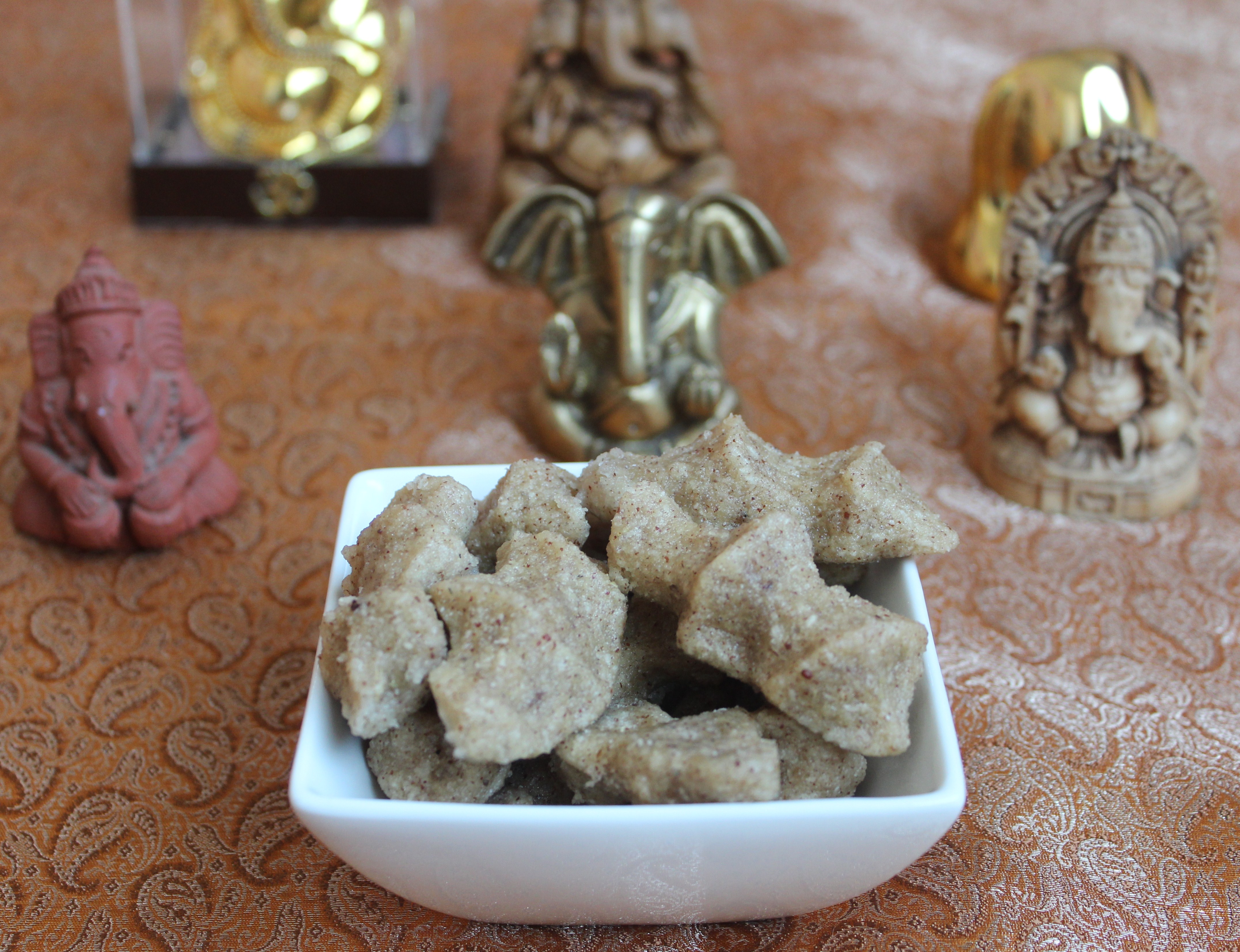
Pori Urundai
 

IMG_2881

Ingredients (makes approximately 30 balls)

  • pori/puffed rice – 5 cups
  • vellam/jaggery – 1 cup
  • thanneer/water – 1/2 cup
  • elakkai podi/cardamom powder – 1 tsp
  • chukku podi/dry ginger powder – 1 tsp
  • nei/ghee – to grease hands


IMG_2882


Method of Preparation

  1. Keep puffed rice in a wide bottomed bowl, enough to mix jaggery syrup
  2. Take Jaggery in a pan with water and heat till jaggery dissolves
  3. Strain jaggery to remove mud which is generally present
  4. Keep the strained jaggery water on stove and add cardamom powder and dry ginger powder
  5. Boil till it becomes a thick syrup and reaches a consistency where it forms a ball when dropped in water – this is called uruttu padham in tamil


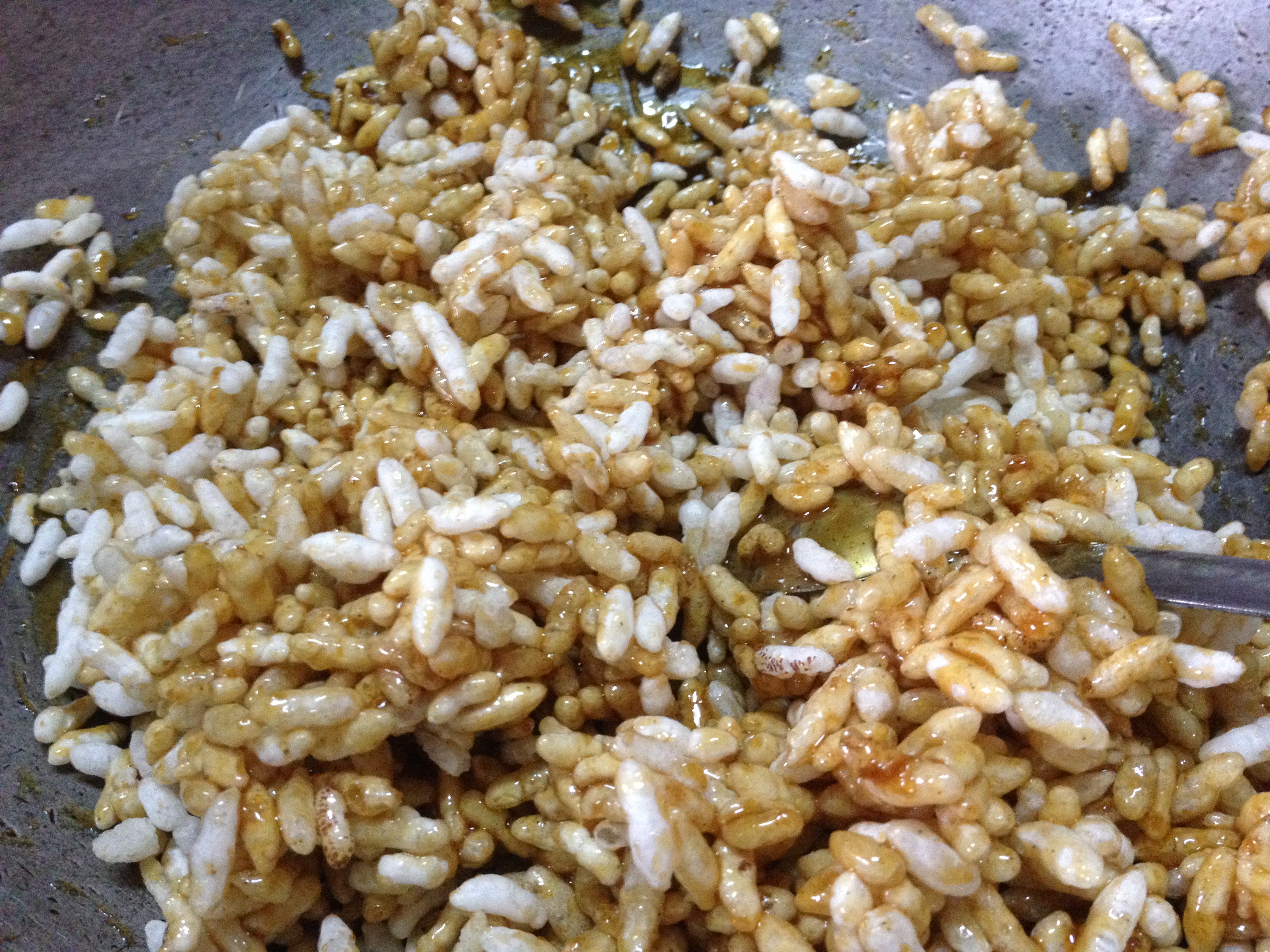
6. When the syrup reaches proper consistency, pour into puffed rice bowl and mix well with a ladle
IMG_2873IMG_2878

7. Adjust the quantity of puffed rice according to the syrup

8. Grease both hands with little clarified butter/ghee and make medium sized balls

9. Pori Urundai is ready.

Note:

  1. The puffed rice can be moulded into balls only if the consistency of jaggery syrup is right.
  2. If the rice mixture turns hard after a while, keep on stove and reheat till it melts a bit and continue making again.
  3. If the pori has become crispy with syrup and is unable to be moulded, the syrup has crossed the required consistency. In such case, enjoy uthiri pori or fried sweet puffed rice.
  4. Adjust the quantity of pori as per need while mixing the syrup. I needed to mix at least 1/2 cup more to bring it to right ratio.
  5. Pori Urundai cannot be made with sugar; Jaggery is the only sweetener. Or one can try palm sugar.
  6. Dry ginger powder aids in easy digestion and helps especially in case of over-eating.
  7. If the puffed rice is not crispy and is a bit soft, dry roast before making urundais/sweet balls.
 

IMG_4489

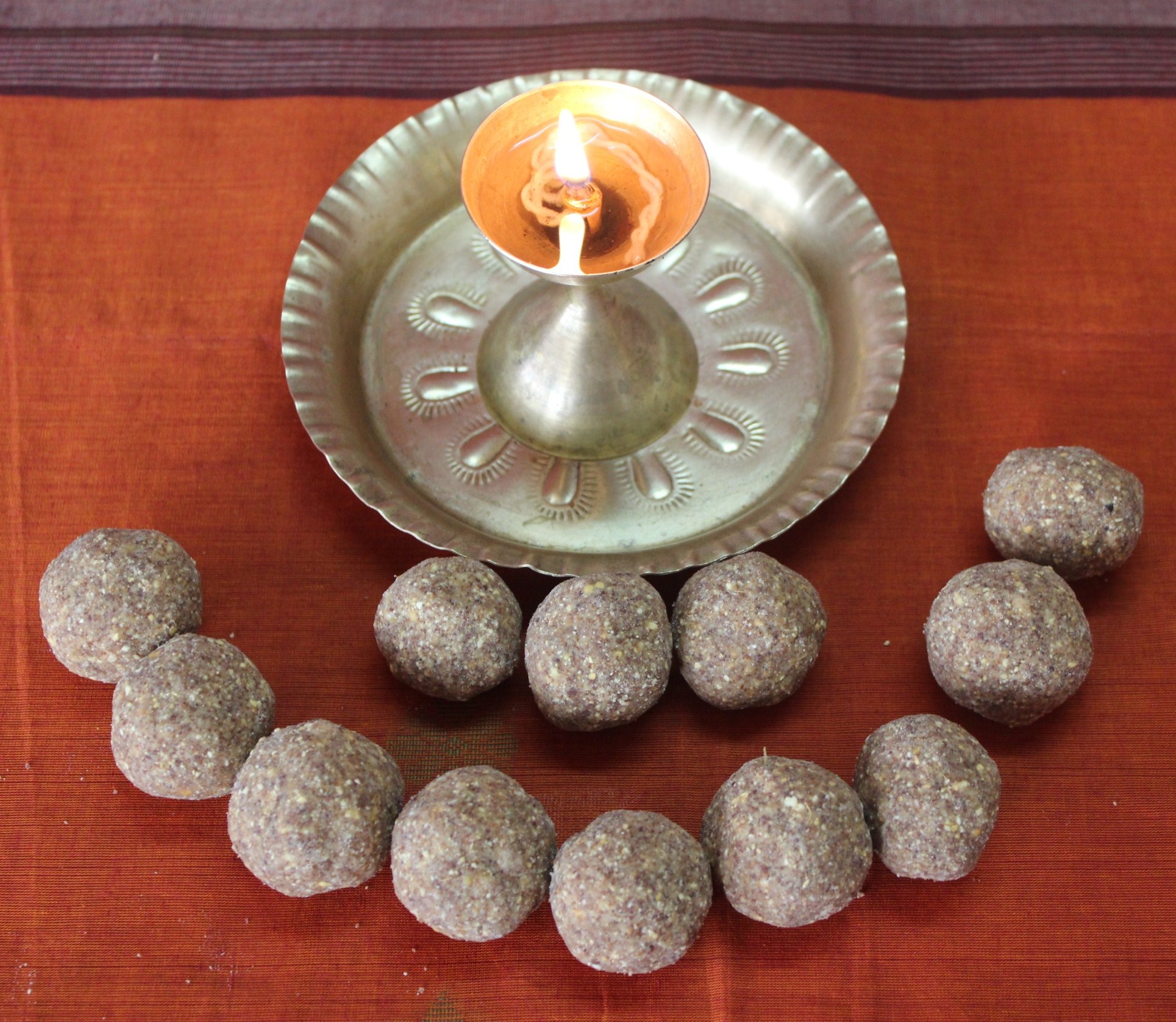
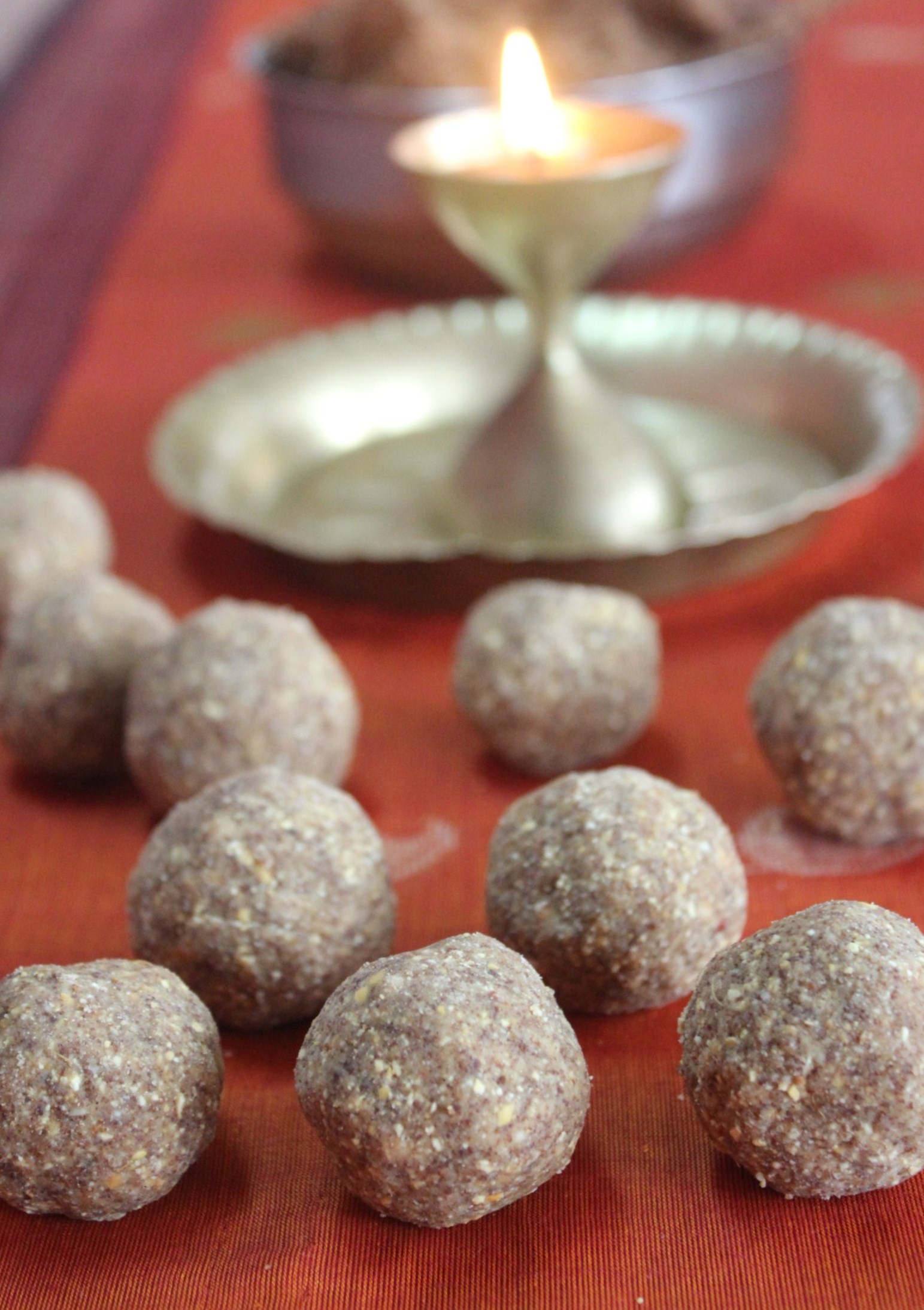
Pottukkadalai-Nilakkadalai Urundai/Roasted Channa-Groundnut Laddu

IMG_4377


Happy Diwali!

Any happy festival is made happier when it is made healthy too. With varied sweets and snacks to eat and greet, it is also important to include a few healthy sweets and snacks to reduce the damage already created by fatty intake of delicacies. After all the goodies have been stuffed and the digestive system has had over loaded duty to perform,  there is always the kashayam/poshion for stomach cleaning (dosaikal.com/deepavali kashayam), which is given as a damage control mechanism.

Yet, this is my contribution to a healthy sweet for the festival of lights, especially suitable for kids and due to the Clarified Butter/Ghee content- in limitations for adults too.

Pottukkadalai/Nilakkadalai Urundai/Roasted Channa-Groundnut Laddu (Sweet Ball)


IMG_4362

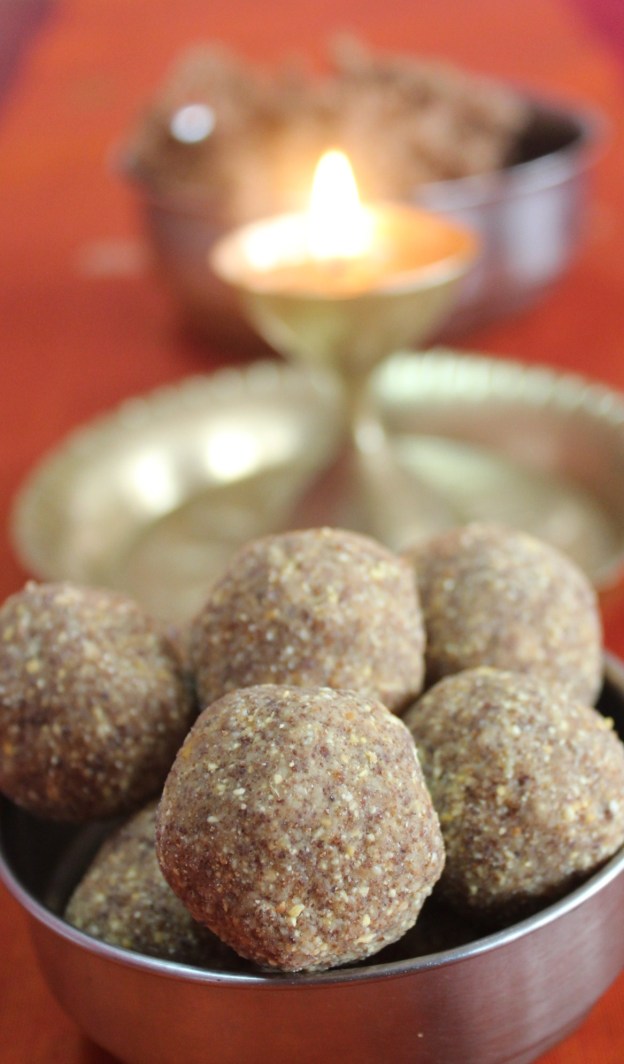
These Urundais/sweet balls are made in combination with roasted channa, peanuts and palm sugar all in powder form.  It is an easy to make sweet as well as high in nutritional value due to the protein rich chick pea and peanuts. White refined sugar has been avoided as they have only empty calories. Palm sugar which is rich in iron and other minerals is an added source of nutrition in the recipe. If powdered palm sugar is not available, cane jaggery syrup, palm jaggery syrup or unrefined cane sugar which is ‘Naattu Sarkkarai’ in Tamil can be used.

Pottukkadalai/Roasted Channa


dosaikal 12 061
Pottukkadalai is Roasted Channa, also called Chutney Dhal in the northern part of India. It gets this name as it is directly used to make chutneys/dips without the burden of frying/roasting the lentil at home. It is had as a simple teatime nibbler too in Tamilnadu. Combined with pieces of coconut and jaggery it can be a healthy munch suitable to curb hunger between meals.


  1. They are naturally fat-free, saturated fat-free, and sodium-free. Roasted chana helps lower your risk of heart disease and may reduce your risk of colon cancer.
  2. They help to keep blood sugar low as the carbohydrate present in them takes longer time to digest and hence it has a low GI which makes them a suitable snack for diabetics.
  3. Use them to add a protein boost to meals without introducing meat or unnecessary fat to the dish.
  4. Roasted chana contain 6 grams of dietary fiber, or 22 percent of the recommended daily requirement of 28 grams. Dietary fiber encourages regular bowel movements, prevents constipation and lessens the risk of heart disease.
  5. They are also a good source of calcium, potassium and magnesium.http://www.tarladalal.com/glossary-roasted-chana-1800i


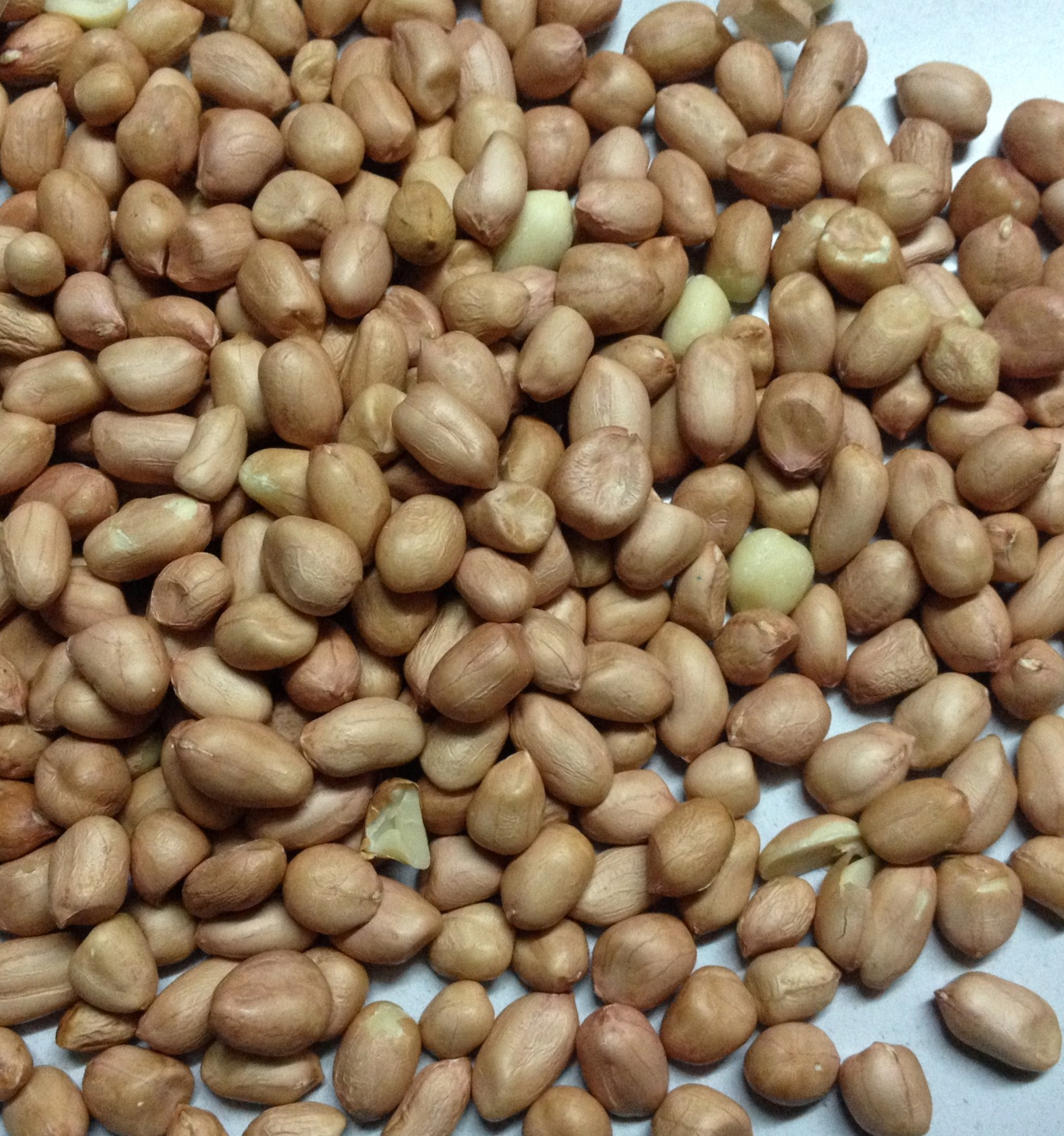
Nilakkadalai/Peanuts


IMG_2774

Here are a few nutritional facts of groundnuts or peanuts-

  1. They are actually legumes but carry almost all the qualities of other popular edible kernels such as pistachio, almonds, etc.
  2. They compose sufficient levels of mono-unsaturated fatty acids (MUFA), especially oleic acid. MUFA helps lower LDL or “bad cholesterol” and increases HDL or “good cholesterol” level in the blood
  3. The kernels are an excellent source of vitamin E (a-tocopherol);
  4. The nuts are packed with many important B-complex groups of vitamins such as riboflavin, niacin, thiamin, pantothenic acid, vitamin B-6, and folates. 100 g of peanuts provide about 85% of RDI of niacin, which contribute to brain health and blood flow to brain.
  5. The nuts are rich source of minerals like copper, manganese, potassium, calcium, iron, magnesium, zinc, and selenium.
  6. Just a handful of peanuts per day provides enough recommended levels of phenolic anti-oxidants, minerals, vitamins, and protein.
    http://www.nutrition-and-you.com/peanuts.html


Pottukkadalai-Nilakkadalai Urundai/Roasted Channa-Peanut Laddu/Sweet Balls


IMG_4352


Ingredients (makes appr. 20-22 urundais)


IMG_2768


  • pottukkadalai/roasted channa – 1 1/2 cup
  • nilakkadalai/peanut – 1 1/2 cup
  • palm sugar (powder) – 1 1/2 cup
  • elakkai/cardamom powder – 1 tsp
  • chukku podi/dry ginger powder – 1 tsp
  • nei/clarified butter – appr. 1/4 cup


Method of Preparation

  1. Dry roast- roasted channa and powder it in a blender
  2. Dry roast peanuts, remove skin and powder it in a blender
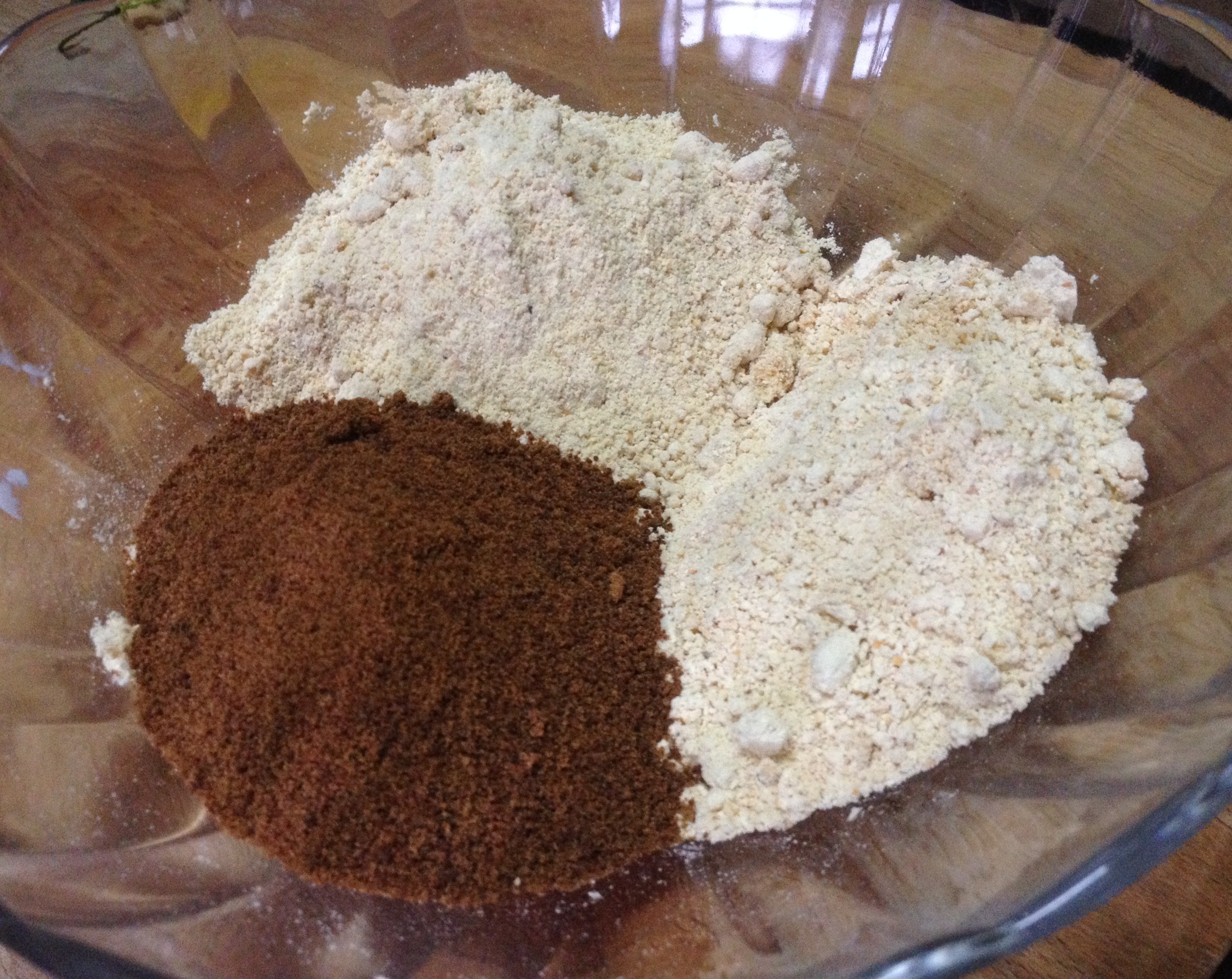
  3. Take a wide bowl and place all the dry powders – channa powder, peanut powder, palm sugar powder, cardamom powder and dry ginger powder and mix well
  4. Heat clarified butter in a small pan and pour on top of the powder mix.
  5. Make lemon sized balls and they are ready to enjoy.


IMG_4379

Note:

  1. Be mindful of the roasted channa. Normal raw bengal gram is not the one to be used here. Go for the roasted gram available in south-indian groceries.
  2. Palm sugar can be substituted with ‘Naatu Sarkkarai’ which is unrefined cane sugar, easily available in local stores in tamilnadu.
  3. Another substitute can be jaggery syrup or palm jaggery syrup. In that case, usage of clarified butter can be reduced as the syrups act as binding agents themselves. A little touch of ghee should be enough.


Kezhvaragu Kambu Urundai/Ragi-Bajra Laddu/Nutty Millet Sweet Balls

IMG_2424


As children come back from school, the first thing to strike them is HUNGER. While some may have a whole meal, some prefer snacking. When we went to school decades ago (has it been so long??),   school was done by 4.15 and we came back between 4.30 and 5.00, ready to run for other activities.

Then it wasn’t the muffins, fluffy cakes or croissants or the tetra pack juices and ready-made flavored milk that filled our tummies. We never knew white flour/maida based empty calorie – so-called goodies… What an inspiring name for unworthy junk food..(sigh).

Orthodox middle class didn’t know beyond bread and jam, which was white, soft and sugary. It was never a staple then, not even a meal. Bread was initially a sick man’s food – a substitute to kanji which is porridge. The light Kanji, which is still a breakfast delicacy in many countries in south-east Asia is definitely a healthier option. But soft bread soaked in milk  offered a delightful change to the fever-stricken patient. Hence, the concept of brown bread, 100% atta bread and rye bread were all beyond comprehension. Good for us!

Coming to after-school snacking, different kinds of home-made urundais(sweet balls) and murukkus and other rice-lentil-millet based snacks were given as hunger busters. The beautifully shaped balls and the varied shaped fries offered distinct flavours with different ingredients each time. With the aesthetics and handwork incorporated into these true goodies, they can certainly be compared to an artisan’s handcrafted product.

Those gentle hands that caressed the young ones with warmth were strong enough to create these healthy snacks not only with pure love but with pure nei/ghee/clarified butter too!


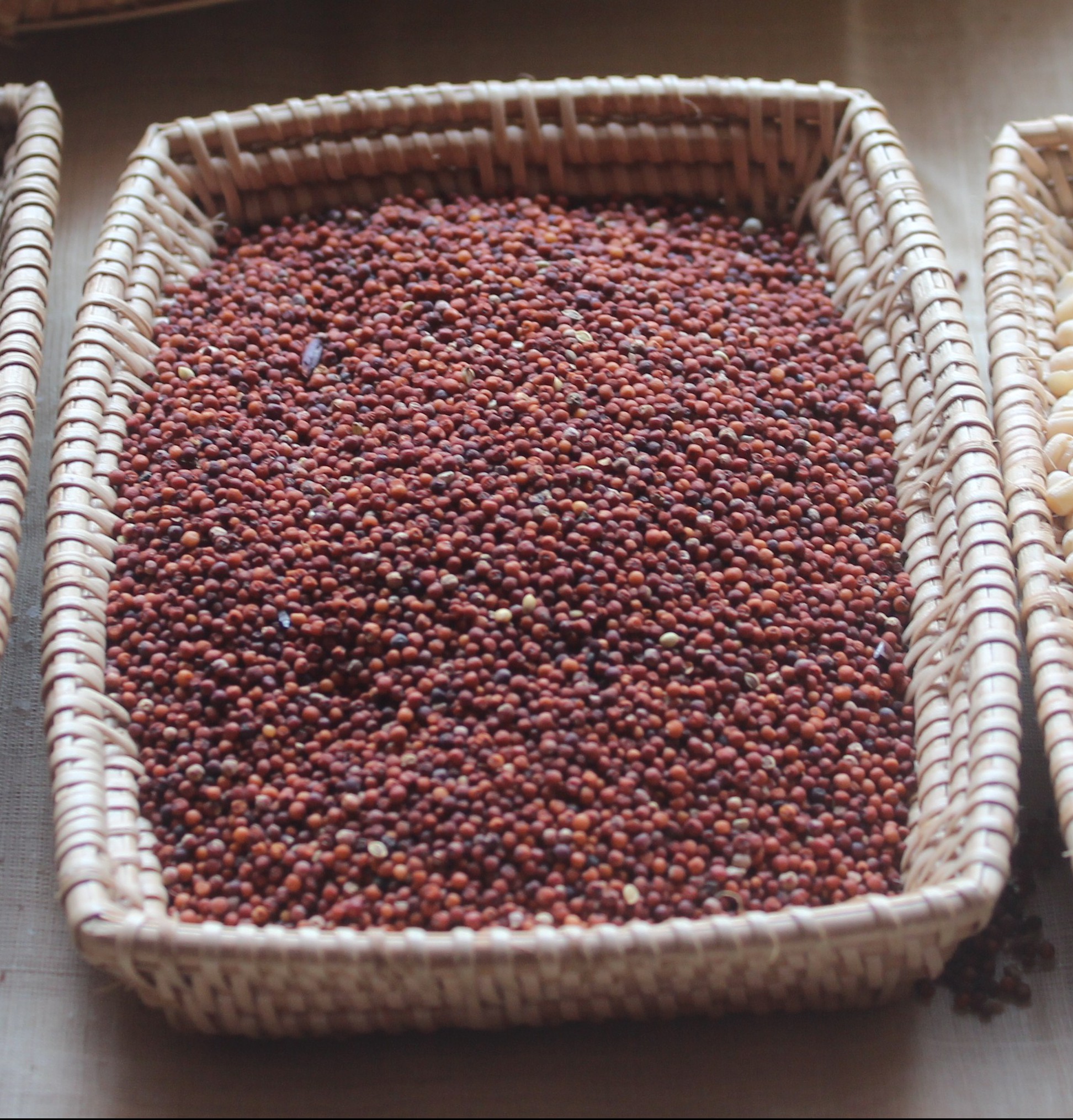
kezhvaragu/finger millet


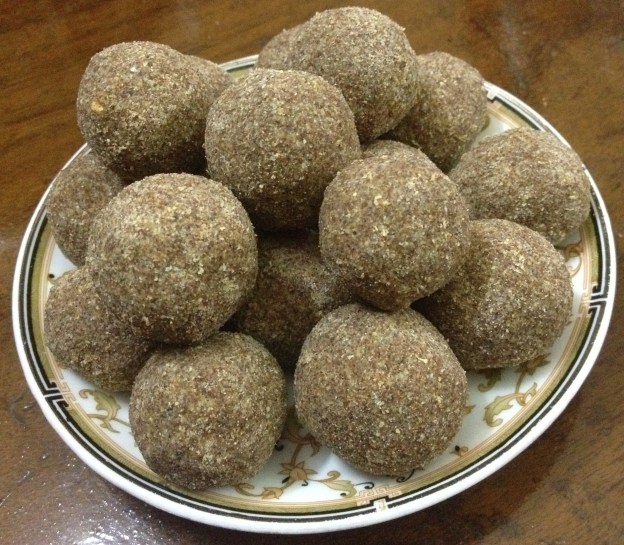
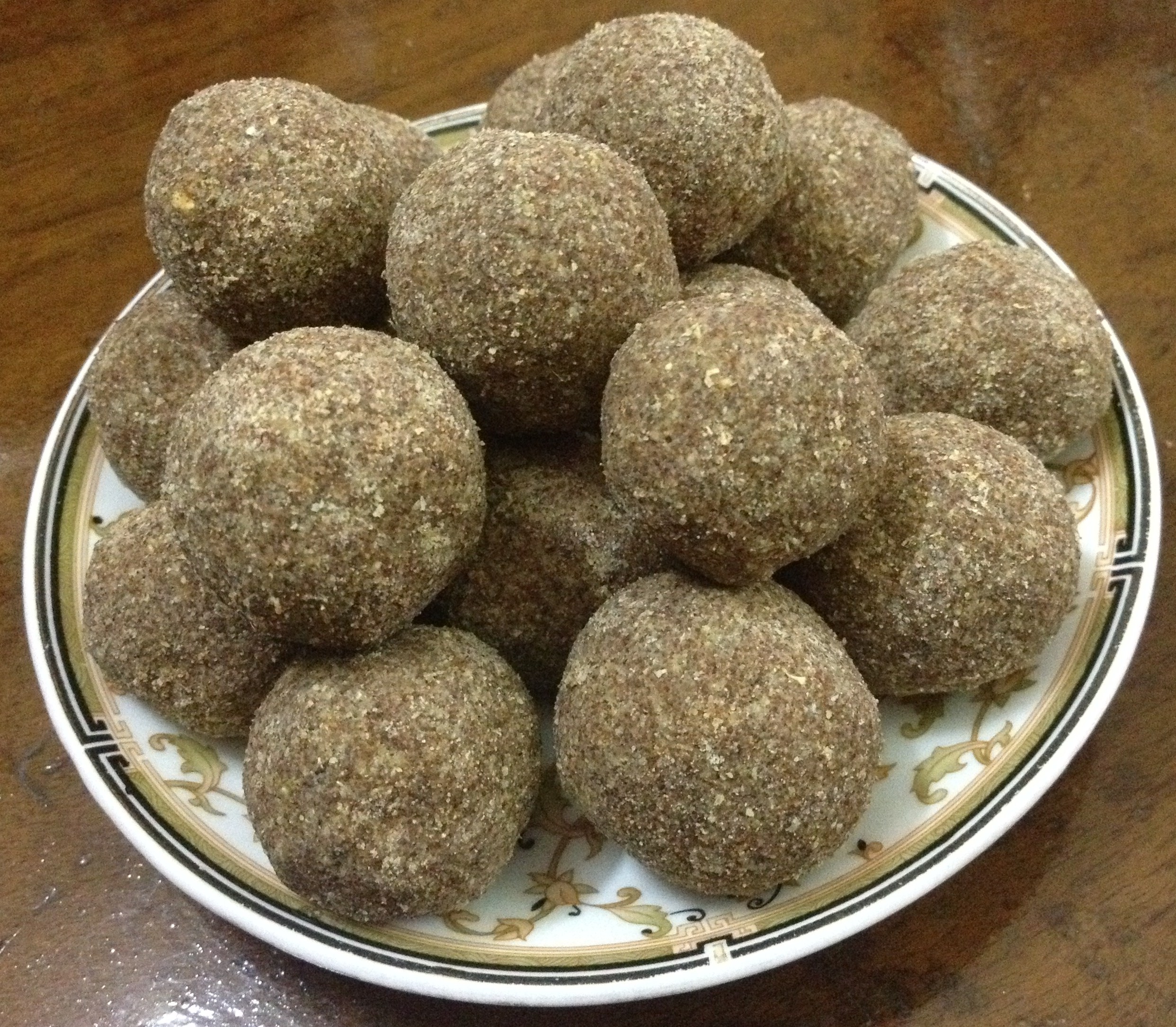
So, in honour of mothers and grandmothers who did their homework well to keep us healthy, fit and immune,  this post is a millet based urundai/sweet ball. Since I had finger millet  (ragi) and pearl millet (bajra) powders, I made the urundai with the both combined with roasted Bengal gram.

While winter is on the way, I also added nuts to it. Summer or Winter, Nuts definitely contribute to the higher nutrient value of the Urundais. Roasted bengal gram and roasted nuts are powdered here and they also help in better binding of the sweet balls with clarified butter (nei).


kambu/pearl millet


For nutritional facts of Kezhvaragu/Finger Millet please refer Kezhvaragu Dosai/Finger Millet Pancakes

For nutritional facts of Kambu/Pearl Millet please refer Kambu Dosai/Pearl Millet Pancakes
Kezhvaragu Kambu Nei Urundai/Nutty Finger Millet and Pearl Millet Sweet Balls


IMG_2416
Ingredients (makes appr. 25)

nuts and sugar-

IMG_2451IMG_2410
roasted gram and millet flours-

dosaikal 12 061IMG_2400


  • kezhvaragu/finger millet/ragi powder – 1 cup
  • kambu/pearl millet/bajra powder – 1 cup
  • pottukadalai/roasted bengal gram/chutney dal – 1/2 cup powdered
  • assorted nuts – almonds, pistachios, walnuts and cashew nut – 1/2 cup – roasted and powdered
  • sarkkarai/sugar powder – 2 cups
  • elakkai/cardamom/elaichi –  cloves
  • chukku podi/dry ginger powder – 1 1/2 tsp
  • nei/ghee – 1 cup melted appr.

Method of Preparation


IMG_2436


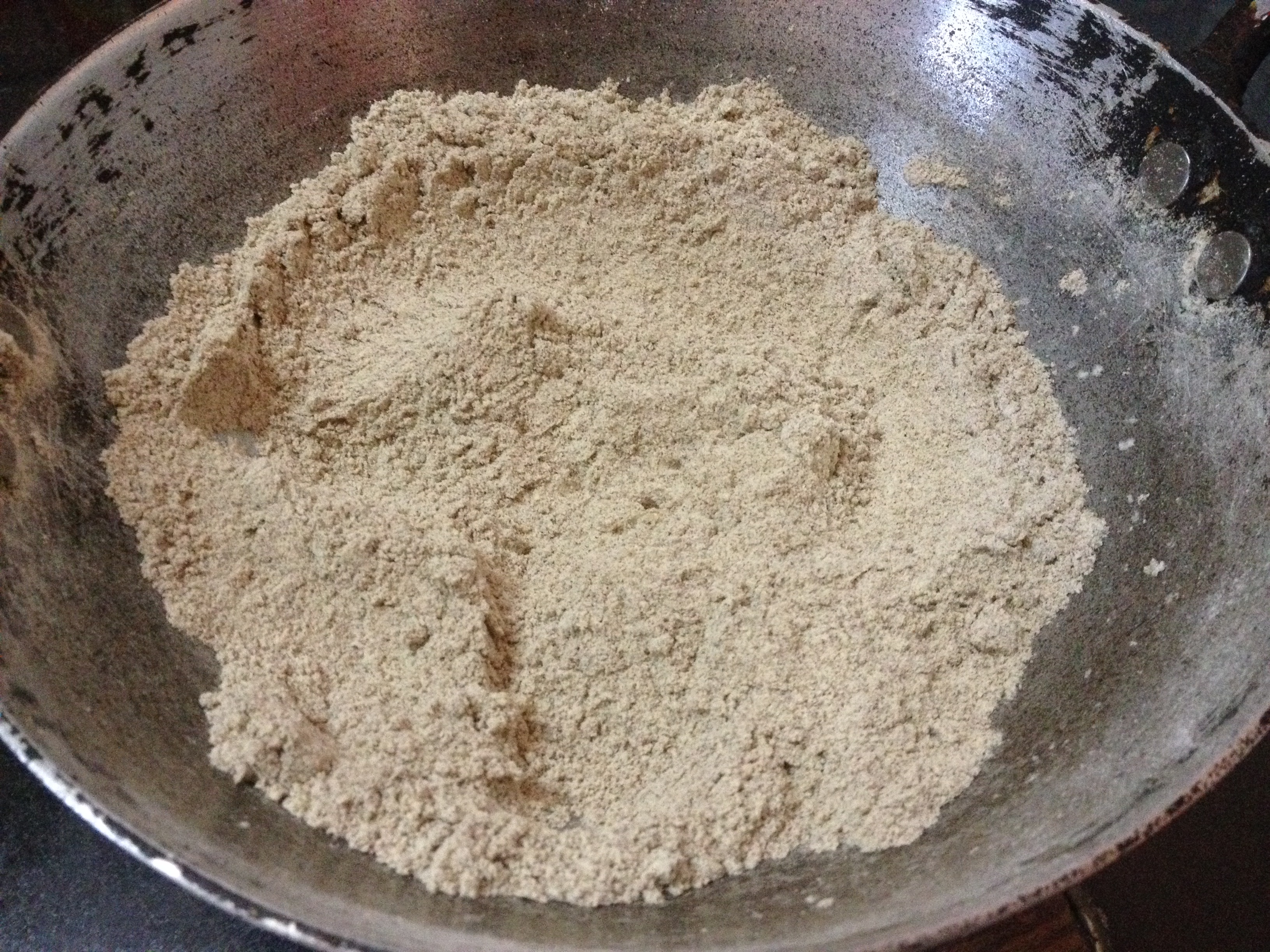
  1. Dry roast finger millet and pearl millet powders together in a pan
  2. Dry roast the assorted nuts and powder them in a blender
  3. Powder the Roasted Bengal Gram with elaichi
  4. Mix the roasted millet powders, powdered roasted bengal gram, powdered nuts, powdered sugar and dry ginger powder in a big bowl
  5. Heat the nei/clarified butter in a separate pan
  6. Pour a teaspoon of nei into the combined flour. If the ghee forms bubbles its hot enough to make balls
  7. When the clarified butter is hot enough pour into the flour and mix well with a spatula
  8. Start making medium-sized balls
  9. Once done, let them cool and store in an air-tight container.

Notes:

IMG_2407


  1. Millet powders are readily available in super markets across India.
  2. Powdered nuts are optional.
  3. Another option is to coarsely grind the nuts fora crunchy taste in the Urundais/sweet balls.
  4. Since I had powdered palm sugar, I used it. If one has unrefined cane sugar or very pure jaggery powder without mud, these can be used too.  Easily available white sugar can be powdered and used.

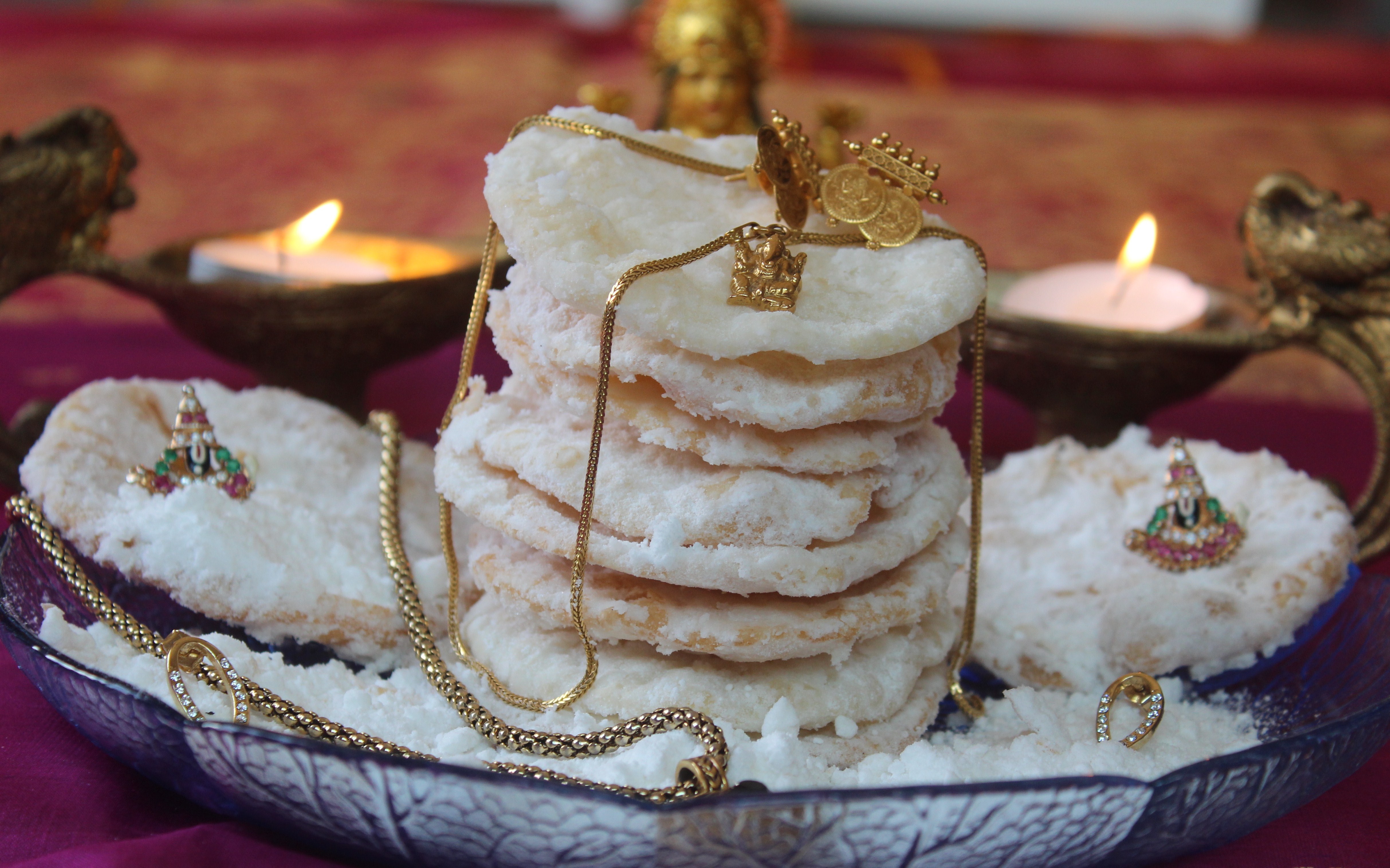
Pathirpeni/Sugary Snow White Crisps


IMG_3397

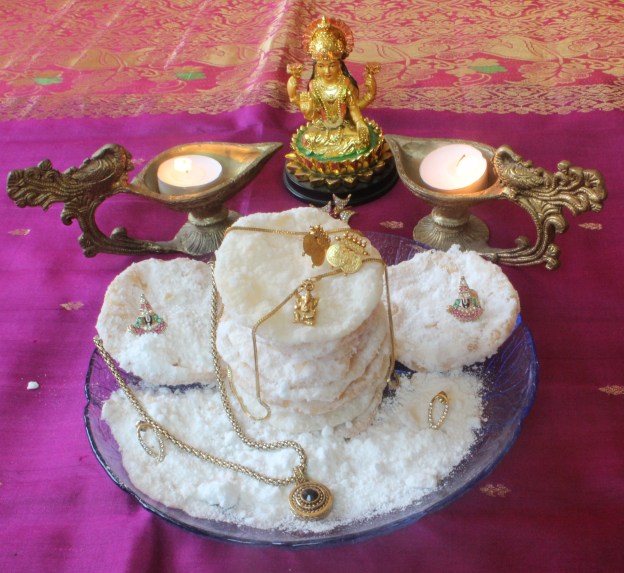
Pathirpeni is a very special sweet to me and to my brother! It was and is still a speciality signature sweet of Aachi  my paternal grandmother. I do not remember having pathirpeni in any other house in the big clan that we belong to. The sole supplier to all near and dear ones was Aachi – helped meticulously by Amma – my mother.

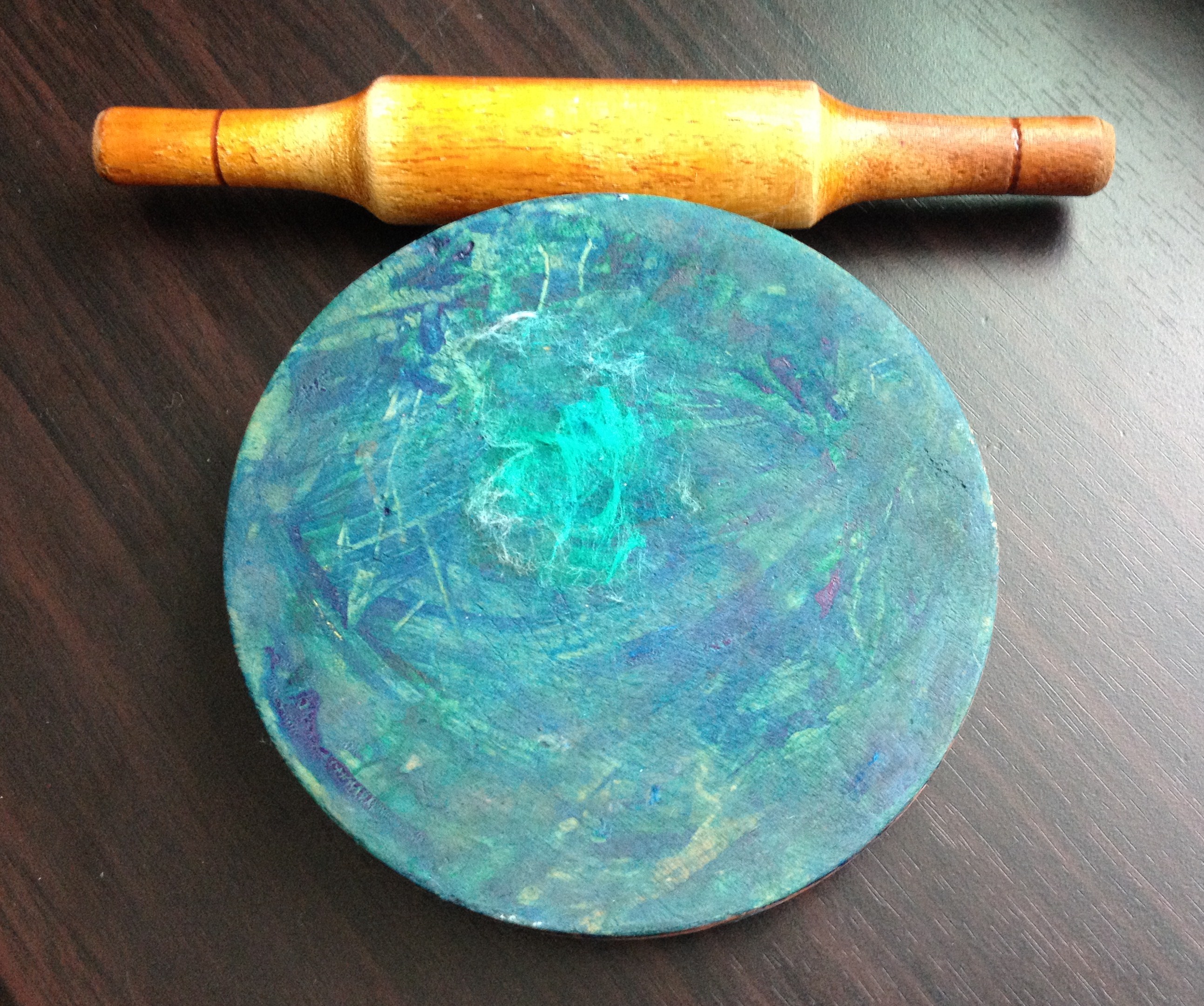
I had my miniature ‘Puri kattai’ or the spherical puri maker in wood to specially make pathirpeni and also puris. This was handed over to my daughter who used to help me make rotis, but feels she is a grown up and uses my bigger puri kattai. She painted my dear little puri kattai though the newer roller is intact.


IMG_3744

Pathirpeni is for those with that extra sweet tooth – which might be god sent genetically or amma fed affectionately… We siblings have both – hence not one but two extras to successfully acquire that ‘happier the healthier’ plump look!

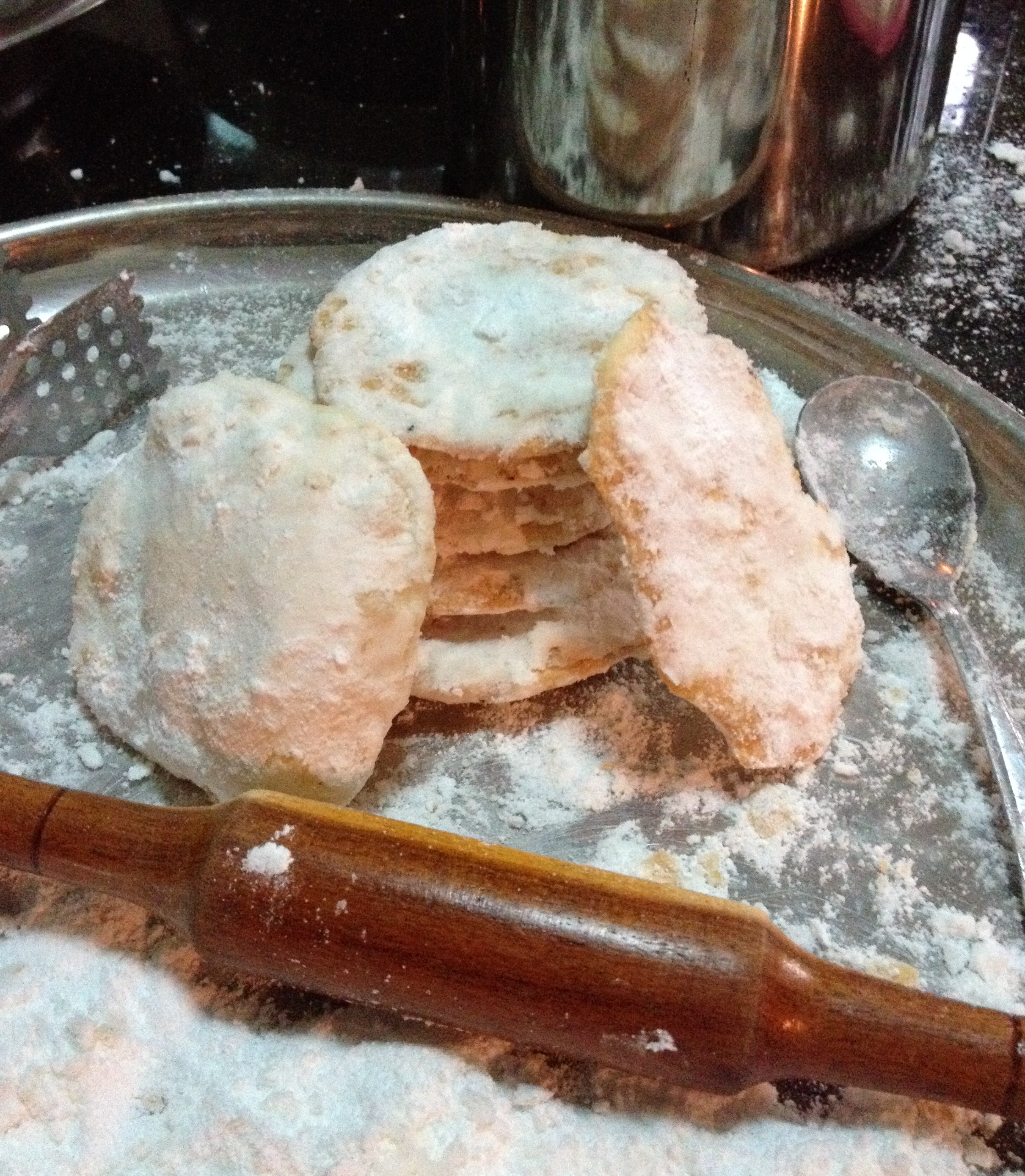
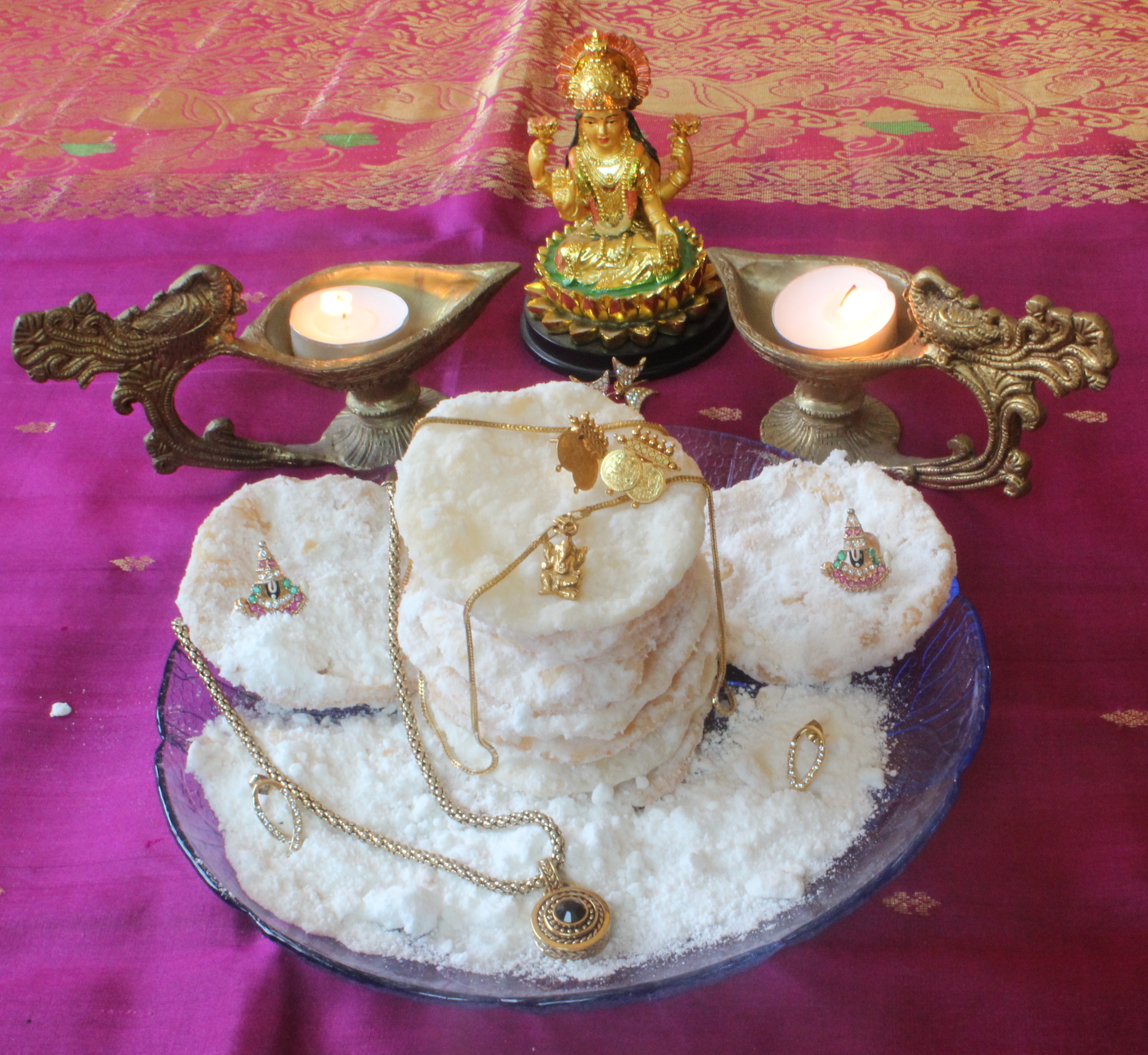
These are deep-fried crisps dipped/rubbed immediately in powdered sugar to get the snowy white finish. It is a simple sweet with minimal ingredients but one should be ready for some interesting variety of work. The sugar that melts in the mouth first is followed by the crispy crunch of the deep-fried discs.

These also involve an efficient team work. Since the count was always in hundreds, amma or aachi would knead the dough; they would take turns in pressing the spheres and frying in oil – the last quintessential part of rubbing the powdered sugar would be ours – mine and my brother… I think I did the rubbing and he contributed more into something which can also be decently termed as tasting!

So I did the rolling and frying and my 6-year-old did the sugar-coating! She wanted to make her own pathirpeni and then I was a proud mother!!


she started off like this….

IMG_3725


and then graduated with flying colours!! – special seven that the little hands made!

IMG_3722

These can be stored in air tight containers after cooled for a week – that’s not a concern as its life ends too quickly! Yet the tastiest crisps are those which directly come out of the oil and are delicately transferred for one’s taste buds to relish, sprinkled/rubbed very quickly with powdered sugar.

One cup of flour (about 150 gms), would yield 20-25 crisps. After a no maida/all-purpose flour and no white sugar life for many years now, this one has been an exception. Might be I try next time with whole wheat flour and brown sugar – but have to sacrifice on the colour as wheat flour would result in brown crisps and then we might call it brownie crisps!

Now to the recipe –
Pathirpeni/Sugary Snow White Crisps


IMG_3385

Ingredients (makes 30-35)


IMG_3426


  • maida maavu/all-purpose flour – 1 1/4 cup (200 gms)
  • cheeni/sugar – 1 1/4 cup (200 gms)
  • thanneer/water – as needed
  • uppu/salt – a pinch
  • nei/clarified butter – 1 tsp
  • arisi maavu/rice powder – 1 tsp
  • yennai/oil – for deep frying

Method of Preparation
1. Sieve all-purpose flour, add a pinch of salt and mix enough water to make a tight dough


IMG_3670

2. Finely powder the sugar and keep in a wide bowl or plate; the deep fried crisps would directly land inside this bowl to have a sugar bath
3. Heat oil in a pan, keep in sim position
4. In a small bowl, mix clarified butter and rice powder
IMG_3673
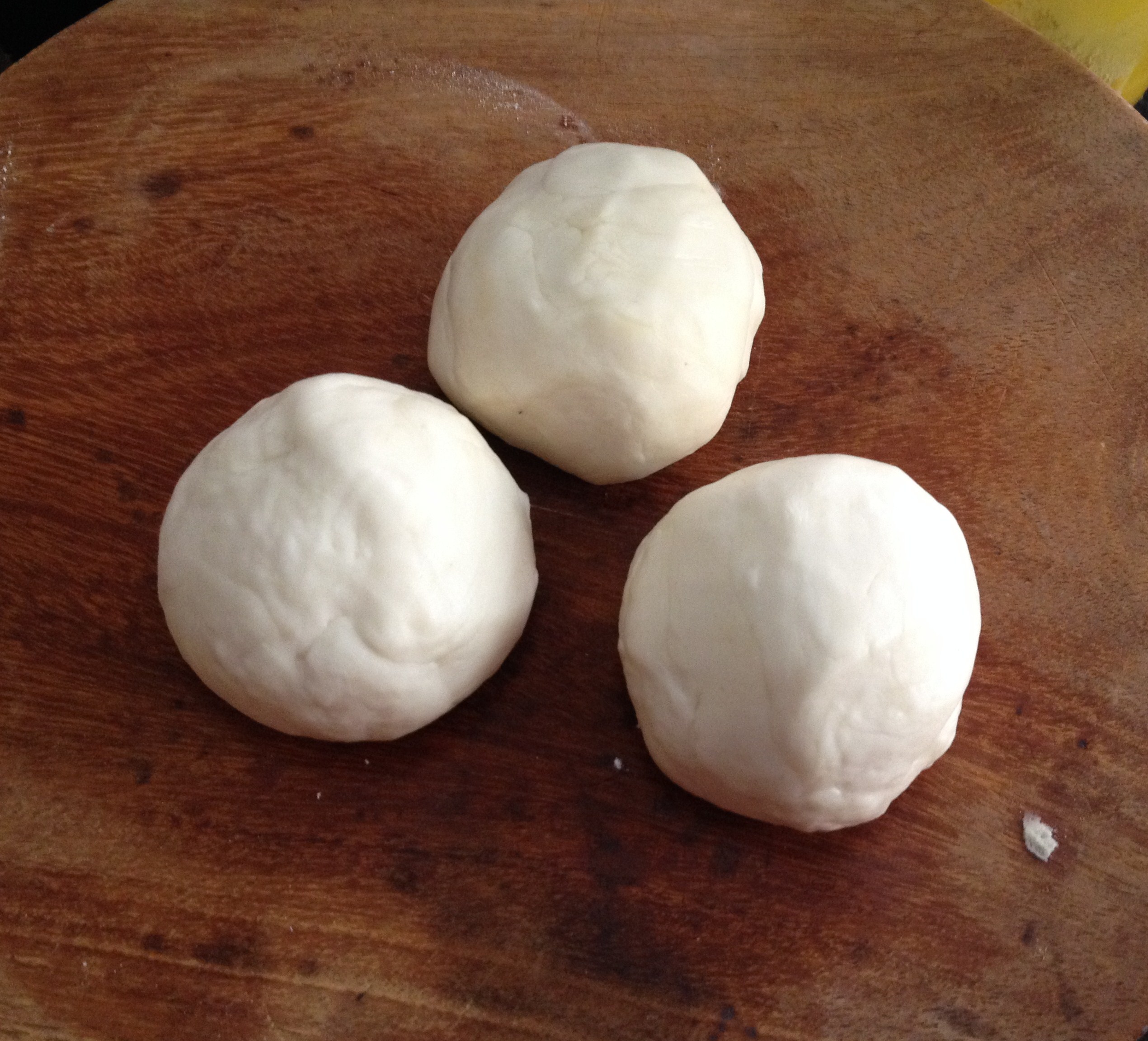
5. Make three even balls of the dough


IMG_3681

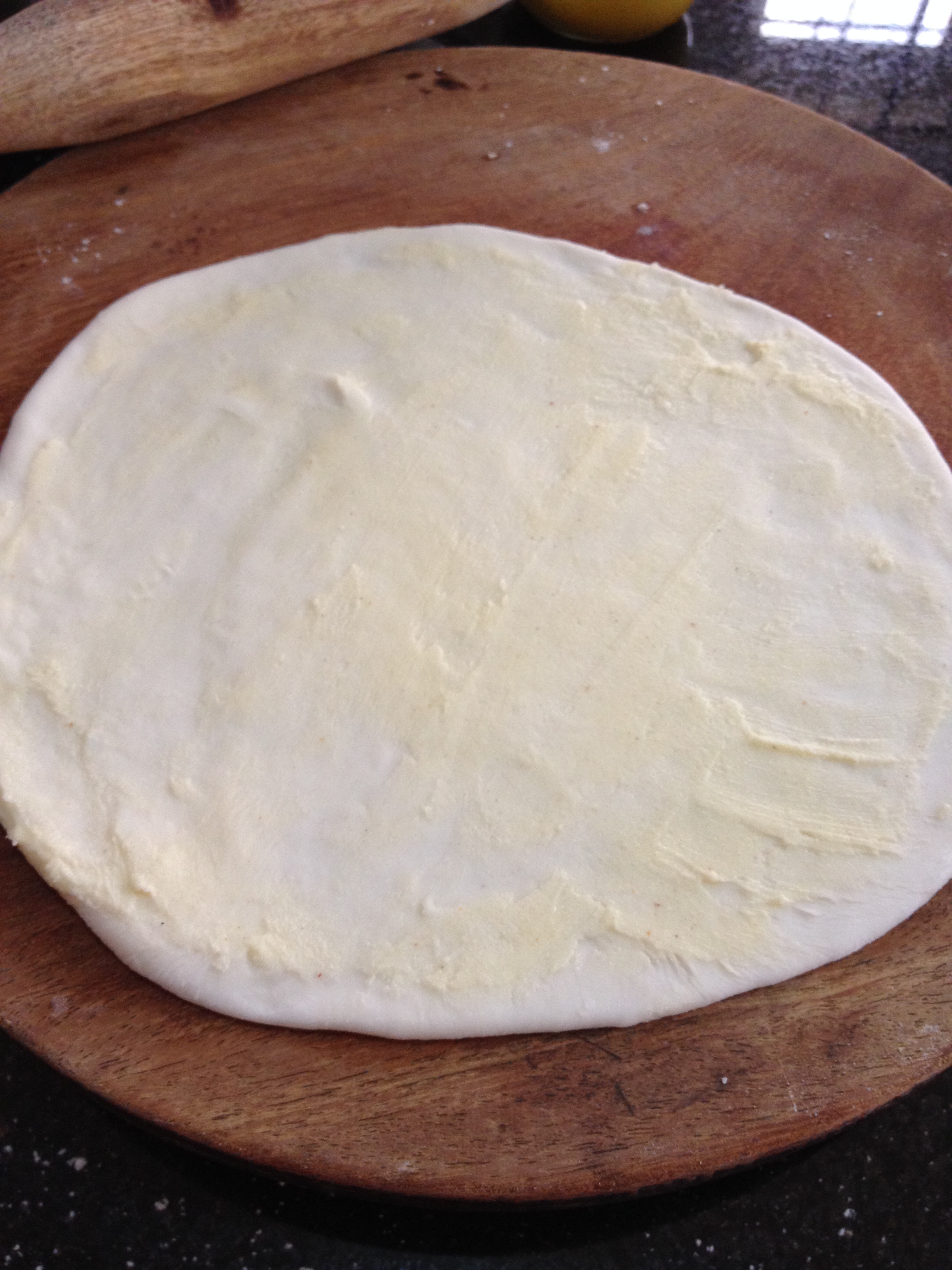
6. Spread into flat breads – chappatis/indian roti size – not too thin, not too thick


IMG_3683

7. Do not place rotis one on top of the other before spreading the mixture as they would stick to each other and one would have to make the three flat breads again. Make one and place on a plate; spread the butter rice powder mixture, make the second one and place on top of the first; spread the mixture and make the third; now place the third on top of the second. It had become messy as I had placed before spreading – I had to do it all over again. So be cautious on this


IMG_3684

8. Roll this triple layered roti . Now it is time to pull the rolled roti as long as possible without spoiling or breaking the texture


IMG_3685


pulled long

IMG_3687

9. Then cut into very small bits, size enough to make small circular crisps

these are little big, i had to make them smaller

IMG_3694

10. Roll into thin crisps – while rolling, see the side which was cut by knife – make thin puris/crisps pressing the knife cut edge into a circle. This helps the butter mixture to stay intact. Otherwise it would ooze out from the puris.


IMG_3688

11. When the oil is ready, roll one by one and fry till crisp. We do not want a fluffy soft puri – make really thin and flat ones that come out crisp
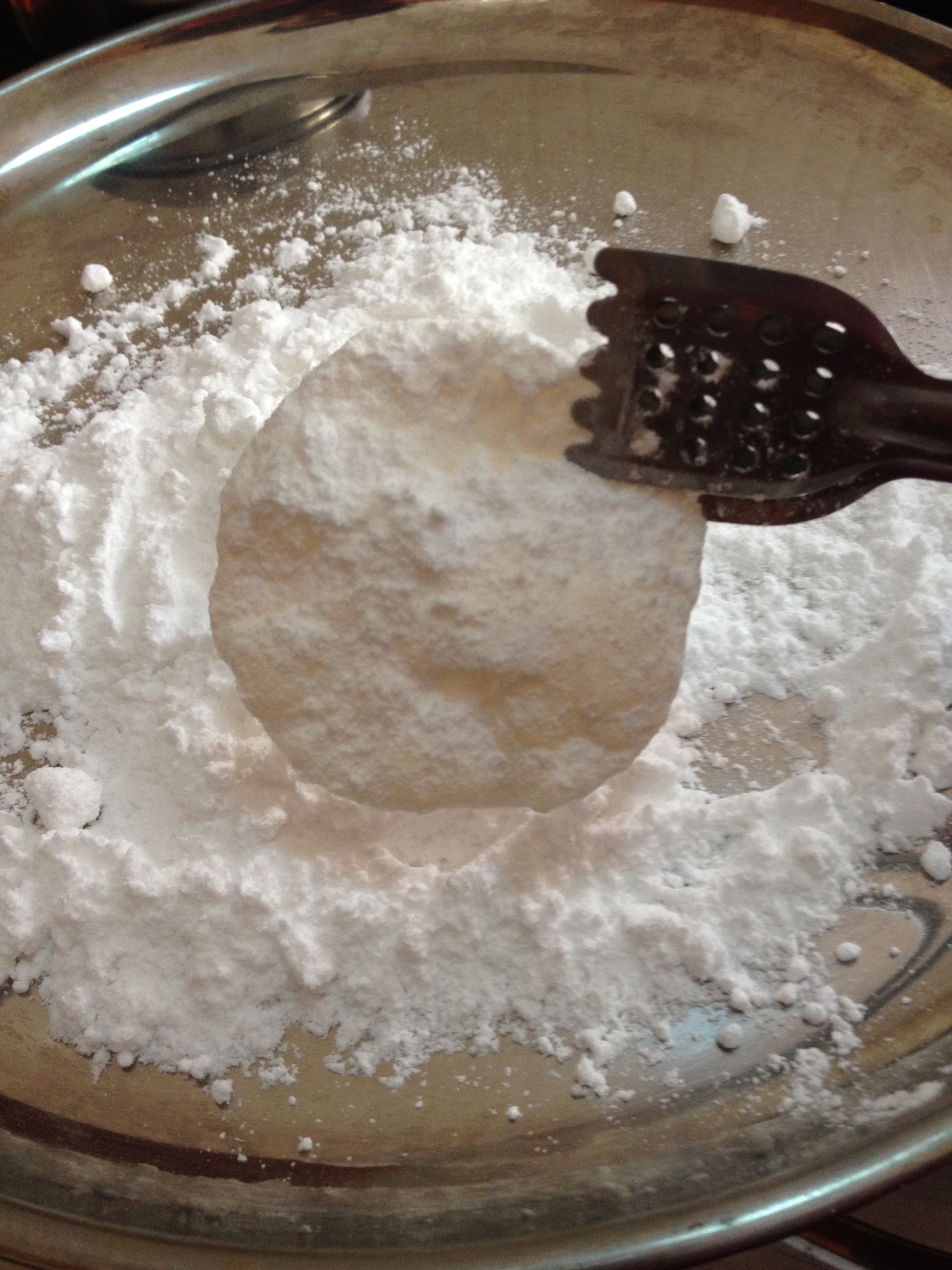
12. Immediately drop it inside the sugar bed and apply well; the powdered sugar must have coated evenly


IMG_3692

13. Tap the crisps slightly to reduce the excess sugar
14. Taste one to enjoy the true taste of pathirpeni – this is the most important step in my opinion; having identified the flaws (making thinner or thicker; right shape; less sugar coating; more sugar coating and so on), proceed with the next
15. Make all the crisps and let them cool
16. Store in an air tight container and enjoy.
17. Do not hesitate to help yourself with more – you won’t get those hot crisps after they are cooled – cannot be microwaved or reheated by any means!
Note:

  1. This is a simple one – yet, some caution on important steps would make it easier
  2. Try one and feel the crispness of it and accordingly try to make corrections on the thinness and crispness of the pathirpeni
  3. Each time, tap a little to take away the sugar if one doesn’t prefer so much sugar
  4. Adding cardamom powder to the powdered sugar might add some aroma and flavor though it is not added normally.


IMG_3367


Ukkarai/Okkarai – Lentil Halwa for Diwali


IMG_2921


The festival of lights is back again! No need for long paragraphs saying Diwali brings in joy and happiness and teaches the traditional values to the younger generation….. Whatever said and done, not said and not done – Diwali or Deepavali in Tamil, brings in loads of sweets and tonnes of savouries – to relish and eat and ofcourse over eat!

So, let’s plunge into some special sweets and savouries one after the other in the coming week. Today it is Okkarai or Ukkarai – a Halwa with two/three lentils and jaggery.

Some make it with all the three basic lentils of an Indian kitchen – red lentil, dehusked green gram and bengal gram or a combination of two of these or just bengal gram. Though amma does not make okkarai, I was re-introduced to this exquisite sweet by my friend Lakshmi in Chennai. When my daughter was very small and we lived in the same locality as theirs, we used to be treated with Okkarai very often and it became one of my daughter’s favourites. The beautiful brown colour, the aroma of clarified butter with the fried nuts added and the flavour of lentils mixed jaggery is just exotic with no words to explain.

Lakshmi, I never knew the effort that was involved in Okkarai until I made it now. So, it is a rekindled, more respectful thanks for the strain you put yourself to!
Recipe adopted from-

In Rajasthani cuisine, Moong Dhal Halwa occupies a special place. To me, it is one of best desserts of Indian Cuisine. I should confess, anyone can swap their home made moong dhal halwa/dehusked green gram halwa – rajasthani style – with the best of my pattu/silk sarees (or my husband’s favourite suits)!!
Okkarai/Ukkarai – Lentil Halwa


IMG_3051

Ingredients (serves 4)

  • kadalai paruppu/bengal gram – 1/2 cup
  • paasi paruppu/dehusked green gram – 1/2 cup
  • thuruviya thengai/grated coconut – 1/2 cup
  • vellam/jaggery – 3/4 cup
  • elakkai podi/cardamom powder – 1/2 tsp
  • nei/clarified butter – 1/2 cup
  • mundhiri paruppu/cashew nuts – 4tsp
  • ular thiratchai/raisins – 4tsp


Method of Preparation

  1. Dry roast kadalai paruppu and paasi paruppu till golden brown
  2. Wash and soak for two hours
  3. Grind into a coarse paste with no water – the same as dry grinding but the lentils are wet as they were soaked – but no water please
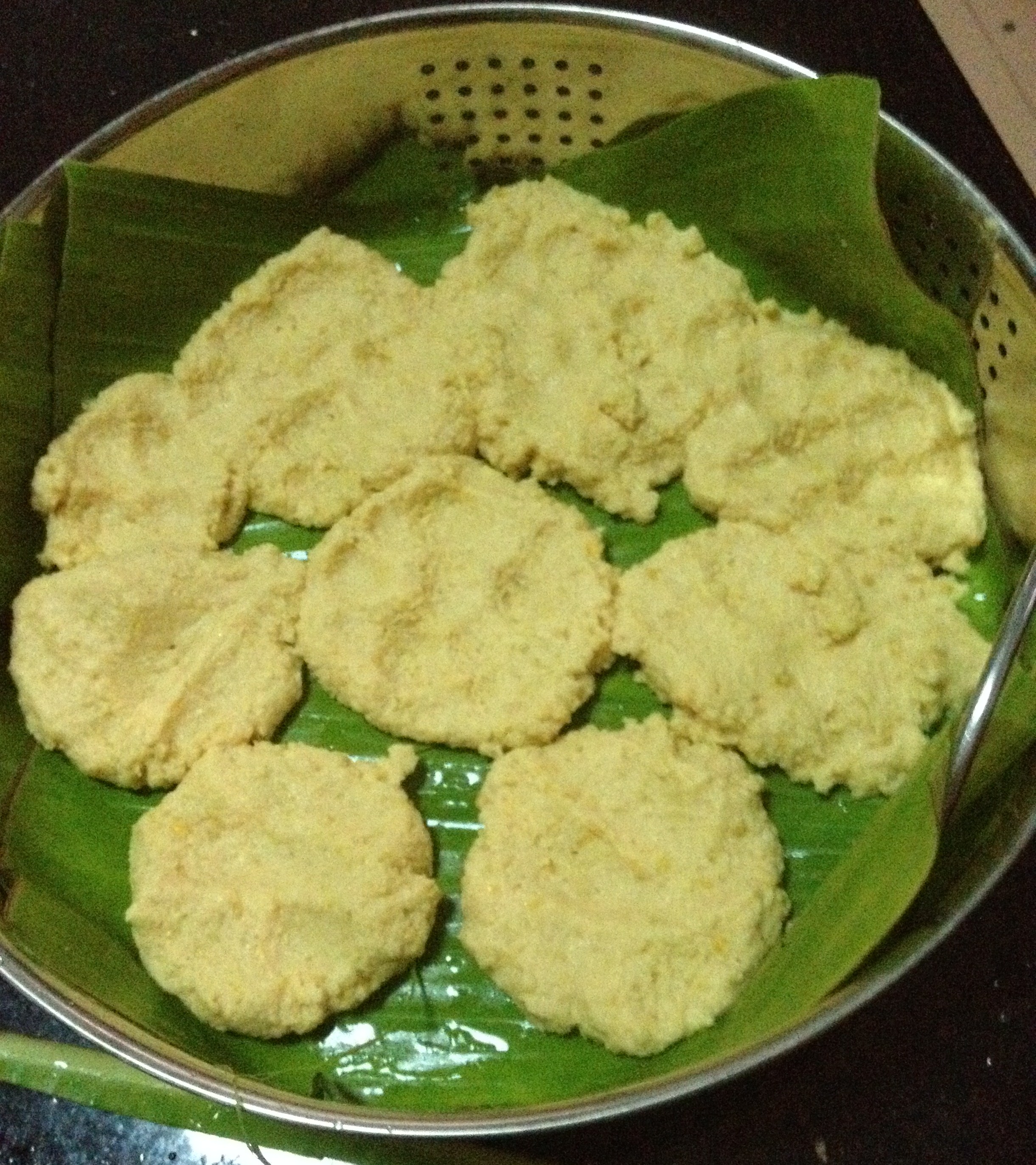
  4. Make small balls and flat discs and steam in a greased tray/mould for about 15 minutes
  5. Dry grind the balls again for an even end product of halwa without lumps
  6. Keep aside the lentil powder
  7. Grate the coconut and keep aside
  8. Heat a little clarified butter in a pan and fry the cut cashewnuts and raisins and keep aside
  9. In a pan slightly heat jaggery in little water until jaggery dissolves completely
  10. Strain it well and place in low heat for a thick syrup  – Even if the syrup is not too sticky like a single string consistence, do not bother. There is enough time while the jaggery gets mixed with lentil powder- but just be careful not to get it burnt
  11. In the same pan, when the jaggery is ready, add the lentil powder to it and start stirring well
  12. Heat the clarified butter into a pourable consistency and add to the jaggery, lentil mixture while getting cooked. This helps the mixture from sticking to the bottom of the pan
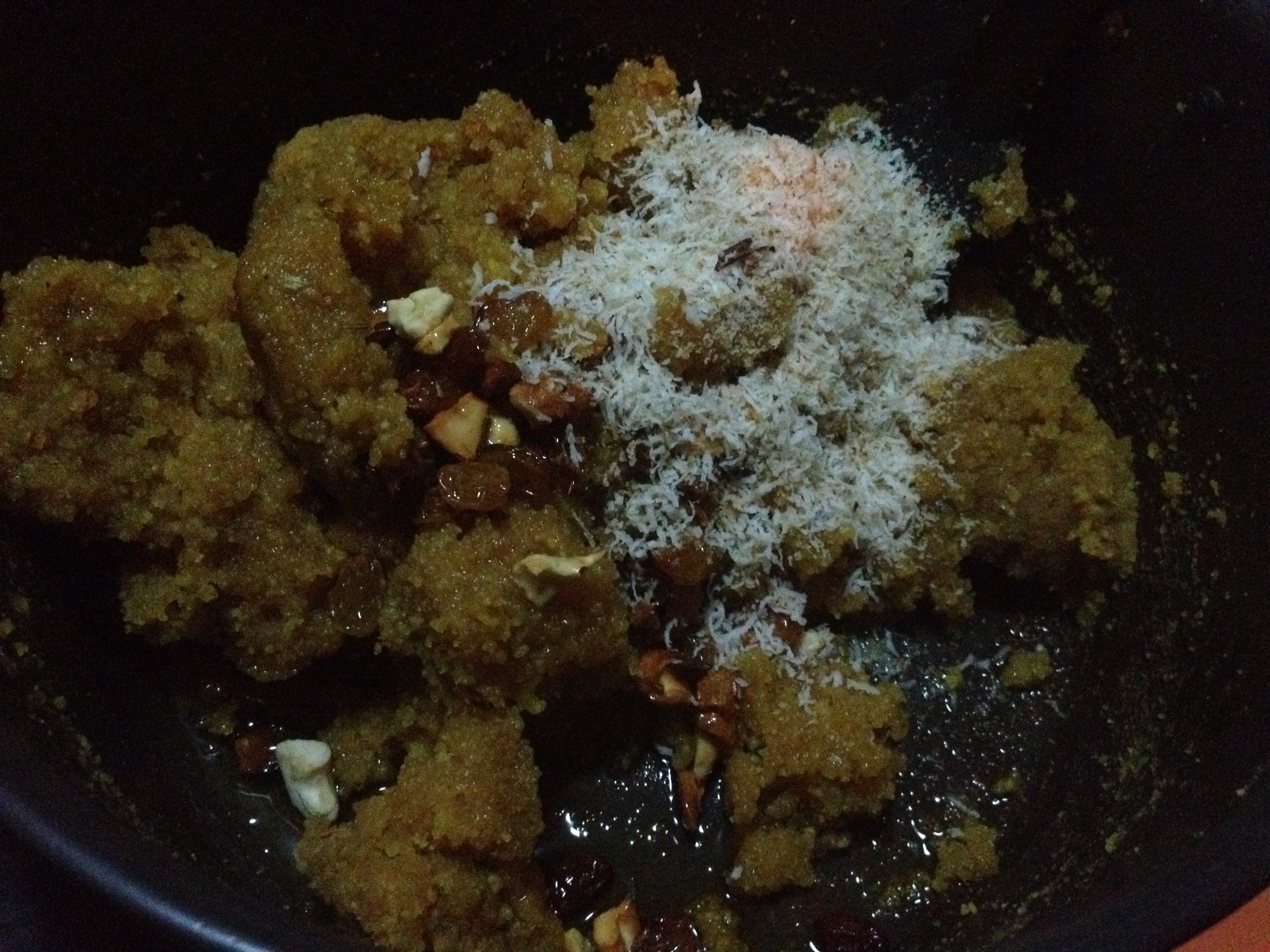
  13. Add the fried cashews and raisins
  14. Stir well till jaggery is completely absorbed by the lentils and a smooth halwa consistency is arrived
  15. In the end add the grated coconut and mix well till the raw smell and juiciness of coconut is gone
  16. Tastes best when served hot.


roast the lentils together

IMG_3209


after soaking, grind and steam the mixture

IMG_3211


then, dry blend to avoid lumps

IMG_3214


mix well with fried nuts and grated coconut

IMG_3234


Notes:

  1. Quantity of jaggery depends on each family
  2. As mentioned above, addition of red lentils is another option
  3. I used banana leaves to steam the lentil mixture for some extra aroma
  4. Add the lentil powder to syrup jaggery or pour in the jaggery syrup into the pan of lentil powder – either way the halwa would come out the same
  5. Quantity of nei/clarified butter can be altered. I love nei in my sweets – hence this quantity. If one prefers lesser clarified butter  -feel free to reduce it. The texture of ukkarai would be slightly powdery – like Puttu (steamed rice cylinders) and hence, okkarai is also called ‘Paruppu Puttu’, I learnt it now.


IMG_2941

Inippu/Vella-k-kozhukkattai/Jaggery Rice Dumplings – Steamed

IMG_2230
Pillayar Chathurthi/Ganesh Chathurthi/Vinayaka Chathurthi falls on September 9 this year. It is Poorana Kozhukkattai – Stuffed rice dumplings or Modhakam the favourite of most of the households. (For Modhakam – see modhakam-pillayar-chaturthi-special.) There can be variations in the stuffing too – coconut-jaggery filling or sesame-jaggery. I hear some make kadalai paruppu/Channa Dhal – jaggery filling in their Poorana Kozhukkattai! Uppu Kozhukkattai (pidi-kozhukkattai-karamsalted-rice-dumplings) and Vella-k-kozhukkattai are the dumplings which have no stuffing but a mixture of few ingredients to make the kozhukkattai sweet or spicy.

Vella-k-kozhukkattai is the sweet rice dumpling. Vellam means Jaggery in Tamil language and Kozhukkattai is Rice Dumpling. The taste of coconut and jaggery blended with cardamom powder tastes heavenly and is versatile in south indian cooking.  It can be made as Poorana Kozhukkattai/Modhakam, Poli – sweet stuffed chappathis (poli-a-different-story/) or non-stuffed plain-mixed rice dumpling, which is what I am writing about today – Vella-k-Kozhukkattai!

This steamed rice dumpling has the simple mix of grated coconut, jaggery and cardamom powder with the core ingredient – rice flour. This is yet another version of ‘Pidi Kozhukkattai’ – Given the shape by pressing with hands! This can be a healthy snack for children any time – and what more those little hands can make their own shapes and munch them too!!

For the initial procedures of grinding rice flour and roasting it to be ready to make dumplings – please see https://dosaikal.com/2013/07/29/pidi-kozhukkattai-karamsalted-rice-dumplings. We directly move on to make the dough ready for kozhukkattai.
Vella-k-Kozhukkattai/Steamed Sweet Rice Dumplings(with Jaggery)

Ingredients

  • arisi maavu/rice powder – 1 cup
  • vellam/jaggery – 1/2 cup (for the sweet toothed can make 3/4)
  • thengai thuruval/grated coconut – 1/2 cup or more as per taste
  • elakkai podi/cardamom powder – 1/2 tsp
  • thanneer/water – 3/4 cup
  • nallennai/gingelly oil – 1 tsp to grease hands and 1 tsp to grease vessel/idli plate


IMG_2175


Method of Preparation
  1. Dry roast the ground rice flour to take away the raw smell out of it
  2. Sieve the flour, remove granules away and take the required quantity of smooth flour in a wide bowl to mix all the ingredients in
  3. Mix grated coconut and cardamom powder to rice flour
  4. Dissolve jaggery in water and strain for impurities
  5. Boil jaggery-water in sim position for 3 minutes – this would not make a thick syrup but yet a thin syrup which will blend well with rice flour
  6. Pour the hot syrup on rice flour and mix well into a soft dough
  7. Add jaggery syrup carefully because more water might make the dough sticky.  Stop when you feel water is enough to make a soft dough
  8. Half teaspoon of nei/clarified butter can be melted and pour in the dough for some festive aroma, which is purely optional
  9. The dough should be neither sticky nor dry
  10. Slightly grease hands with gingelly oil/clarified butter, so that dough doesn’t stick to hands
  11. Take small portions in hand and press slightly with fingers, to get the beautiful impression of fingers in the rice dough
  12. Steam for 8 to 10 minutes.
  13. Always grease the bowl/idli vessel before placing kozhukkattais to steam. This helps dumplings from not sticking to the vessel
  14. Inippu Vella-k-Kozhukkattai/Sweet Jaggery Dumpling is ready.


IMG_2233


Notes:
  1. Since the rice flour is dry roasted, cooking time is less.
  2. Always sieve the ground flour after roasting. Granules tend to form while roasting.
  3. Always make thin jaggery syrup first and filter as jaggery of any kind would have mud/sand particles in it.
  4. Too thick a syrup would make dumplings harder – Be careful not to make a thick syrup .
  5. I somehow feel comfortable with the syrup if boiled a little while. So, I let the jaggery water boil a bit but yet not loose its thin consistency. Then add to rice flour-coconut-cardamom powder mixture.
  6. Thin jaggery syrup should be boiling hot. By this, the rice flour becomes cooked a bit.
  7. If one is using rice flour from shops, use the flour meant for Idiyappam-string hoppers and do not forget to roast it a bit.
  8. Thick dough might make dumplings hard and sticky dough might not result in dumplings at all. A slightly soft yet tight dough is needed for soft kozhukkattais.
  9. Any problem with the shape, just make small balls and steam.
  10. Both Kaara-k-Kozhukkattai and Vella-k-kozhukkattai would become dry too quick. For immediate consumption, keep in a hot case. Or else, cover it well and lightly steam before serving. Never leave it open.


IMG_2218

Entering Year 3! Paasi Paruppu Payasam/Dehusked Green Gram Pudding/Kheer


paasi paruppu payasam

IMG_1297


The second year of blogging has not been a continuous writing affair… though there was no end to cooking affair! Too much into packing, shifting places, entering new places and faces, unpacking and settling has been quite tedious. When I look back, the previous year has been a slow-paced one… sometimes out of sight for a couple of months too. But I feel overwhelmed by the support I have received in spite of those long intervals.

NANRI – Thanks a ton – for understanding my absence for short periods!

During this period of settling down, the new subscribers that joined hands with me and my old friends who have been continuously keeping pace with my posts, have made me feel more guilty of not having settled sooner and not having posted more. I shall surely try to compensate on that this year.

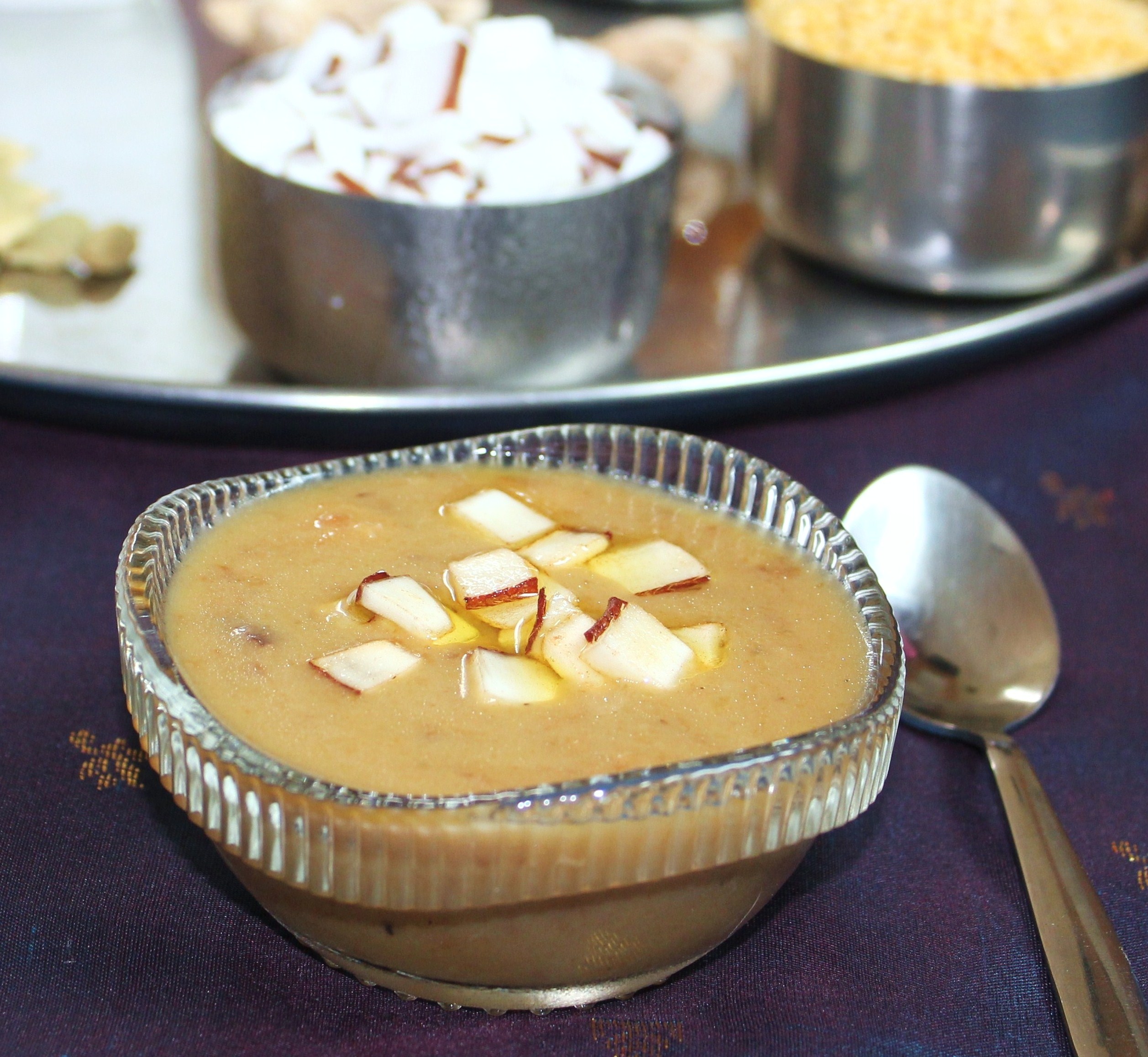
As usual, let’s enter another year with a sweet dish. This is one of my favourite payasams, of course next to Adai Pradhaman (https://dosaikal.com/adai-pradhaman-ada-pradhaman).J aggery and coconut milk make a sweet dish heavenly! This is one such payasam/pudding/kheer, with dehusked green gram. Generally, in payasams or any sweet dish, nuts are roasted or fried in nei/ghee to add richness and flavour. Here, traditionally, thinly cubed coconut pieces are fried in nei/clarified butter and added to the completed payasam. The coconut pieces can be added with fried cashewnuts. But, they can taste good all alone without the nuts too! Here, I have avoided the nuts and added fried coconut pieces alone.
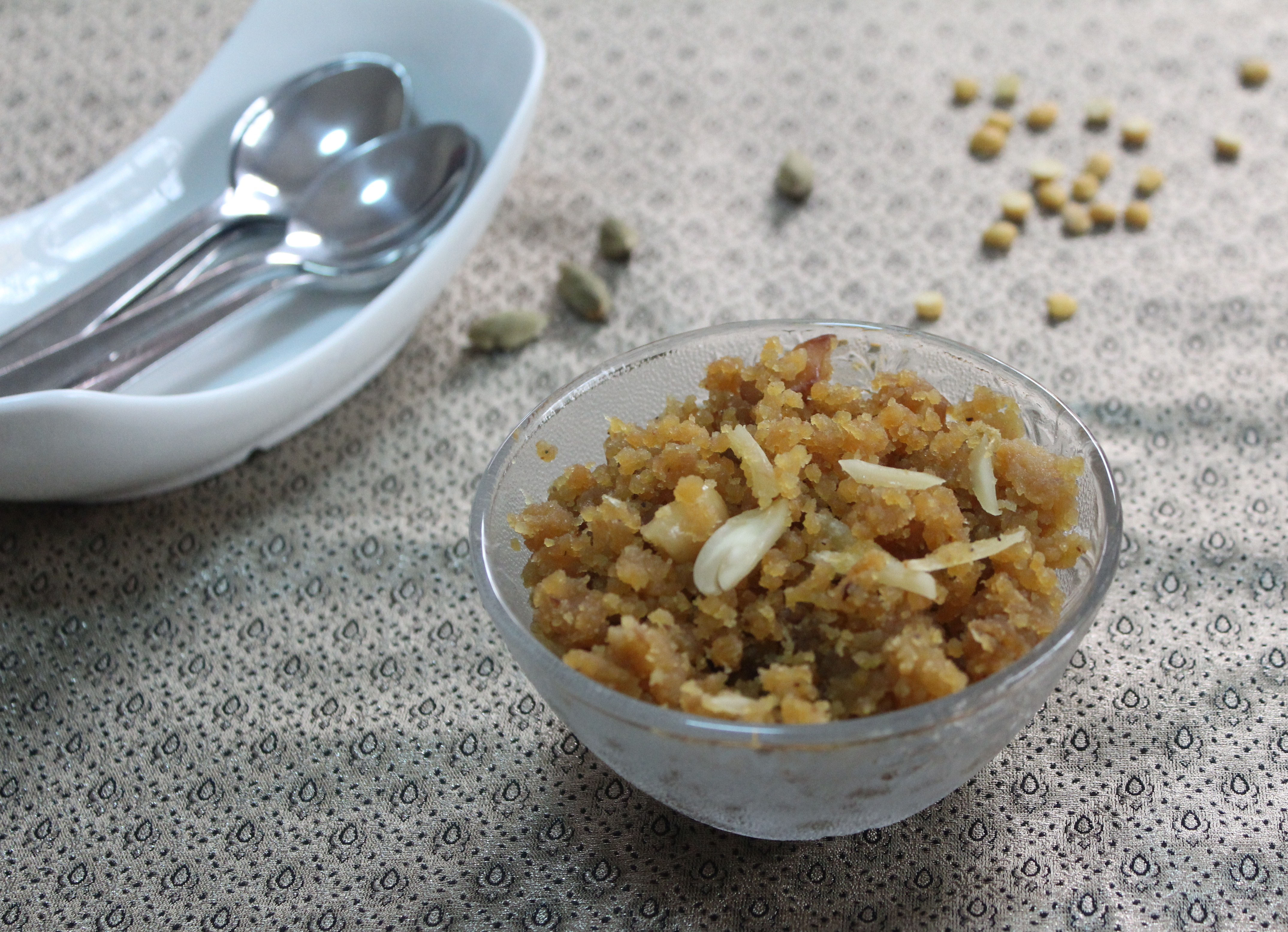
I have seen aachi and amma always use chukku podi – dry ginger powder when jaggery is used in sweets. Adding dry ginger to jaggery helps in avoiding acidity and gastric problems. When the dish has coconut milk to make it a heavy intake, chukku podi/dry ginger powder would aid in easy digestion too!
 

Paasi Paruppu Payasam


IMG_1316
 

Ingredients (serves 4-6)

  • paasi paruppu/dehusked green gram – 3/4  cup
  • vellam/jaggery – 1/2 cup
  • water – 1/4 cup to dissolve jaggery
  • thengai pal/coconut milk – 1 and 1/2 cup
  • chukku podi/dry ginger powder – 1/2 tsp
  • elakkai podi/cardamom powder – 1//2 tsp
  • thinly cubed coconut pieces – 3 tblsp or lesser as per preference
  • nei/clarified butter – 2 tblsp


Method of Preparation

  1. In a pan, roast dehusked green gram till golden brown, no oil or butter needed
  2. In the same pan, fry coconut pieces in clarified butter till golden brown
  3. Cook the gram in pressure cooker with enough water till done; do not overcook
  4. While the green gram is getting cooked in the pressure cooker, dissolve jaggery in just enough water (1/4 cup). Strain it to avoid impurities
  5. Now on, the preparation is really easy and simple – Strain jaggery into the pressure cooker with cooked lentil
  6. Add dry ginger powder and cardamom powder and bring the mixture to a slightly thick consistency; if the cooked lentil is already thick and with very less water and the addition of jaggery has made it thicker, not to worry – add very little water if needed. This might help blending jaggery well with the lentil
  7. When jaggery is well blended with cooked lentil, add coconut milk. I used canned coconut milk
  8. If the payasam is too thick in consistency, add 1/2 cup water to dilute it.  If one likes the thicker version, can avoid adding more water
  9. After coconut milk is added, too much cooking and boiling might make coconut milk curdle due to the presence of jaggery
  10. Bring to a single boil and switch off the stove
  11. Transfer to a serving bowl and mix the fried coconut pieces with nei/clarified butter
  12. Serve hot.


Note:

  1. Do not roast the lentil too dark as the payasam would lose perfect colour.
  2. Coconut pieces should be really thin.
  3. Keep track of the amount of water in cooking the lentil and soaking jaggery… too much water would result in too much cooking time in reducing the lentil-jaggery mixture before adding coconut milk.
  4. The quantity of jaggery here is for a mildly sweetened payasam. Those who prefer more sweetness in their payasam can add a little more jaggery
  5. The most important thing is the coconut milk. Adequate care should be taken not to curdle the milk.
  6. REHEATING: Do not reheat the payasam directly on stove as it may curdle or the lentil would get burnt at the bottom. Heat slightly in microwave or Boil water in a vessel and place a steel bowl of payasam to heat up.


IMG_1297
 

Wait..Wait…

This is not as complicated as the points mentioned above! But actually, just take care of the coconut milk alone.

If one notices, I have emphasised a bit too much on water. It is just to say that one need not panic if lentil has less water or more water. Add more water wherever needed and incase of excess water, boil it to bring to required consistency. Just one thing to remember, all alterations of boiling should be before coconut milk is added.

If lentil is overcooked, not to worry. This payasam tastes good with overcooked lentil too! Personally to me, doesn’t make big difference. The taste of coconut milk with jaggery takes care of everything.

One last thing….
Forgot to reduce water before adding coconut milk…… not to worry again!  Instead of a bowl, serve in a tumbler/glass as we do at home in Tamilnadu!!

Ravai/Rava Kesari – Semolina Pudding


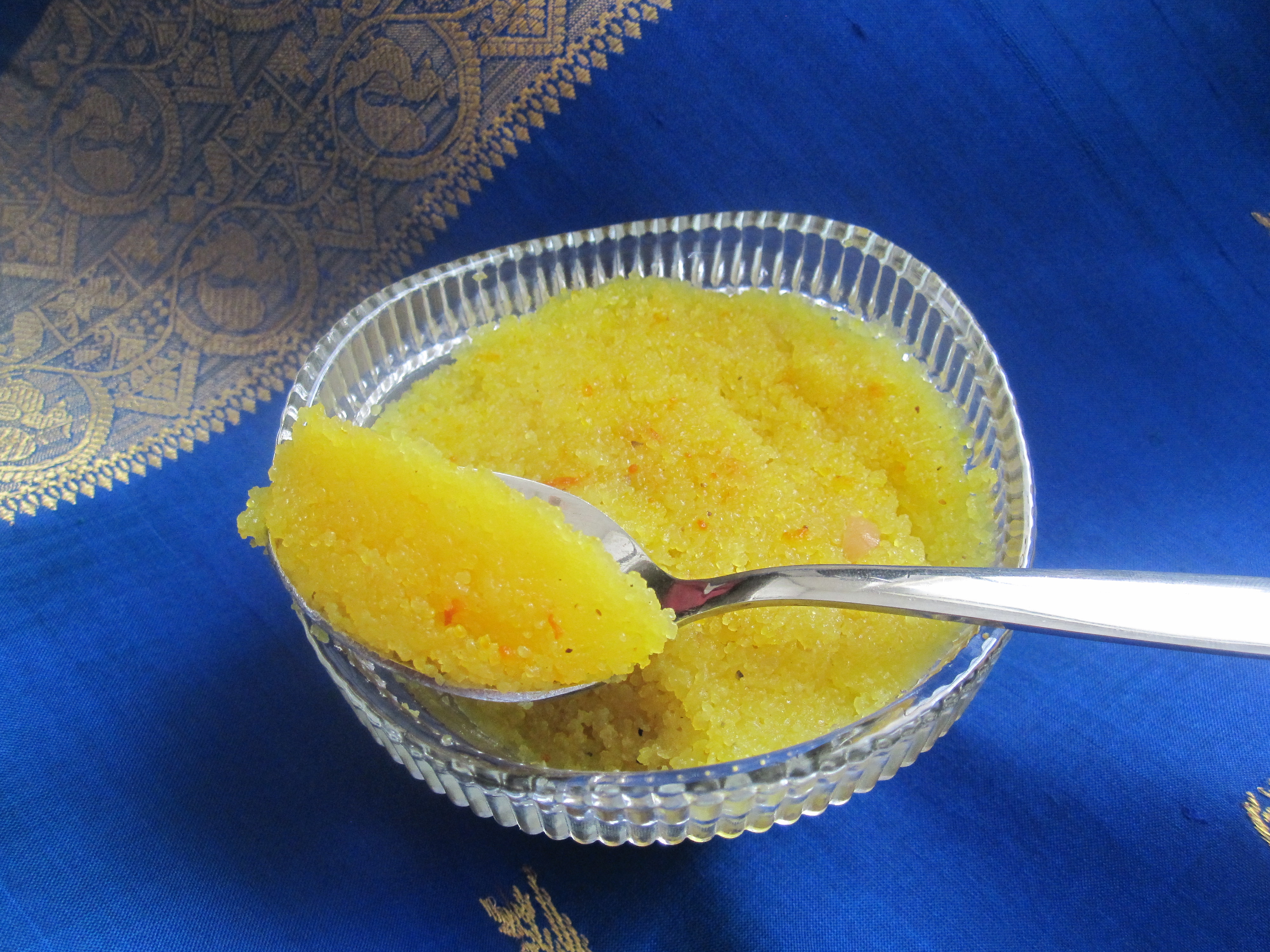
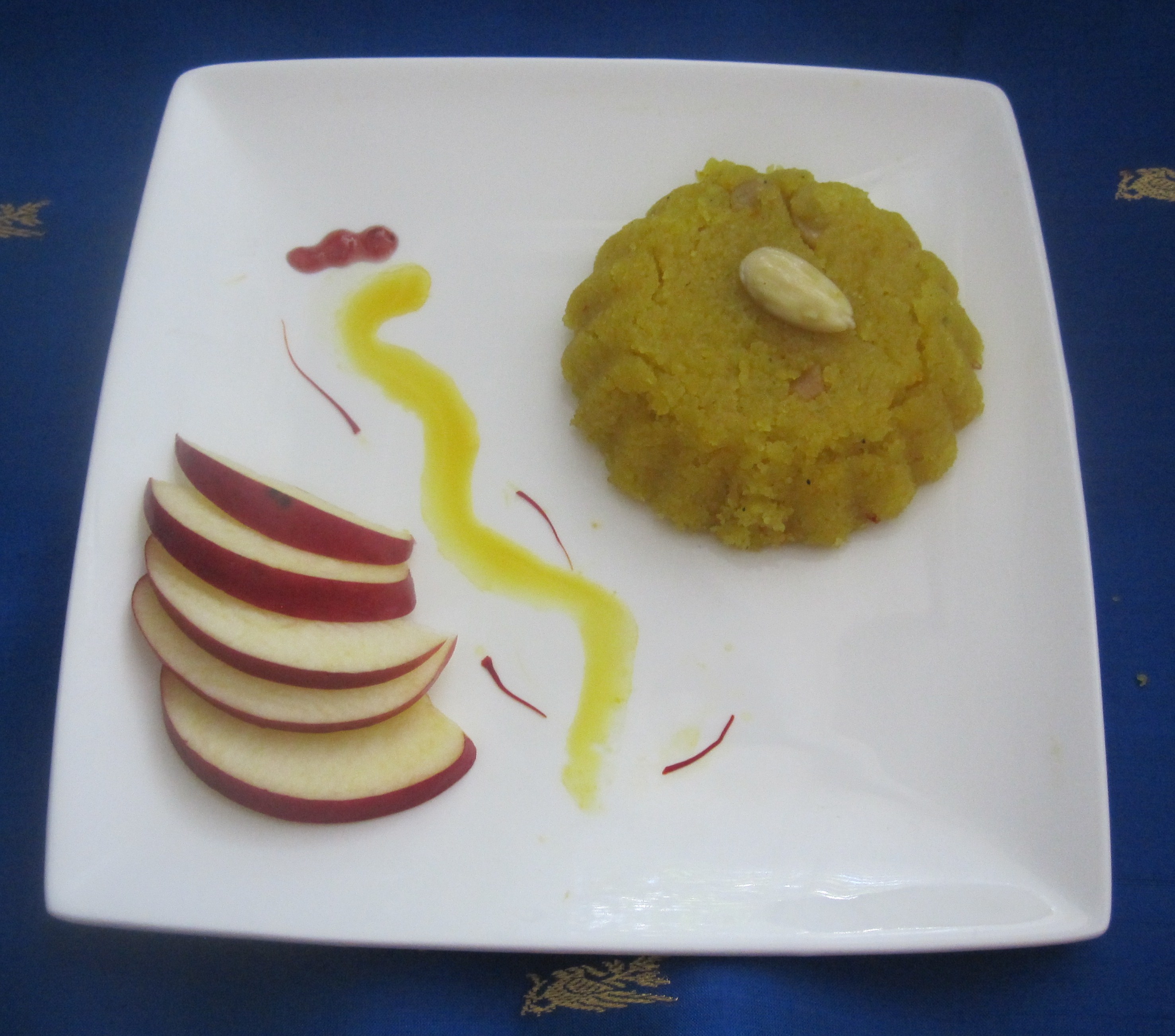
kesari


When we start anything new, we always start with a sweet. Now, when ‘dosaikal’ is stepping forward into another new year, let us enter with a sweet. Birthday of any member of the family or Marriage Anniversary is celebrated with the person/couple’s favourite payasam (of course cakes for youngsters in the evening); Entry into a new house – ‘pudhu manai pugu vizha’ in tamil or the house-warming ceremony is started in the new kitchen by boiling milk with sugar/jaggery flavoured with cardamom; Festivals begin with specific sweets of the occasion early in the morning. So, where does this Ravai/Rava Kesari come in ….?

It is a simple and quick sweet dish which accommodates itself on all occasions.

In marriage ceremonies, the morning breakfast served for guests in the ‘Thirumana Mandapam’ – Marriage Hall, would start with kesari; 

In some families, during the ‘bride seeing ceremony’ – when the family of the bridegroom visits many of those ‘expected eligible brides’ to choose a perfect life partner for their son – sojji (kesari) and bhajji (vegetable fritters) are served. Kesari is also known as ‘sojji’ – (must have come from the hindi word for ravai/semolina – sooji);

Sudden guests? – there is always the simple Kesari – quick and pleasing;

To start a breakfast feast menu, to go with a snack and filter kaapi (https://dosaikal.com/2011/08/18/the-morning-cup-of-coffee) for evenings or as and when to satisfy the urge of the extra sweet tooth – the versatile ravai/rava kesari is certainly a show stealer – and one of my favourite sweets.


The name Kesari

Kesar denotes Saffron.


The name saffron comes from Arabic, where the spice is known as za’fran that name derives from a Semitic root signifying “be yellow” or “become yellow”. Almost all European and several non-European languages have loaned that name. 

Several superficially similar Indic names of saffron (Sanskrit kesaravara, Hindi kesa, Urdu kisar) are, however, not related but derive from Sanskrit kesara “hair”, which refers to the thin, almost hairlike saffron threads.  (http://kesarwani.net/Pages/Etymology.aspx)


In Tamil, saffron/kesar is called kungumapoo – combination of kungumam and poo. Kungumam/Kumkum is the red coloured mark applied on the forehead, by women in India (mostly Hindus) and religiously by both men and women; Poo means flower. So, Kungumapoo means the vermilion coloured flower.

Kesar – kungumapoo – saffron is grown in Kashmir, a state in northern India. In the south of India, the world’s most expensive spice is used in rarity – I think mostly expecting mothers add to their glass of milk.

In North India, Semolina Pudding is called Sooji ka Halwa – literally translated as semolina halwa/pudding. Sooji ka Halwa does not have the touch of saffron – it has the subtle colour of roasted semolina in clarified butter. But, the south indian version of semolina pudding has the colour of saffron and hence it must have got its name KESARI. Nowadays, generally, orange food colour is added to Kesari for the colour. In many households, kungumapoo/saffron is added to give Kesari the original saffrony colour.

Now, to the making of Kesari!


Kesari

Ingredients (serves 6)

  • Ravai/Rava/Semolina (sooji) – 1 cup
  • sarkkarai/sugar – 1 1/2 cups (
  • thanneer/water – 4 cups
  • elappodi/cardamom powder – 1/2 tsp
  • nei/clarified butter – 1/2 cup
  • mundhiri/cashewnuts – 2 tbsp
  • kungumapoo/kesar/saffron – a few strands 


Method of Preparation

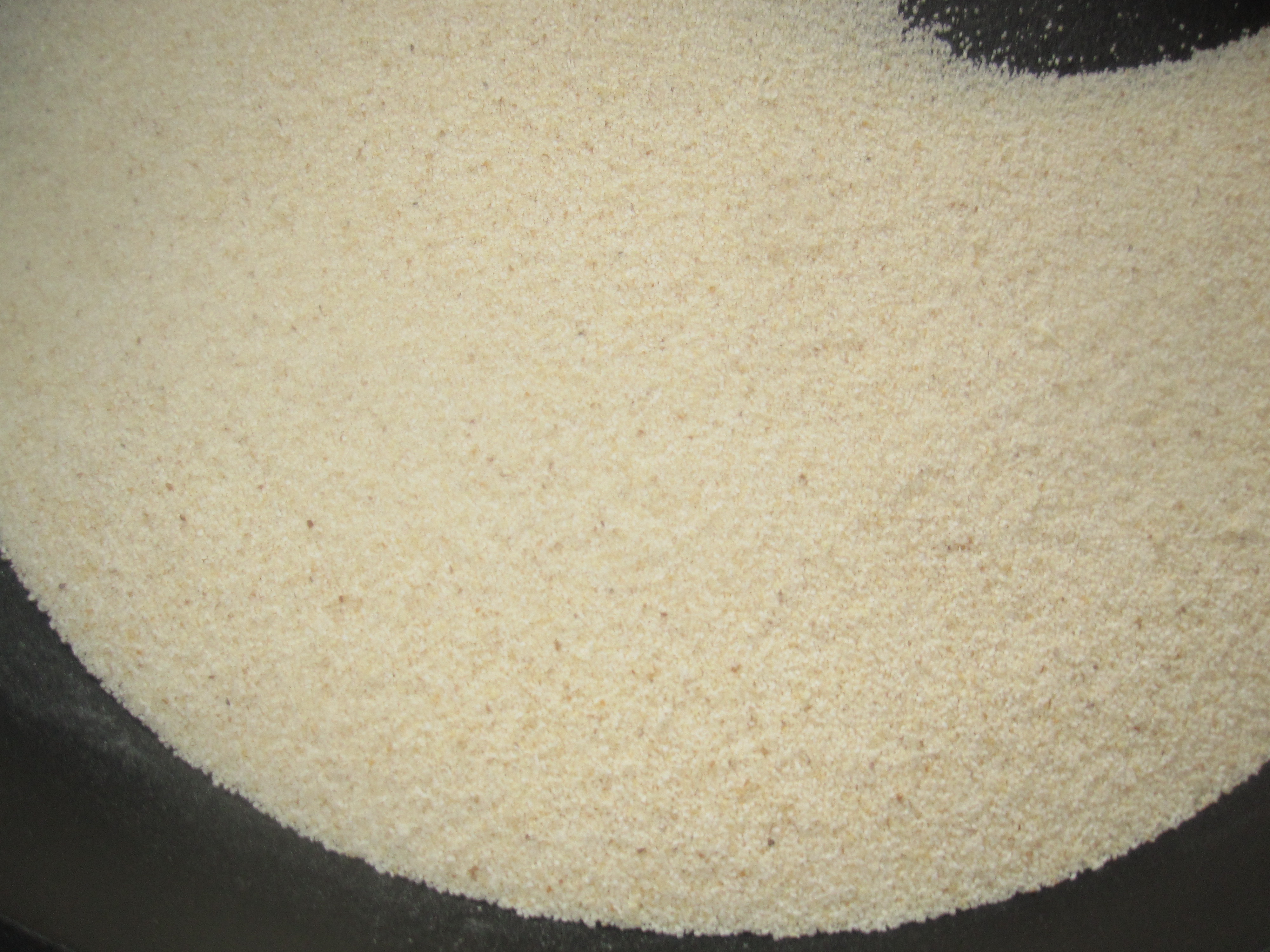
1. In a broad pan, roast ravai/semolina till it gives out a roasted aroma and starts turning golden brown (should not be completely golden brown)


2. Spread in a plate and keep aside


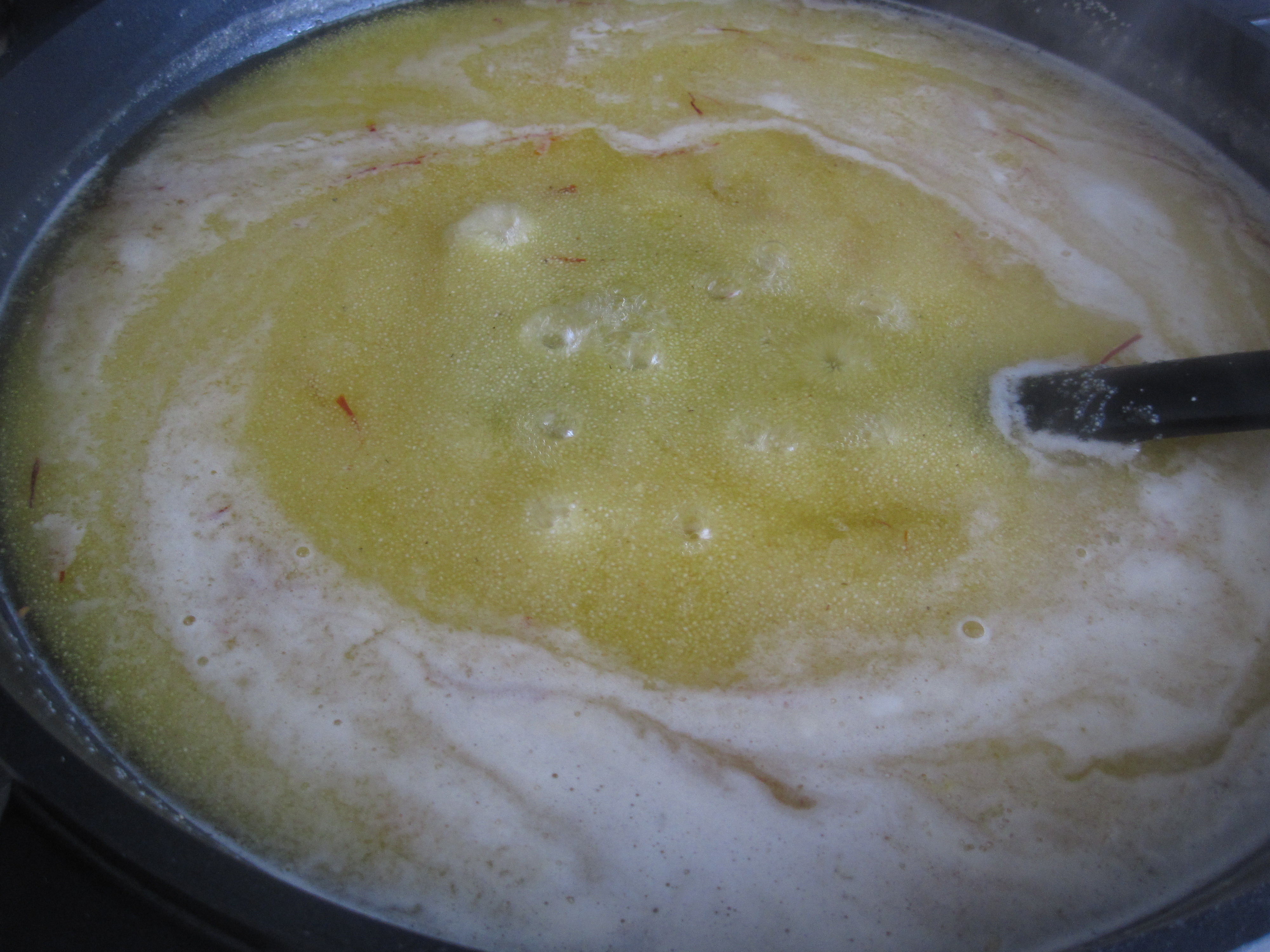
3. In the same pan, boil 4 cups of water, sugar, saffron strings and cardamom powder


4. Close the pan with lid to bring to a boil quickly 

5. Simmer stove at this stage

6. Slowly add roasted ravai- be careful with constant stirring as lumps form very easily (Add ravai with one hand and keep stirring with the other)


7. Keep stirring till ravai/semolina absorbs all water and comes to a thick consistency

8. Do not forget to stir continuously till the whole mixture thickens

9. As soon as the mixture is thickened, immediately in another stove,  fry the cashew nuts in nei/clarified butter (let the stove be in sim position only)

10. Pour this into the nearly done kesari and mix well


11. Close the lid and cook for nearly five minutes

12. After the addition of nei/clarified butter, the texture of kesari reaches the much awaited ‘melt in the mouth consistency’


13. Serve hot for a heavenly taste

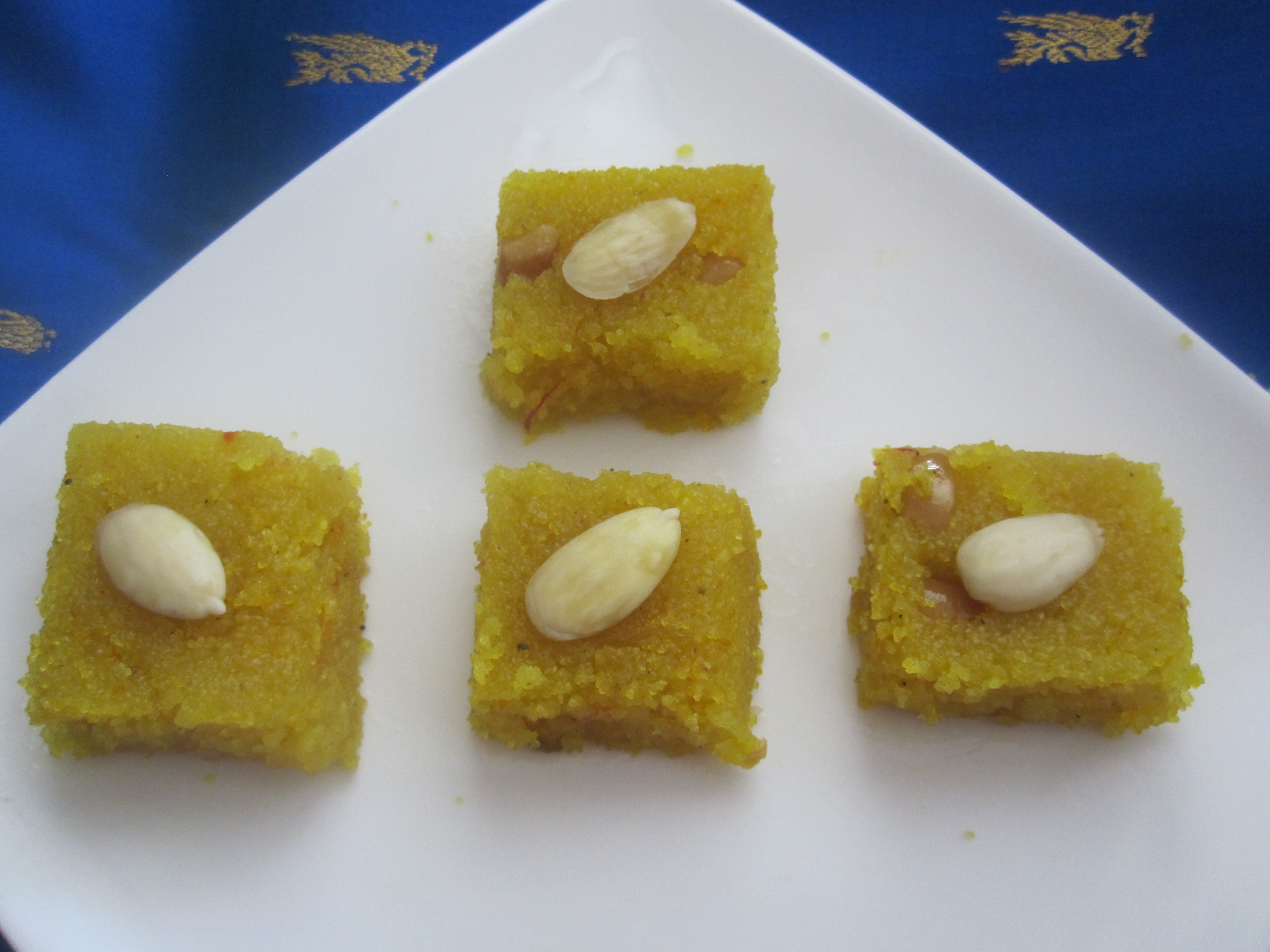
14. Alternatively, cool kesari and cut to required pieces and garnish with almonds.


or serve as you wish!


Note:

  1. Though Ravai Kesari is a very easy sweet – lumps form very easily when ravai/semolina is getting cooked. To avoid this, stirring continuously is the only remedy
  2. While roasting, be cautious not to let ravai brown too much
  3. Generally, 3 cups water is taken for 1 cup ravai; I find this level insufficient for a super soft kesari. So, I use 4 cups of water, which lets ravai/sooji/semolina cook well and would not let semolina thicken before getting cooked
  4. Though quantity of nei/ghee/clarified butter can be reduced as preference, the above mentioned ‘melt in the mouth’ consistency would be compromised…so, the choice is yours
  5. If the last method of frying cashew nuts in nei seems complicated with kesari in one stove, one may roast cashewnuts separately and then heat the nei separately to add to kesari 
  6. Always pour hot nei/ghee/clarified butter into cooked kesari to bring out the best consistency.

The Tricky Athirasam!

***Updated on 03rd November 2016
img_7799

Deepavali as we know is marked by the sweets and savouries made for the occasion. The day of Deepavali starts with the early morning oil bath, new dresses, poojai with the – ever tricky athirasams. Athirasams are fried delicacies made of rice flour and jaggery. The texture of athirasams depend on the jaggery syrup and quality of rice flour. Generally, raw rice is soaked and dried at home and powdered, then used with jaggery syrup to make this exotic sweet. But rice flour from the store (fine quality) can also be substituted. The result might not be the best. I have used rice flour from shop – the shop did not have raw rice but had rice flour – hence I opted to settle with that.

Athirasam as the name suggests means very tasty or might be ‘x’ factor in taste! It certainly has it. All other sweets and savouries are prepared the day before Deepavali and Athirasams are a morning poojai affair. At my parent’s home on the Deepavali morning, as children we would be busy trying the new outfit/outfits and enjoying sparklers and crackers. So, I did not really have the experience in helping or making athirasams  – it was restricted to tasting alone.

After marriage, specially at my husband’s granny’s (paatti) home, I could be part of the athirasam making team of youngsters! The chief cook is always the octogenarian or nonagenarian granny – she doesn’t know her age – but calculating through her first son’s age, she could be in her nineties, but by her active cooking abilities – this is difficult to admit.  She makes flat athirasams on banana leaf, and guides her helpful daughter-in-laws to fry them to perfection, and other grand-children would be pressing excess oil out of the hot athirasams… This was thoroughly a watcher’s delight! First time, I joined the children’s gang to press out oil (atleast a hundred athirasams would be fried); Next deepavali, I graduated or got a double promotion sitting near paatti (grandma) to make flat athirasams on banana leaf. She wouldn’t allow me in front of the oil stove to fry!

img_7799

Making athirasam was so easy this way…but to make it alone for the first time is quite a difficult one. Making the dough for athirasam is a very delicate work which has to be done with caution. If the consistency of the jaggery syrup is not right, the athirasams  might break inside oil or turn out strong enough to break your enemys’ teeth! Being a high level optimist, I felt I was quite lucky this time – (oh, I don’t mean breaking anyone’s teeth but talking about athirasams) though not perfect as amma’s or picture perfect as paati’s athirasams – they tasted good enough though didn’t look the most perfect!

They were not hard but surely lacked the oily glow, one of the special features of athirasams. I didn’t know whether I should be happy about the less oil texture or worry about the missing originality… Then, I decided I would worry about the latter. The reason behind the not-so-good outcome might be the quality of rice flour or the more likely culprit – consistency of jaggery. I am going to try and rectify these known mistakes. Suggestions regarding this are always welcome. But since this is the proven right recipe by amma and paatti for making athirasams…might be you get it better than mine! Next time, I am going to try with raw rice from scratch…ofcourse when it is available in the Indian grocery shop  (better athirasams in the near future).

***Updated on 03rd November 2016
***The next time of good Athirasams arrived recently, from Athai/Aunt, who gave me a perfectly done dough to be stored for months. This has been a loving way of making Athirasam available all the time,  when you are out of your home town. The prepared dough has been stored in the refrigerator. I follow these simple steps for the true joy of Athirasam.

a. I take the required dough out

b. place it in a warm place to bring it to normal temperature

c. Mix very little warm milk to make a smoother dough

d. Fry in hot oil

e. Squeeze the oil out

f. Serve and enjoy tasting every bit of it.

I have certainly graduated with my paagu – syrup in making perfect groundnut or sesame or dry fruit brittles. Athirasam shouldn’t be very far off. But, when I had the opportunity of relishing Athirasam through the caring hands of Athai, didn’t miss the chance.

Nanri Athai.***

Athirasam

img_7783

Ingredients (makes approximately 10 athirasams)

  • arisi maavu/rice flour – 1 cup
  • thuruviya vellam/grated jaggery – 1 cup
  • Elakkai podi/cardamom powder – 1 tsp
  • chukku podi/dry ginger powder – 1/2 tsp
  • yennai/oil – for frying

Method of Preparation

  1. Heat jaggery with 1/4 cup water in a vessel to dissolve
  2. Filter when jaggery is dissolved and make a syrup
  3. The syrup should be single string consistency – When the jaggery is boiling well in the vessel – keep a bowl of water and add a few drops of the syrup. The drop should settle in water and one should be able to make a soft ball out of it – it should not be too sticky. This is the right consistency of syrup.
  4. Turn off the stove.

Making dough

  1. Add rice flour to jaggery syrup and mix with a ladle. There should be no lumps
  2. Do not wait for the dough to become stiff. One can stop adding rice flour if the dough becomes pasty
  3. Jaggery stiffens the dough after a while and hence the dough should be a little sticky
  4. Keep the dough closed overnight.

 Frying Athirasams

  1. Next morning, heat oil in an iruppu chatti/kadai
  2. Apply little oil on an aluminium foil, take a small ball and press it even into flat discs with greased fingers

  1. Deep fry one by one till golden brown
  2. Depending upon the colour of jaggery, athirasams can also be dark brown – mine was done from the darker variety of jaggery
  3. Soon after athirasam is removed from oil, place it on a dabara/kattori and press it with another dabara/kattori to squeeze out excess oil. This helps  in flattening the athirasams

Store in containers. Athirasams become softer after a while.

img_7800

Tip:

  1. If the dough thickens or is stiff after 12 hours – add 1 or 2 tsp of curds/yoghurt and knead well to bring it a soft dough consistency.
  2. Some might also add milk instead of curds.
  3. If one finds the sweetness of athirasams less or more, texture of athirasams soft or hard, can be altered in the next attempt! There is always another chance!!

I wish everyone a very HAPPY DEEPAVALI!

Sweet and Special Somasi!


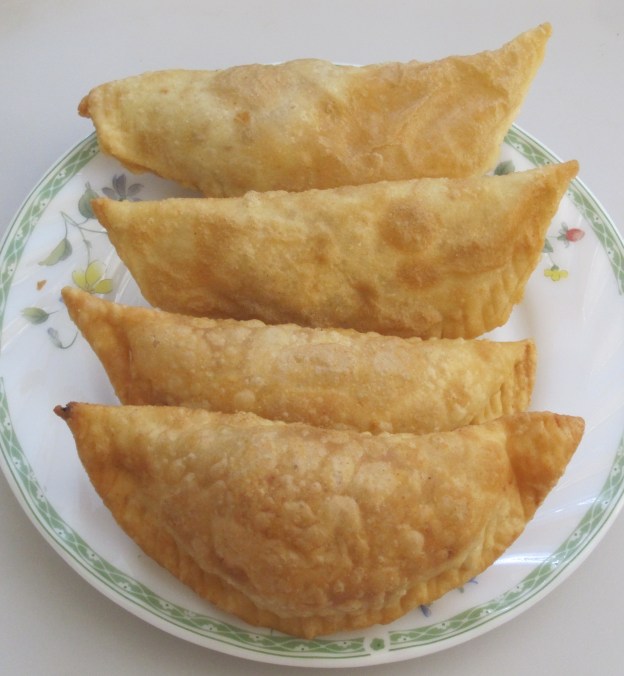
Somasi is certainly a special traditional sweet – Why special? Because it is also international in the making process. These may very easily be mistaken for puff pastries – deep-fried but just a little different in shape. Whenever I try baking ‘dutch apple flappen’ with pastry sheets – I am reminded of somasis. The filling, (of course with different ingredients) – which goes into all-purpose flour rotis instead of the pastry sheet, sealed – then deep-fried for somasis and baked for apple flappen!

Somasi is usually cut with a special somasi cutter. At present, I do not possess one… It is a spoon with a wheel like cutter at the other end – somewhat like a pizza cutter with a spoon at the handle position –  (another proof of its international appeal!) I used a knife to cut the extra dough and my daughter helped in making the edges intact with a fork. By the time I made nearly 20 somasis, I felt quite tired.. Might be because this was the first time I made it all by myself! I know the next time it is going to be easier.. After completion, it seemed to resemble another all time favourite ‘f’rench pastry – the croissant’ (especially in the photo down below)!

I once again remembered and missed the joy of making sweets and savouries together with two generation of experienced hands as a kid. One to roll the dough and keep the filling, we the kids to cut it to proper shape and the other elder member to deep fry in oil – with filter coffee by our sides to keep the energy intact… But thambi (brother) would only need those somasis or already made murkkus to keep up his energy!

Somasis

Ingredients (makes approximately 15-18 somasis)

  • freshly grated coconut/desiccated coconut – 1/2 cup
  • ghee – 2 tsp to roast coconut
  • pottukadalai/roasted split chick peas – 1/2 cup
  • white sesame seeds – 3 tsp
  •  sugar – 1/2 cup
  • cardamom powder – 1/2 tsp
  • all-purpose flour – 2 cups
  • salt – a pinch
  • water – just enough to make a dough
  • oil – for deep-frying

 Method of Preparation

The filling

  1. Roast grated coconut with 2 tsp ghee. I used the desiccated coconut from the super market – the dryness in it helped roasting easier and quicker
  2. Dry roast sesame seeds till golden brown
  3. Powder pottukadalai and sugar separately
  4. Mix roasted coconut, powdered pottukadalai, roasted sesame seeds cardamom powder and sugar and keep aside

The dough

Mix all-purpose flour and a pinch of salt with enough water to make a smooth dough to be rolled into rotis

Making somasis

1. Make small balls out of the dough and roll them to round medium shaped rotis or puris

2. Keep 1 tbsp of the filling on the rolled rotis

3. Fold the roti into a semi-circle

4. Cut the folded semi-circle clean in the edges, with a knife or a pizza cutter or with a somasi cutter if one has it

5. Mix the removed excess dough with the basic dough

6. If cut with a knife or pizza cutter, seal the edges with a fork

7. If done with a somasi cutter, the cutter would take care of the edge design

8. Heat oil in a chatti/kadai

9. Gently drop the raw somasis into oil

10. Fry till golden brown and take them out in a kitchen tissue to absorb excess oil

11. Let them cool and store in an air-tight container.


Note:

  1. Sugar can be increased if needed
  2. If there is left-over filling, it can be stored and used within a week to make somasis again or any other sweet.