Category Archives: Generations to Generations

Thamizhar Virundhu/ Feast of the Tamils

Rice being the staple food of the southern part of India, is consumed with various gravies or kuzhambus to go with it. Idlis, dosais, uppumas, idiyappam, aappam, pongal are some of the breakfast and dinner preparations. But, lunch is always rice. Some or many households might have rice for dinner too.

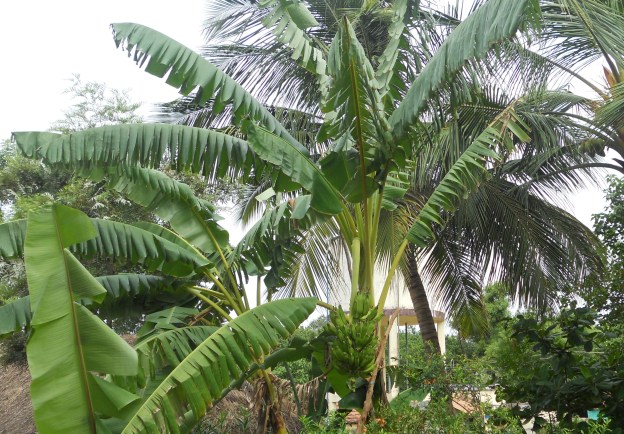
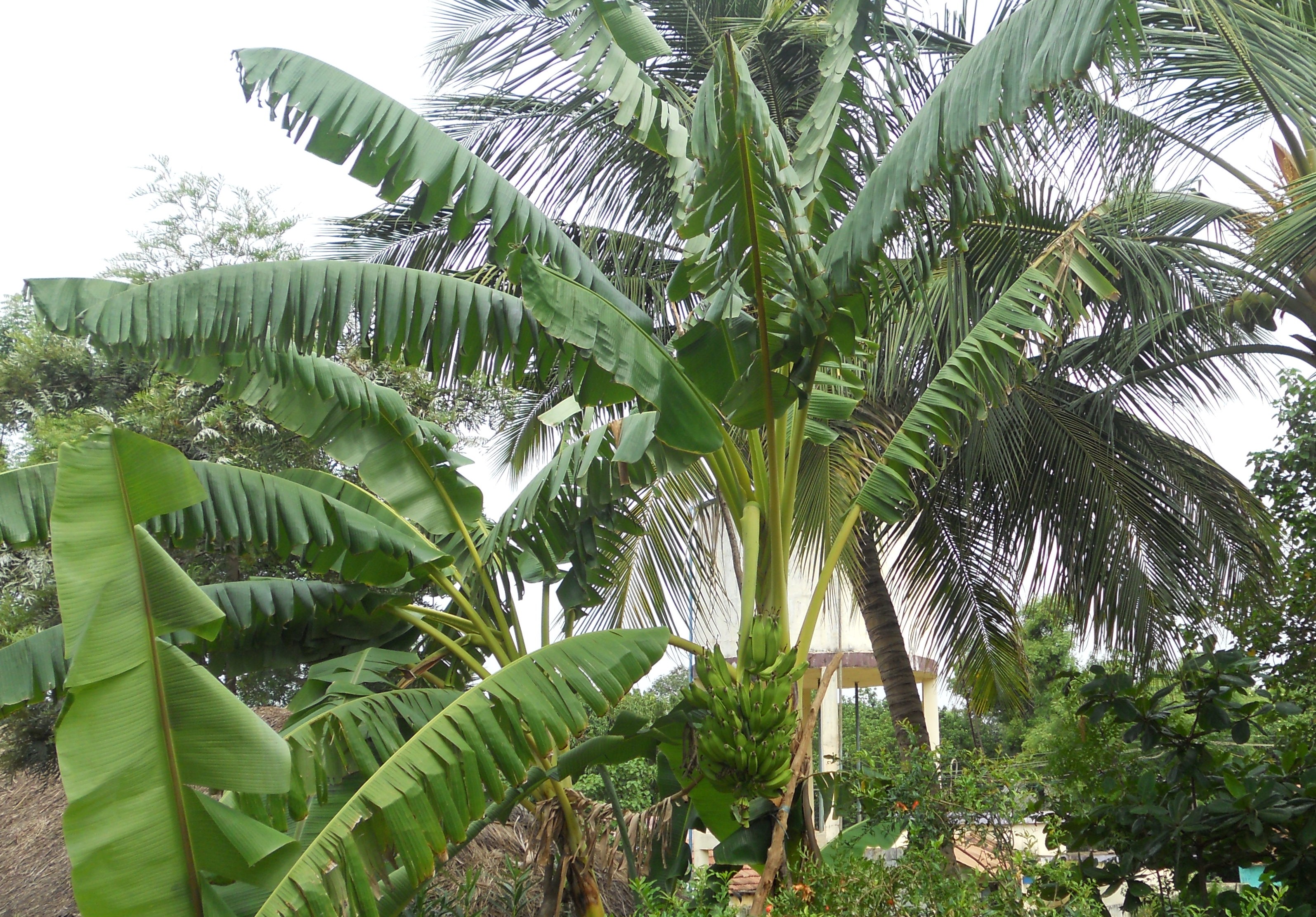
The traditional tamil meal is called ‘Sappadu’. Sappadu means a complete minimim three course meal with rice and curries. ‘Virundhu’ is a feast on special occasions laid for guests, many years ago on the floor but nowadays on tables and chairs but always on Vaazhai Ilai/banana leaf. Vaazhai is Banana. Ilai means leaf in tamil and hence the virundhu sappadu or the feast meal is also called ‘ilai sappadu’. Most of the houses in villages and towns and some in the city would have banana plant in the garden. Before every meal, the suitable leaves are cut, washed and laid for breakfast, lunch or dinner.  Steel plates are also commonly used.

Vaazhai Maram/Banana Tree

A lavish feast would have the five main courses below in part I, accompanied by one or more of the part II varieties.

Part I

  1. Rice with Thaalicha Paruppu or Seasoned lentil with ghee
  2. Rice with Sambar with ghee
  3. Rice with Kuzhambu with ghee
  4. Rice with Rasam
  5. Rice with Thayir/yoghurt or an option of more/buttermilk

Part II

  1. Kootu – a stew of vegetables
  2. Poriyal/Thuvaran – dry vegetable curry
  3. Pachadi – combination of yogurt and vegetables or raita in hindi
  4. Fruit Pachadi – generally fruit salad with honey or a fresh fruit jam
  5. Appalam – Pappad
  6. Pickles
  7. More milagai

When the banana leaf is laid, the first item to go on it after wash is salt. Salt symbolises gratitude. ‘uppittavarai ullalavum ninai’ is a very old tamil saying- which means – always remember the person who offered you food.

The order at which each of the vegetable items are placed on the leaf after salt is a ritual in itself – mostly unfamiliar to the younger generation.

After salt and vegetables, Paruppu or Dal is already served on the leaf before rice arrives.

Rice is first had with Thaalicha Paruppu which is seasoned lentil – generally thuvar dal/red gram/pigeon pea seasoned with mustard seeds, urad dal, cumin seeds and green chillies.

Sambar – is a combination of lentil and vegetables prepared with a special curry powder prepared traditionally by evey household.

Kuzhambu – can be any gravy. Even sambar is a kuzhambu. But on a feast platter – generally a spicy, tangy tamarind based curry with specially ground spices called puli kuzhambu, vatral kuzhambu or kara kuzhambu is served.

Rasam is a thin soup not used as an appetiser as popularized outside the south of India and abroad, but is a digestive soup.

After Rasam comes the dessert. There is already a sweet – for example poli, laddu or badushah kept initially on the banana leaf; payasam or the sweet pudding/kheer comes after rasam and before curds/yoghurt. Nowadays, payasams are often kept in a small pudding bowl, so that one can have it anytime inbetween the meal to counter the spices or generally at the end.

Traditionally, payasam is poured on the banana leaf.. In tirunelveli feasts, I have enjoyed payasam with a sprinkle of sweet boondhi and appalam. This is a rare but different combination, stimulating the taste buds with mildly sweet payasam, very sweet boondhi and salted appalam! Rolling your hands in the banana leaf to pick up enough payasam to send inside the mouth is an intricate, complicated task but a very interesting one. One would have already had this practice with rice and rasam – which comes before payasam – trying to hold the edge of the banana leaf so that the liquidy rasam doesn’t flow on the lap!!

Last comes rice and thayir – curds or buttermilk. Curds or yoghurt rice is had with pickle and another exclusive combination for curd rice – more milagai. ‘More’ in tamil means buttermilk. Green chillies soaked in buttermilk, then dried in the sun and stored in bottles. More milagai is prepared by a long process, but available in super markets easily.  To serve more milagai, it is fried in oil and made crisp and these are had with curd rice.

In a normal household, every lunch meal would constitute rice with sambar, rasam and curds with a minimum of one kootu and one poriyal, appalam to go with sambar and rasam, oorukai/pickle mostly a must for curd rice. Appalam and oorukai have become restricted due to health factors. But due to dietary and practical reasons – lesser intake of food, lesser intake of rice products and lesser time to spend in kitchen – the spread varies with each family.

I read an interesting article of a banana leaf meal or ilai sappadu experience in http://agelessbonding.blogspot.com/2010/06/elai-saapadu-experience.html.

Deepavali – the sweets and savouries story!


India and the festive spirit

India is rightly called the land of festivals. Its multi ethnical, multi lingual, multi cultural population and the vast geographical territory are some of the reasons for its festivities and celebrations that knows no boundaries.

All the festivals are celebrated with so much vigor and colour. And the energy with which the people rejoice and glorify each event is a splendid sight. Till today these festivals are celebrated by each household with the same spirit not only because of the sheer joy and happiness involved, but mainly because of those people who want to take forward these unique traditional customs to the next generation.

With each celebration, when it comes to the customs and rituals involved, there are so many questions asked and probed by the younger ones and answers explained by the older ones. But when the younger ones become older, the same spirit of celebration with customs and rituals comes active again with some or many changes in life style. Deepavali is one such celebration. It is celebrated in many parts of India in different ways.
 

Deepam and Tamilnadu

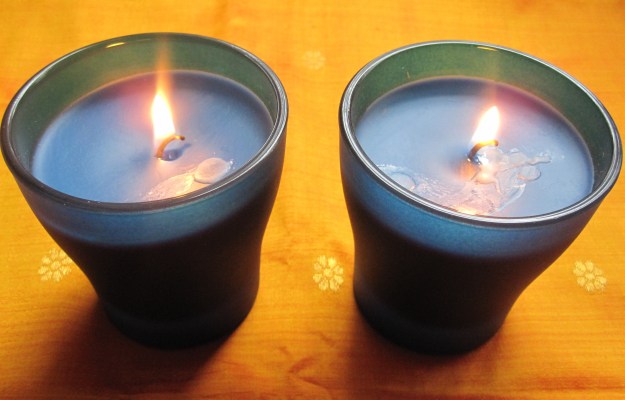
I am unable to track the origin of Deepavali in Tamilnadu. If anyone has any kind of detail regarding this, please do communicate. In Tamilnadu, karthigai deepam is called the festival of lights. Karthigai Deepam is celebrated in the tamil month of karthigai which falls in November-December.

‘Karthigai Deepam’ is one of the oldest festivals celebrated by the Tamil people. One of the earliest references to the festival is found in Ahananuru, which dates back to the Sangam period (200 B.C. to 300 A.D.) The Ahananuru clearly states that Kaarthigai is celebrated on the full moon day of the Tamil month of Karthigai and mentioned that it was the primary festival of the ancient Tamils. Avaiyyar, the renowned poetess of Sangam age portrayed the festival in her songs………… Unlike many other Hindu festivals, Karthigai Deepam is basically a Tamil festival and is virtually not known in other parts of India’(http://tamilnadu.com/tamilnadu/main/common/tamilnadufestival.jsp?festival=Karthigai%20Deepam).

Tolkappiyam, The earliest tamil grammatical treatise, the dating of which has been debated among various scholars also mentions about deepam –

‘Evidence from Tamil literature proves that this festival is one of the oldest in the state. In ancient Tamil literature, the oldest available work Tolkappiyam gives in concise verse form rules for Tamil grammar as well as other topics. Scholars agree that this work dates back to 2,000 or 2,500 BC. In one of the formulae Tolkapiyar in his treatise uses the phrase “like the lamp’s flame pointing upwards.” This phrase, says one of the commentators, refers to the beacon lit on the Annamalai Hill, which burns brightly without flickering in the wind, and flares up towards the sky’ (http://www.kerala-tourism.net/tamilnadu/tamilnadu-fair-festivals.html).

According to Wikipedia, ‘Some scholars prefer to date it not as a single entity but in parts or layers which are estimated as written between the third century BCE and the fifth century CE’ (http://en.wikipedia.org/wiki/Date_of_the_Tolkappiyam).

We shall talk about karthikai deepam after Deepavali celebrations.
 

Deepavali and Tamilnadu

Karthigai Deepam can be called the traditional deepam festival of the Tamils. Though Pongal, Tamil Puthaandu (New Year) and Karthigai Deepam are the major tamil festivals, Deepavali has a special place.

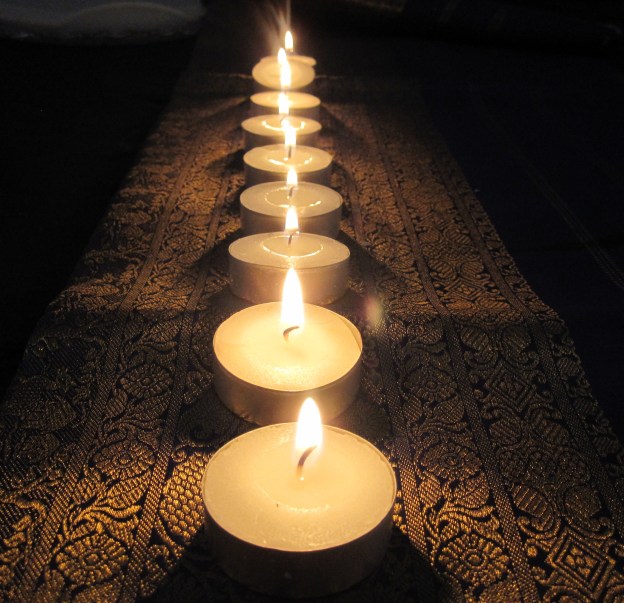
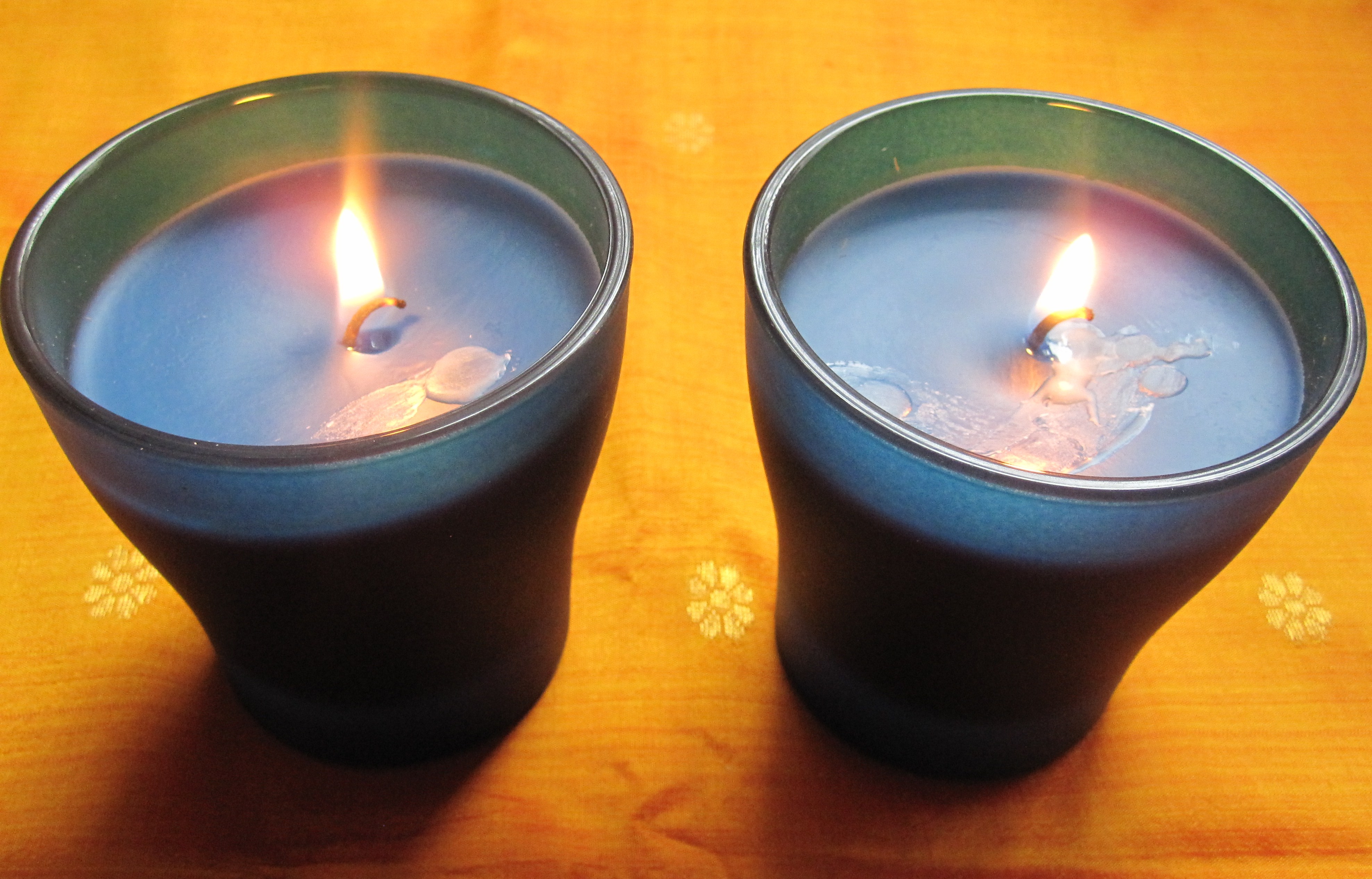
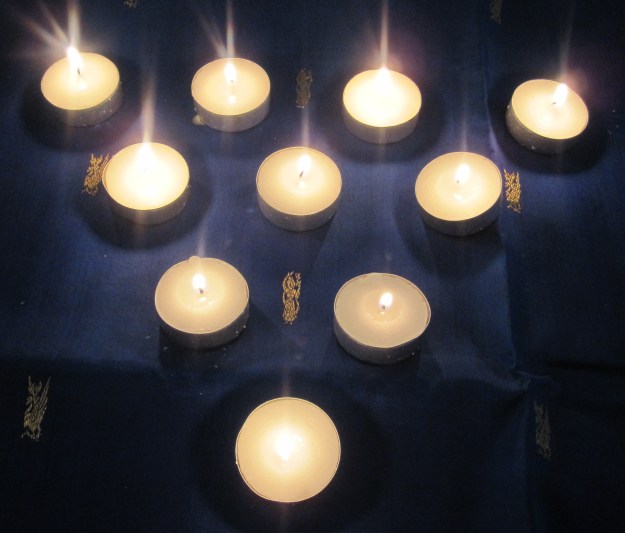
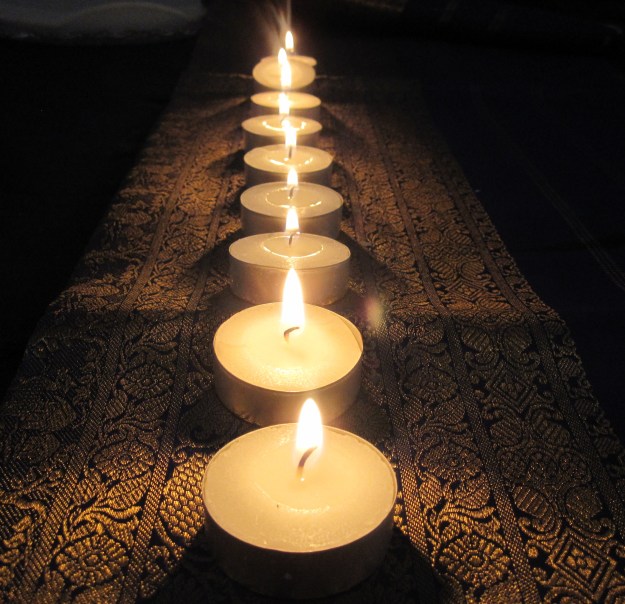
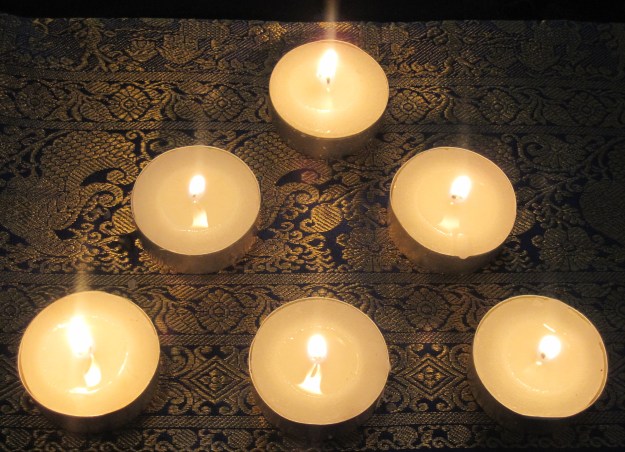
In so many years now, Deepavali has also taken its place among the major festivals. Deepavali is a culmination of the two Sanskrit words Deepam and Avali. Deepam means light and avali means a row. The display of the row of lamps at home and crackers throughout the day and few days before and after is a fascinating sight. It is regarded as the celebration of the victory of good over evil.

It is celebrated as the victory of Lord Krishna over the demon Narakashura. It is marked by new dresses, sweets and savouries distributed to friends and relatives and bursting fire crackers.

After marriage, the first Deepavali of the newly married couple is called ‘Thalai Deepavali’ and is celebrated with extra pomp and pride. If one is married in December, then Deepavali in somewhere October or November the next year is the Thalai Deepavali for the couple though they might not fall under the ‘newly married’ category!
 

The Deepavali Day

The day starts very early with an oil bath – applying gingelly oil on hair and shampooing with shikakai – the traditional shampoo powder made of herbs. Then the new dresses purchased would be kept in front of God and the auspicious turmeric powder would be kept like a dot in an unknown corner and the dresses transferred to each member of the house.

After dresses, comes food – special deepavali pujai snacks are prepared fresh in the morning (athirasam, appam and a few more). Morning pujai with all the sweets and savouries made – kids eyes closed and hands put together in vanakkam position (greeting the tamil way), but mind wandering on which sweet or snack to taste first!

Then comes tasting – that seems to be beyond words.. After tasting and having breakfast, comes distribution of sweets and savouries to neighbourhood and friends and family. This is mainly the task of the girls of the house. Some of the houses we go and some guests come home to deliver. It is basically exchange of goodies and good wishes – and we greet each other – ‘Deepavali Vaazhthukkal!’

Deepavali would be incomplete without crackers.. Irrespective of the age, there is a cracker or firework for all.
 

Deepavali and dosaikal

I thought of starting this as a Deepavali Sweets and Savouries special series! In most of the houses, preparation for Deepavali in terms of sweets and savouries starts about two or three days before. Apart from the fresh sweets made for the pujai or worship on the special day, there are a lot more sweets which have to be made before hand and these can be stored for weeks, and especially savouries for even months. After distributing to friends and relatives, it would be a daily evening snack or throughout the day snack and would be ultimately over within days is another different issue.

My memory goes many years behind, where the grinding of kadalai maavu/bengal gram flour for kara sevu, arisi maavu and ulundha maavu/rice flour and urad flour for murukkus, paasi paruppu maavu/yellow lentil flour for nei urundai, plain arisi maavu for athirasam would start nearly four days before Deepavali. The dining area would be filled with thookuchattis (tall vessel with handle to store flours and snacks later) with different flours in them. The aroma of the snacks would start spreading the house two days before Deepavali. I would be sitting on the floor with aachi and amma, watching them make Pathirpeni (deep fried flat cakes covered in powdered sugar), Poli (channa dal-sugar mixture filled flat cakes), Gulab Jamun (deep fried sweet dumplings in sugar syrup) – to mention a few of the sweets and different kinds of murukkus, thattais and mixtures – some of the savouries. That is how I learnt to make the very special kai-murukku.

When I was thinking of explaining Murukku, I just visited Wikipedia and got a beautiful definition. Murukku is made out of a combination of rice and urad flour. ‘The mixture is made into a batter, mechanically extruded, formed into a spiral or coil, and fried to a crisp. Murukku can also be rolled into a flat ribbon (ribbon murukku) or shaped by hand (kai murukku). Kai suthu murukku (Hand spun) is prepared by getting a string of dough and twisting it while winding it into a ring. This process is very hard, requires patience and is highly technical work.’

This is the speciality of kai murukku. Though I have half forgotten the art of kai murukku, learnt from aachi (my paternal grandmother), the next sentence in Wikipedia definition made me think of practicing it again seriously – ‘This profession is in high demand and is paid very well’ (http://en.wikipedia.org/wiki/Chakli)!

Any festival or celebration comes with a teaching note.. Deepavali I think in our households has taught us patience and self resistence. The sweets and savouries prepared and ready but lids closed, would not be allowed to be tasted till pujai on the day of Deepavali. The aroma of the sweets and murukkus spread over the whole house and the whole locality (each house’s speciality), everyone waits eagerly and patiently for the first bite – allowed only after it is displayed in front of the Gods and tasted by them!

Nowadays, with both members of the family working, and less time to spend in kitchen, youngsters becoming more conscious of the fat content, children of many families working or settled abroad and eventually lonely parents, buying sweets and savouries – both traditional and modern(?!) from sweet shops has become common. Distribution among friends is still a living element – thankfully. Though some important sweets for pujai are made at home.

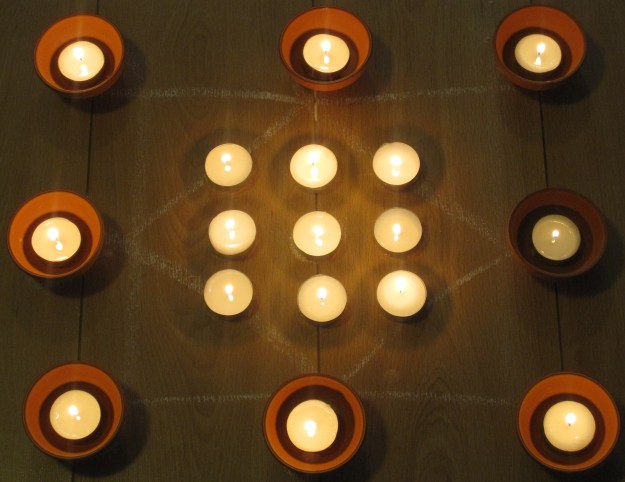
deepams arranged on traditional kolam
 

Why Deepavali series so early?

I know this is going to be a great learning experience for me – trying to make those mouth watering sweets and savouries – some for the first time! That is why I thought, if I could start a little early, might be I could make more goodies in a relaxed way – experimenting stress free.. I would also be happy to learn new recipes from any of you – my friends!

So let us celebrate Deepavali together!! This year Deepavali falls on October 26th (2011).

Navaratri and the Sundal Connection (Kadalai Paruppu Sundal/Channa Dal Sundal/Bengal Gram Salad)

Navaratri is a Hindu festival of worship of Shakti or Parvathi or Durga. These are nine nights of festivities. The word Navaratri means nine nights in Sanskrit, nava meaning nine and ratri meaning night. During these nine nights, Goddess Parvathi is worshipped in nine forms. The tenth day is celebrated as Vijayadhasami.

If it is Shivaratri for her husband Shiva, Navaratri is exclusively for Shakti. The difference is that, Mahashivaratri is celebrated on one particular night in the month of march, but navaratri for shakti is celebrated for nine days. Ofcourse, there are the monthly sivaratris. In most states of India, Durga Puja is celebrated in different names.

Navaratri is also celebrated four times a year in some parts of the country. In Tamilnadu, as far as I know, the most popular celebration of navaratri is in the month of Purattasi (September-October). One can find more details on navaratri on http://en.wikipedia.org/wiki/Navratri.

The first three days are devoted to Parvathi as she is popularly known in Tamilnadu – goddess of power, the next three days are devoted to Lakshmi – goddess of wealth, and the last three days are devoted to Saraswathi – goddess of wisdom. The tenth day is celebrated as Vijayadasami – the day goddess durga defeated the demon mahishasur and she is worshipped as Mahishasuramardhini.

Beyond these religious aspects, worship techniques or maintenance of rituals and customs, which might differ with every household, I have always been more concerned and attracted to the cultural and traditional aspects of any festival.

In Tamilnadu, the ninth day is celebrated as Saraswati Poojai and Ayudha Poojai and tenth day as Vijayadasami.

For Saraswathi Poojai, all our books would go to the Poojai Arai or Puja Room and appa would make a beautiful seating arrangement covering all the books with special new silk dhoti, on top of which the usual framed photo of goddess saraswathi with the veena on her hands would graciously sit. Sometimes we would give our gold chains to adorn saraswathi.

That day, used to be the happiest.. More because we would be instructed not to study or even read any book. Suddenly by noon, I would feel so bad not studying or reading my favourite magazines! I wouldn’t have missed my books so badly any other day!!

Ayudha Poojai would be marked by cleaning all instruments, equipments, metallic substances of day-to-day use – cycles, bikes, cars, all musical instruments at home.  Everything associated with the household or work places would be cleaned, decorated and worshipped. Agricultural equipments for a farmer, type writer in a typing class, sewing machines, an aruval (sharp big knife specially for coconuts) for a coconut vender and so on..

All new ventures would begin from Vijayadasami. Even today, some schools take in children for kindergarten sessions starting from vijayadasami day. It is believed anything started on this particular day would be successful. All forms of art classes are started from vijayadasami. Every year, on that day, we show our special gratitude to our art teachers – whom we regard as goddess saraswathi herself.

When I was very young, navaratri meant sundal everyday (can I call it cooked lentil salad?), a different one every day.. After a few years, it used to be wearing the best of pattu pavadai (traditional long skirt and top in silk) and go to other houses in the neighbourhood, sing Carnatic music in front of goddesses and not to forget – collect the day’s sundal from their house. After a while, it was more of performing at home and neighbourhood (irrespective of what the neighbours or relatives feel – we are singing for the goddesses!).

But still, more memories are stuck with the different kinds of sundals prepared and the golu decorations in some households. Navaratri in tamilnadu is very much marked with golu or kolu. Apart from the traditional kolams or colored rangolis, golu is a kind of a decoration of dolls and other beautiful innovative things. Some arrangements might have five steps, seven steps or nine steps generally or always in odd numbers. Golu would be arranged with traditional dolls collected for generations, some of the gods and goddesses, some depicting epic scenes, also some new dolls – all displayed with a sense of ethnicity and beauty. It can be called a household exhibition of innovative artistic skills.

For more details on golu, I found this website with a native touch – http://cvrajan.hubpages.com/hub/Navratri-Golu-The-Hindu-festival-of-dolls

I find this golu decoration similar to the Durga Puja Pandals in West Bengal. If those pandals are a community event and done on a large-scale through committees or organisations, the one in Tamilnadu is a household affair – innovative, ethnic, traditional and religious involvement and excitement intact.

Now, to Sundals or lentil salads!

Sundals can be associated with mainly two things – one navaratri and the other – Beach! The beaches in Chennai and other places in Tamilnadu are always remembered with the sale of different kinds of spicy, tangy sundals. On beach sundal we shall talk in another post.. Now on navaratri sundal.

There used to be no golu decoration in our house. But worship of goddesses on all days with different sundals and distribution in the neighborhood was always there. In this session, let me share making a few varieties of sundal.

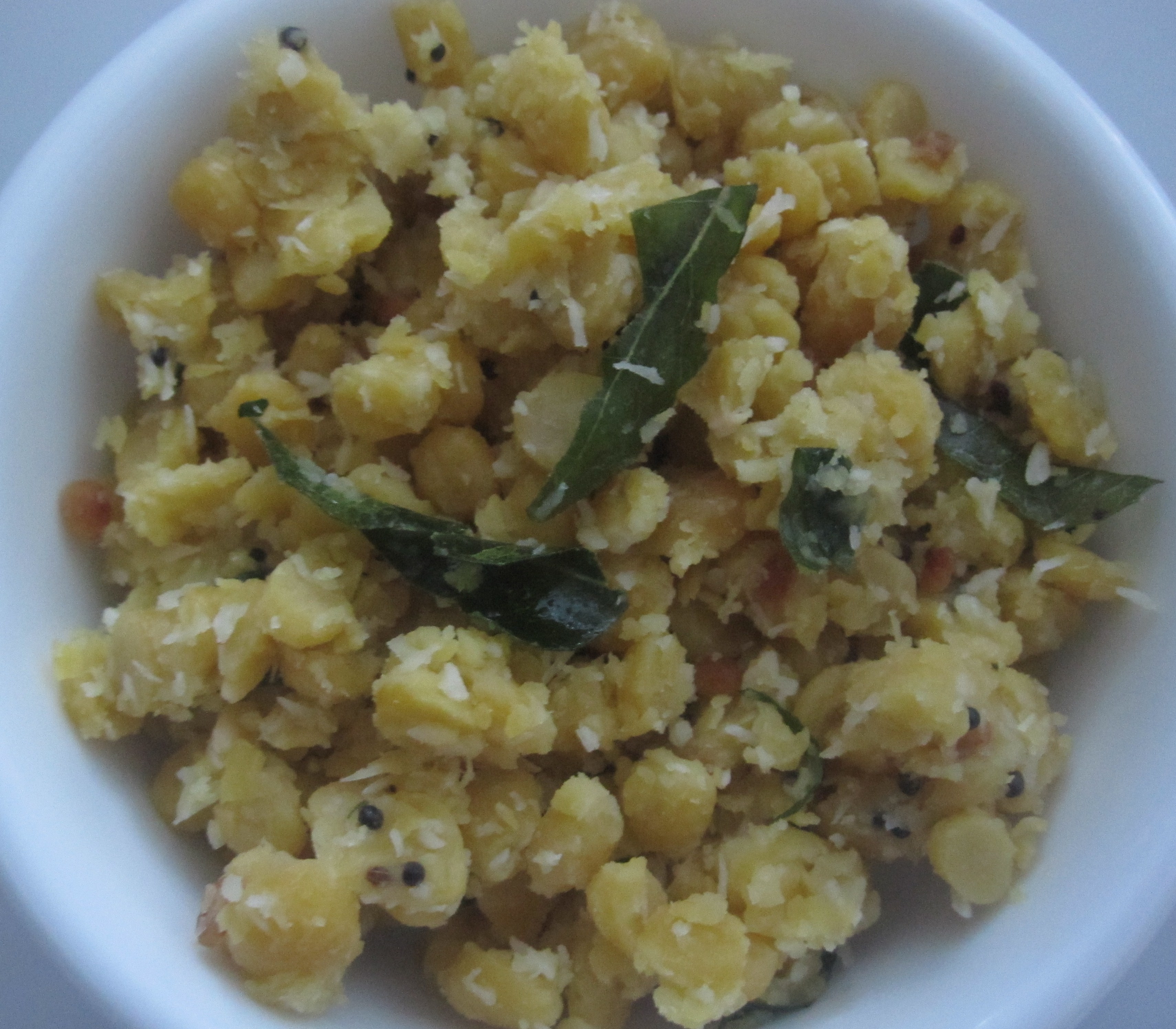
Kadalai Paruppu Sundal/ Channa Dal Sundal/ Bengal Gram Salad


Ingredients (serves 2)

  • kadalai Paruppu/channa dal – 1 cup
  • onions (optional) – 1 medium
  • green chillies/red chillies or both – 2 nos
  • salt – as needed
  • oil to temper – 2 tsp
  • mustard seeds – 1 tsp
  • urad dal – 1 tsp
  • curry leaves – a few
  • asafoetida – ½ spoon
  • grated coconut – 1/2 cup

Method of Preparation

  1. Soak kadalai paruppu for ½ an hour
  2. Pressure cook till just done – careful it shouldn’t be over cooked
  3. Strain the water and keep the dal separately
  4. Chop the onions fine (onions are optional – some wouldn’t prefer onions when prepared for puja)
  5. Chop green chillies or slit into two halves
  6. Heat oil in a kadai, let mustard seeds splutter
  7. Add urad dal, when it turns golden brown add curry leaves, onions and green chillies
  8. Red chillies can also be added if preferred
  9. Add the cooked kadalai paruppu and sprinkle salt
  10. Mix well and let it cook for approximately 5 minutes
  11. Be careful not to stir too much or else the dal might get mashed
  12. Sprinkle asafoetida
  13. When done sprinkle grated coconut and serve hot
  14. This can also be served as a healthy starter for dinners.

Idly/Dosa for two!

This batter would be just enough for two persons. I also tried making the batter in a mixer/blender.

These are some details about Parboiled Rice.  Parboiled rice is produced through the process of parboiling or partially boiling. Harvested paddy or rice with husk is hydrated and then steamed, before drying them. Once dried, the husk of the rice is removed. Traditionally, the husk of rice is removed manually and not mechanically. The process of parboiling makes it easier for the husk to be removed by hand. Another advantage of parboiled rice is that, the process of steaming or heating the hydrated paddy, forces the nutrients in the bran (especially, vitamin B1) to get absorbed into the grains, making the rice, nutritious. While, parboiling, the broken kernels inside the husk may get glued together, thereby reducing the number of broken grains. Parboiling process helps in the sterilization of the harvested rice, which may contain impurities and insect eggs. Parboiled rice takes longer to cook and is not sticky. Once cooked, the rice will be firmer and retain its shape too. Apart from being nutritious, parboiled rice tastes delicious. Parboiled rice is said to be more nutritious than white rice and at the same time, easily digestible, as compared to brown rice. ( http://www.buzzle.com/articles/parboiled-rice.html)

Among the parboiled rice varieties, the rice to be cooked and consumed directly is different from parboiled idli rice. The normal cooking rice looks more polished. Parboiled idli rice has more brownish tan on it. To choose the best rice, go to an indian shop – if it is a shop familiar with south indian food items, ask specifically for idli rice, they would mostly have parboiled rice.

parboiled rice


Idli/Dosa for two (makes approximately 22 idlis or 15 dosais)

  • parboiled rice – 2 cups
  • urad dal – 1/2 cup
  • fenugreek seeds – 1/2 tsp
  • salt – 3/4 tsp


soaked parboiled rice


soaked urad dal 


 Method of Preparation

  1. Wash and soak rice and urad dal separately for 6 hours or overnight
  2. Wash fenugreek seeds and add to urad dal before soaking
  3. Grind urad dal and fenugreek seeds first to a smooth paste
  4. Remove from blender
  5. Grind soaked rice to a smooth paste
  6. Mix dal and rice together adding salt
  7. Always mix with hand
  8. Cover and leave this batter for a minimum 12 hours so that it ferments well
  9. During colder temperatures, the batter can be kept in an oven at warm position overnight
  10. Generally if the batter is ground in the evening hours, it is fermented and ready to make dosais or idlis next morning during summers
  11. After each time of using the batter, it should be stored in the refrigerator
  12. For more on basic batter see https://dosaikal.com/2011/09/16/basic-idlidosa-batter/
  13. After the batter is well fermented, make idlis or dosais as preferred
  14. Serve them with chutney of choice (https://dosaikal.com/category/chutneys/).

grinding it in a blender

fermented batter

The Morning Cup of Coffee

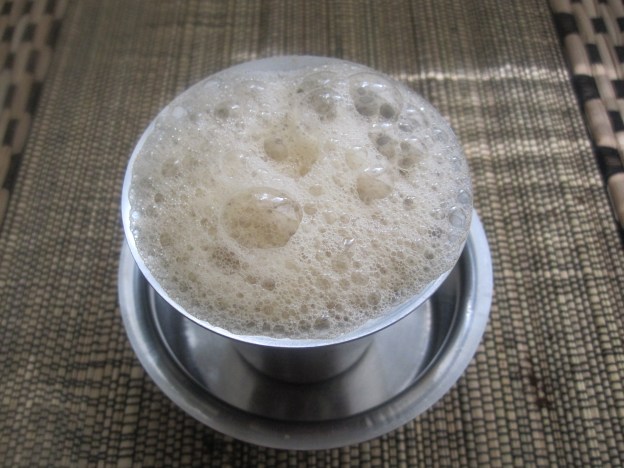
Coffee is Kaapi in tamil. At home, the day always starts with a hot cup of filter coffee. Black Coffee made from the steel filter early in the morning by aachi or amma. Fresh milk boiled at the same time. Black coffee, thick milk and sugar made foamy and frothy… black coffee is called decoction. Wickipedia also mentions that ‘Decoction’ is the term used colloquially in south india to refer to black coffee prepared by the traditional method.  Dictionaries also say –  to ‘decoct’ is to extract the flavor by boiling or to make concentrated.

No left over decoction and no old milk for filter kaapi.  When the new milk packet comes home every morning, it is opened and boiled.. ready for immediate consumption of kaapi. Kaapi is served in dabara set – small bowl and tumbler/glass. The bowl is either to mix sugar separately or make the kaapi right and medium hot to drink.

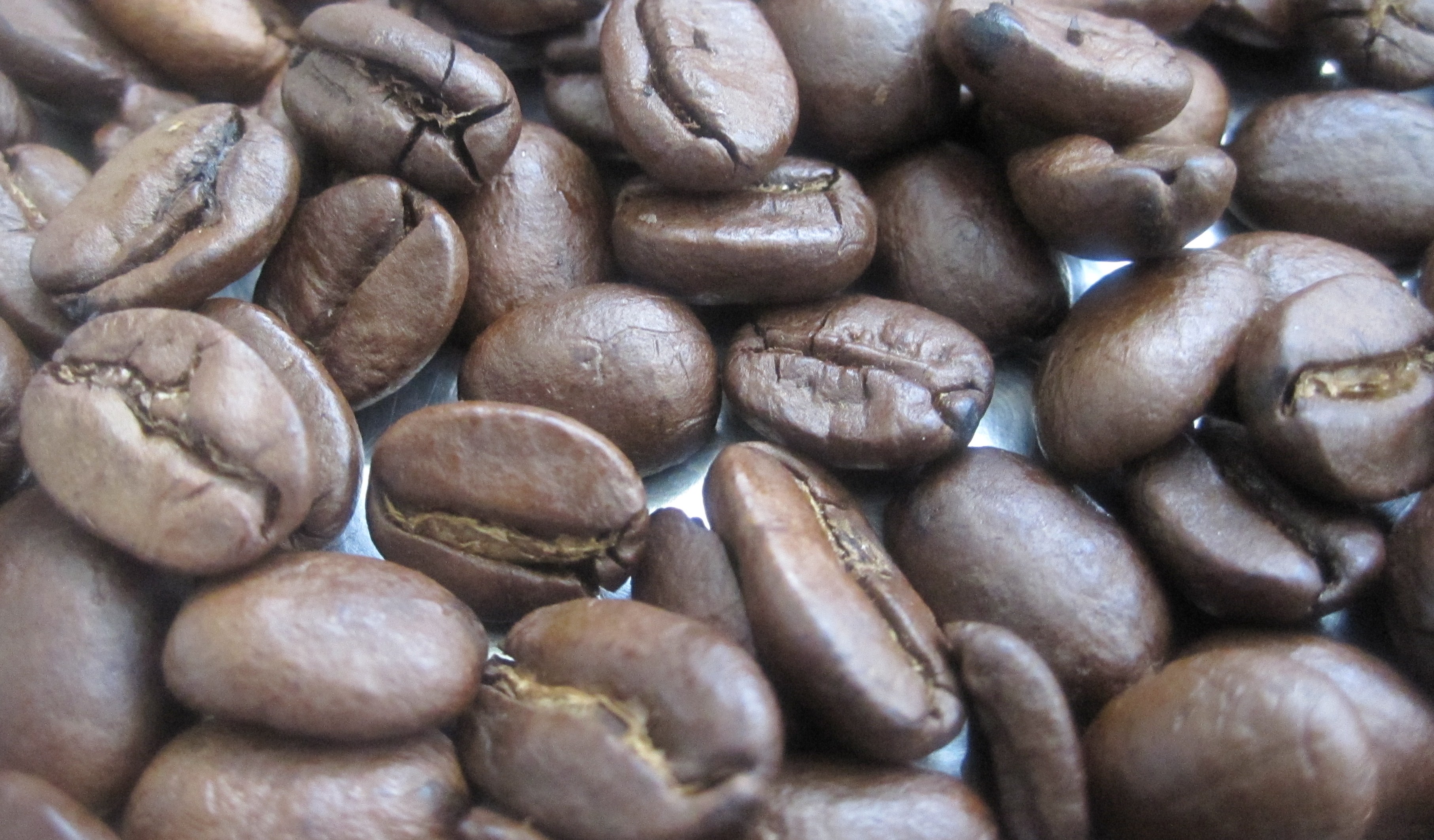
Kaapi Thool or coffee powder would come from the traditional coffee grinding shop. When amma goes to get the kaapi thool, I used to accompany her sometimes. I use to love the fresh aroma of coffee beans being ground.   She would blend two varieties – choose from peaberry A, peaberry B, and Robusta and no chickory. Till the time we reach home.. the aroma of kaapi thool would travel with us – sometimes in bus, sometimes in auto or in the car. Even today, in the super markets, the aroma of ground coffee seeds takes me to those fresh aromatic days.

But, children were given coffee to drink only when they enter universities. When we were still in school, only milk and milk based porridges or drinks. Seeing thaatha, aachi, appa and amma drink foamy frothy coffee, we would also demand foamy frothy milk and fight for the best foam between siblings. After the milk is done, amma is always there to wipe our milky cat moustaches with her mundhanai – or saree pallu.


Filter Kaapi 

The Coffee Filter

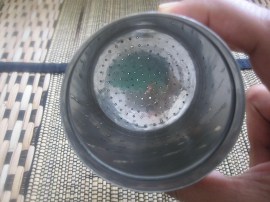
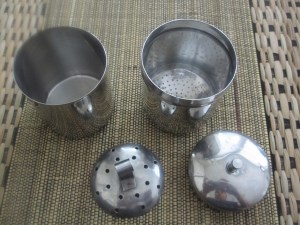
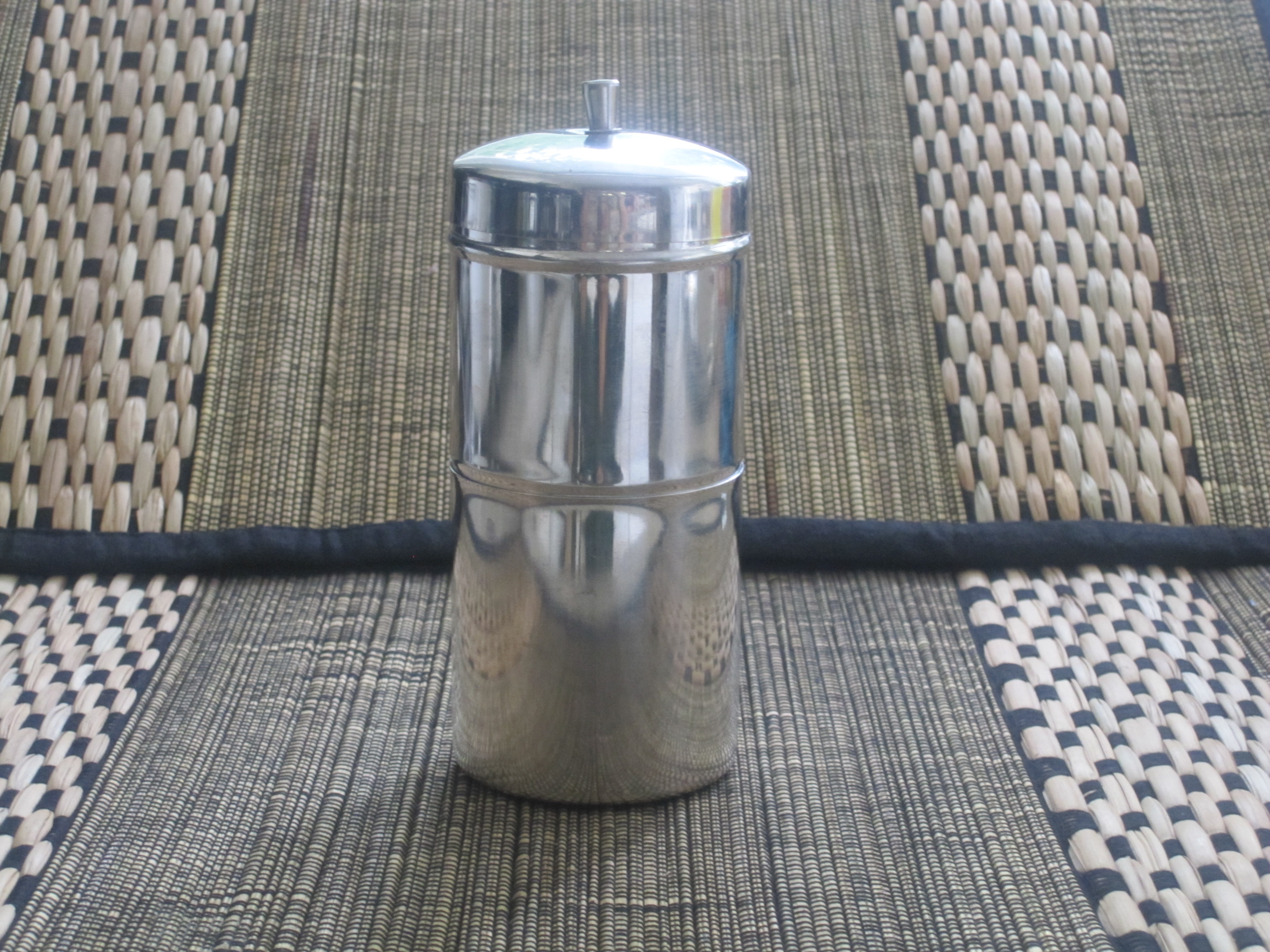
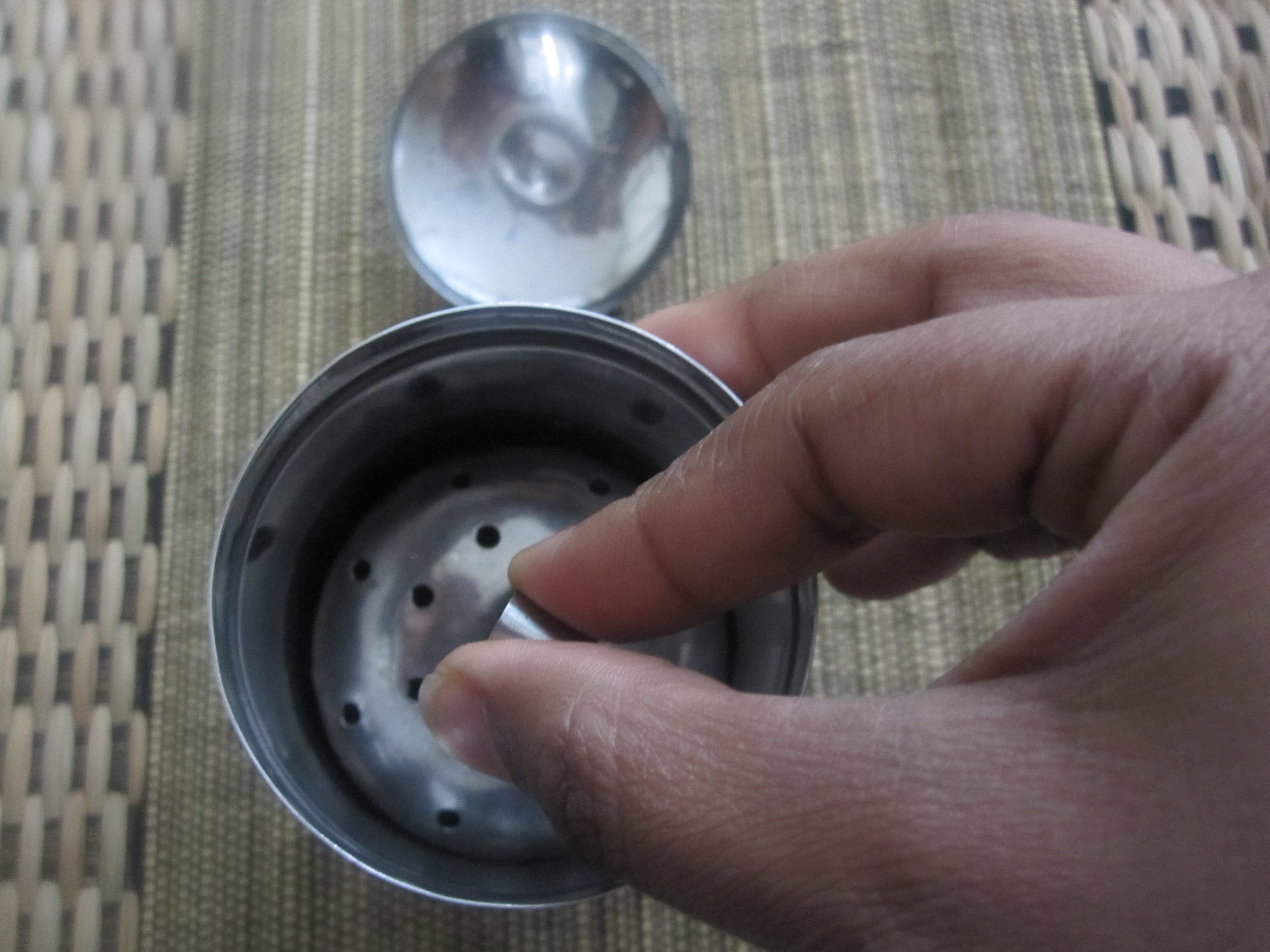
  • The coffee filter has four parts – bottom cup, the upper cup, the presser and the lid
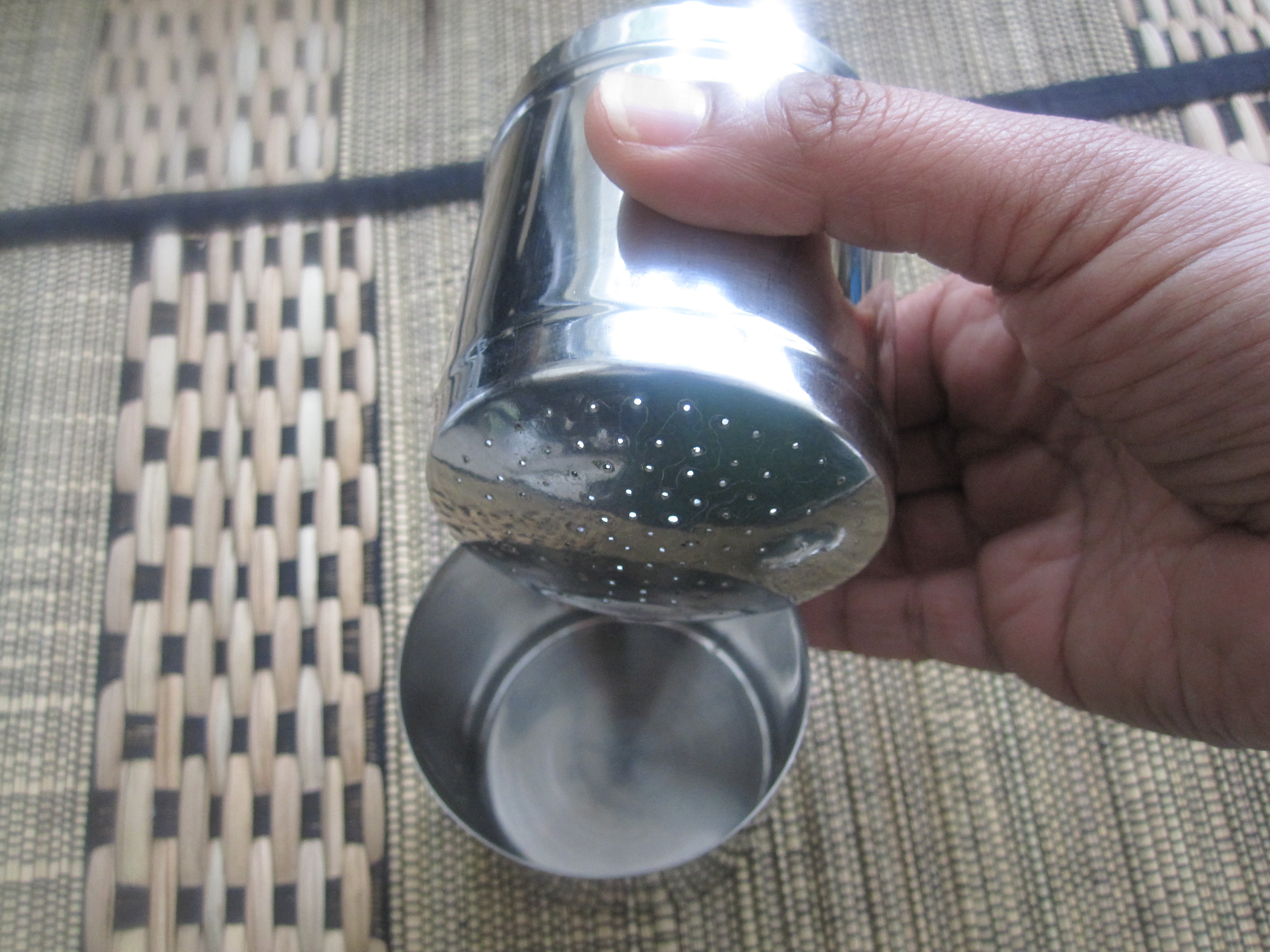
  • The upper cup is the filtering portion and has very small pores to hold the powder and let out the black coffee
  • With the presser, the powder is compressed well to hold the powder intact
  • The decoction or brewed black coffee is collected in the bottom cup


Ingredients

  • ground coffee powder – 3 heaped tsp
  • boiling hot water – 225 ml

The quantity of coffee powder can be altered to each person’s preference – strong or less stronger coffee also depending on the coffee powder.  The aroma of coffee is best stored when the upper cup with coffee powder is filled with water till brim. So, if your coffee filter is slightly bigger and can take in more water, add more coffee powder.

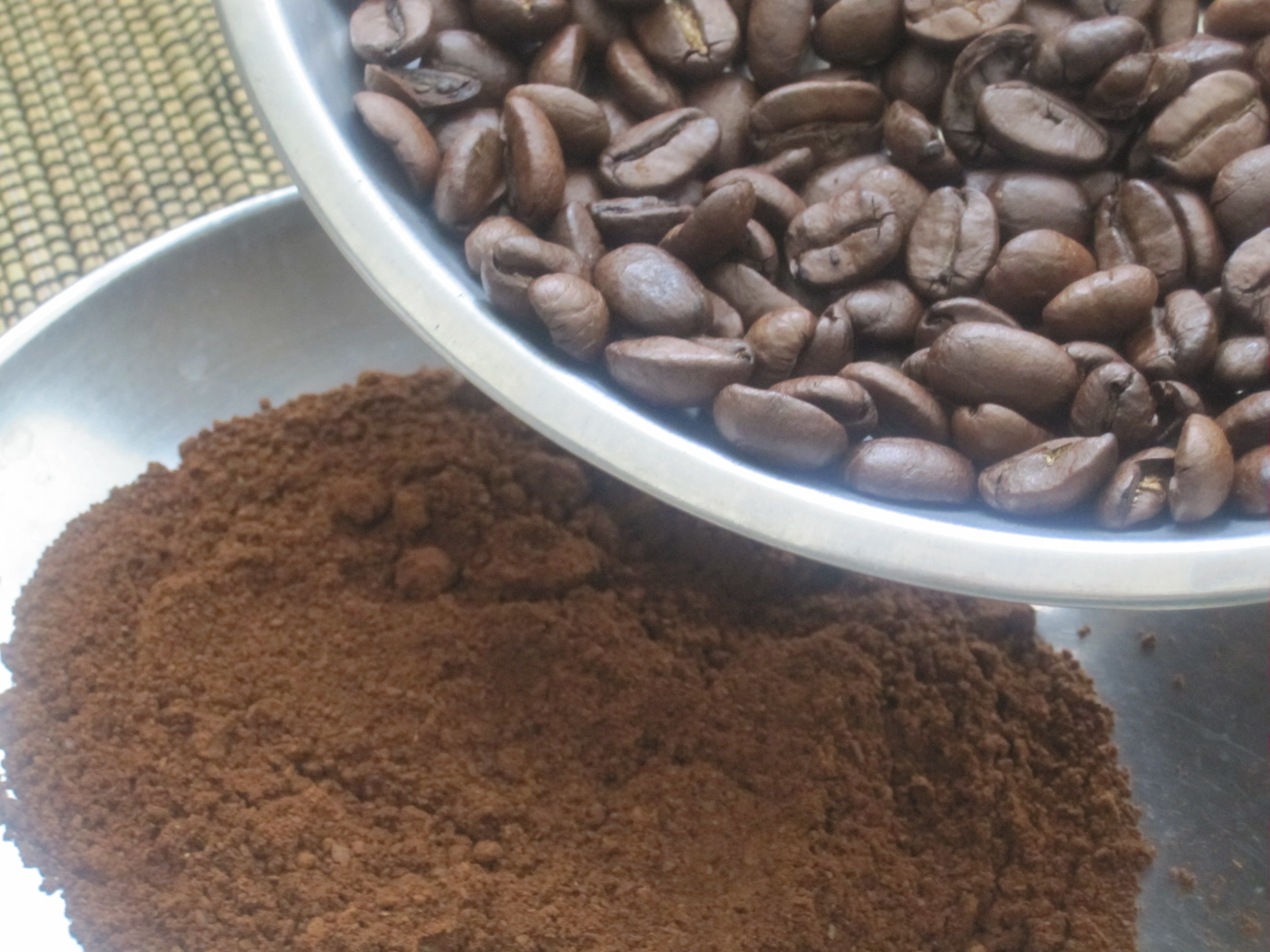
  bean and powder


 Method of preparation of decoction

  1. Take 3 heaped tea spoons of coffee powder in the upper cup of the filter – which has the pores/filter on it
  2. Press it with the presser to make the powder even but do not press it too hard
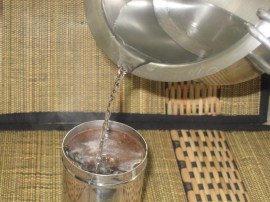
  3. Pour in the boiling hot water on the pressed coffee powder in the upper cup till brim
  4. Close with lid and let the decoction brew down
  5. If one finds the coffee very strong, take the first decoction out and pour half the quantity water and let it percolate again – this is the second decoction and is less stronger than the first
  6. One can either use the blend of both first and second decoctions or just the first.


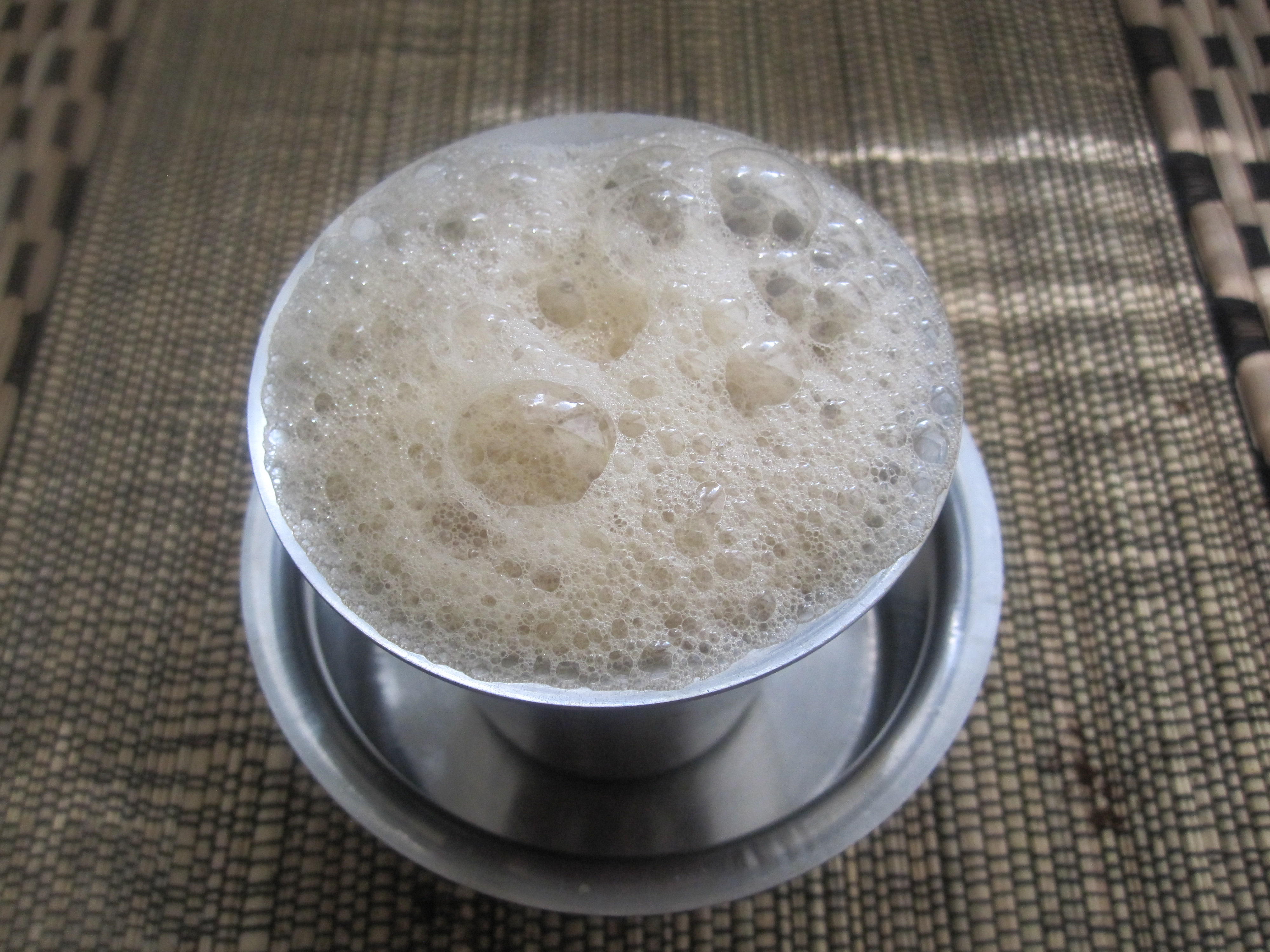
making the decoction foamy


The Dabara Kaapi


the traditional cuppa


To make one cup of coffee

  1. Take 1/3 cup of black decoction with or without sugar as preferred and make it frothy.
  2. Making the decoction foamy and frothy is an art by hand (see picture)
  3. Boil 2/3 cup of milk in a vessel on stove
  4. When the milk boils, pour in the frothy black decoction and pour it back and forth again in the vessel to make it more frothy
  5. When it is hot enough, pour in the tumbler 
  6. Place the tumbler in the dabara and serve
  7. Adjust sugar or milk according to preferences. 

A beginning

Vanakkam!

After a long long wait and research, I have started writing my blog. Before I start..

Thankyou so much Oz, for all the help. With kids and family, work and your blog,  preparing to shift to your own country and more, you have been guiding and pouring in suggestions, helping in the step by step process to start this blog, with the same gentleness and warmth always.

Thankyou Ganu and Meera, for all the thought provoking advices in detail.

Now.. About what I would like to share in ‘Dosaikal’… Is this a food blog with recipes and cooking ideas? Yes, food has always been one of my passions, even from those days when I didn’t know the differences in lentils! 

‘Dosaikal’ – when translated is  ‘The Pancake Pan’. Dosa is the  pancake and kal is the pan or tawa on which dosas are made. For me, it symbolises south indian cuisine..   The newest of the non-stick cookware can make better dosas or south indian pancakes – made of rice and dehusked blackgram batter. But, the best ones are made from the traditional cast iron tawas.  More so because, thick and fluffy grandma’s dosas, crispy crunchy amma’s dosas  or the ghee dosas my daughter demands – dosas make me travel on a different time machine, to my younger days of granny’s traditional recipes and life style.

Those are the moments I still cherish, the pleasant greeneries of down south districts of Tamilnadu, that sweet dialect of my mother tongue Tamil that makes me turn around immediately even today, the way we jump, run, dance, chat, fight, cry, giggle and laugh amidst cousins, aunts, uncles and above all grandma and grandpa – we call them aachi and thatha.

Somehow between the joys of togetherness, I can still smell the fragrances and flavours of mouth watering good food.. traditional tirunelveli and thoothukudi style. Thanks to amma and appa who gave me the strong base to absorb these fragrances and flavours of one’s own soil. So, why not add the flavours of traditional life style to modern day cooking!

 Now… Dosaikal is not about dosas alone.  The rich cultural heritage of the tamils goes hand in hand with the varieties of dishes cooked in households with the supervision of grandmother’s even today.. I would like to relive the past with those simple and exotic recipes. And nothing is best than sharing it with friends!

I can’t wait to get started!!