Author Archives: dosaikal

Unknown's avatar

About dosaikal

A simple person who believes strong roots and values build up stronger generations; and good food and good food habits are one of the best gifts that one can give to their off springs.

Navaratri and Nostalgia – Karuppu Kondaikadalai Sundal/Stir fried Black Chick Peas


IMG_3115

This is the week of Navaratri – the Hindu festival devoted to the three women deities – Parvati, Lakshmi and Saraswathi, consorts of Shiva, Vishnu and Brahma respectively.

Religious aspects differ with families and mindsets of families. This holds good for traditions too. But, I strongly believe that the procedural aspects of religion are secondary and so are the mythological stories that have evolved to keep a community within its boundaries. But the traditions that have been transferred through grandmothers and mothers of households holds a community, society and a race intact, without losing its identity.

Passing on stories and memories of one’s childhood to the next generation is an interesting event on a day-to-day basis. With nuclear families as the norm and families living in different countries around the world, the connection between generations has slowly gone to a negative index. Thanks to modern social networking tools and low-cost international call facilities, the widened gap has reduced. But, the role of story telling is switched over predominantly to the parents from grandparents greatly.

This ‘Role Adoption’ of a mother as a story-teller in transferring culture and traditions to the next generation, has its own advantage, especially during festival occasions.

More information had been written on the religious and festive aspects of Navaratri in https://dosaikal.com/2011/09/30/navaratri-and-the-sundal-connection. So, let us talk about the experience of story telling with Navaratri and Nostalgia.

The immediate ones, apart from other elaborate and striking features, that would come to my mind about Navaratri are –

a. Pattu Pavadai – the traditional dress worn by little girls on festive occasions;

b. Carnatic Music – classical south indian music, the classes of which would start from the day of Vijayadasami;

c. Recital of Songs – as small and young girls, we would go in groups or with amma to worship the golu celebrations or the decorative arrangements of our near and dear ones and

d. Sundal – the lentil salad if I could call it which would be made everyday for poojai and also distributed to families in the neighbourhood!

Pattu Pavadai Chattai


IMG_3079

Now, as a story teller, Nostalgia hits me first with the Pattu Pavadai Chattai – Pattu – Silk; Pavadai – Full Skirt and Chattai – Blouse; the traditional silk skirt and blouse of the little girls. Everytime I buy new clothes from Chennai, Pattu Pavadai is part of the collection – it comes from various sources – maternal and paternal grannies and other grandmothers and grandfathers of the total clan!

I get them stitched like any other Tamil person in different heights so that my daughter can wear each one new as she grows taller day by day. There is also the concept of ‘duck’ – not the noun which quacks but the verb – the work that the tailor does to alter the height of the Pavadai/skirt. We tell him ‘ducku podunga’ – might have been ‘tuck it in’. He tucks the extra length of the skirt cloth in one or two layers to be unthreaded as she grows and the height of the skirt is increased. What excellent tailoring sense from generations!

When I see her wear the Pattu Pavadai Chattai for any occasion – my childlike senses are rekindled – this time I made the ‘puff kai chattai’ – puffed hand blouse – which I dare not try to wear for my Pudavai/Saree today.


IMG_3089

Carnatic Music

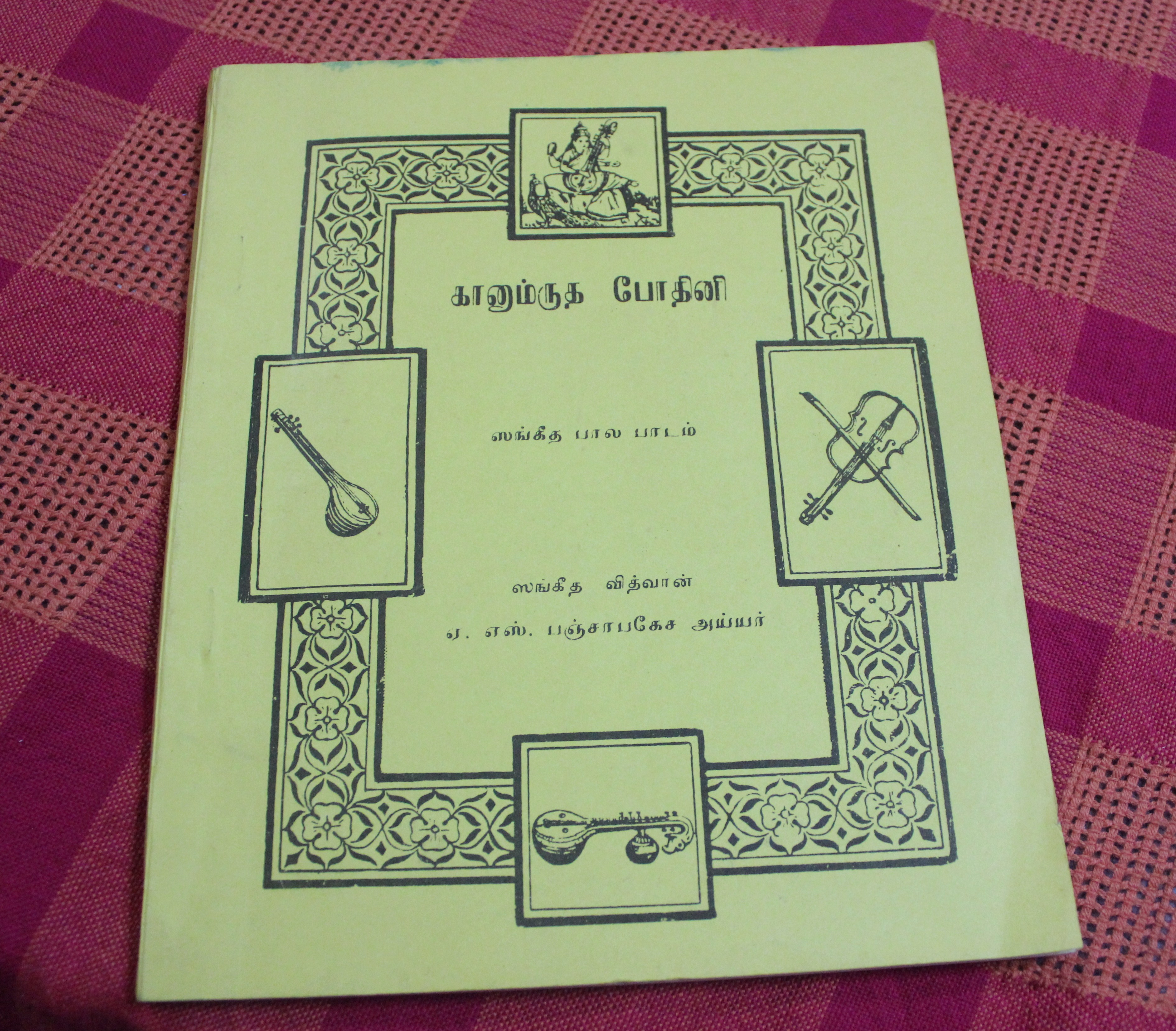
Telling her stories of Paatu vaguppu/Music classes, I have become her music teacher too – just the basics!
 

IMG_3038

With the new edition of the same old book of basic classic Carnatic music to the easily portable shruthi box – I try to dig in to memories back home!
Sundal

Navaratri without Sundal – lentil salad is like Pongal without Karumbu/Sugarcane.(https://dosaikal.com/2012/01/13/thai-pongal-the-harvest-festival)

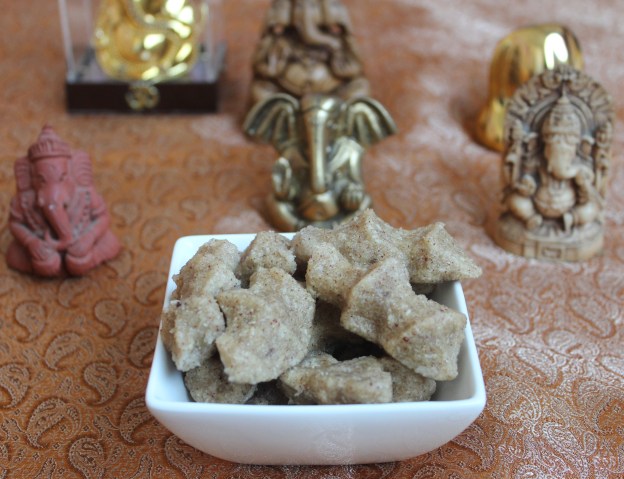
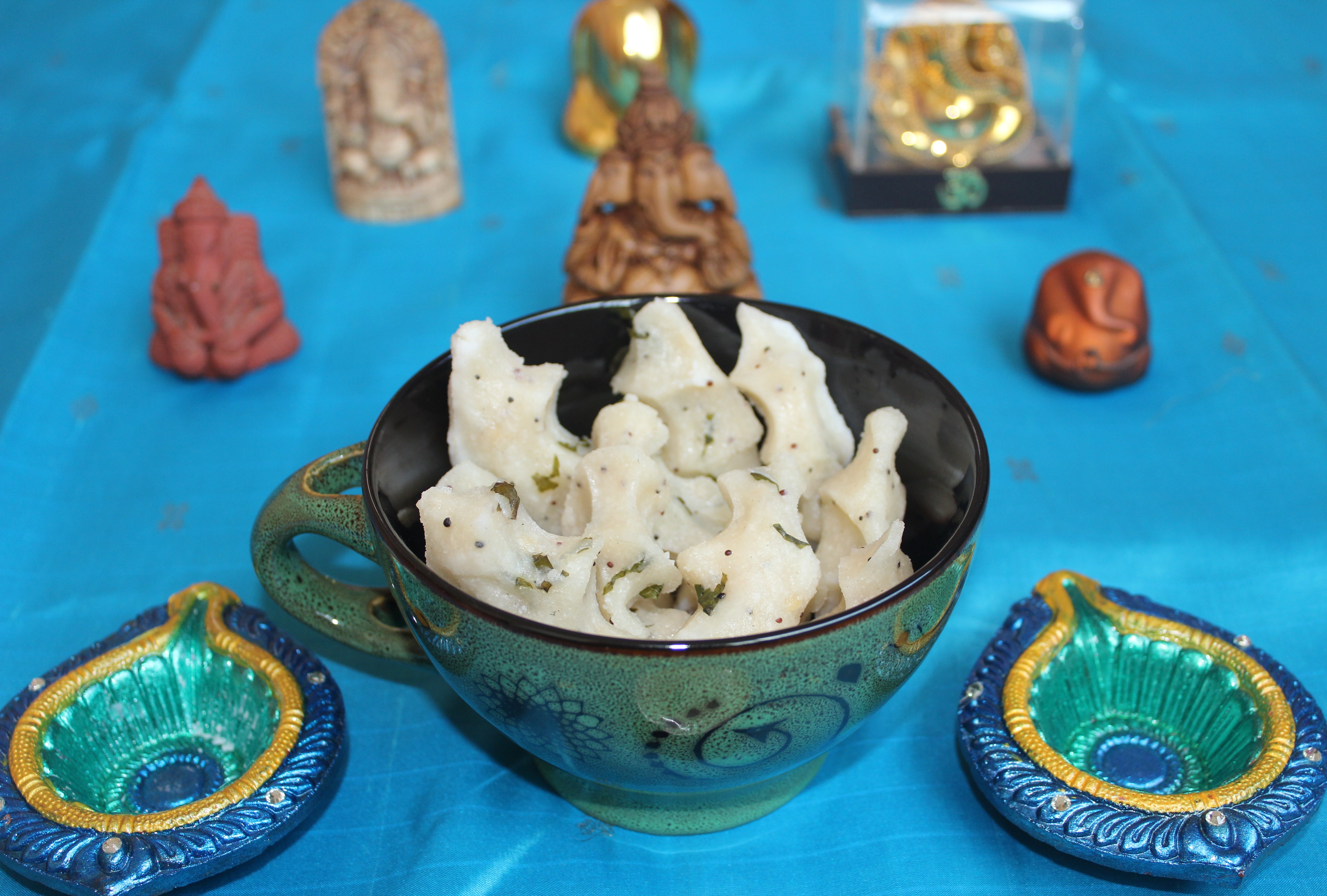
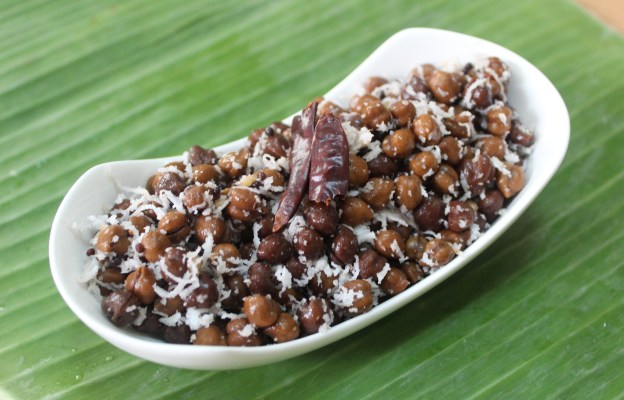
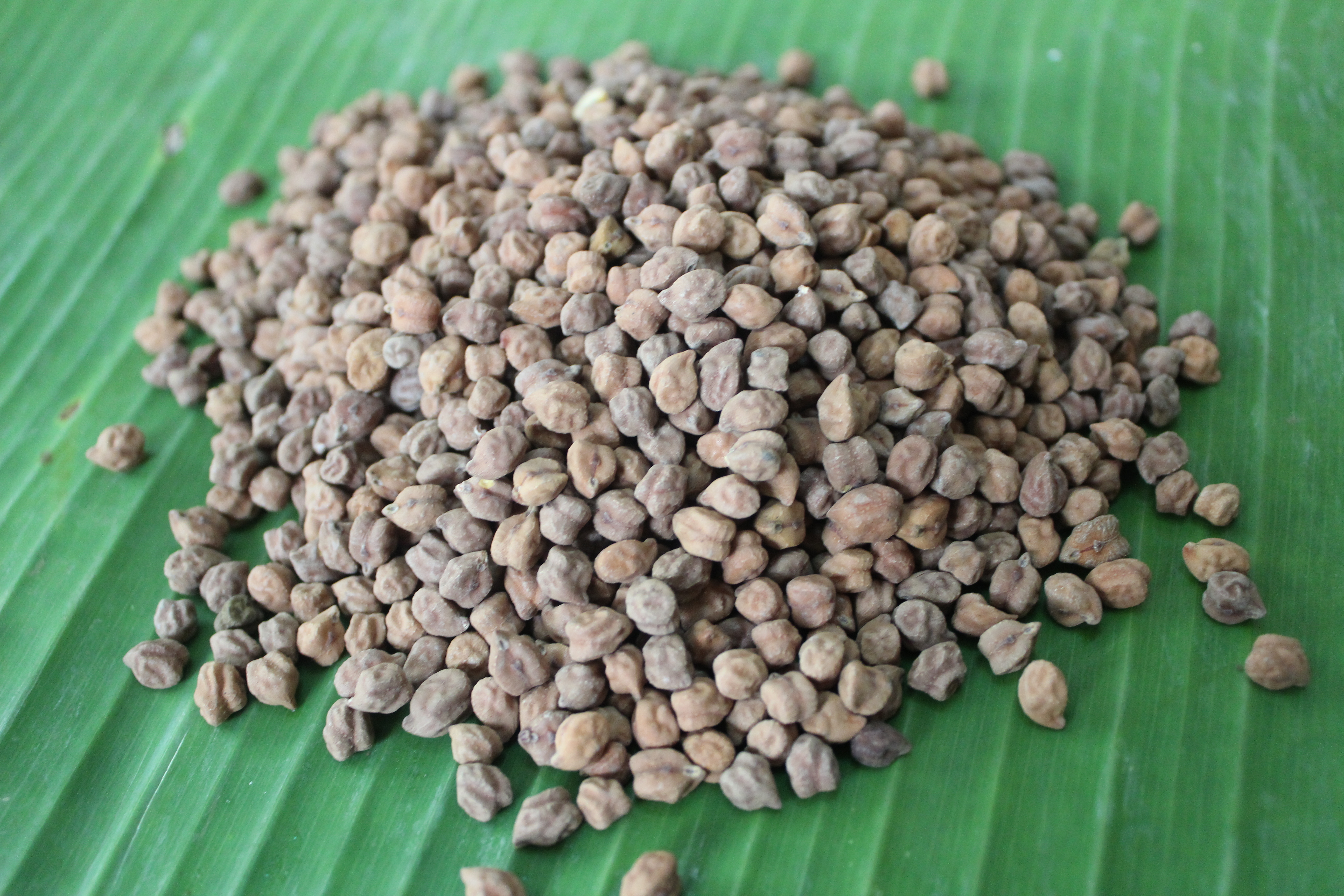
The protein rich, nutritious sundals are real treat during this festival.  Different lentils are soaked and cooked and seasoned with minimum oil and just stir fried to be presented as a healthy snack. Among the various varieties, it is Karuppu Kondaikadalai Sundal this time.

Now, to the recipe –

Karuppu Kondaikadalai Sundal/Stir fried Black Chick Peas
 

IMG_3121


Chickpeas are a source of zinc, folate and protein.Chickpeas are low in fat and most of this is polyunsaturated. Nutrient profile of desi chana (the smaller variety) is different, especially the fibre content which is much higher than the light coloured variety. One hundred grams of mature boiled chickpeas contains 164 calories, 2.6 grams of fat (of which only 0.27 grams is saturated), 7.6 grams of dietary fiber and 8.9 grams of protein. Chickpeas also provide dietary phosphorus (168 mg/100 g), which is higher than the amount found in a 100-gram serving of whole milk.

Recent studies have also shown that they can assist in lowering of cholesterol in the bloodstream. http://en.wikipedia.org/wiki/Chickpea

Ingredients (serves 3 to 4)

  • karuppu kondaikadalai/black chick peas – 1 cup
  • thuruviya thengai/grated coconut – 1/2 cup yennai/oil – 2 tsp
  • kadugu/mustard seeds – 1 tsp
  • ulundham paruppu/dehusked black gram – 1/2 tsp
  • milagai vatral/red chillies – 1 no.
  • kariveppilai/curry leaves – a few
  • perungayam/asafoetida powder – 1/4 tsp
  • salt – to taste


IMG_3096

Method of Preparation

  1. Wash and soak black chick peas in enough water overnight or at least for 8 hours
  2. Pressure cook till soft – this might take at least 20 minutes in low-medium heat
  3. Heat oil in a pan and let the mustard seeds splutter and add black gram
  4. When dehusked black gram turns golden brown, add red chillies and curry leaves and saute
  5. Red chillies can be substituted with green chillies if one prefers
  6. Strain the cooked black peas and add to the pan
  7. Add salt to taste and stir fry well
  8. When all ingredients are combined well – this might take five minutes – turn off the stove
  9. Sprinkle freshly grated coconut to serve
  10. Coconut can be added while sundal is still getting stir fried. Then, the colour of fresh coconut is lost but an excellent flavor of pan roasted coconut enhances the salad; While non-roasted fresh coconut might not add those extra calories due to roasting!
  11. The addition of coconut can be left to choose as per family preference
  12. Enjoy the healthy snack which can also be an excellent starter in dinners.
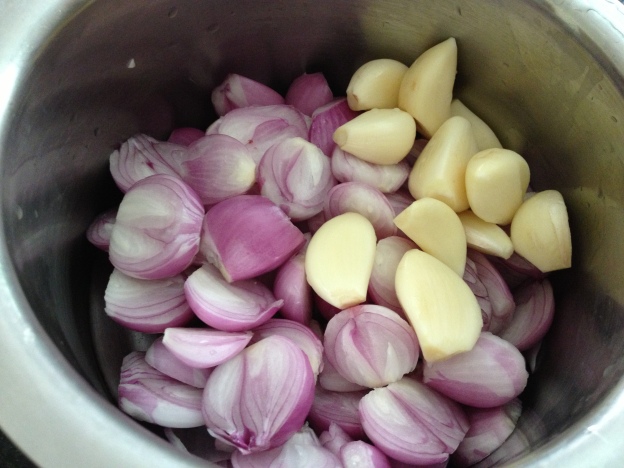
 

Chinna Vengaya Thuvayal – Shallot Dip/Chutney


IMG_2902

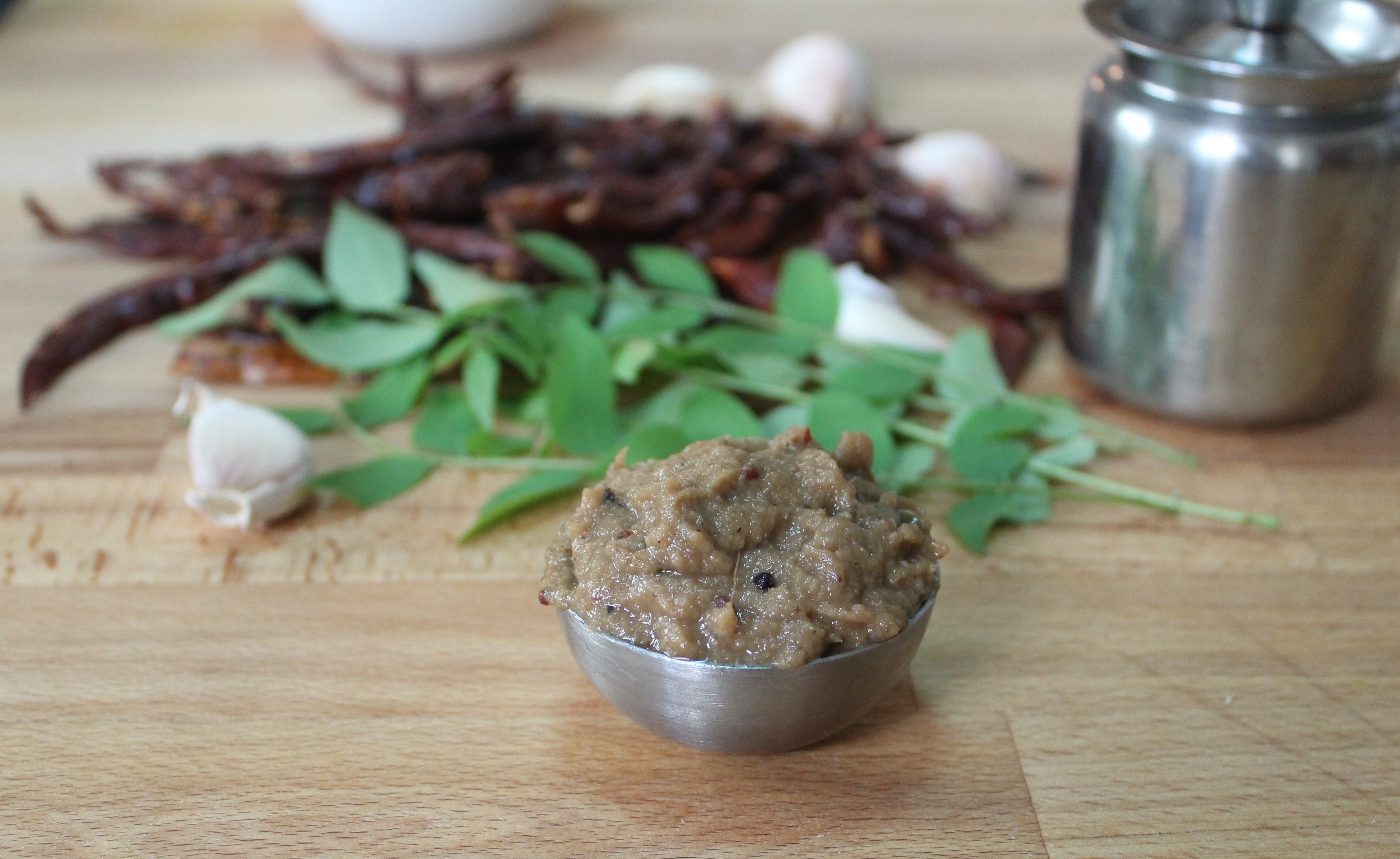
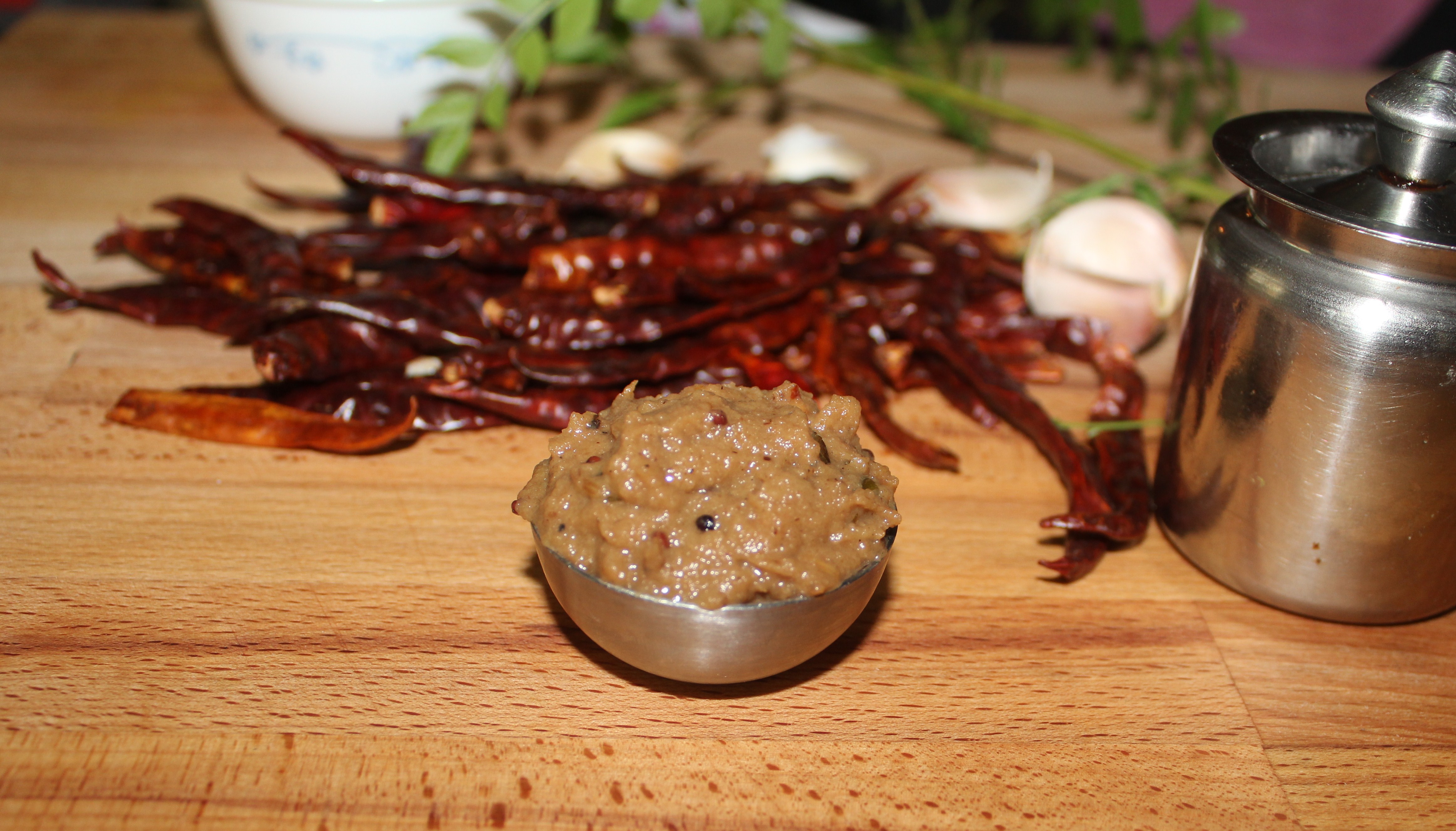
Unlike most of those plans/promises I have not been able to keep up, this time I could make it. As written in the previous post – here is the chinna vengaya thuvayal, ideal for lentil dosais. Also good for basic Idli and Dosai, but I believe the garlic content in this vengaya thuvayal helps to tackle the gastric problems which might arise for some, due to the protein rich whole lentils in the pancakes. In a whole, this thuvayal aids in digestion.

With simple ingredients and simpler preparation, this has the ability to change the earthy pancakes into a special treat or a quick and easy breakfast or dinner food.


Chinna Vengaya Thuvayal – Shallot Dip/Chutney

IMG_2858
Ingredients (serves 4)

  • chinna vengayam/shallots- 12 no.s
  • poondu/garlic – 12 cloves
  • milagai vatral/dried red chillies – 6 no.s (less or more)
  • puli/tamarind – gooseberry size
  • uppu/salt – to taste

thaalippu/seasoning:

  • nallennai/gingelly oil – 6 tsp
  • kadugu/mustard seeds – 1 tsp
  • ulundham paruppu/dehusked black gram – 1 tsp
  • kariveppilai/curry leaves – a few


IMG_2436


Method of Preparation

  1. Clean, wash and cut onions and garlic
  2. Wash tamarind well
  3. Grind to a smooth paste with red chillies, tamarind and salt
  4. Heat 4 tsp oil, add mustard seeds and black gram; when the black gram is golden brown add curry leaves; fry for about 15 seconds in low flame and pour the blended paste
  5. Stir the blended paste well in the seasoned oil
  6. Fry/cook for about 10 minutes in slow flame
  7. The texture and taste of the end thuvayal/dip depends on the family.  If one prefers a slight raw taste of onions, frying for 5 minutes is sufficient
  8. Frying the thuvayal for 10 minutes would give it a darker shade colorwise and the raw smell of onions and garlic would be gone
  9. Do not forget to stir at frequent intervals from the bottom of the pan as the thuvayal might stick to the bottom and be burnt very quickly
  10. When the thuvayal is done, remove from the pan and transfer into a serving bowl
  11. Heat 2 tsp oil in a pan; Pour on top of thuvayal that has a glow on top due to hot gingelly oil
  12. Thuvayal is ready! While served with dosais, pour one or two teaspoons of gingelly oil for one of the best flavours you would have tasted till date!


IMG_2366

Note:

  1. The quantity of red chillies can be altered according to taste preferences.
  2. Onions and garlic also contribute to the spice of the thuvayal – so try with lesser chillies and upgrade it the next time if needed.
  3. More gingelly oil, tastier the thuvayal. The taste of gingelly oil helps in tackling the spice level and pungent smell of garlic and onion – hence do not be conscious of oil here.
  4. Instead of seasoning first, one can also start with just heating the oil and pouring the blended paste and cooking together.This doesn’t make any difference to the taste.
  5. Season the thuvayal in the end. Pouring the seasoned oil or just hot oil –  on top of the done thuvayal is very important to make the thuvayal a delight with any kind of lentil dosais.


IMG_2883


Muzhu Ulunthu Dosai/Black Gram Dosai – Pancakes


muzhu ulundhu dosai/black gram pancake
IMG_2934

There are different kinds of Dosais – Traditional and Contemporary! The traditional ones include those pancakes made from a variety of grains and lentils. Like Kezhvaragu Dosai – Finger Millet Pancake; Kambu Dosai – Pearl Millet Pancake; Chola Dosai – Corn Pancake; Gothumai Dosai – Whole Wheat Pancake; Rava Dosai – Semolina Pancake; Adai – Lentil Pancake; Masala Dosai – Rice Pancakes stuffed with dry potato curry and so on.. The categorisation of tradition and contemporary might be a topic of conversation.

Now, this Masala Dosai is a perfect catch! It is a versatile pancake – to stuff the ingredient of one’s choice. The contemporary pancakes cater to the taste buds of people far and wide across the world, with the different kinds of stuffing.

But certainly, the pancakes with the various grains and lentils can be categorised as traditional as 1. they have been prepared through generations and most importantly 2. are becoming almost next to undone presently in households, while they are available at very selective restaurants.

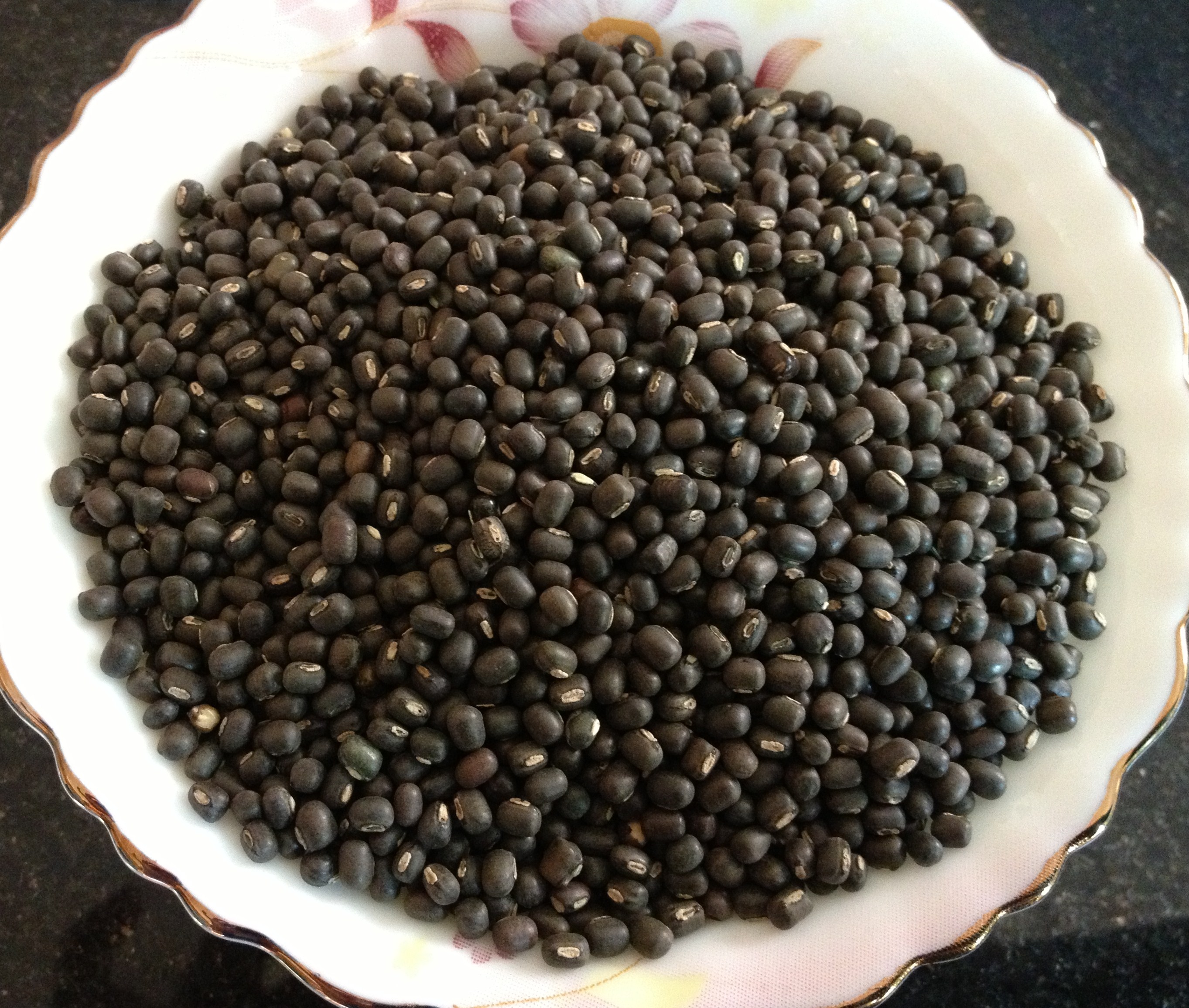
One such kind of Dosai/Pancake made more commonly in Tirunelveli and Thoothukudi districts of Tamilnadu is the Muzhu Ulundhu Dosai or Karuppu Ulundhu Dosai. It is Pancake made with Whole Black Gram. Normal Dosais are made with dehusked or skin removed black gram. This dosai is packed with the goodness of the whole grain and hence high in protein value. Black Gram is also a rich source of Iron, Phosphorus and Calcium.


muzhu ulundhu/black gram

IMG_0701

Grinding

Muzhu Ulundhu Dosai is made with the usual Parboiled Rice meant for Idlies and Dosais. The only difference being the Lentil used. The dehusked or deskinned black gram used in Idli and Dosai is substituted with the whole back gram. An easier option too – why? The batter can also be prepared by soaking all ingredients together and then blending them together. The time-consuming job of soaking separately and grinding separately rice and lentil is not needed here!

But originally, the black gram is ground first – soaking part not needed. Yes. you read it right.  Only rice is soaked and the black gram is ground without being soaked. This might not work well with the present day electric grinders.

Amma says in those days when there were no electrical grinders, the muzhu ulundhu/black gram was ground in the Aattural – the hand machine to grind the batter. In the Aattural, the unsoaked black gram would be pounded first and then ground well with water until fluffy. After the ground gram is removed, the soaked parboiled rice is ground and mixed well with salt – no ladles please – only with hands. I had mentioned before too – the heat of the body through the mixing hands would let the batter ferment well and produce soft idlies or crispy dosais.

Now, if we use the black gram directly in the wet grinder of today, the stone inside might be damaged…  or the motor inside might be affected – this one is quite practical and if the above mentioned problems do not arise – there would be a great amount of noise pollution created due to the dry grinding. So, in simple terms, just soak the black gram for a strain free treat.

When making the batter for a small family, the quantity of black gram to be soaked would be less  – for a household of three members like ours might need batter for 12-15 dosais – breakfast or dinner for two schedules. Here soaking and grinding separately would be difficult to grind in the grinder. So, I soak both rice and black gram together and grind together and this has not made any big difference in the taste too.

IMG_2805


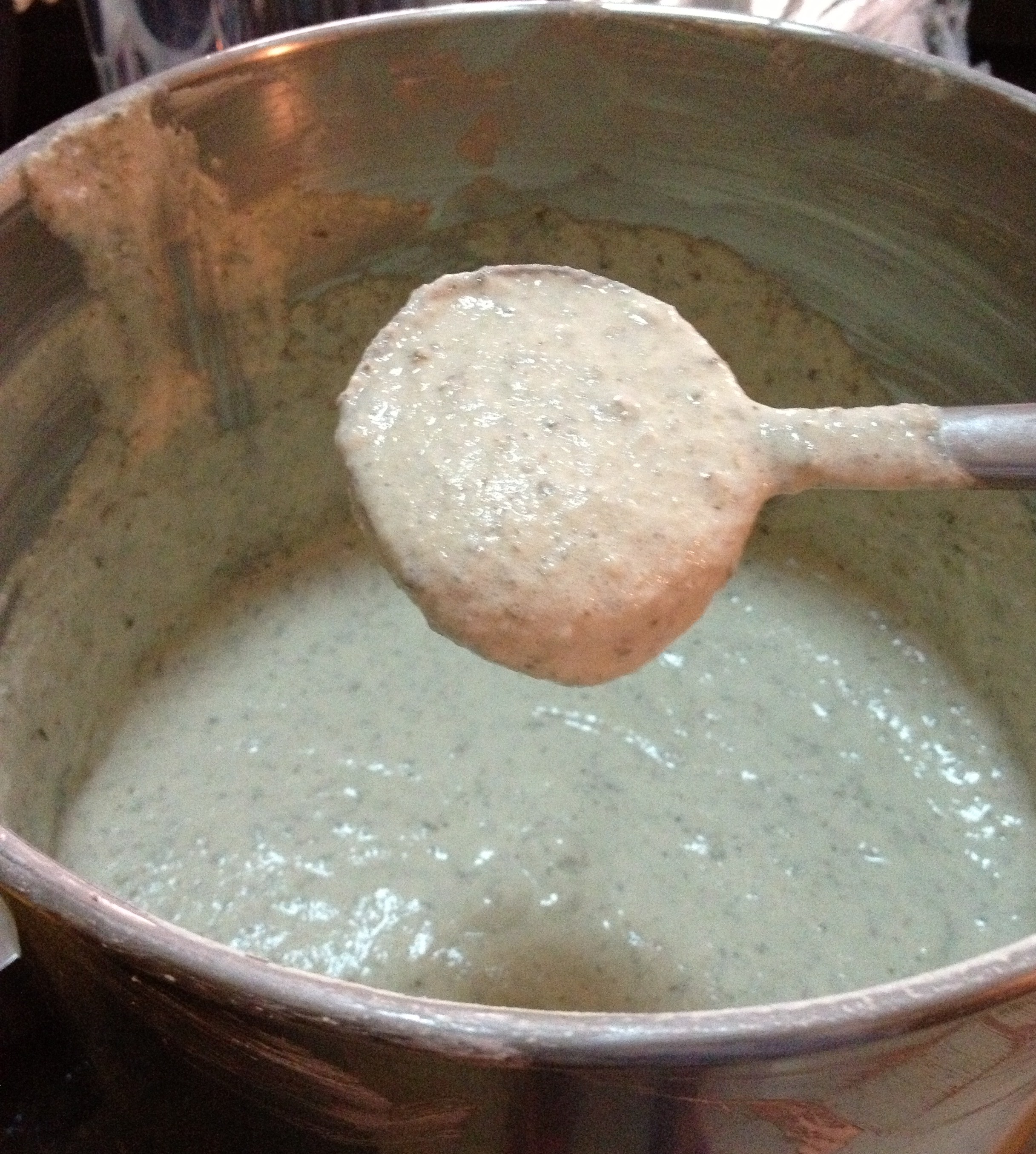
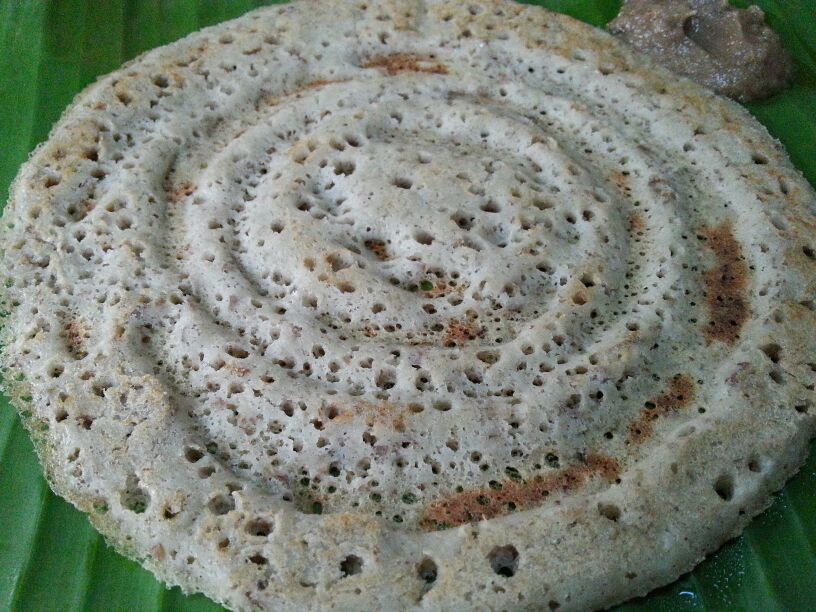
This Dosai/Pancake batter comes out wonderfully fluffy after fermentation. The dosais can be made soft and thick or crispy as per one’s choice. I prefer the soft version and like most of the lentil dosais, muzhu ulundhu dosai tastes best with a spicy chutney. In our houses, it is the Vengaya Thuvayal or the Onion Chutney/Dip. With very limited ingredients – onions, garlic, tamarind and red chillies this chutney is the perfect match for a dosai with an earthy flavour due to the black gram.


dosai and thuvayal

IMG_2847

Muzhu Ulundhu Dosai/Karuppu Ulundhu Dosai/Black Gram Pancakes


IMG_2833
Ingredients (makes 25-35 pancakes)

  • puzhungal arisi/parboiled rice – 3 cups
  • muzhu ulundhu/black gram – 1 cup
  • venthayam/fenugreek seeds – 1 tsp
  • salt – 1 1/2 tsp

Method of Preparation

  1. Wash and soak rice, black gram and fenugreek seeds together for 4 hours
  2. Grind to a smooth paste with the same soaked water
  3. Add salt and mix well
  4. Let the batter ferment for a minimum 6 hours or overnight according to the heat in the kitchen – preferably overnight.
  5. Make soft or crispy dosais/pancakes. To make dosais, see https://dosaikal.com/basic-dosaidosa.


making dosai on dosaikal/pan

IMG_2813

Notes:

  1. Reduce the quantity to make lesser dosais but in the ratio 3:1 – rice:black gram.
  2. Fenugreek seeds are optional – but they aid in the versatility of dosais – crisp, soft or fluffy with added flavour.
  3. Always use gingelly oil if possible, for the best tasty Dosais.
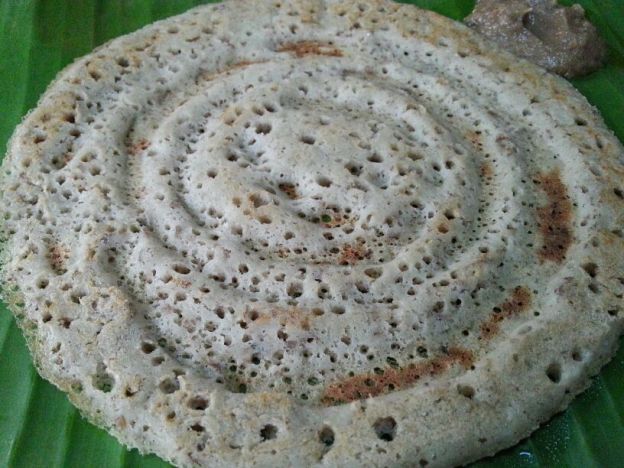
  4. A well fermented batter would produce a pore-ful dosai!


well fermented and dosai with pores
IMG_2947

Num Kom-Sticky Rice Cakes with coconut filling/Khmer Kozhukkattai!

Modhakam (http://modhakam-pillayar-chaturthi-special), Kara Kozhukkattai (http://pidi-kozhukkattai-karamsalted-rice-dumplings) and Inippu Kozhukkattai (http://inippuvella-k-kozhukkattaijaggery-rice-dumplings) for Pillayar Chaturthi have been made in the recent posts. So why not make this Pillayar Chaturthi a fusion festival – with a Tamil-Khmer festive sweet… that which also somewhat resembles our Poorana Kozhukkattai (Dumplings with filling) in preparation and filling!
Here is Num Kom – The Cambodian Sticky Rice Cake!

IMG_2543

Cambodia with the staple food rice has many varieties of food made with Rice, especially the Glutinous Rice or the Sticky Rice.

Glutinous rice (Oryza sativa var. glutinosa; also called sticky rice, sweet rice or waxy rice) is a type of rice grown mainly in Southeast and East Asia, which has opaque grains, very low amylose content, and is especially sticky when cooked. It is called glutinous (< Latin glūtinōsus)[1] in the sense of being glue-like or sticky, and not in the sense of containing gluten. While often called “sticky rice”, it differs from non-glutinous strains of japonica rice which also become sticky to some degree when cooked. http://en.wikipedia.org/wiki/Sticky_rice


IMG_2668 (2)
Some of the main delicacies made for special occasions with the Sticky Rice are the different kinds of Rice Cakes. Special occasions can be Weddings, Khmer New Year or Pchum Ben (Festival devoted to worship of ancestors).

The Rice Cake varieties can be Num Kom,  Num Ansom Chrouk and Nom Ansom Chek. Num means Cake in general. Nom Kom is the Rice Cake with coconut and palm sugar filling. Ansom Chrouk has a filling mainly of pork fat and green bean and can be a main course.  Ansom Chek has a filling of banana and it is served as a dessert.

During Pchum Ben – where the ancestors of every family are worshipped – women of the household, young and old sit together and prepare Num Kom.  The Rice Cakes require a lot of time wrapping them in banana leaf – folded in a particular pattern.  While Num Kom – the coconut filled rice cake needs less time comparitively,  there are other fillings to the rice cake – like pork meat – cooking time of which is longer. So, they say the womenfolk sit chatting in the night making hundreds of rice cakes, while the different kinds of cakes get cooked for the next day ceremony.

Thanks to http://blog.aseankorea.org/archives/16079 – from which I could collect some interesting information about these Rice Cakes.

Special thanks to my friend and one of the pioneer bloggers of Cambodia at a very young age – Keonila of blueladyblog.com for helping me out in the search of more authentic information. Also patiently answering my doubts on the fillings of Nom Kom. She is one of the top 5 bloggers of Cambodia and a social media advocate. Thankyou Nila!

And all those other friends who may be reading this – do correct me when I am wrong on information – and please do not hesitate to share your thoughts. This would help me get a better insight into the traditions and culture behind the cuisine of Cambodia!

This Rice Cake could not have been prepared without the guidance and helping hands  of friend ‘D’, who played teacher in letting me learn this cake – with the taste and twist (literally) of banana leaves. Thank you ‘D’.
Num Kom


IMG_2548

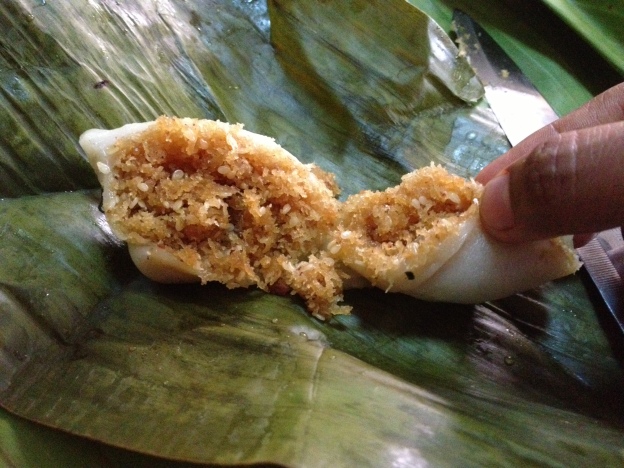
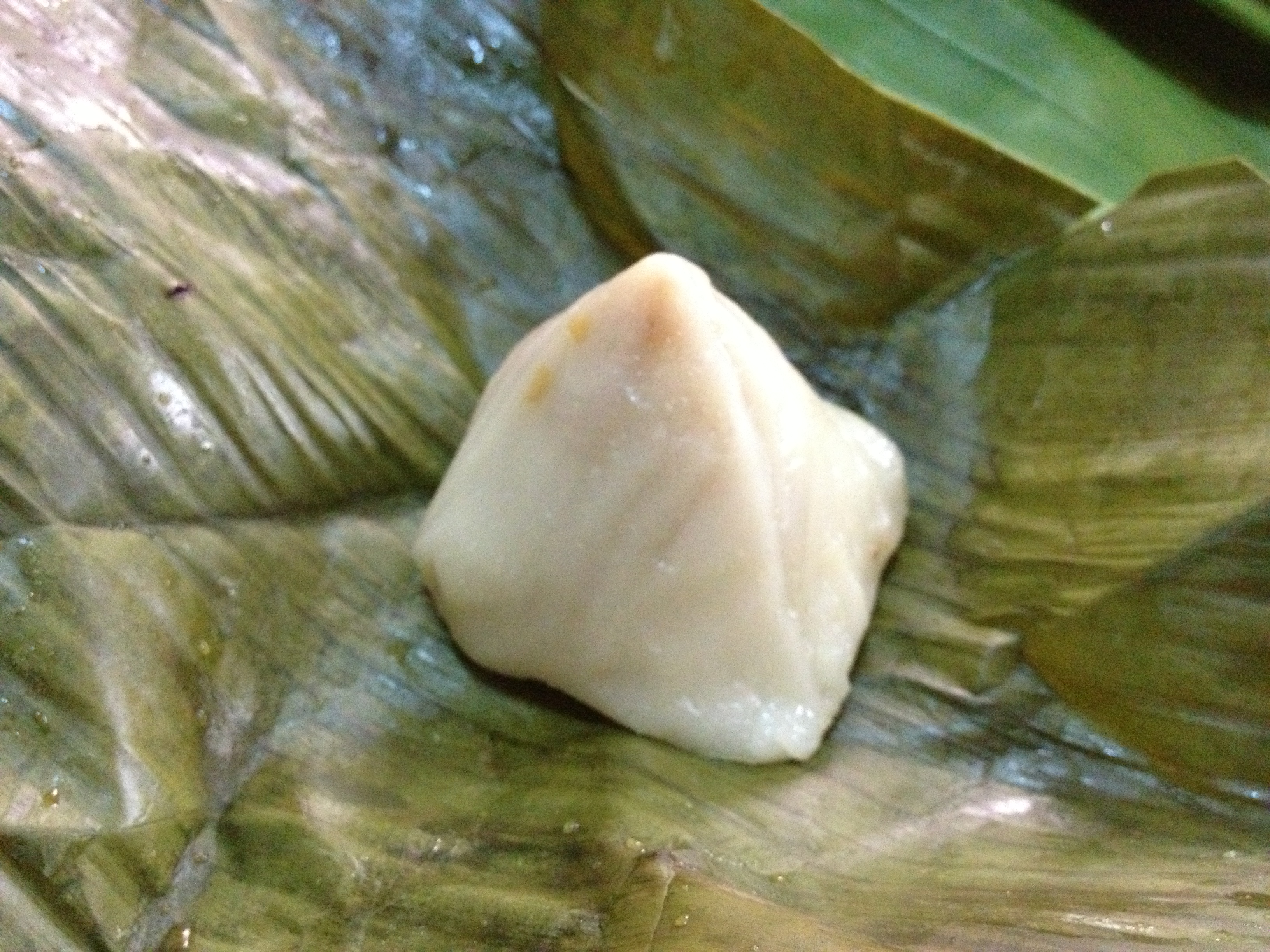
Num Kom is a Rice Cake made with the outer shell of Sticky Rice with a filling of coconut and palm sugar, wrapped in banana leaf and steamed.

Originally palm sugar is used as sweetener. Since I did not have it, I substituted with the home made jaggery syrup which was available. Incidentally, when I made modhakam/poorana kozhukkattai on pillayar chathurthi, there was no jaggery at home as well in the Indian shop I get it from. I could only palm sugar instead. It was meant to be this way I suppose – Indian Kozhukkattai (Rice Dumplings) substituted with palm sugar and Khmer Kozhukkattai (Rice Cakes) with jaggery.


Ingredients (makes 7-8 num koms)


for the filling
IMG_2672 (2)


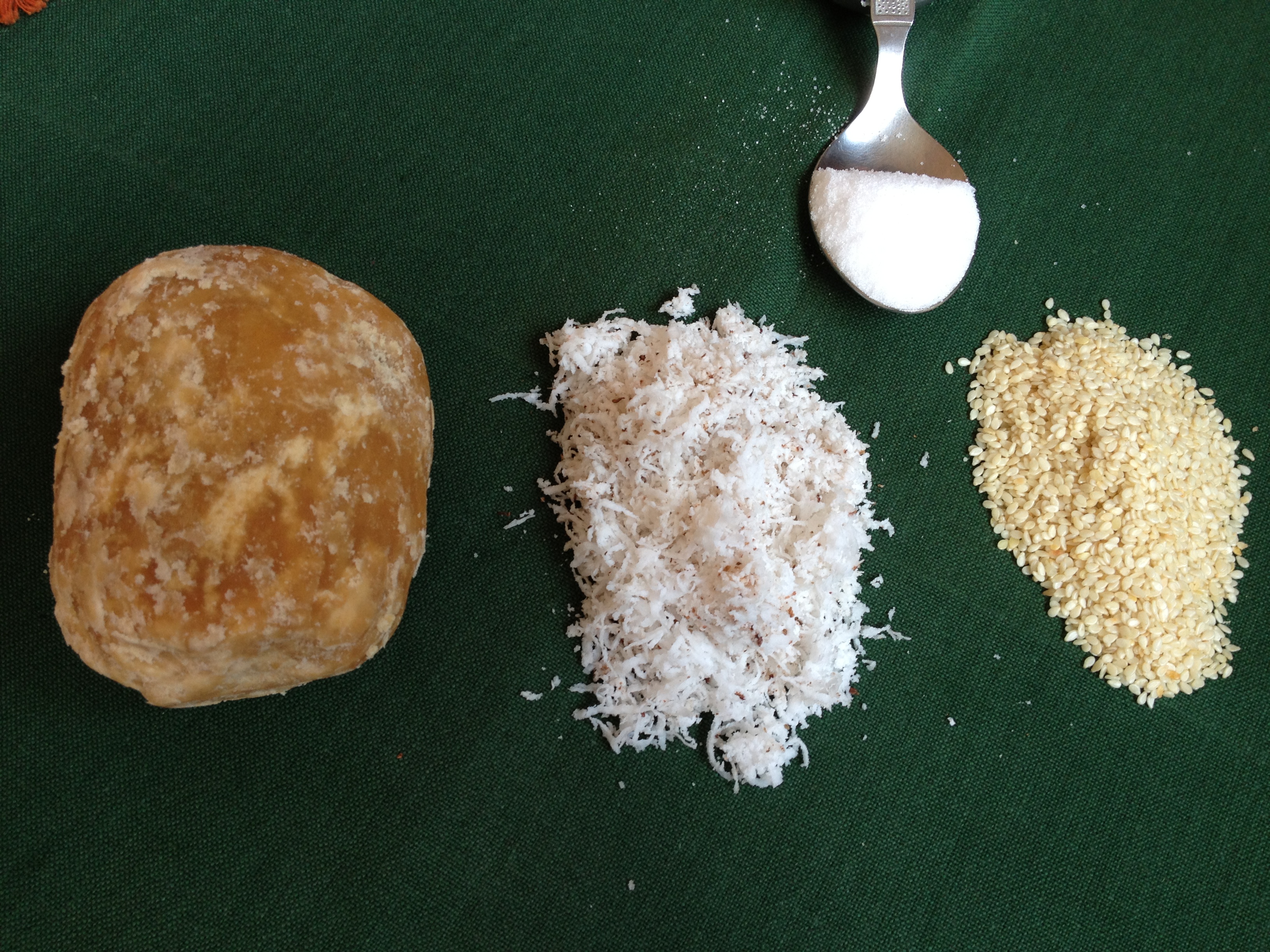
  • glutinous rice/sticky rice – 175 grams (1 cup – a little more or less)
  • grated coconut – 1 cup
  • sesame seeds – 3 tsp
  • jaggery syrup – little less than 1/2 cup
  • salt – a pinch
  • banana leaves to wrap

Method of Preparation


I. Preparation of Outer Shell/Rice Covering


IMG_2507

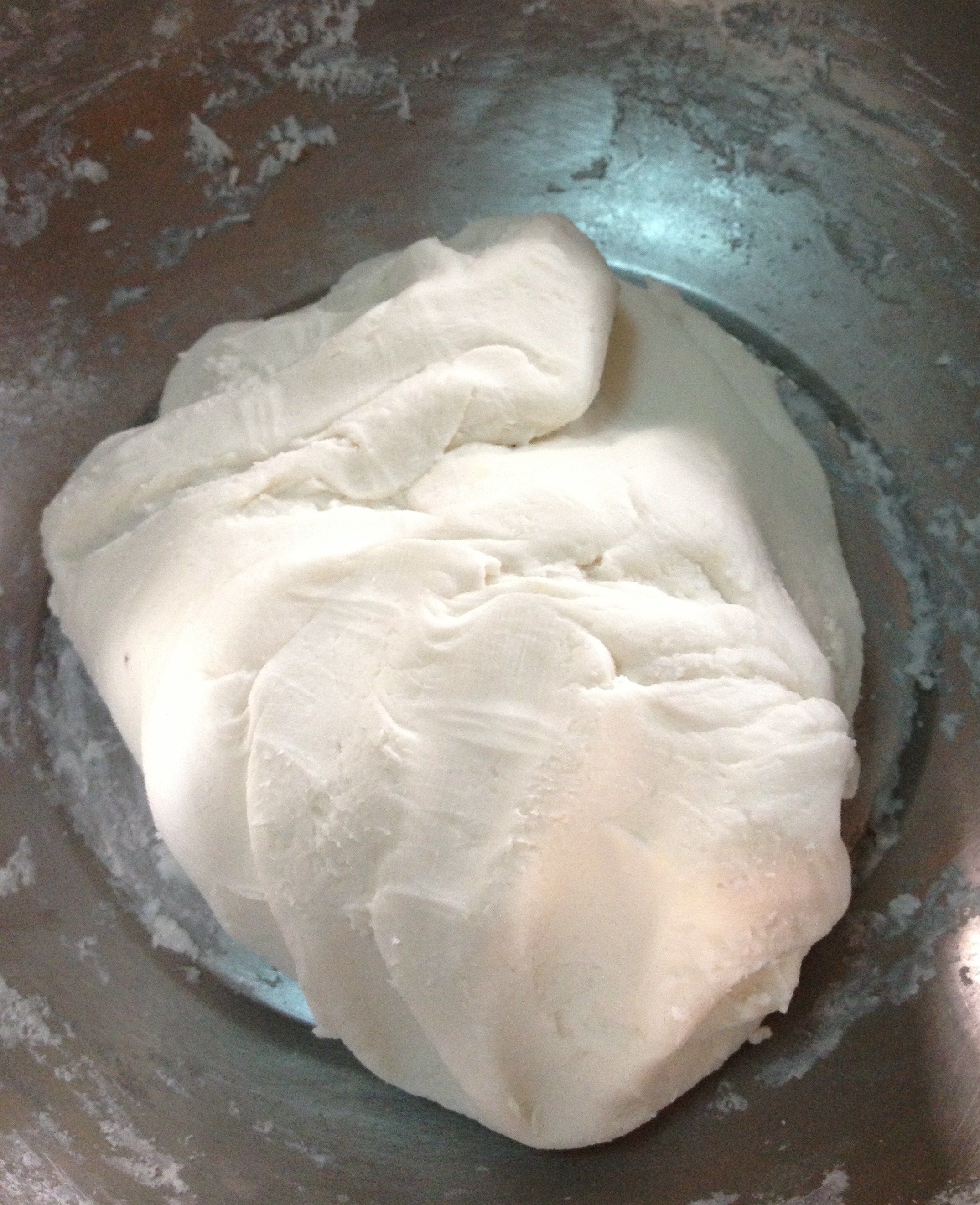
We decided to go for the traditional method of soaking rice and making a paste. The paste is strained in a netted cloth and the water content remaining in the paste would go. Then, hot water is added to somewhat dry dough to make it easy to wrap the filling inside.


IMG_2488

This was a flop with the cloth I had was thick and could not strain the water away.. Emergency!!!  Got some glutinous rice powder and mixed it with the rice paste and converted it into the required right consistency to make Num Kom

Keep aside.


II. Preparation of filling
IMG_2687 (2)


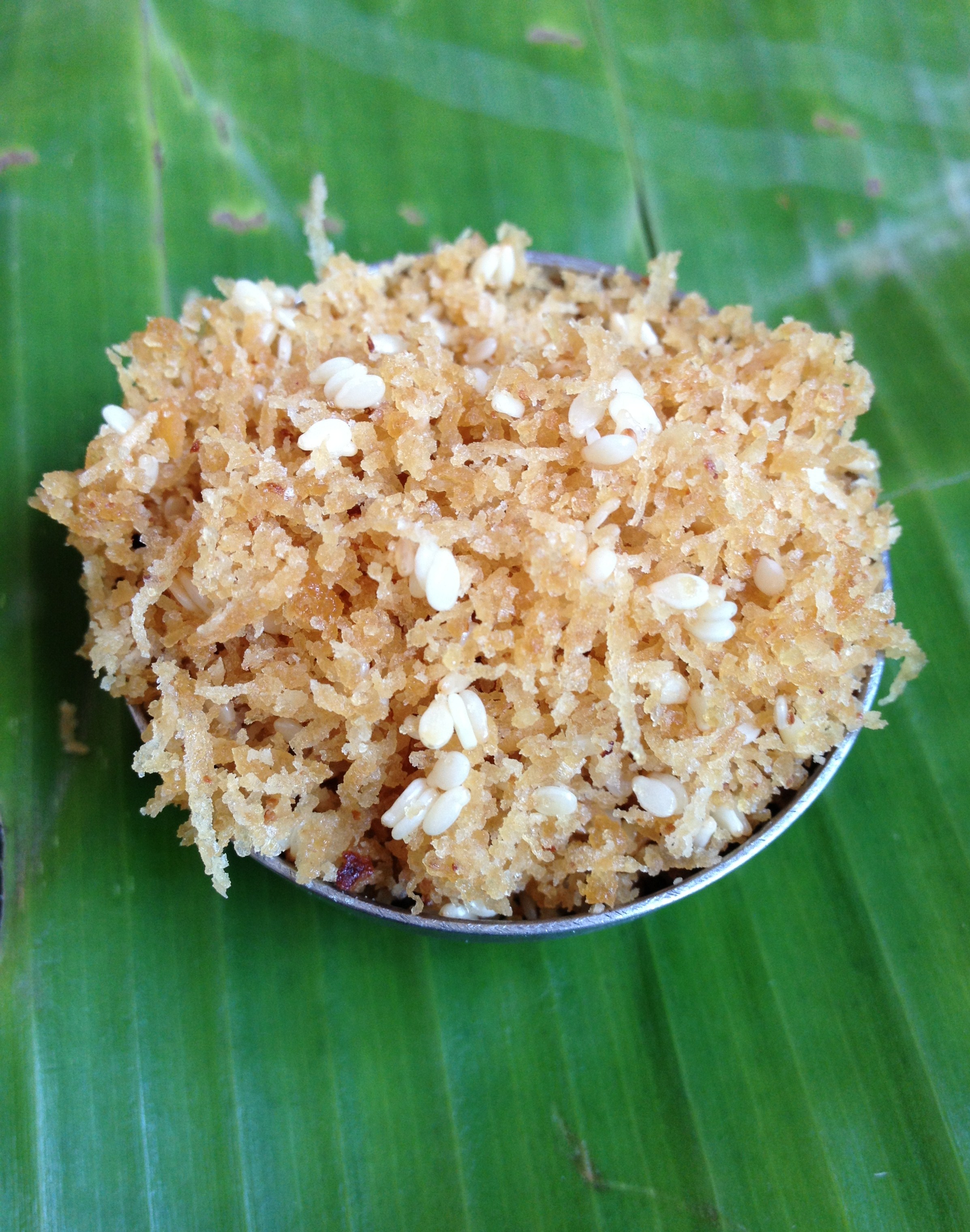
  1. In a wide pan, dry roast sesame seeds till slightly brown. Preferably black sesame – but I had white.
  2. Switch off the stove and add grated coconut and jaggery syrup
  3. If one uses palm sugar, it mixes well very fast and easily
  4. Frying more or making the filling thick and sticky as in south indian dumplings is not needed here
  5. Mix well and keep aside.


III. Preparation of Rice Cake


IMG_2527


  1. Make small balls of rice dough
  2. Flatten each to keep the filling inside
  3. Fill with coconut-sesame-jaggery filling
  4. Close and make a ball

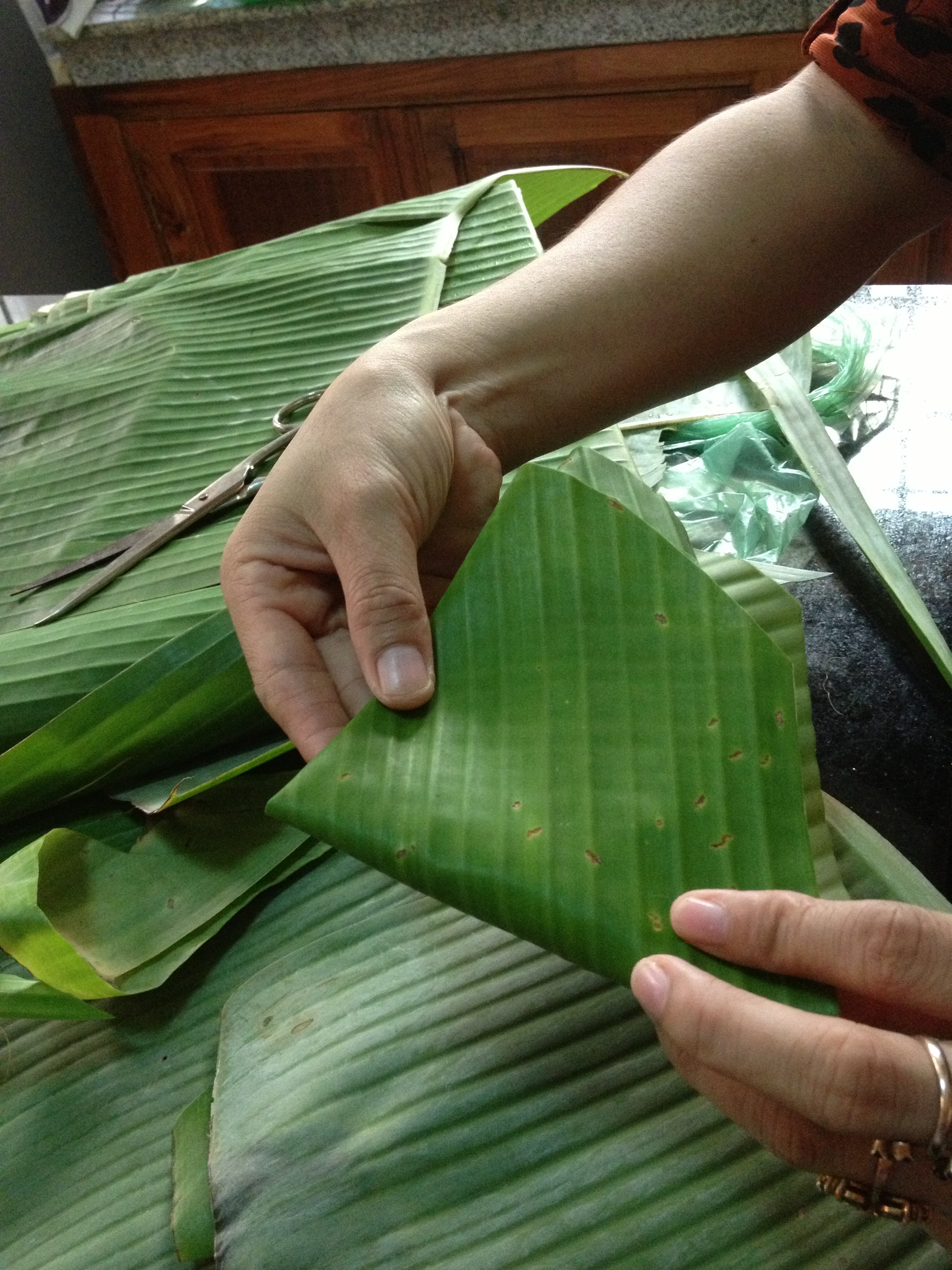
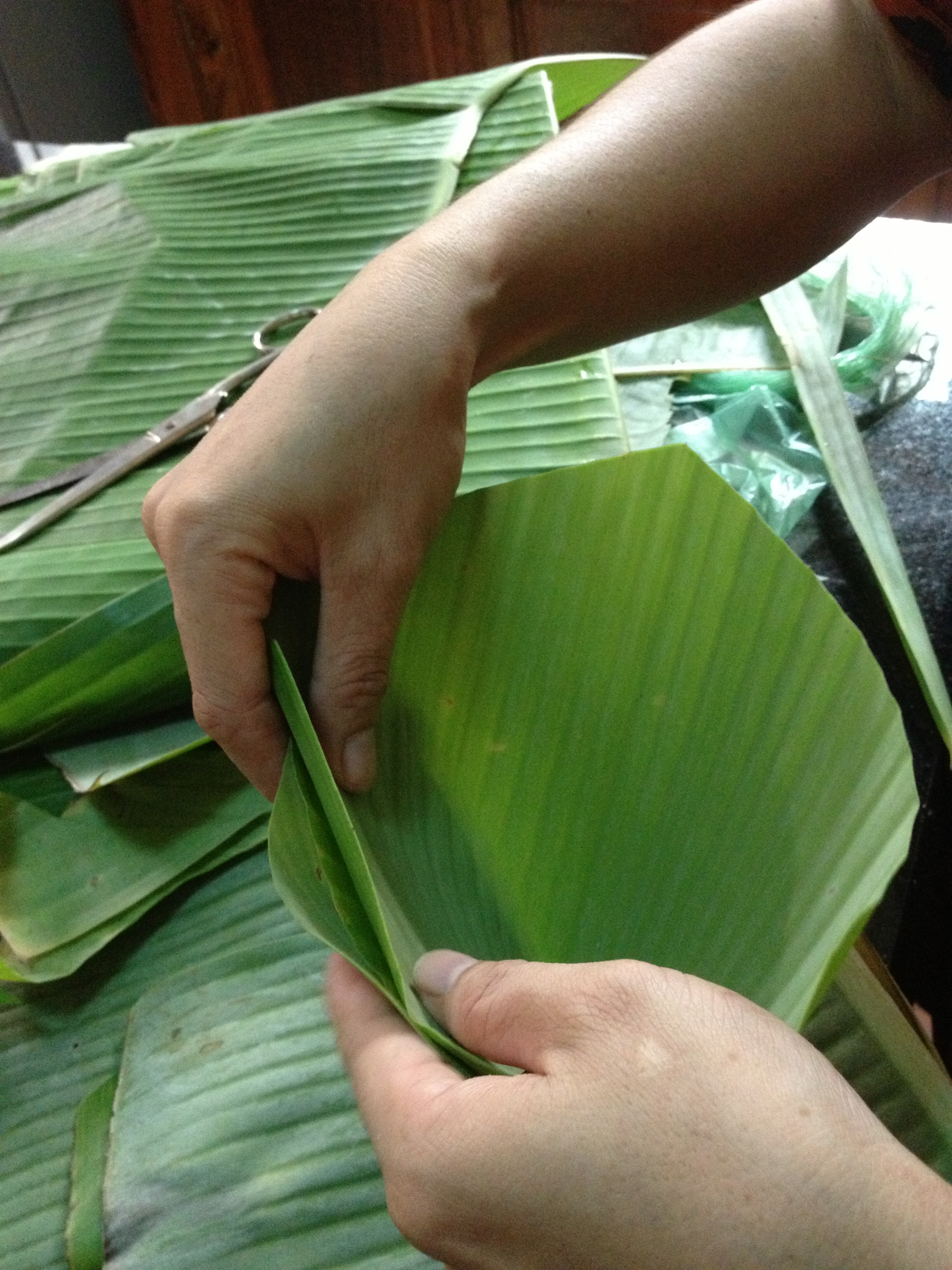
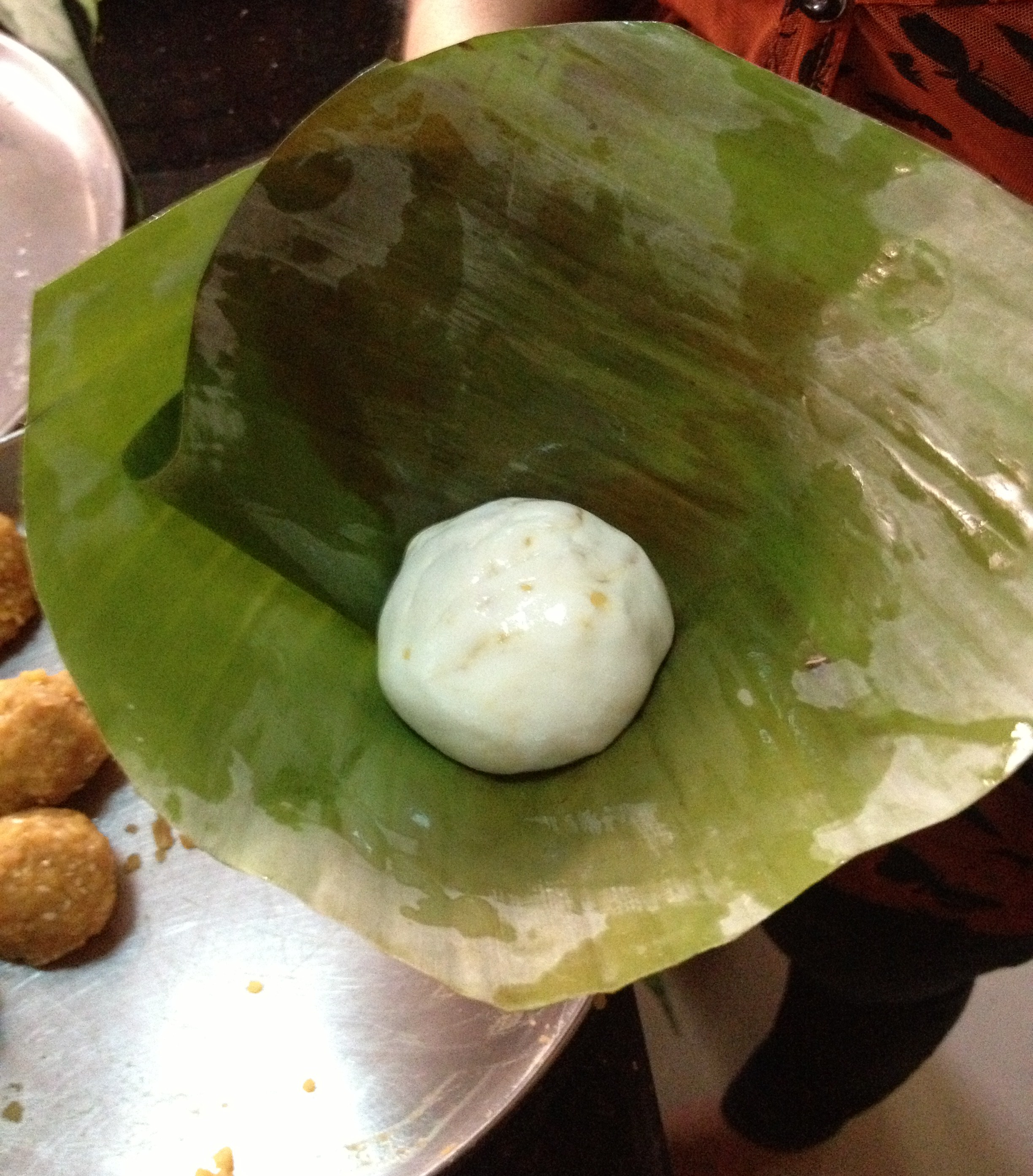
IV. Folding the Rice Cake in Banana Leaf

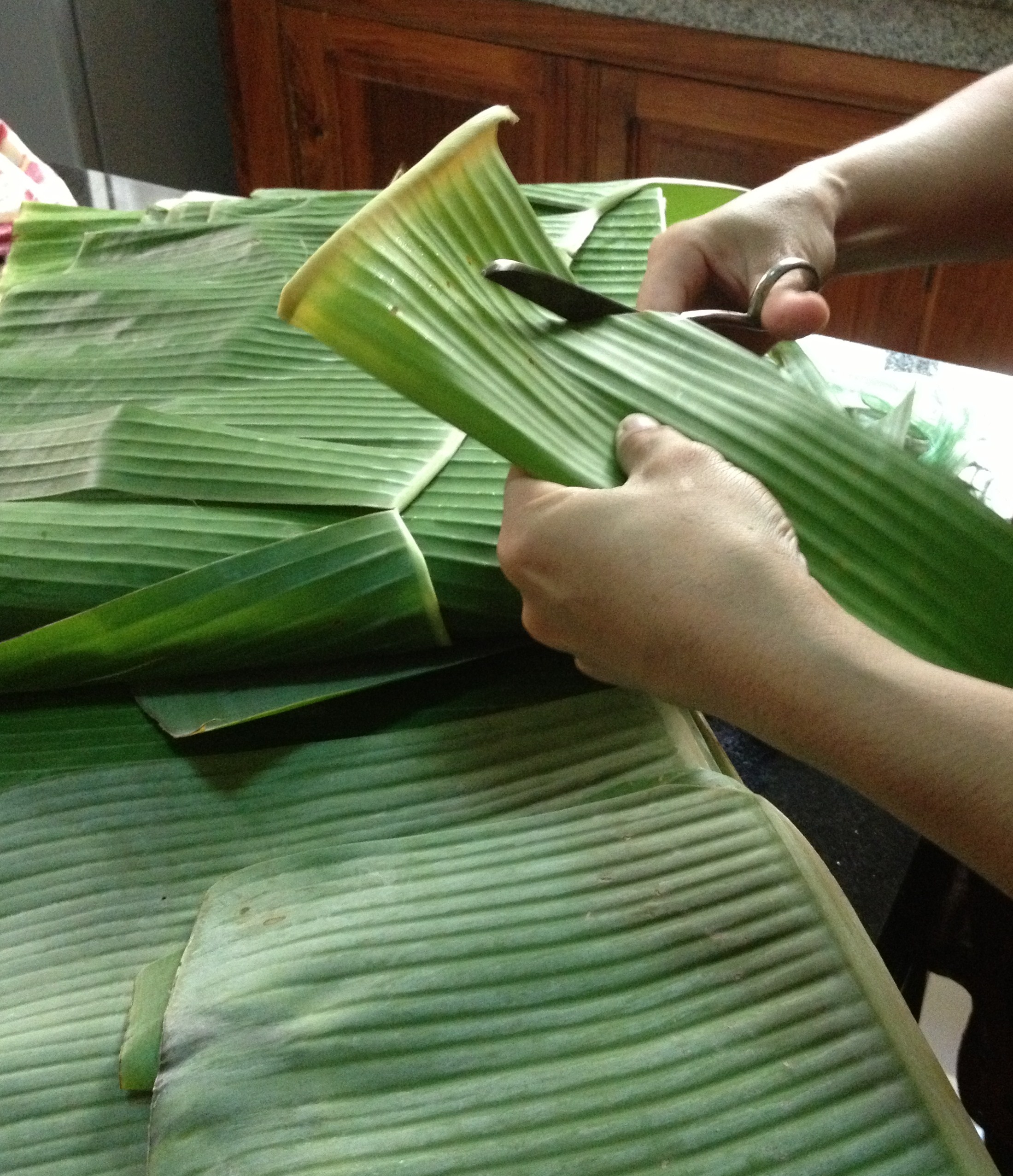
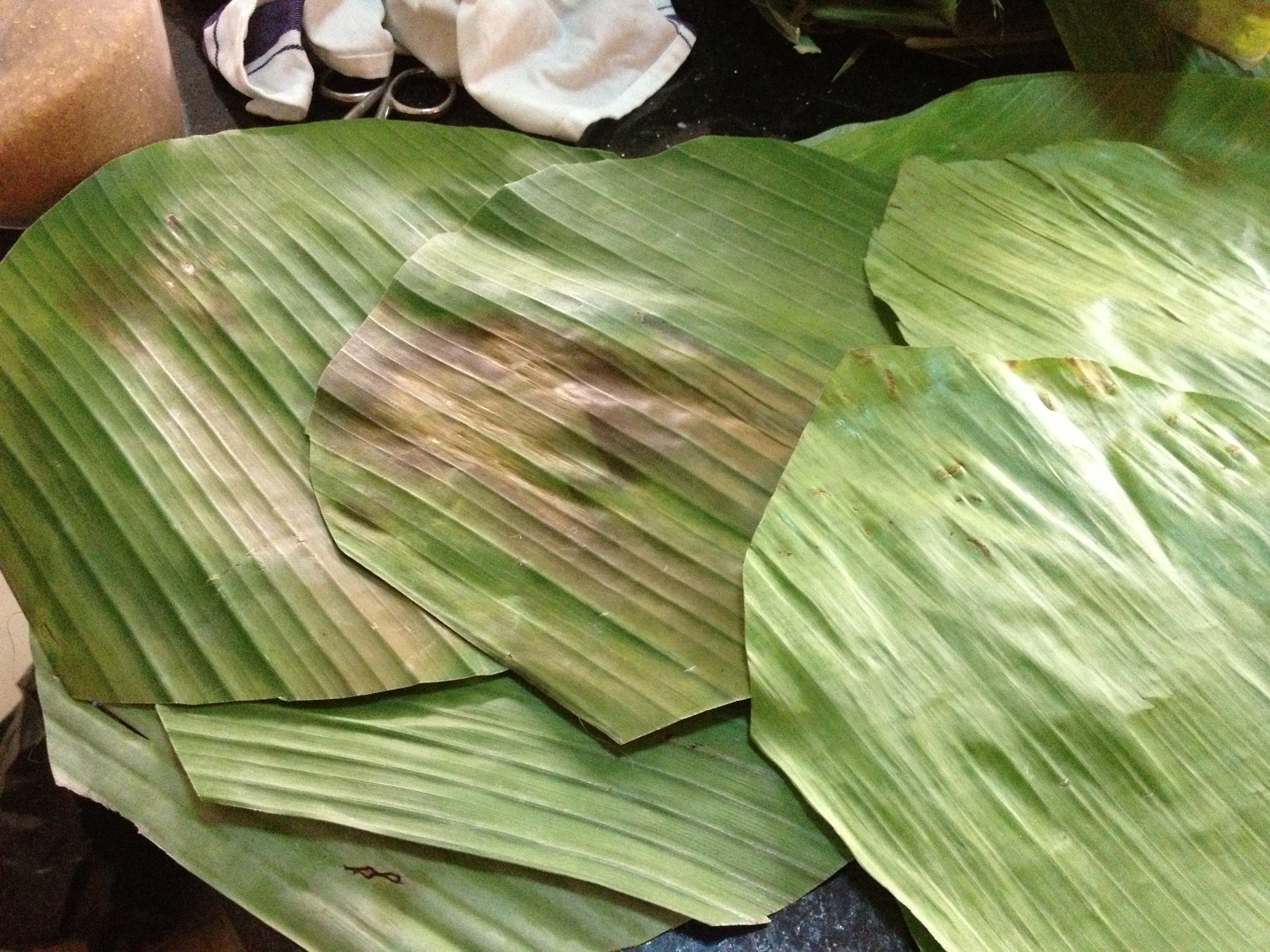
1. Cut the banana leaves in 8 by 7 inches  (khmer food cooking tutorial: num kom’s (steam rice cake with coconut)

2. Wash the leaves well and wipe them clean with cloth

3. Fold each leaf vertically and give it a slightly cross cut

IMG_2493

4. The cut leaves look like this

IMG_2510
5. Fold it vertically – one fold

IMG_2494

6. Next fold – make it a ‘V’

IMG_2496

7. There would be two pockets – open the wider pocket

IMG_2498

8. Grease the leaf and place the Rice Cake inside

IMG_2520

9. Do not close it the same side where the leaf looks ‘V’ – but, fold the leaf to close the cake in the middle portion where there is a double slit – now, this is a tricky part I forgot to capture. I was learning to close it and was quite successful too. But no photos please. Shall try again for sure!

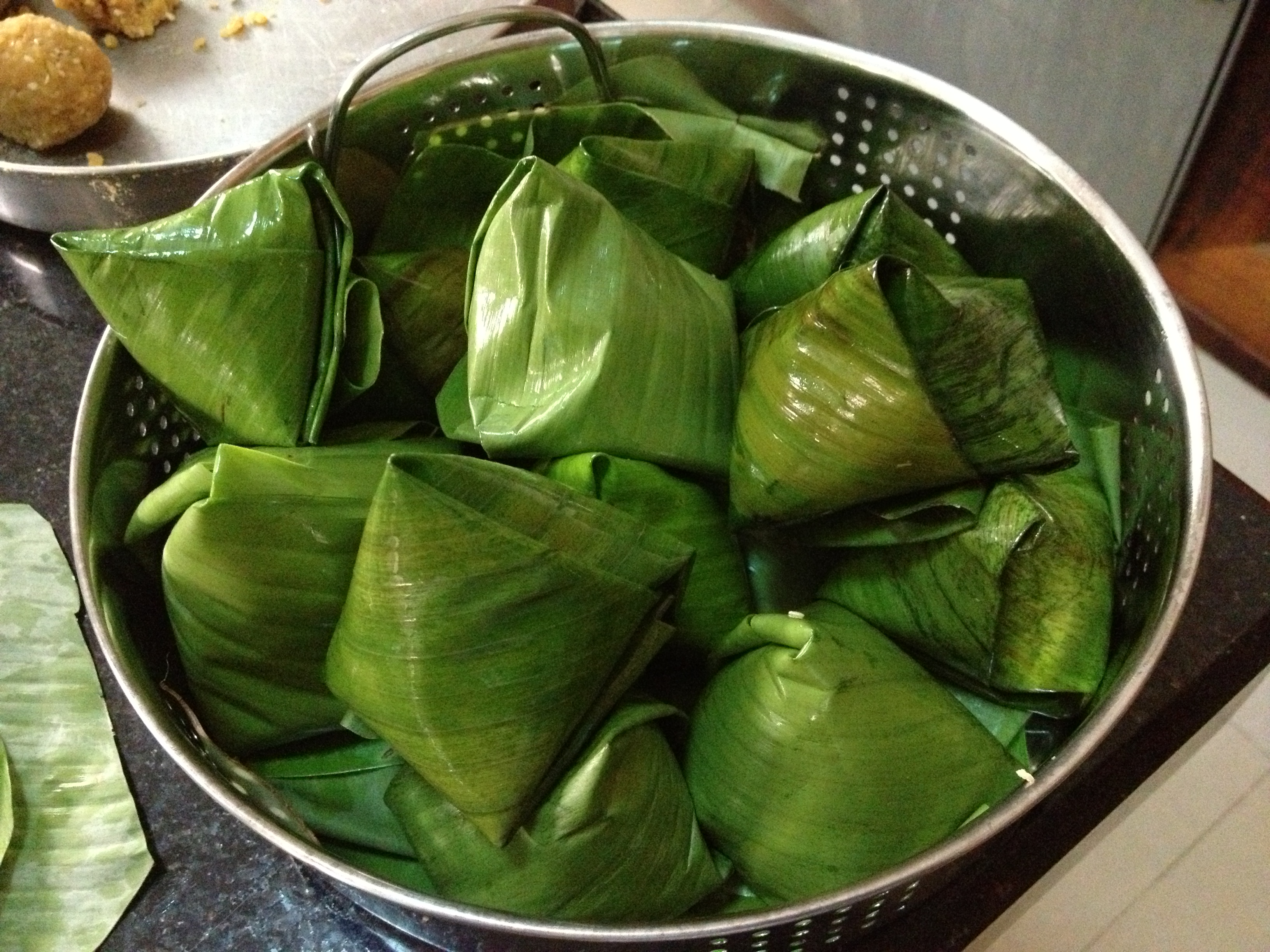
10. Done and the cakes are ready to be steamed.

IMG_2523


V. Steaming Num Kom

place the rice cakes randomly in the vessel
IMG_2535


  1. Boil water in a steamer
  2. In the container, place banana leaves as base. This prevents the num koms from sticking to the bottom of the vessel and also gives more banana leaf fragrance and flavour to the steamed cakes
  3. Arrange the prepared rice cakes. Be careful not to damage the shape
  4. Place more banana leaves on top and close the steamer with lid
  5. Steam for about 15 minutes
  6. Num Kom is ready


IMG_2538

Sounds so similar, feels so familiar – yet so different! This holds good to the cuisine connections of Cambodia and South India! Shall explore more…

IMG_2546


Inippu/Vella-k-kozhukkattai/Jaggery Rice Dumplings – Steamed

IMG_2230
Pillayar Chathurthi/Ganesh Chathurthi/Vinayaka Chathurthi falls on September 9 this year. It is Poorana Kozhukkattai – Stuffed rice dumplings or Modhakam the favourite of most of the households. (For Modhakam – see modhakam-pillayar-chaturthi-special.) There can be variations in the stuffing too – coconut-jaggery filling or sesame-jaggery. I hear some make kadalai paruppu/Channa Dhal – jaggery filling in their Poorana Kozhukkattai! Uppu Kozhukkattai (pidi-kozhukkattai-karamsalted-rice-dumplings) and Vella-k-kozhukkattai are the dumplings which have no stuffing but a mixture of few ingredients to make the kozhukkattai sweet or spicy.

Vella-k-kozhukkattai is the sweet rice dumpling. Vellam means Jaggery in Tamil language and Kozhukkattai is Rice Dumpling. The taste of coconut and jaggery blended with cardamom powder tastes heavenly and is versatile in south indian cooking.  It can be made as Poorana Kozhukkattai/Modhakam, Poli – sweet stuffed chappathis (poli-a-different-story/) or non-stuffed plain-mixed rice dumpling, which is what I am writing about today – Vella-k-Kozhukkattai!

This steamed rice dumpling has the simple mix of grated coconut, jaggery and cardamom powder with the core ingredient – rice flour. This is yet another version of ‘Pidi Kozhukkattai’ – Given the shape by pressing with hands! This can be a healthy snack for children any time – and what more those little hands can make their own shapes and munch them too!!

For the initial procedures of grinding rice flour and roasting it to be ready to make dumplings – please see https://dosaikal.com/2013/07/29/pidi-kozhukkattai-karamsalted-rice-dumplings. We directly move on to make the dough ready for kozhukkattai.
Vella-k-Kozhukkattai/Steamed Sweet Rice Dumplings(with Jaggery)

Ingredients

  • arisi maavu/rice powder – 1 cup
  • vellam/jaggery – 1/2 cup (for the sweet toothed can make 3/4)
  • thengai thuruval/grated coconut – 1/2 cup or more as per taste
  • elakkai podi/cardamom powder – 1/2 tsp
  • thanneer/water – 3/4 cup
  • nallennai/gingelly oil – 1 tsp to grease hands and 1 tsp to grease vessel/idli plate


IMG_2175


Method of Preparation
  1. Dry roast the ground rice flour to take away the raw smell out of it
  2. Sieve the flour, remove granules away and take the required quantity of smooth flour in a wide bowl to mix all the ingredients in
  3. Mix grated coconut and cardamom powder to rice flour
  4. Dissolve jaggery in water and strain for impurities
  5. Boil jaggery-water in sim position for 3 minutes – this would not make a thick syrup but yet a thin syrup which will blend well with rice flour
  6. Pour the hot syrup on rice flour and mix well into a soft dough
  7. Add jaggery syrup carefully because more water might make the dough sticky.  Stop when you feel water is enough to make a soft dough
  8. Half teaspoon of nei/clarified butter can be melted and pour in the dough for some festive aroma, which is purely optional
  9. The dough should be neither sticky nor dry
  10. Slightly grease hands with gingelly oil/clarified butter, so that dough doesn’t stick to hands
  11. Take small portions in hand and press slightly with fingers, to get the beautiful impression of fingers in the rice dough
  12. Steam for 8 to 10 minutes.
  13. Always grease the bowl/idli vessel before placing kozhukkattais to steam. This helps dumplings from not sticking to the vessel
  14. Inippu Vella-k-Kozhukkattai/Sweet Jaggery Dumpling is ready.


IMG_2233


Notes:
  1. Since the rice flour is dry roasted, cooking time is less.
  2. Always sieve the ground flour after roasting. Granules tend to form while roasting.
  3. Always make thin jaggery syrup first and filter as jaggery of any kind would have mud/sand particles in it.
  4. Too thick a syrup would make dumplings harder – Be careful not to make a thick syrup .
  5. I somehow feel comfortable with the syrup if boiled a little while. So, I let the jaggery water boil a bit but yet not loose its thin consistency. Then add to rice flour-coconut-cardamom powder mixture.
  6. Thin jaggery syrup should be boiling hot. By this, the rice flour becomes cooked a bit.
  7. If one is using rice flour from shops, use the flour meant for Idiyappam-string hoppers and do not forget to roast it a bit.
  8. Thick dough might make dumplings hard and sticky dough might not result in dumplings at all. A slightly soft yet tight dough is needed for soft kozhukkattais.
  9. Any problem with the shape, just make small balls and steam.
  10. Both Kaara-k-Kozhukkattai and Vella-k-kozhukkattai would become dry too quick. For immediate consumption, keep in a hot case. Or else, cover it well and lightly steam before serving. Never leave it open.


IMG_2218

The Grand Palace – Bangkok


So, we cross the road and enter into the Royal Palace.

The Royal Palace was the official residence if the Kings since 1782 and has been renovated often to preserve its grandeur. Though the Royal Family does not reside here, it is open for public view and is used for ceremonial purposes. Most of the buildings inside the Palace complex are closed to the public.


IMG_2604


As we walk inside the long palace path, we come across three strikingly beautiful towers. These represent three different styles of temple architecture – Srilankan, Thai and Khmer. The golden stupa to the left representing19th century Srilankan, the middle pillared tower representing Thai and the right representing Khmer Architecture. The Srilankan Stupa is worshipped as the most sacred of all the three towers as Buddha’s relics – a piece of Buddha’s breast bone- are preserved here.

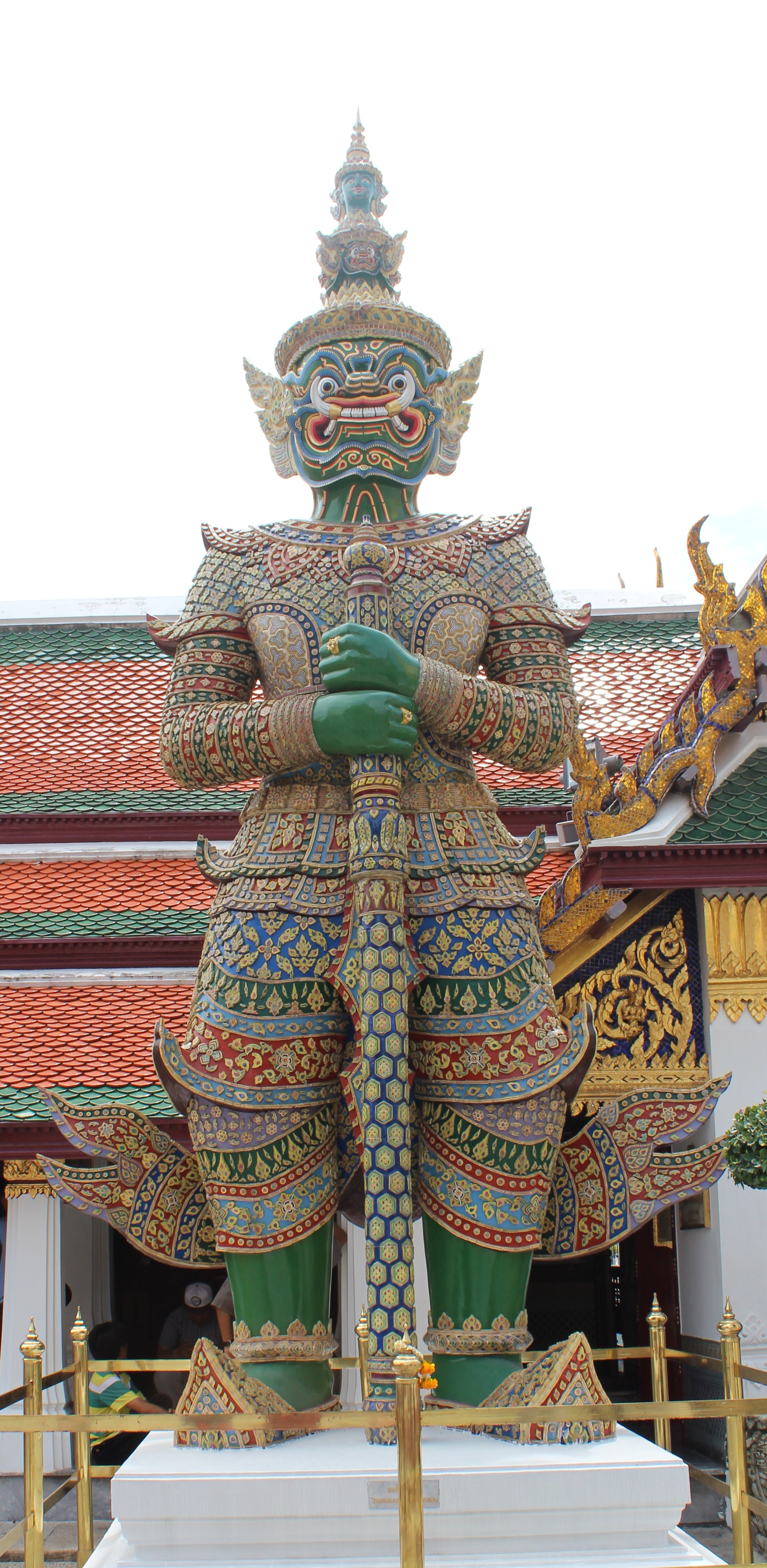
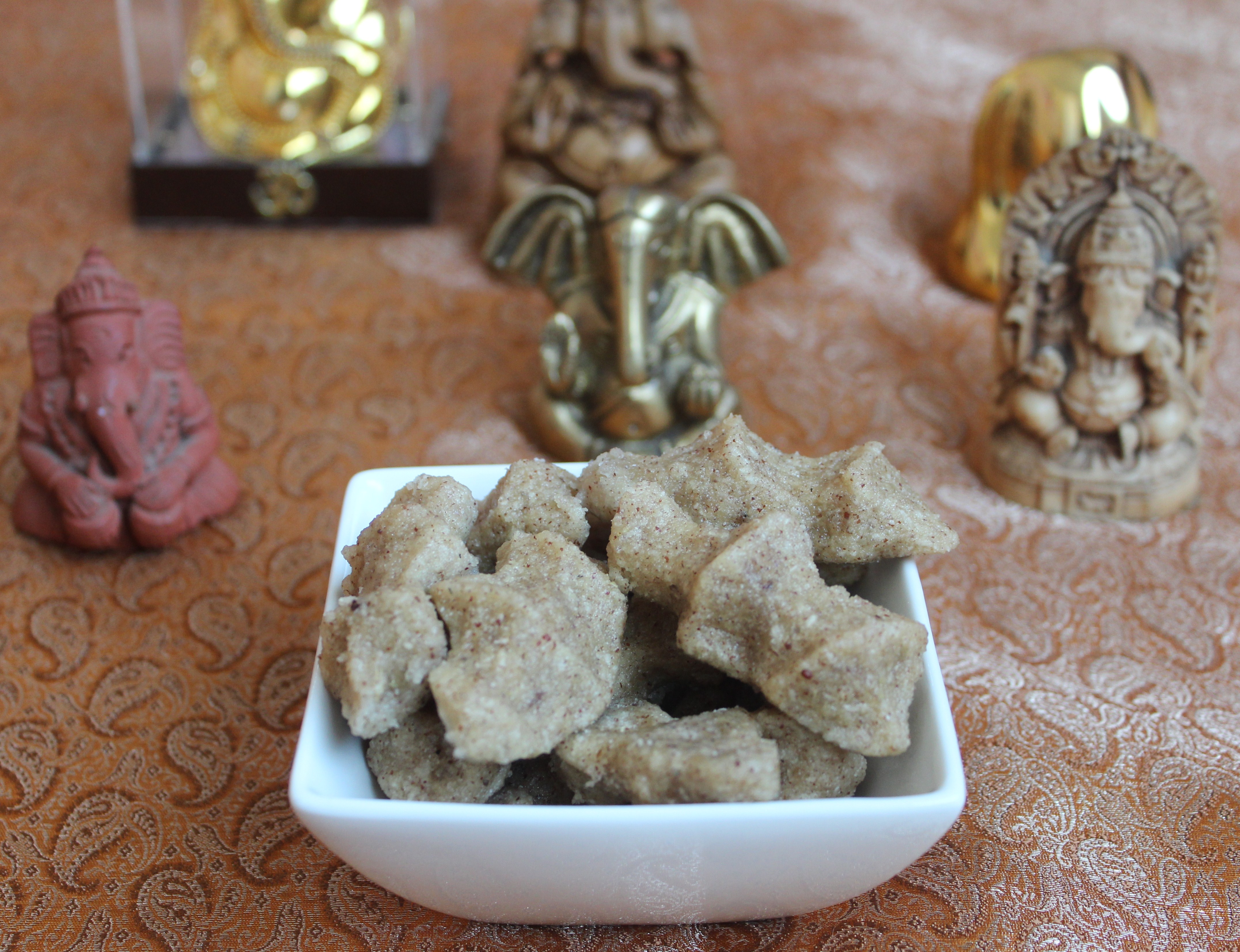
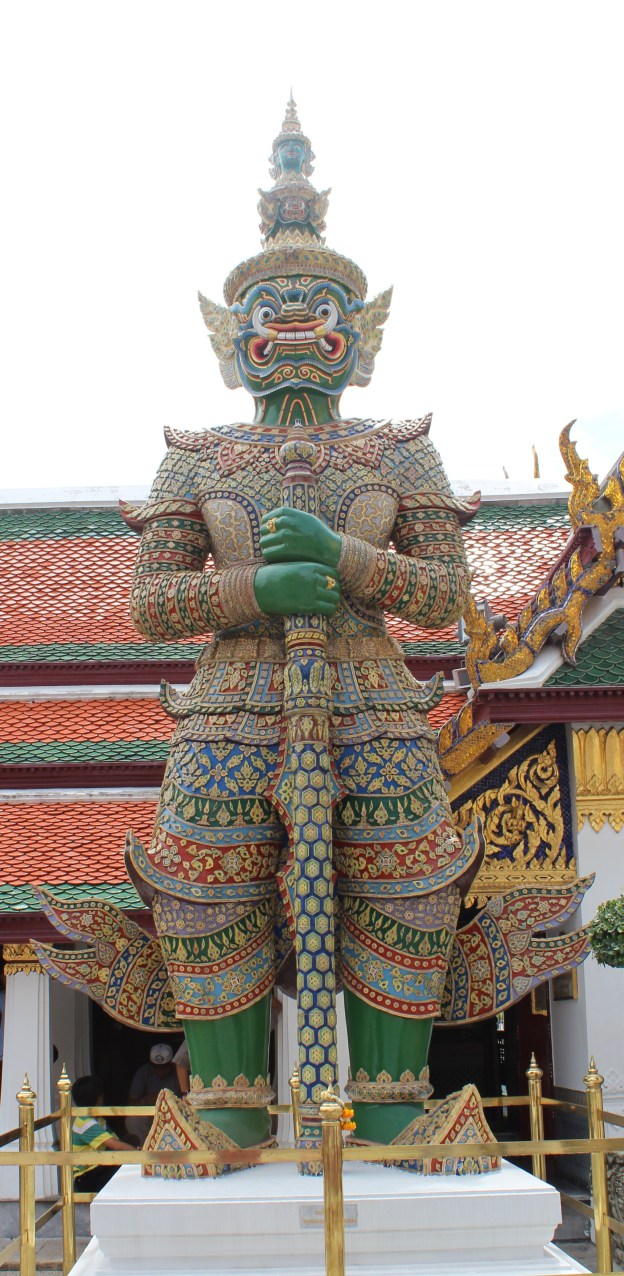
We are greeted by Yakshas – Demons guarding the Palace –


IMG_2605


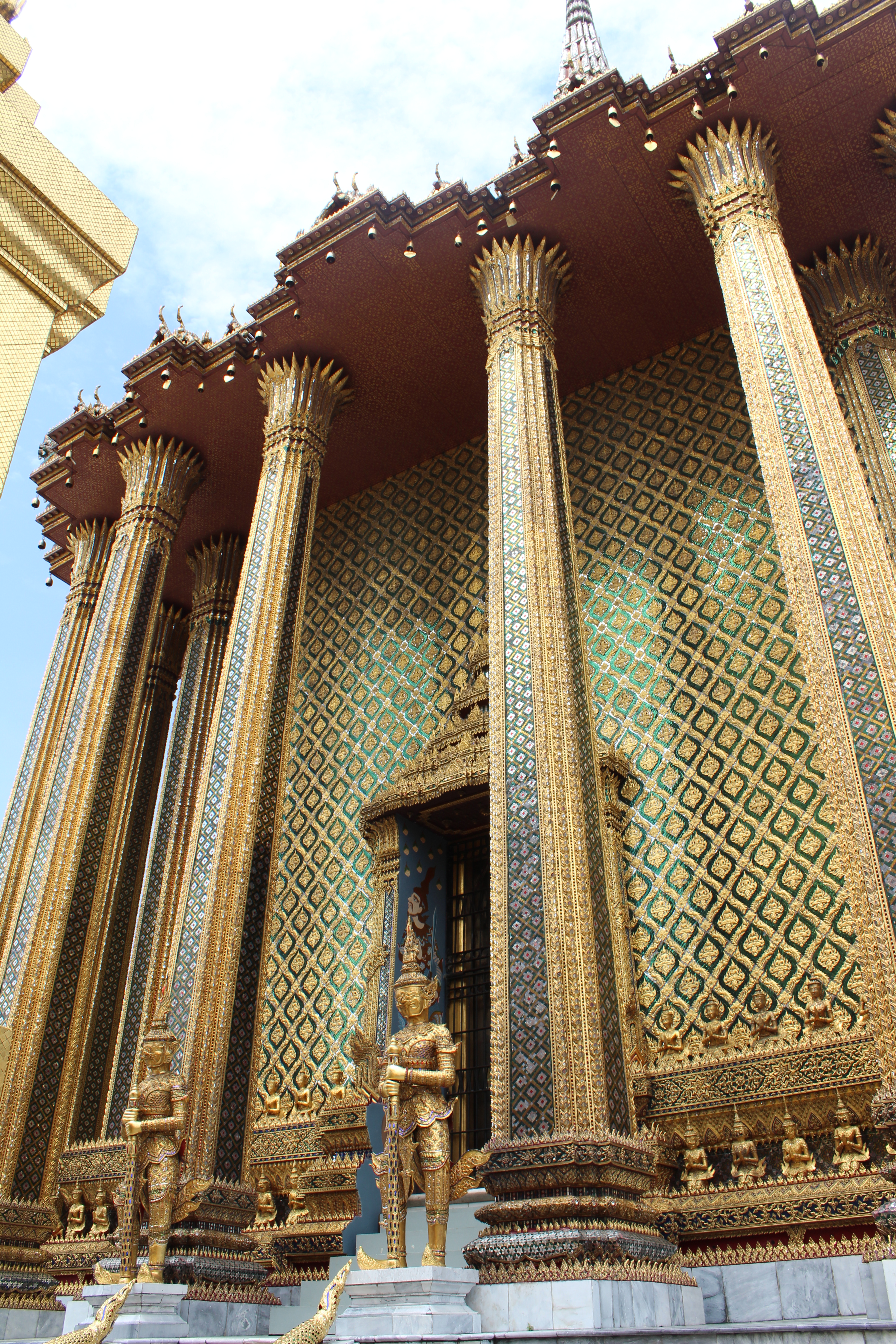
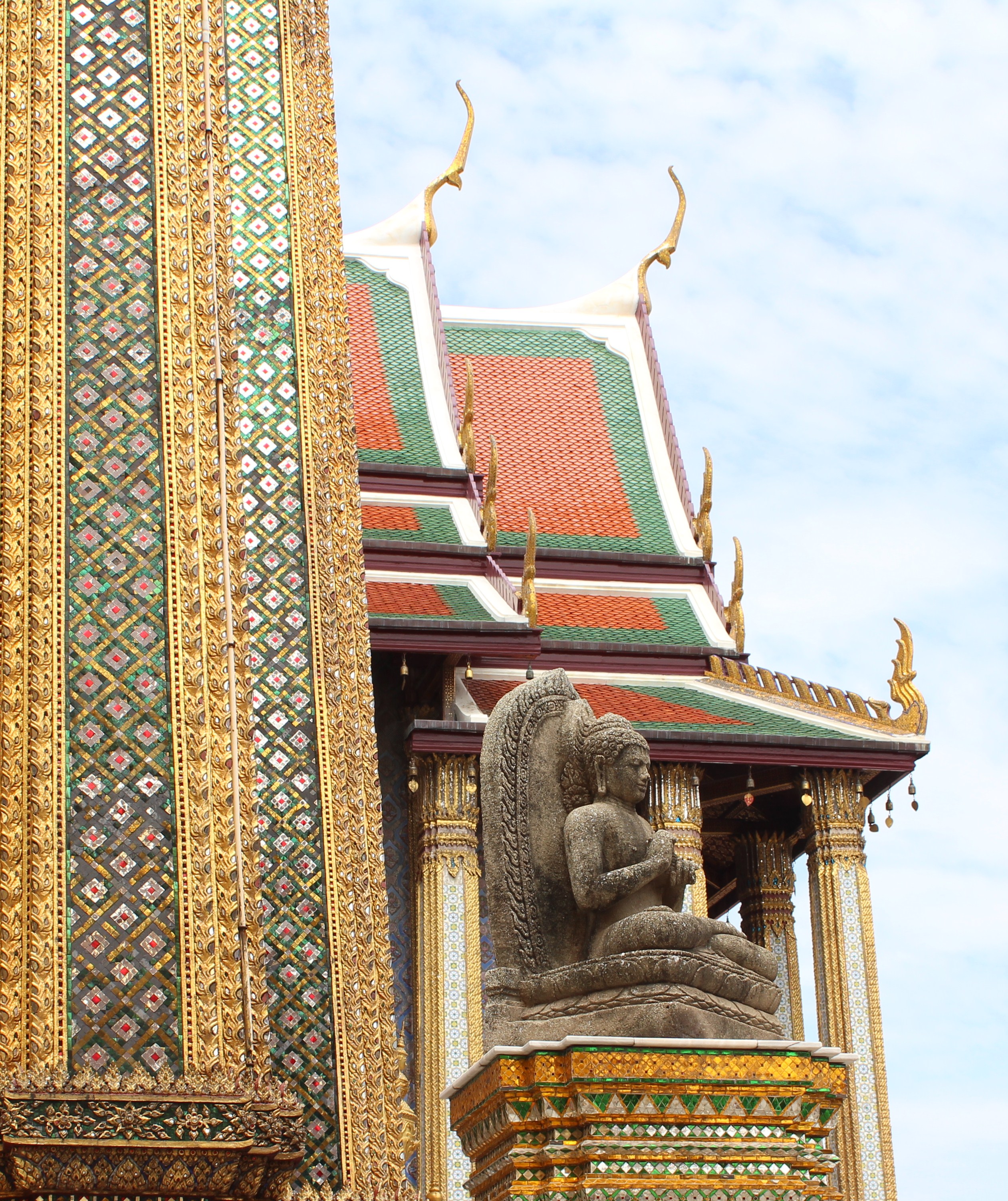
The intensely ornate Thai style architecture Library which contain sacred Buddhist manuscripts.
IMG_2611


and the tranquil Buddha sitting in stone on the side of the library –


IMG_2612


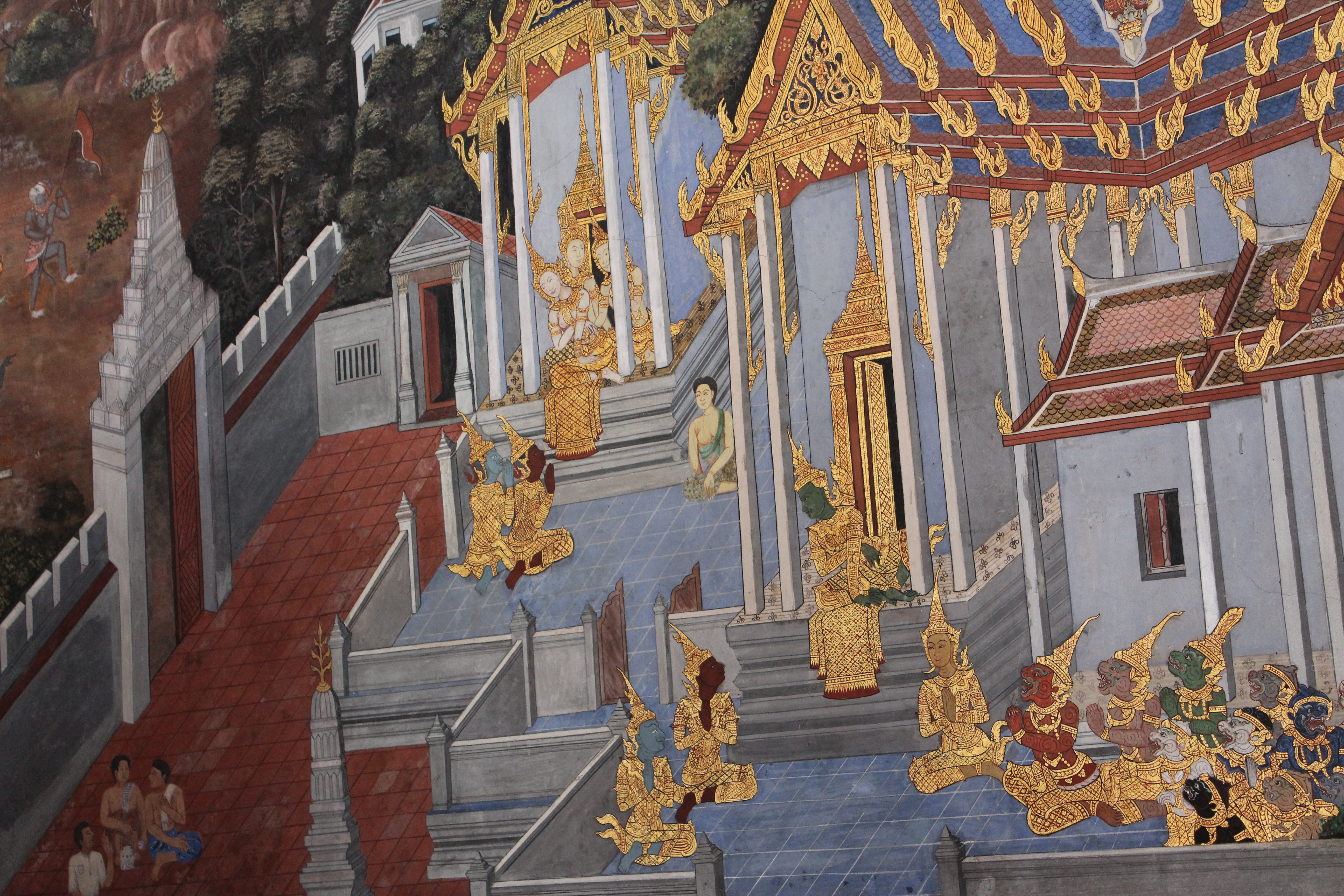
Ramakien


The Ramakien (รามเกียรติ์, “Glory of Rama”, sometimes also spelled Ramakien) is Thailand‘s national epic, derived from the Hindu epic Ramayana.
While the main story is identical to that of the Ramayana, many other aspects were transposed into a Thai context, such as the clothes, weapons, topography, and elements of nature, which are described as being Thai in style.

The Ramayana came to Southeast Asia by means of Tamil Indian traders and scholars who traded with the Khmer kingdoms (such as Funan and Angkor) and Srivijaya, with whom the Indians shared close economic and cultural ties.  http://en.wikipedia.org/wiki/Ramakien


KambaRamayanam

In Tamil, Ramayanam is called ‘Kambaramayanam’ – Ramayanam written by Poet Kambar. Kambaramayanam occupies special place in the history of Tamil Literature for its distinct literary presentation and delivery of emotions through crisp language skills – by the ‘King of Poetry’ – Kavichakravarthy Kambar as he is hailed.

Kambar adopted Valmiki’s original Ramayana in the Tamil style, with changes made according to Tamil Culture. In other words, it is the re-telling of the story of Lord Rama without alienating from the Tamil lifestyle.


One of the situations is where Ravana the king abducts Sita from the hut where she is staying with Rama. In the Sanskrit version, Ravanaa lifts Sita and carries her. But this is unthinkable to the Tamilian. So Kambar makes a deviation and states that he lifted her up along with the hut and the earth below it and carried that piece of earth, hut and the lady in it. There are several such instances. http://en.wikipedia.org/wiki/Kambar_poet


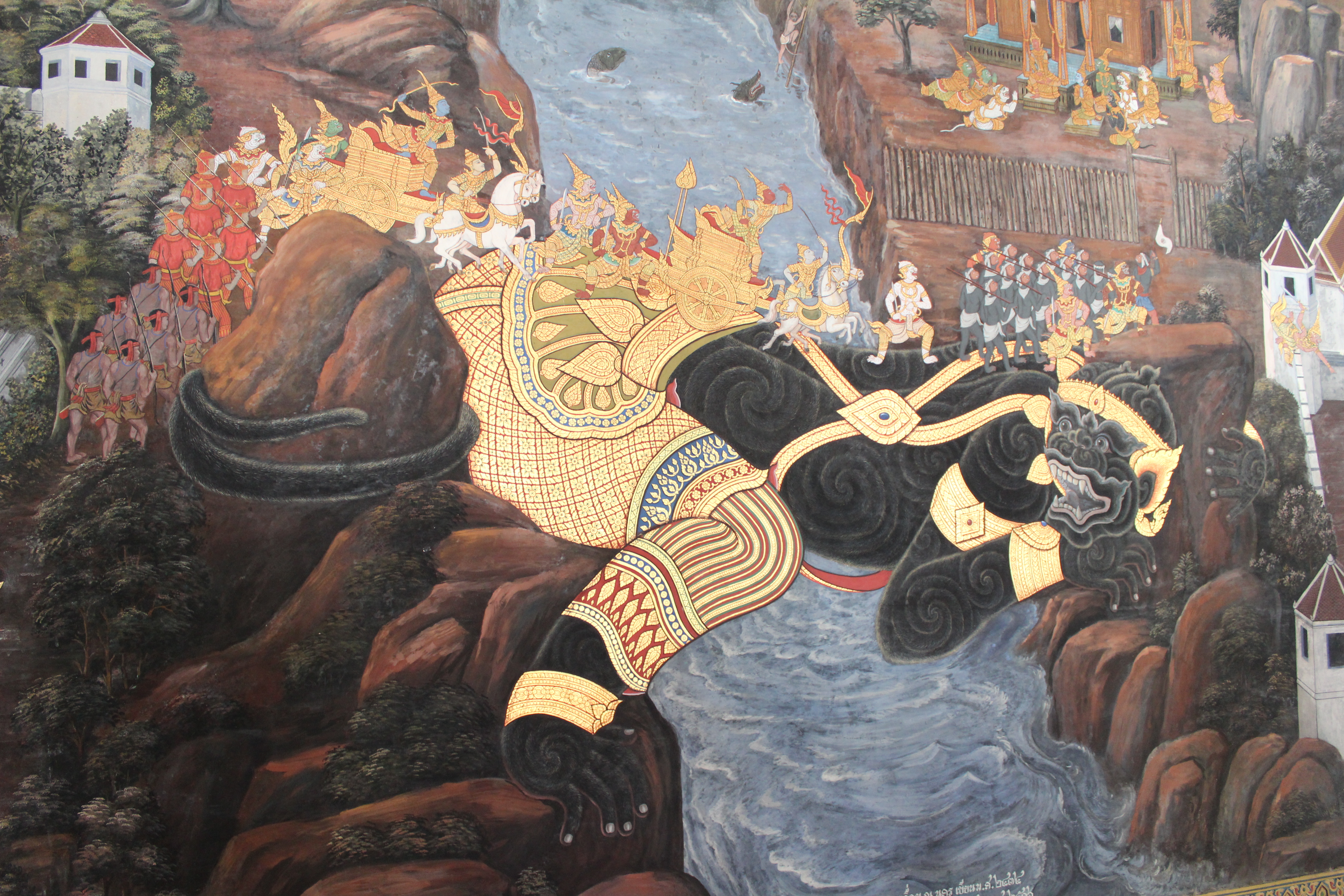
Scenes of Ramakien, the Thai version of the Ramayanam decorates the walls in the Royal Palace Complex.


IMG_2596


Is this Hanuman helping Rama’s force cross the sea to Lanka?


IMG_2599


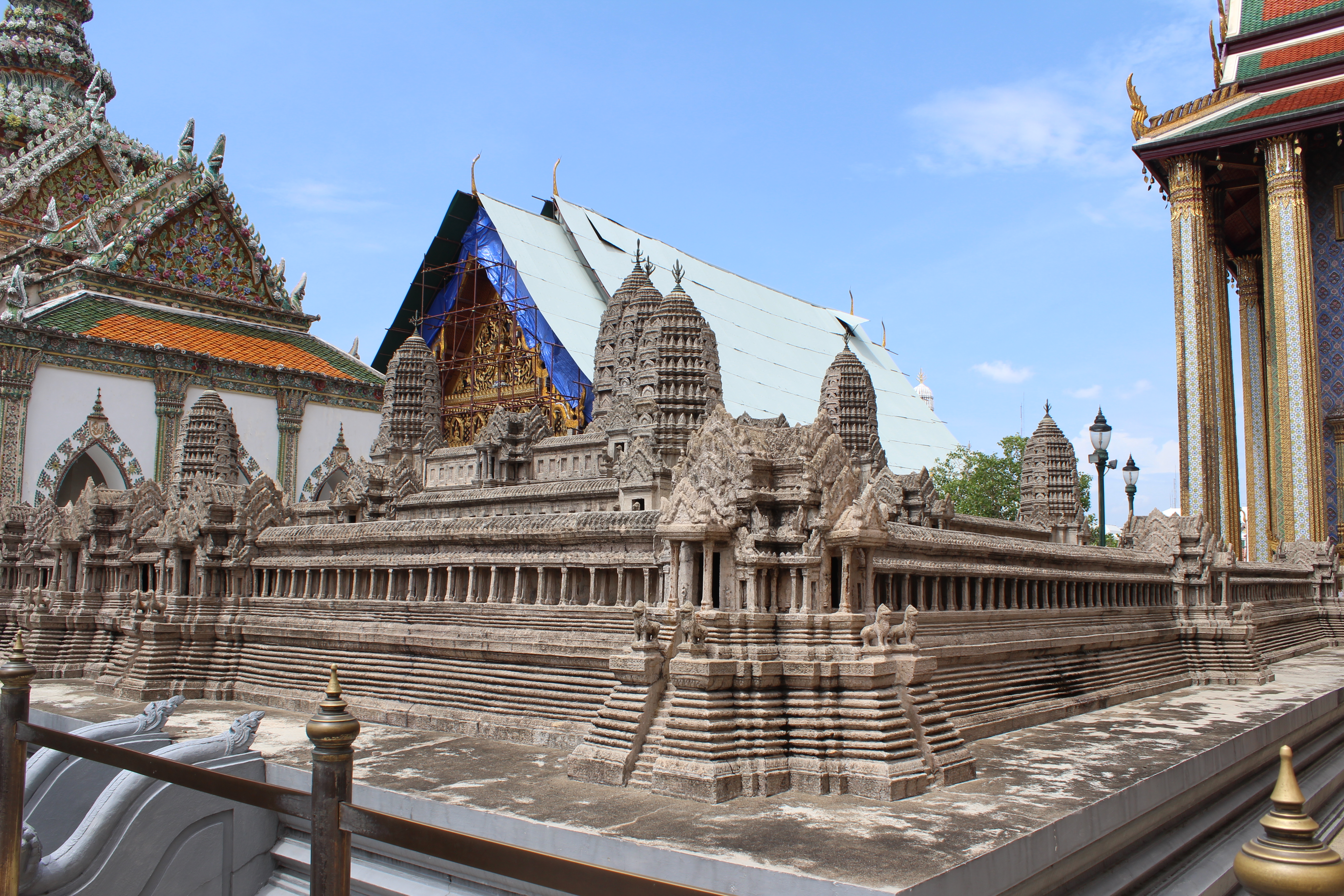
A stone model of Angkor Wat, Cambodia – the largest religious structure in the world, can be seen-

IMG_2621


Kinnara and Kinnaree

Golden statues of Kinnara and Kinnaree greet the visitors –

In Southeast Asian mythology, Kinnaris, the female counterpart of Kinnaras, are depicted as half-bird, half-woman creatures. One of the many creatures that inhabit the mythical Himavanta. Kinnaris have the head, torso, and arms of a woman and the wings, tail and feet of a swan. She is renowned for her dance, song and poetry, and is a traditional symbol of feminine beauty, grace and accomplishment. http://en.wikipedia.org/wiki/Kinnara


This Kinnaree is an exclusive one – body of a female and legs and tail of a lion! Please do let me know if she is also a Kinnaree or has any other specific name in the mystical world.

IMG_2633


and her counterpart – half male and half lion – our guide mentions he is also called Narasimha – the sanskrit word for man and lion.


IMG_2637


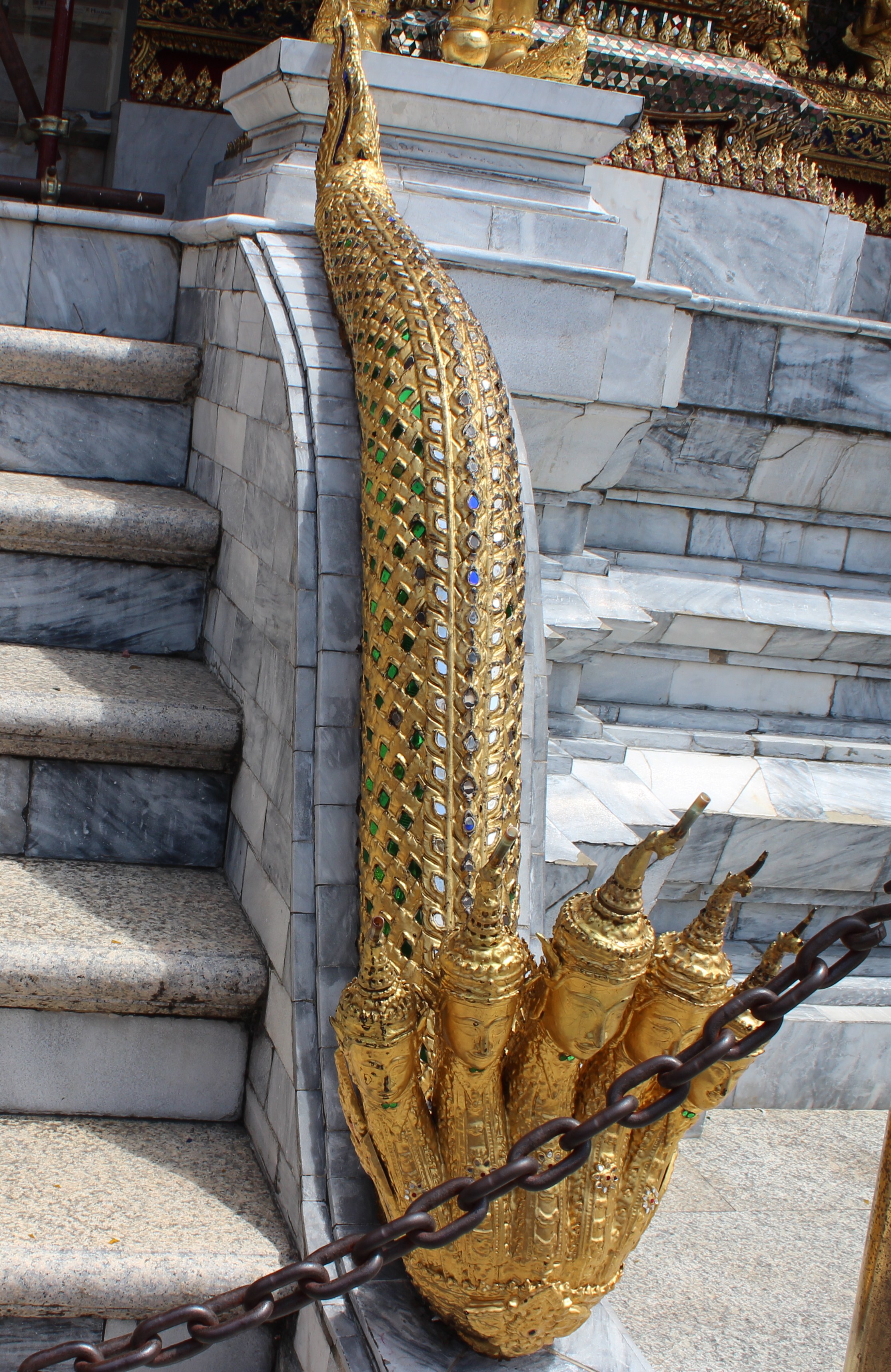
And the exclusive Naga – Snake – with the head of an apsara – devine female and body of a snake… The usual Naga has the head of a demon and body of a snake – our guide tells us!

IMG_2623


Wat Phra Kaew – The Temple of the Emerald Buddha

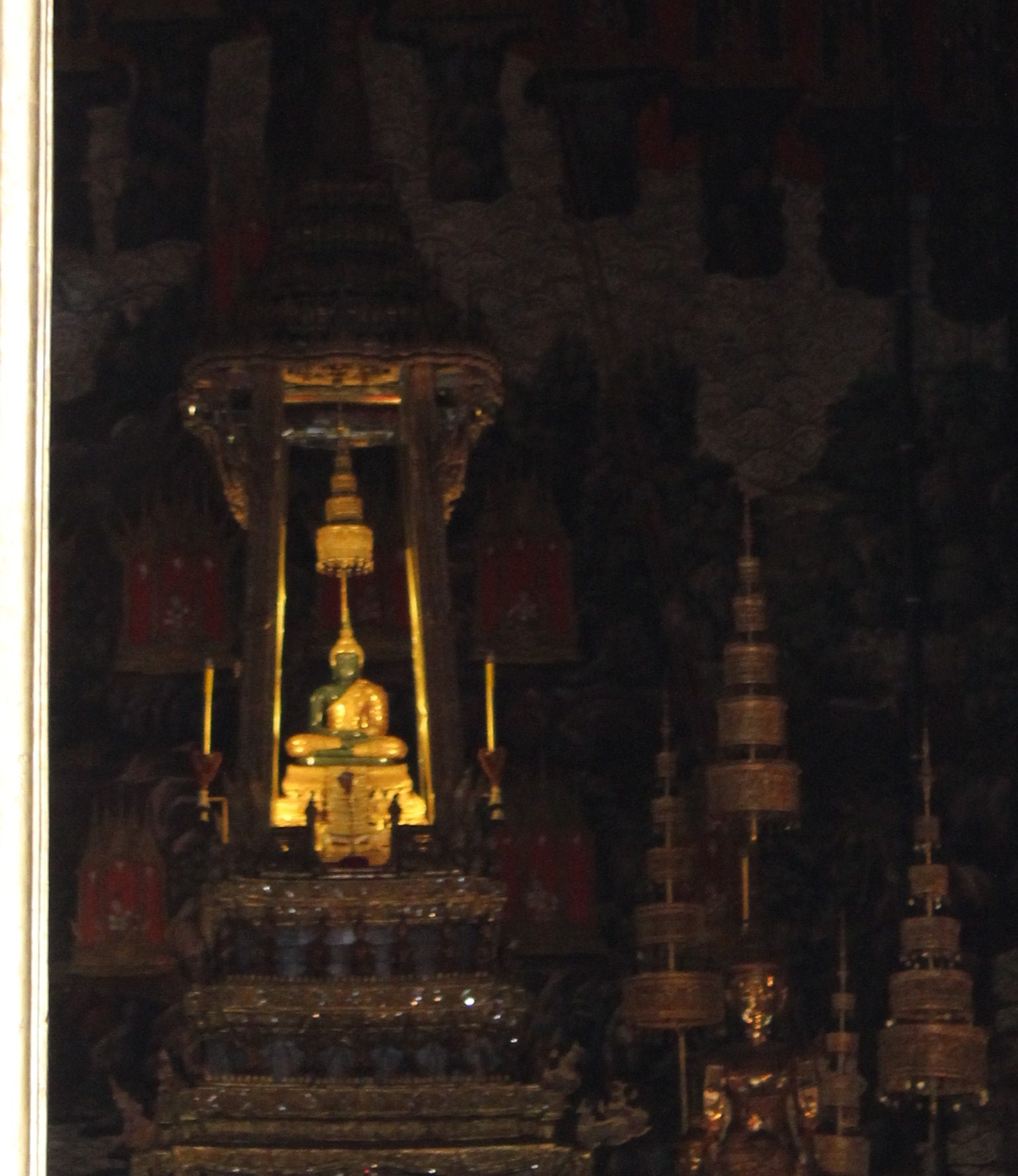
Wat Phra Kaew is considered the most sacred of the Buddhist temples in Thailand. The statue of Buddha is just over 2 feet tall and no photographs allowed from inside the temple room. Buddha is seated in a well crafted shrine, glittering in gold.

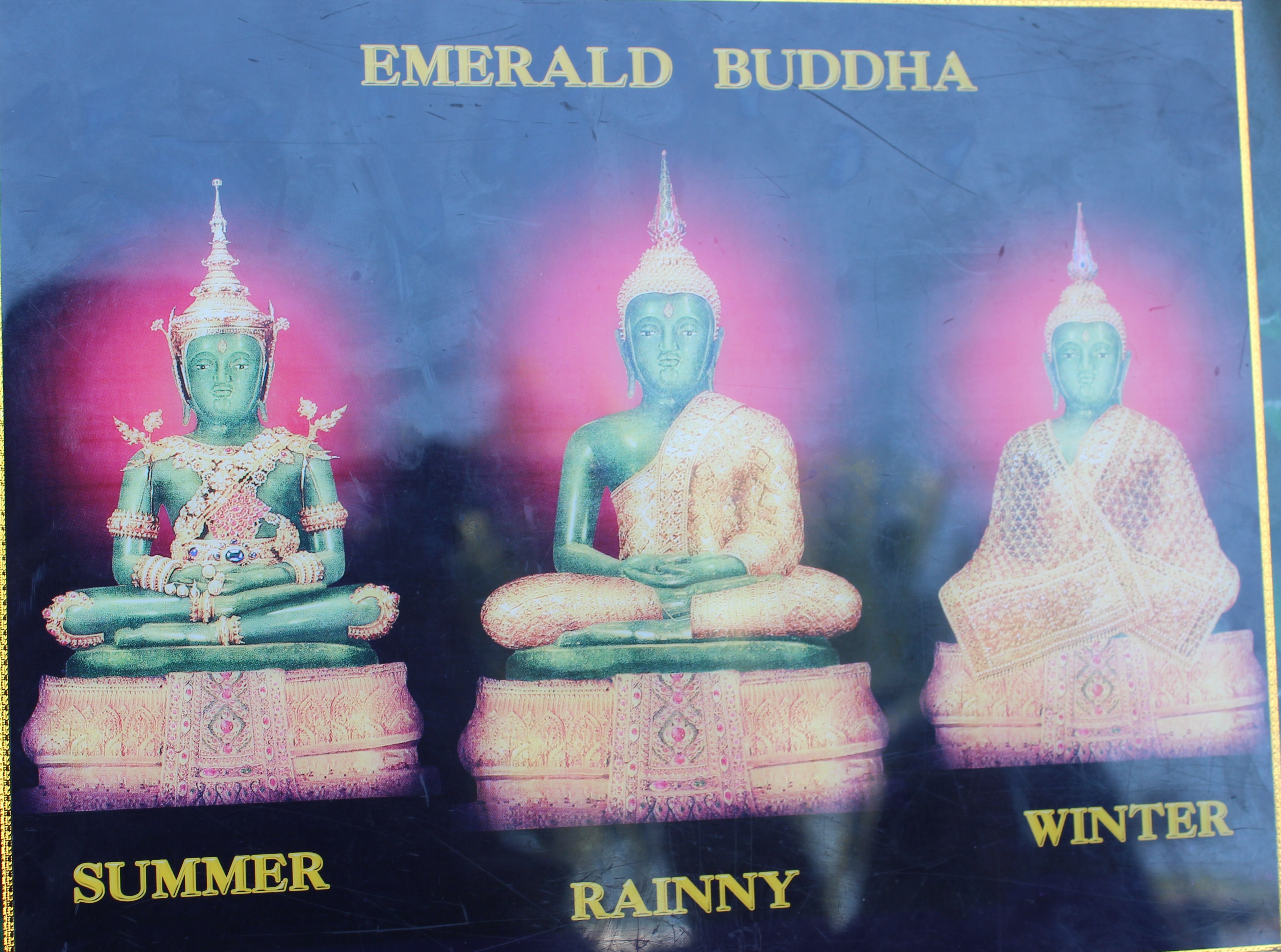
The Emarald Buddha is adorned with different costumes three time a year – summer, winter and the rainy months of the year. Only The King touches the statue and changes the costume of Buddha.


IMG_2638


and the costumes for the three seasons –


IMG_2639


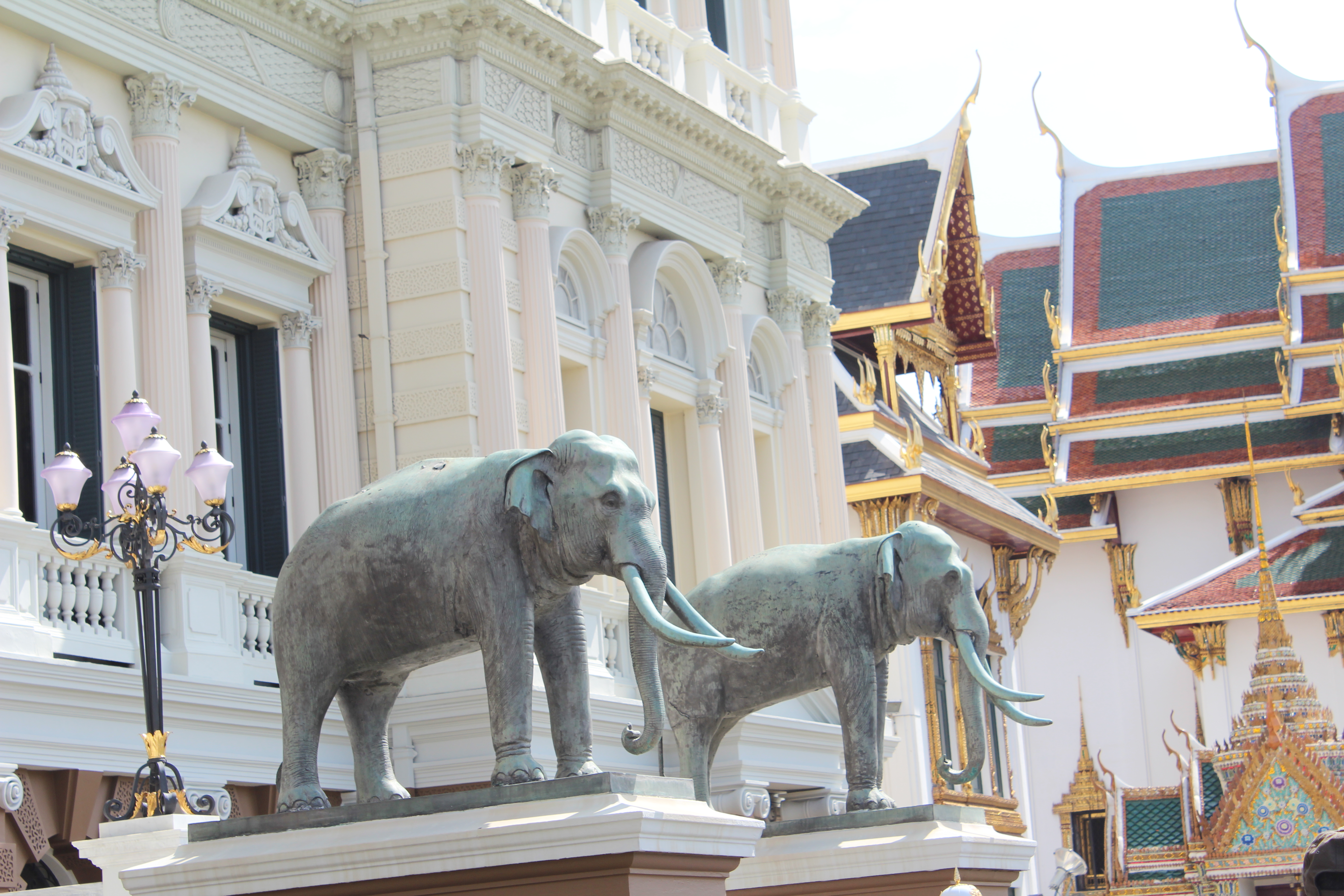
Then we proceeded to the Grand Palace Grounds – the different Halls, added and renovated by successor Kings. Ancient Buddha stupas, Temples and Murals from literature, Ornate Temple Architecture in glittery gold – and a Palace Hall with a European touch – visit to Grand Palace has been an enthralling majestic experience. The shine of gold in bright sunny daylight and the master piece architectural beauty cannot surely be captured in one’s camera.

The efforts put to safeguard these important symbols of culture and literature –  the endless renovation works being carried over are truly commendable. I would never miss another chance to visit again!


IMG_2654

Bangkok – An Architectural Splendour!


IMG_2545


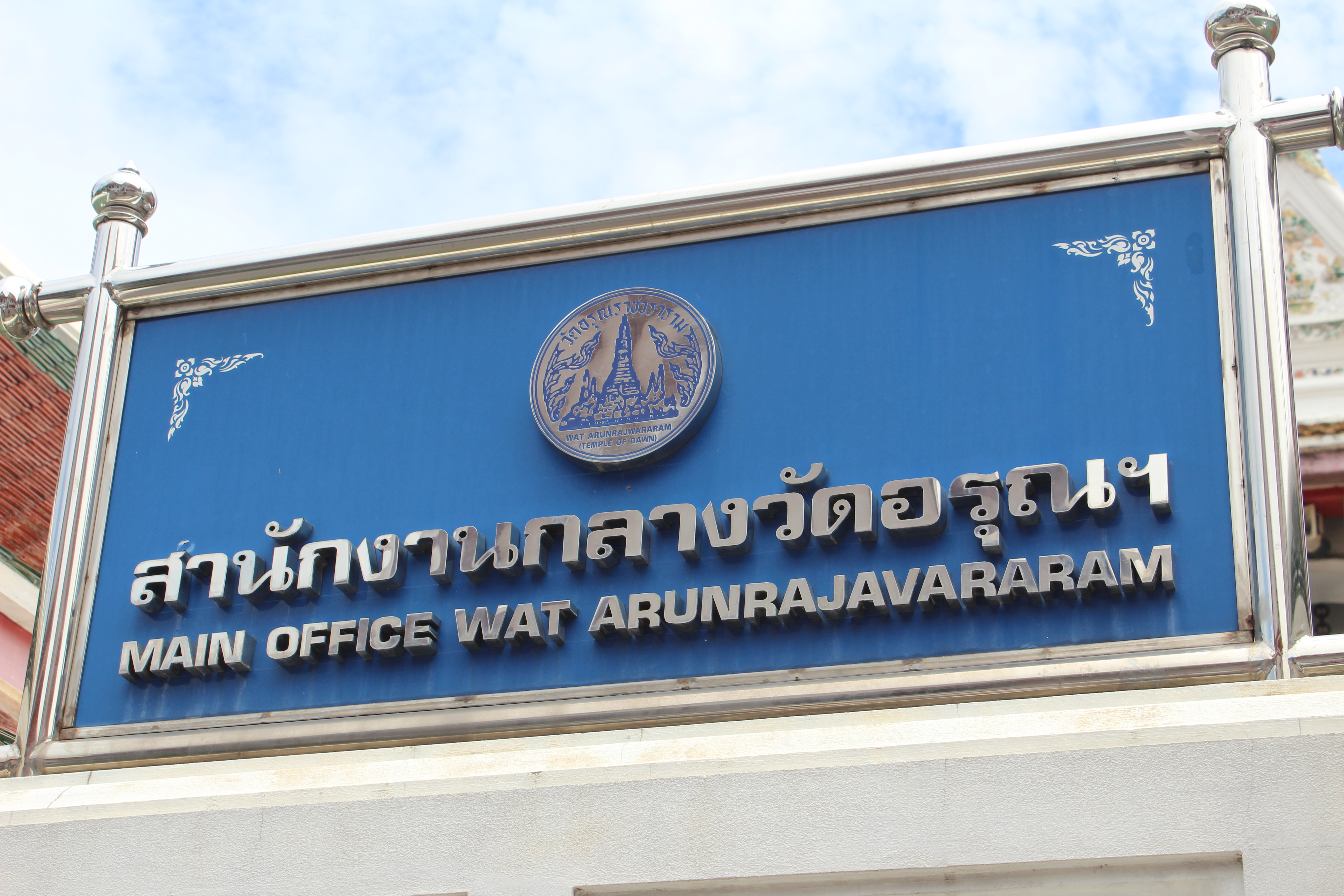
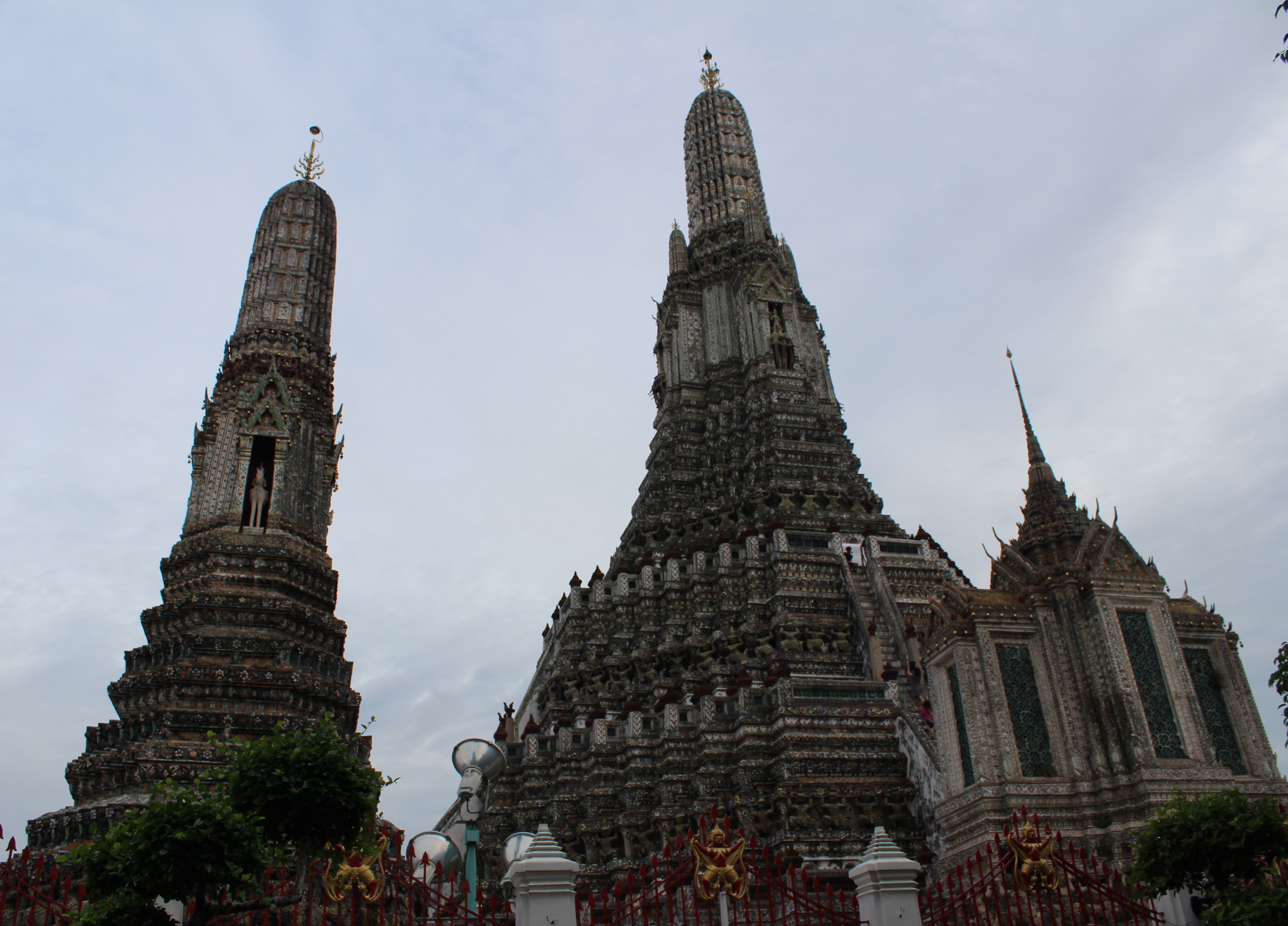
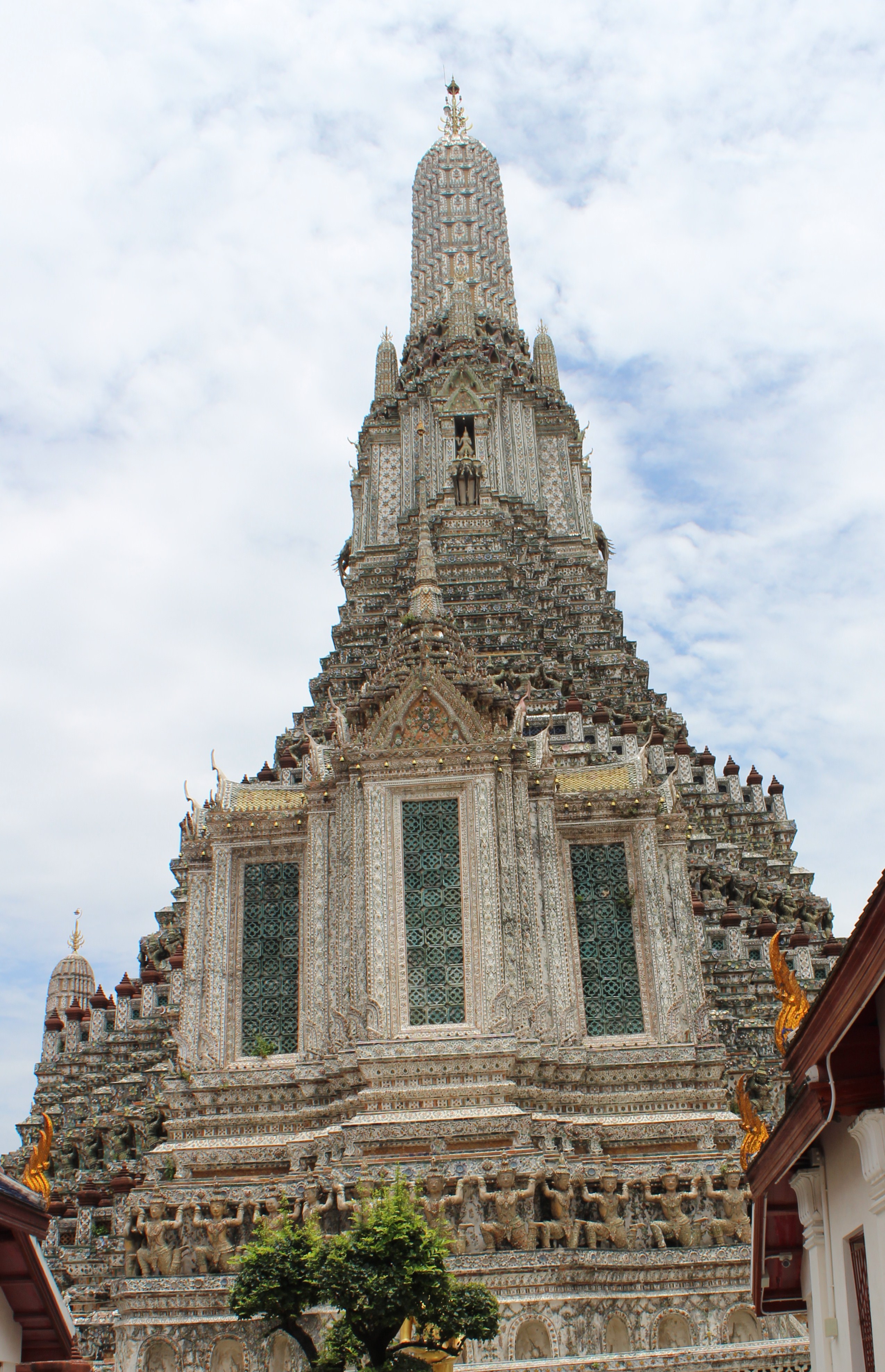
Our next place of visit was Wat Arun – The Temple of Dawn. This temple is named after Aruna – the Sun God or the God of Dawn. It stands magnificient on the banks of the Chao Phraya River. The first day evening when we went to the temple, we took the ferry – ferries run straight across the river to reach the other side in about 5 minutes duration to reach the temple side. Wat Arun can be reached by road too. The next day when we went during the day, we took a taxi.


IMG_2286

The stunning view of the Temple of Dawn at dusk, is what makes it different. The image of the stunning Wat that falls on the river waters is truly captivating. As the sun gets ready to take some rest, we see people thronging the restaurants and filling up empty spaces wherever possible, on the other side of the river, to make the best use of their best of Cameras. Such is the view of WAT ARUN in lights with its image on water!

IMG_2329

It is said that the royal fleet of King Taksin, the founder of the former capital of Thonburi, arrived at Wat Makok Nok precisely at dawn. He stopped his vessel and disembarked to pay homage to the Holy Relic inside the pagoda, and the temple was subsequently referred to as Wat Chaeng – the Temple of Dawn. When King Taksin crowned himself the monarch, the temple was designated a royal temple within the grand palace, as it was the first place in Thonburi to catch the morning light. http://www.watarun.net/the_origin.html


The tall tower of the temple is called ‘Prang’. It is a Khmer style tower ( style belonging to neighboring Cambodia).  King Rama III raised the Prang and it remains the highest tower in Thailand even today.


IMG_2580

Wat Arun temple had been founded in the early 17th century, some believe it to be earlier than that but most of the features present today were built by King Rama II and King Rama III through the 19th century. http://www.bestofthailand.org/thailandtourismguide/2012/09/wat-pho-temple-wat-arun-temple-other-bangkok-temples.html

This Wat or Buddhist temple is an architectural representation of Mount Meru, the center of the world in Buddhist cosmology. In the mythology of Tibetan Buddhism, Mount Meru is a place that simultaneously represents the center of the universe and the single-pointedness of mind sought by adepts. http://www.watarun.net/index.html


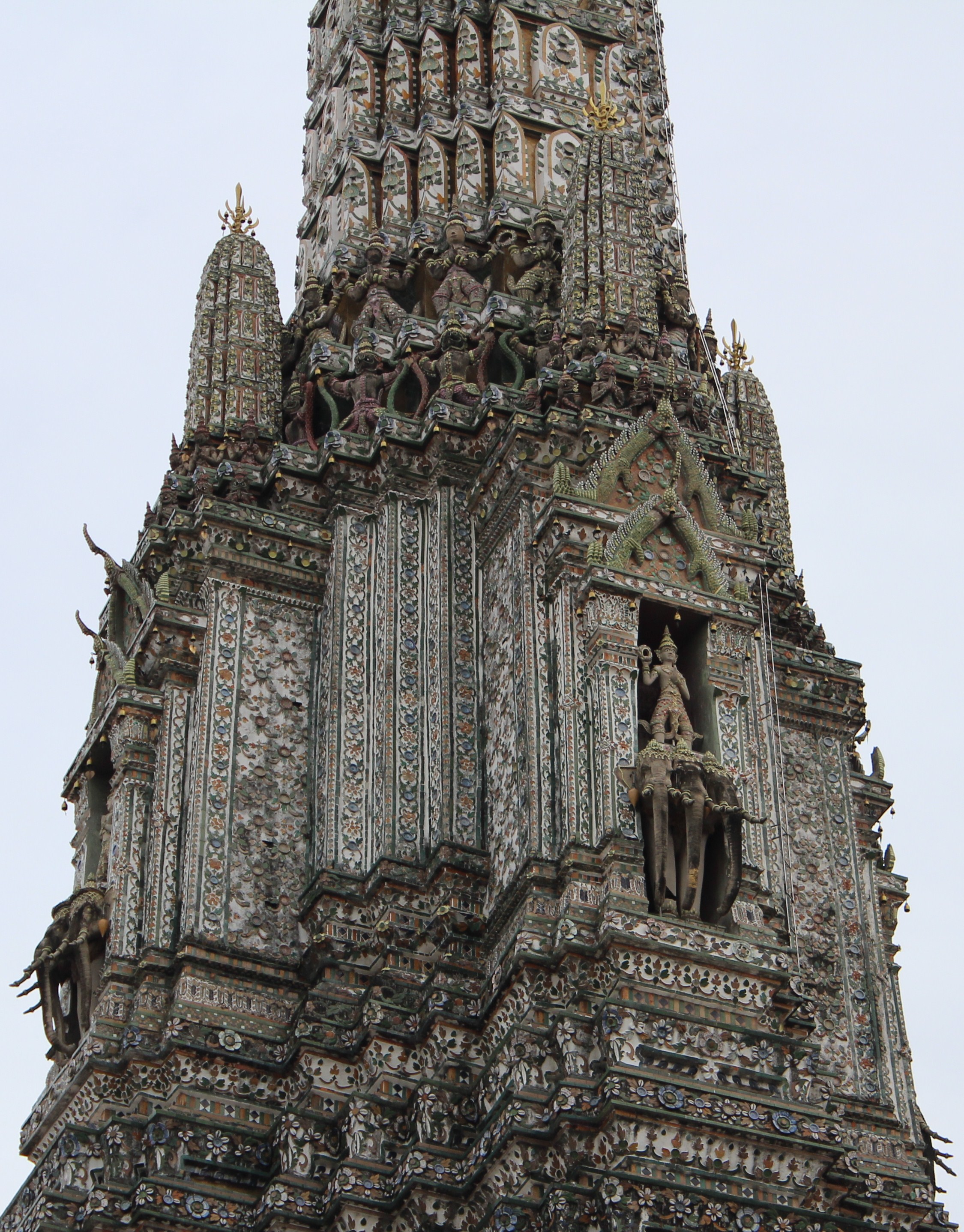
On the second terrace,  the Hindu god Indra called Erawan, in Thai, is seated on his three headed elephant. There are four such statues.

IMG_2295

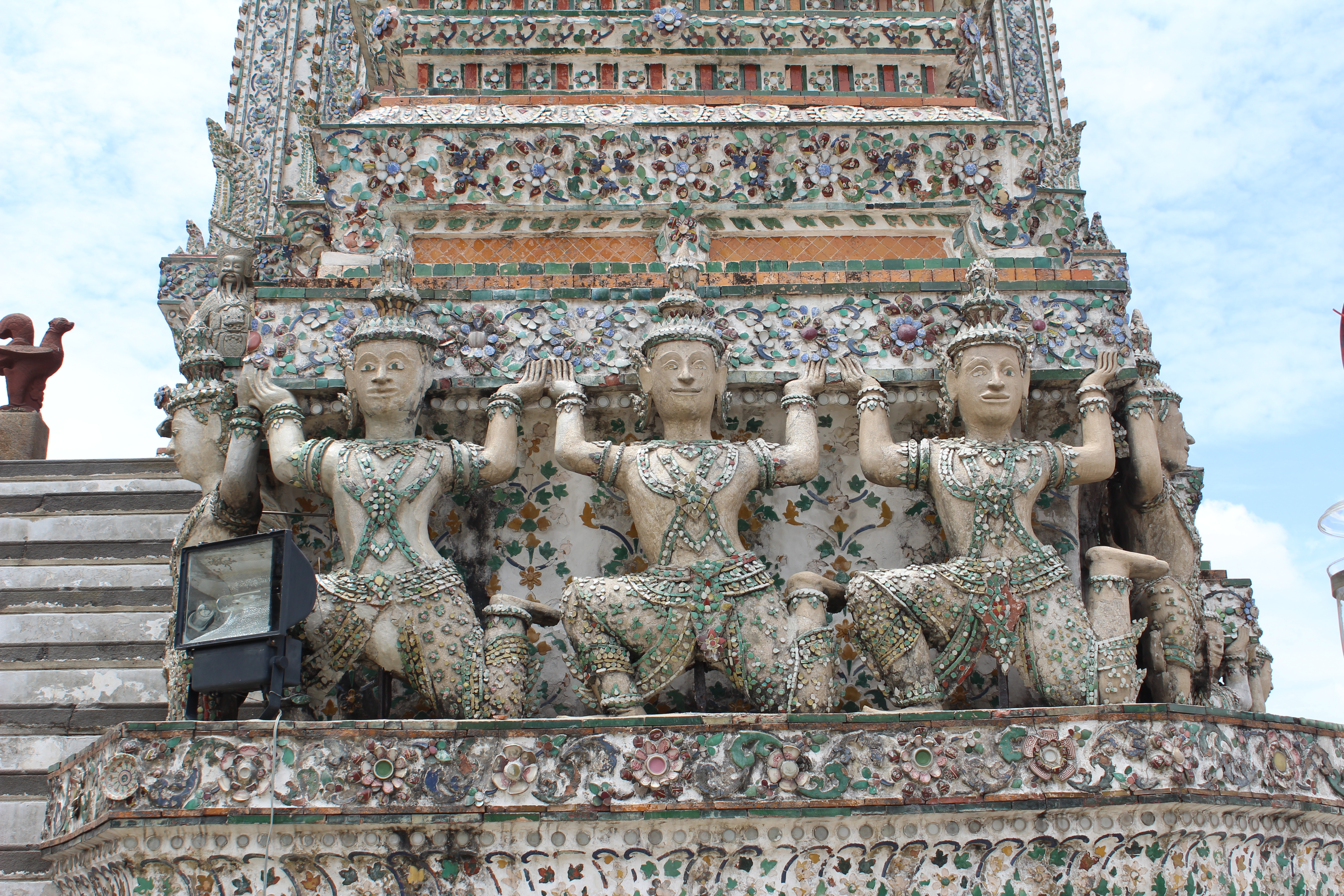
The multiple layers of the towers are supported by Devas –

IMG_2554

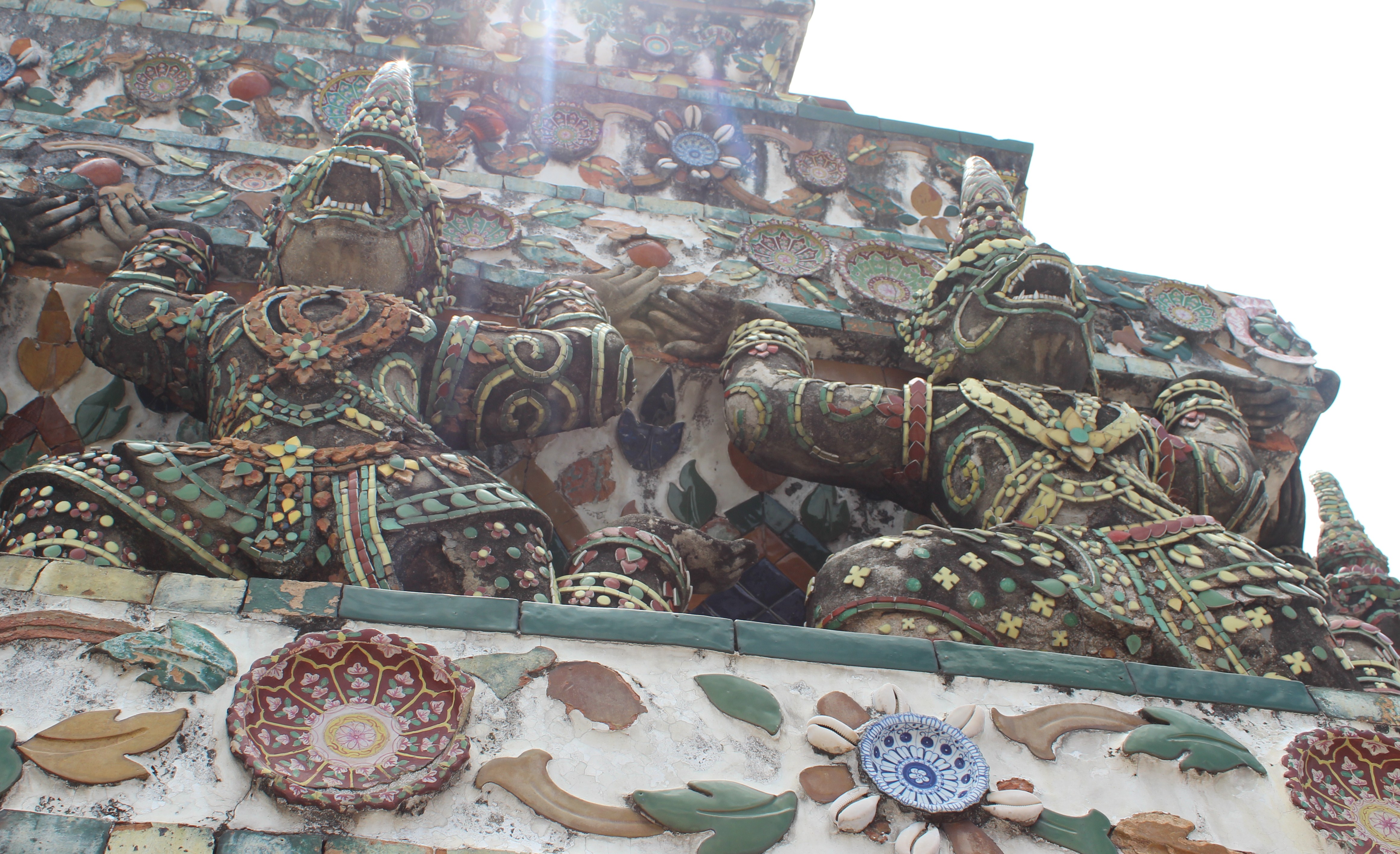
and Asuras –

IMG_2565

The temple towers and the different layers are decorated with colourful porcelein plates (seen in above picture). These are said to be porcelein, which the Chinese ships used as ballasts and discarded on arrival at the port of Bangkok.

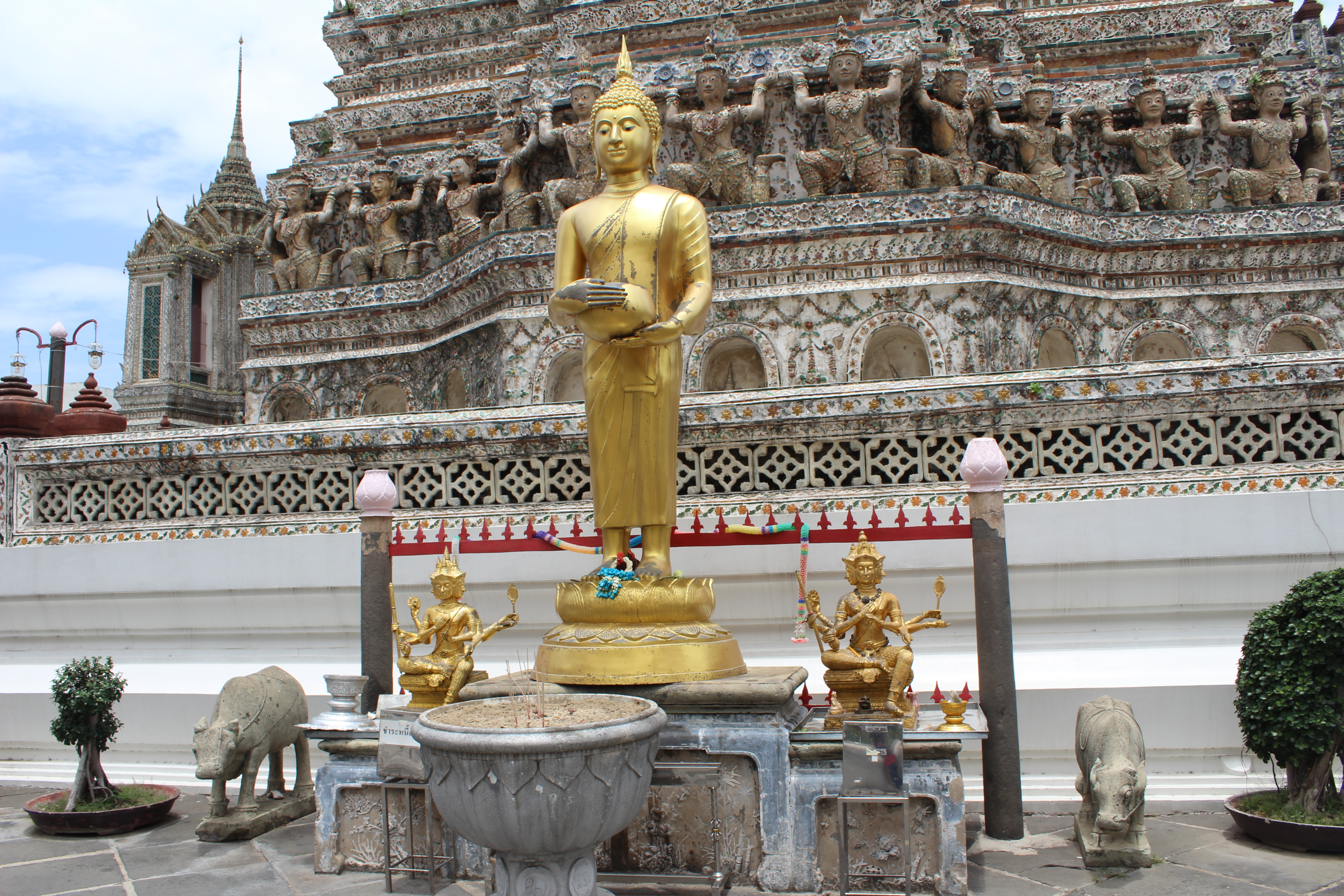
There is a huge Buddha statue with two statues of Brahma – the four headed Hindu God of Creation.

IMG_2570

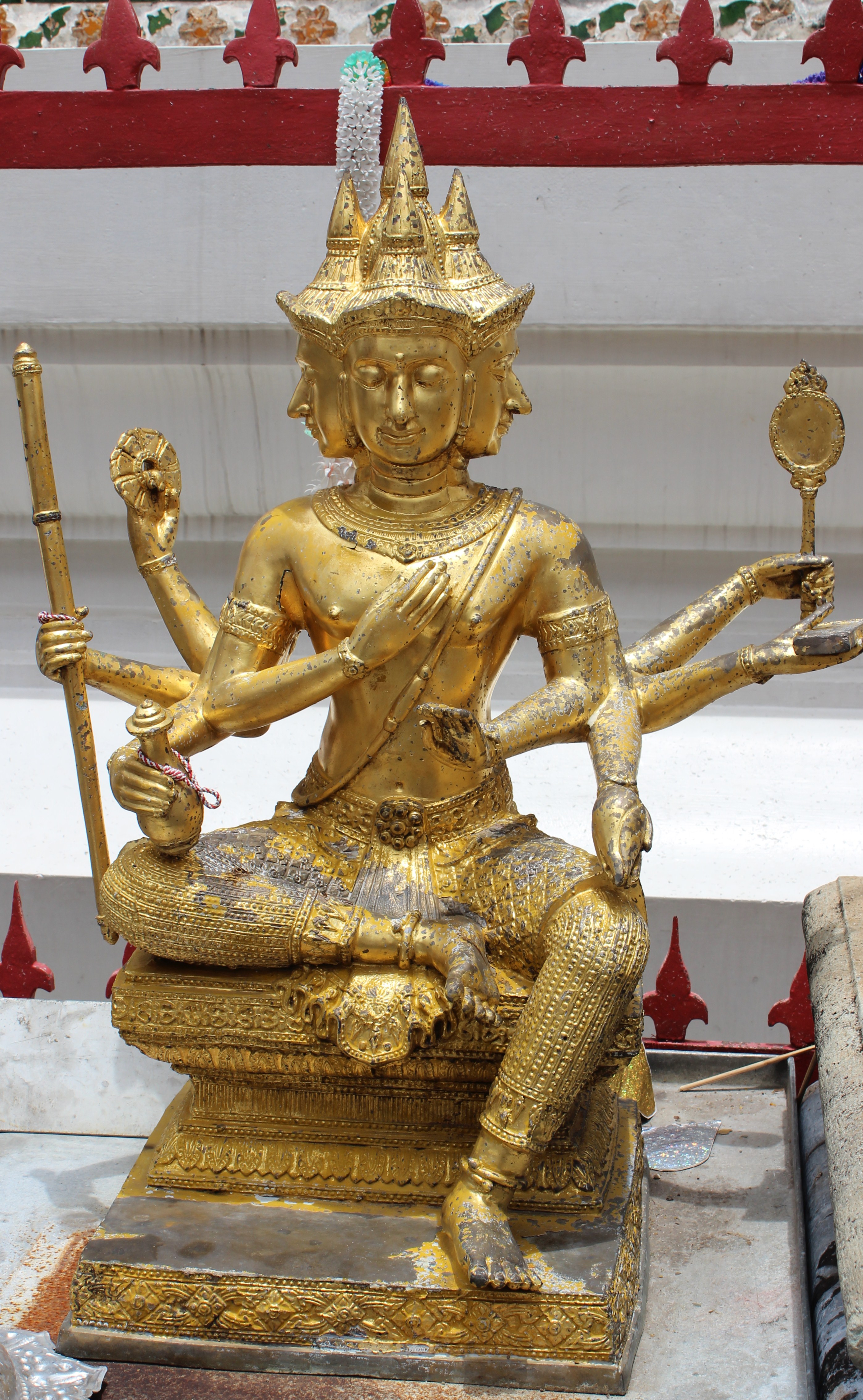
Lord Brahma-

IMG_2574

Wat Arun was truly an architectural splendour – but we had more to experience – at the Royal Palace which is very close to Wat Arun and Wat Pho.

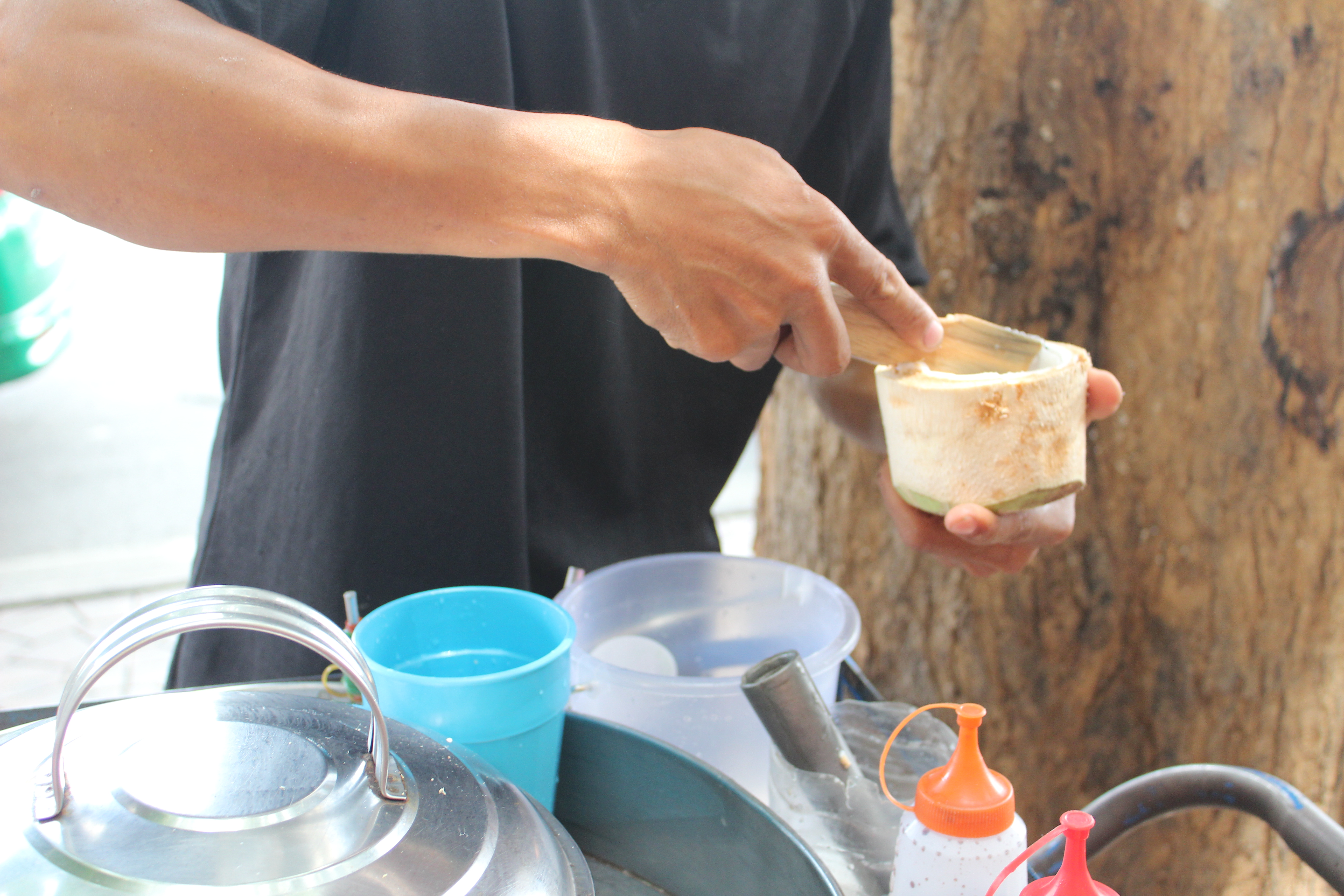
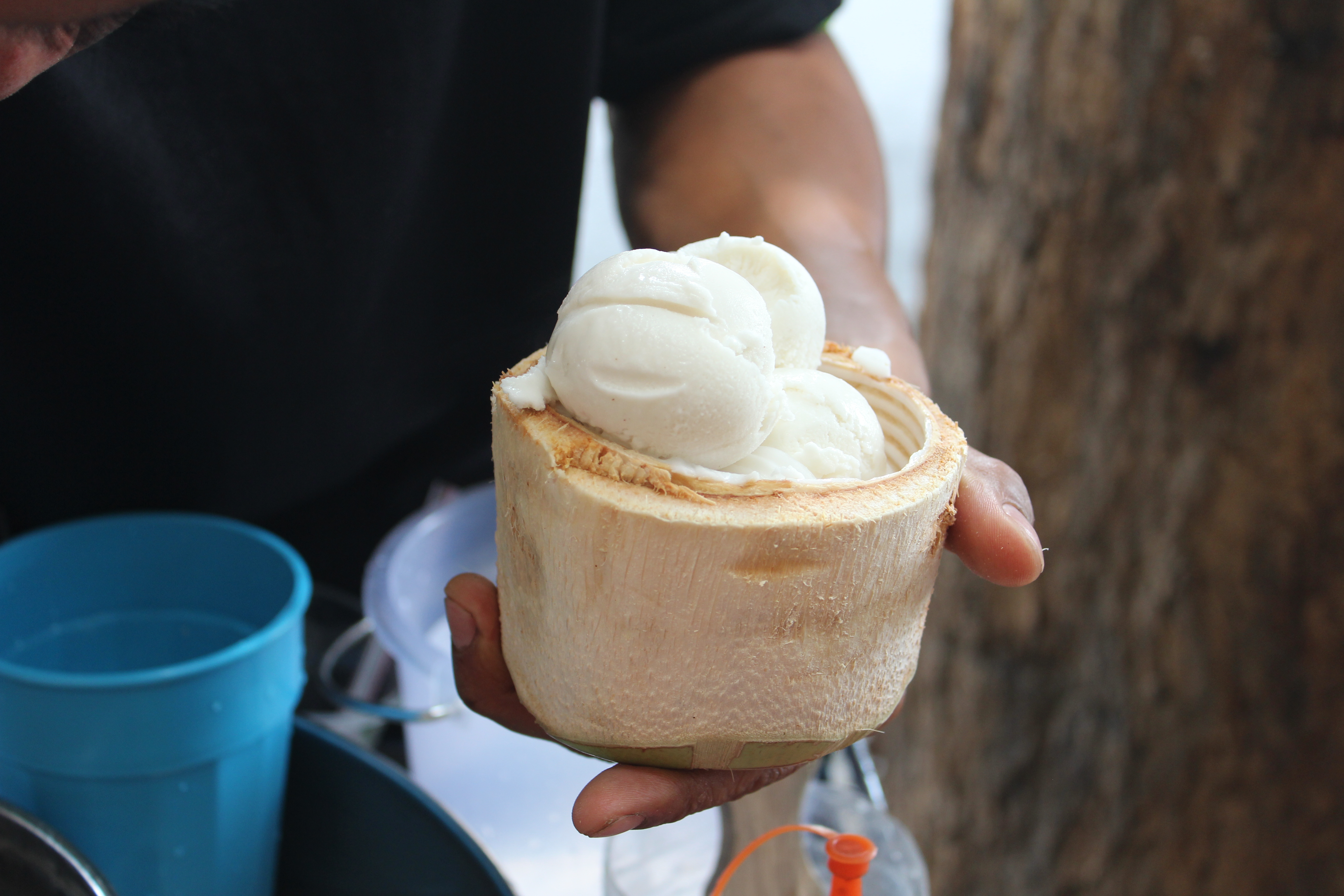
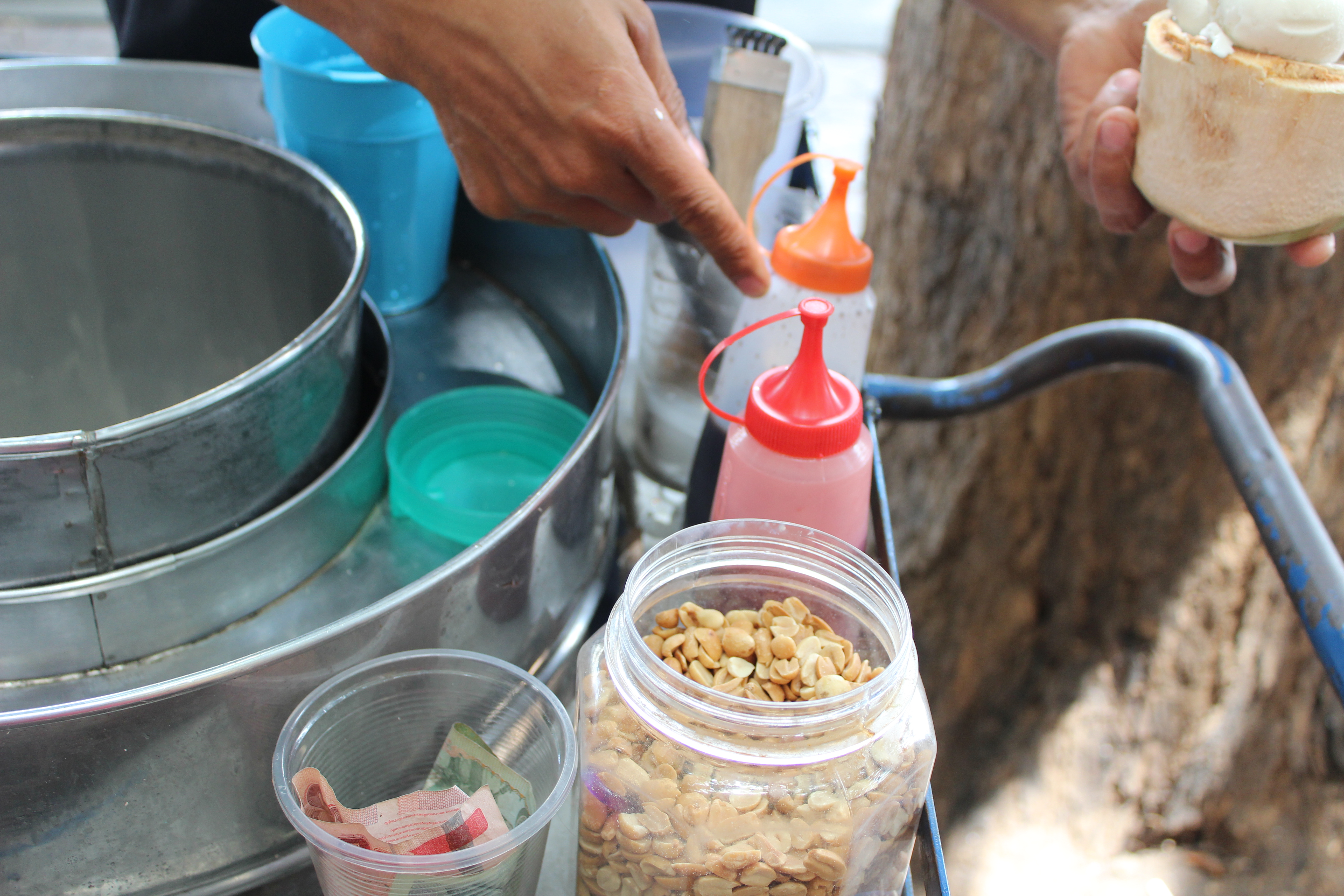
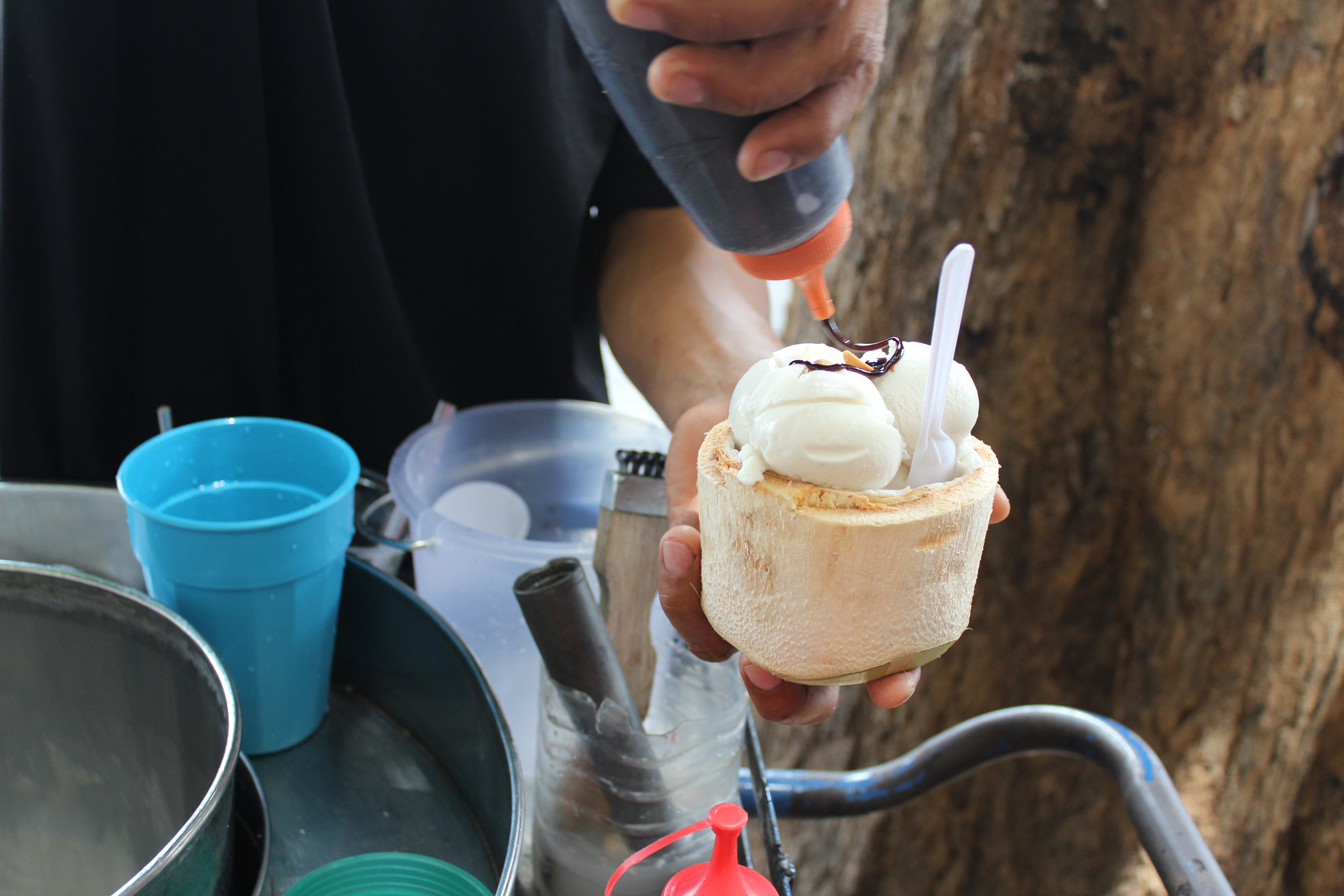
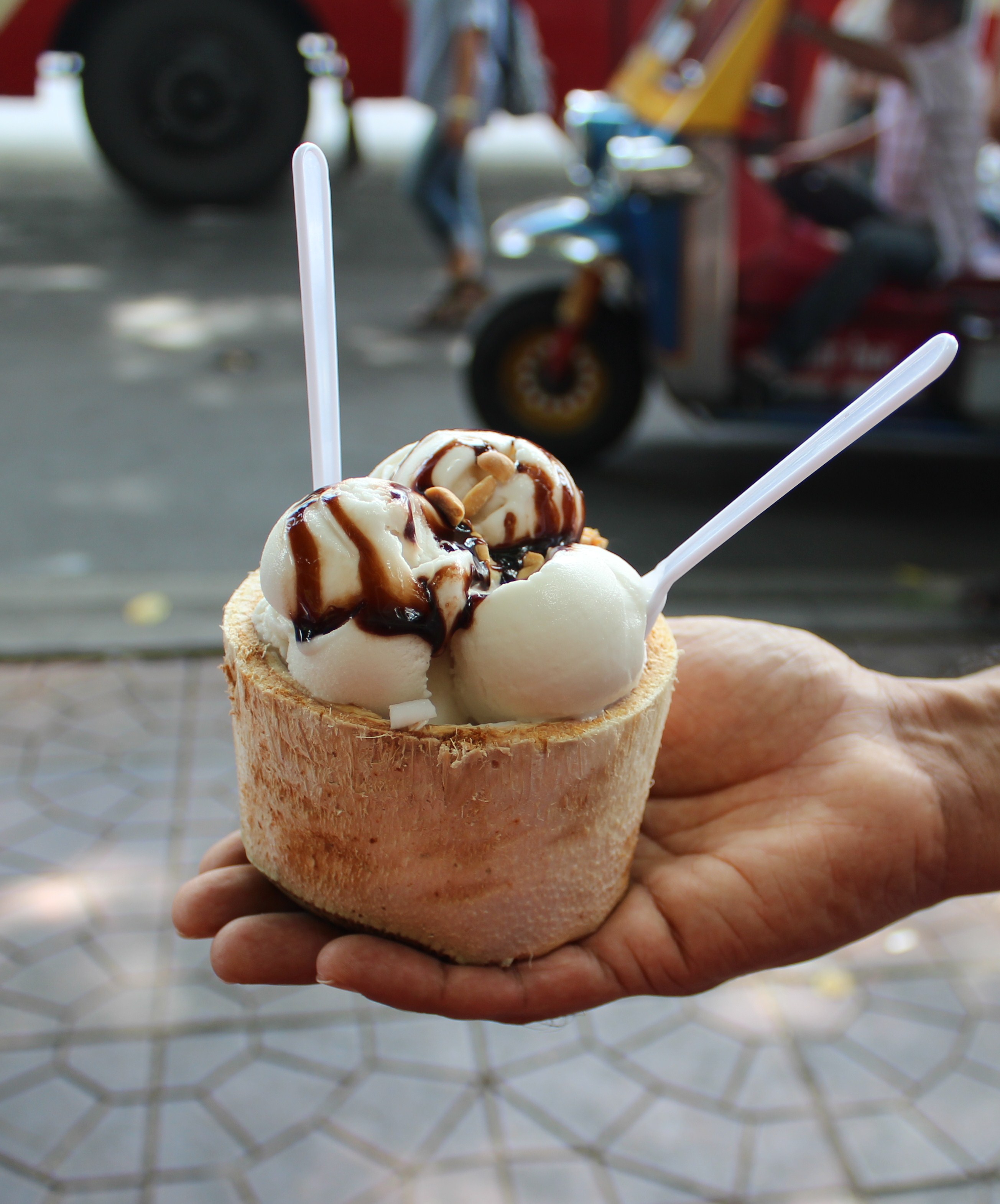
On the way to the Royal Palace, a very bright and sunny day that was – couldn’t resist the coconut icecream, served in a different way altogether!

Coconut Ice Cream –

step one- scrap out a few layers of coconut from the already scrapped out, ready to be served coconut shell

IMG_2585


step two – place 3 scoops of vanilla ice-cream or coconut ice-cream

IMG_2588

step three – sprinkle some peanuts on top, which is optional

IMG_2589

step four – choose your syrup  chocolate or strawberry (I chose chocolate syrup)

IMG_2590

step five – exquisite stuff ready!

IMG_2594

After a cool-cool treat, we crossed the busy road and walked inside the Royal Palace. So, meet you next at the Royal Palace!

The Charming Capital of Thailand!


Stunning view  At night – Wat Arun – Temple of Dawn, Bangkok

IMG_2307


When two months of holidays were almost going to be over, a sudden plan of visiting Malaysia and Singapore came up. As soon as we returned from KL and Singapore, there rose an oppurtunity for a quick visit to Bangkok!

The beauty, culture and spirit of South East Asia  – each country different and unique by its own, yet similar! Culture, Religion, Behaviour, Lifestyle, Traditions – beyond the marked differences there is still a thin line indicating the centuries of give and take.

While KL and Singapore experiences would follow later, the beauty of Bangkok that lies very fresh in my mind makes me write about it first. So, the very recent ones first.

Bangkok seemed to be a mixture of traditional and modern things in the same shell. I think this fusion is something that makes Bangkok the most visited place in the world.


Bangkok, Thailand will be the number one destination for tourists in 2013, according to MasterCard’s new Global Destination Cities Index.

It beat out major destinations like London, Paris, New York, and Dubai with an anticipated 15.98 million international arrivals in 2013. http://www.businessinsider.com/most-popular-tourist-destinations-2013


For the religious and heritage lovers – huge Buddhist temples; for the fashion and shopping lovers – the small, medium to big malls; for the cullinary lovers – street food, food courts in malls, restaurants offering different cuisines of the world to chose from and speciality THAI restaurants for those with heavier pockets; for relaxing the global community – the innumerable massage centres to classy Spas; for true tourists who believe in nights by the water – river cruises and dinner cruises, Bangkok has so much to offer!

Leaving aside the traffic jams and busy roads, the Metropolitan Rapid Transit or MRT is a very comfortable transport system, called the Underground Train. It is called the BTS or sky train.

Under the Metro Rail System, the Airport Rail Link is a very comfortable service which is available from the Airport itself. This is a great boon for tourists, for the first timers not knowing the routes and the used passengers alike.

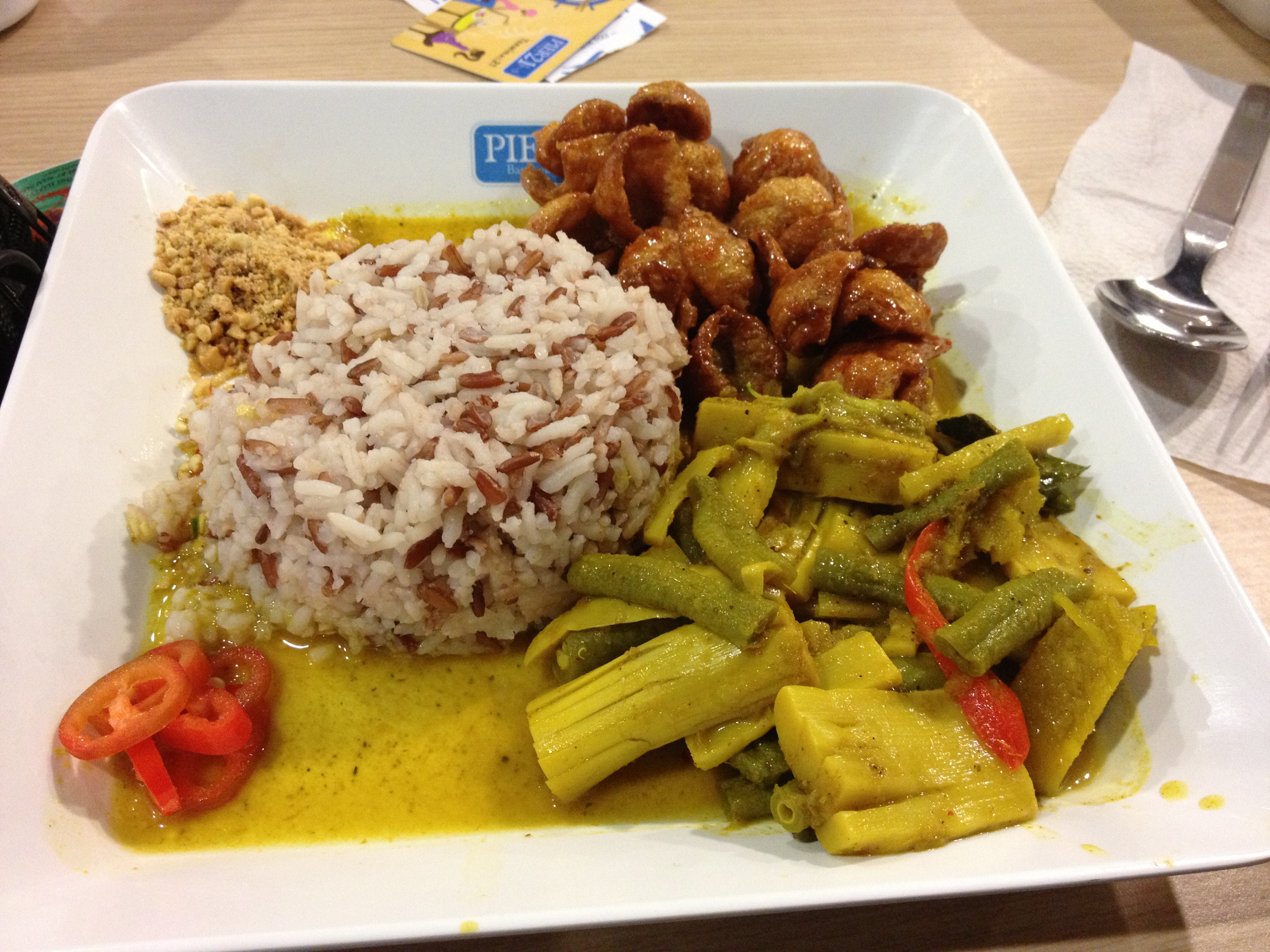
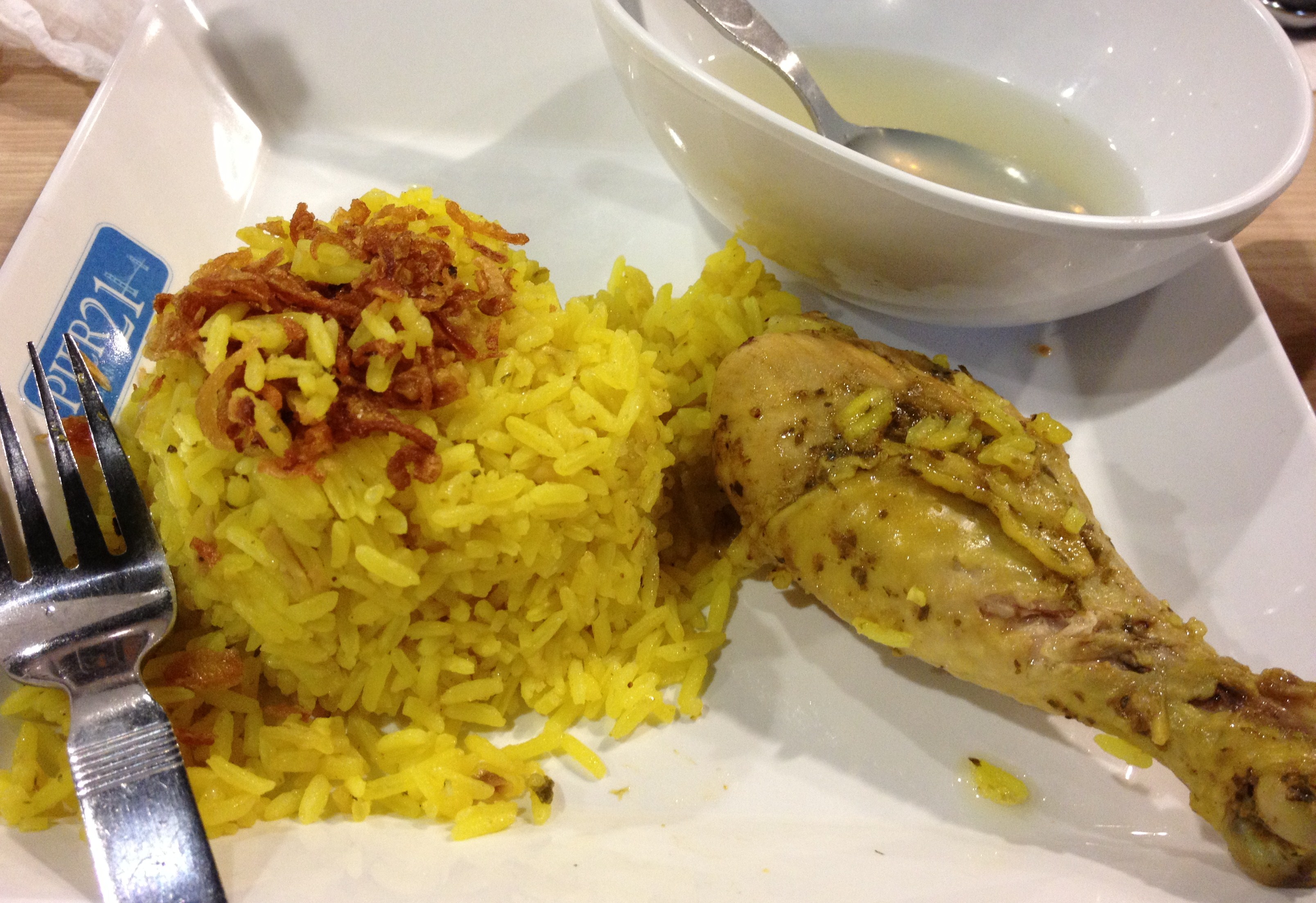
Of our favourite topic Food – as mentioned earlier, the food courts in malls offer food at very reasonable rates. A platter which is a whole filling meal, with the spicy taste of Thai Cuisine – which has the touch of Chinese and Indian cuisines.  Forget about the very popular Thai Red and Green Curries, there is an entire variety like –


Brown Rice, Crispy Fried Mushroom and Spicy Vegetable Curry

IMG_2265


Yellow Rice, Chicken in Spicy Curry (served without the curry for my daughter) and a clear soup

IMG_2269


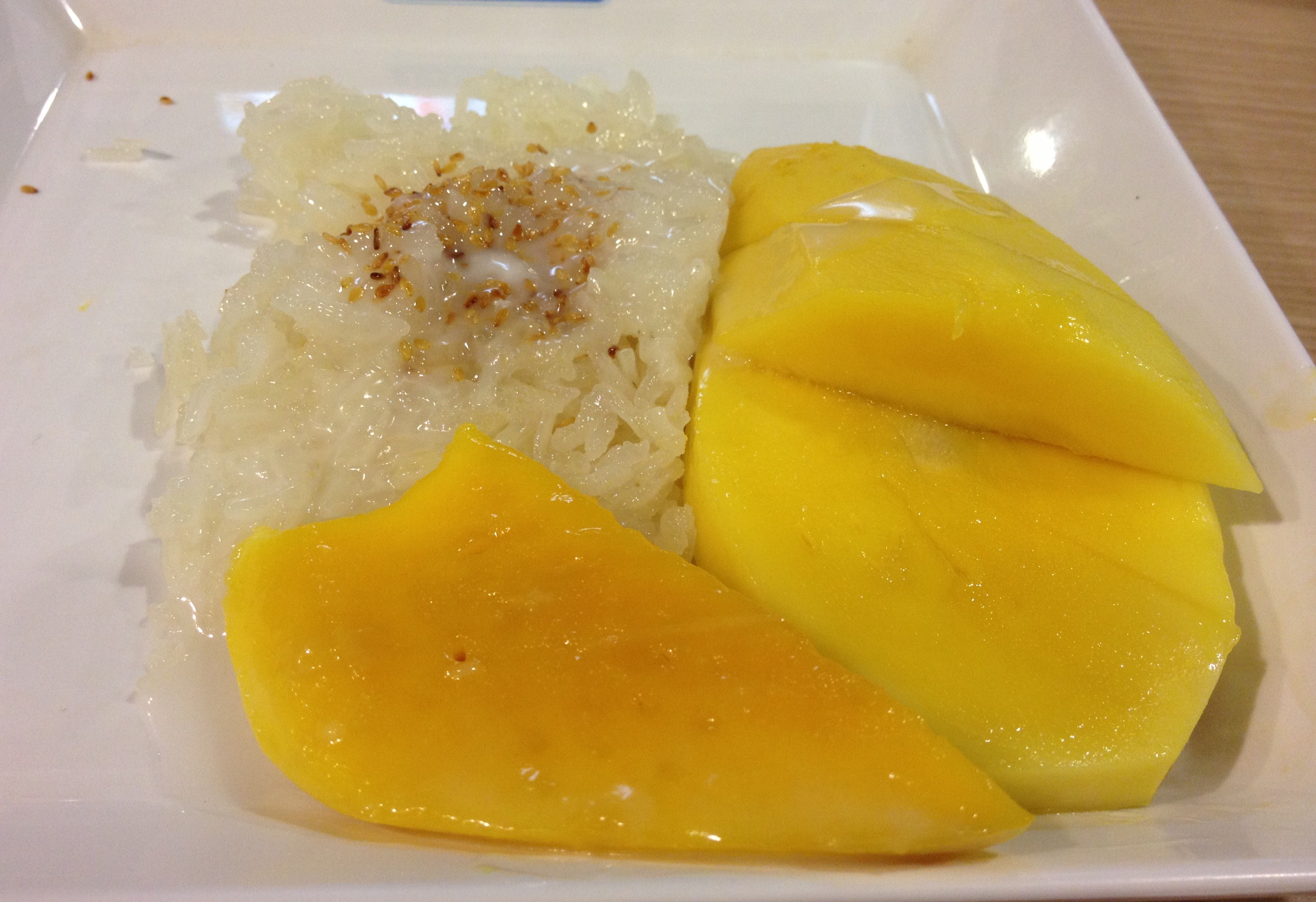
I had this dessert in mind – and I wanted to taste it after seeing it as one of the best foods to be tasted in Thailand – It is called Khao Neeo Mamuang in Thai language or the Mango Sticky Rice. It is cooked rice sweetened with a sauce of coconut milk, sugar and salt; served with sliced mango  and garnished with the coconut milk sweet sauce and roasted sesame seeds! We got it served cold. This is certainly a refreshing dessert – that gives a soothening effect to the tummy after all those spicy Thai Curries!


IMG_2276


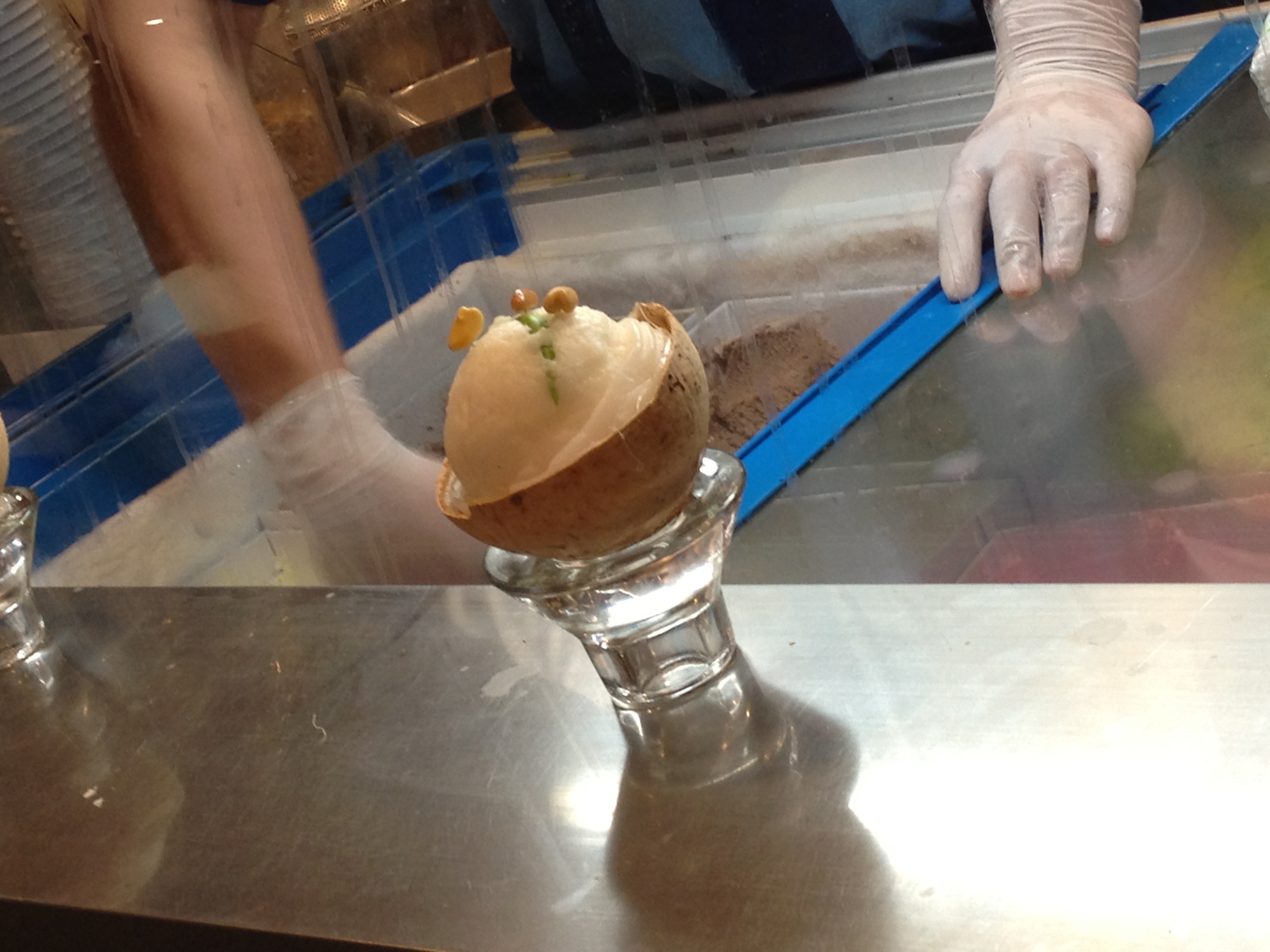
and the beautifully presented Coconut Icecream! There can be many versions to this- different in the way is served.  Ice Cream made with Coconut milk is scooped in coconut shells with scrapped tender coconut pieces. One of the versions –

IMG_2311


Another version – served at street corners comes in the next post!

Now, let’s talk about the enchanting places we visited!

The first day, we planned to see Wat Pho and Wat Arun. The word Wat in general denotes a place of worship, here denoting Monastery Temples.


In everyday language in Thailand, a wat is any place of worship except a mosque (Thai สุเหร่า – su-rao; or มัสยิด – Thai rendering of masjid; a mosque may also be described as โบสถ์ของอิสลาม – bot khong Is-a-lam). Thus wat cheen is a Chinese temple (either Buddhist or Taoist), wat khaek is a Hindu temple, and wat kris or wat krit or wat farang is a Christian church, though Thai โบสถ์ (โบด bot) may be used descriptively as with mosque. http://en.wikipedia.org/wiki/Wat


Wat Pho – The Temple of Reclining Buddha

IMG_2258

Wat Pho is the oldest and largest temple in Bangkok.  The first temple was built in the 16th Century and consecutive renevations and additions have been done by successive kings.

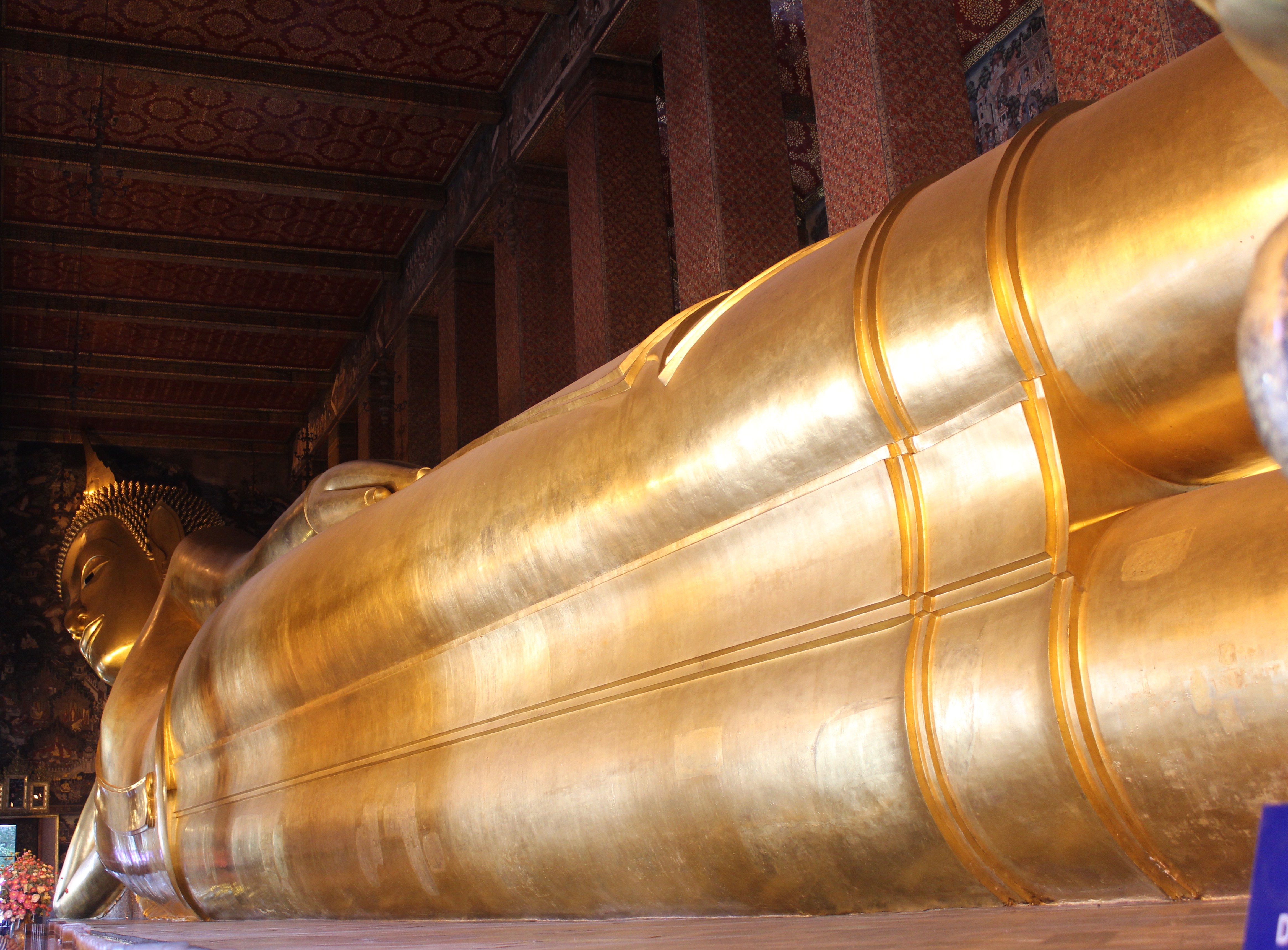
Inside the temple complex lieds the biggest Buddha in reclining position in Thailand. This statue is 46 metres long, with the dimensions at the face of 15 metres high and at each foot of 3 metres high and 5 metres long.

IMG_2246

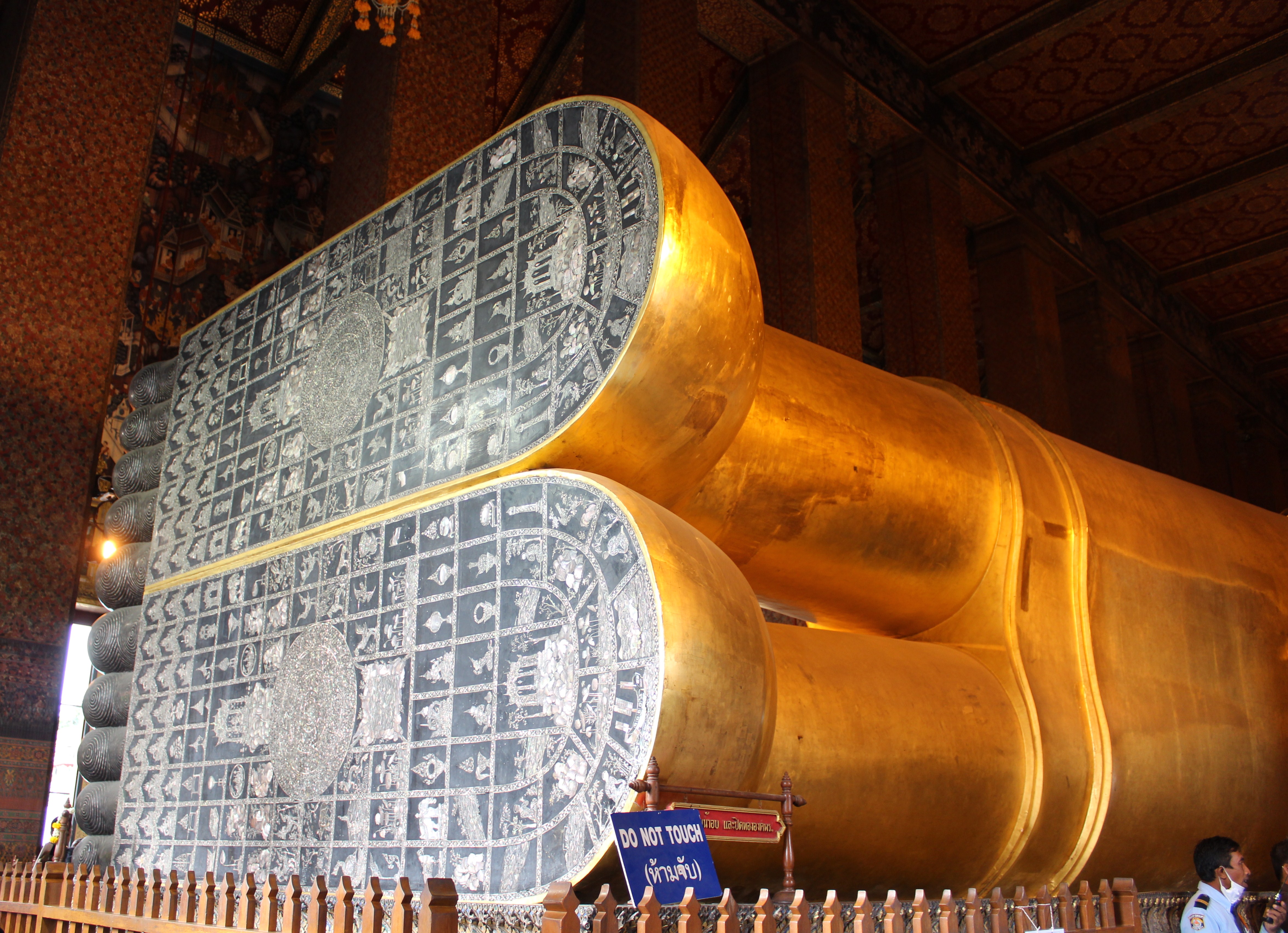
The soles of the statue’s feet are inlaid with mother-of-pearl showing the 108 auspicious signs of the Buddha. This is the largest and most beautiful piece of fine arts of the Buddha image in a reclining position found in Thailand.

The mother of pearl inlay at the feet of the image is of Thai-Chinese style, as indicated by 108 auspicious signs portraying natural scenes of both Indian and Chinese influences. http://www.watpho.com/en/data/buddha.php


IMG_2249

Inside Wat Pho runs the Thai Traditional Medical School where Courses on traditional Thai Massage are conducted.


Being the base of Thai Medicine, Wat Po Thai Traditional Medical and Massage School was opened in 1955 inside Wat Po. It is the first Thai Medical School under the approval of Thai Ministry of Education. http://www.watpomassage.com/2009/index.php?page=about&lang=en&title=About Us


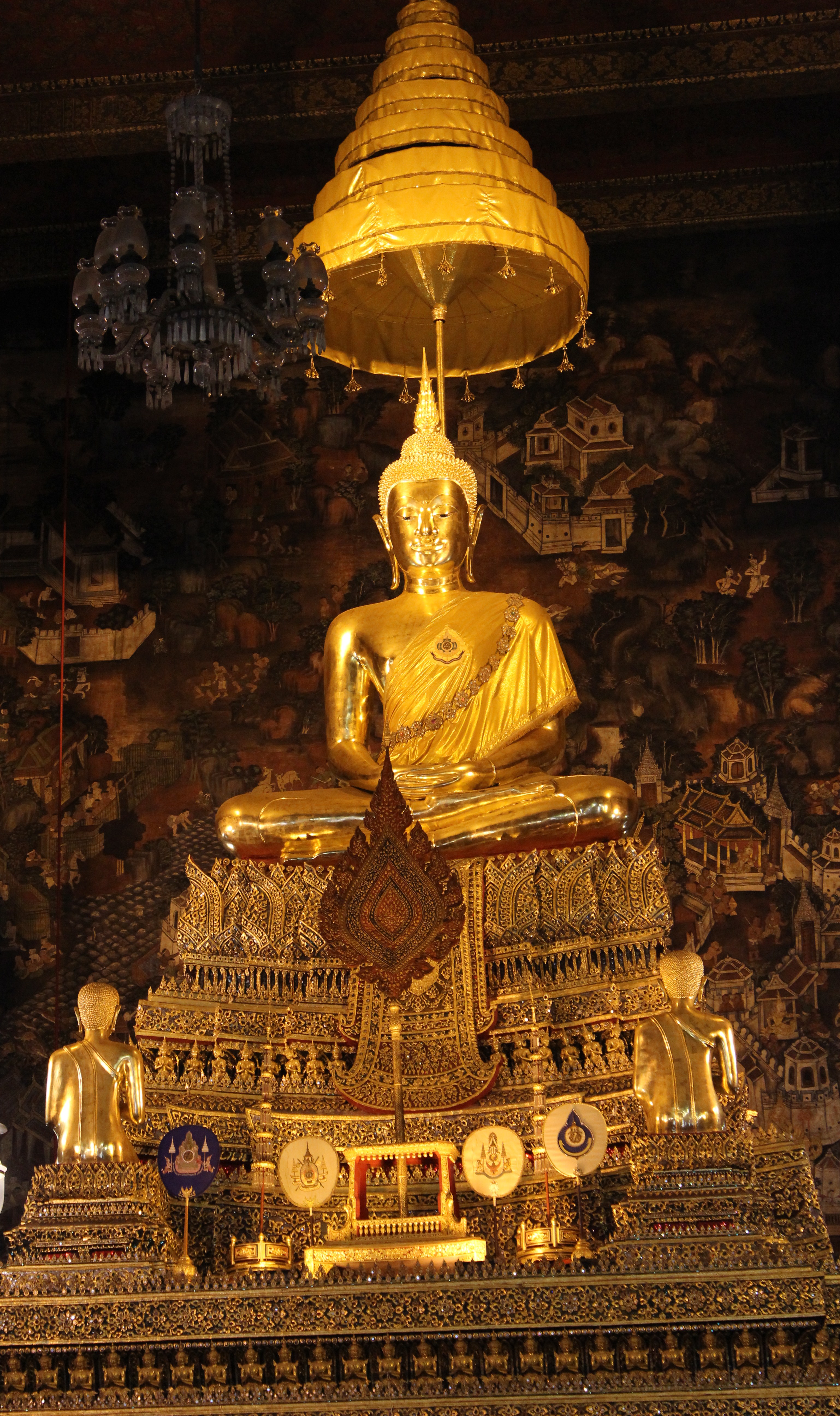
The second important building inside the temple is the Phra Uposatha – the Main Chapel where monastic rituals are performed.


Lord Buddha in a posture of concentration

IMG_2281


For Buddhists, the main chapel is the heart of the monastery, as without a main chapel, it would be a monk center and not a monastery. http://www.watpho.com/en/data/phrauposatha.php


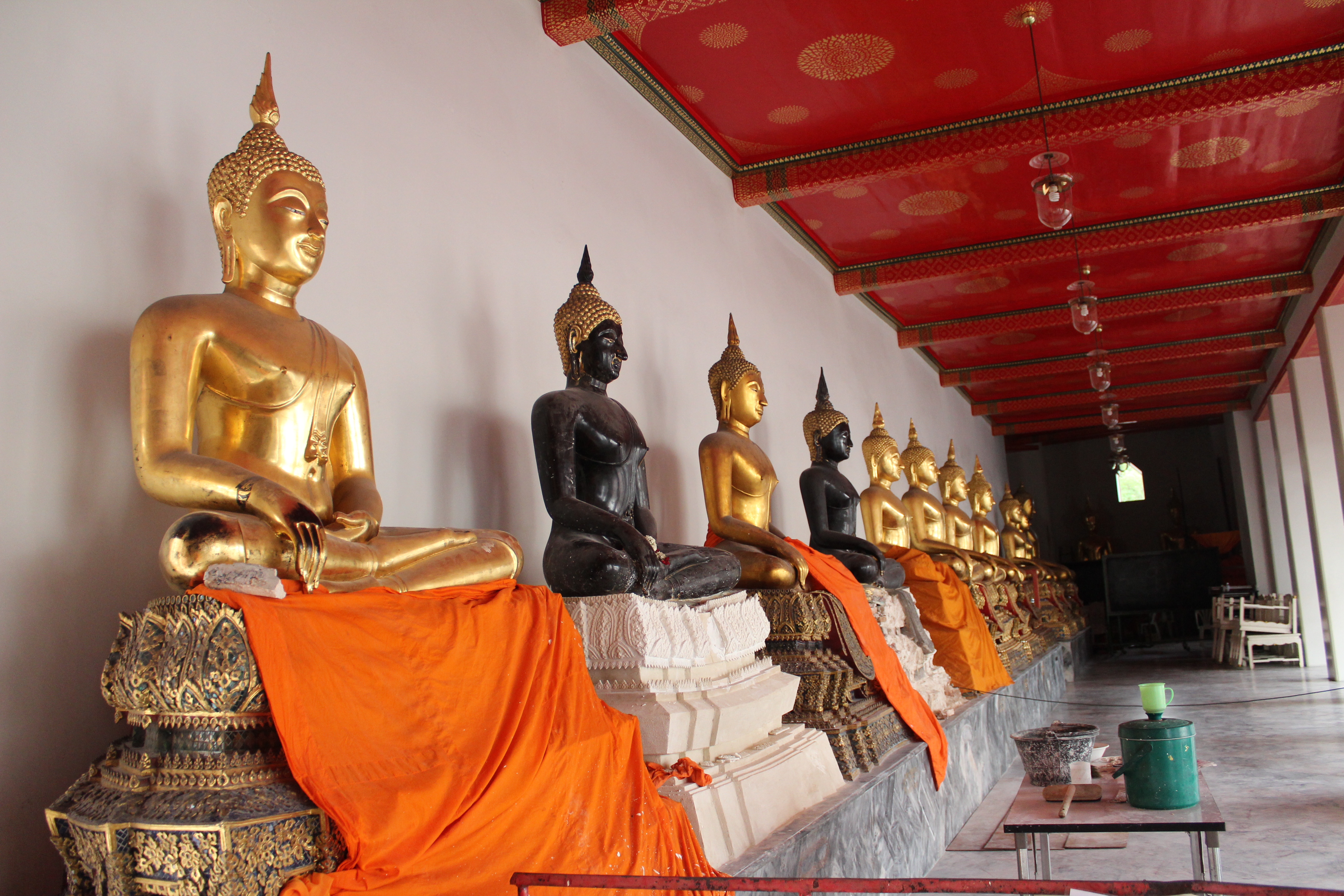
A tour inside the temple complex lets one admire the numerous Buddha statues bright.

IMG_2274

The galleries extending between the four chapels feature no less than 394 gilded  Buddha images, many of which display Ayuthaya or Sukhothai features. The remains  of Rama I are interred in the base of the presiding Buddha image in the bòht. http://www.lonelyplanet.com/thailand/bangkok/sights/buddhist-temple/wat-pho


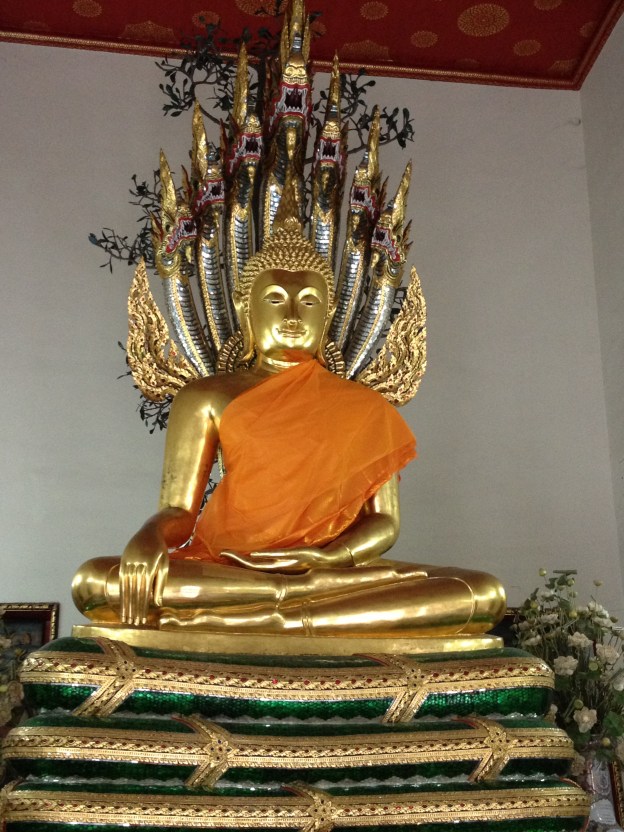
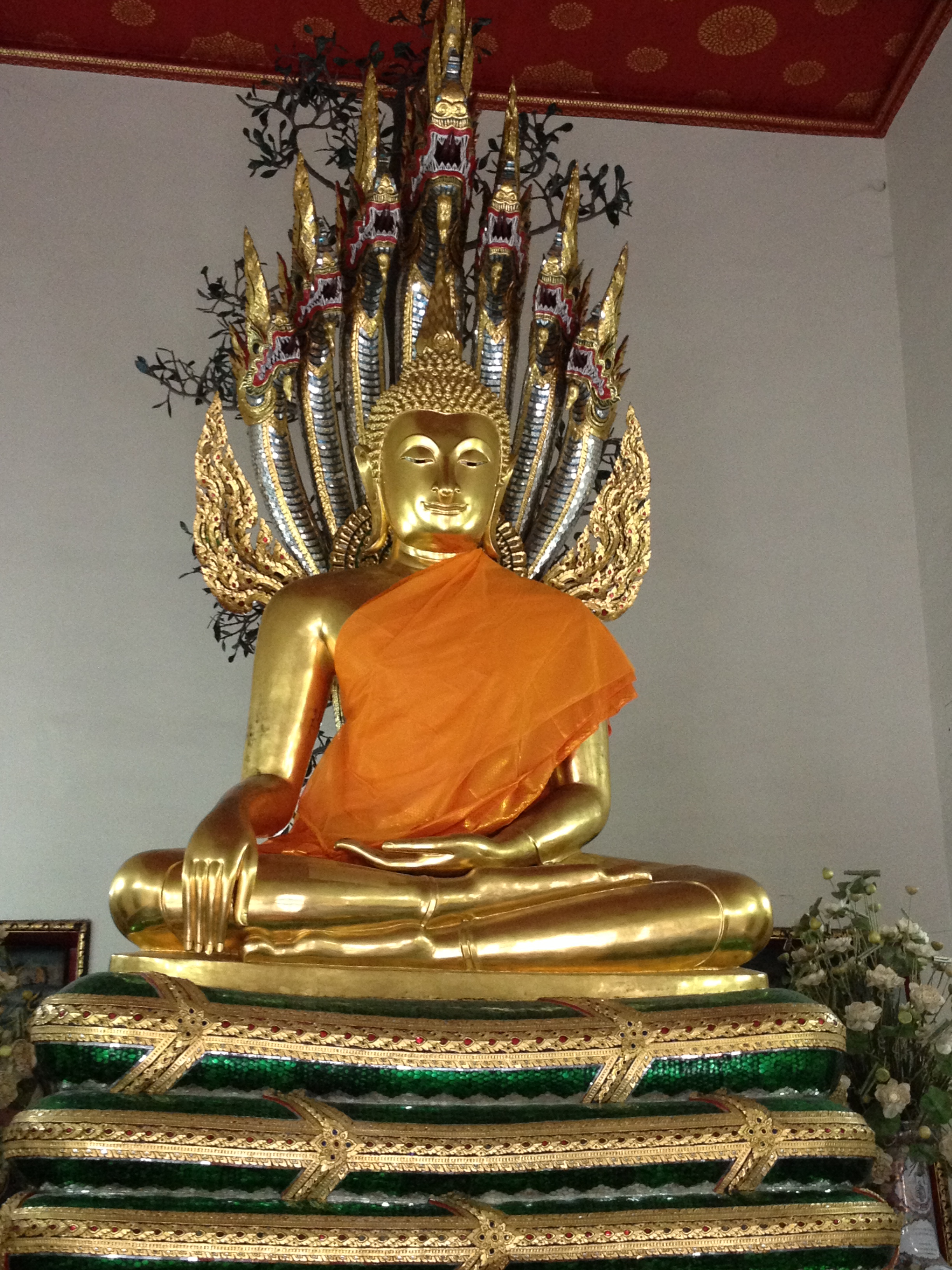
In the West Vihara there is an image of “ Pang Nak Prok ”, the Buddha under the Naga’s hood.

IMG_2292

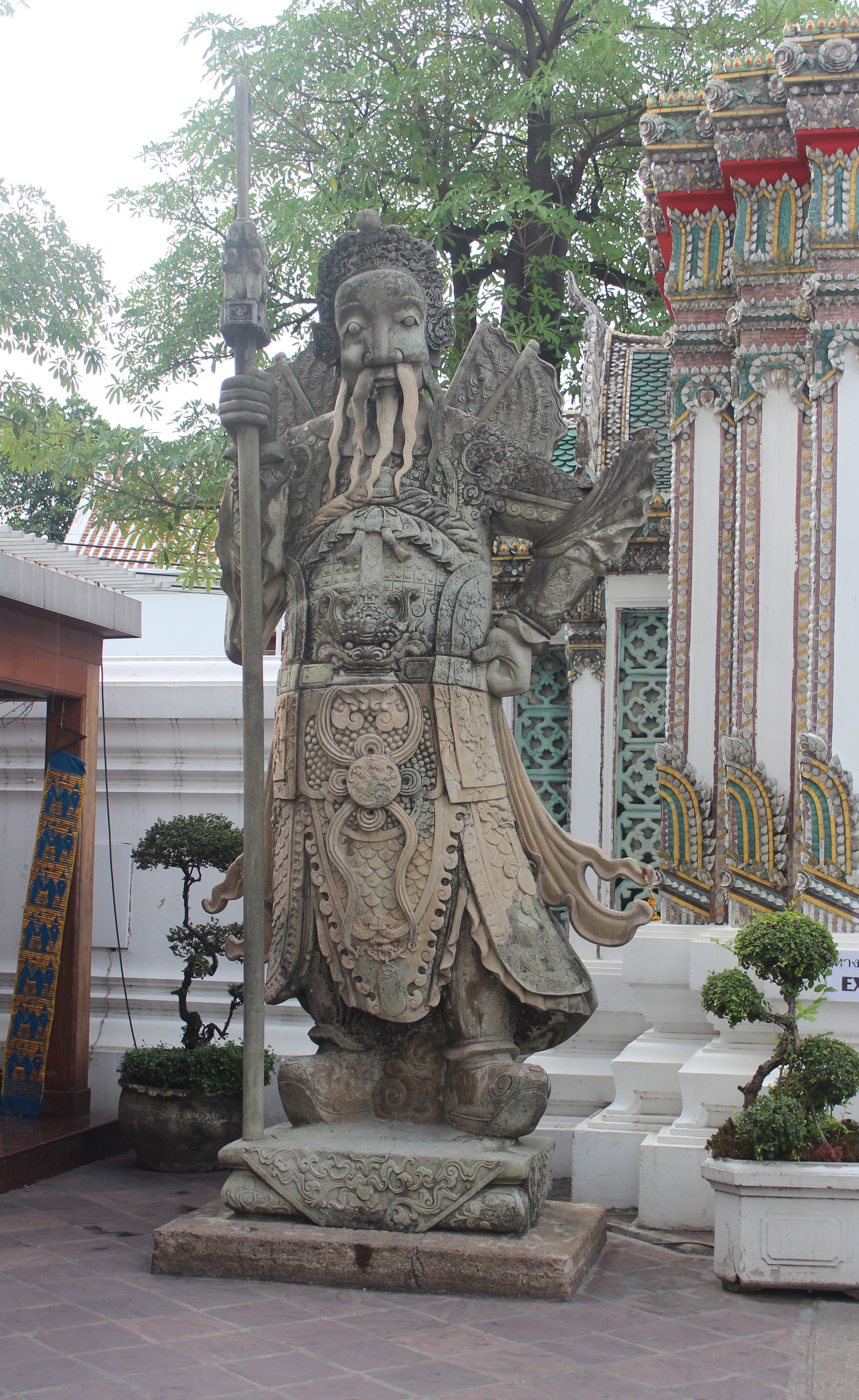
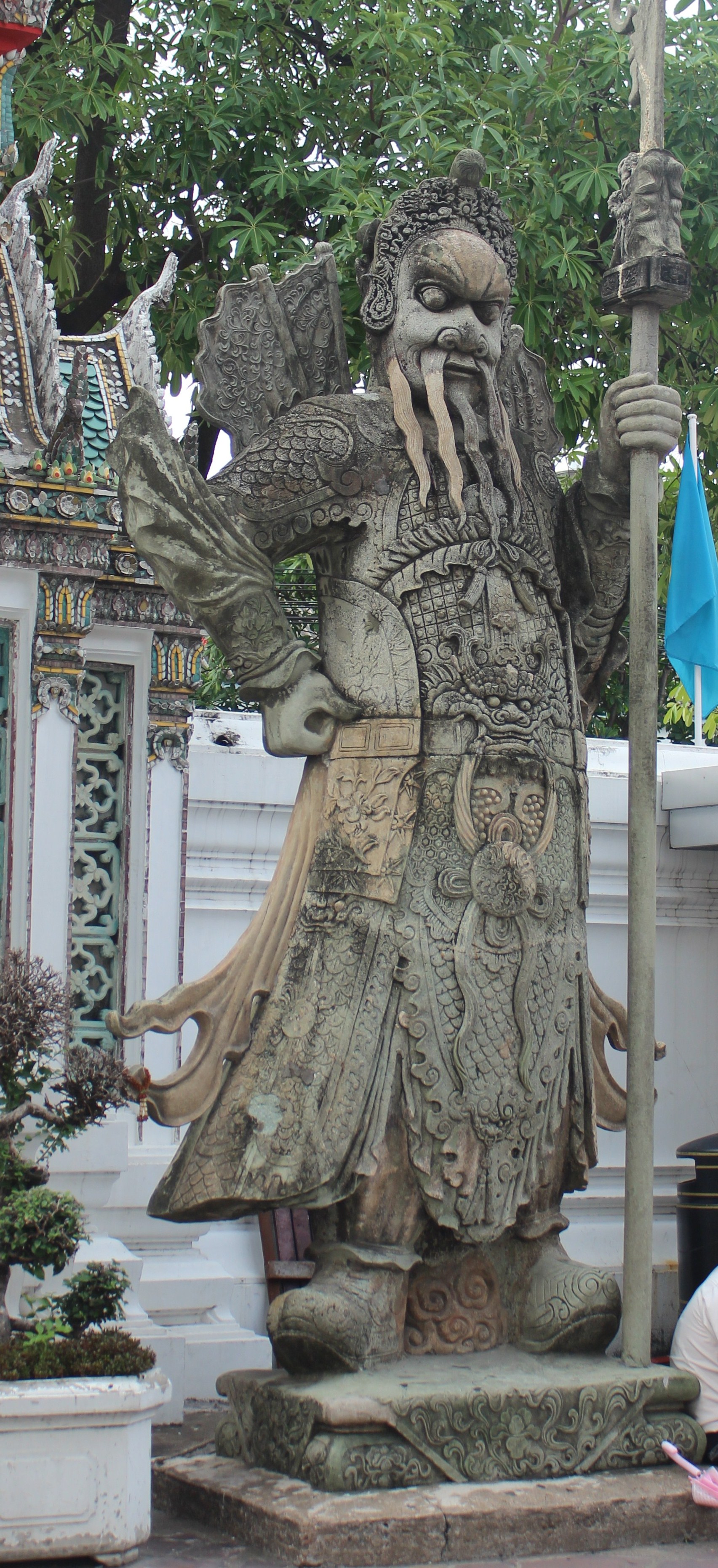
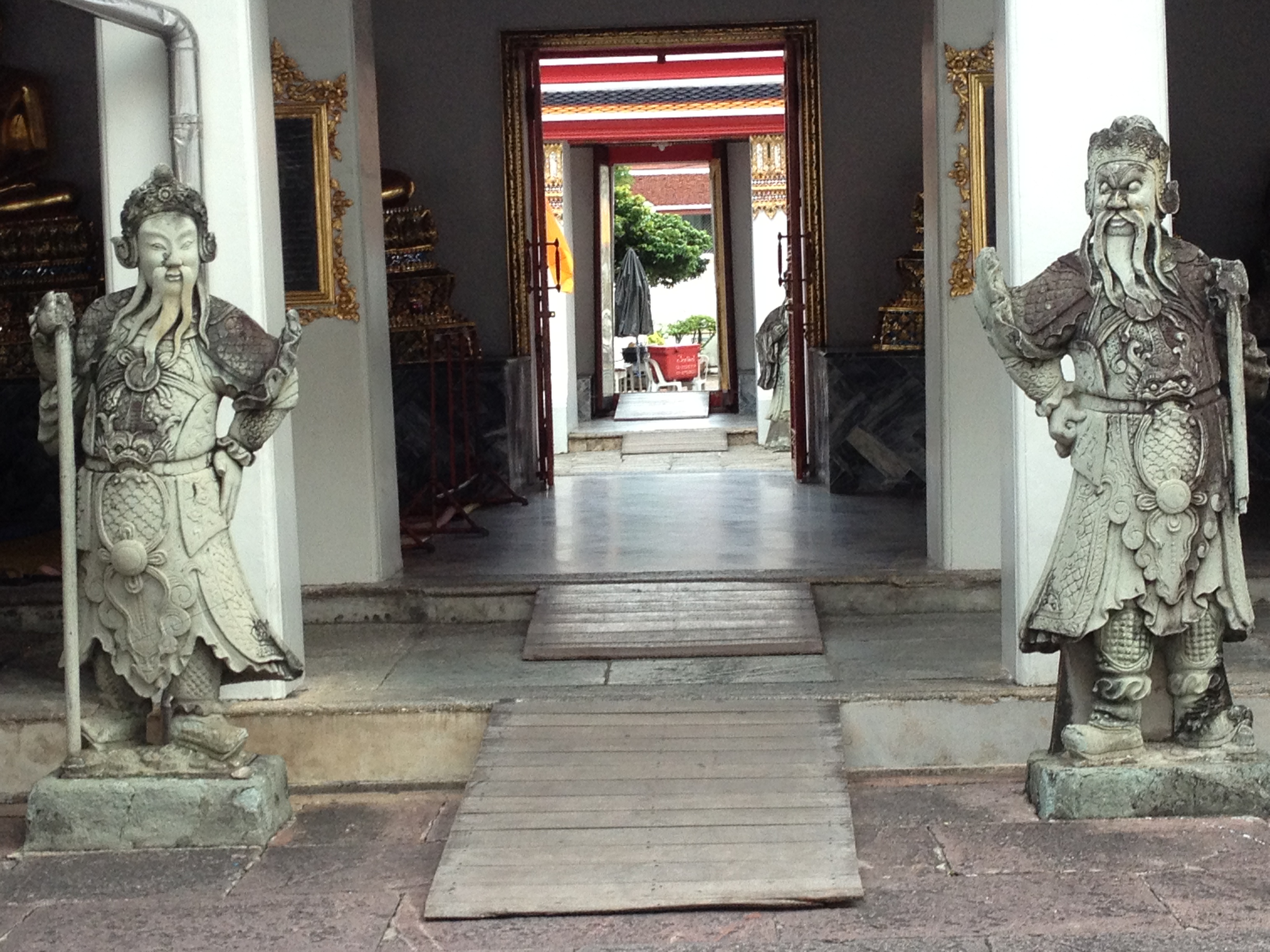
One of the most interesting features of the temple is the stone and rock statues.  These Chinese statues stand as guards inside the corridors of Wat Pho. Very interesting to note the facial features and the amazingly well sculpted emotions on the faces. These statues arrived into Thailand from the ships which brought in goods from China. These were used as Ballasts to provide stability to the vessels during sea voyage.

Thailand, with its fertile valleys, was a main producer of rice and other crops in the 19th century, which it exported to China as well as other countries. The ships on the way home, used these Chinese figures as ballast, but these statues became very popular in their own right and were eventually imported for their intrinsic merit also. http://www.photodharma.net/Thailand/Wat-Pho-Buildings/Wat-Pho-Buildings.htm


IMG_2232


IMG_2233


and …

IMG_2280


Bangkok has so much to offer, historical and modern… the old ones captivating the hearts and minds with their skillful architecture and beautiful techniques employed centuries ago. Shall continue with more!

Pidi Kozhukkattai -Karam/Salted Rice Dumplings-Spicy


IMG_2209

Kozhukkattai is a steamed rice dumpling made sweet or salt. We had already seen the stuffed version of Kozhukkattai before – (https://dosaikal.com/2011/09/14/modhakam-pillayar-chaturthi-special). Poorana Kozhukkattai or Modhakam has the filling of coconut and jaggery inside, and are steamed till done.

These Kozhukkattais are called PIDI KOZHUKKATTAIs,  as they are given their shape with hands. ‘Pidi’ in Tamil means ‘to hold’. They have no filling inside but several ingredients are mixed to the ground rice flour to be made into a dough. The sweet or salted dough is shaped into beautiful dumplings by pressing with fingers. These are also called Uppu Kozhukkattai which means salt dumplings.
About Kozhukkattai…

Kozhukkattais can be an evening snack on weekends after a lazy nap;

a healthy snack when kids come back from school, hungry to fall prey to some junk food;

why not…. can be a wonderful finger food/starter in a dinner served with any spicy chutney (https://dosaikal.com/category/chutneys).

Above all, not so simple it might look, but made frequently, Kozhukkattais can be a simple breakfast or dinner menu for light eaters! To add variety to a breakfast or dinner – make both salt and the sweet versions.

Ko-ZHU-kkattai – ‘Zhu’ is not pronounced ‘su’ or ‘zu’. The word is not pronounced kozukkattai. ‘ZHA’ is the twisted tongue version of ‘la’. The tongue is twisted towards the inner portion of the upper jaw to get the sound of ‘zha’. This letter ‘ZHA’ is the speciality letter of Tamil language. Malayalam also has the letter as it is the latest language to have parted from its elder sister – Tamil. Malayalam still possesses some authentic and long forgotten pure words of Tamil Language.

The word TAMIL itself is pronounced ‘TAMIZH’. For easier comprehension and pronounciation, it is written as TAMIL. The people – the Tamils – are proud of their speciality letter – but is that anymore – only Tamils/Tamizhs can answer!?


Kozhukkattai is the favourite food of Lord Ganesha.  Sweet jaggery filled Modhakams, Ellu Urundai (Sweet Sesame Balls), Uppu Kozhukkattai (Steamed Salted Rice Dumplings), Inippu/Vella Kozhukkattai (Steamed Sweet Rice Dumplings) and Appam (Wheat-Banana-jaggery Fritters) are some of the speciality foods made on the special day.  The special celebration dedicated to Lord Ganesha or Pillayar as he is called in Tamilnadu, Pillayar Chaturthi falls in September.

Why am I posting the Uppu Kozhukkattai so soon?  There is a special reason behind it.

June and July were summer holiday months in Cambodia. Now, with a six year old getting bored at home, I had to make some arrangements to keep her busy… yet interested! Myself and my daughter charted out a time-table for seven days of the week – Arts, Music, Chess, Maths, Tamil language, English Writing, Swimming and COOKING! We baked some cakes, made some potato snacks and not to mention those flop cookies which were burnt!

And when I had to think hard of something which is easy as well as healthy for kids to make and munch, these Kozhukkattais came in. It is such a pleasure to see her write her own recipe book with her cookery class recipes. We made both the salt and sweet version of rice dumplings.

That is why Kozhukkattais before Pillayar Chaturthi!! This time it is Uppu Kozhukkattai – Salt Kozhukkattai. Also called Kara Kozhukkattai or Spicy Kozhukkattai- with added red chillies.


Rice Powder


soaked raw rice being dried

IMG_1985


rice – powdered

IMG_2210


The basic ingredient for the dumplings is the rice powder, made from Raw Rice. Kozhukkattais taste best with freshly ground rice powder. This is how I made it –

  1. Soak Raw Rice for two hours in water.
  2. Strain water and spread the rice in a clean cloth
  3. Let the rice dry in shade inside home
  4. When the rice has dried 75%, dry grind in a mixer to make a powder
  5. The dried rice should be still wet a bit, able to be powdered but would not become a paste
  6. Soak the quantity of rice that can be ground in your dry grinder; Use as needed and store the rest
  7. After grinding, dry roast the rice powder, then sieve it to remove the granules of rice (see picture)
  8. Dry Roasting of rice powder helps in storage
  9. Use it within a week kept in freezer
  10. If kept in normal temperature, use within a couple of days in humid temperatures.


always sieve flour after roasting to remove granules

IMG_2209 (2)


Uppu Kozhukkattai/Kara Kozhukkattai – Salt and Spicy Rice Dumplings


IMG_2201


Ingredients (makes 20-25 dumplings)

  • pacharisi maavu/raw rice flour –  2 cups
  • uppu/salt – to taste
  • thanneer/water – 1 1/2 cups or a little more or less
  • yennai/oil – 1 tbsp
  • kadugu/mustard seeds – 1 tsp
  • ulundham paruppu/dehusked black gram – 1 tsp
  • milagai vatral/red chillies – 2 no.s split (according to taste preference and spiciness of the chillies used)
  • kariveppilai/curry leaves – optional – a few


mixed dough

IMG_2222


Method of Preparation

  1. Dry roast the ground rice flour to take away the raw smell out of it
  2. Sieve the flour, remove granules away and take the required quantity of smooth flour in a wide bowl to mix all the ingredients in
  3. Heat oil in a pan; Add mustard seeds and let them splutter
  4. Add dehusked black gram and when it turns golden, add red chillies and curry leaves
  5. Pour over rice flour and mix well
  6. Boil water with salt in a pan
  7. Pour boiling water into the rice flour mixture carefully. Carefully because more water might make the dough sticky
  8. Make a dough which is neither sticky nor dry
  9. Take a small portion in hand and press slightly with fingers, to get the beautiful impression of fingers in the rice dough
  10. Steam for 8 to 10 minutes.
  11. Serve with coconut chutney or any spicy chuntey.


ready to be steamed

IMG_2229

Note:

  1. Since the rice flour is dry roasted, cooking time is less.
  2. Always sieve the ground flour after roasting. Granules tend to form while roasting.
  3. Over steamed dumplings might become harder. Be careful on that.
  4. Water should be boiling hot.
  5. If one is using rice flour from shops, use the flour meant for Idiyappam-string hoppers.
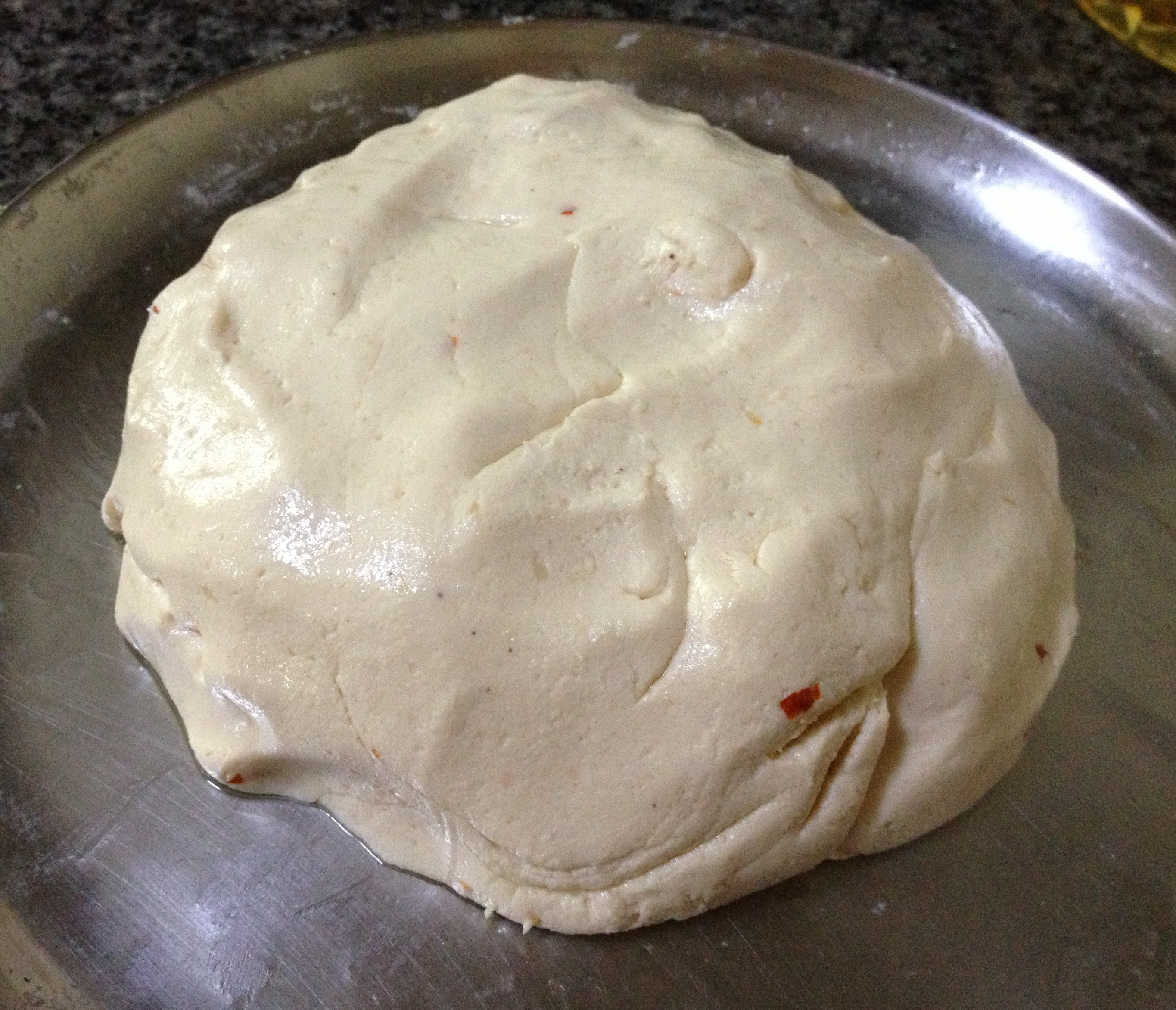
  6. Thick dough might make dumplings hard and sticky dough might not result in dumplings at all. A slightly soft yet tight dough is needed for soft kozhukkattais.
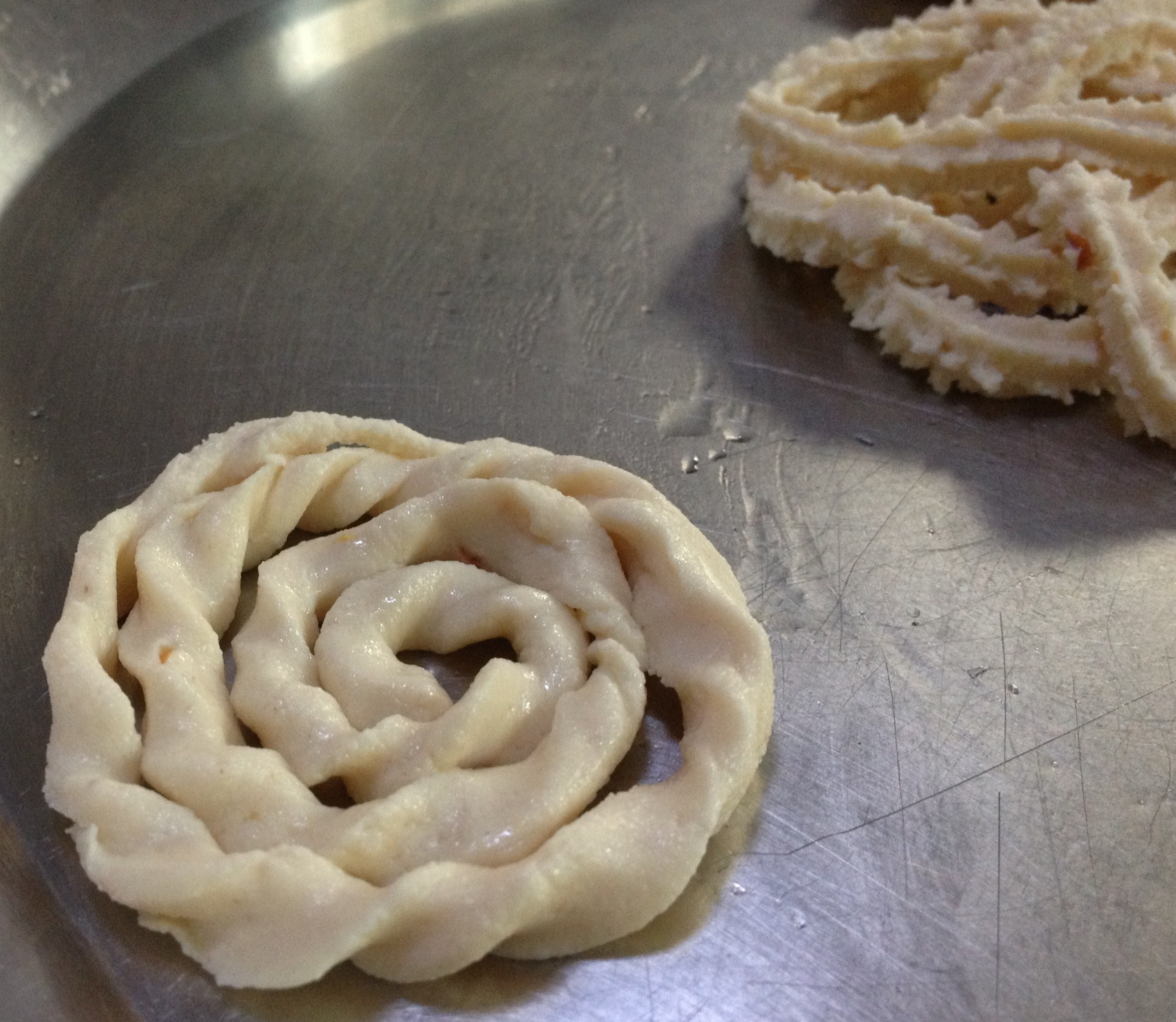
  7. Any problem with the shape, just make small balls and steam.


IMG_2207


Araithu Chutta Murukku-1/Crispy Murukku made with Freshly Ground Rice


IMG_1338

Murukkus come in different shapes and tastes (https://dosaikal.com/the-all-time-favourite-murukku/). So does the Murukku Maker. This time, I got a new one – easier one to make murukkus from Chennai.

my new murukku maker

IMG_1334

Here, in Phnom Penh, finely ground rice flour is not available. When craving overpowers non-availablity, innovation in kitchen begins! Those days when they were no electric equipments to grind, no public mills to mill fine powder, self sufficient households made their murukkus from different sources. One was this… soaking rice and grinding to fine paste/dough.

Even now, there are many villages where the traditional ‘Aattural’ is still used for grinding purposes – Idli/Dosa Batter, Vadai (Crispy salted doughnuts with dehusked black gram) or murukku maavu and many more. Aattural – Aattuthal or Aattu comes in place of araithal which in tamil means to grind and ‘ural’ is the grinder.


That is why, I searched for a Murukku without rice or floured dehusked black gram or a murukku with other substitute ingredients, but the end result should be a feast to teeth.

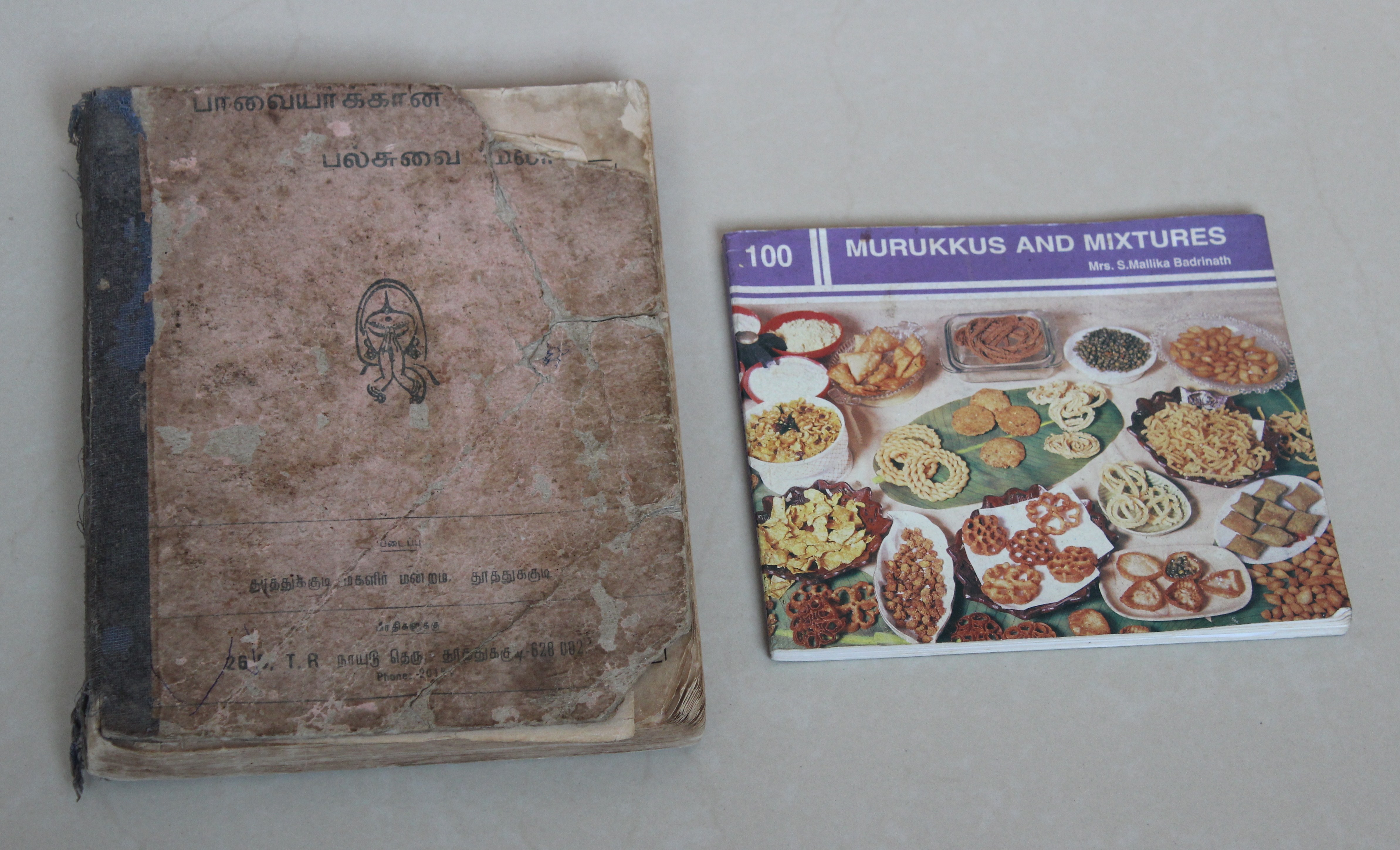
I pulled out my almost twenty year old cook book from Thoothukudi – which has various native recipes as well as those popular around the world.

Next, I referred Mrs. Mallika Badrinath’s Murukku book and concluded on this one. It is actually the recipe for ribbin pakoda, another crispy chips in shape of small ribbons – hence the name. I altered the amount of bengal gram flour as the first set came out a bit hard.

IMG_1417

So, here is Araithu Chutta Murukku.. thanks to my Grinder – could get a smooth dough. The original Araithu chutta murukku has ground rice with dehusked black gram flour. It is also called ‘Puzhungal Arisi Murukku’ – Par-boiled Rice Murukku. To reduce the work of dry grinding ulundham paruppu/urad dal/dehusked black gram flour at home, I stuck to bengal gram flour. That’s why I named Murukku -1. Next time, I shall make with dry grinded black gram! When I spoke to aachi the other day, she mentioned of adding powdered pottu kadalai/chutney dhal instead of bengal gram flour. I just wanted to give way for Araithu Chutta Murukku 2 and 3 to follow in future!

The Murukkus had the flavour and taste and crisp too, though I would not rate them as perfectly crisp.

Araithu Chutta Murukku/Crispy Murukku made with Freshly Ground Rice

IMG_1403

Ingredients

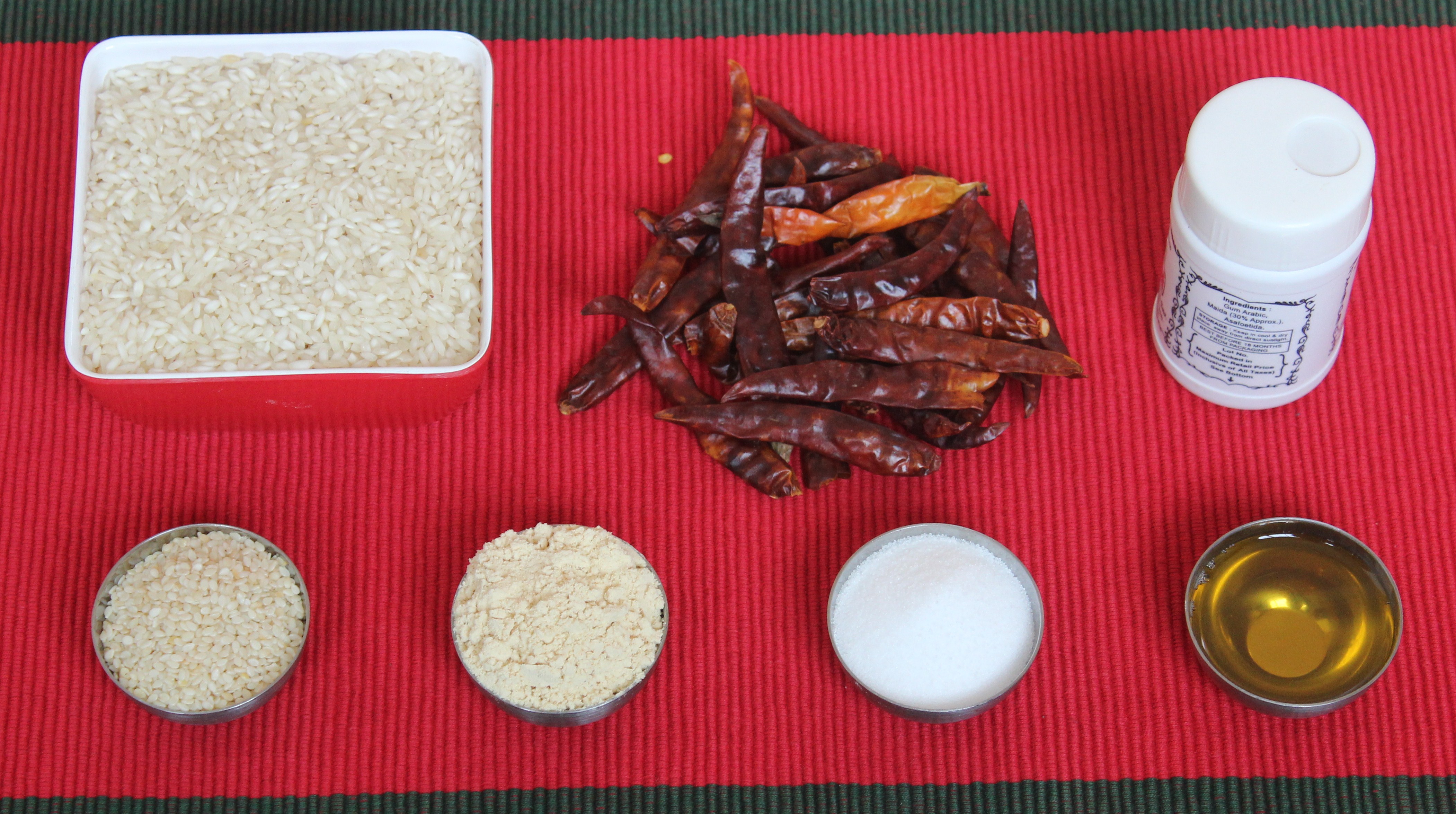
  • puzhungal arisi/parboiled rice – 2 cups
  • kadalai maavu/bengal gram flour – 1 cup
  • ellu/sesame seeds – 1 tblsp
  • milagai vatral/red chillies – 10 no.s
  • uppu/salt – 2 tsp
  • yennai/oil – 2 tblsp hot oil
  • yennai/oil – for frying
  • perungayam/asafoetida powder- 1/4 tsp


mixed dough

IMG_1875


I also tried ‘kai murukku’ – twists made with hands

IMG_1878

Method of Preparation

  1. Wash and soak rice in just enough water for 2 hours
  2. Grind with very little water and red chillies into a smooth paste
  3. While still grinding, add salt and asafoetida in the end and switch off the grinder
  4. Mix bengal gram flour to the rice paste
  5. Heat 2 tblsp oil separately and pour into the rice paste and bengal gram flour. Mix well with sesame seeds to form a firm dough
  6. Take the murukku maker and choose your favourite shaped disc. Fill the dough inside
  7. Make murukkus on a plate and fry them in batches in hot oil till golden brown
  8. Take the murukkus out on absorbent sheet
  9. When they are at room temperature, store in air tight container.

IMG_1341