A simple person who believes strong roots and values build up stronger generations; and good food and good food habits are one of the best gifts that one can give to their off springs.
Brittle is a type of confection consisting of flat broken pieces of hard sugar candy embedded with nuts such as pecans, almonds, or peanuts. https://en.wikipedia.org/wiki/Brittle_(food)
As per the above definition, normal brittles are made with sugar and water, mostly white sugar.
Traditional indian brittles are made with jaggery. Hence, are a combination of health and taste. Kadalai urundai (peanut jaggery balls)/ ellu urundai (sesame jaggery balls)/ pori urundai (puffed rice balls)/ pottukadalai urundai (roasted bengalgram balls) are common combinations made with jaggery syrup brought down to hard ball consistency.
Urundais are sweet balls, but the less time consuming version is the Mittai – Brittles. Kadalai Mittai and Ellu Mittai are squared brittles. When was the word ‘Mittai’ included in Tamil vocabulary is a matter for research. Before the concept of urundais or sweet balls came into making, the kitchen guardians must have powdered the nut and jaggery in the ural -mortar and enjoyed the marriage of sweet-nutty flavour.
Making sweet balls or bars involve perfect string consistency of jaggery syrup. After continuous efforts, off-late my nut brittles are almost good. Before I got the right consistency to harden the syrup to be perfectly crispy , we used to munch chewy candies. The sticky chewy candies were equally a joyous endeavour in the mouth…. reluctant to leave the teeth.
I shall be ever grateful to my daughter and husband, who never hesitated to pull the chewy candy from teeth to tongue. It is because of their patience, that I have reached this stage, making crispy brittles.
For the recipe, as usual, chukku podi/dry ginger powder for easy digestion and elakkai podi/cardamom powder for flavour have been added.
These are a few brittles that I’ve tried …
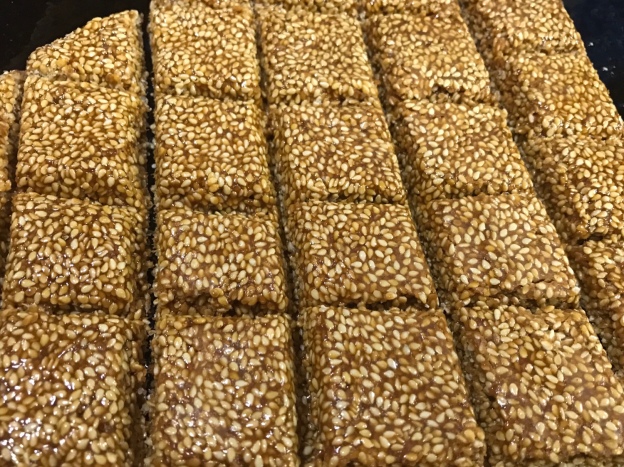
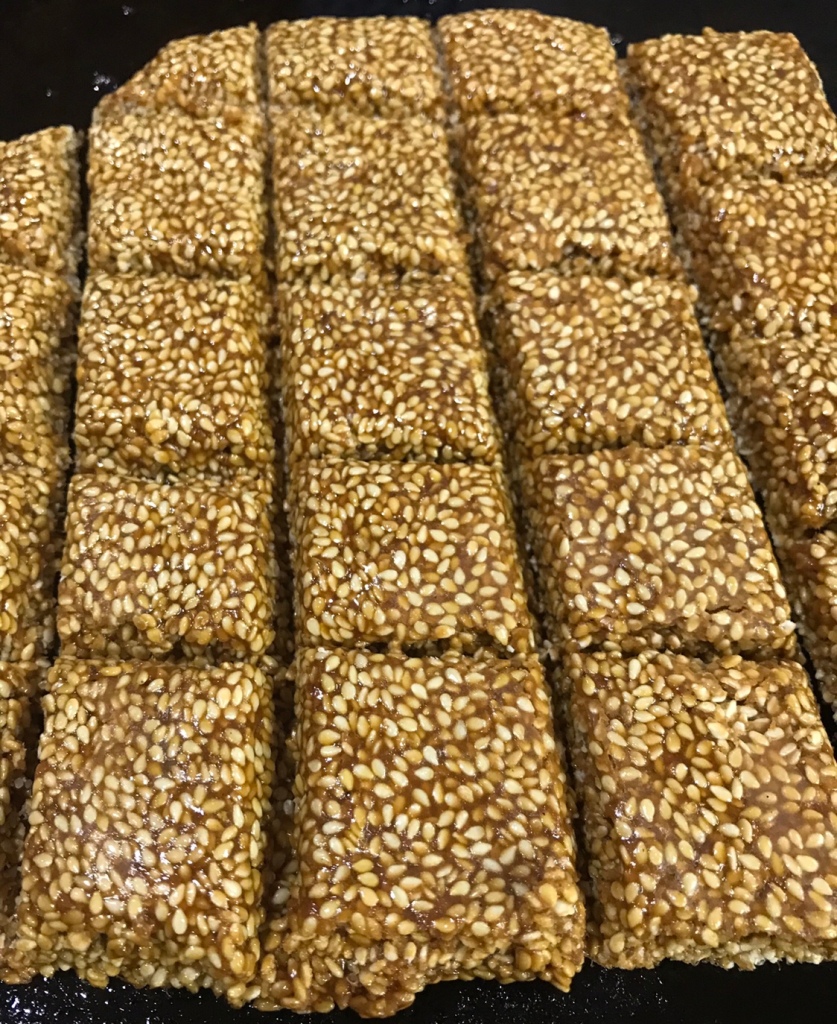
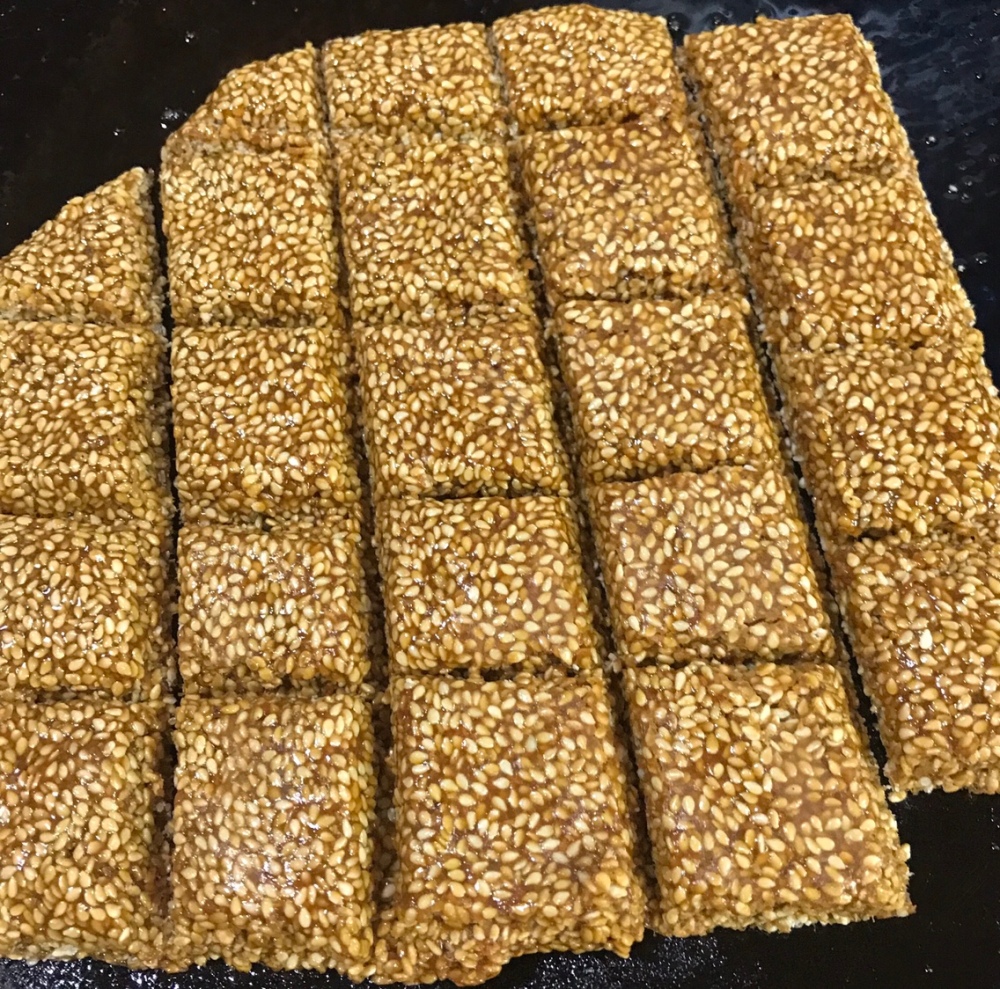
Ellu Mittai/Sesame Brittle
Kadalai Mittai/Peanut Brittle
Dry fruit Mittai/Brittle
Let’s handle them one by one.
Ellu Mittai/Sesame Seed Brittle
Ingredients
ellu/sesame Seeds – 1 cup
vellam/jaggery – 3/4 cup
thanneer/water – 1/4 cup
chukku podi/dry ginger powder – 1 tsp
elakkai podi/cardamom powder – 1 tsp
Method of Preparation
I used white sesame seeds. Dry roast sesame seeds until golden brown and crispy
Grease a plate for spreading the done mixture later
Heat a pan, and let jaggery melt in water
Strain the jaggery water in a clean hard bottomed pan.
Add dry ginger powder and cardamom powder. Let it boil
When the syrup reaches hard ball consistency – when you drop a little syrup in cold water, it should form a hard ball – switch off stove and add the roasted sesame seeds
Mix well and immediately spread on the greased plate
Level the presently sticky mixture and cut into squares with a sharp knife.
Remove pieces once it is cooled.
Store in air tight container and relish the goodness of ths healthy brittle.
Whatever the title makes you comprehend, I am here to clarify.
Nowadays we hear people say – ’40 is the new 20′. Times are changing and we seem to ‘age’ slower with advanced medical facilities, anti-aging feel-good slogans and social media messages. In contrast, children less than 15 are falling prey to life style diseases, which used to be post-middle age illnesses.
The classification as middle age illness or old age disease doesn’t hold good anymore. Anyone gets it anytime. While 40 seems to look like the new 20…. is 20 the new 40?? Kind of role reversal here? The reasons for this contrast may be varied. But, as a food blogger and believer in providing healthy food to the family, my focus is on a few factors- primary being ‘Choice of Foods and Ingredients’.
We all seem to be living in ‘DANGER ZONE’ amidst junk food outlets and super markets with evil jaws inviting us into the harsh and tragic world of dangerous health hazards. Making better choices is something written and preached about for a long time. It is not enough if we just understood better choices – but its high time ‘making right choices’ an important part of our life style.
With ‘making right choices’ comes the most important ingredient of our culinary indulgences – ‘FAT’. Everyone is talking about Good Fat and Bad Fat – understanding FAT has become an essential element in averting several health related disasters.
While our diet needs to be balanced with all necessary components, why say NO to Fats?
A few of the noticeable consequences of ‘Say No to Fats’ theory, according to me are-
Margarine replaced Butter
Refined oils that boast to protect your heart replaced Cold pressed Oils
Low fat fruit yoghurts (the added sugar went unnoticed) replaced Plain Natural home made Yoghurt
Canned/bottled Fresh juices most of which hide the added sugar replaced Fresh fruits
Diet drinks with added Aspartame and Aerated drinks replaced freshly squeezed juices
Brown bread in varied Avatars (whole meal, multi grain etc. ) with very little reduction of white flour replaced white bread which itself substituted indigenous grains decades ago
These are only a few to be named… the list is longer.
Unknowingly, we as a whole generation have fallen prey to many misconceptions and unclear theories. While I am neither a dietician nor a physician to guide my readers, I only know for sure that Not all Fats are Bad. It is quintessesntial to understand the differences between Good Fat and Bad Fat.
I am not attempting to write a post of Good Fats and Bad Fats… internet is bloated up with information on this. Please read those carefully. Nor am I trying to justify indulging in sweets. This is a humble post to encourage using better ingredients for indulgence too.
Now, understanding Good Fats and Bad Fats would let us make Right Choices. Making Right Choices is the Core. This by itself would bring in a huge Positive Life Style Change.
As sweets/desserts are major contributors to Fat, I chose to introduce this Urundai/Sweet Ball with better choice of ingredients.
When it comes to desserts, I have realised, traditional sweets of any culture with the choicest of unrefined ingredients, eaten in moderation cannot be hazardous. If your physician has adviced you to stop any kinds of sugar, then this recipe is not for you, but the post is for everyone aiming at a healthy life style.
So, for the benefit of all sweet toothed members of the household, in consideration of the FAT intake of my family, I say NO to these –
white sugar
white flour
margarine
and replace with unrefined cane sugar, jaggery, mollases or palm sugar; substitute white flour with milled wheat flour and use clarified butter, which is medicinal instead of margarine.
I cut down my Bad Fats and include Good Fats such as nuts and oily seeds. These are simple changes made to bring out different nutritious combinations.
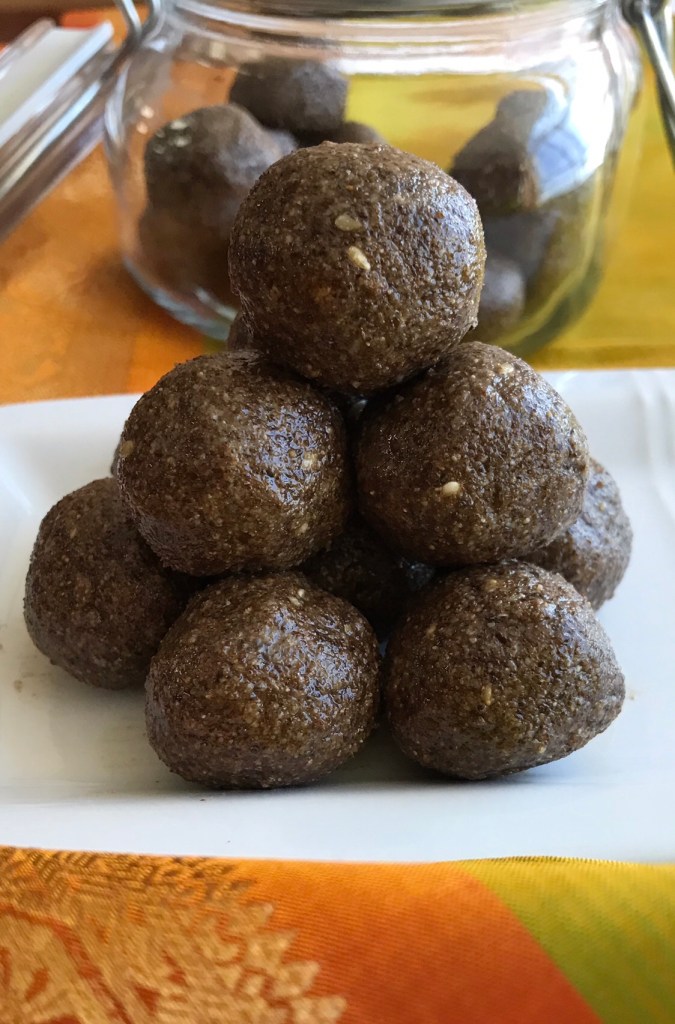
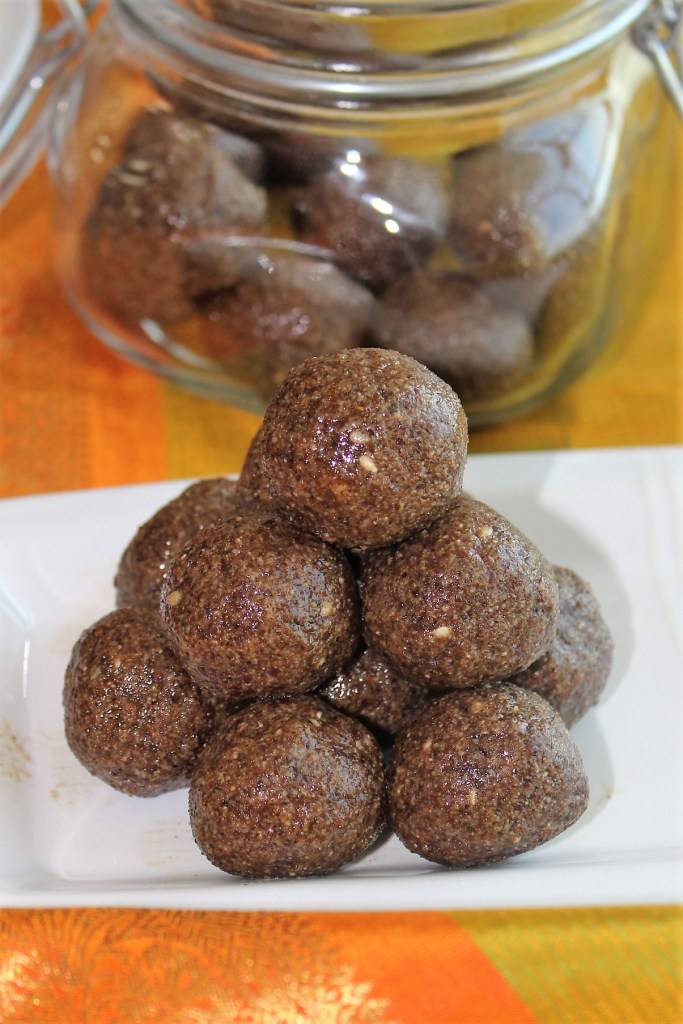
Atlast, I have arrived at the reason for naming the Sweet Ball that I made for Deepavali. The GOOD FAT BLACK BALL has ingredients with Poly unsaturated Fats – Sesame seeds and Flax Seeds – which are Good Fats. White sugar has been replaced with unrefined cane sugar. Very little clarified butter has been used for binding them into urundai. Cardamom powder for flavour and dry ginger powder for digestion.
Benefits of the ingredients
Aalli Vidhai/Flax Seeds
Omega-3 essential fatty acids, “good” fats that have been shown to have heart-healthy effects. Each tablespoon of ground flaxseed contains about 1.8 grams of plant omega-3s. Lignans, which have both plant estrogen and antioxidant qualities. Flaxseed contains 75 to 800 times more lignans than other plant foods. https://www.webmd.com/diet/features/benefits-of-flaxseed#1
Ellu/Sesame Seeds
Not only are sesame seeds an excellent source of copper and a very good source of manganese, but they are also a good source of calcium, magnesium, iron, phosphorus, vitamin B1, zinc, molybdenum, selenium, and dietary fiber. In addition to these important nutrients, sesame seeds contain two unique substances: sesamin and sesamolin. Both of these substances belong to a group of special beneficial fibers called lignans, and have been shown to have a cholesterol-lowering effect in humans, and to prevent high blood pressure and increase vitamin E supplies in animals. Sesamin has also been found to protect the liver from oxidative damage. http://www.whfoods.com/genpage.php?tname=foodspice&dbid=84
It activates the digestive enzymes in our body, thus helps in proper digestion of food. It acts as a detox, as it helps cleanse the liver by flushing out nasty toxins from the body. Jaggery is loaded with antioxidants and minerals like zinc and selenium, which help prevent free-radicals (responsible for early ageing). It helps boost resistance against infections, hence building stronger immunity. www.indiatoday.in/benefits-of-eating-jaggery
This is certainly a guilt free sweet. Please have in moderation.
THE GOOD FAT BLACK BALL
Ingredients (makes 22-25 urundais)
ellu/sesame seeds – 100 gms – 1 cup
aalli vidhai/flax seeds – 100 gms – 1cup
naattu sarkkarai/unrefined cane sugar – 50 gms
nei/clarified butter – 2 tsp
elakkai podi/cardamom powder – 1 tsp
chukka podi/dry ginger powder – 1 tsp
Method of Preparation
Dry roast sesame seeds and flax seeds separately till crispy
2. Cool both and blend well with cane sugar, cardamom and dry ginger powder into a fine powder
3. Transfer into a bowl
4. The oil in both the seeds would make the powder greasy. That is why, very little clarified butter is used to bind
5. Heat clarified butter and pour inside the blended powder
6. Make medium sized balls
7. Store in air tight container. It lasted well for over two weeks.
8. I preferred using black sesame seeds, but white sesame was available at home. Use as per preference.
On a hot summer day, quenching the thirst with colas in different colours and flavours, or go for sugar filled so-called fruit juices may be the choice of sophistication. Whether that’s really a healthy option seems to be incomprehensible for most of us. The shops filled with bottles and television channels clogged with cool drink advertisements are not enough proofs. But the sale of packed juices and hands of citizens of all ages with these cool stuff, stand proof to our degenerating health ambitions.
Why don’t we stop being carried away by false advertisements? Why don’t we monitor our food choices more strictly? The magnetic pull of the beautifully arranged cans/bottles/tins is so hard to resist… that our shelves and refrigerators are storehouses of junk bombs.
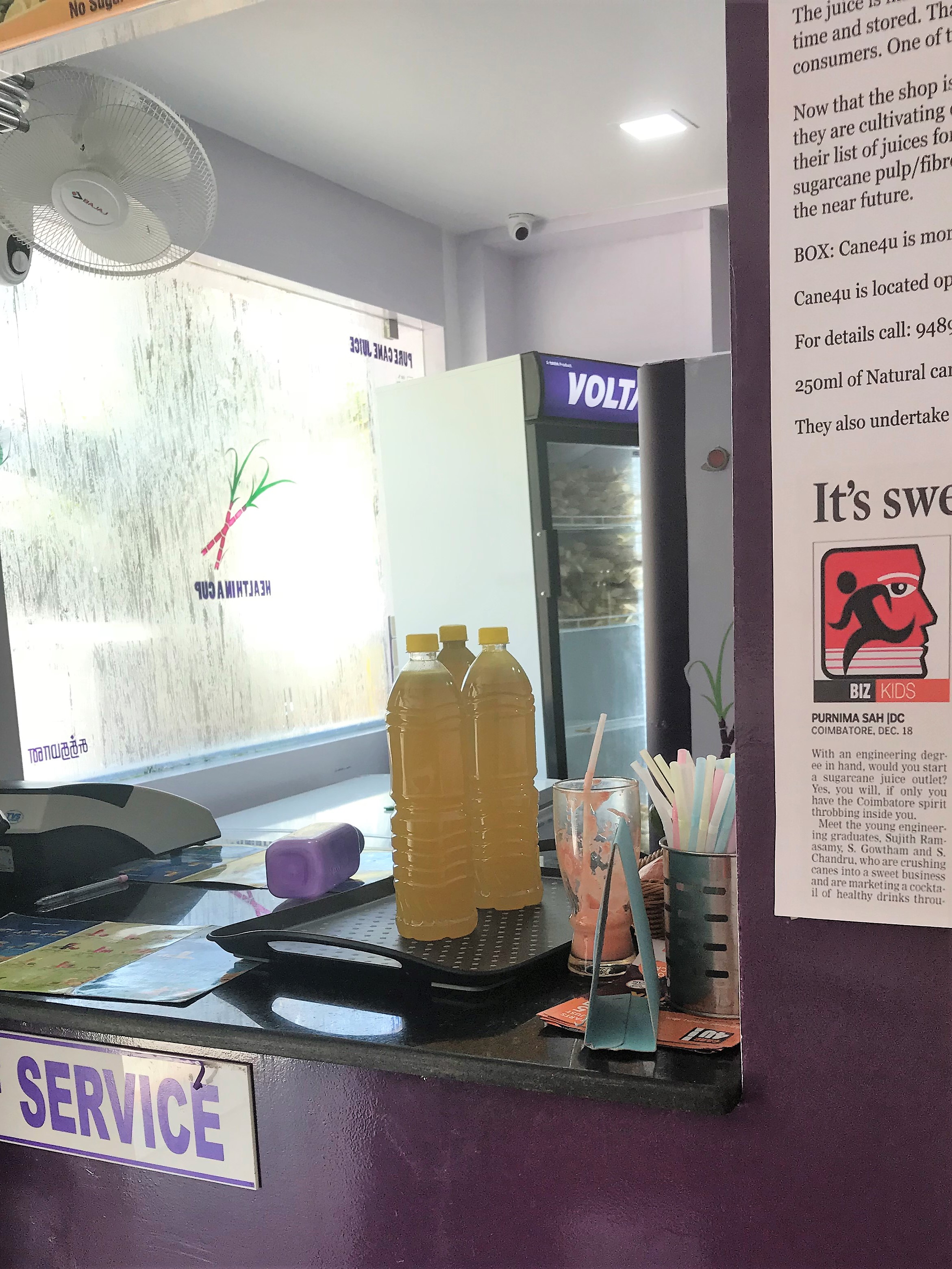
It is no doubt, eating fresh fruits or drinking fresh fruit juices are better options than storing canned juices. So, during my stay in Chennai, when I came across this trendy little outlet called CANE4U with catchy captions on natural sugarcane juice, I couldn’t resist peeping in.
Who wouldn’t like Karumbu Chaaru – Sugarcane Juice…. one of nature’s best juices and a source of world’s favourite sugar??
Come along .. let me take you in.
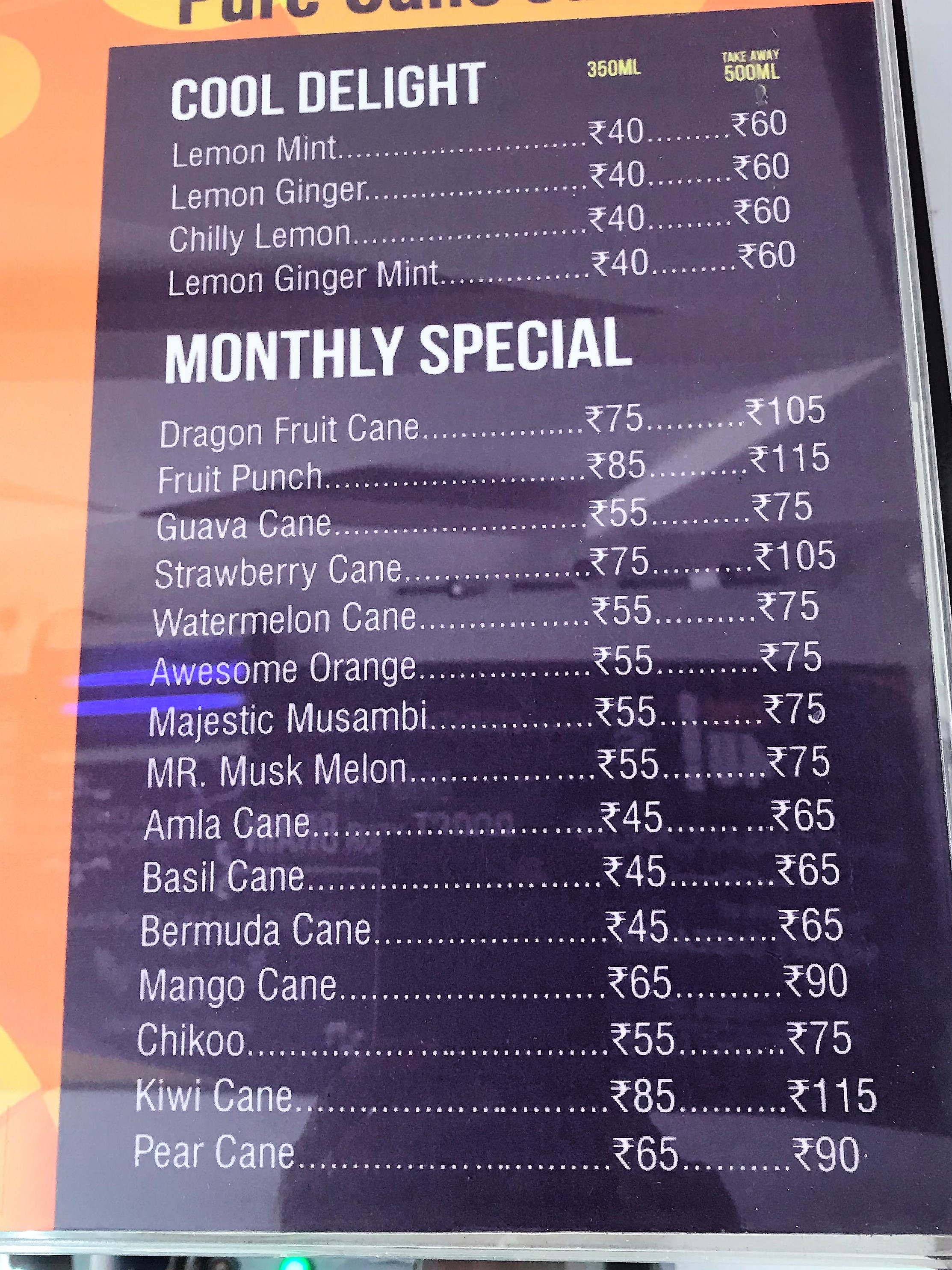
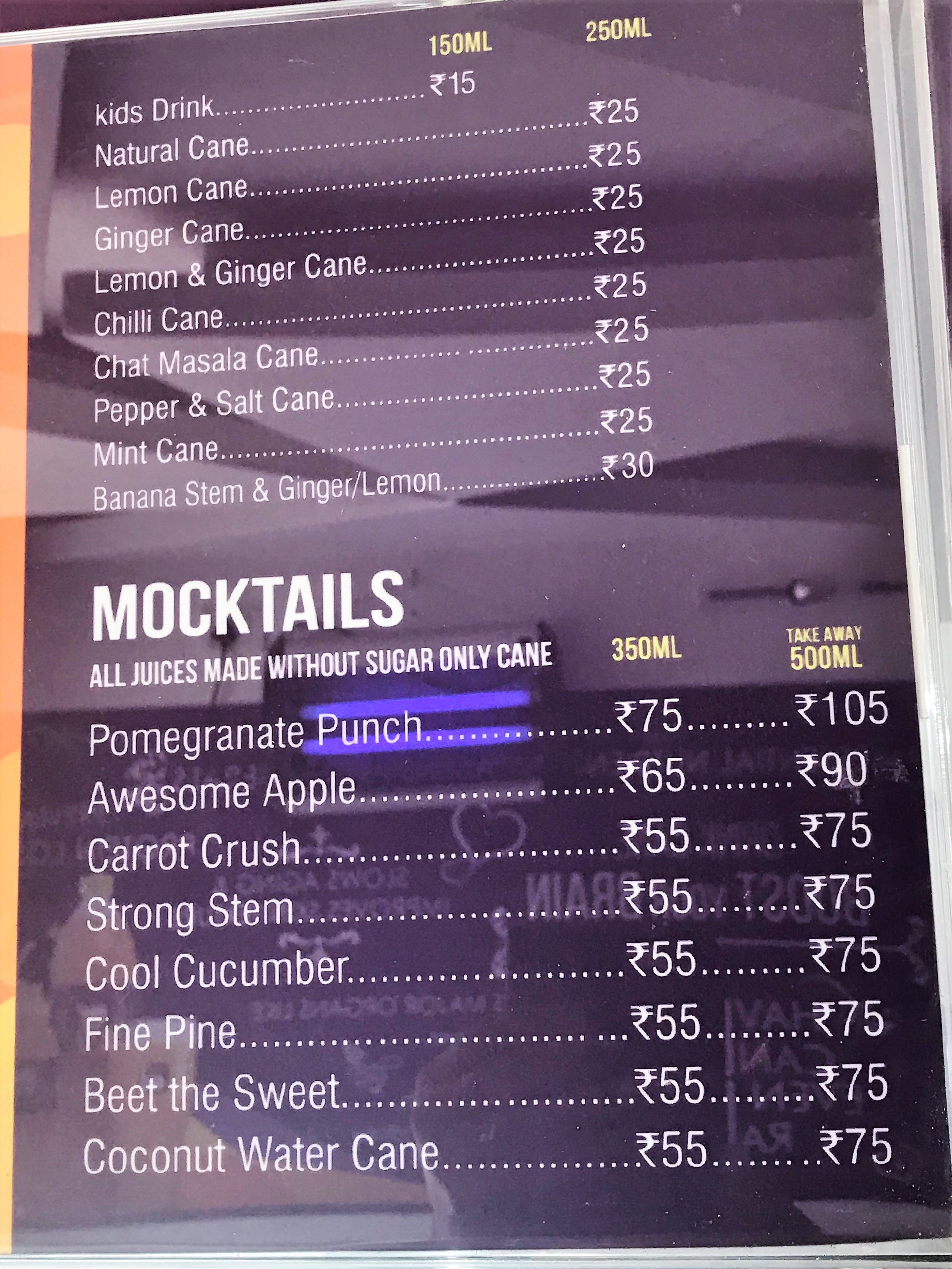
The shop had enough space to seat 12 people. The interiors were filled with information on health benefits of sugarcane. And the list of sugarcane juice combinations with other fresh juices was an innovative option.
various combinations with sugarcane offered
and mocktails
The juice extracting machine is almost as huge as a room .
stored sugarcane is stored in a corner-
Now, to clean, fresh juice- step by step…
fresh cane is sent in-
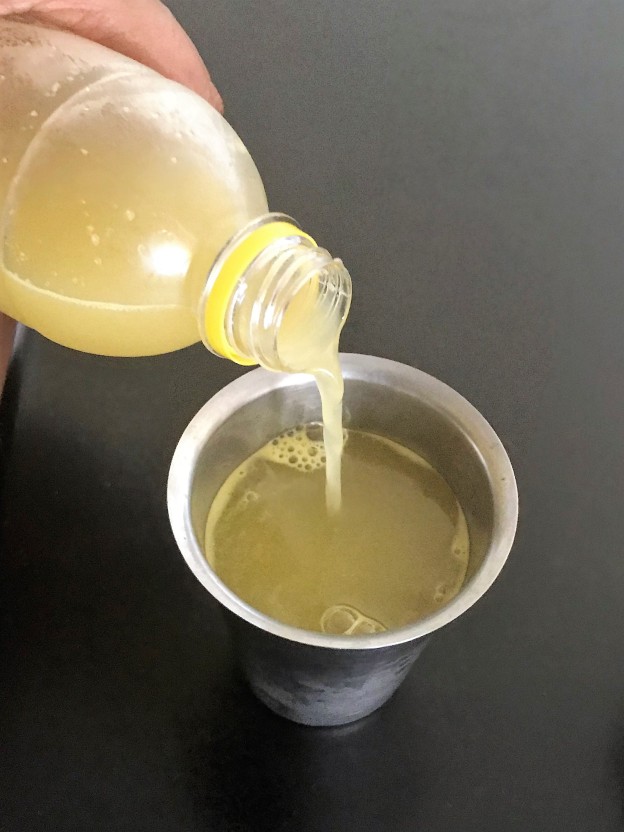
2. squeezed fresh juice is dispensed-
3. and after extraction-
4. ready for take away. You can also take your own container and fill your favourite combination.
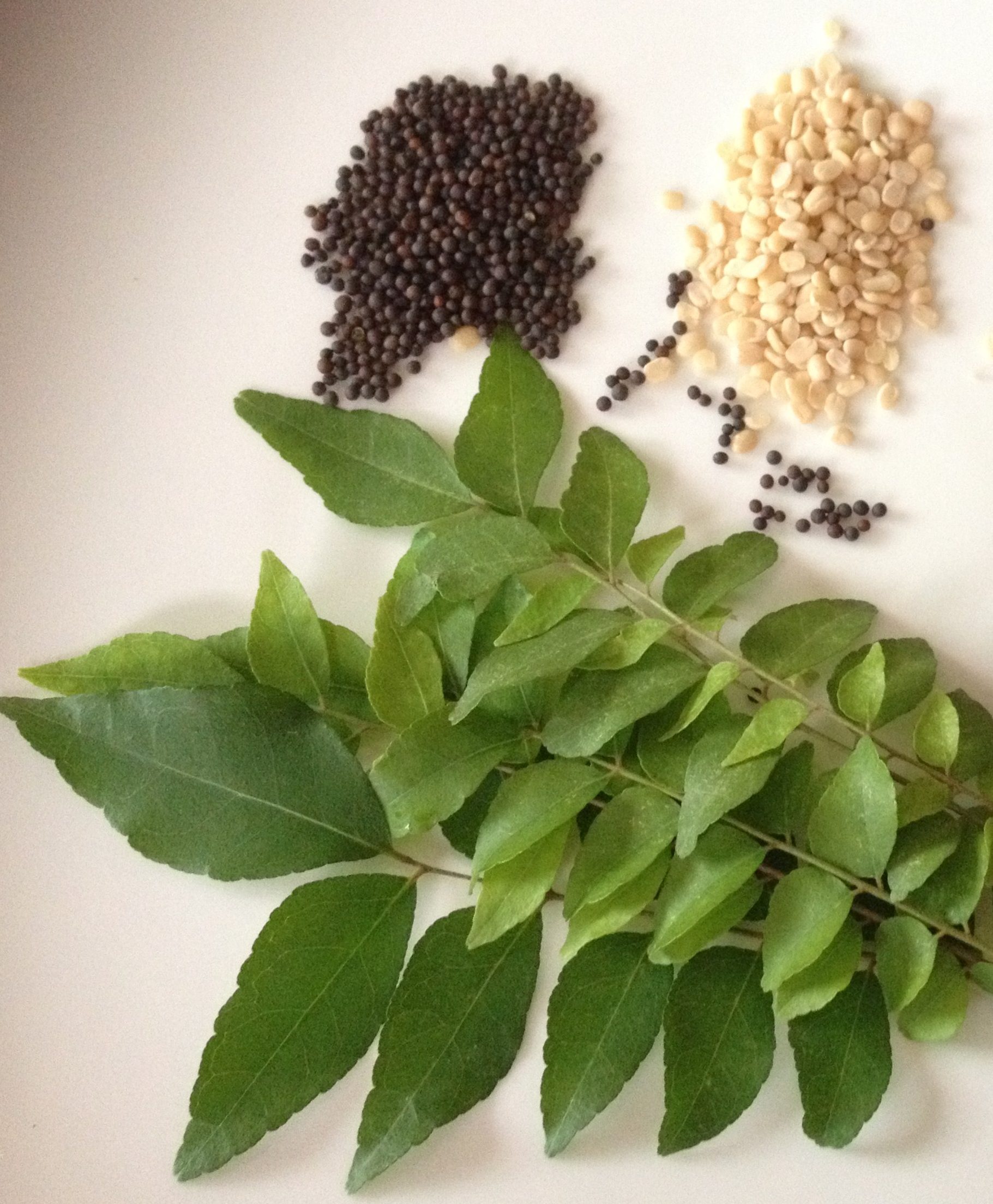
Kariveppilai is the Tamil name for Curry leaves. It roughly translates as neem leaf used in curries – Kari+Veppilai – Veppilai is Neem Leaf. It looks almost like neem leaf, but doesn’t carry the bitterness of neem. The wonderful aroma of the curry leaf when fried, makes it a great agent for seasoning in many dishes. Having known the medicinal effects and health benefits this exceptional tree possesses, the Tamils have been including the curry leaf in varied usages.
They are considered to have anti-diabetic, antioxidant, antimicrobial, anti-inflammatory, anti-carcinogenic, and hepatoprotective (capability to protect the liver from damage) properties. The roots are used for treating body aches and the bark is used for snakebite relief.
The main nutrients found in curry leaves are carbohydrates, energy, fiber, calcium, phosphorous, iron, magnesium, copper, and minerals.[1] It also contains various vitamins like nicotinic acid and vitamin C, vitamin A, vitamin B, vitamin E, antioxidants, plant sterols, amino acids, glycosides, and flavonoids. Also, nearly zero fat (0.1 g per 100 g) is found in them.
Apart from these scientific facts, the main benefits that home makers for generations have been telling their off springs are-
kariveppilai/curry leaf is-
good for eyes
good for digestion
important in maintaining darker hair colour
a natural coolant
When we used to leave aside the fried curry leaf from the chutney, from the sambar, from the kuzhambu/curries on our plates, amma would scold us to chew and finish it off. We would reluctantly do it or sometimes quarrel and throw it away. Then she would secretly add the leaves -powdered- in many dishes… we would unknowingly consume it. Now, as a mother, I am scolding my daughter to wipe the plate clean chewing all extra curry leaves, and am also trying to inculcate the valued curry leaves in many dishes, without my child’s attention. No fault here with the curry leaf, but some genetic disorder of setting aside chewable things from blended dips.
Curry leaves are herbs that are known to have essential nutrients that help in conditions like weight loss, blood pressure, indigestion, anaemia, diabetes, acne, hair loss, et al. These aromatic leaves, also known as kadi patta, have nutrients like copper, calcium, phosphorus, fibre, carbohydrates, energy, magnesium and iron. They also possess many types of vitamins like vitamins A, B, C and E and amino acids beneficial for health.
The specific usage of the curry leaf in preparing Hair Oil is the topic of this post. Curry Leaf Oil is a great coolant for the hot climate of the southern part of India, especially Tamilnadu. It also tackles early greying of hair and aids in hair growth – whether applied as oil or consumed in various dishes.
I have used kariveppilai yennai when young and still see appa (father) use it. We also make fun of his moustache having turned grey sooner than his hair, thanks to the kariveppilai yennai/ curry leaf oil. The aroma of curry leaves slowly cooked in coconut oil for the purpose of black, thick hair, takes me to my childhood.
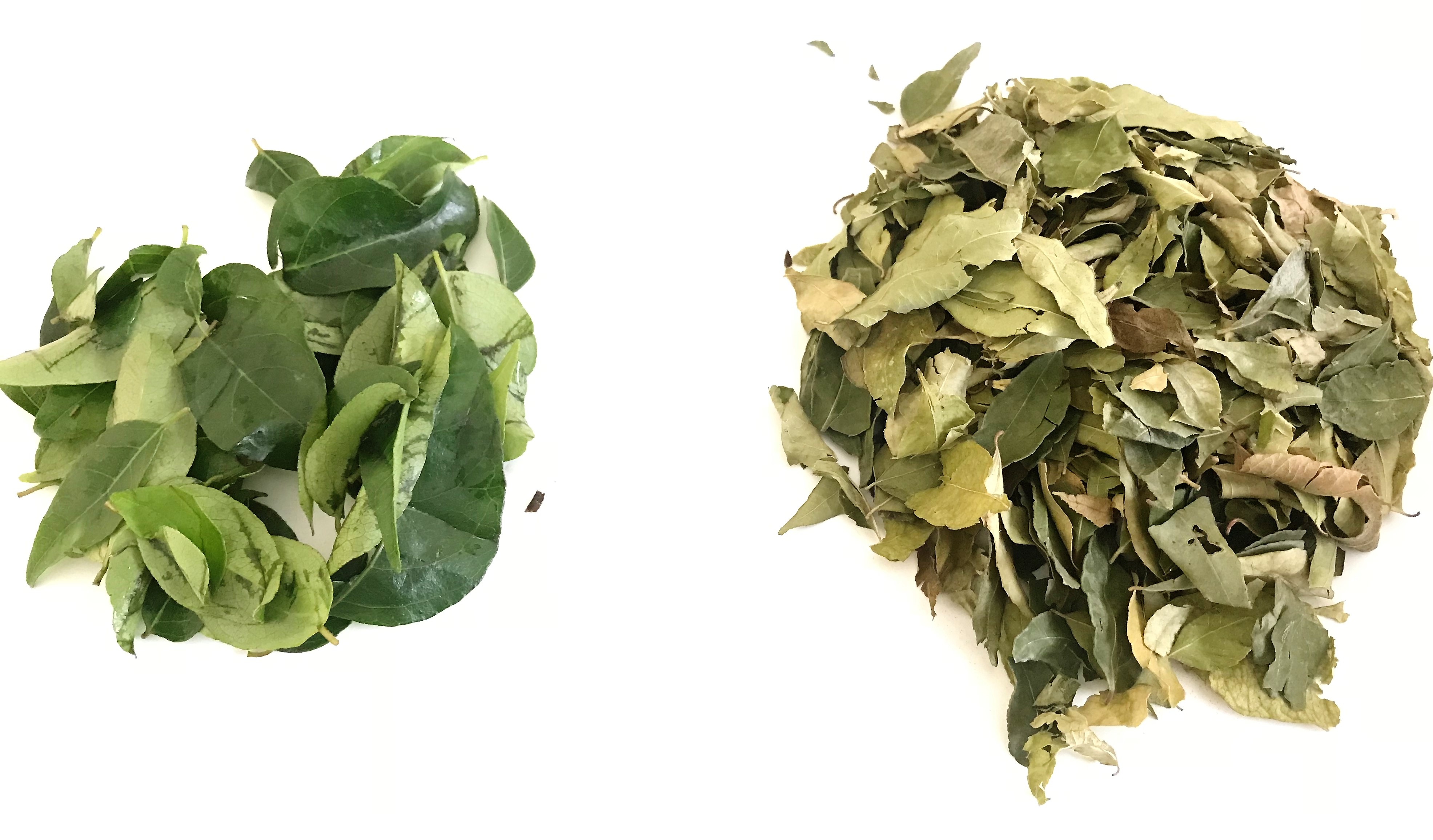
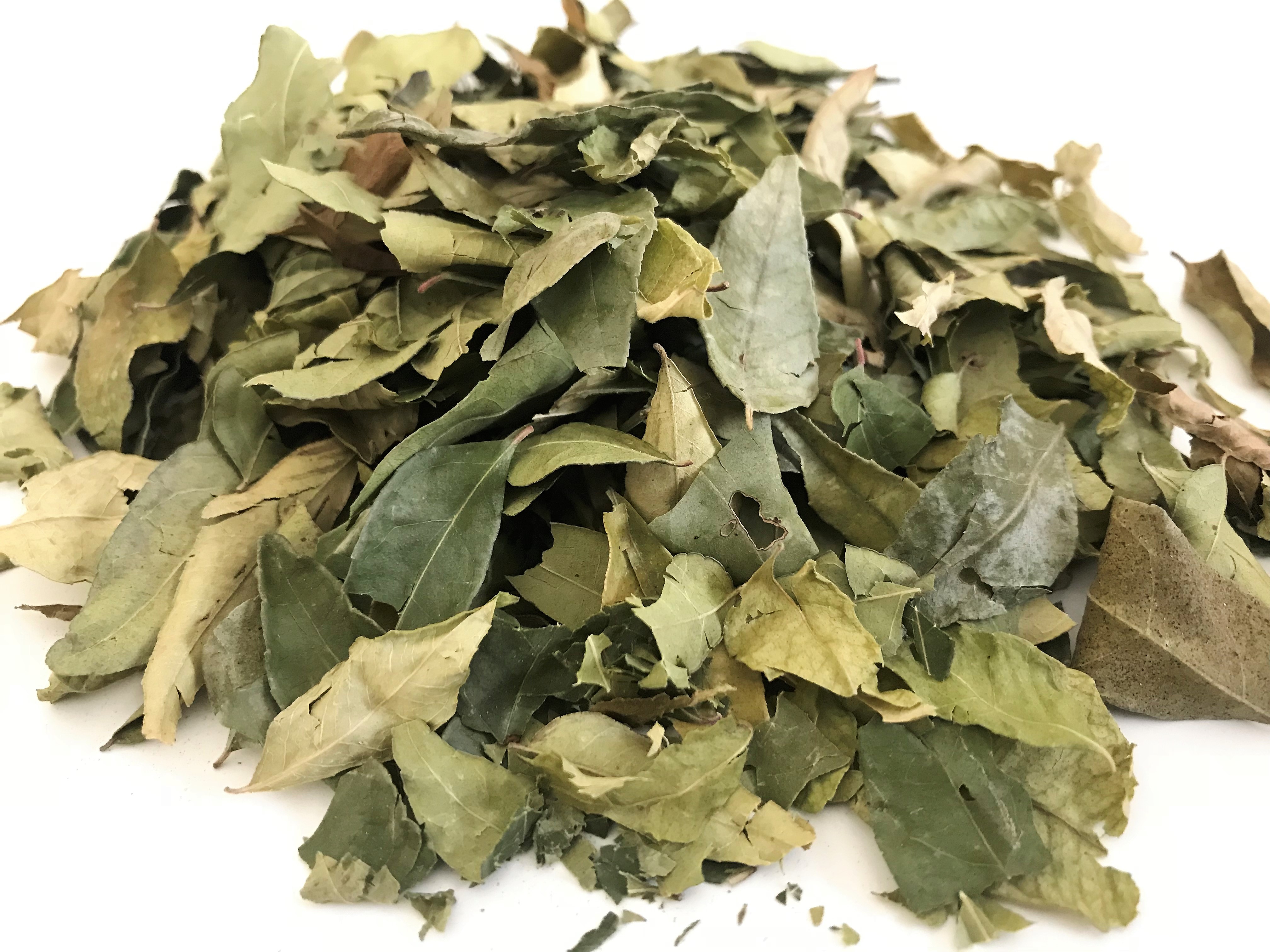
fresh and dried leaves
Original curry leaf oil is made in a more refined/step-by-step process-
Curry leaves are blended with very little water – in those days made into a paste with ammi – roller stone
They are then flattened into thin round cookies – approximately 1 1/2 to 2 inches diameter, on a muslin cloth or plastic sheet
These are sun-dried for days until the ground curry leaf sheets come out of the cloth, completely dried
These dried thins are slow cooked in coconut oil, until the colour and aroma of the curry leaf is completely extracted
This is done when the oil stops to splutter or approximately 30 minutes of slow cooking
Extra curry leaf thins/sheets are stored for next oil preparation
The same is done with marudhani/henna while making henna oil.
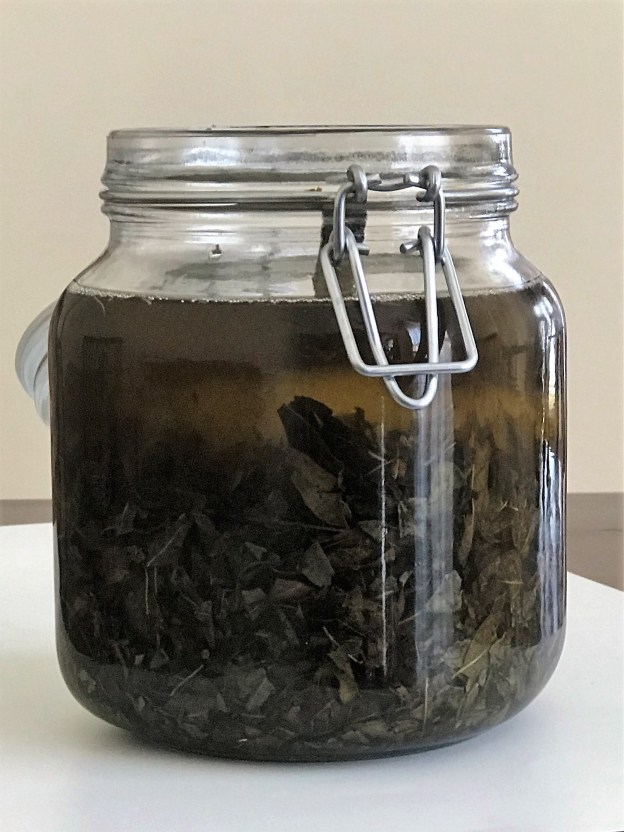
Here, I have not followed the same procedure. I took the short cut method of sun drying kariveppilai directly and slow cooked in oil. There is no compromise in the quality of oil, in comparison to the previous traditional technique – the aroma and colour seems to be the same. While using the curry leaf thins/sheets, they would settle down in the bottom of the bottle and leave a clear residue on top, but here- the dried curry leaves occupy more space in the bottle and yet, the oil on top is a clear residue. Later, when the oil is mixed too much with the leaves, one can filter and use.
Kariveppilaii Yennai/ Hair Oil with Curry Leaves
Ingredients
good quality pure coconut oil – 1 litre
dried curry leaves – appr. 6 cups
Method of Preparation
Sun dried curry leaves
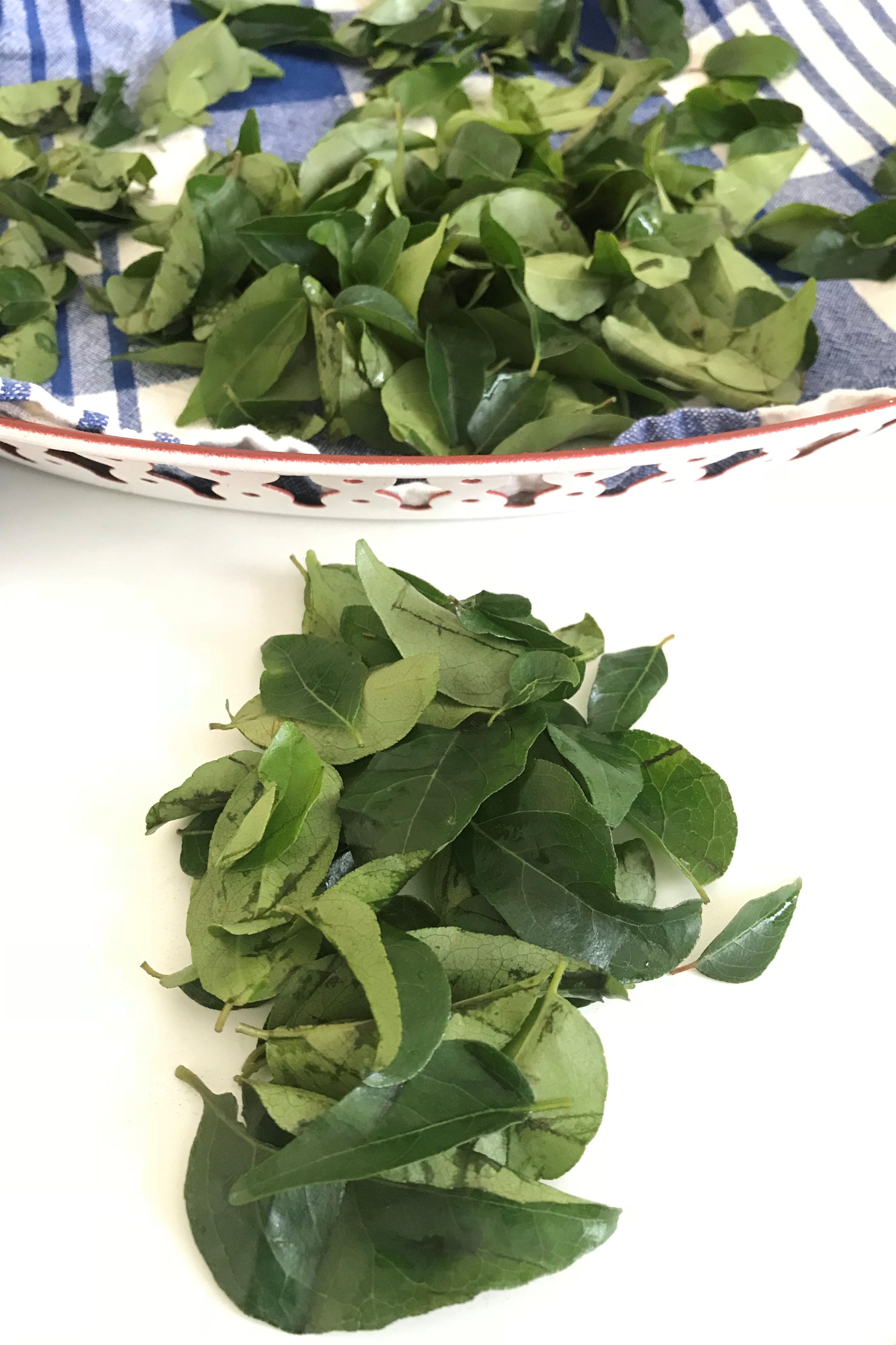
Pluck curry leaves from tree/plant or buy enough from the vendor
De-stem leaves and wash very well
Spread on a clean cloth and pat dry
4. Place the cloth in a sunny area and dry well in the sun – might take few days to completely dry without moisture
5. Once the leaves are dried, they are ready to be used in the oil.
Making the Oil
In a wide pan, pour pure coconut oil – see label for aromatic ingredients, other oils which might have been mixed with coconut oil. We need only 100% coconut oil – preferably cold-pressed. Most branded coconut oils are refined, can’t help.. proceed.
Measure 6 cups dried curry leaves and mix in the oil, before it turns hot. If dried leaves are added after oil is heated up, the leaves would be fried and would give out a burnt smell. Hence, drop the leaves in, while the temperature of oil is normal.
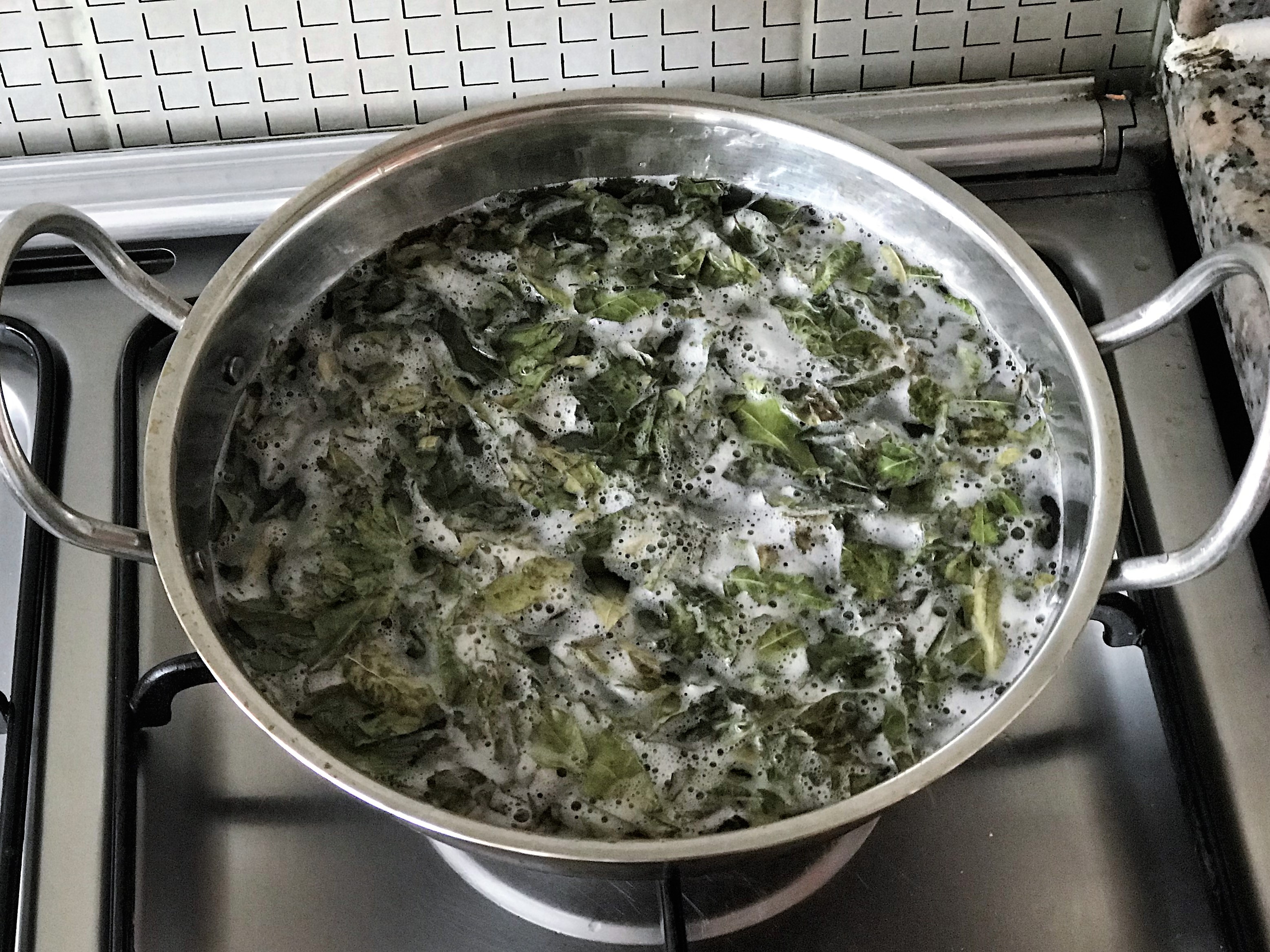
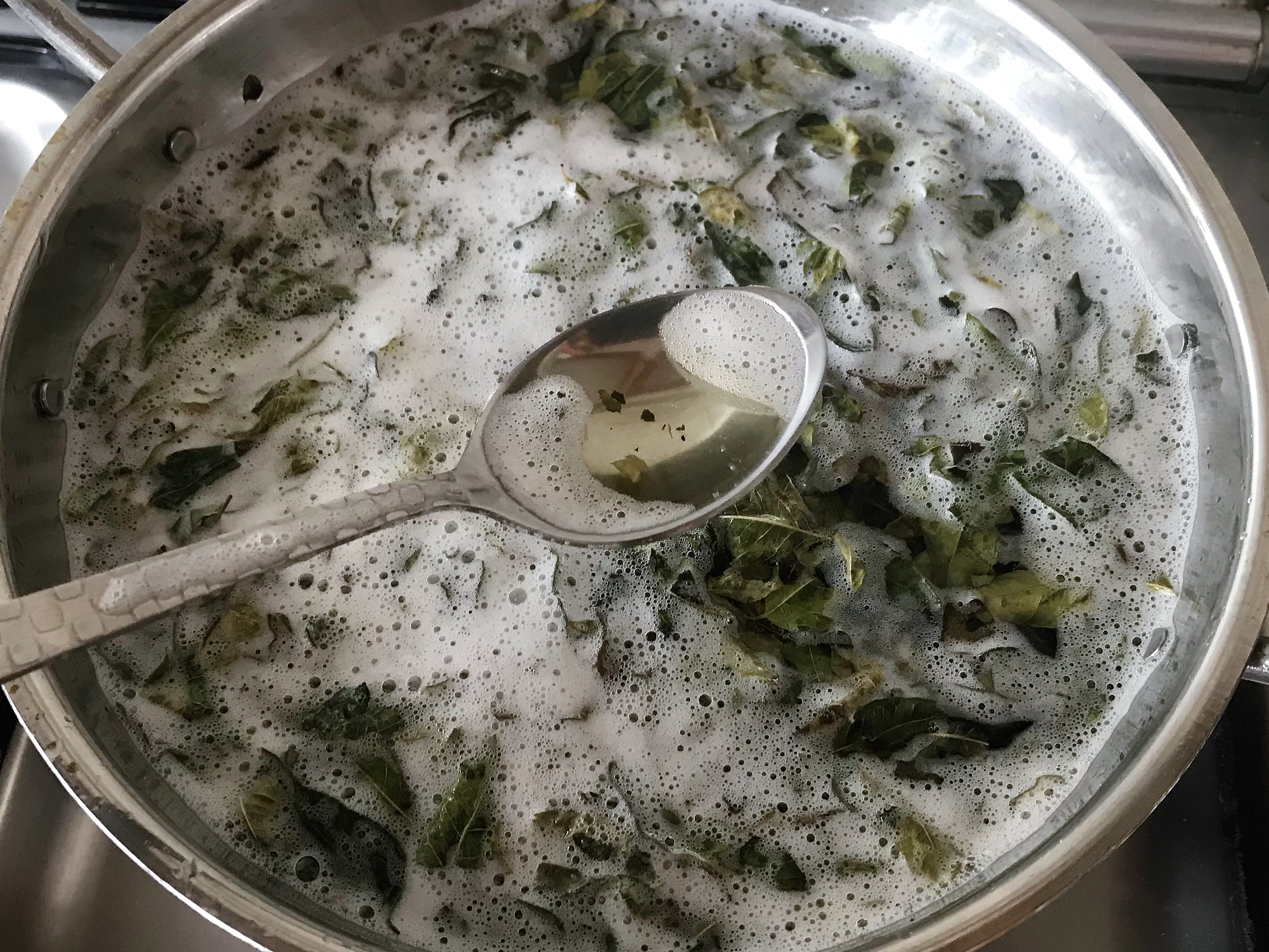
3. Once the oil starts to heat up, simmer the stove and let the leaves cook in oil for about 30 minutes, till the colour of oil starts to darken.
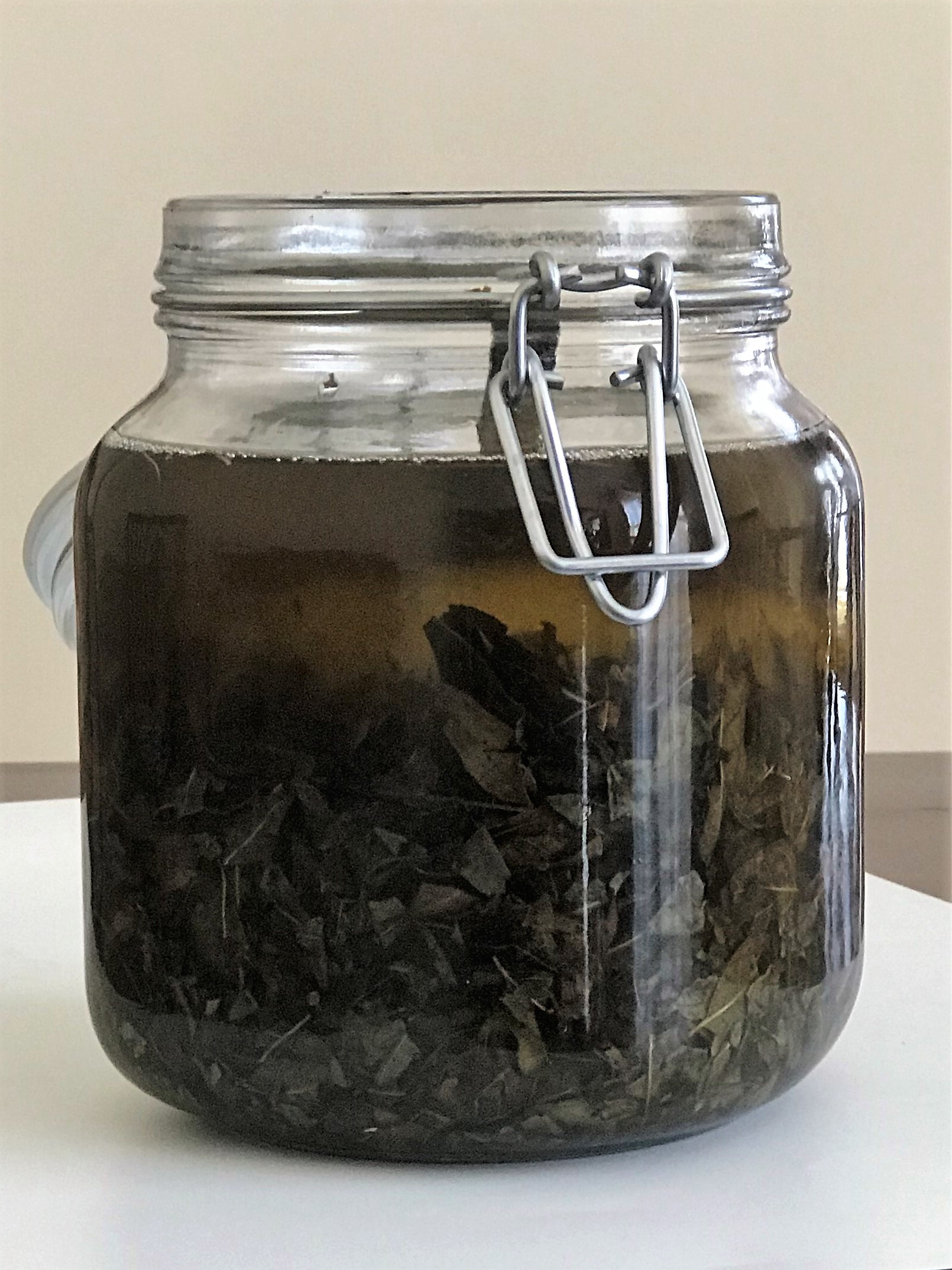
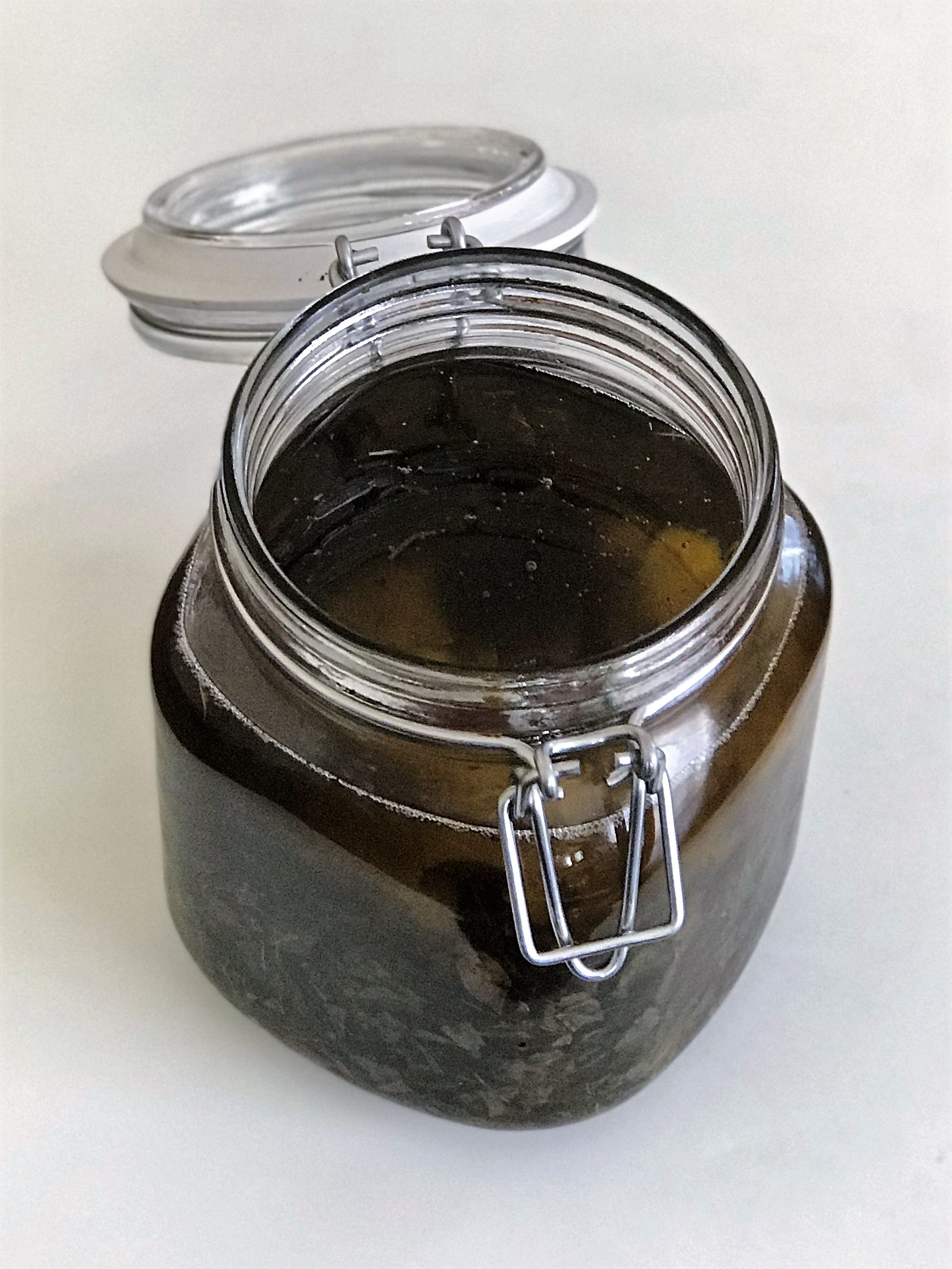
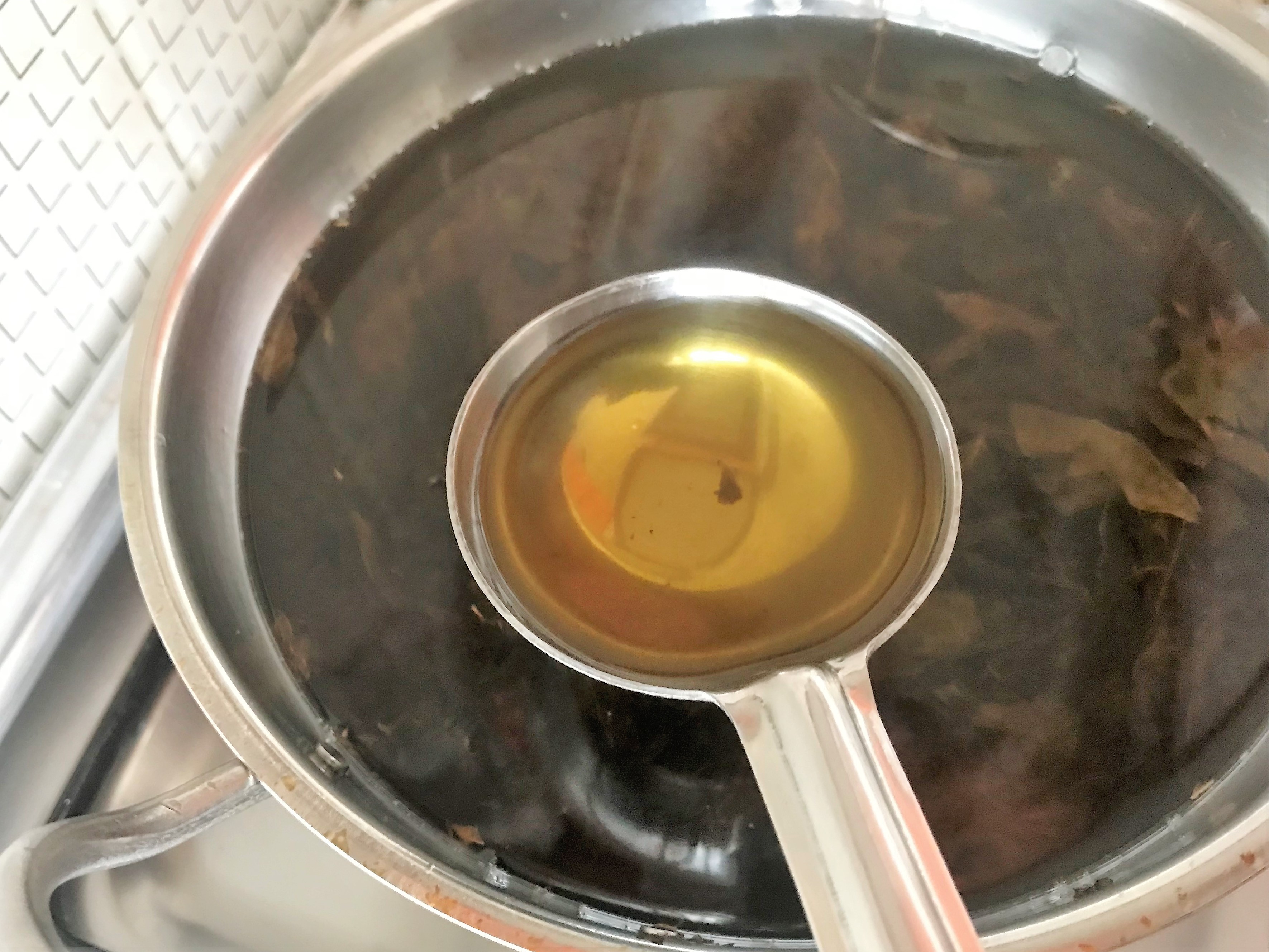
a little later – darker oil
4. Switch off and let the oil cool.
5. Store oil with curry leaves in a bottle and use everyday.
Pudhina Paanagam is a subtle variant to Paanagam – lemon jaggery juice and Pudhina Kulir chaaru – Mint Cooler.
Paanagam is a combination of lemon and jaggery water and is an acidity regulator. Hence, it is a preferred drink during fasts. It soothes the stomach and cools the system.
Pudhina Kulir Chaaru or Mint Cooler is basically extracting the flavor of mint in boiling hot water, not blending in a mixer. The previous recipe has sugar in it.
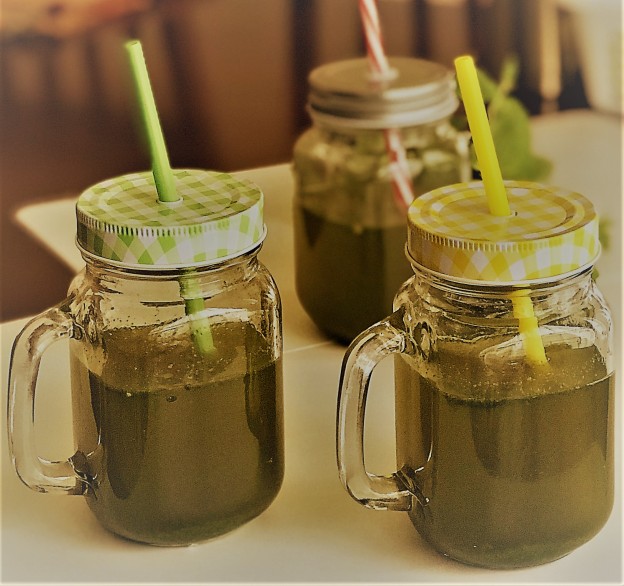
Here, in Pudhina Paanagam, I blended fresh mint leaves in lemon-jaggery juice. This has the soothing effect of lime and jaggery, packed with freshness of blended mint leaves. The colour is pleasingly green and the strong flavour of mint hits your palate to travel in and cool the tummy.
I avoided the usual cardamom in Paanagam as it might clash with the mint flavour. Chukku Podi/Dry ginger powder is added for easy digestion.
Pudhina Paanagam/Fresh Mint-Lemon-Jaggery Coolant
Ingredients (serves approximately three)
juice of 5 lemons (medium sized)
filtered jaggery water – preferred sweetness
fresh mint leaves – destemmed – (1/2 cup for each glass of juice) – appr. 1 1/2 cups
chukku podi/dry ginger powder – 3/4 tsp
additional water – as required
Method of Preparation
Jaggery Syrup
I would recommend making jaggery syrup at home, filter and store for various purposes. This is one way, we might avoid depending upon crystal sugar for immediate usages.
Heat jaggery in water in sim flame until it completely dissolves. Strain and then boil for 5 minutes… it would be neither syrupy nor watery.
Cool and store in fridge.
Paanagam
Mix juice of lemons and mix the jaggery syrup. The quantity of syrup is per one’s sweet preference
Add dry ginger powder
Pudhina Paanagam
Clean and de-stem mint leaves
Wash well and blend together with lemon, jaggery syrup and dry ginger powder
Add enough water to make 3 glasses of juice
Strain and drink. If one prefers without straining , that’s perfect too.
Caramel seems to be omnipresent…. be it chocolates, ice creams, milk shakes, macchiatos, puddings, cappuccinos, cakes, frostings and the list is endless. If not a weight watcher, I am certainly a health watcher. When craving (especially to indulge in sweets) takes a huge leap, I try to substitute with my favourite unrefined forms of sugar. My immediate choice is palm or sugarcane jaggery which involves dissolving and filtering from scratch. The next in line to make Urundai/Sweet Balls, I prefer raw unrefined palm or cane sugar for direct usage.
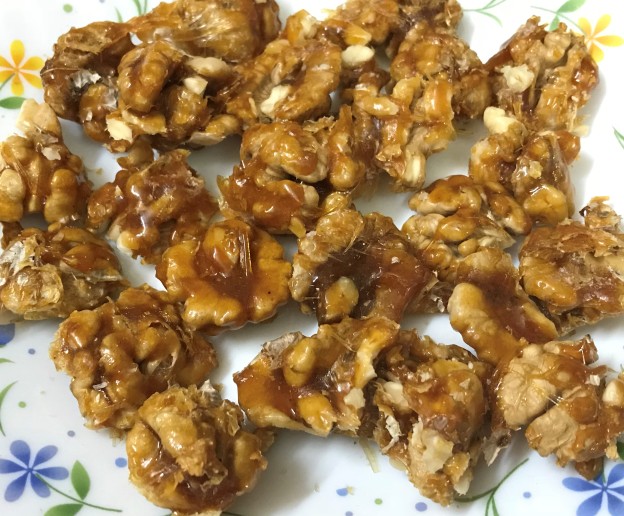
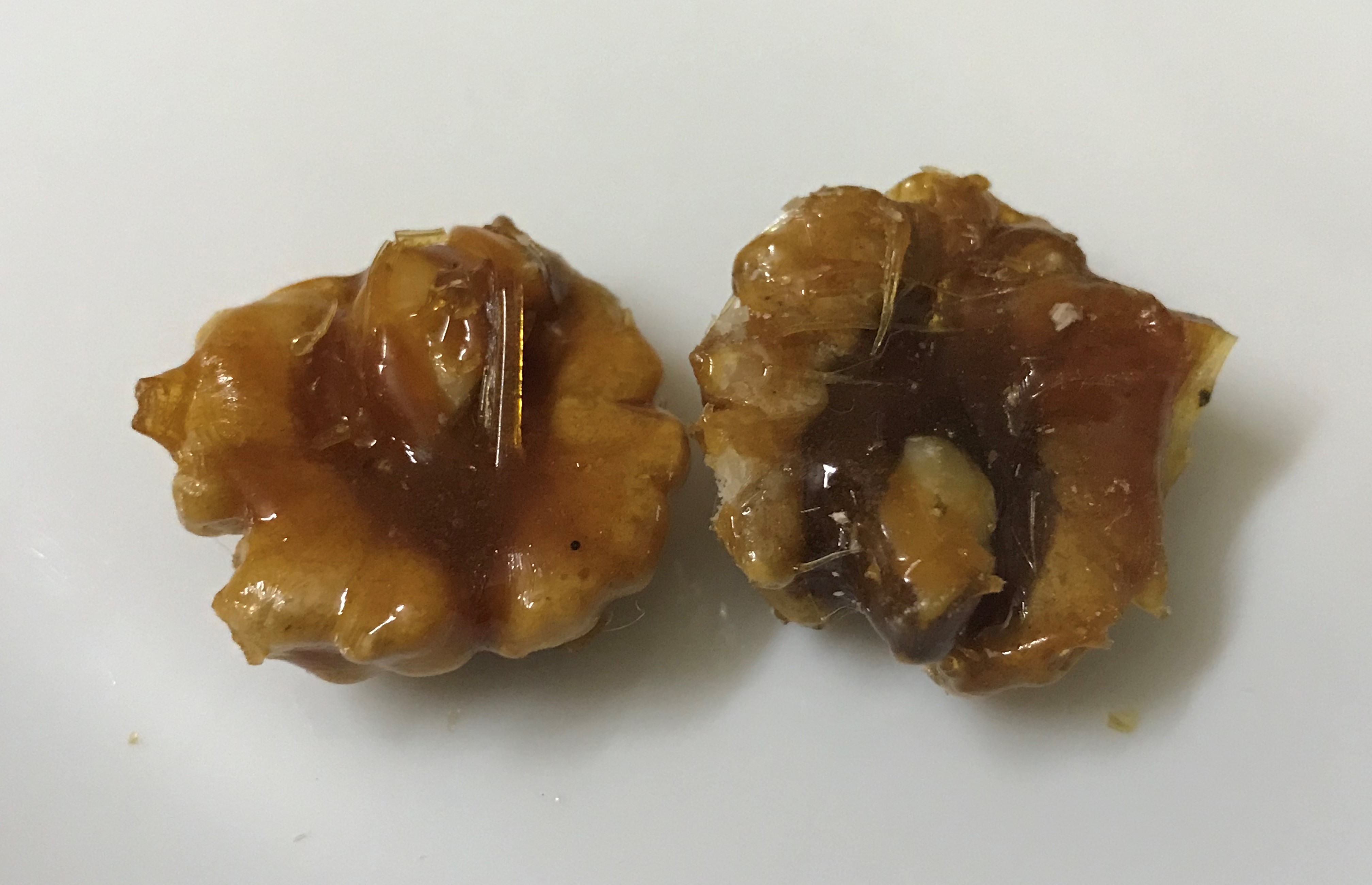
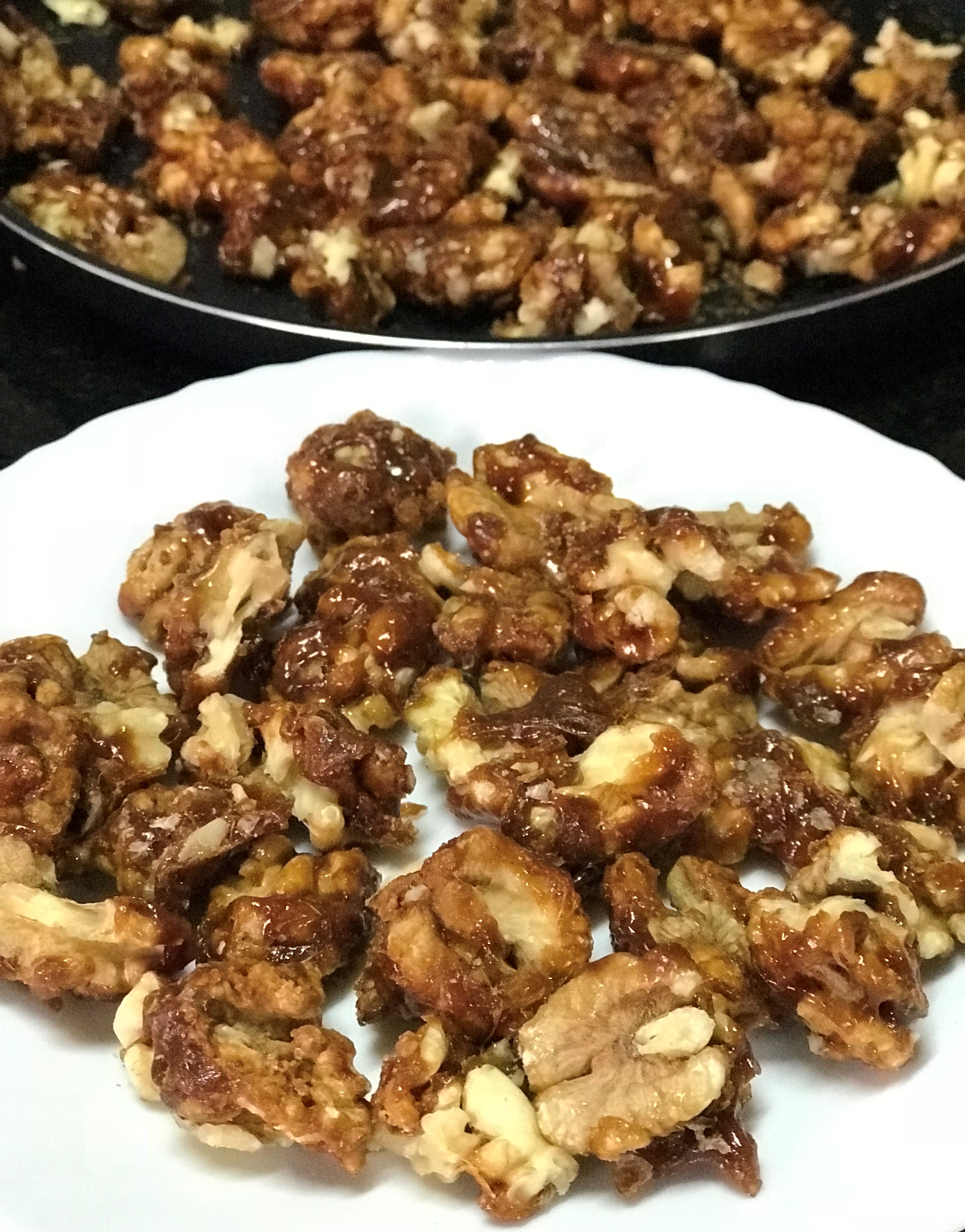
When we went to dine in this beautiful restaurant, the dessert served was vanilla ice cream with caramelized/candied walnuts. The hot, gooey, a touch of bittery sweetness in the caramel that coated crispy walnuts was truly awesome. After a while when the caramel coat hardened a bit, it was a wonderful crispy cracker. Though I relished the taste of it, the guilt of having something with white sugar hit me hard, as usual.
Hence came this recipe. I substituted jaggery with sugar. The kadalai mittai- peanut crackers, ellu mittai- sesame crackers, pori urundai- puffed rice crackers…. all native sweets of Tamilnadu, made with jaggery syrup caramelized to perfection – for the crunchy bite came to my mind. When we could make caramel popcorn with jaggery syrup, why not caramel walnuts? Yes we can. There is no butter or clarified butter to add extra calories.
Candied Walnuts (with jaggery syrup)
coated well
Ingredients
walnuts – 2 cups
vellam/jaggery – 1 cup grated
water – 1/2 cup
elakkai podi/cardamom powder – 1 tsp
chukka podi/dry ginger powder – 1 tsp
Method of Preparation
Dry roast walnuts until crisp –
Preheat oven at 350°F. Place walnuts on butter paper/cookie sheet.
Bake for appr. 10 minutes- couple of minutes more or less . Do keep checking frequently.
2. to caramelize jaggery
On a stove, dissolve 1 cup jaggery in 1/2 cup water
After jaggery has dissolved completely, strain for impurities
Take a hard bottomed chatti/pan, pour the filtered jaggery water
Add cardamom powder and dry ginger powder- cardamom for flavour and dry ginger for quick digestion
Let it boil until syrup consistency is reached
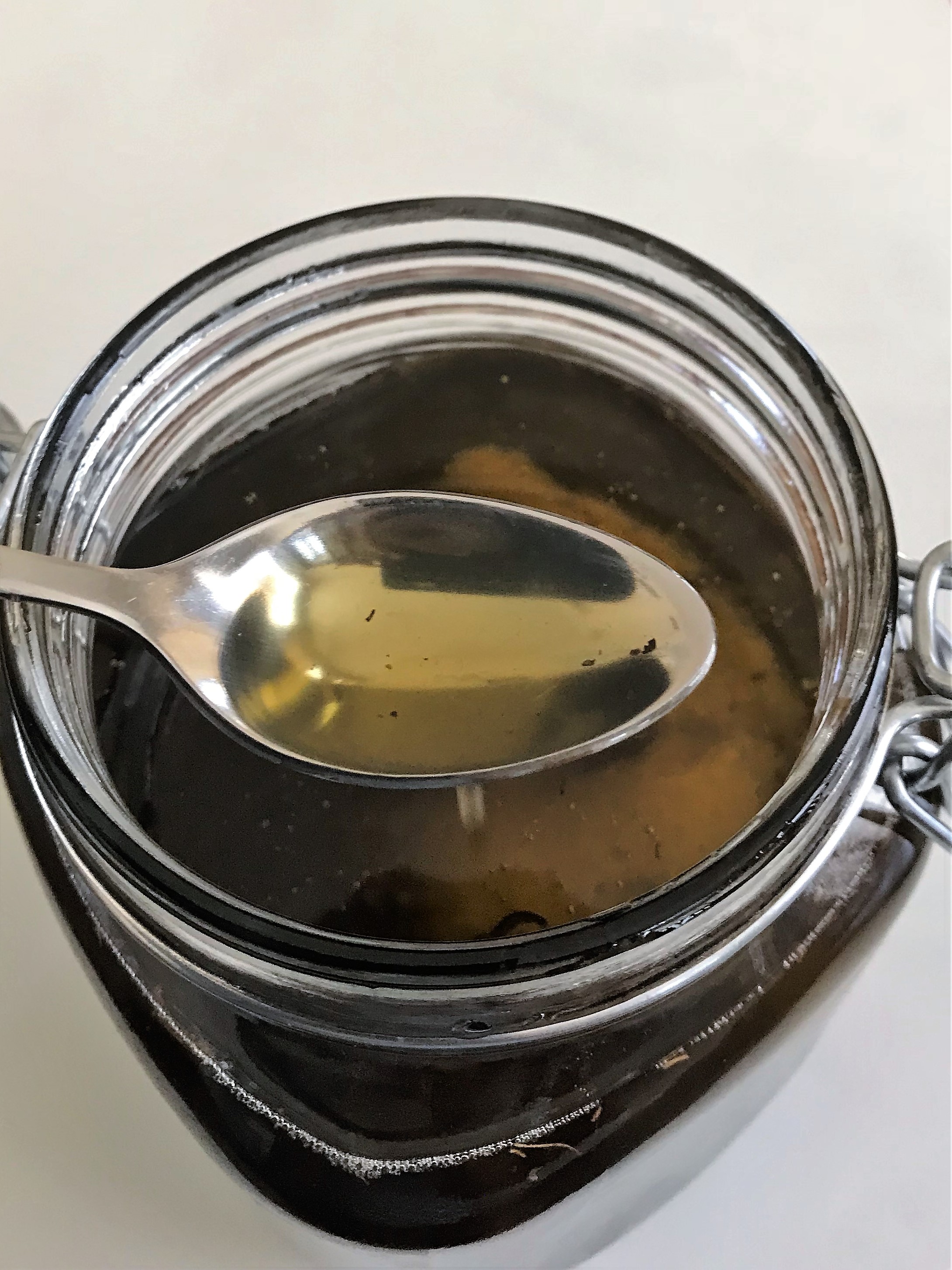
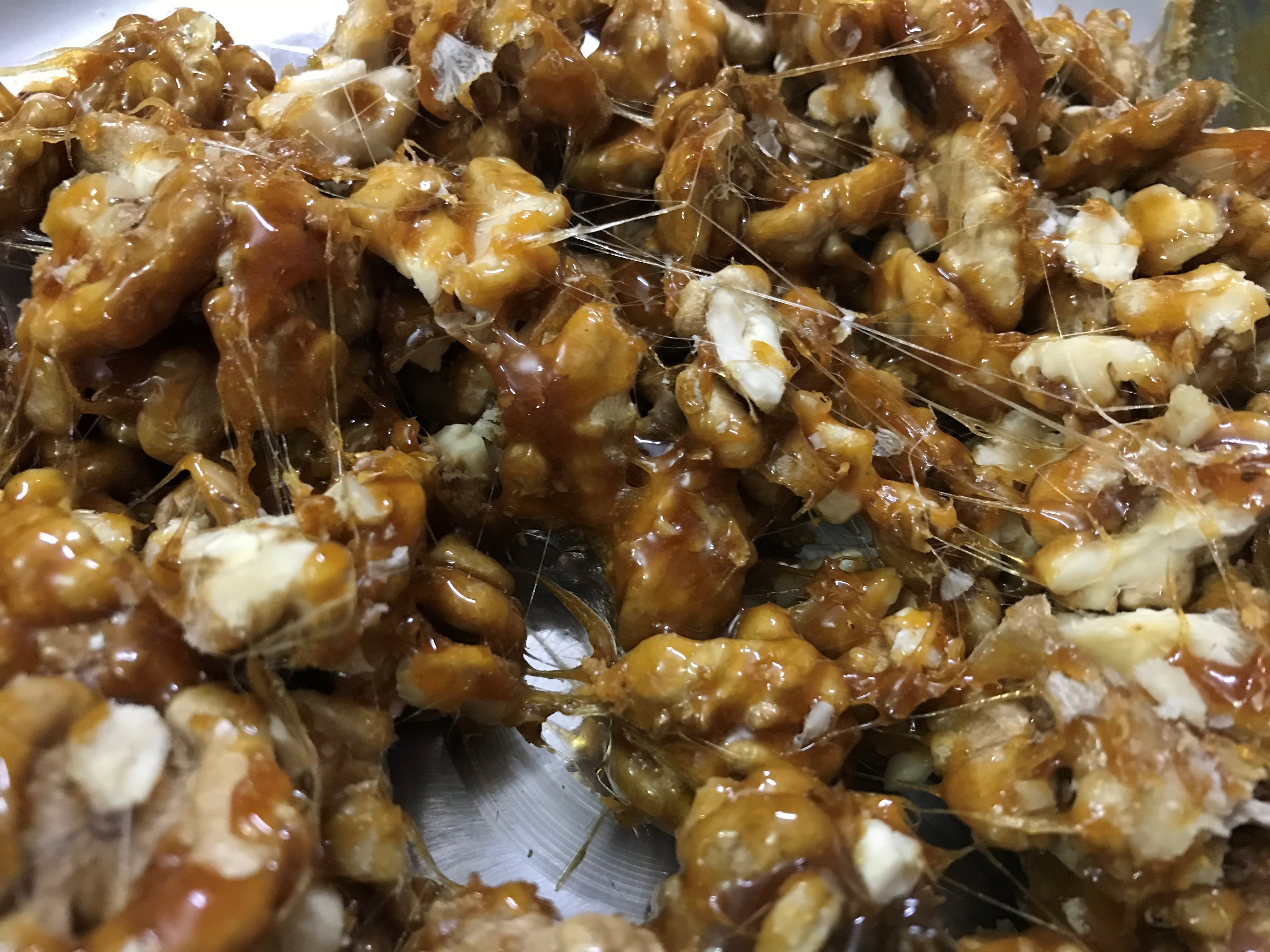
Once the liquid becomes syrupy, simmer the stove and wait for the required three string consistency or hard ball stage.
3. Hard Ball stage in syrup
Have a small bowl of cold water
Drop a little syrup into water. If should form a hard ball. If it is a soft ball, the syrup needs a bit more time.
Firstly, my sincere regrets and apologies for having disappeared for quite a long time.
When other priorities push your zeal to the backseat, the zeal to perform has to wait. I suppose that’s what happened with me. When life suddenly showered upon a new ‘Bucket List’ of various ‘Family Packages’, the writer in me had to wait for a while. But the inquisitive learner in me never stopped working.
A self proclaimed ‘hard core optimist’ that I am, I’ve come back after this break, with wonderful experiences of peeping into Grandma’s kitchen once more, ofcourse which is presently Amma’s kitchen… the speciality being the presence of the nonagenarian aachi (grandmother). I was lucky enough to play the role of the little grand daughter again to my grandmother, getting loads of life tips, family stories and sharing non-stop giggles. Interestingly, I seem to have grown younger with the help of the time machine called aachi.
Sometimes, God showers lifetime experiences that one would seldom expect.
This break showered me with an experience of sharing the same roof with young at heart oldies set apart by three decades. My grandmother who is 90; my father in the 70s club; and my mother – probably one of the most patient and pragmatic ladies, in her sixties…. taking care of everyone. Being spectators to the daily routines of the three were me and my daughter of 11.
Now… I think you would understand my over whelmed joy to just observe and immerse myself in the role of a spectator…. and daily ‘Walk the Talk’ with these interesting personalities.
More than a food enthusiast, I have become a life style enthusiast with age. These special months have enlightened me to accept things in life, and let go many worries that we dump our soul sacks with.
Wouldn’t these elders from 60-90 years have issues related to food, health, fitness, relationships and loneliness? Tackling all these, along with the inability to do things they could do a decade ago…. is truly a catalyst to many agonies. But the time their bodies have taken to age has provided their minds and hearts with the great art of graciously accepting their own old age and its limitations.
One of the many lessons I learnt was to focus on enthusiastic diversions, that would provide the fervour to tackle the fast pace of life, as well as life’s various complications that never cease to diminish with age and with growing children. These elders seemed to have their own interests they were engaged and occupied, throughout the day.
Am I still a Blogger or an amateur Philosopher??? No, No, Not yet. When I analyse in isolation, all through the journey of ‘dosaikal’, I had aimed for a deep rooted cultural transfer from my previous generations to my next. The precious months those passed by, have given me a sense of satisfaction and great joy of having provided some of life’s beautiful lessons to my daughter. Especially, I was witness to the transfer of unconditional Love and Passion for Life from a 90 year old great grandmother to a 11 year old great grand daughter in the most beautiful manner ever possible.
Incidentally, my previous post has also been one inspired by the energetic old lady. This might seem like a repetition post … but the passion and zeal of life that I observed in her tied me up to sit back, relax and relish those special moments… inhaling every micro second of it.
The 90 year old seemed the most energetic among the three. Though Amma (mother), who is the care taker of the household, is the most active, beyond her physical problems, Aachi (grandmother) astonished me with her briskness and memory. This is what made me explore more on the life styles of our elders.
I started thinking about healthy life style that is emphasised by authors, dieticians, diabetologists, food researchers and amateur foodies like me too. Now, what makes our previous generation a healthier community than us. And is that the real truth that they are a healthier lot than us? We might be a medically developed world… but what makes us fall prey to simple and complex diseases that immobilise us from performing our routine chores? With so much knowledge available on various platforms, what makes us scroll for more and more ideas on healthy life style? Why haven’t we been able to find a path… stop the search and proceed?
Have we ignored the wealth of knowledge that our own elders provide, live and exhibit every day…as we spend so much time searching the net for remedies. We have converted our beautiful homes into mechanical dwelling houses .. where machines and gadgets live for more hours than our human hearts. We are driven by advertisements -provided by Retail companies and Spiritual Gurus alike.
Going back to traditional values, observing and absorbing what our previous generations ate, actively did and very actively avoided might provide a satisfactory result. Be mindful, we are intelligent enough to separate those unwanted logics too from the lives and beliefs of our elders. But most importantly, those life style markers that might pull us back from entering into Diabetic/Hyper tension Platforms… leave aside Alzheimer and Amnesia…. could be identified from their life style.
Why I repeatedly go back to my grandmother is for her memory to narrate stories and name members of the unbelievably huge extended family that she hailed from. At ninety, to squat and draw ‘maakkolam’- the intricate drawings on entrances with rice flour paste and chopping vegetables with ease is a sight of astonishment. This is not only a physical ability… but the mental vigor to keep working, help and share the burden of the daughter-in-law. There is an inbuilt mechanism of stress busting, by chatting and diverting her mind into many other simple daily chores… and the remarkable fact is that… this stress busting technique comes unknowingly and is triggered unconsciously… no therapists to guide.
So, the simple moral I learnt is to observe our previous generations, inhale the best techniques that make them live a life with lesser ailments, or live a life that makes them feel there were lesser ailments or no great ailmemnts at all. It is a mind technique that came genetically, that we fail to inherit because of the so-called advancement in science and life style.
After this extensive food for thought, its time for real food for the tummy. With the same passion of zeal, I believe to have inherited from my grandma, I started exploring a few spots in Chennai and here are a few delicacies that I experimented in my kitchen…
Walnut Crackers
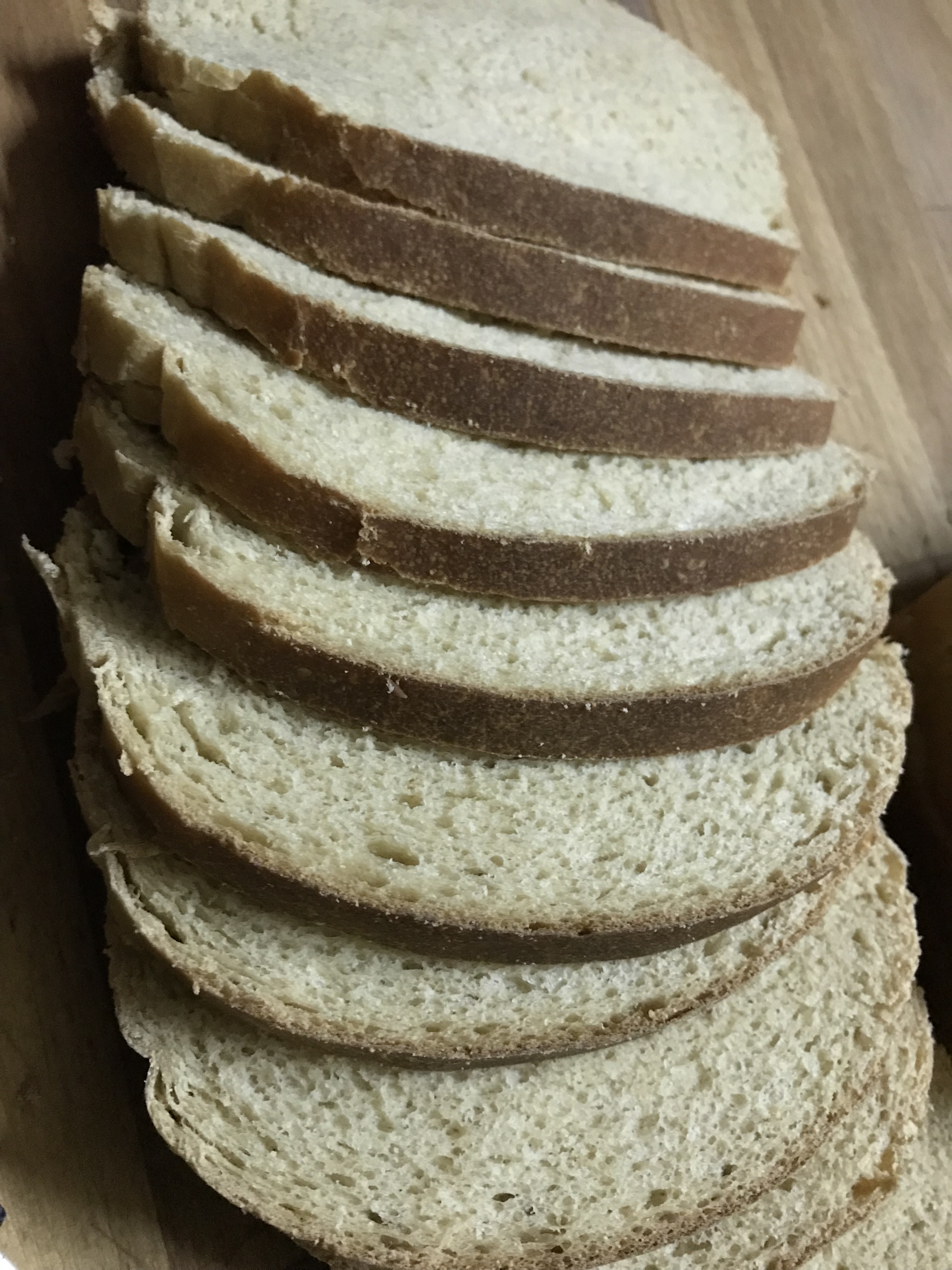
Amazingly perfect bread
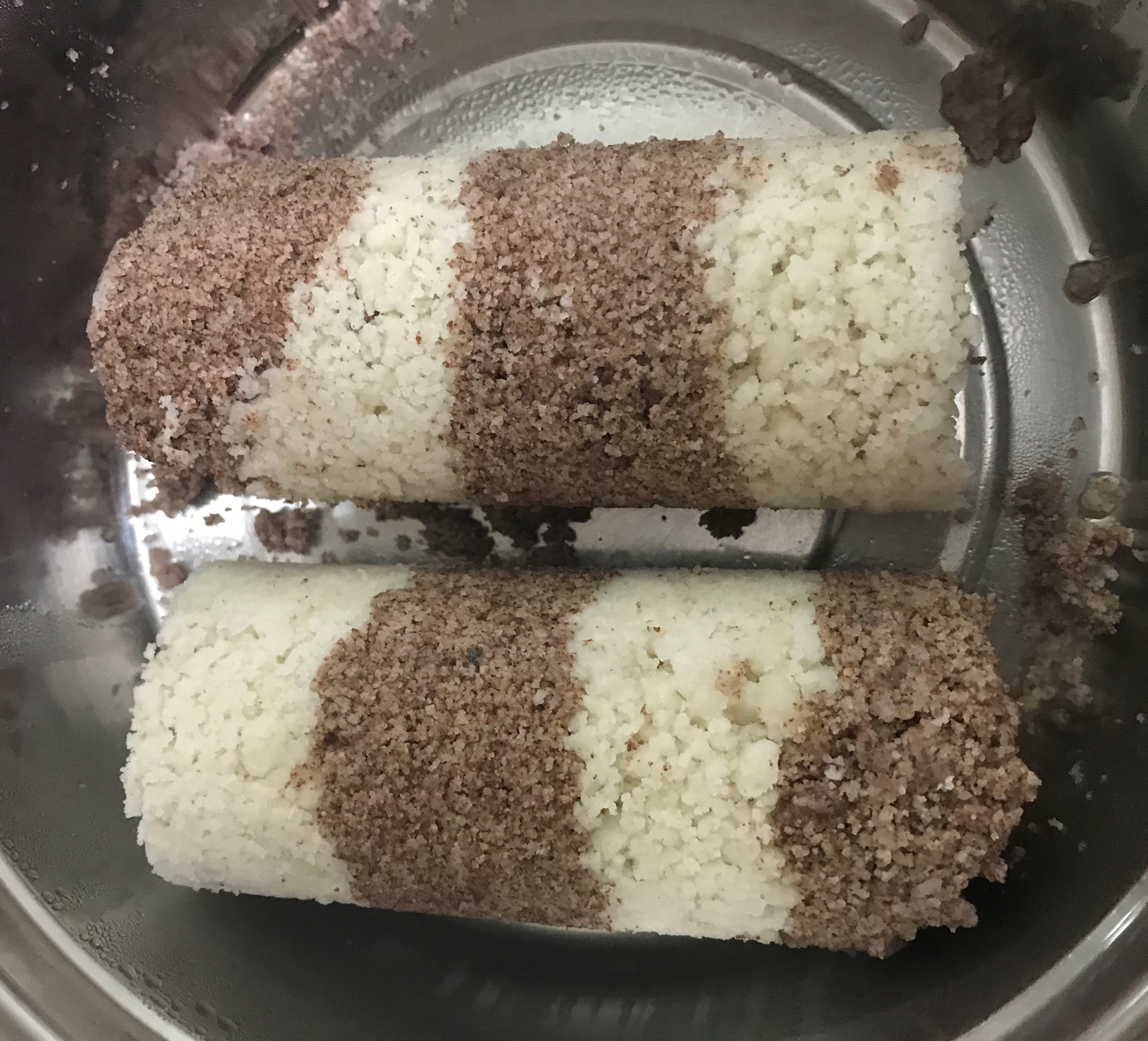
Puttu
100% whole wheat Buns
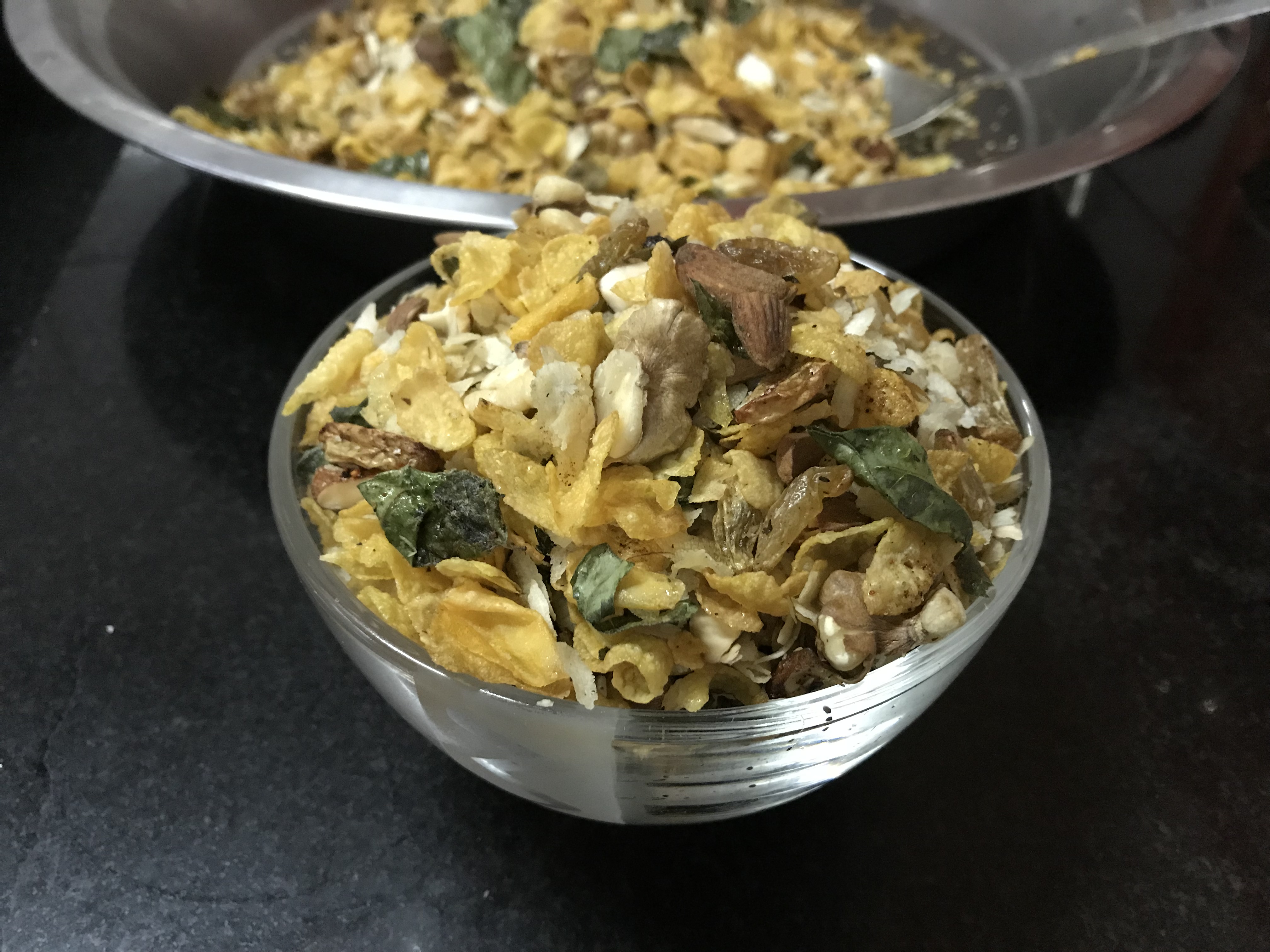
Healthy roasted mixture
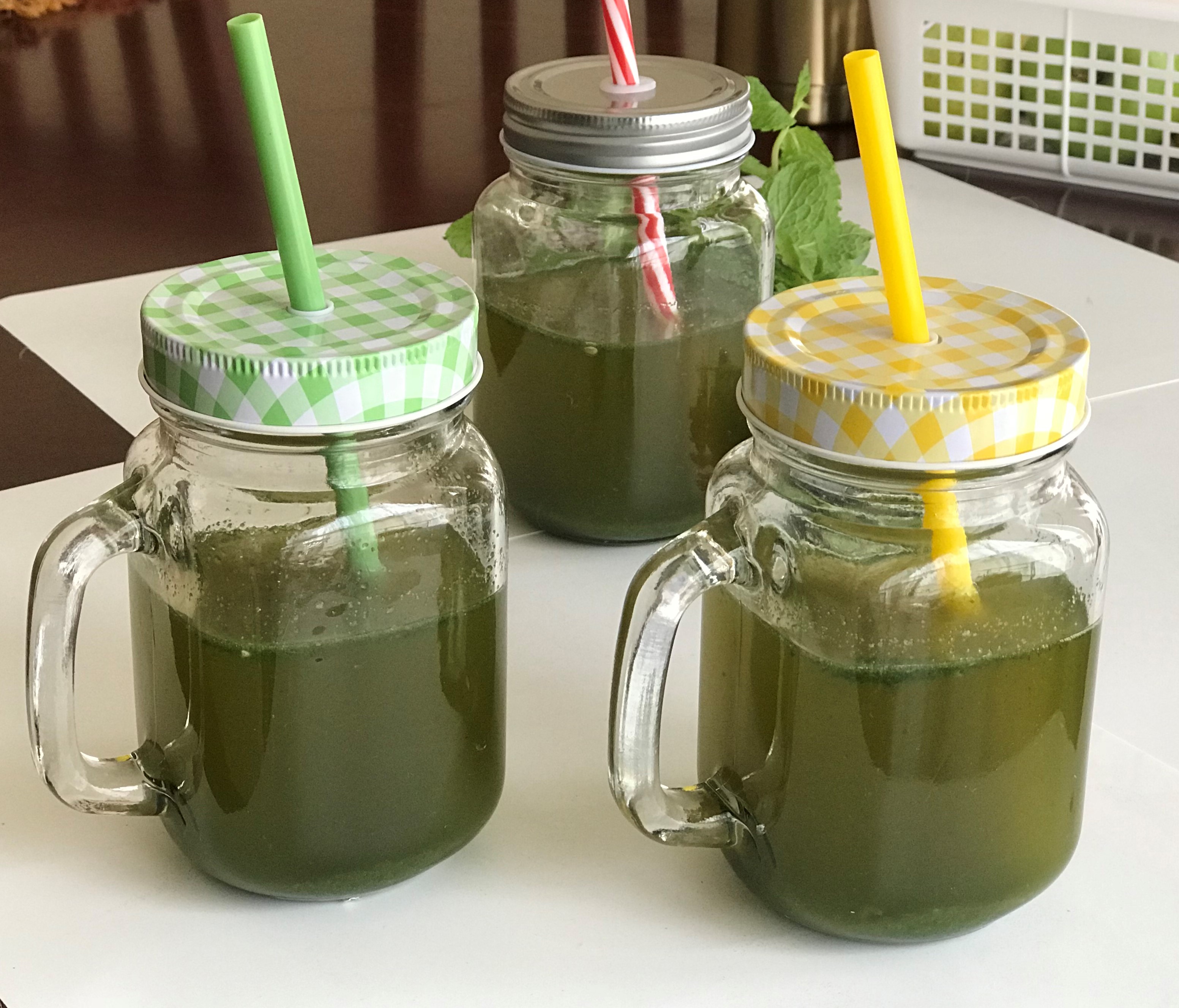
Pudhina Panagam (lime and mint -jaggery coolant for summer)
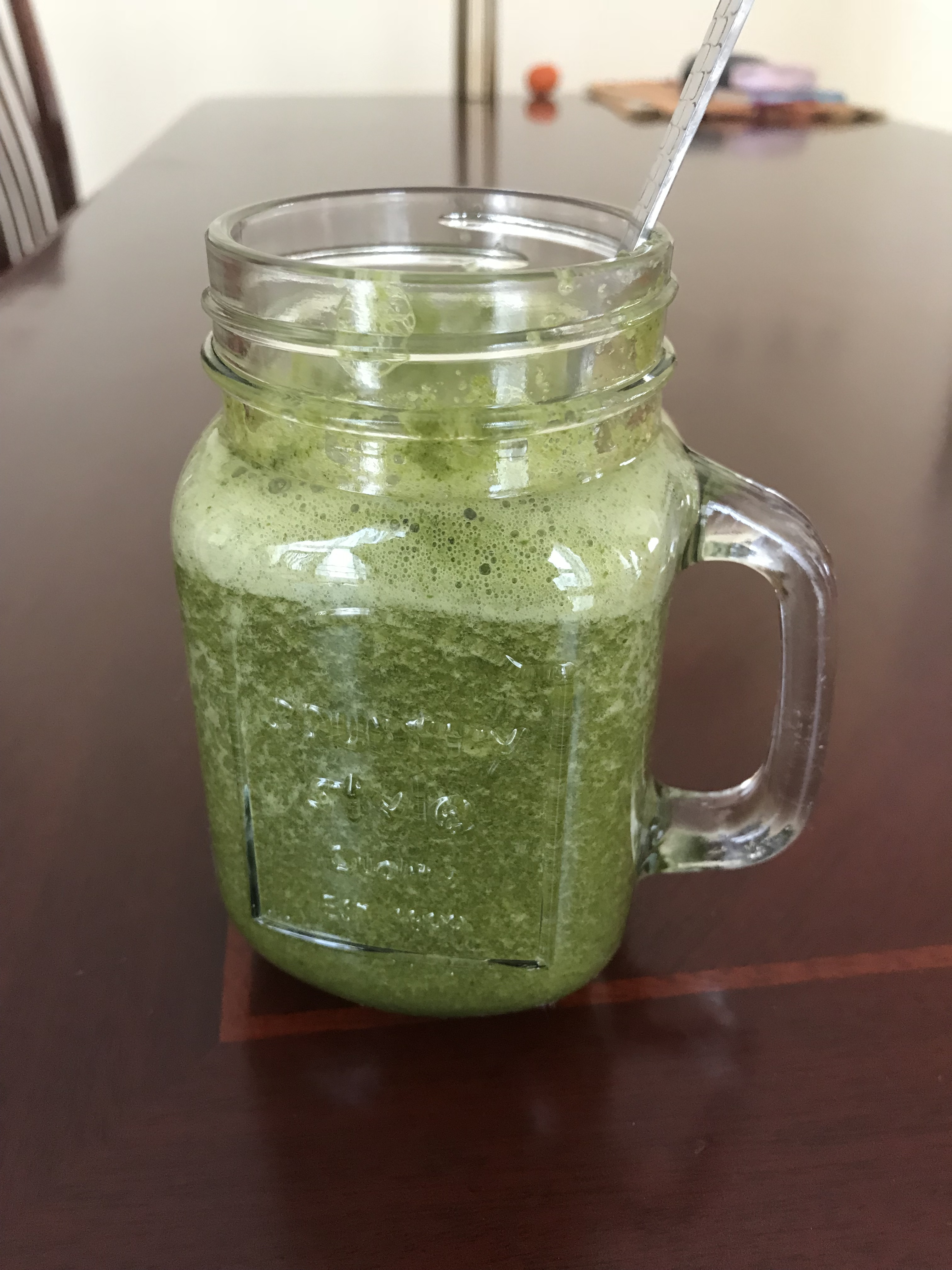
Green Apple Mint Juice
Thanks to my little angel, who brought me back from the awestruck state of mind to reality- to write more for her and for myself.
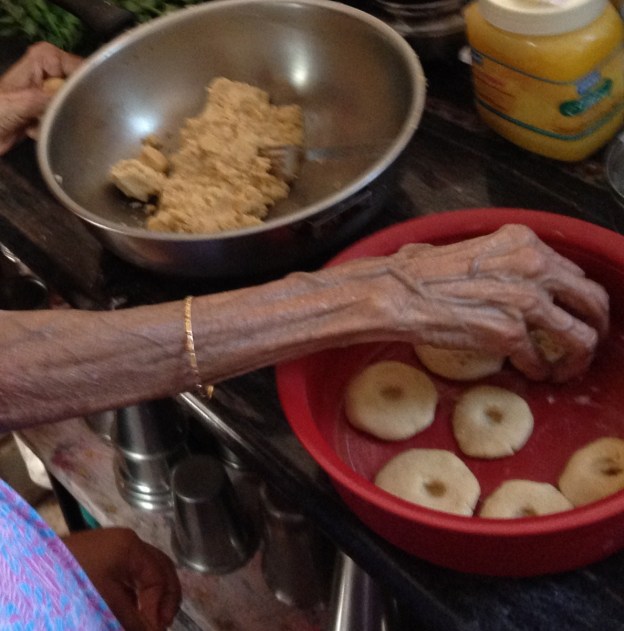
This post is a tribute to the almost nonagenarian, my 89 year old grandmother-aachi, whose kitchen I peeped into as a kid. It has been a beautiful journey of love, love and love alone – millions of life’s lessons learnt from thousands of chatting sessions. The soft yet strong hands have produced en-numerous delicacies with tonnes of affection. I see those soft hands that have turned wrinkled and bony… and realize life’s harsh truths. The truth of aging, might not be as bad as I sound.. as we learn the art of aging graciously. But seeing our elders age is certainly one among the severest truths.
When I hold those hands now, I feel the same warmth among those pressing bones that protrude. How many nei urundais (lentils sweet) and pathirpeni (sugary crisps) and murukkus (savoury crisps) have these hands made and served, the taste still lingering in our minds…
When I see the glittering child like smile amidst those few clinging teeth and skinny cheeks, I long for the same energetic glee that has welcomed us home from school…
When I now listen to the never ending stories through the tired voice, I hope to hear the tamil songs sung to me and the gossips of the household with the same youthful tone…
When I look into those wrinkled sleepy eyes, I think of those youthful eyes that admired my every move…
But.. the joy of having aachis/grandmothers to tell you stories and admire your children is certainly a boon.
at work – great grandmother and great grand daughter
When I see my little daughter enjoy the company of Pooti Aachi/Great Grandmother and play several games, I am astonished by the connect of an almost ninety year old with a nine year old and also the other way round! The passion to connect can well be understood by today’s generation of social networks. This is a great connect, that needs no wi-fi. This is the generational link that passes through four generations of interdependent relationships. Quite amazing..truly no words to express.
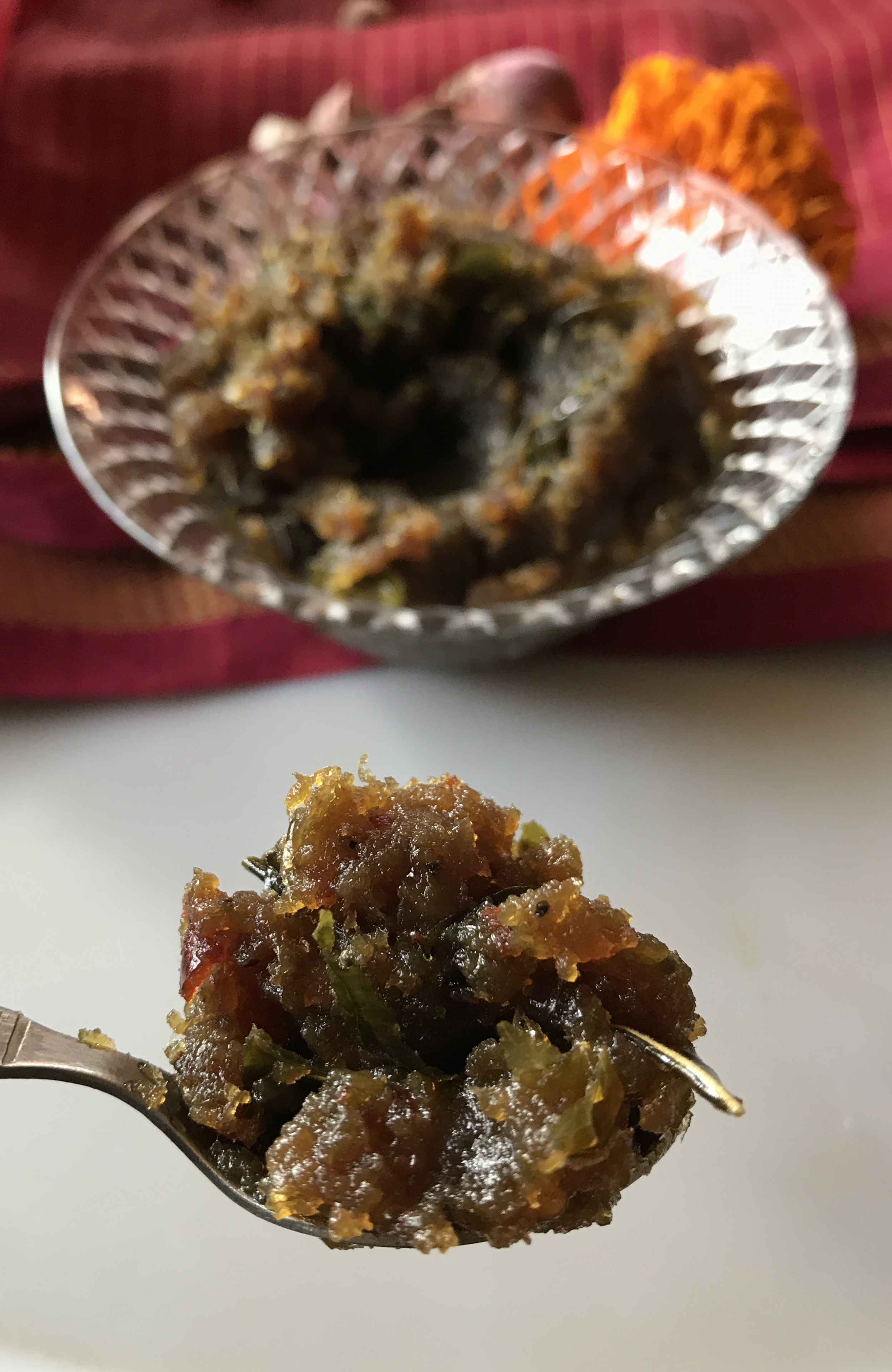
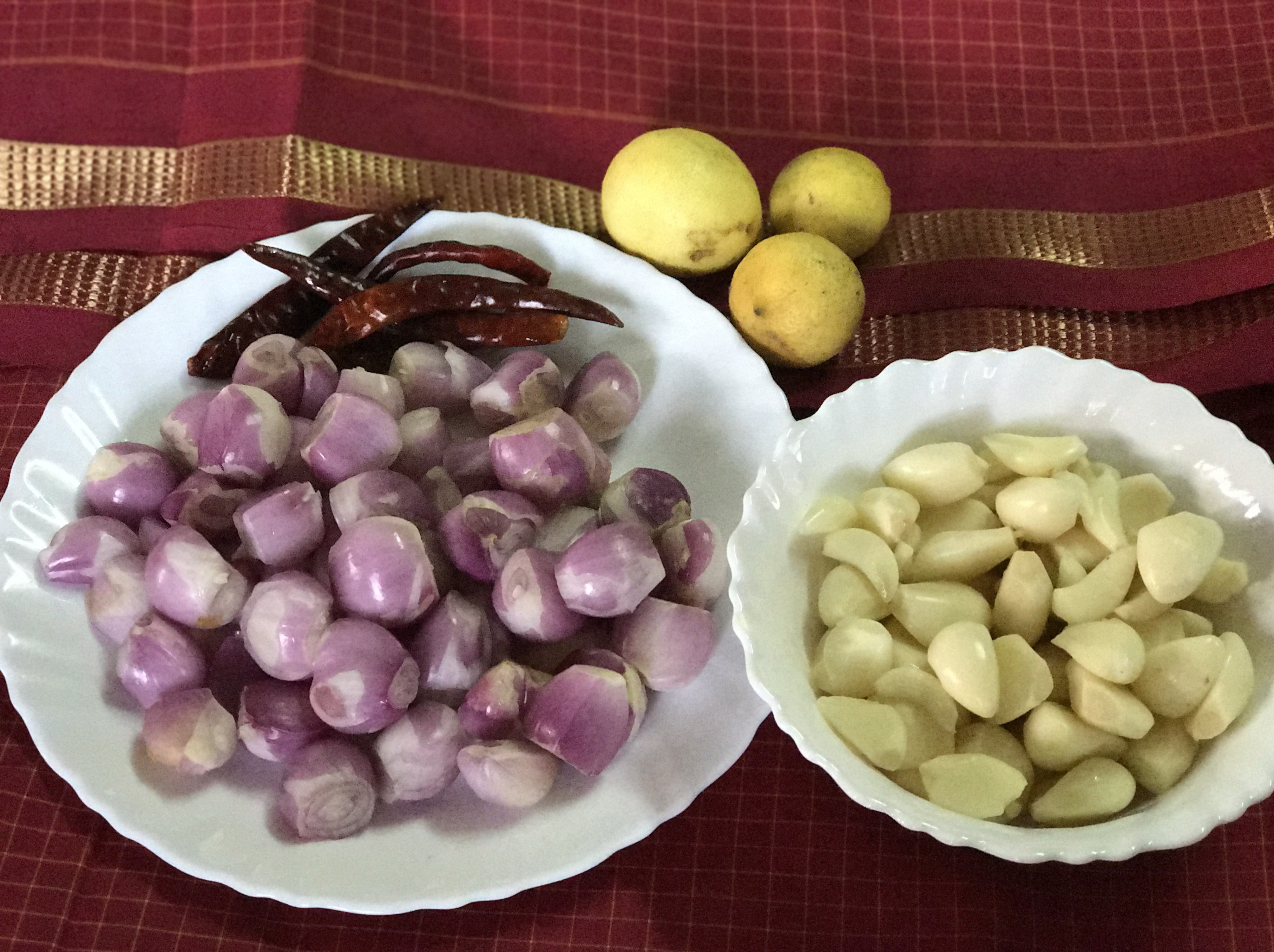
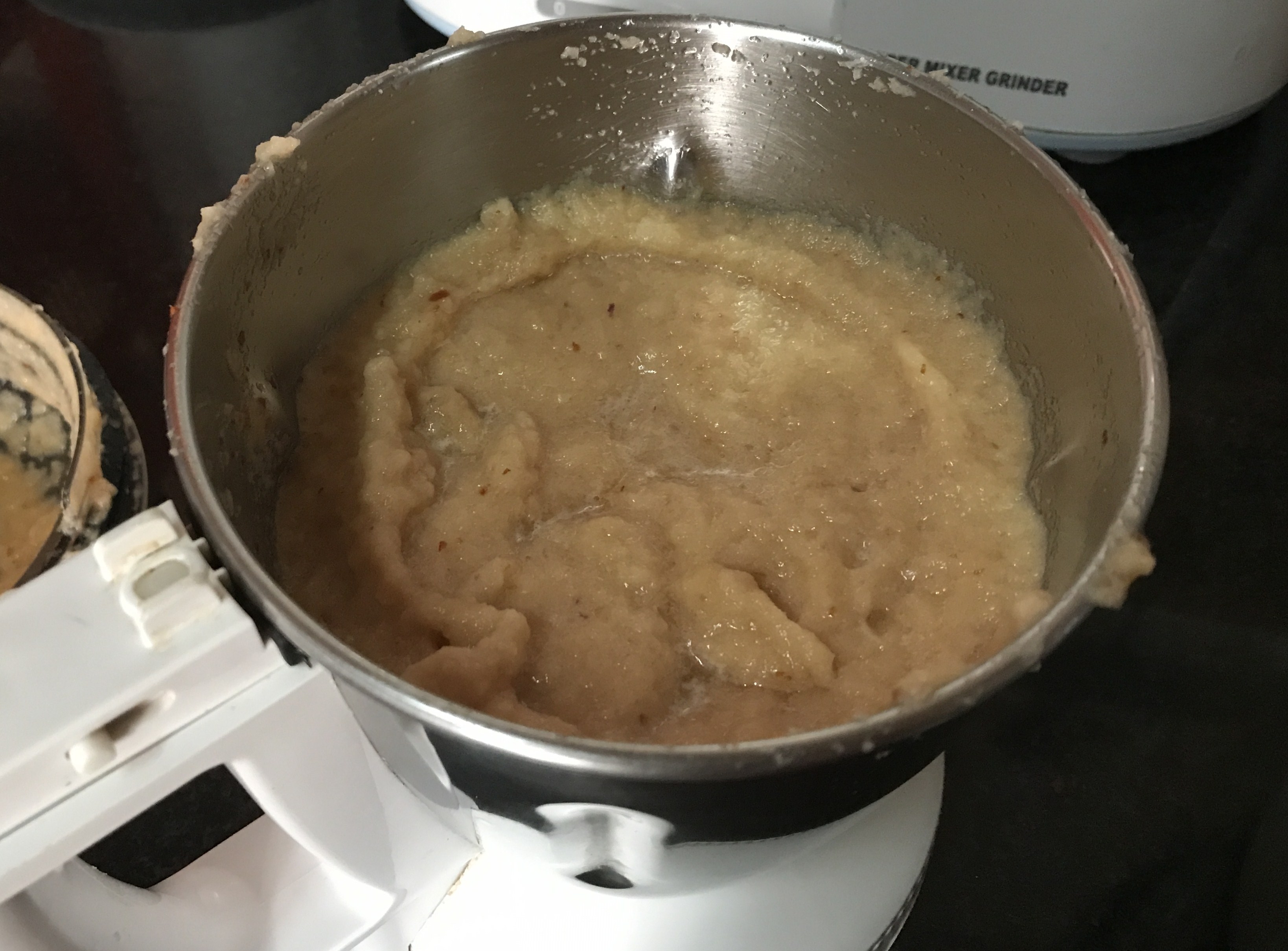
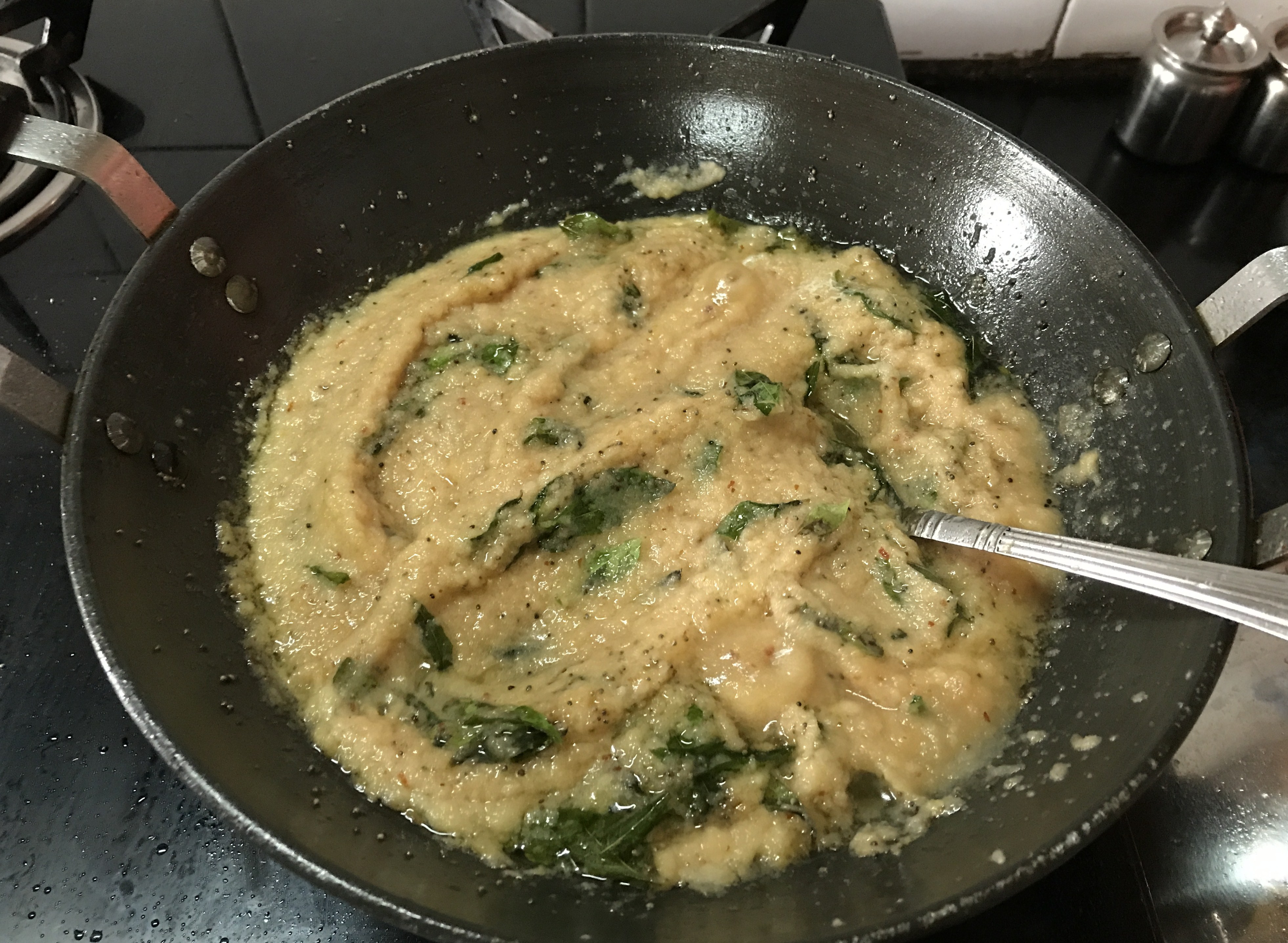
This is yet another trademark Aachi’s recipe. This storable Onion Chutney is simply the best of chutneys and a great preserve. It can be stored for weeks without a refrigerator. But.. brush your teeth before meeting people.. these are onions and garlic.
The name normally associated with the thuvayal/chutney is vengaya thuvayal or onion chutney. But when it became my daughter’s most favorite chutney, she renamed it as ‘Pooti Aachi Vengaya Thuvayal’ – what else could suit the best of dishes – with the four generational connect. So each time we go home, this is packed on demand…
Due to old age, pooti aachi/great grand ma doesn’t make it anymore. It is made by her daugther-in-law – Amma who has been making this for decades now. But, aachi insists to stand behind to guide, so that nothing is missed. Such emphasis on perfection… certain traits of old age one can’t avoid, I suppose. Though Amma makes the same Great Grandmother’s Onion Chutney to perfection, but she needs to wait a few more decades to earn that name- ‘Pooti Aachi’ and the chutney to be named after her.
So, this post is completely in admiration of that Grand Lady of True Affection, whom I always long would stay with me forever.
Pooti Aachi Vengaya Thuvayal
The chutney is a very simple one, that involves patience and care… the same qualities that I respect my Aachi for.
Love and Valour have been the main sources of Life and Literature of the Tamils for more than 2000 years (Sangam Tamil Literature dates back to 3rd century BCE to 3rd century ACE).
‘Ilavattakkal’ -roughly translated as ‘the stone of the youngster’ – is an almost forgotten symbolic stone of the Bridegrooms among the Tamils Community. It is a huge stone which was used as a means to judge the physical and mental strength of the ‘Groom in Talk’ for their daughter. To lift the heavy, slippery, beautifully round stone needed great valour, fearlessness, manliness and tonnes of courage. This was an unambiguous assessment of the stamina of the Man, who was seeking the hands of their Daughter. The process was carried out in front of the village elders. The strong man gets the girl.
There are several stages in lifting the ‘Ilavattakkal’.
1. First, the man sits in squatting position
2. and tries to hug the (huge) stone closer to the chest
3. Slightly gets up and moves the stone down till his knees
4. Standing erect, lifts the stone slowly back to the chest
5. Then moves the stone gradually upward to shoulders
6. Holds the stone at shoulder position
7. Beyond holding the stone, taking a circumambulation of the temple or the village pond is another act to prove extra valour.
Now, what is the match between Ilavattakkal and Mappillai Samba Rice, the next native rice variety we are talking about?
The Tamils who have been cultivators of thousands of varieties of rice for the two or three millenia, the trail of mankind has been traced – have classified different rice varieties for different purposes. A few are listed below.
Mappillai Samba Rice was supposed to be a strengthening rice for ‘Mappillai’ or the groom ready for marriage.
Kavuni Rice was a variety meant to be consumed after marriage.
Poonkar Rice was meant to be consumed by women during Pregnancy.
Paal kudavaarai was given to women after child birth, for sufficient milk production. (paal means milk in tamil).
Vaaran Samba was given to babies after sixth month.
Hence, the name ‘Mappillai Samba’ is derived from the person the rice is given to -The Groom to be – for strength and health . Maappillai or Mapillai means Bride-Groom in Tamil.
Additionally, this rice boosts immunity and helps tackling Diabetes, among several other health benefits.
Mappillai Samba Kanji or Porridge made from this rice is a sort after tasty simple dish. I tried making Dosai and here is how I made them.
Mappillai Samba Arisi Dosai/Pancakes
Ingredients (makes approximately 10-12 dosais)
• maappillai samba arisi/rice – 1 ½ cups
• karuppu ulundhu/black gram – ½ cup
• vendhayam/fenugreek seeds – ½ tsp
• kal uppu/rock salt – ½ tsp
Method of Preparation
Making batter-
1. Wash well maappillai samba arisi and black gram.
2. Add fenugreek seeds and soak overnight or minimum 6 hours in water
3. Grind well in a grinder or any blender
4. Once ground into a fine batter add rock salt and mix well or grind the rock salt in the end.
5. Leave the batter overnight or until fermented well.
6. Dosai batter is ready for use.
Making Dosai-
1. Heat dosaikal or the pancake pan on stove
2. Pour a ladle of batter and spread into perfect round pancakes – preferably thin
3. Pour droplets of gingelly oil on the sides of the Dosai for easy lift of pancake.
4. Turn the Dosai to the other side and let it cook
5. Take out once done- remember it would take just about 30-50 seconds to cook one side of thin Dosai. If one keeps it longer, the texture of pancake would be lost.
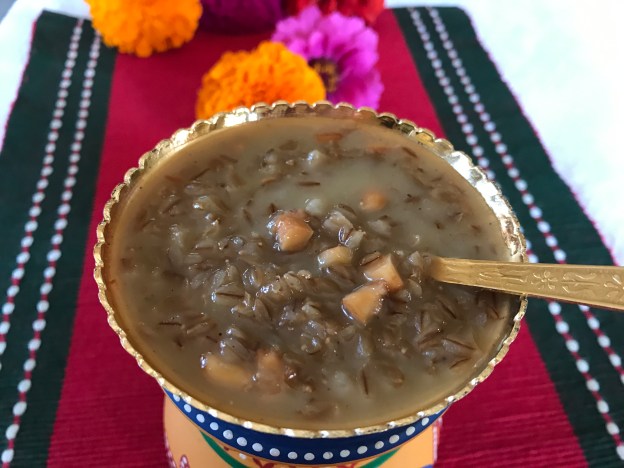
Moongil Arisi or Bamboo Rice, is a rare variety among native rice which is the gift of the bamboo flower, during the last stages of the plant. Almost similar to wheat in looks and nutty in taste, it is highly adaptable as payasam/sweet pudding, dosai/pancakes, uppuma, or a replacement to cooked rice with loads of nutritious value.
High protein, high in potassium and vitamin B, strengthens heart, reduces cholesterol, maintains sugar level as it is low in glycemic index…. so many details available. No doubt, it is several times healthier than the polished, refined rice and other carbs that are available today.
I chose to make a payasam/sweet pudding to relish this exclusive gift from the Bamboo Flower to mankind.
mundhiri paruppu/cashewnut – 8 no.s broken into smaller pieces
Method of Preparation
1. Soak jaggery in 1/4 cup hot water and close lid. It would be mostly dissolved after 15 minutes. Crush the jaggery pieces if any and filter for impurities. Keep aside to use it later
2. Wash well and soak moongil arisi/bamboo rice for 4 hours.
3. Use the soaked water for cooking too. Take 4 times water to 1 times rice (I used 4 cups water for 1 cup bamboo rice)
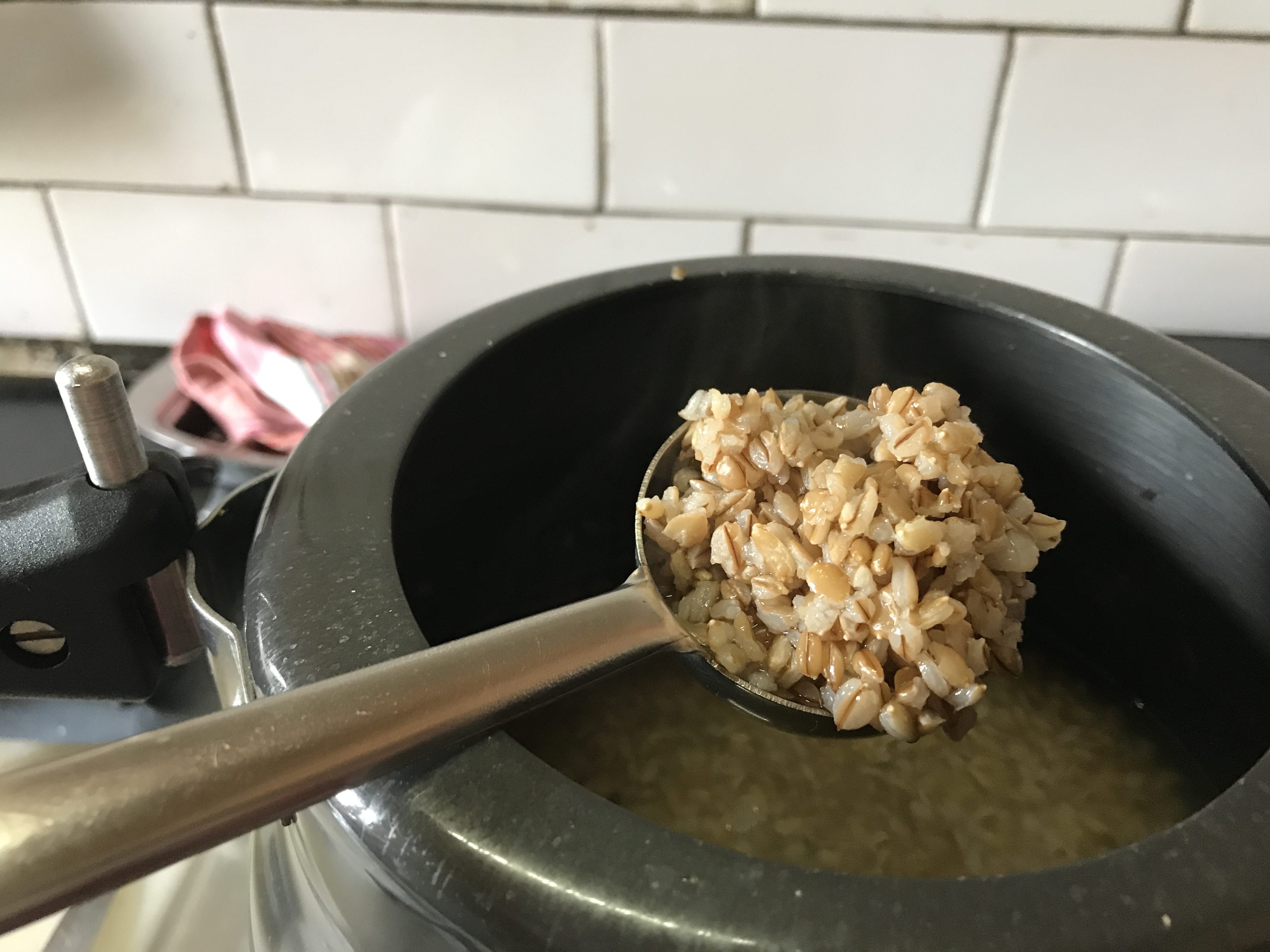
4. In a pressure cooker, reduce the burner after the first whistle and cook for 20 more minutes
5. Open lid after pressure subsides completely
6. Pour the filtered jaggery water and cook till the mixture thickens
7. Add the diluted thin coconut milk and cook for another 5 minutes. Like the paasi paruppu payasam, moongil arisi can be cooked in third coconut milk and then second and the first thick milk can be added to complete the process. But, moongil arisi is a hard nut to crack. I thought it might need more time to soften and hence used water to cook the rice well.
8. While using store-bought canned coconut milk – dilute 1/4 cup milk with 1/4 water and add at this stage, or if using home-made coconut milk from scratch, add the second milk (not so thin) after the rice is cooked with jaggery.
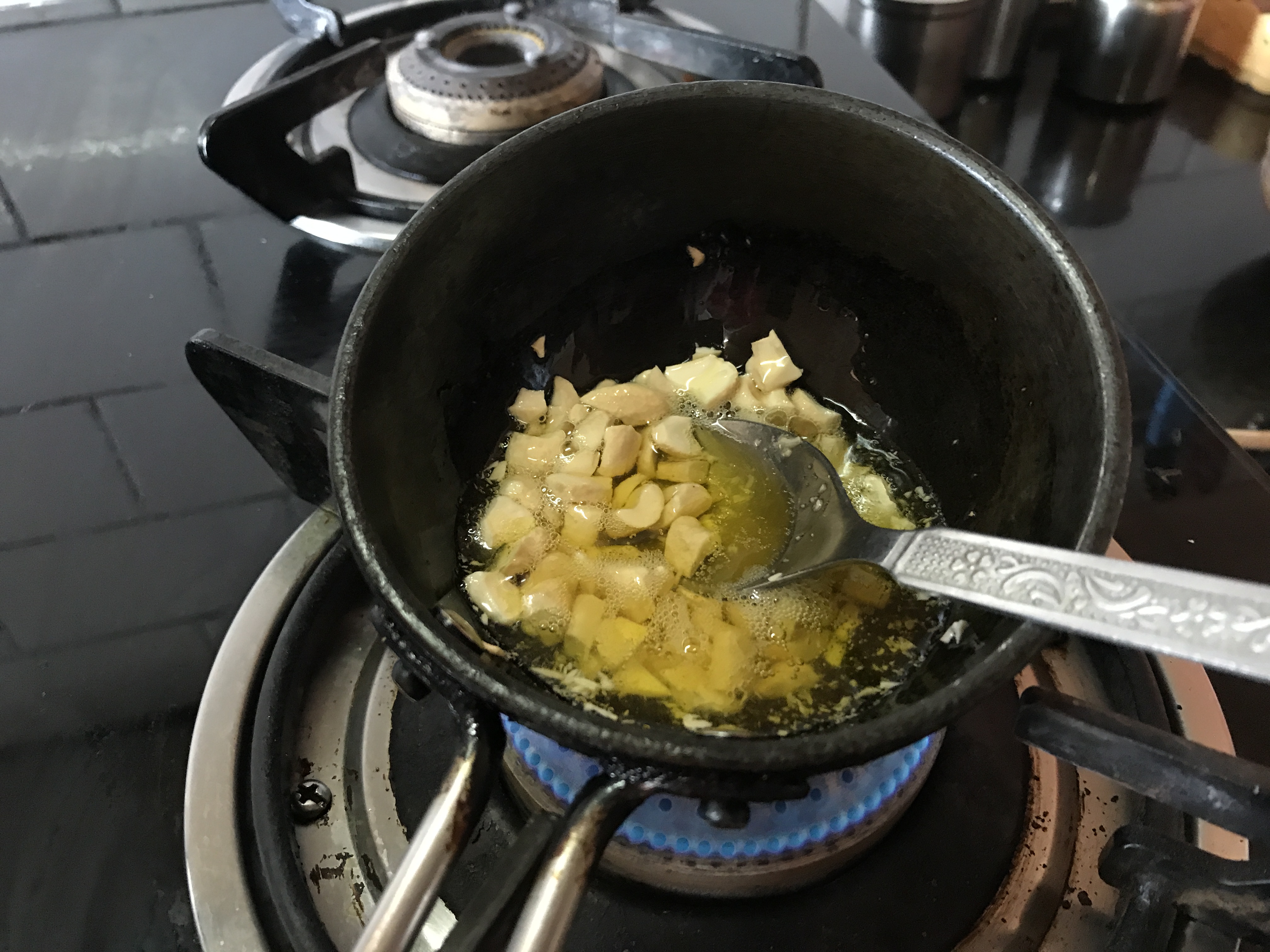
9. Heat clarified butter in a pan and fry cut cashew nuts and add to the boiling payasam. One can also use fried coconut slices or raisins to enhance flavor.
10. Check whether the rice is cooked well and absorbed the jaggery and coconut milk.
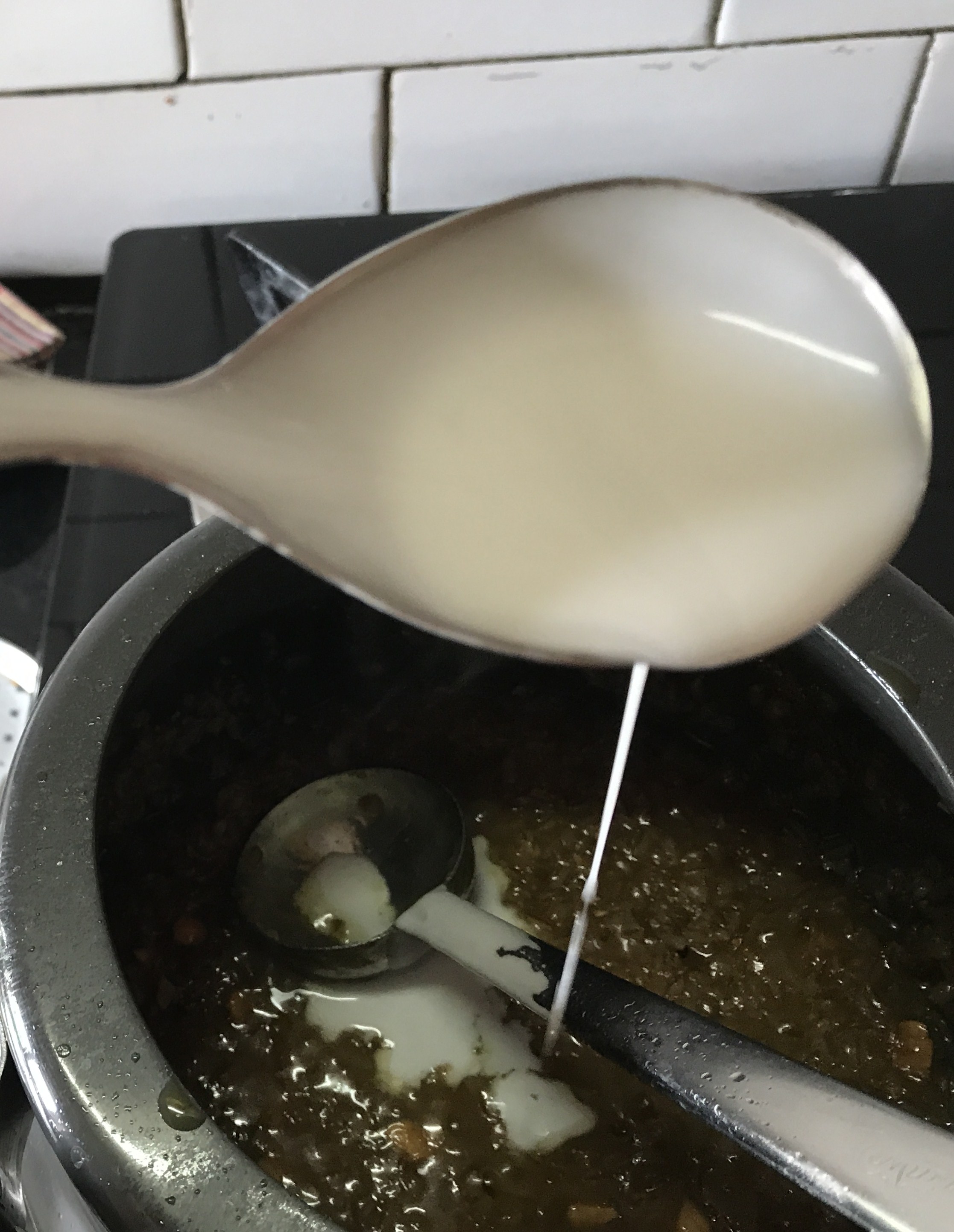
11. Now, add the thick milk and boil for just 2 minutes in simmered flame. The jaggery may curdle the coconut milk.
Nutritious Moongil Arisi Payasam is ready to be served.















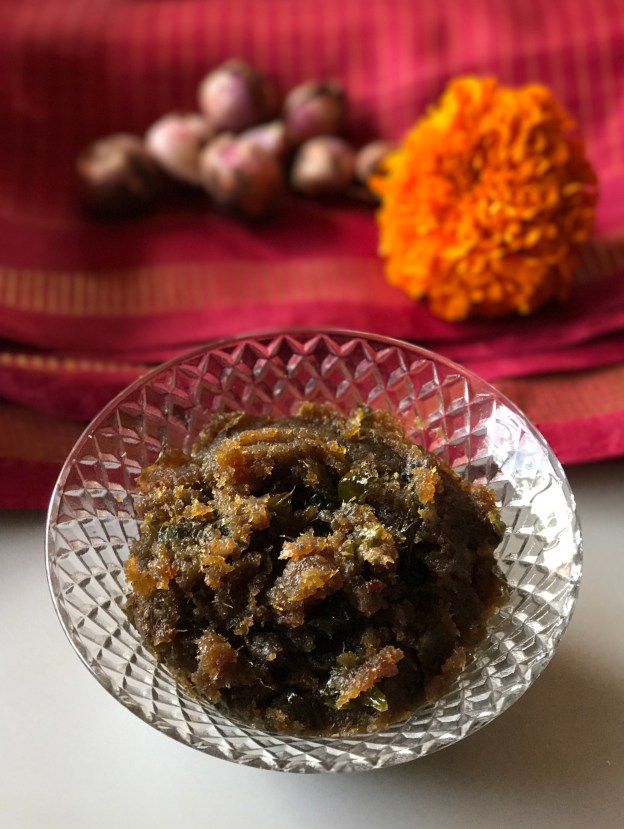
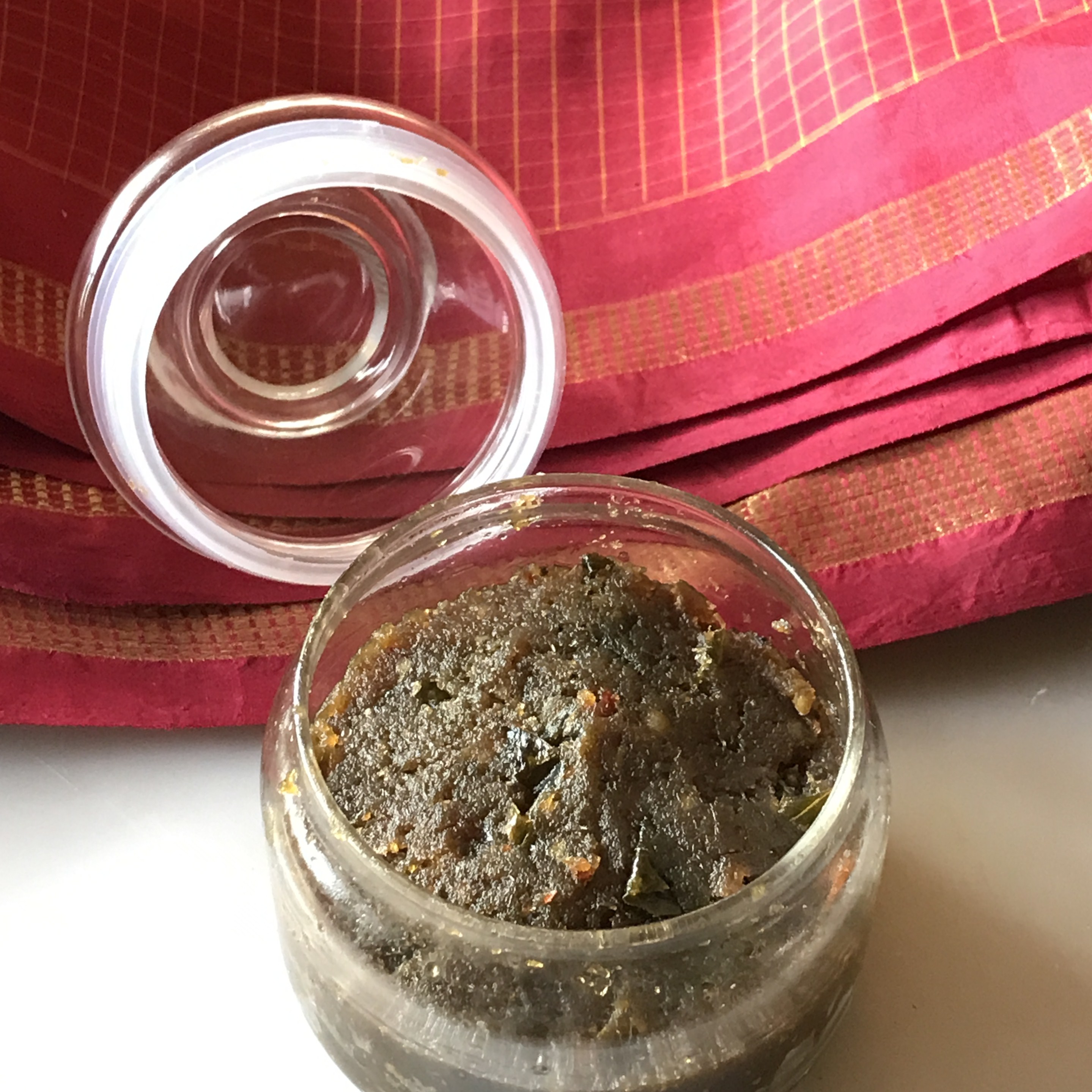
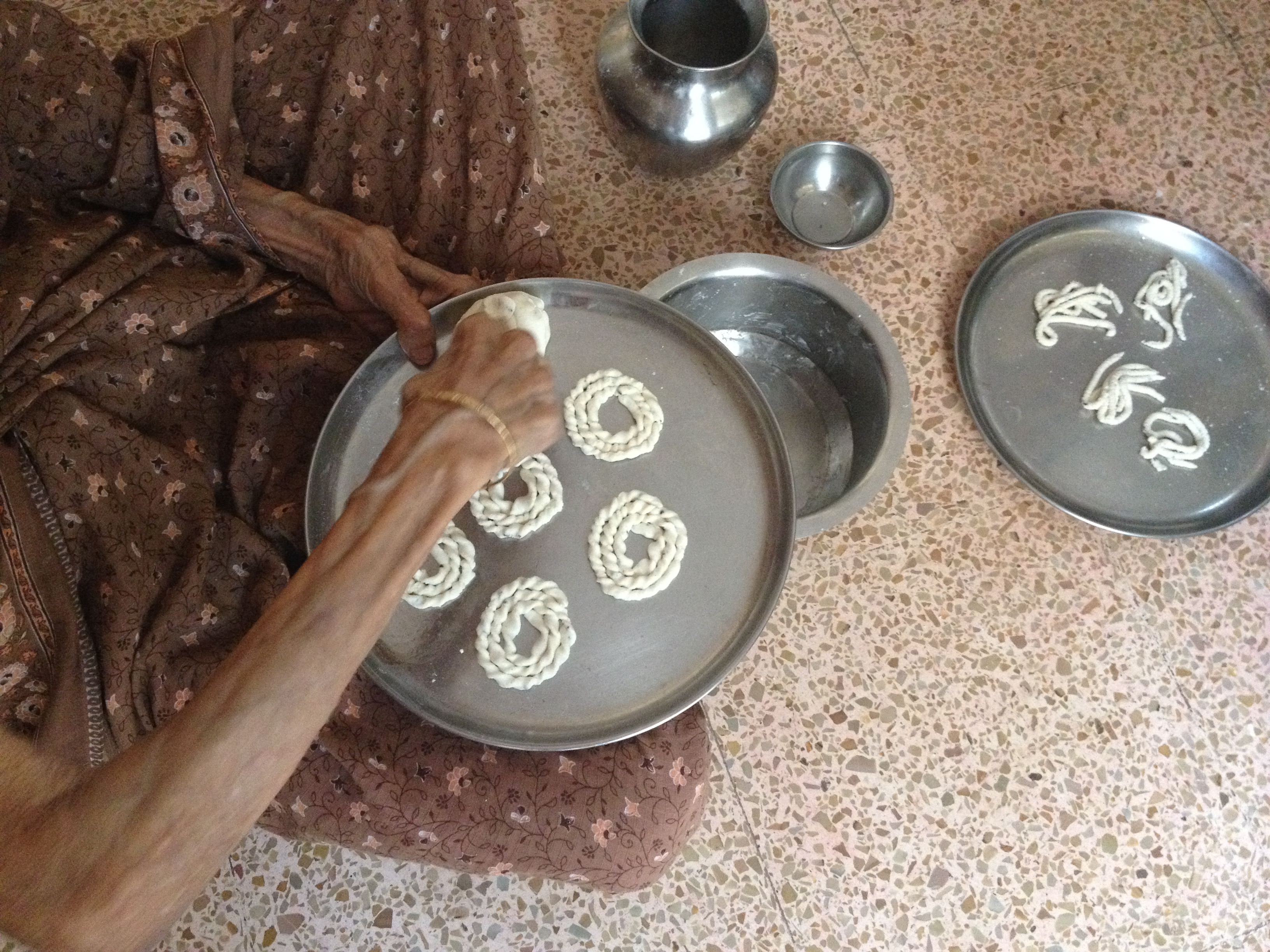
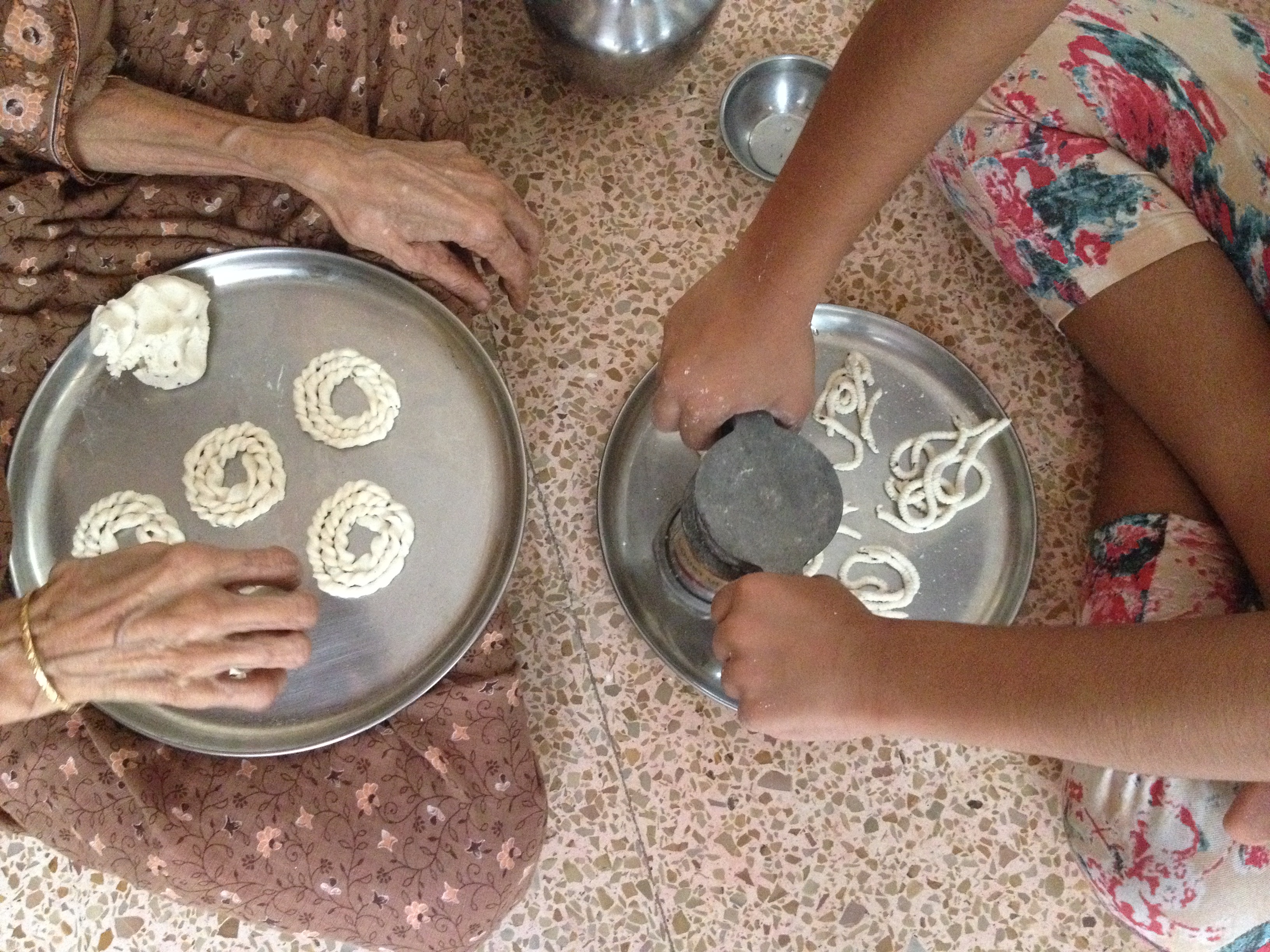










 Dosaikal